Categories
Learn

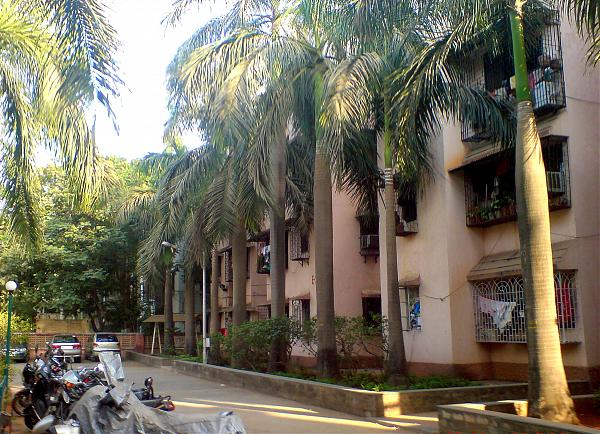
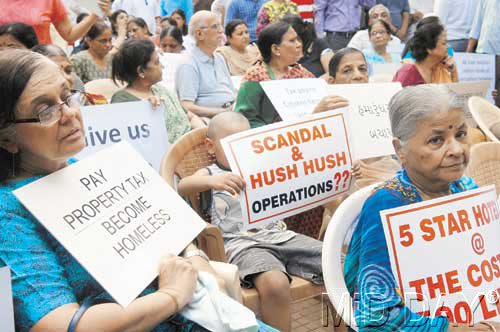
“In Mumbai Region, 40% of us are living in ‘Campa Cola'”

Ramesh Prabhu, Chairman of the Maharashtra Societies Welfare Association, writes to the Maharashtra Government on the Campa Cola building society demolition issue.

“As Mumbai awaits with bated breath for some kind of miraculous intervention to save the 94 families of Campa Cola Compound from being dis-housed, these middle-class families are like the administration’s scapegoats. They represent all of us. As they wait for the raised axe to fall on their necks, my heart goes out to them with sympathy, and I am filled with worry with what will befall the rest of us. I am not competent to comment on the legality or the judicial wisdom of this decision; surely, the Supreme Court knows best. But I would like to ask some questions to no one in particular.

Why only Campa Cola Compound? What about the rest of Mumbai, where over 40 per cent of occupied residential buildings don’t have BMC’s mandatory Occupation Certificates? It is reckoned that at least  6,000 buildings are paying double for municipal water, which means they are not authorised. Many unauthorised structures are routinely regularised on payment of penalties… but there are many more that are not yet regularised for various reasons. Will this axe fall on them also?

And why only Mumbai? What about Thane, Mumbra, Ulhasnagar etc. where thousands of unauthorised (and often unsafe) structures are standing — a disaster waiting to happen?

In all these places, builders have have sold the flats, made off with the life savings of crores of families, worth several thousand crore rupees. Dozens of MPs, MLAs and Corporators from all political parties are routinely the accomplices of these builders, as are the bureaucrats.

As it happened with the three builders of the seven buildings of Campa Cola Compound, developers perpetrate the crime and usually go scot-free. Thousands of architects and contractors who mastermind such unauthorised buildings will also never be caught.

The municipal officials, State Government bureaucrats and police officials who turned a blind eye to the goings on are unlikely to be punished.

Needless to say, no one may point a finger at the judiciary, which willy-nilly allowed cases to drag on for decades and created a perfect window of opportunity for all the illegalities to build up.

When the time comes to for buildings to be demolished, it will be you and me — the common man — who will be running helplessly from pillar to post like the residents of Campa Cola Compound are doing today.

I have no easy solutions to offer. Major surgery is required in the entire MMR region, and that will not be a bloodless and painless process.

But may I humbly urge the State Government and Legislature to frame a humane policy to deal with unsafe buildings first, before demolishing sound structures like the Campa Cola buildings? May I humbly urge Maharashtra Government to avoid shirking its responsibility, and letting municipalities take their own decisions?

If a comprehensive and humane “demolition policy” is not framed, a humanitarian crisis looms large before at least 40 per cent of us in the years to come. Until such a policy is framed, I cannot help feeling that we all are Campa Cola building residents, waiting for our houses to be demolished for one reason or another.

Yours sincerely,
Ramesh Prabhu
Chairman
Maharashtra Societies Welfare Association

The Supreme Court today stayed the demolition notice and gave the affected building residents five months to vacate the premises. The threat of demolition still looms, however.

(Pictures courtesy chandivali.com, mid-day.com)

Categories
Trends

Your office could be checking you out

Companies have started verifying employees’ credentials in the wake of several crimes –  existing employees are included in the checks.
by The Editors | editor@themetrognome.in

The recent spurt of crimes, both economic offenses or otherwise, is spurring several companies to quietly check out the antecedents of those in their employment. And it’s not just the ones that companies are hoping to employ that are being given the once-over, a lot of companies are conducting background checks on those working for them already.

Details such as education, residence and personal information are being cross-verified to see if employees have given wrong data on any of these counts. Any misinformation is a potential red flag – companies then probe if the person has a past criminal record.

Employee verification is a routine practice among corporations in the West. Our country has only recently woken up to the threat that a ‘wrong’ employee can pose to the company, in the wake of several crimes being committed by supposedly ‘suitable’ individuals.

A recent survey by the Associated Chamber of Commerce (ASSOCHAM) found that nearly 52 per cent corporates in Mumbai, Delhi-NCR, Kolkata, Chennai, Bangalore, Ahmedabad, Pune, Dehradun and Hyderabad have been verifying their current and prospective employees at all levels. The verification was conducted by the Human Resource departments of small, medium and large businesses, the survey found. “Companies are fast realising the benefit of doing background checks of prospective employees or risk hurting their brand image in a fraud case. Screening of job candidates at all levels, and even vendors and contract staff is preferred. Previous employment details, academic and professional certificates, identity, criminal records, and credit risk, among other information, are checked thoroughly for authenticity and veracity,” the survey says.

Corporates are certainly becoming more careful and cautious when they are recruiting for the junior, middle and senior level positions, highlights the ASSOCHAM survey. “Many companies hadn’t done any background checks before hiring an employee, mainly at junior levels. The horrendous rape case in Delhi has certainly led to the need for carrying out a comprehensive scrutiny of employees at all levels.”

The survey majorly focused on broad sectors such as BPO, IT/ITes sector, financial and other services, construction, real estate, hospitality, tourism, FMCG and infrastructure, media and advertising, manufacturing and textiles, logistics, transport operators etc. Those companies that cannot conduct checks on their own are outsourcing the work – nearly 25 per cent of the companies surveyed had outsourced the verification work to specialised third party agencies. Under the most intense scanner were jobs that entailed working with children, or in healthcare.

(Picture courtesy www.eharmony.co.uk)

Categories
Learn

Women, be a part of your building’s affairs

The 97th Amendment to the Maharashtra Cooperative Societies Act 1960 now provides two seats for women on their building’s society’s Board.
by Krishnaraj Rao

Two seats will be reserved for women on the Board of every co-operative housing society, as per the 97th Constitutional Amendment, the amended Maharashtra Co-operative Societies Act 1960 and the newly-announced model bye-laws. So far, in the housing societies of Maharashtra, there was only one reserved seat for women, and that mandate was usually ignored. Now, with the State Co-operative Election Authority supervising elections, it will be impossible to ignore this mandate.

The moot question is: will these reserved seats be filled up with ‘Rabridevis’ i.e. women who take orders from their menfolk, and who are dummy candidates of dominating males? Or will the housewives and working women of Mumbai use this opportunity to take their rightful place at the helm of housing societies, so that women’s interests are safeguarded?

It makes good sense that housewives especially should actively participate in the affairs of the building society. After all, they are most affected by the quality of upkeep of buildings, water supply, sanitation etc., as they spend a major part of their day at home.

What prevents housewives from participating in discussions at meetings? Often, it is a lack of confidence. They don’t have the confidence because they feel, or are, ignorant of the laws and rules governing their building. It is time women learnt that they are legally mandated to participate in their building’s administrative matters, and stand for elections.

An interesting aside:

The Maharashtra Societies Welfare Association (MSWA) has organised a three-hour orientation programme specifically for women who wish to participate in governance of their societies, by availing of the reserved seats (and general category seats also if they wish).  With some experience, they can also occupy the paid posts of ‘functional directors’ and ‘expert directors’ as defined in the amended MCS Act.

The orientation programme is slated for Wednesday, May 1, at MSWA, A-2/302, Laram Centre, opposite Platform 6, Andheri West, Mumbai, from 4 pm to 7 pm. A registration fee of Rs 400 per person will be charged, or Rs 300 per person for two or more women from the same building. Contact Vishal Bamne on 98239 11027 or 022-42551414 for details.

(Picture courtesy wikimapia.org. Image used for representational purpose only)

Categories
Learn

Mumbai to get a law university

Mumbai, Nagpur and Aurangabad to get their own law universities, on similar lines as the existing one based at Bengaluru. Maharashtra State-based students will pay very nominal fees.
by The Editors | editor@themetrognome.in

On a day when the ongoing Session of the State Legislature drew to a close, the State Government okayed a number of key proposals – the key one being the in-principle approval of three National law universities for the State. These universities will be located at Mumbai, Nagpur and Aurangabad.

The Maharashtra National Law Universities in all three locations are to be fully operational in the next three years, with the first one to come up at Aurangabad. A site in Uttan has been approved for the Mumbai Law University. As per a release from the Chief Minister’s office, issued this evening, it seems that a sum of over Rs 75 crore has been set aside for the project. The Government expects that the Universities will be operational by the 2014-2015 academic year.

The release also said that each University will have about 120 students, and Maharashtra-based students will pay nominal fees for their studies. Additionally, reservations for seats will be decided as per the provisions outlined in the Constitution of India.

(Picture courtesy mopolaw.com) 

Categories
Kharcha paani

Just ‘Be!’ in Mumbai

Be!Fund, an initiative that funds enterprises run by people from low income groups with risk-free capital, launched in Mumbai yesterday.

This is great news for those looking for capital to fund a business idea that will benefit the community they live in. Going to School, the Delhi based not-for-profit organisation, announced the launch of the Be! Fund at a press conference in Mumbai yesterday. The Be! Fund provides new access to risk-capital (up to $10,000/INR 500,000) to young people from low income groups so that they can start sustainable enterprises that solve local social and economic problems where they live.

Be! Fund is built on the premise that the world needs new heroes for the time we live in and the heroes we should look for are the poorest young people in India – they have solutions that can change India for everyone.

Be!Fund operates by using movies and radio to reach out to young people to ask them to call with local, sustainable, business ideas for change. “The business idea must prove that they can solve a local problem, generate income for the entrepreneur and create jobs. Young people return the investment once they generate a profit, if they fail, they are not put into debt. It’s a risk capital fund based on trust and belief that the poorest young people are the best people to run their businesses. All returns are ‘paid forward’ to invest in more young entrepreneurs to change the way ahead,” says the Be!Fund website.

Raghav Dhar, Bollywood Director, Sanjay Gupta, Chief Operating Officer, Star India, Elizabeth Warfield, Deputy Mission Director, US Agency for International Development (USAID), Anusha Bhagat, Chief Operating Officer, UBS Bank India, Shrinath Bolloju, Group Chief Operating Officer, Deutsche Bank India, and Lisa Heydlauff, Director, Going to School formed the panel that discussed the need for such an initiative. They discussed the need for creating new hero stories to inspire young people to choose to become entrepreneurs, the role of national television in taking these stories to millions of young people free-of-cost, the impact of development organizations supporting innovative approaches to sustainable development and the role of banks taking a risk with their philanthropic capital to invest in young entrepreneurs from base of pyramid communities.

Commenting on the role of Be! Fund, Heydlauff said, “By 2020, there will be over 200 million unemployed young people below the age of 30. The youth unemployment crisis cuts across all industries and development sectors. In short, we need new heroes to solve India’s greatest problems – the heroes we need to find are the poorest, youngest people in India, who by pioneering new sustainable business models that create jobs and solve problems become role models to inspire millions of young people to change the world around them by choosing to become entrepreneurs.”

The Be! Fund started in Bengaluru, with a seed capital from entrepreneurs Phaneesh Murthy and Dev Roy, who believe that the poorest young people in India are worth investing in to change the world – they have the answers to the problems their communities face, all they need is a group of people to listen to them and be open enough to take a risk to invest in their ideas to make them a reality. After the success in Karnataka, new investors in Be! Fund decided to take this ‘made-in-India’ model to Mumbai and the rest of India.

 (Picture courtesy businessenquirer.net)

Categories
Trends

Summer cheer for yoghurt industry

Frozen yoghurt industry growing rapidly in metros and Tier II cities; is an alternative to ice cream and soft drinks.
by The Editors | editor@themetrognome.in

This is sweet news for the Indian frozen and flavoured yoghurt industry – as per a study conducted by premier commerce body Associated Chamber of Commerce (ASSOCHAM) and released yesterday, the frozen and flavoured yoghurt industry is tipped to grow by 40 to 45 per cent annually, and may touch Rs 1,200 crore by the end of year 2015, up from the current Rs 750 crore.

The study reveals that Indians are waking up to frozen yoghurt, especially its low-fat and no-fat variants, due to rising health consciousness, rising disposable incomes, quality dependence and more awareness about the product and its supposed benefits. Titled Yoghurt Market in India, the study says that the factors that have fuelled this industry’s growth are the wide availability of raw material (milk), a growing willingness among consumers to experiment and increasing disposable incomes.

While releasing the paper DS Rawat, Secretary General ASSOCHAM said, “In India, yoghurt has positioned itself as a healthy dessert option, so the increasing health and wellness awareness will help it gain popularity with some momentum. The branded yoghurt market in India has huge potential with consumers increasingly demanding greater hygiene and quality. The flavoured yoghurt is rapidly becoming a part of regular grocery purchases for many affluent urban households in tier-II and tier-III cities.”

Consuming yoghurt may compete with flavoured milk drinks and fruit/vegetable juice, whilst fruited spoonable yoghurt may emerge as a competition for ice cream as a dessert, the paper finds. Low/no fat and low/no sugar yoghurts are new trends in the market, added Rawat.

Mango, strawberry and pineapple variants, which are common to all brands, are finding takers. Frozen yogurt (plain and flavoured) has already started to replace ice cream to a certain extent. “Companies are also tying up with corporates to target office employees to increase consumption by making it a quick, convenient and healthy substitute for meals. The demand of frozen yoghurt market will see a growth of 70 to 80 per cent each year over the next three years,” adds Rawat.

(Picture courtesy groupon.co.in)

Exit mobile version