Categories
Event

City NGO protests commodification of women

Demands quick redressal of sexual crime complaints; urges I&B Ministry to act against films, ads showing women as sex objects.
by Hamari Sanskriti

The public uproar and anger generated in the country due to the heinous rape and murder of the 23-year-old Delhi student compels us to introspect and find the possible reasons behind increasing sexual crimes against women. Though we speak about most of the reasons, we are not considering the root cause of the increasing incidents of sexual crimes – the portrayal of women as sex objects by the media.

One cannot deny the fact that the mass media is a very powerful and influential medium, and hence whenever an awareness campaign is started by the Government, whenever a public message is to be given to the masses, the civil society and NGOs, all  of them use the mass media. If the media can have a positive influence, then why are we not acknowledging that it may have a negative influence as well?

For example: addressing a woman as ‘Chikni Chameli’, songs like ‘Sheela ki jawani’ and lyrics like ‘Main tandoori murgi hoon yaar, gatka le mujhe alcohol se‘ and ‘Pallu ke niche chhipa ke rakha hai, dikha doon toh hungama ho‘ demean women and project them as sex objects. Such references to women, to parts of their bodies, certainly convey a lot about the intention of the creator of such content about the image of a woman. The gestures of dancers in such songs, and the lyrics, invite sexual aggression against women.
The posters of recent films like Jism 2 and Raaz 3 leave nothing to the imagination. Showing the naked body of a woman, with hands placed on her private parts, on huge hoardings in the middle of the roads, photographs of film sets printed on front page of the Bombay Times on December 12, 2012 showing Arshad Warsi holding Minissha Lamba’s breast, are shocking and are examples of the levels to which the entertainment industry can stoop to sell their films.

It will be foolish to believe that the poster of Matru Ki Bijlee Ka Mandola, in which a girl in micro shorts is pointing towards her buttocks with ‘Dekho Magar Pyar Se‘ written on her lower waist will not draw undue attention towards women on the road.

Be it films, advertisements, serials, newspaper photos, all of them are contributing in further demeaning women and commodifying their body. Such songs, advertisements, hoardings and posters, films and serials on television, are everywhere, in all media.

If such songs and scenes are not meant to titillate and arouse the viewer, then why are they created? Who are we displaying them for? How can songs like ‘DK Bose’ of Delhi Belly, or words like ‘Paincho’ of Matru Ki Bijlee Ka Mandola be suitable for a U/A audience? Is this what film producers want our children to say and learn? The way the name of one entertainment channel Bindass is written on BEST buses and hoardings is also objectionable, it is written with ‘B’ on one line, followed by ‘in’ on the next line and ‘d ass’ on the third line.

All the above examples are related to women, parts of the female figure or abuses and sexually suggestive words. With repeated hammering of the same, it is reflected in the behaviour and thought process of society. The entertainment media needs to be more responsible while portraying women in songs, films and advertisements.

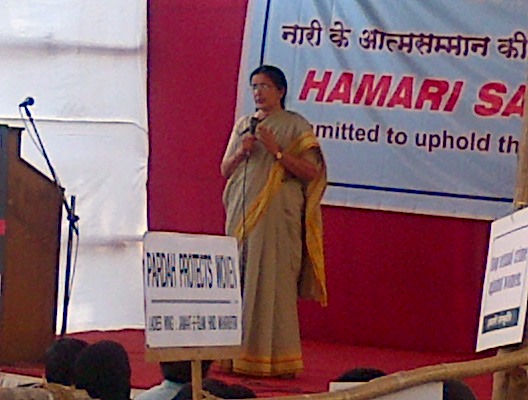
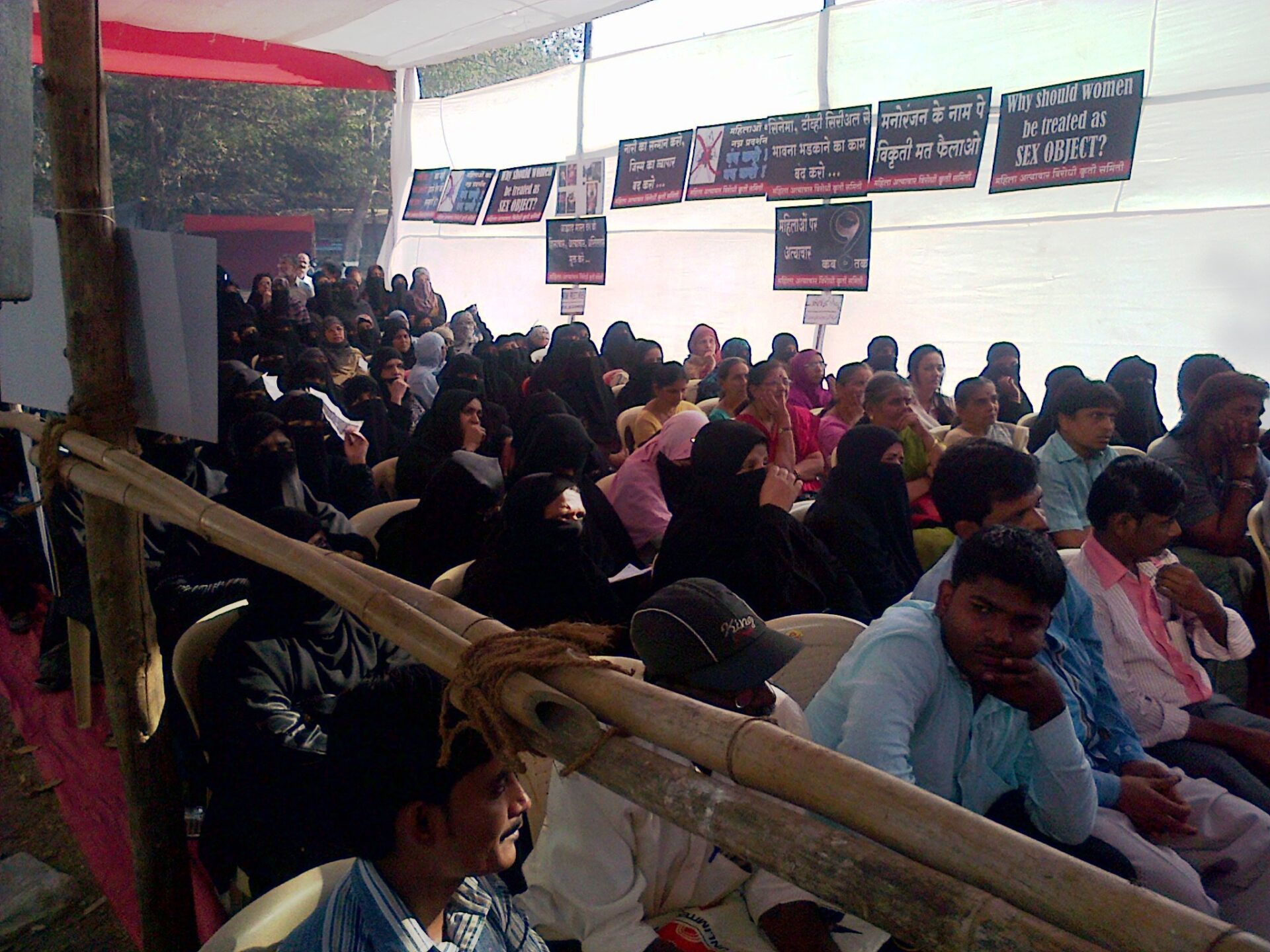
Hence the staged a protest against such depictions, and made an effort to make the law-enforcers accountable for permitting such violations. We demand that there should be a regulatory body (comprising of psychologists, child counsellors, sociologists, teachers, parents, eminent lawyers, representatives from print, electronic media and film-makers), which has punitive powers to which we can complain and get a redressal for grievances. Immediate action should be taken against the violators of laws.

We would boycott all films and film/television stars who depict women on a demeaning manner or treat them as sex objects. The I&B Ministry being the ultimate authority for enforcing the various laws in the print and electronic medium cannot shirk its responsibility towards society. So we urge you to take immediate steps to ensure that henceforth no advertisement or film in the media treats women in a derogatory manner or as sex objects.

We also demand that those committing sexual crimes against women and children must be given stringent punishments and such cases be sent to fast track courts, with a time limit of maximum six months to deliver the judgment.

 

Categories
Event

Feting Obama in Mumbai

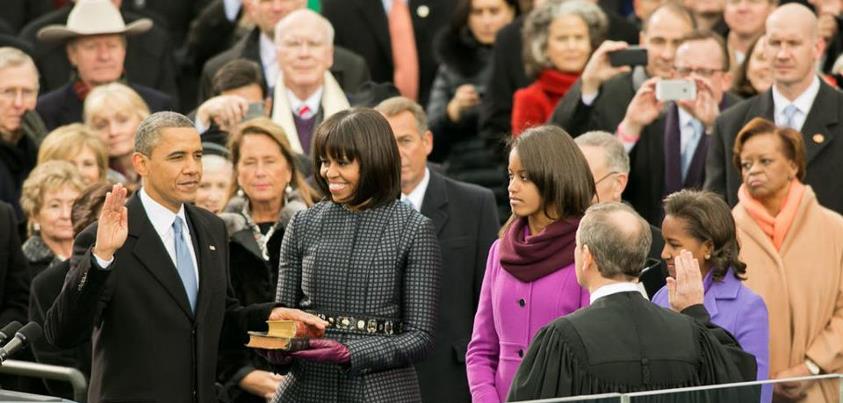
A select few in Mumbai watched and applauded as US Consulate Mumbai telecast Barack Obama’s Inaugural Ball in Washington DC.

The US Consul General, Peter Haas and Atul Nishar, President of ‘Namaste America’, co-hosted an inaugural ball in honour of the 44th President of The United States of America, Barack Obama. The Consulate’s Inauguration Ceremony featured a live telecast of the Presidential Address from Washington DC. Bajaj Group was the presenting supporter of this prestigious event.

Popular Bollywood actor Rani Mukerji graced the occasion and was felicitated for her valued contribution to Indian Cinema.

The evening began with a dance performance by renowned choreographer Rahul Saxena and his team of accomplished dancers. The event was attended by a diverse cross-section of Mumbai society. Those in attendance included Dr Alka Nishar, Niraj Bajaj, Anne E Grimes, Deanna Abdeen, Satish Shah, Nisha Jamvwal, Poonam Dhillon, Talat Aziz, Dalip Tahil, Sushma Reddy, Sunita Menon and other prominent personalities.

‘Namaste America’ Indo American Association of Art and Culture promotes and fosters goodwill between the people of the United States of America and India by providing a platform for  cultural and trade exchange particularly in the areas of Education, Media, Entertainment, Science and Sports.

(Pictures courtesy Presidential Inaugural Committee 2013 and US Consulate Mumbai)

Categories
Film

A businessman who acts in films

Mithun Rodwittiya is not a struggling actor – he ‘chose’ to do ‘Inkaar’, and is looking for serious, sensible roles.

Our idea of what a first film role means to an actor generally follows a formula popularised by masala entertainers of the 80s: the would-be actor leaves his hometown and comes to Mumbai following a film dream, lives with friends and survives on wada pav and chai, does the rounds of producers’ offices and waits years for the elusive break. When the break comes, he is older, wiser, and an instant hit.

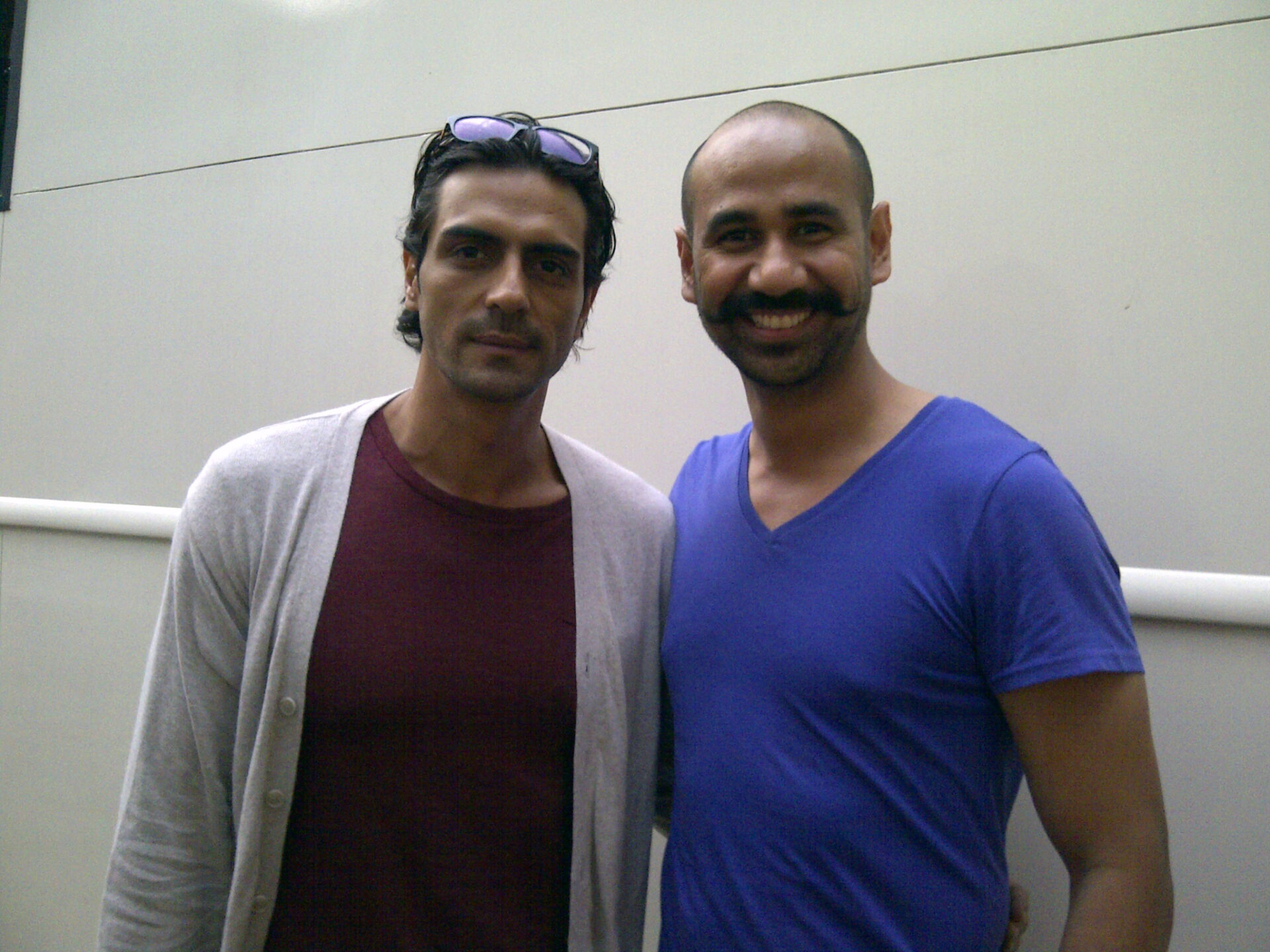
Mithun Rodwittiya’s road to Bollywood was the exact opposite of this filmi roadmap. The Malad resident got a role in the Arjun Rampal-Chitrangada Singh release Inkaar after a fruitful stint in modelling. A successful feature and ramp model for about eight years now, Mithun (34) has worked with a lot of big brands in the country and has shot numerous TVCs, apart from walking the ramp for several top designers in their fashion shows. “I became very interested in pursuing a film career after I watched Kaminey,” he tells The Metrognome. “I watched the film and I kept thinking, ‘Hey, I want to do this…’”

However, the desire to face the camera had always been there, even before he decided to take the Bollywood plunge. “Shooting for TV commercials helped me understand the techniques of shooting. Also, I realised that I was very comfortable in front of the camera,” Mithun says. His first TVC was for Tata Indicom. “It was an interesting experience for me – you work with 80 to 90 people on the set, you have to fit within a role set out for you,” he explains, adding that facing the camera was something he consciously pushed himself into.

“I used to have stage fright as a child. So facing the camera was not something I set out to achieve as a personal challenge. I was simply curious to know what the process would be like for me,” he explains.

When Inkaar happened

“I had been working with some brilliant casting directors, and one of them was Nalini Rathnam, who excels at fitting an actor with the right role. I have a certain sensibility in film, and Nalini understands it. She told me about this role in a Sudhir Mishra film, where I would play a small but crucial role as the CEO of the ad agency’s biggest client. I was happy to accept,” Mithun says.

His role, though a small one that required just three days of shooting in Mumbai, proved to be a tremendous learning experience for him. “See, I’m in this out of a choice I made. I run a business and ideally, I want to be able to balance my work and films,” he says, explaining that he is an NID alumnus. “People on the set were stunned to know that I was from NID, that I had something to work on apart from the role I was playing in the film. A lot of people don’t have that. I decided to be a part of Inkaar because I would get to work with stalwarts like Sudhir Mishra and Deepti Naval.”

He says that Sudhir Mishra is “a taskmaster,” but a man with commendable clarity. “He knows exactly what he wants, right down to the most minute details on the set. But he is very approachable, and though I have no formal training in acting, he was very helpful and accommodating. He knows how to use his actors.”

How was it working with the cast? “Of all of them, I enjoyed working with Chitrangda Singh the most,” he says. “She is an extremely intelligent lady who takes her work seriously and is such a wonderful person to work with and be around.”

Now that Inkaar’s in the theatres and Mithun’s being recognised, he’s also receiving offers for roles in what he calls “the same kind of cinema as Inkaar.” He explains, “I don’t see myself running around in a field of sunflowers. I identify with the kind of roles that actors like Pankaj Kapur, Abhay Deol and Irfaan do. Since there is no pressure on me to accept any and every work that comes my way, I can choose the kind of roles I would be happiest doing,” he says.

He is now awaiting the release of his next film, in which he plays one of the leads. “It’s a comedy and it’s a good role,” he says. And does he see himself getting into acting full-time? “At this point, I’d have to say maybe, but ideally I’d like to always be in a position to choose to do films. I chose Inkaar because I knew that I would have dialogues and screen time with Deepti Naval, Arjun Rampal, Mohan Kapur. It’s not about the length of the role for me,” he says.

(Pictures courtesy Mithun Rodwittiya) 

Categories
Event

Legal Counsel India Awards announced

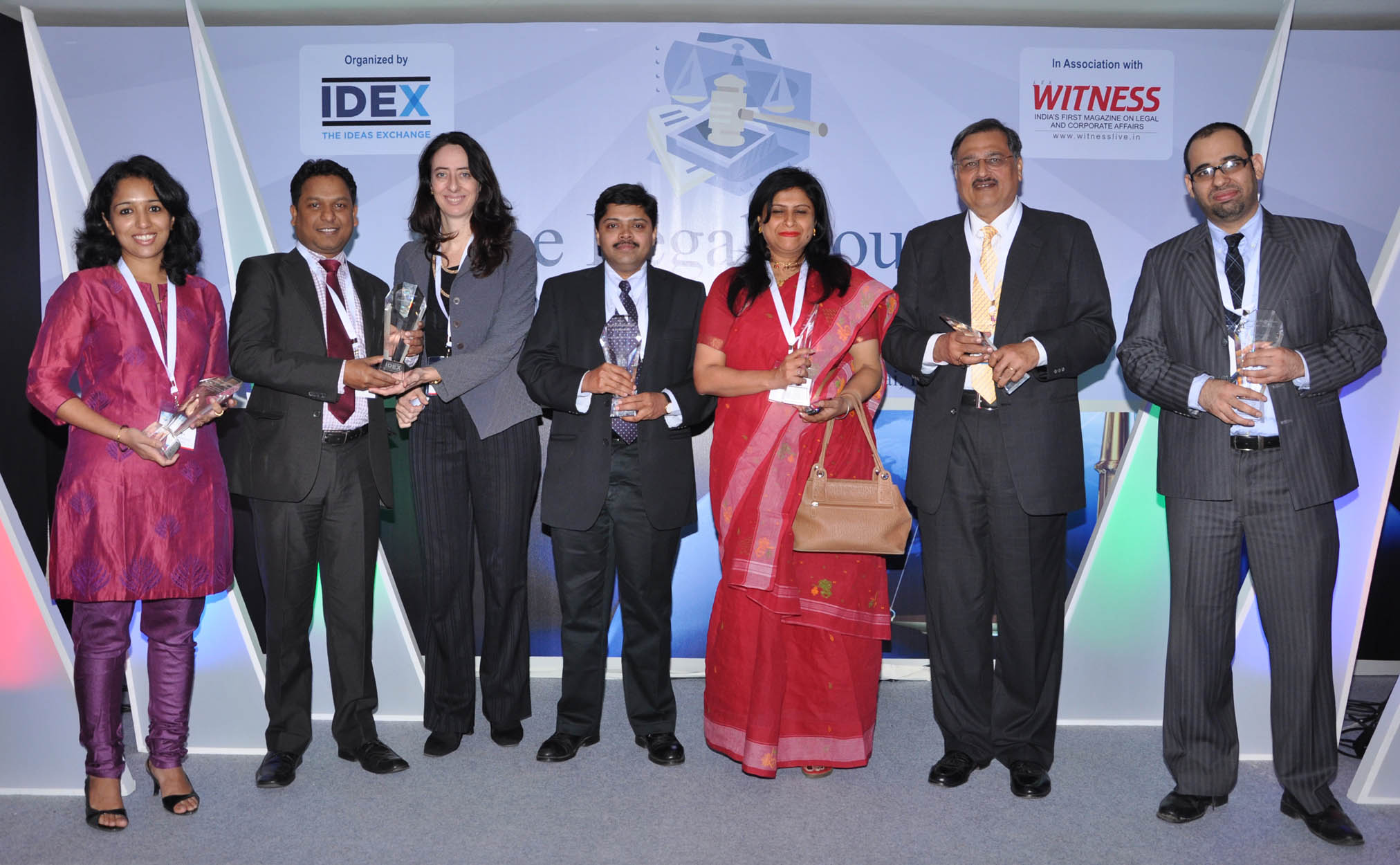
The 4th Annual Legal Counsel Congress took place at Hotel Trident recently. Siemens, BPCL, IDFC won awards at the ceremony.

The Ideas Exchange, in association with Lex Witness, presented the 4th Annual Legal Counsel Congress in Mumbai focused on helping General Counsels and Heads of Legal work towards attaining greater operational excellence and preparing them for the legal department of the future. The evening also hosted the second edition of the Legal Counsel India Awards at Hotel Trident BKC; the awards recognise and honour excellence amongst the corporate legal fraternity.

The conference was chaired by Nilanjan Sinha, General Counsel, GE Capital, who introduced the Chief Guest, The Honourable Former Justice Deepak Verma, Supreme Court of India. Justice Verma briefed the legal counsel on strategies for effectively partnering with the Bench in order to expedite the judicial process for the benefits of the Indian legal system.

Speaking on the occasion, Vikas Vij, Managing Director, The Ideas Exchange said, “The Ideas Exchange is committed to working with business leaders across sectors and business functions and focused on delivering knowledge based platforms for a discerning and informed industry to ideate and enable business exchanges in a creative, efficient and responsive manner.”

Some of the prize winners:

Amarchand Mangaldas, National Law Firm of the Year Award 2013

BPCL, Best Employer of the Year

Persistent Technologies, Best Use of Technology and Innovation Award 2013

Siemens, Team of the year

IDFC’s Rajeev Oberoi, General Counsel of the Year Award

IDFC’s Rohit Sharma, Young In-House Lawyer of the Year (Male) Award

BIAL’s Kavery MadappaYoung In-House Lawyer of the Year (Female) Award

Wockhardt’s Debolina Partap, Woman General Counsel of the Year Award


Categories
Event

New stamp commemorates late Aditya Birla

State Governor released the stamp in the presence of the Birla family; slammed other family-run businesses for lack of ethics.

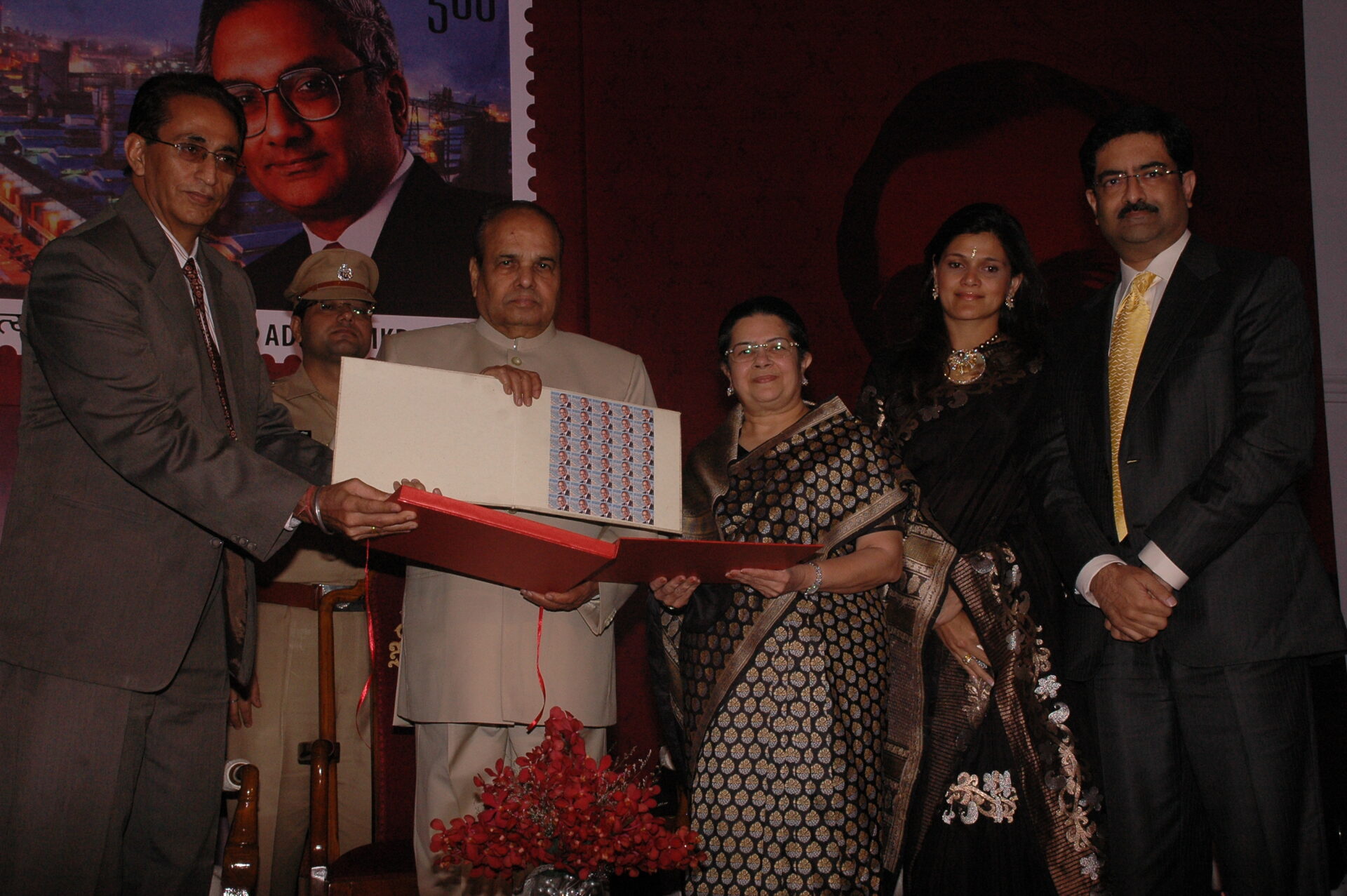
The Governor of Maharashtra, K Sankaranarayanan yesterday released a commemorative postage stamp on late industrialist Aditya Birla. The function was held at Raj Bhavan, Mumbai, in the presence of other prominent Birla family members such as Kumarmangalam Birla, Neeraja Birla and Rajashree Birla, among others. The Post Master General of India was also present on the occasion.

In his speech, the Governor said, “Only five days ago, the Honourable President of India had released the commemorative stamp on late Shri Aditya Birla at Rashtrapati Bhavan in New Delhi. I am happy that we are celebrating the occasion here in Raj Bhavan, Mumbai. Although belatedly, I am glad that we are honouring one of the greatest pioneering business leaders of India late Shri Aditya Vikram Birla in a befitting manner.”

However, while praising the late business icon, the Governor slammed other businesses in India. He said, “Unlike other family-owned businesses in India, the Birla Group definitely stands out as one of the most respected business groups for two reasons. The first and foremost reason is the association and involvement of the Birlas in India’s freedom struggle. The late Shri GD Birla (Aditya Birla’s grandfather) was a close confidante of leaders like Mahatma Gandhi, Pandit Nehru, Sardar Patel and many others.

The second reason why the Birla Group is a respected name is because of the integration of ethics and values by the Birla Group with business. The name Birla at once inspires trust and confidence because of the adherence of the Group to these values.”

The Governor went on to extol the virtues of the late business leader, saying that he was “a silent business revolutionary who foresaw the winds of globalisation coming to India much before others. He was not one to blame the system for the unfavourable business atmosphere prevailing in those days. He worked his way out to put Indian business on the global level as early as in 1969. He went on to set up 19 companies outside India in countries like Thailand, Malaysia, Indonesia, the Philippines and Egypt. The postage stamp is a just recognition of his formidable work for the Birla Group and for the nation at large.”

(Picture courtesy Raj Bhavan, Mumbai)


Categories
Event

An enCounter between art and the city

Nidhi Qazi catches up with Hong Kong-based artist Clara Cheung, who creates electricity using plastic bottles, metal waste and seawater.

Artist Clara Cheung from Hong Kong sees Mumbai’s sea water, used plastic bottles and metal waste as an opportunity. And how? She uses them all to unleash the Energy of Sea- the theme for her installation work at this year’s edition of enCounters.

I catch Clara in action at Bandra’s Carter Road promenade, a hotspot for various cultural activities the city hosts. From setting up the panel for her installation to getting down to work all details, Clara is all smiles. “My work tests the idea of how sea water of Mumbai can be used to generate electricity and help people.” ‘Best of waste’ is a known practice internationally, and Clara’s work is a case in point. She uses plastic bottles, seawater, aluminium cans and copper wires to generate electricity.

A standing panel is hung with plastic bottles cut in the shape of a bowl, and painted. The copper wires and aluminium waste from the cans have been fixed inside the cups, which are filled with saline seawater from the sea. With the forces of physics and chemistry backing them, the cups emit a faint and feeble glow, thanks to the electricity produced in the tiny bulbs attached to the copper wires.

“The amount of electricity is not great but it still gives us hope that we can find alternatives all around us. We can use the existing resources and wastes to construct something that is needed,” says Clara. A curator with the C&G Artpartments, Clara is in Mumbai for the fourth edition of enCounters.

Celebrating art in the public spaces, Powerplay enCounters is a platform that brings artists closer to common people. “We want to create a connection between art, the people and their problems,” says Claudio, co-founder, ArtOxygen – the organisation behind this project.

Claudio adds, “Such events don’t aim at producing immediate outcomes. We use arts to generate curiosity among people. Through aesthetics, we want to trigger people to question their lives, surroundings, environment. They should not be satisfied with anything and everything around them.”

The week long event closes on Sunday, January 20. A collaboration of ArtOxygen and Asia Art Projects, enCounters is a Mumbai-based the art initiative. Its previous themes in the three editions were Identities, Water and Land.

During the week, various artists from India and abroad displayed their works with the theme of Energy as the backdrop. The event had a number of workshops and interactive sessions to help artists connect with the people. One such event was the floor painting by artist Wai lun Chung whose objective was to make people think from other perspectives, apart from the obvious ones.

(Pictures courtesy Nidhi Qazi)

Exit mobile version