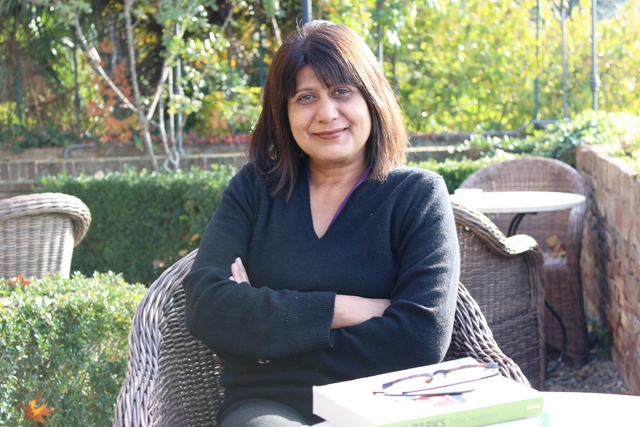
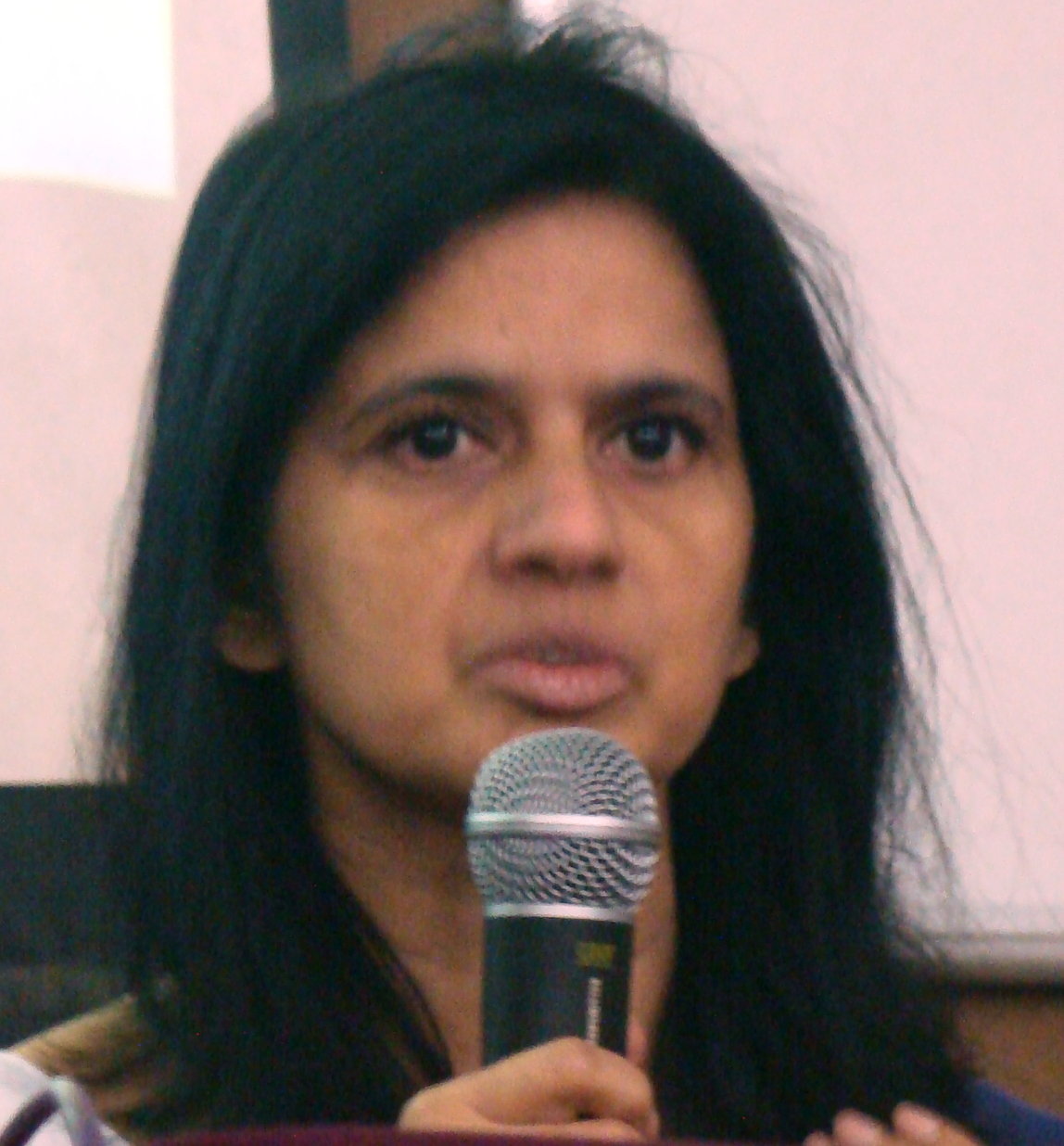
Rupa Gulab speaks about her latest book, why she prefers writing short stories and about telling it like it is.
by Vrushali Lad | vrushali@themetrognome.in
That Rupa Gulab is a very good writer is stating the obvious. The writer of three books – Girl Alone, Chip Of The Old Blockhead and The Great Depression Of The 40s: A Novel, and a columnist with a flair for the comic touch, Rupa is a revelation with her newest book, I Kissed A Frog.
In an interview with The Metrognome, the author talks about writing on love and friendship, how her most poignant tale in this story is an ode to her best friend, and why one must stop looking for love and let it come when it has to.
Why a book of irreverent short stories on love?
Why not? I enjoy telling it like it is! I must say that with I Kissed A Frog I discovered that writing short stories is so much more fun than writing a novel. You have so many different characters and situations to play with – it’s great entertainment for a writer. But I’d just like to point out that this book is not merely about love – friendship plays a huge role here. And friendship (to me) is just as important as love. I pointed that out in ‘Hell’s Angel’ (one of the stories in the book), where the heroine is gutted when her best friend moves to New York.
You mention in the book that some of the stories were published earlier in magazines and websites, and that you made changes to them before they went into I Kissed A Frog. What is it like, re-visiting something that is written and published?
What can I say? I get bored rather quickly. My first novel, Girl Alone, was based on a column called Dating Diary that ran in Cosmopolitan for two years. When I decided to adapt it to a novel, I made many changes. Like, for example, in the column whenever Arti (the heroine) goes through a spot of trauma, she glugs antacids. In the novel, I changed it to cough syrup because that gives it a more dangerous dimension. I have to refresh things to keep myself interested. Then there’s so much more freedom when you’re writing a book. You can use swear words liberally without worrying about nasty letters being sent to an editor. And there’s no word count limitation – you can write as much as you want.
That’s why I made a few changes to six of the stories in I Kissed A Frog that were published earlier in mags and websites.
Are any of the stories in I Kissed A Frog autobiographical?
Not at all. Girl Alone was the only novel in which I let a part of myself show.
Of all the stories in the book, ‘Au Revoir’ stands out for its very different tone. In fact, I was startled by how searing this particular story was, not what I was expecting after such funny ones as ‘Diet Wars’. What inspired this particular story?
When I was writing stories for the Friendship Diaries section of I Kissed A Frog, I decided to put in one about my best friend, Ranjona Banerji, too. See, Ranjona and I have always joked about the fact that she will outlive me because of my lousy lifestyle choices. Which means she’d be the person to contribute to my obituary, and I’d be off the hook for her obit, right?
So I decided to write her obit in advance – Au Revoir is just that. It’s a tribute to our long friendship that goes back to school days. Not surprisingly, the emotions flowed naturally, and dark humour set the tone. I sent her a cryptic text message while I was writing it, saying that I had just murdered her. As far as I’m concerned, my job is done. And she owes me an obit, and I want it now! Hell, I’m longing to read nice things about myself before I die.
Have any of your family and friends featured as characters in any of the stories?
While there are shades of some members of my family (including my husband) in my earlier novels, I Kissed A Frog is free of family-based characters. And I bet they’re all heaving a sigh of relief! This book really is about different kinds of love and a celebration of friendship. And, as I mentioned before, the story ‘Au Revoir’ is based on and for my best friend.
Of all the stories, which one is your favourite? Why?
I have three favourites: ‘The Ex-Files’, ‘Au Revoir’ and ‘Rapper N. Zel’. I enjoyed writing ‘The Ex-Files’ because of the gradual changes in the heroine’s prickly relationship with her mother after she got dumped – exploring relationships is my thing! I loved writing ‘Rapper N. Zel’ because it’s all about how women have to struggle to break the glass ceiling and how bitter they become because of it – and in my mind, this story is dedicated to all my friends who’ve faced that problem. And as for ‘Au Revoir’, I’ve already told you why it’s special for me.
Of all the stories, which one is most likely to have played out in your own life?
Oh, ‘Hell’s Angel’ – definitely! I worked in the media (as a copywriter in advertising) for many years. The heroine’s lifestyle could have been mine.
What is the nicest compliment you’ve received for ‘I Kissed A Frog?
A review by a male blogger who started out by saying how much he disliked chick lit, and ended up saying that I Kissed A Frog changed his mind about the genre. I seriously love this guy! (Read his review here)
What is your honest opinion on love and the various ways we go about looking for it?
I’d say stop looking for it! Don’t waste your time. It will come when it has to. And if it doesn’t come, who cares? Look, you have friends you can rely on for companionship, FB and Twitter are great interaction spaces, and then you have work, books, music and movies to lose yourself in. Life’s crowded enough already. When I was in college, I’d put up a lovely paragraph from DH Lawrence’s Lady Chatterley’s Lover on my bedroom wall. It says everything I believe about love. Here goes:
“It’s no good trying to get rid of your own aloneness. You’ve got to stick to it all your life. Only at times, at times, the gap will be filled in. At times! But you have to wait for the times.”
Not surprisingly, I put this quote in Girl Alone as well!
On the subject of your sister Kushalrani (aka Bunny), who you say is a ‘horror, and your worst critic’, how has having a writer sibling helped you when you write?
Well, most writers always show their first draft to family and/or close friends. I have a small core group: my sisters Roma Circar and Kushalrani Gulab (aka Bunny), my husband Salil Sadanandan and my friend Ranjona Banerji. The reason why I chose them is because we share the same sense of humour and irony. Incidentally, all of them are writers. While my husband is not a full time writer (he was cruelly shoved on the IIT, IIM path by his parents) he occasionally writes on eclectic subjects (humour, design and travel) for various publications.
When I share my first draft with them, my brief is very stern: “Do not waste my precious time by telling me what you like about it. Tell me what you hate about it. Be savage, rip it to shreds!” I must say that this is the only time they ever listen to me. I grade them on the ‘savagery’ index:
Roma is the gentlest of the lot. When she doesn’t like something, she informs me firmly but apologetically, starting her sentences with nervous “umms.”
Ranjona is tougher. No “umms” for her. It’s always a grim “hmm” which is followed by a bald statement. Our biggest arguments are over the placement of commas. We both have strong views on the subject.
Bunny and Salil are the most frightening – and frankly, I don’t know which one is worse. Let me start with Bunny. When she goes through my draft she ruthlessly deletes sentences/paragraphs that she believes interfere with the flow of the story, ignoring my howls of anguish. Hell, some of my funniest jokes have been killed by her and she’s always unrepentant. “The story comes first,” is her heartless mantra.
Clichés are bigger sins than murder according to her, and my God, if she happens to spot something like “as white as snow”, she hisses menacingly and explodes like an angry pressure cooker. I have, however, sneakily slipped in an “over the moon” in one of the stories in I Kissed A Frog. An act of defiance, just to prove to her that I have a backbone!
If Bunny does the pressure-cooker-exploding act to frightening perfection, Salil is like one of those raging Pamplona bulls you really don’t want to cross paths with. He gets furious, absolutely livid, if he comes across bits he doesn’t like. I am ordered (yes, ordered!) to rewrite bits of stories, change a character’s profession, change a tone of voice, et cetera. And though I’m complaining bitterly, I have to confess that his feedback on the draft of I Kissed A Frog was marvellous. Bunny’s softer when it comes to rewrites. She merely offers suggestions that I am free to ignore.
At the end of it all, I’m a quivering mess and I go with my gut. Sometimes I give in, sometimes I don’t. But I’m always thankful for the advice from all four of them because they are the critics I respect most.
What is the kind of writing you are most drawn to? Who are your favourite authors?
I grew up in a house that had more books than furniture because my parents were voracious readers. Humour was their preference and we had practically every single book written by PG Wodehouse, Richmal Compton, Anthony Buckeridge, Lewis Carroll, etc. As I grew older, I added a few more humour writers to my personal book shelves: Woody Allen, James Thurber, George Mikes, Richard Armour and Gerald Durrell, to name a few. At the same time, I have to confess that I sighed deeply over Gaston Leroux’s The Phantom Of The Opera, William Saroyan’s beautifully brilliant The Human Comedy, Richard Llewellyn’s How Green Was My Valley (my dad’s favourite book), most of DH Lawrence, some of Thomas Hardy and other books that do not fall into the humour category. And as for the girlie moments, I still fall back on my mum’s favourites: Jane Austen, Georgette Heyer and Jean Webster who wrote my absolutely favourite growing up book Daddy Long-legs. Oh, and I have finally learnt to appreciate Charles Dickens! My parents loved him so, and they were shocked that I hated his books when I was in school and college.
What are you working on next?
I can’t say yet. I’ve got two novels for drastically different target audiences in mind, but I really have no idea if and when I’ll get down to it. I’m not a disciplined writer anymore. Take I Kissed A Frog. I suddenly decided to write it in April last year and finished it in three months flat. I’m pretty much worn out after that frenetic burst of activity.
Lastly, if you had to change the endings for any of these stories, which ones would you choose and how would you change them?
I wouldn’t change them at all.
_________________________
About the book:
I Kissed A Frog is a collection of not-so-perfect love stories, dealing as they are with ex-boyfriends, current boyfriends hooking up with best friends, aiming for a man who doesn’t love one when another who does is right in front of one, friends and colleagues engaged in diet wars, and in a really funny vein, love and relationships through popular fairy tales set in contemporary times.
I particularly liked ‘Love in F Major’, where a girl starts seeing a married man and hopes he will make the ultimate choice, ‘Welcome to the Sisterhood’, which discusses sex change, ‘Wannabe mum’, in which a woman’s biological clock decides the course of her stable relationship, ‘Au revoir’, in which a dying girl says goodbye to her best friend, and all of the ‘Not-so-grim fairy tales for big, bad girls’.
Rupa keeps the tone conversational and sometimes flippant, bringing in different dimensions to love, romance, inter-office rivalry, personal insecurities, and of course, friendship. This is a book to be read by all women – those who have a gang of girls to hang out with, those who slink off home after work to watch TV and eat ice cream straight from the container, those who wonder why their mothers and best friends oppose everything they say and do, and especially those who feel that the world ended with their one great romance.
In fact, the book stands the very real danger of being picked up only by women – and all the stories are written from a woman’s perspective. Maybe Rupa’s next book of short stories could be about what men want.
Send us a love story to editor@themetrognome.in, and you could win a copy of Rupa Gulab’s I Kissed A Frog.

 to packed houses across the country, Nina (in pic on right) said, “Films combine an element of art and an element of commerce. The reason films are so expensive to make, is because a film requires a huge collaborative effort from several different people who must all be on the same page. With such a big canvas, the element of risk is greater. If a certain kind of cinema, parallel cinema for example, does not have an audience, it is not going to be made.”
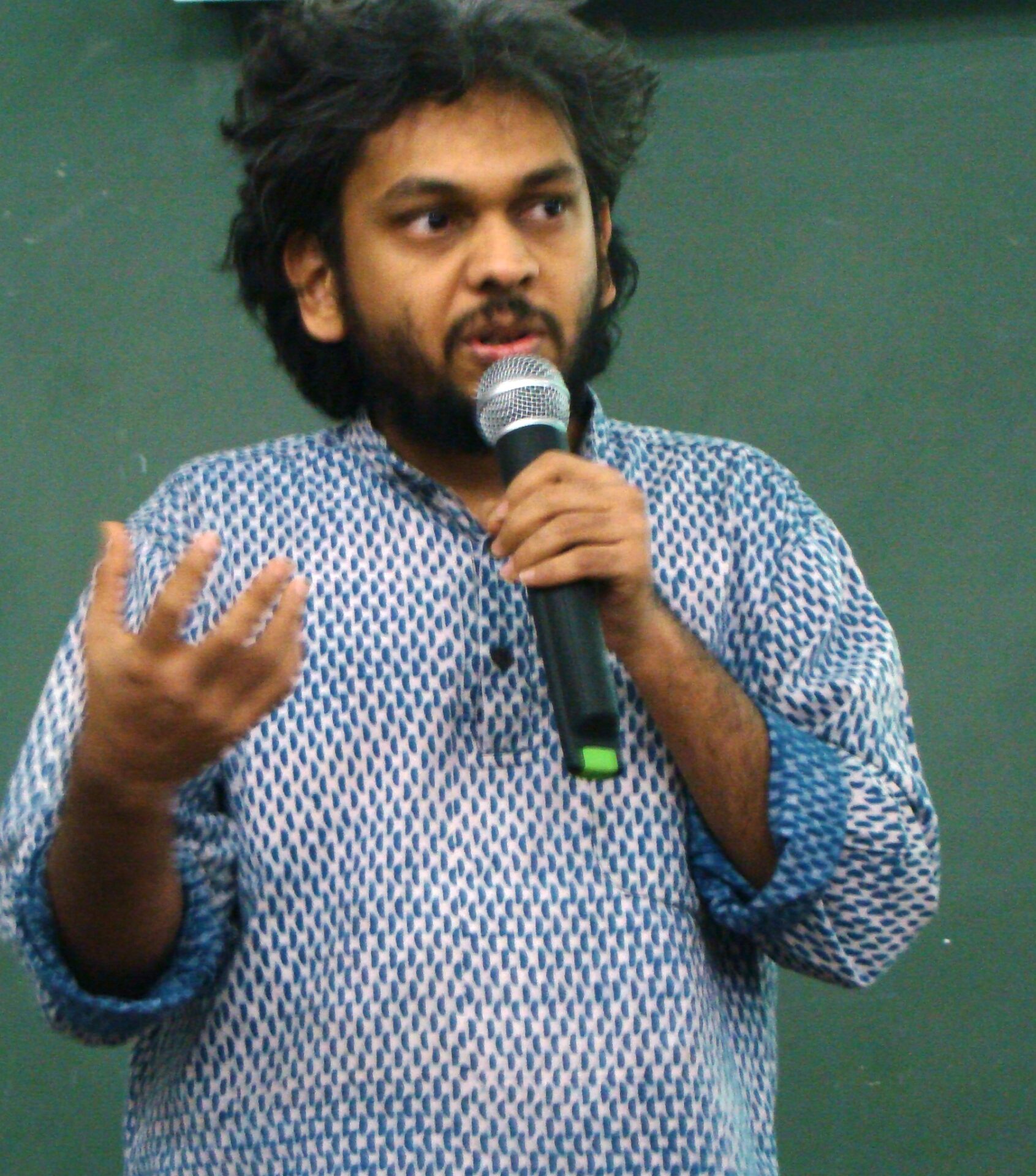 Anand (in pic on left) interjected when an audience member said that mass entertainers only dwelled on escapism, “Cinema serves extremely complex functions. Films do mirror who we are, our relationships, the times we live in, but they also mirror our aspirations, dreams and memories. A film is an anthology of our responses. Films that mean something to me have reflected the environment I have been in, and my introspection. So I don’t think that idealism and realism can be mutually exclusive of each other in cinema.”