Categories
Tech

The best messaging clients for your smartphone

Love to text people and want to go beyond SMS and WhatsApp? Check out four other cool client messaging options.
by Manik Kakra

With smartphones in our hands or pockets more often than not, it is the best device to stay connected with your near and dear ones. Until recently, SMS was a big part of most people’s phone usage, when messaging apps for user-to-user phone chat started taking their place. Here are the best clients you can install on your smartphone today:

WhatsApp: You saw it coming, right? With the biggest userbase among any such apps, WhatsApp is what most users have installed, and is their go-to app for texting. Active development team, and cross-platform availability, this one is surely among the keepers.

ViberViber: Available for Windows, Mac, Android, iOS, BlackBerry, Symbian, this one, along with WhatsApp, enjoys first-to-arrive benefit among these apps. Following the same rule of setting a user’s number as his/her ID, it isn’t much of a hassle to set it up. Users can also call each other through it, though the developers really need to improve the call quality.

LINE: LINE is one of the recent entrants in this list, but is surely here to stay. With over five million users registered in India in about three weeks’ time of its Indian launch, this one could well be your next favourite messaging client. Good call quality, emojis, emoticons, and some really nice stickers, plus a clean and responsive UI are the best things about it. It’s available for Android, iOS, BlackBerry, S40, Windows and Mac OS X.

Tango: You might not have heard its name, but this app got the Best Communication Awards this year. Its call quality – whether voice or video – is impressive, and with the usual text, picture and video-sharing features available, you should try this app once.

Fring: Old, but still relevant. With Fringe, you can not only group chat, but can also conference call with four persons. Great, right? Whether fringlandline (fixed) or mobile phone, you can make free call, mostly.

Apart from these, there are a number of other clients. While iOS has its own native iMessage (along with FaceTime), BlackBerry users have got their beloved BBM, which is soon going to be launched for iOS and Android; Android might get its own client later this year. Other apps worth checking once include Facebook Messenger (with its new Chatheads), SnapChat, which is focused more on image sharing. Nimbuzz, and WeChat.

(Pictures courtesy www.windowsphone.com, play.google.com, beyondthedefaults.com)

Categories
Tech

Seven apps for women’s safety

In today’s times, women need some handy help – and it can come via their smartphones, through seven wonderful apps.
by Manik Kakra

Most women must carry a smartphone or tablet with them wherever and whenever they travel. As crimes against women increase all over the country, it is up to women to provide the first ring of security to themselves. Usually, the phone they carry can help establish contact to get immediate aid.

But how can you make sure the device is actually ‘smart’ and useful to you in many more ways than just the conventional ones? Having smart apps is an answer. Let’s take a look at some handy apps and services aimed at women’s safety.

Damini appDamini: Launched after the horrifying Delhi rape case in December 2012, this app allows you to send your location data and video as soon as the person starts the app. You can form a group from your contacts list to whom this app sends data whenever required.

FightBack: Available for almost all smartphone platforms, this app not only uses your phone’s GPS, SMS, and Maps, but also your Facebook account in order to alert your near and dear ones in an emergency.

Cab4me: This is a very useful app even for your day-to-day use. Its database allows you to quickly search through taxi stands near your location and you can book a cab right on it. In case of any emergency, you can quickly glance through your self-made favourite list, so that you can book a cab or inquire about services without wasting too much time looking for a cab on a deserted road. It’s available for Android and iOS.

SafeBridge (also available on Google Play): In case your phone doesn’t have any way to access the Internet at the time, this service has got your covered. It uses safebridge appyour phone’s SMS to send your location quickly to somebody pre-selected from your contact list.

iFollow: This is another smart app. In case you’re running out of time to make a call or do little else, all you have to do is shake your phone thrice and this app will get started. Next, it will make a call to a contact, and further an SMS, if the call doesn’t get answered.

Scream Alarm: As the name suggests, a loud voice comes from your phone as soon as your press the scream button in the app. That’s about it, however.

YWCA-Safety-Alert-Apps-3YWCA Safety Alert: This app not only can make a loud scream from your phone, but can also send your location data as well as email the selected contacts, when you simply shake your phone or tap its alert button.

Apart from these, there are a few apps which send your location data to a particular contact stored on your device, such as SafeTrac and inE.

(Pictures courtesy yourstory.in, play.google.com, itunes.apple.com, techtips9.com)

Categories
Watch

Watch this film to read better

Film to be screened at Max Mueller Bhavan this evening discusses the challenges that the reading habit faces in Mumbai.
by The Editors | editor@themetrognome.in

Early last year, Sayalee Karkare, alumna of the Erasmus Mundus Global Studies programme (EMGS) received a fellowship from the Tata Institute of Social Sciences (TISS) in Mumbai to make a documentary film on books and reading culture in in the city. She collaborated with Matthew Sharp from the Mundus Urbano programme, who did the camera and sound work for the film.

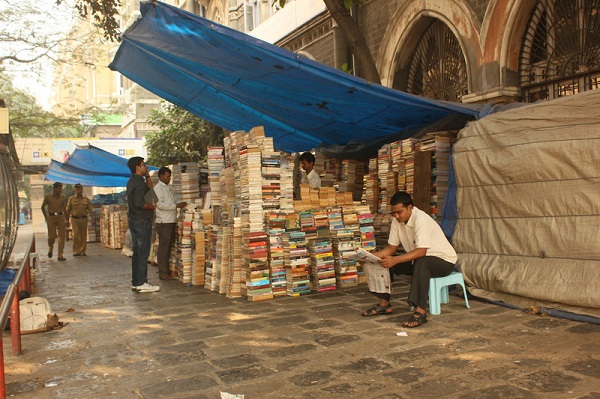
The film, titled Books In The Big City, addresses the challenges that the culture of reading faces in a fast-changing city like Mumbai. As the city modernises and Mumbaikars shift their reading online, many small libraries and bookstores are closing down. What’s more, there are fears that mainstream magazines and news publications might also take their wares to the Internet.

But is this really about to happen? Street booksellers, famous in Mumbai for selling everything from pirated to first edition books, are also feeling the pressure. While technology has opened up new avenues for reading, not everybody can afford access to the Internet and e-readers. This raises important questions about access to knowledge in general, and the need for reader-friendly spaces in overcrowded urban areas in particular.

Books In The Big City explores these issues through the testimonies of prominent locally-based writers, readers and booksellers, taking the viewer on a journey around the city, from the cramped living quarters of a bohemian bibliophile to exclusive members-only ‘public’ libraries.


The documentary is part of the ‘Urban aspirations in global cities’ research laboratory, an international collaborative project in which researchers from TISS (Mumbai), the Max Planck Institute (Germany) and Partners for Urban Knowledge Action and Research (Mumbai) are working together. The project aims to compare post-colonial mega-cities in Asia, including Mumbai, Singapore and Shanghai, and to understand how the urban community of rapidly growing mega-cities impacts the development of urban aspirations.

Head to the Library, Max Mueller Bhavan, Kala Ghoda today, July 19. The film begins at 7 pm, seating starts at 6.30 pm. A Q&A follows the screening.

(Picture courtesy Sayalee Karkare, video courtesy EMGS) 

Categories
Do

Bringing butterflies back to Mumbai

A new initiative by a city-based NGO, OASIS, hopes to attract butterflies – and colour – back to the city.
by The Editors | editor@themetrognome.in

In a city starved of green spaces and facing greatly diminished nesting areas for birds, any initiative that strives to welcome our feathered friends into the hustle and bustle of the city must be welcomed with open arms.

A few weeks ago, on June 5, World Environment Day, city-based NGO OASIS started a new initiative for Mumbai city, specifically targeting its public gardens, in an attempt to create ‘butterfly parks’ at various spots in the city. The initiative, called ‘Bring back butterflies’ aims to attract at least some of the 150 species of butterflies seen in Mumbai, to the city’s public gardens and parks.

Dr Puja SukhijaSpeaking to The Metrognome, OASIS’ (Organisation of Aware Saviours In Society) Dr Puja Sukhija (in pic on left), whose idea this initiative was, said, “In 2011, we had conducted a project on roughly mapping the flora and fauna of Mumbai. Under this, students took a survey of the birds in certain areas, and while the survey was being conducted, we all realised that we hadn’t spotted any butterflies.”

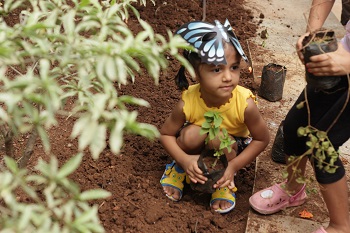
Cut to 2013. Dr Sukhija envisaged a plan to convert the city’s public gardens into butterfly parks, with the help of school children from the nearest schools. “The idea is to plant saplings of such nectar-rich plants as lantanas, that attract the Grass Jewel Butterfly and the Blue Mormon. The Grass Jewel is among the tiniest butterflies in the world, while the Blue Mormon is most commonly found in India and Sri Lanka,” she explained. “We submitted our plan to the Environment Department, State of Maharashtra, and they were very happy with the idea. We have been sanctioned Rs 3,00,000 by them to plant saplings in as many BMC gardens and public parks as possible. We already have upwards of 15 gardens and we are largely focussed on BMC schools’ participation.”

The initiative largely hinges on identifying the best gardens after contacting the BMC, then looking for schools in the vicinity and getting Sapling plantation drive at Kharstudents on board. “We first speak with the students in school, then we take them to the garden and show them the site,” Dr Sukhija says. The planting of saplings is done on pre-determined days, and monitoring of the outcomes is done regularly.

The funds generated by the Government are used for such activities as digging, paying labour, maintenance and purchasing saplings. “We also need funds to conduct educational talks in schools and create awareness. So far, the response has been great – children are extremely receptive to the idea. We are now looking at having college students enroll in the initiative, so that we can scale up the project to include data collection, monitoring and general maintenance,” Dr Sukhija says.

Would you like to be a part of the ‘Bring butterflies back’ project? Contact OASIS on 9820403344 or write to them at info@oasisngo.org.

 (Pictures courtesy commons.wikimedia.org, OASIS) 

Categories
Do

Baulish delights

A total fun weekend awaits Mumbai’s music lovers, as the Bauls of Bengal perform at various spots in the city.
by Medha Kulkarni

This weekend promises to be an absolute treat for music lovers across the city. From July 13 to 15, different locations across the city will play host to an introduction to the Bauls of Bengal with Lakshman Das Baul.

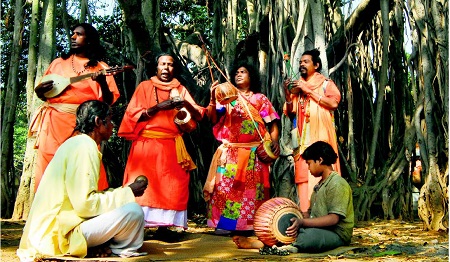
The word ‘Baul’ has its etymological origin in the Sanskrit words ‘Vatula’ (madcap), or ‘Vyakula’ (restless) and used for someone who is ‘possessed’ or ‘crazy’. The Bauls originally were a nonconformist people who rejected societal norms to form a sect where music was their religion. Baul is the name that is given to the genre of folk music developed by this sect.

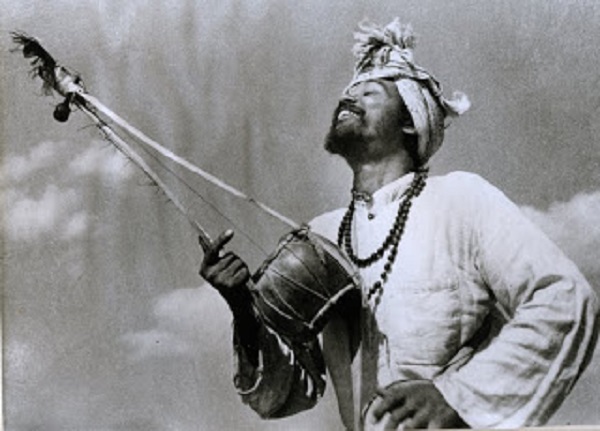
baulsLakshman Das Baul is a disciple and the adopted son of renowned Baul master and composer Shri Shudhir Goshai of famous Joydev-Tamaltala Ashram in Birbhum District. He is a young performer well known for his magnificent energetic performances. He accompanies himself with Anandalahari and Dotara while he sings. He has performed in many parts of India. After the demise of Shri Shudhir Goshai, he has looked after the Joydev-Tamaltala Ashram, where he lives with his wife and son and the Mother (the companion of Shri Shudhir Goshai). He has been collaborating with the renowned master Parvathy Baul.

The music of the Bauls is not only a stunning art form, but is also an oral documentation of history as the Bauls are storytellers at heart. The nomadic people travel the country singing and performing and enthralling and entertaining, but it is an art that is unfortunately increasingly under the threat of extinction. This is a wonderful opportunity to experience this art and also to support it and ensure it’s survival.A rich repertoire of knowledge, this art promises to mesmerize it’s audience.

Here is the itinerary for this event :

July 13 7 pm to 8.30 pm, Vivekananda Auditorium, Ramakrishna Mission, and Khar West.

July 14 11 am to 12.30 pm, New Acropolis Centre, A-0 Connaught Mansions, opposite Colaba Post Office, Colaba AND 6.30 pm to 8.30 pm, Sangeet Mahabharti,10th Road, Opposite Amitabh Bachchan’s Bungalow, Juhu.

July 15 6.30 pm to 8.30 pm, Comet Media Foundation, 301 Meher House, 15 Cawasji Patel Street, Fort.

(Pictures courtesy ushaharding.blogspot.com, epaper.timesofindia.com)

Categories
Watch

Let the world in, today

Volume II of the two-part film project ‘To Let The World In’ will be screened at the Films Division today.
by Medha Kulkarni

‘To Let The World In’ is a project that revolves around a significant period in the history of contemporary Indian art over the last three decades. The film feature three generations of some of India’s most iconic artists who share ideas, memories and concerns about their work.

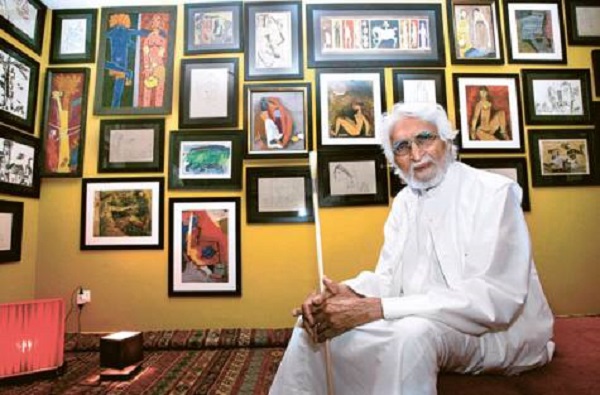
M F HussainVolume I was screened last week and Volume II showcases MF Hussain’s 1967 film Through The Eyes of a Painter. The conversations are intimate and the interviews are conducted by renowned art historian and curator Chaitanya Sambrani, and have been filmed by Avijit Mukul Kishore. The works are a visual documentation of some of the most important moments in Indian art history from the 1980s to the present day. Volume II explores the changing contexts in art production and the connections between art and political history and the evergreen questions of patronage and recognition.

The film starts with the volatile context of art practice when India was on the brink of economic liberalisation juxtaposed against the re-assertion of religious fundamentalism in Indian politics. The artists featured in this volume are Anju Dodiya, Archana Hande, Benitha Perciyal, Sharmila Samant, Parvathi Nayar, Riyas Komu, Tushar Joag, Shilpa Gupta, Josh PS, Gargi Raina, Sumakshi Singh, TV Santhosh, Nataraj Sharma, Anandajit Ray, Gigi Scaria, Reena Saini Kallat and Jitish Kallat.

The screening will be followed by a Q & A session panelled by Abhay Sardesai, art critic and the editor of Art India Magazine.

The film was produced by Art Chennai, to accompany the show ‘To Let The World In: Narrative and Beyond in Contemporary Indian Art’, curated by Chaitanya Sambrani, held in Chennai in 2012.

Head to RR Theatre, 10th floor, Films Division, Pedder Road, at 4 pm.

(Pictures courtesy www.thenational.ae, gulfnews.com)

Exit mobile version