Categories
Tech

The best phablets to buy

As smartphones get bigger and bigger, we compile a list of the five best, value-for-money phablet choices you can make.
by Manik Kakra

For the last two years or so, phone manufacturers have gone from big to bigger smartphones. We have seen smartphone screen sizes go from 3 to 4 inches, and now beyond the 5-inch size. Bigger smartphones, or phablets (phone + tablet), are here to stay, and here are some of the best available today.

Remember, having at least a 5-inch screen (but less than 7-inch) is a must to be considered in this list.
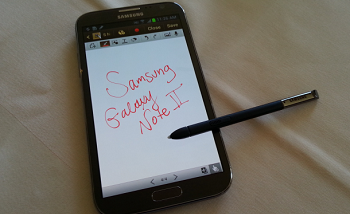
Samsung Galaxy Note II

Samsung Galaxy Note II, Rs 30,000: Samsung’s Note series has been successful — whether it was the Note or the Note II (see pic on left) — consumers have liked Samsung’s Note devices, and the Note II is selling really well. Sporting a 5.5-inch 720p screen, Android 4.1 with TouchWiz U, that has got a lot of extra features from Samsung, this phone has got every base covered for what most smartphone users would like on the move.

LG Optimus G Pro, Rs 36,000: The last 18 months have seen LG’s race back to the top spots of the smartphone race, and why not? They have produced some great devices to get back their mojo, and the Optimus G Pro is one of them. Sporting a 5.5-inch full HD screen and 13 MP rear camera, this LG phone also has Optimus UI, which has a few features just like the Note II with its TouchWiz UI. Some of these are: QuickMemo to take notes quickly with your hand, and QSlide, where you can multitask with two apps open side by side on the screen, among others.

Sony Xperia Ultra Z, Rs 43,000: With its 6.44-inch HD screen, this is the biggest device in the list (see featured image above). Under the hood, this Sony phablet has got the Snapdragon 800 processor, Adreno 330 GPU, along with 2 GB of RAM. On the back, there is an 8 MP EXMOR RS sensor. This is an aggressive device that marks Sony’s entry into the phablet arena.

Huawei Ascend Mate, Rs 23,000: You didn’t see this one coming, right? Well, Huawei has done pretty good in several markets and the Ascend Mate deserves a mention here. With it 6.1-inch 720p screen, this Huawei phablet has got a big 4,050 mAh battery, it could be a solution for your battery woes. Running on Android 4.1 with Huawei’s own quad-core processor under the hood, it is not the best performer in this list, but certainly not a slouch.

HTC Butterfly, Rs 38,000: Released five months ago, this device is the smallest one in our list. Upgradable to Android 4.2, this HTC (see pic on right) boasts a 5-inch full HD screen, and is powered htc butterflyby the Snapdragon S4 Pro processor. Looks-wise, it is a really good HTC device that feels good to hold and is solid to use. With a decent 8 MP camera and Beats Audio, this is a good if you are looking for a not-so-huge phablet experience.

There are a few more available in the market like the Xperia Z, Galaxy Mega 5.8 and 6.3 but we find the above-mentioned devices more. Do let us know your favourite ones, and if you really like this large form factor or not.

(Pictures courtesy www.gospelherald.com, www.htc.com, www.extremetech.com)
Categories
Watch

The best documentary in the world…

…is coming to your city, every weekend, starting tomorrow, as part of the Dharamshala International Film Festival’s ‘best documentaries package’.
by Medha Kulkarni

The Dharamshala International Film Festival (DIFF), in association with The Root Reel and Blue Frog, is presenting ‘The Best Documentaries Package’, in which some of the best documentaries will be screened for Mumbai audiences, every weekend. The initiative starts tomorrow.

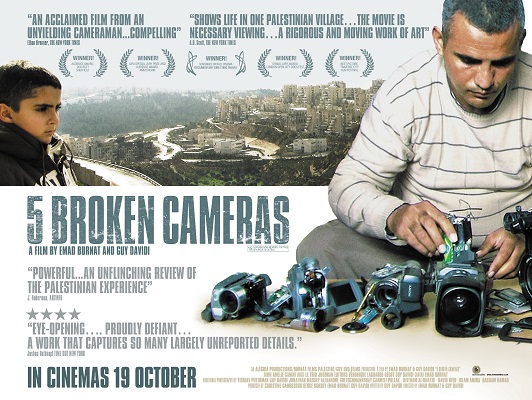
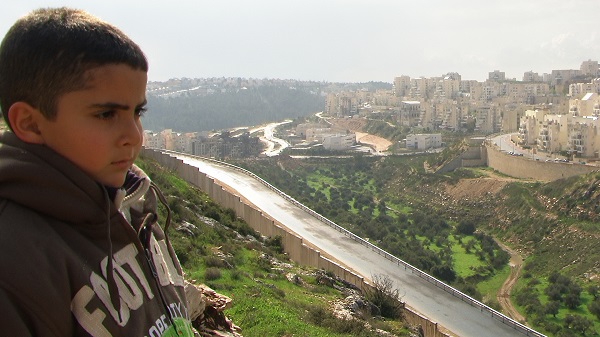
5_Broken_Cameras_ posterThe first film to be showcased tomorrow, August 4, is the highly acclaimed film 5 Broken Cameras. It is a deeply personal, first-hand account of life and non-violent resistance in Bil’in, a West Bank village surrounded by Israeli settlements. Shot by Palestinian farmer Emad Burnat, who bought his first camera in 2005 to record the birth of his youngest son, Gibreel, the film was co-directed by Burnat and Guy Davidi, an Israeli filmmaker. Structured in chapters around the destruction of each one of Burnat’s cameras, the filmmakers’ collaboration follows one family’s evolution over five years of village upheaval.

As the years pass in front of the camera, we witness Gibreel grow from a newborn baby into a young boy who observes the world unfolding around him with the astute powers of perception that only children possess. Burnat watches from behind the lens as olive trees are bulldozed, protests intensify and lives are lost in this cinematic diary and unparalleled record of life in the West Bank. In the current climate, with constant upheavals in the Middle East, this film is a telling reminder of how life changes in a seeming instant.

5 Broken Cameras is the first-ever Palestinian film to be nominated for Best Documentary Feature at the Academy Awards. Watch the trailer here:


About the initiative:

As filmmakers based in Dharamshala, Ritu Sarin and Tenzing Sonam of White Crane Films, have long believed that the town’s unusual profile would make it a perfect destination for an international film festival. The inaugural edition of DIFF was held in November 2012, showcasing 26 contemporary features, documentaries and shorts, curated from the best of international independent cinema.

The second DIFF will take place over four days in 2013, from October 24 to 27, 2013. The aim is to build and expand on the blueprint of the first edition and establish DIFF as a world-class film festival, where filmmakers and film lovers can interact in an intimate, creative and informal way.

The Root Reel is a Mumbai based organisation whose main objective is to be a mirror, reflecting upon stories around us and try bringing them closer to the urban audience.

Entry is free and on a first-come-first-seated basis. Head to Blue Frog, Zeba Centre, Mathuradas Mill Compound, Lower Parel, tomorrow at 7.30 pm. Call 098200 95432 for details. 

(Pictures courtesy rabble.ca, www.newwavefilms.co.uk)

Categories
Listen

A concert for Indo-European chamber music

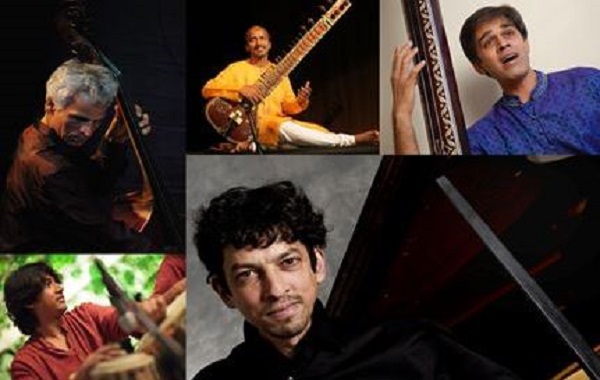
Musicians Jarry Singla, Sanjeev Chimmalgi, Vinayak Netke and Hindol Deb come together for a concert today at Ravindra Natya Mandir.
by Max Mueller Bhavan, Mumbai

This is a concert lovers of classical Indian and European music cannot miss. It features four excellent musicians, and a fusion of Indian and European melodies for an unforgettable evening of chamber music.

“Inspired by the encounter of Indian and European culture, the artists go beyond hitherto existing musical boundaries. Elaborately ornamented melodies of Indian vocal art reverberate with the piano´s melodic outlines, whilst the sitar and the double-bass create new forms of “stringed dialogues”. Indian and western improvisational concepts stimulate each other, and original compositions based on the tradition of European polyphony are enriched by the melodic qualities of the tabla. Harmonic progressions act as an inspiring challenge for the voice and the sitar. The cooperation of the five artists leads to a creation of fresh, subtle and exciting sounds, which I would like to call “Contemporary Indo-European Chamber Music”.

– Jarry Singla

In cooperation with the Goethe-Institut/Max Mueller Bhavan Mumbai, the Arts Foundation of the German state of North-Rhine Westphalia initiated an ‘Artist-in-residence’ programme that promotes an exchange of artists. Currently, the Indo- German pianist and composer Jarry Singla is residing in Mumbai. In his original music, the Indo-German pianist and composer combines European musical traditions not only with a variety of jazz-styles, but also with classical and folk music drawn from non-European musical cultures.

Only shortly after his arrival in Mumbai, Jarry had the chance to start working with three of the finest Indian musicians based in the city: vocalist Sanjeev Chimmalgi, tabla-player/composer Vinayak Netke and sitar-virtuoso Hindol Deb.The four musicians will be joined by Jarry Singla’s longtime musical companion Christian Ramond, a highly acclaimed double-bass player from Cologne who is highly in demand all over Europe.

Apart from Mumbai, the quintet will perform in Pune and Chennai.

The concert is free and open to all. Head to Ravindra Natya Mandir, Prabhadevi, at 7 pm today.

(Picture courtesy Max Mueller Bhavan)

Categories
Event

Muslim mass rally on Friday

Leaders in city have called for a rally to pressurise Indian Government to petition UN on terror acts in Syria.
by The Editors | editor@themetrognome.in

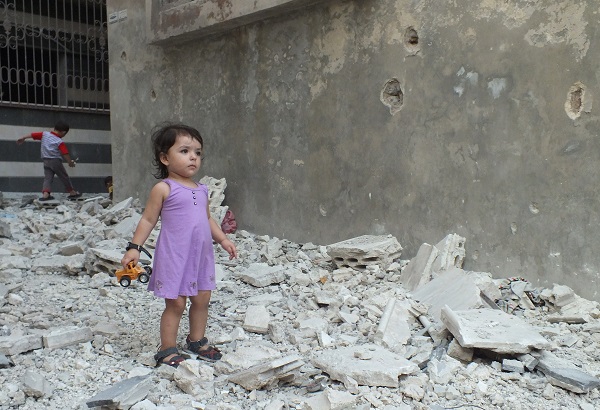
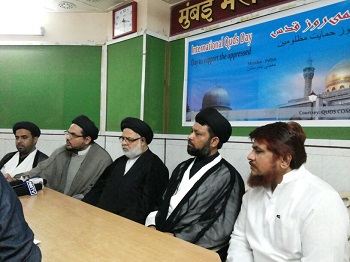
International al-Quds Day is an annual event on the last Friday of the holy month of Ramadan, expressing solidarity with the Palestinian people and the holy mosque Al-Aqsa, located in Jerusalem (Palestine). Today Muslim leaders in the city united under the banner of Quds Committee in order to condemn the terror acts taking place around the world, specifically in Iraq, Syria and Palestine. The speakers condemned the 17 serial blasts in Iraq which took place on Monday, and the ongoing terror activities happening since several years in Palestine and Syria. They said that Islam being a religion of peace, respects freedom for all countrymen and a secure life.

Press conference at Patrakar SanghA press conference to discuss the same was held today at Mumbai Marathi Patrakar Sangh, CST.

The leaders also condemned the Israeli and American activities in the land of Palestine, which has been colonised by the Israeli occupants for many years. Quoting Mahatma Gandhi, the leaders said, “Palestine belongs to the Arab, as France belongs to the French and Britain belongs to the British.” They asked the Government of India to send a petition to the UN and take some active steps in the international political scenario to make tge US stop funding and supporting the terror activities.

The committee has also decided to organise a mass rally on this Friday, August 2, from Khoja Masjid, Dongri, to get support from people and ask the Government to take strong steps soon.

The participating speakers were Maulana Hasnain Kararvi, Maulana Fayyaz Baqri, Sarfaraz Arzoo,  Maulana Husain Mehdi Husaini, Aliraza Namdar, Maulana Farman Sahab and Maulana Abulqasim.

(Picture courtesy www.latitudenews.com)

Categories
Read

Do our youth need spirituality?

Three writers pen a tome, aimed at the youth, on the holy places of all religions and faiths across India.
by The Editors | editor@themetrognome.in

Everybody follows a religion. While religion is a deeply personal issue, and so is the visiting of holy places as per one’s faith, the undertaking of a pilgrimage is generally considered to be a task for old people. It is not an activity associated with most youngsters.

But, found three writers, the opposite is true.

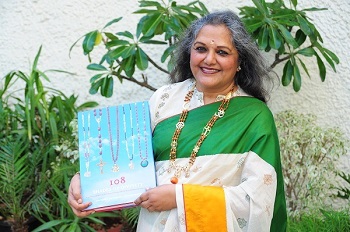
Anju PoddarIt was this line of thought that led the three writers – Anju Poddar, Sethu Vaidyanathan and Mukul Singhal – to explore India’s several religious faiths and the holy places associated with each. Their observations, made over a period of two years, were laid down in the stunning book 108 Shades of Divinity, which is a collection of the 108 holy places in India across nine faiths. We spoke to Mumbai resident Anju Poddar, whose brainchild the book was, about writing this particular book and discovering several interesting truths during the writing process.

Excerpts from the interview:

How did you hit upon the idea of this book?
Mukul Singhal (one of the authors) who is my friend Parul’s brother, had read my earlier books on Manasarovar and Traditions of India. I have written seven other books prior to this one. Mukul had visited the chaar dhams and the 12 Jyotirlingas as well. He contacted me about this project which was already in my mind. Then my daughter Avantika introduced me to Sethu Vaidyanathan (the third writer) who also had a passion about visiting places of worship. The three of us made a good team. Once we discussed the concept and the contents, we got started. We worked in total harmony, complementing each other.

Why do young people need to read this book?
For a while, I had been observing that a lot of youth were getting increasingly inclined towards visiting these holy places. The reasons could be that may be they suffered from too much stress in their lives, or may be they did it in a spirit of adventure. Or may be they did it just to connect with their roots?

When we were kids in the 1960s and 70s, my father KN Modi used to take us to all religious places when he could. Later on, we carried this tradition forward with our children also. So my daughter Pallavi once told me. ‘Maa, your grandkids have seen the three Disneylands in the US, Paris and Hongkong, but none of the Jyotirlingas. Why don’t you write about them and inspire the youth?’ That was how I got the idea for this book.

Why did you self-publish this book, instead of taking the traditional publishing route?
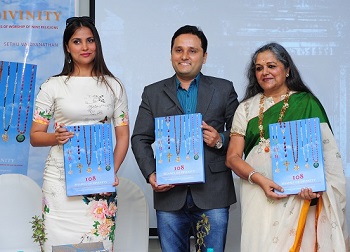
Self publication gives more freedom and flexibility in terms of content and choosing the top designer as per requirement. In our case, buying images was a mega cost which a From L- R. Lara dutta, Amish Tripathi, Anju Poddartraditional publisher would not have okayed, and the publisher also may have objected if we said we wanted to go to the best of printers and use expensive paper and hire a good editor. I say this from past experience.

All three of us pitched in (for the costs of production), we got the ISBN number and started work.

Despite it being a self-published work, the response to the book has been good so far. Apart from launching in Mumbai and Hyderabad, we launched in London on July 5 and we will launch it in Delhi on July 25.

Did you meet a lot of religious leaders/priests/imams in the writing of this book?
We had over 70 people helping us in the research and information gathering of this book, across religions. We had consulted Shankaracharayaji of Dwarkadheesh and Badri Ashram for the writeups on Hinduism. Likewise, for every other religion we went to various fathers, imams and priests, apart from experts for their inputs. After we wrote our articles, we sent them writeups to these people for their approval.

Why is the knowledge enshrined in 108 Shades of Divinity important in today’s times?
108 is an auspicious number, and this is known across our faiths. Even the beads in the jap maala are 108 in number. People should be aware of the location and significance of their holy places. My daughter Avantika suggested this name and we worked around it.

(Pictures courtesy Anju Poddar and www.alasr.info) 

Categories
Tech

Google could give your TV the smarts

Google’s latest event unveiled new devices and a device that, if it comes to India, could smarten up our TVs.
by Manik Kakra

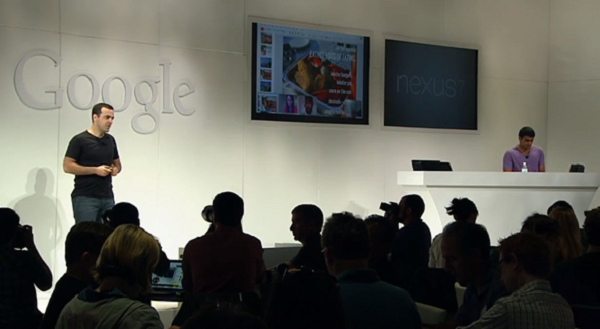
Google recently held an event centred around its Android operating system. The event was held under the name of Sundar Pichai, Android team head. Google showed not one but two new gizmos – new Nexus 7 and Chromecast. On the software side, it released the new Android version – Android 4.3 Jelly Bean.

New Nexus 7The tablet. Let’s first talk about the tablet. The new Nexus 7 (in pic on left) sports a 7-inch (1200 x 1920) screen, and runs on the latest Android 4.3 OS. It is powered by Qualcomm’s S4 Pro processor with Adreno 320 GPU, along with 2 GB of RAM. On the back, there is a 5 MP camera; and the front has got the same camera from its predecessor. The tablet comes in 16 GB, 32 GB and 64 GB options with WiFi-only and WiFi + 4G variants, starting from $229 (approx Rs 13,521) and going up to $349 (approx Rs 20,606). As of now, there is no official news on its Indian release or price.

The software. Coming to Android 4.3, Google has brought a lot to the platform with this update, but mainly all under-the-hood stuff. The OS has now got support for 4K videos, yes. Along with better graphics and responsive UI, the OS has also got a new games Play app, which is basically a competitor to Apple’s Game Center on iOS. Other highlights include improved Bluetooth support with lower power requirement; restricted profiles through which you can restrict apps and content consumed by other users using your tablet; tweaked camera app, and more. The OS update is already out for Nexus devices – Galaxy Nexus, Nexus 7, Nexus 10 and Nexus 4, and will be out for Google Play edition devices soon.

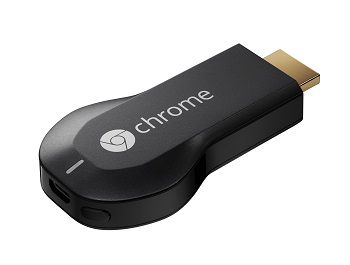
Chromecast. The Chromecast was more of a surprising announcement at this event. There were no prior leaks or rumours, and not many saw it coming. What is Chromecast? ChromecastChromecast is a dongle which allow you to play content from your PC, tablet or smartphone to your TV. Plug it in your connected TV, and you can watch your content on it. With this plugged in, you can access YouTube and Netflix, too. It costs $35 (approx Rs 1,4756), and is out of stock already. When we can get it in India, you ask? Well, not any time soon. And above that, there is not much hope that we would see any content for such devices even if they make it to India, in the near future. Having said that, Chromecast, and Apple TV, could well be the next buy for your living room just to make that idiot box a little smarter and more useful.

(Pictures courtesy www.redmondpie.com, gigaom.com, allthingsd.com)

Exit mobile version