Categories
Tech

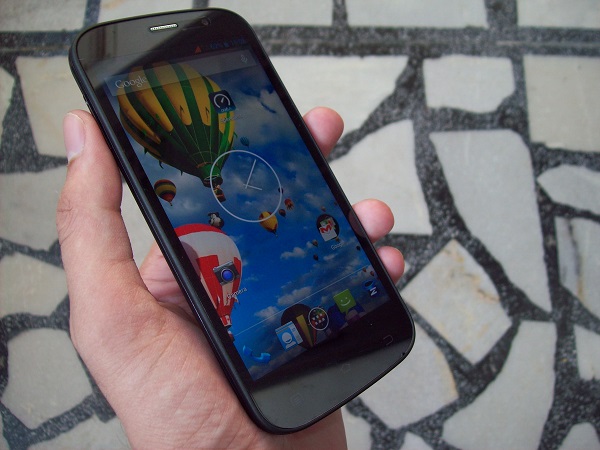
Lenovo launches Vibe X

Lenovo’s latest offering in India is an Android smartphone that costs Rs 25,999, marking the launch of the Vibe series.
by Manik Kakra

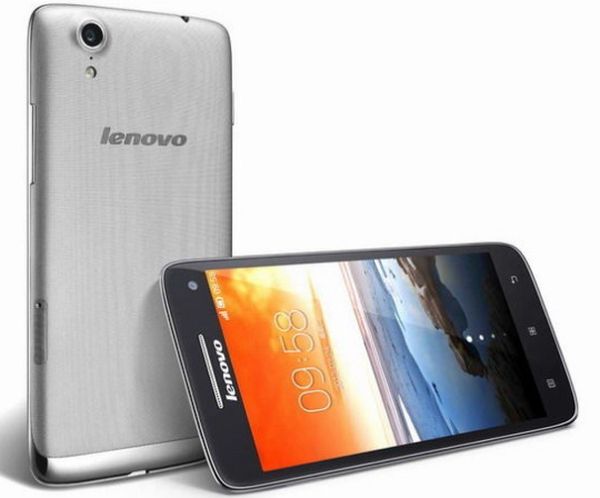
Lenovo today unveiled its new Vibe X Android 4.2.2 smartphone in India. The device marks the launch of the company’s new Vibe series of handsets. Weighing 121 grams, the Vibe X sports a 5-inch full HD screen with Gorilla Glass 3 on its edges. Under the hood, there is a 1.5 GHz quad-core MT6592 chipset and 2 GB of RAM. It comes with 16 GB of on-board storage, and is powered by 2,000 mAh non-removable battery.

On the back, there is a 13 MP (AF) camera (with LED flash); while the front side has a 5 MP camera. Connectivity-wise, the phone is equipped with 3G, Bluetooth 3.0, microUSB 2.0, WiFi b/g/n WiFi Hotpsot and A-GPS.

The Vibe X comes in only silver colour, and is priced at Rs 25,999. It goes on sale on December 21, 2013, and can also be pre-ordered here, where you will also get a free flip cover along with the phone.

“Our ultimate goal is to use innovation to differentiate Lenovo and become a leading PC + brand. We are confident that the Vibe X will be a popular choice in the Indian market where consumers crave for intelligent performance in a slim and light package. With this launch, we strengthen our focus on the smart connected devices segment,” Amar Babu of Lenovo explained.

Lenovo has been quite aggressive in the Indian market for quite a while now. It has been doing great in the PC market, and is now looking to get a larger share of consumer phone market with this offering, and six other Android smartphones it had launched a few months back. It will be interesting to see how they differentiate their products, and if we get to see OS upgrades from them or not.

Categories
Tech

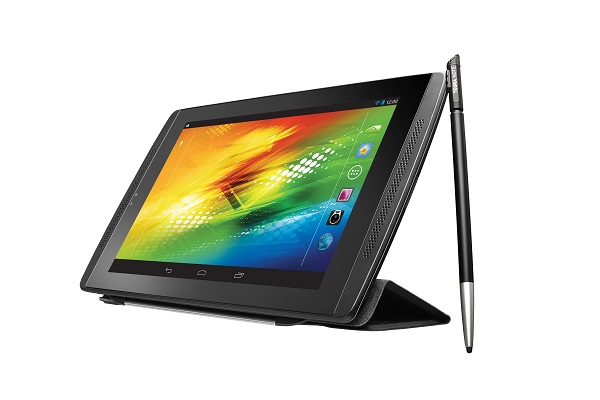
Just in: XOLO Play Tegra Note

XOLO’s new tablet, the Play Tegra Note, was launched in the country yesterday; carries a price tag of Rs 17,999.
by Manik Kakra

XOLO yesterday launched its new Play Tegra Note in India. The tablet sports a 7-inch (1280×800) LCD, and comes with a stylus for writing and drawing purposes. Under the hood, there is a Tegra 4 SoC (1.8 GHz quad-core A15 and 40S GPU), along with 1 GB of RAM.

The Play Tegra Note features WiFi a/b/g/n, WiFi hotspot, Bluetooth 4.0, microUSB 2.0 and GPS for connectivity options. On the rear, there is a 5 MP camera; while the front has a VGA camera. It is powered by 4,100 mAh (15.`7 Watt) battery. Running Android 4.2.2 (near stock), it is said to be upgraded to Android 4.3 soon. Other usual features include Light Sensor, Gyroscope, 3.5mm headset jack, and Proximity Sensor.

The tablet has been launched at a price of Rs 17,999, and comes in only one colour. You can also pre-book one here, which will get you a smart cover worth Rs 2,499 (as per the company website) for free.  Looking at its price, it is quite clear that the company wants to get some consumer attention, with the Nexus 7 and iPad mini Retina currently in the top two places; it will be hard for XOLO to compete if they price their devices at par with these known contenders. This new tablet seems good on paper, but can only be described once tried for a fair amount of time.

Categories
Do

RK Laxman, in an exhibition

Over 200 of the legendary cartoonist’s works are being displayed at Worli’s Nehru Centre Art Gallery till January 5, 2014.
by The Editors | editor@themetrognome.in

Journalists and students of the profession will often remark on the role and importance of the political cartoonist in the newspaper’s overall scheme of things – and lament at the absence of the cartoonist in contemporary media.

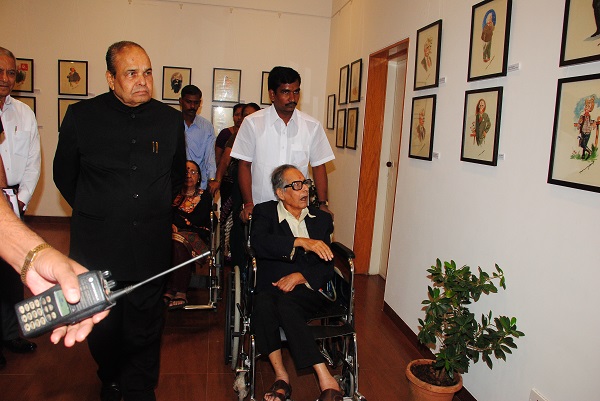
Hence, it is heartening to visit an exhibition of works by India’s best-loved political cartoonist, RK Laxman. The exhibition, the 21st in the ‘Indian Master’s Retrospective’, was inaugurated by Maharashtra State Governor K Sankaranarayanan at the Worli-based Nehru Centre Art Gallery, and the works have been curated by the Gallery’s Assistant Director, Nina Rege. The showing includes over 200 cartoons, old and new, made by Laxman.

RK Laxman exhibitionSpeaking at the inauguration, the Governor said, “Few cartoonists have held forth such a long sway over readers as RK Laxman has done with his remarkable work, day after day and year after year for 60 long years. He has been a ‘people’s representative’ in the real sense of the term for all these years.  He gave face to the aam aadmi in our country. Through his cartoons, he has represented the silent millions of the country, voiced their real problems and raised their issues forcefully in the corridors of power.

“Very importantly, Shri Laxman has explained to the readers a range of complex political, national and international issues using his master strokes and a few simple lines. Personally, I rate the cartoonist a few notches higher than the Editor.”

The Governor exhorted the public to visit the exhibition as it “brings to light some of Shri Laxman’s best and yet less known works.  It has also brought out Laxman, the artist. His sketches of personalities and landscapes are outstanding and prove his brilliance as an artist.”

A new book,  Finely Exaggerated, will also be released during the exhibition period.

Head to Nehru Centre Art Gallery, Worli, from 11 am to 7 pm. The exhibition is on till January 5, 2014. Call 022 24963426 for details.

(Pictures courtesy Raj Bhavan, Mumbai)


Categories
Event

An Able woman in a Nano

An evening of discussion on Vanessa Able’s book had the author lavishing praise on India, its people and the Nano.
by Nidhi Qazi

“There’s a feeling that something is at stake.”

“I met nothing but warmth.”

“I felt a sense of emptiness when the journey ended.”

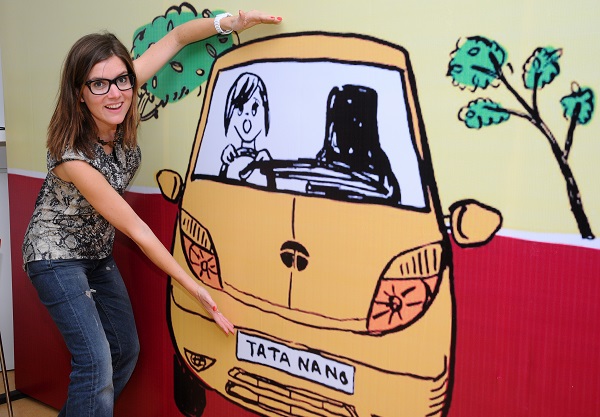
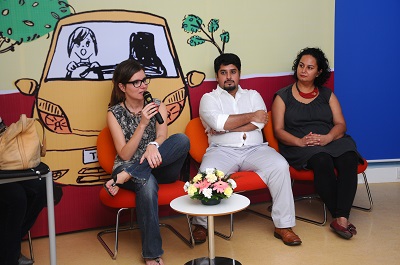
Vanessa Able at the talkThese and many more such experiences came alive in an evening hosted at the British Council, India Bulls, for journalist Vanessa Able, author of The Nanologues, a book about her experience of travelling more than 10,000 kilometres driving the Tata Nano across India. The discussion, facilitated by Rakhee Geelani, a writer, and Vardhan Kondvikar, Editor, Lonely Planet Magazine, India, made for a fun narrative of Able’s journey.

Why did she choose Nano, of all cars, to undertake such a long journey? She said, “I had read so much about the car. From the fact that it was not just a car, but a piece of truly local engineering with a significant price tag; to the fact that it represented hope which cut across the social spectrum made this car worth driving.”

Able chose to do a road trip in a car because she felt that a car drive gives a different kind of energy and “one sees a different level of life depending on the means of transport one chooses.” The fact that she did the entire journey on her own did not make her feel lonely, because as she put it, “I am someone who enjoys my company the best. So I kept talking to myself.” Probably that explains the title of her book.

The author also went on to describe her experience of being a woman driver unaccompanied on the roads. “I know that many women in India do face dangers when they travel unaccompanied, but it’s not just in India. Incidents keep happening in Australia, USA , the UK and all other countries, too. You just got to be smart. But talking about India, I met nothing but warmth. We also need to see that a lot of people around do try to make you feel safe and protected, but unfortunately such incidents don’t get highlighted.”

What was the highest point of the journey? Able replied, “From the start to its end, this journey’s been on a high. Though initially, coming from England, I did get shocked at the roads and driving culture and traffic did play on my nerves, but as time passed, I adapted, got into the journey fully and tried engaging with the landscape as much as I could.”

With the journey’s end, Able felt a sense of emptiness, desolation and not to forget, achievement.

And that signalled the end of the evening, hosted for the author who feels “it takes a little bit of gumption, a whole lot of patience, and the world’s cheapest car, the Tata Nano, for one woman to drive in a land where bullock carts vie for space with SUVs on eight-lane super-highways, where GPS systems fail to give directions, and where a blessing from the gods is considered better road insurance than safer driving.”

(Pictures courtesy Vandan Kajaria, The British Council)

Categories
Tech

State of Zen – the new Ultrafone 701 FHD

Zen’s new smartphone, the Ultrafone 701 FHD could do with a few bug fixes for a device at that price.
by Manik Kakra

Zen has been one of those Indian brands that have getting a lot of attention recently. The company launched the Ultrafone 701 HD a few months back, and has now come up with its successor –the Ultrafone 701 FHD. The Ultrafone 701 FHD is an Android 4.2.1 smartphone powered by Mediatek’s MT6589 chipset, along with 1 GB of RAM. Boasting a full HD screen, the phone makes the sub 20k phone range more interesting. Without further ado, let’s start with our review.

Hardware and design

The Ultrafone 701 FHD follows the usual slab design without much added or removed from the picture. As soon as you hold the device, you realise it’s not bulky and fits well in the hand. A glossy back with plastic coating on top, it is probably the only design part which makes the phone different from a lot of slab-styled phones out there. Having matte grey edges, just like its front edges, these are certainly better while holding the device and performing a task with one hand.

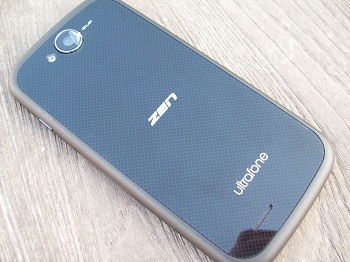
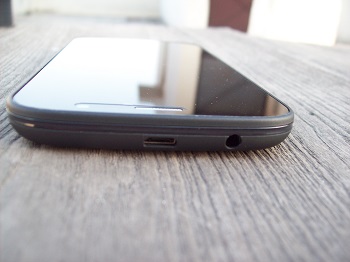
The front sports the screen with speaker grill and camera above, and three capacitive buttons – Options, Home and Back – on its bottom. The bezel below the screen is a bit too noticeable, especially considering how much space is left even after providing some for buttons. On the right side, you only have the Power/Lock key. On the left, you have the volume rockers. And the top gets 3.5 mm headset jack along with microUSB port. The back boasts a 13 MP camera, Zen logo in the middle and loudspeakers at the bottom – all black back with a diagonal pattern.
New Zen UltrafoneScreen

Talking about the screen, the phone has a full HD display, which is pretty much its USP. The screen quality is, let’s just say, good. It’s not very bright, but videos mostly look just fine. Colours are not very rich, but a bit washed out, and probably the way you would expect when the company wants to save on some bucks. The resolution seems good when viewing images. And visibility under direct sunlight it also average. I was expecting the screen to be much better, considering how much effort the companies make on them these days.

Camera

The phone sports a 3 MP rear camera that has a Bsi 2 sensor for better photographs under not-so-good light conditions. Here are a few sample images: http://imgur.com/a/cgfZT

The images mostly came out nice and clear. My experience with this camera in low-light conditions wasn’t too good. It was just okay, but in daylight and in general, it’s probably as good as you can get from an Android device priced around Rs 15K, apart from unusual over-sharp images. Just that the stock camera app isn’t the best, and you may well try a few third-party apps to get more out of the camera.

The front facing 8 MP camera is nice, wide angled and really good for your video calling and mirror needs.

Audio

I was very irritated due to the placement of the loudspeakers – right at the bottom on the back. I had missed so many calls and alerts due to sound getting all muffled with the phone New Zen Ultrafoneplaced back side down. Though the sound is actually quite loud and clear, the moment you place the phone down, you wouldn’t hear a single thing. In-ear sound quality is just fine, but I have tried phones with much better sound quality than this, even at this price point.
Call quality wasn’t an issue with the smartphone. I was satisfied with the audio during call, and also didn’t notice any network reception trouble during my usage.

Battery

The phone is equipped with 2.050 mAh battery, and takes more than three hours to get charged, which is a bit too much for a battery cell this size. I usually got about 18 hours of battery life with about four hours screen on time. It’s apparent that the full HD screen takes a toll on the battery life, and the phone could do with a firmware update to get better battery utilisation.

Software and Performance

The Ultrafone 701 FHD runs on Android 4.2.1 with near stock software. You get a few pre-loaded apps like WhatsApp and Saavn, but it is more or less stock Android Jelly Bean. Under the hood, there is a quad-core MT6589 SoC, along with 1 GB of RAM. And here’s the thing: the phone works smoothly when you are using two to three apps and keep exiting each one. But when you are in an app, using it for more than, say, half an hour, you realise that the RAM capacity isn’t enough.

The company says the chipset used here isn’t much optimised for 2 GB of RAM, so that had to put in 1 GB. That was my main issue with the phone’s performance; it will remain smooth but definitely lags and stutters in apps when an app or two are used (on-screen) for a bit. The capacitive keys, when pressed in an app or when using the default keyboard, will show you what I am saying. Smooth initially, but mostly sluggish performance after using for about half an hour.
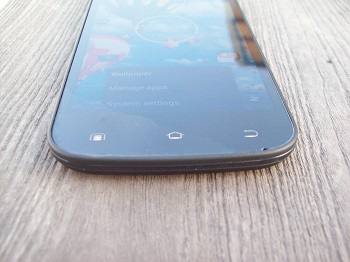
New Zen UltrafoneThe OS isn’t much different from stock Android and that isn’t really a bad thing. We have been told that the phone will get Android 4.3 update in a month or so, but there is no official word on 4.4. There are five Home screens by default, you can customise the way you need. The App Drawer, Notification Center, all are exactly how we are used to seeing, not much different even from the 701 HD.

All in all, it is clear what Zen is trying here – bring in quad-core devices with full HD screens and offer them in sub 18k range. The 701 HD was a pretty good device for under Rs 13,000, but the 701 FHD could do with a few bug fixes – battery optimisation and general performance – on order to give the Sony and Nokia phones in this range a run for their money.

Categories
Tech

Apple iPad Air and mini Retina launching in India this week

December 7 will see the launch of two new iPads in India. Know the specs you can expect from both.
by Manik Kakra

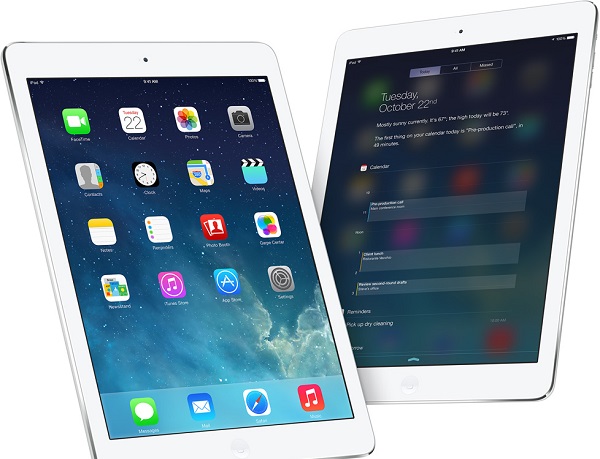
The new iPads – iPad Air (in pic above) and iPad mini with Retina Display – are going to launch in India on the December 7. As per one of Apple’s retail partners in India, Ingram Micro, the iPad Air’s price will start from Rs 35,900 for the base model (16 GB WiFi), and the iPad mini Retina will start from Rs 28,900 for its basic model.

While the iPad Air may cost up to Rs 67,000 for its 128 GB WiFi + cellular model, the iPad mini Retina is expected to notch around Rs 60,000.

Apple’s iPad mini (original) will is still available for its starting price of Rs 21,900, and the iPad 2 for Rs 28,900. Previously, Apple launched the iPhone 5C and iPhone 5S in India, but this time there doesn’t seem to be too much of a difference between the official prices in the US and India.

Both the tablets, available in space grey and white-silver colour options, will hit the shelves on December 7, and the announcement could come as late as Friday.

These are the hardware specification of these iOS 7 devices:

iPad mini_RetinaiPad mini Retina (in pic on left) Display:

7.9-inch Retina Display (326ppi)

Dual Channel, WiFi a/b/g/n; Bluetooth 4.0

1.2 MP front-facing camera; 5 MP rear camera

A7 chip (64-bit) along with M7 co-processor for motion


iPad Air:

9.7-inch Retina Display (264ppi)

Dual Channel WiFi a/b/g/n; Bluetooth 4.0

1.2 MP front-facing camera; 5 MP rear camera

A7 chip (64-bit) along with M7 co-processor for motion

Exit mobile version