Categories
Event

Nancy Powell visits Thane

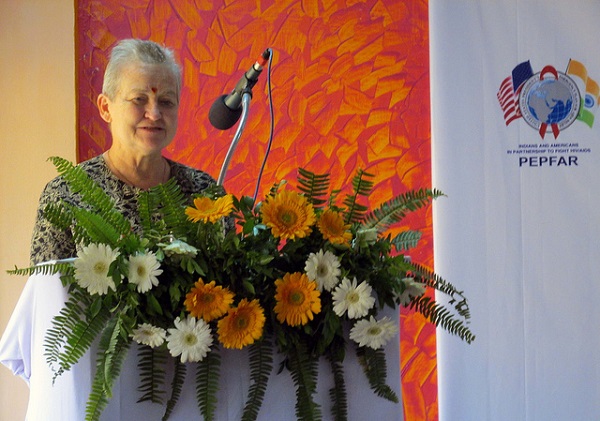
US Ambassador Nancy Powell marked World Aids Day this year with a visit to a hospital in Thane district, Maharashtra.
by The Editors | editor@themetrognome.in

To mark World AIDS Day, US Ambassador Nancy J Powell visited the Indira Gandhi Memorial Hospital in Thane district to see firsthand the work that is being done to combat HIV-AIDS. The Indira Gandhi Memorial Hospital offers HIV testing and counseling services, as well as free anti-retroviral (ARV) drugs, to persons living with HIV who are clinically eligible for treatment.

The United States Government is a partner to the State of Maharashtra in tackling the HIV epidemic through the project, ‘HIV/AIDS Partnership: Impact through Prevention, Private Sector and Evidence-based Programming (PIPPSE)’ that is implemented by the Public Health Foundation of India. During the visit, Ambassador Powell noted, “It is powerful to see firsthand the extraordinary work that is being done to combat HIV/AIDS. I am proud of our partnership with the State of Maharashtra in tackling this challenge. This joint effort is one of many examples of the deep partnership between the United States and India to address global health issues.  By working together to prevent, detect, and respond to disease threats, the United States and India are working hand in hand to address some of the most difficult health concerns of our times.”

Categories
Do

What did you do with your clothes?

Did you lose weight and now have several old clothes you don’t need? Donate them for needy persons in Maharashtra.
by The Editors | editor@themetrognome.in

With awareness of weight loss and its benefits rising every day, there are several people who actively take up a healthy lifestyle and lose their excess weight. However, once the weight is lost, there is the question of buying a new wardrobe of clothes since the old ones are no longer useful.

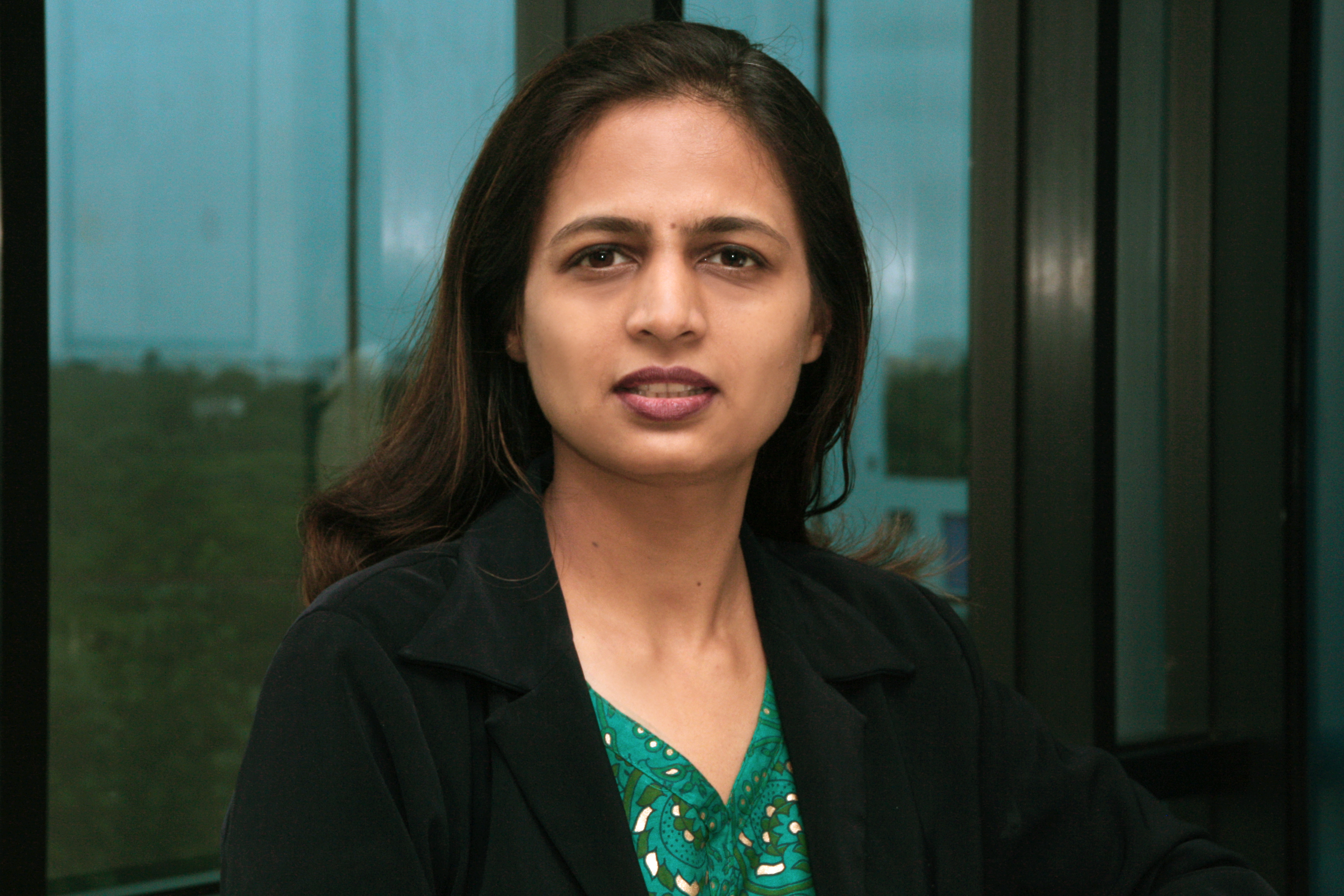
Dr Jayashree TodkarIn several homes where the fat to obese have lost weight, either through surgery or exercise, there may be loads of clothes that are discarded to make way for new ones. Today, Dr Jayashree Todkar (in pic on left), leading bariatric surgeon, is giving Mumbaikars a chance to donate their old clothes to promote awareness of obesity in Maharashtra. “I appeal to people who were obese and have lost weight to donate their used clothes which they no longer need after surgery or weight loss. The donated clothes will be distributed to needy persons,” Dr Todkar says.

This awareness campaign will kick start at Dr Hiranandani Hospital, Powai, on Saturday, November 30, 2013. The event is open to the general public. Today, Dr Todkar will give a detailed presentation on obesity, diet and nutrition.

On the day of the event, Todkar will give a detailed presentation on obesity, diet and nutrition. Adults and children both will have the opportunity to listen to this presentation and learn details about the importance of having a healthy body. Dr Todkar says, “I will take this campaign to other parts of Maharashtra to spread the message about obesity. The campaign will go to Pune, Kolhapur, Ahmednagar and Nagpur.”

To register, contact Sonam on +91-98195 22811or Dr Neeta on +91-80071 41000. The event starts today at 6 pm and will continue in December 2013.

(Picture courtesy in.reset.org)


Categories
Event

Palestine, in a lecture

When was the last time you pondered over Palestine’s ground realities and when the violence would stop? Do it today.

Today, November 29, Jnanapravaha gives Mumbai the chance to engage with the realities of life in occupied Palestine through the work of well know Palestinian conservation architect and writer Saud Amiry.

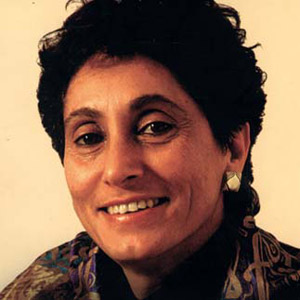
Saud AmirySuad Amiry has lived most of her life between Amman, Damascus, Beirut and Cairo and now lives in Ramallah, Palestine. Amiry is the founder of Palestinian NGO RIWAQ, a winner of the 2013 Aga Khan award for Architecture. Riwaq documents, conserves and rehabilitates historic buildings and centers in rural Palestine. She is also the author of Sharon and My Mother in Law, which won the prestigious Premeo Viareggio award.

“Reality or non-fictional life in Occupied Palestine is the biggest fiction and hunting fantasy,” Amiry says. In this visual presentation, she will share with the audience her two worlds: the architectural world of her organization RIWAQ and the private and very personal world of her writings. Using “black and white” humour, Amiry brings to life the absurdity of everyday life in Occupied Palestine. Amiry’s talk co-incides with the launch of her new book, Golda Slept Here, published by Women Unlimited in India.

The presentation will be followed by a conversation between Saud Amiry and Anil Dharker, Founder, Literature Live! The Mumbai LitFest.

Head to Jnanapravah, Queen’s Mansion, G Talwatkar Marg, Fort. Tea will be served at 6.30 pm, followed by the lecture at 7.00 pm. Seating is limited and entry is on first come first serve basis, so be there on time if you don’t want to miss it.

Compiled by Medha Kulkarni

(Pictures courtesy www.facebook.com/JnanapravahaAtMumbai and www.umbriajournal.com)

Categories
Tech

HTC’s One Max comes to India

HTC’s newest phone is priced at Rs 56,490; the phone’s high price could be accounted for by fluctuating rupee-dollar rates.
by Manik Kakra

HTC has just officially launched its One Max in India. This phone boasts a 5.9-inch 1080p LCD 3 touchscreen, and is touted as the One’s big brother. Under the hood, there is Snapragon 600 (.17 GHz quad-core Krait 300) SoC, along with 2 GB of RAM. On the back, there is a 4 MP ‘Ultrapixel’ camera as well as a fingerprint scanner mainly for unlocking the screen and launching three apps with a finger swipe (three fingers pre-assigned by the user). The front side sports a 2.1 MP wide-angle camera and dual speakers. It runs on Android 4.3 Jelly Bean with HTC’s Sense 5.5 UI on top.

Weighing 217g, the One Max features Bluetooth 4.0, WiFi a/b/g/n/ac, NFC, a microUSB 2.0 port and 3.5 mm headset jack. The phone is powered by 3,300 mAh battery, and is available in 16 GB and 32 GB storage options, expandable up to 64 GB via microSD card.

First showcased back in October, HTC has priced the phone at a whopping (MRP) Rs. 61,490, and it’s now available in the market for Rs. 56,490. Users also get 50 GB of free Google Drive storage space for two years. The company also unveiled the official Power Flip Case accessory for the One Max, which aims to provide 1,200 mAh of juice while providing for protection to the device as a shell.

It is evident that the rupee-dollar exchange rate has really made phones prices rocket in the last couple of months or so, and it’s hurting. It’s hard to imagine people going for this phone for over Rs. 55K, maybe once the price goes under the 50k mark, it may well attract a lot of user looking for a large-screen phone.

Categories
Event

‘Our reality is shaped by the medium we use’

A panel of media experts and photographers weighed in on the purportedly ‘dying’ art of photojournalism, at Max Mueller Bhavan.
by The Editors | editor@themetrognome.in

Who says photojournalism is dying? Or to put it another way, who says photojournalism is still alive?

A talk at Max Mueller Bhavan, Mumbai, titled ‘Wanted: Dialog on Photojournalism’ saw noted news photographer Sudharak Olwe, journalist and teacher Sanjay Ranade and Mid Day Executive Editor Sachin Kalbag give their views on the relevance of photojournalism in today’s times, and whether there was ever a chance of the art dying out completely in an era of smart gizmos.

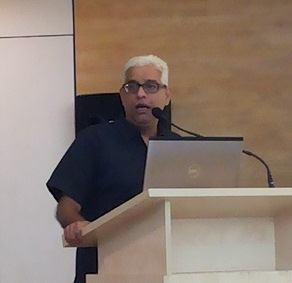
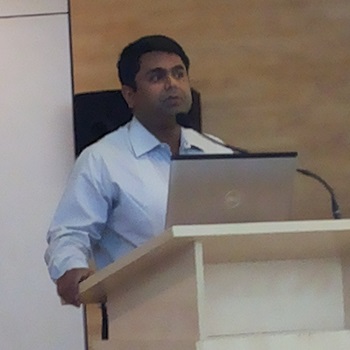
Sanjay RanadeExpectedly, each of the speakers debunked the notion that photojournalism was dying out, though they did concede that the “message was certainly diluted” in certain cases. Said Ranade (in pic on left) , “Our reality is changed by the medium we use. Contemporary users are ‘pickled’ in user-generated content – they are negotiating their realities with the devices they own. Users are filtering the news they want, they are free to click a picture and instantly put it out there for everyone else to see, so why should they read newspapers?

“The statement being made often is that with everybody owning a smartphone, what is the need for photographers? But the difference is, these users are not professionals, so they cannot ‘design’ a picture, a moment, the way a professional can. A photojournalist performs an important function – he gives ‘context’ to a picture.”

Kalbag said, “We (the Mid Day newspaper) are a third or fourth choice newspaper in Mumbai. What do we do to get picked up, to get Sachin Kalbagnoticed? In Mumbai, and for a paper that caters exclusively to the city, we cannot not have a strong visual connect with our readers. There is no greater way than photojournalism to chronicle a great city.”

Olwe continued this train of thought thus: “In my work, I have seen that a bigger impact [is created] through a series of photographs on one subject, instead of just one picture. But this is not always true as well; it depends on the picture.” He went on to explain why he felt photojournalism could never die. “How can anyone say that photojournalism is dying? We have to create newer spaces [for more media]. Even with digital cameras, with the most advanced equipment, the photographer still has to follow the due ‘process’ of taking the right picture. You cannot have this process with an iPhone or a smartphone.”

Kalbag ended his talk by saying, “I honestly feel that reports of photojournalism dying or having died already are vastly exaggerated.”

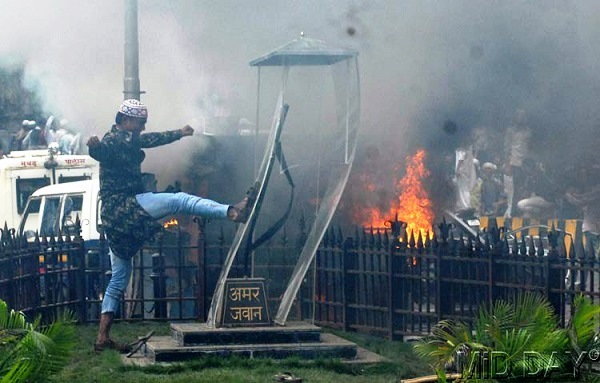
(Featured image courtesy www.mid-day.com)

Categories
Tech

Review: Sony Xperia Z1

What does the Xperia Z1 have that the earlier Xperia Z doesn’t? We do some checking and look for answers.
by Manik Kakra

Sony has been trying to get its phone division better converged with its music and camera divisions in order to get ahead in the smartphone battle. Its Xperia Z left a bitter taste in some people’s mouths, and the company aims to find its mojo back with the Xperia Z1. So, let’s check out this new Android smartphone from Sony.

Hardware and design
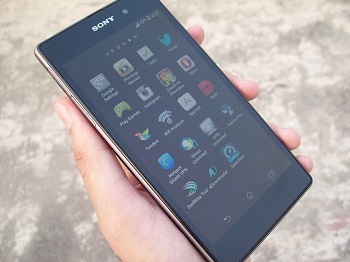
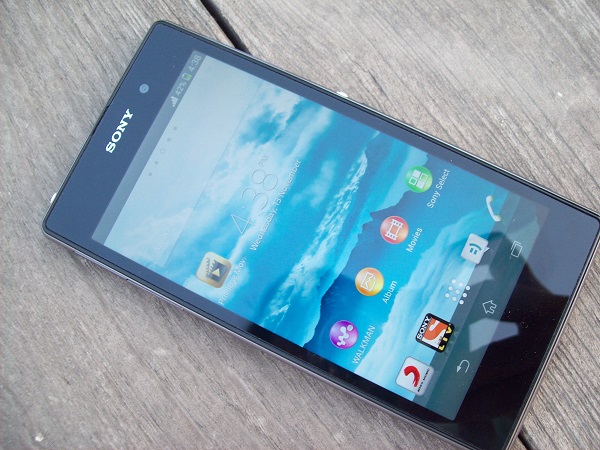
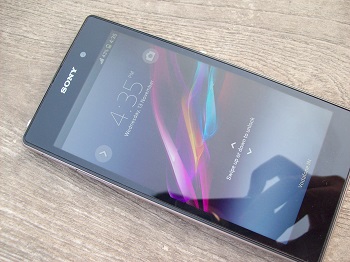
Sony Xperia Z1Sony’s Xperia Z1 (C6902) follows the same rectangular slap design that we have seen with the Xperia Z, and ZR. Handling one for the first time, you may realise that it’s a bit bigger than the Z, but isn’t different from it when it comes to looks.

The phone sports a 5-inch full HD screen, which also carries the three onscreen keys. On top are placed the usual speakers with LED fitted underneath the grills inside. Just below the screen, even though there is nothing placed, the bezel space is noticeable and pretty big for a space having no real estate.

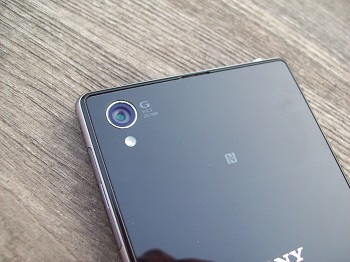
On the left sidepanel, you have the microUSB port, memory card slot and two-pin charging points for charging using a dock. On the right side, there’s the SIM slot and the familiar circular metallic Power button – looks nice to me – and plastic volume rockers. All these slots are flapped and, though the Z1 is water-proof, these flaps, which seem quite fragile, have to be put on Sony Xperia Z1when you are trying some water adventures while carrying the device. On the back sits the 20.7 MP camera with an LED flash. The back is made up of thick plastic material with coating, which fits quite well in the hand, but both front and back are dust and fingerprint magnets. It becomes a bit frustrating seeing dust all over the screen after pulling the phone out from your pocket.
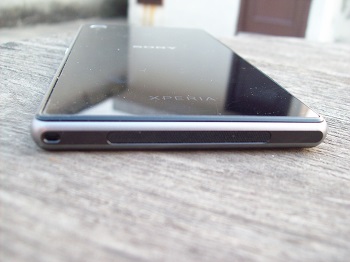
The top gets the 3.5mm headset jack. The loudspeakers, like the iPhone 5’s, are at the bottom. Round edges, aluminium-mixed front.

Screen

Talking about the phone’s 5-inch 1080p screen, Sony’s Z was mainly looked down for its ordinary screen quality, but did the Z1 come out winning? The Z1’s seemed much better to me than the Z. Colours look nowhere as washed out as on the Z, and it is crisp. But when you use it after seeing the LG G2 or even the HTC One, it does rank below those two. Sony mentions the use of BRAVIS Engine for the display, but while there is certainly a lot of improvement from what it was like on the Z, there is still some work needed when it comes to viewing angles and contrast.
Sony Xperia Z1Camera

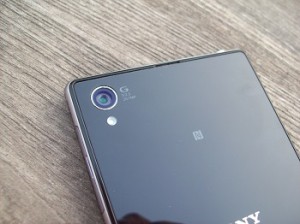
The Xperia Z1 boasts a 20.7 MP f/2.0 (mainly 20) MP camera with BIONZ image processor. The trick here is that the camera does oversampling, giving out 8 MP images. I tried the camera a bit, and was pretty satisfied with it. Sony’s camera UI is neat, straightforward and doesn’t require too many adjustments for every shot. On the down side, I did notice some over-processing from the software. You take a shot expecting something, but the result you view later seems a bit different, usually sharper than how it should have been. The camera performed well in decent conditions, but there’s definitely a lot of noise once you try it in a dark room or under such difficult conditions. See sample shots here.

Audio

Let’s now talk a bit about the audio quality. It’s Sony, so you expect a good audio experience, and that’s exactly the case here. In-ear sound is clear, quite loud and you shouldn’t be hesitating to use your favourite headphones with the phone. Loudspeakers are also loud and usually don’t distort when played on high volume. I was quite happy with their performance while gaming, barring muffling them with my hand while holding the phone when in landscape mode. Also, Sony’s music player is really nice. It has got some beautiful colours for backgrounds and works smoothly, too.

The call quality on the Xperia Z1 is top notch, and there’s no network reception issues any time during my usage.

Software and peformance

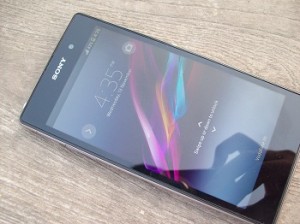
The Xperia runs on Android 4.2.2 with Sony’s UXT UI on top. Overall, there are hardly changes here from we have seen and used on the Xperia Z. Under the hood, there is a quad-core Sony Xperia Z12.2 GHz (Krait 400) Snapdragon 800 SoC, along with 2 GB of RAM. The whole look and feel is identical. The phone hardly ever lagged during my usage, and was mostly smooth, responsive and didn’t do any random reboots on its own. You can play full HD videos, go back and forth, and won’t notice any major performance issues. Having five home screens by default, four icons – Sony LIV, Mucis, Messaging and phone in dock, and below sit the on-screen buttons –Back, Home and Multi App View.
Thanks to the placement of on-screen buttons, you lose some screen estate to them in most of the apps you will use. The UXT UI gives you similar app launcher as other OEMs do. Here, you also get a different screen, when swiped from left, to uninstall apps, go to the Play Store, Sony’s app store, and arrange apps in various orders.

I usually got around 21 hours of battery life from, the phone’s 3,000 mAh battery, on a single charge – auto sync on, half an hour of gaming, some music and lots of Twitter and Web surfing.

Sony also provides users with music downloading and streaming service – SonyJive. You et free downloading and streaming for first six months. Don’t get excited. The app is very sluggish, full of bugs, the service has average collection and you get DRM protected content. Yup, it is really bad. I would rather have no such service than having one which may give such an awful experience – definitely the worst part of the whole device.  LIV is a service that allows you to stream content from various Sony channels, without any extra cost. There is also Big Flix app from which you can stream Bollywood movies – pretty decent collection this time. And you also get six movies free (can only be watched on the device itself) six movies from Priviledge, just wish they had given HD qulaity, too.

Summing up

The Xperia Z1 is definitely Sony’s best offering right now. Great performance, coupled with decent camera and looks, the phone does seem a good choice. There is no doubt Sony still needs some work on the display side, and maybe just put (or leave it out completely) a better music streaming service for Indian users. All in all, the phone shows that the company might well be on the right path.

Exit mobile version