Categories
Read

Review: ‘The Diary Of A Reluctant Feminist’

This book is, without doubt, one of the most awful books to come out at the start of this year.
by Vrushali Lad | vrushali@themetrognome.in

Not all books one reads are good reads. Most of them are average, even tedious reads. But then you come across a book that is so bad, so futile, that every other bad book you’ve read in your life actually shines brighter in comparison.

Bhavna Bhavna’s The Diary Of A Reluctant Feminist is one such book. A look at the synopsis promised several good things, which prompted me to start reading it in the first place. The excerpt on the back cover goes thus:

‘The problem in my struggle for a divorce was in the small print – as with everything in my life it read “subject to my mother’s permission.” And since my mother was never going to allow me to divorce I was relegated to being an armchair divorcee…So I decided, after two years of being separated, to stop waiting for my parents’ elusive permission, and to take the initial steps in the painful journey myself. In this process, I was also branded a “feminist”, which in their view was marginally worse than being a “terrorist”…’

So far, so good. The problem actually began when I started reading it.

The problem with the book is: the whole book.

What could have been a (as promised by the publishers) “profoundly funny chronicle of a young woman’s attempt to get divorced…” is anything but. If anything, it is a whiny, outrageously cliched, lacking-in-the-essentials kind of book, with extremely lazy storytelling. In fact, subject to a few revisions and rewrites, this book could have been a bit closer to what it actually aims to be.

So the author brings out the entire jing bang of a large Punjabi family – a domineering matriarch heading the household, her obedient sons and their wives and children, how the arranging of marriages is a competitive sport, how traditions and customs set by the family’s elders are unquestioningly followed even after the elders’ deaths, how individual wishes of girls and women are never important, but the men get to exercise their rights, and so on. Unfortunately, the story does not rise about these elements at all.

I’m not saying nobody will like this book, it may find its fair share of admirers. Why I am not one of those admirers is because when I read a book, I want to be told something I don’t already know. I don’t mean I should be told an entertaining account of the Higgs Boson, for instance, but when I pick up a book about a woman wanting to tell her overbearing Punjabi family that she wants to get a divorce, I want to be a told the story that makes me 1) Sympathise with the protagonist, 2) See the (promised) hilarity in the several (often banal) exchanges between the woman and her strict parents, 3) Feel the woman’s tension as she tries and fails to save her marriage before deciding to separate from her husband, and 4) Most importantly, find a non-cliched representation of a loveless relationship of the kind we see often in the till-death-do-us-part milieu of Indian marriages.

Instead, all the reader gets is a series of cliches thrown at him one after the other, in a rambling account of the protagonist’s increasingly failing marriage, how her opinion has never been solicited even on matters affecting her life, how her family and indeed, all of society, gangs up on her once her singleton status is established, and how nobody gives her a chance at doing good for herself. Well, boo hoo. What is even more annoying is the sweeping assumption that this is what all girls in large Punjabi families go through – I’m not saying these things don’t happen, but since they do happen fairly regularly, what is the point of telling us just that? And while we’re on the subject, when will be stop caricaturing Punjabi families in this fashion? Aren’t there good, wholesome, uncliched stories about Punjabis to be told at all?

In short, I do not recommend this book at all. If you still want to read it, knock yourselves out here.

Rating: 1.

Rating scale: 1 = Awful; 2 = Slightly rubbish; 3 = Tolerable read; 4 = Good; 5 = Paisa vasool

(Pictures courtesy www.flipkart.com, www.theatlantic.com)
Categories
Watch

Two films, photography, and Films Division

Head to Films Division this evening, January 11, for a screening of two landmark documentary films about photography in India.

As a lead-up to the Mumbai International Film Festival (MIFF), which will be held from February 3 to 9 at NCPA, Films Division is bringing audiences a series of films that have won awards at earlier editions of the festival. Today, Saturday, January 11, they’ve planned a special programme on photography that includes Sabeena Gadihoke’s landmark film Three Women and a Camera, which won the Golden Conch at MIFF 1998. The programme is curated and will be presented by cinematographer and film maker Ajay Noronha.

When the Kodak Brownie camera debuted in the early 20th century, few could have imagined how it would revolutionise photography. The photograph became a popular form to chronicle significant and historical events as well as everyday snapshots. Today, over a hundred years later, it is estimated that over 380 million photographs are uploaded just on Facebook every day!

How has this changed the way we look at ourselves and the world around us? This week Films Division celebrates the act of ‘seeing’ with two passionately-made films about image making and the image-maker. Set 25 years apart, these two filmmakers present two very different narratives on photography in India.

YES, IT’S ON

12mins/1972 /Films Division

Director: SNS Sastry | Photography: B Khosla | Editing: MN Chaubal, NS Patole | Sound: SD Patil

SNS Sastry in his inimitably playful manner captures the nation and its people, especially its women, post independence. He invites us into a dialogue between the one looking and the one being looked at. The untiring camera gaze is underscored by ingenious juxtaposition of advertising jingles and popular film dialogues and songs. The film reassures us that along with the nation, the camera is still rolling.

THREE WOMEN AND A CAMERA
56mins / 1998 / Doordarshan

Director: Sabeena Gadihoke | Writer: Shohini Ghosh | Editor: Vinod Kaul | Sound: Harikumar Pillai

Sabeena Gaihoke’s award-winning film is a quiet meditation on photography seen through the eyes of three celebrated women photographers. The film debates the major shifts in the concerns of photographer Homai Vyarawalla, whose work celebrates the euphoria and optimism of the birth of the India nation, while Sheba Chhachhi and Dayanita Singh attempt to grapple with the various complexities and undelivered promises of the post independence era. This film debates the major shifts in their concerns regarding representation, subject-camera relationships and the limits and possibilities of still photography in India today.

Head to RR Theatre, 10th floor, Films Division, 24, Peddar Road. Entry is free and open to all.

 (Picture courtesy Films Division, Mumbai)

Categories
Event

Two-day theatre conference starts in Mumbai today

Look forward to book releases, postcards, performances, panels and much more at this two-day do from January 10 to 11.
by Sophia Institute of Social Communications Media, Mumbai

Jhelum Paranjape met a pickpocket in jail and tried to explain Animal Farm to her. Dolly Thakore’s son Quasar Padamsee’s baby sitters included Shabana Azmi and Javed Siddiqui. PG Wodehouse helped Shanta Gokhale fight cancer. Nadira Babbar swore that she would never get into theatre.

At the inauguration of a two-day conference on theatre in Mumbai titled ‘Many Cities, Many Masks’ at 9 am on Friday, January 10, the first book of a proposed series, Lives Of The Women edited by the award winning author Jerry Pinto will be released. Titled On Stage/ Off Stagethis book features four in-depth essays on the professional lives of  eminent women from Mumbai’s stage such as Shanta Gokhale, Dolly Thakore, Nadira Babbar and Jhelum Paranjape.  The post-graduate students of SCMSophia have researched and written this book.

The conference being organised collaboratively by the Sophia College for Women and SCMSophia (Sophia Institute of Social Communications Media) on Friday and Saturday, January 10 and 11, 2014. This forms part of a series of Mumbai seminars organised at Sophia College for the last five years. The conference will feature academic papers and presentations by practitioners and panel discussions.

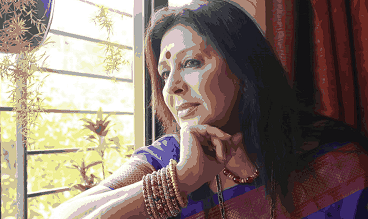
Vandana GupteAdditionally, a commemorative postcard set ‘Green Room: Mumbai’s Theatre Makers‘ featuring photos  taken by SCMSophia students of  personalities from English, Hindi, Marathi, and Gujarati  theatre in Mumbai including Anahita Uberoi, Shernaz Patel, Rita Rose, Annapurna Shukla, Aditi Desai, Vandana Gupte (in pic on left) , Kavita Lad Medhekar, Rasika Dugal, Shanta Gokhale, Nadira Babbar and Dolly Thakore will be released.

The postcards also feature insights in the form of quotes from all these personalities. “After the third bell the cast waits in the wings.  At this time, you realise more than ever how crucial you are to each other.   In the silence you acknowledge each others talent, strengths and weaknesses and together step into the collective performance zone… to create the collective illusion that we call theatre,” says Anahita Uberoi.” The theatre is a space where I submit to the will of my audience,to the vision of the director and to my own vanity,” admits Rasika Dugal candidly.

This conference will also see the release of Mumbai—Socio-Cultural Perspectives: The Contribution of Ethnic Groups and Communities, a collection of papers presented at a previous conference at Sophia College. Students of SCMSophia and Sophia College will also be presenting short performances during the breaks adding to the festive atmosphere.  These include a street play on Freud, bhavai (on Marx), lavni (on Galileo) and qawwali (on Darwin) during the breaks.

Categories
Event

Kerala’s historic art form comes to Mumbai

Chavittu Naatakam, India’s most ancient coastal art form from Kerala, forms the theme of the annual Keli Festival starting today.
by The Editors | editor@themetrognome.in

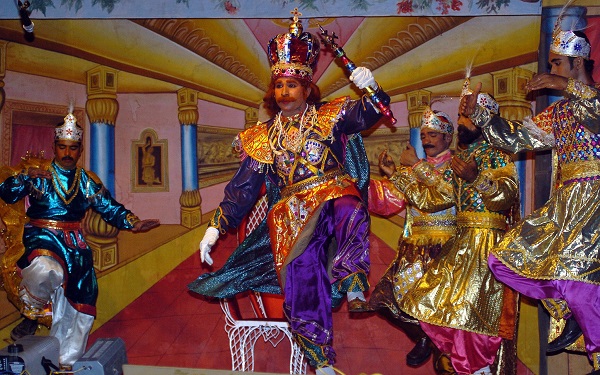
Human life is incomplete without cultural identity. When people migrate to distant shores, they take with them aspects of their culture, which then mix with the local cultures to create unique cultural expressions. Chavittu Natakam, India’s most ancient maritime theatre tradition is one such cultural expression that came out of such a mixing of cultures – drawing from the European operatic tradition carried by the Portuguese Christian missionaries who came to Kerala’s shores post the 15th century, and merging with the local Kerala martial arts and dramatic traditions.

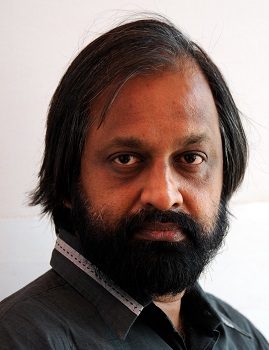
ramachandran kStarting today, the Keli Festival, a three-day festival to be held at the YB Chavan Auditorium, Nariman Point and Prithvi Theatre, celebrates Chavittu Natakam. Performances over the three days will retell the history of Emperor Charlemagne’s capture of Turkey, and the events that unfolded thereafter. The Metrognome spoke to Keli Festival director Ramachandran K (in pic on left) about the festival; he has been the Festival’s Director since its inception in 1992.

Why did Keli think of bringing Chavittu Naatakam to Mumbai?

I was the special curator for the cultural programmes of India’s premier biennale that happened in Cochi last year. During my work I came across this art form and associated with it. I realised that the historic relevance of this art form in the art history of the world is not yet unveiled. It was not much presented outside Kerala, except for one performance that happened in the 60s in Delhi. It was in these circumstances that our organisation KELI decided to do this year’s annual festival with Chavittu Naatakam as the main theme and to propagate the strength of this art form to the maximum possible extent.

What is the response you anticipate to the Keli Festival this year?

Fairly good. We have had lots of enquiries already.

Can you elaborate a bit on Chavittu Naatakam’s importance in present-day life?

It is the only existing, most ancient maritime theatre tradition in India. It is quite remarkable that it passed the test of time for over five centuries.

Chavittu Naatakam has a significant place in the art history of the world. [It is] A pattern of culture that migrated from across the sea; a theatre form that was nurtured and Anjelikka അഞ്ചേലിക്കdeveloped by the coastal people, a tradition of drama written, directed and enacted by the same coastal people, and a theatre movement with performance spaces, created at the coastal villages out of meagre donations from villagers. It is an artistic emanation which draws its audiences from the same coastal people – Chavittu Natakam is truly the most authentic ancient maritime theatre tradition in every sense of the term.

Unfortunately, no serious research or academic studies have been done on this fascinating art form so far, nor have academies and state patrons extended significant attention towards preserving and propagating this tradition. The form lives on due to enthusiastic artists, passionate audience, and the support and dedication of a very few art lovers.

What has been the most satisfying part of being associated with an initiative of this sort?

Bringing the Indigenous artistic strength of India’s rural locales to the metros, with their purity of tradition.

Why do you think that Mumbai needs to be exposed to Chavittu Naatakam?

Mumbai should acknowledge the proud legacy of the only maritime theatre tradition in India. I also feel that artistic traditions should be explored more and should be presented without being compromised on quality.

Programme schedule:

Day 1

Venue: YB Chavan Centre, opposite Mantralaya, Nariman Point.

Date: Thursday, January 9, 2014 | Time: 6.45 pm

Inaugural Programme: Story: Karalman Charitham (Charelsmagne) Part 1

Written by : Chinnathambi Annavi

Presented by: Yuvajana Chavittunataka Kalasamithi Gothuruth

Directed by: Thampi Payyappilly

Day 2

Venue: Y.B. Chavan auditorium,Opp. Mantralaya

Date: Friday, January 10, 2014 | Time : 7.30 pm

Story: Karalman Charitham (Charelsmagne) Part 2

Day 3

Venue: Prithvi Theatre, Juhu, Vile Parle.

Date: January 11, 2014 | Time: 7 pm and 9 pm

Story: Karalman Charitham (Charelsmagne) Part 3 ( Subtext)

Name of Subtext: Story of Anjelikka

Written by : Raphel Acharuparambil

Presented by: St. Rocky’s  Nrutha Kalabhavan, Pallippuram

Directed by: Alex Thalooppaadath, disciple of late Guru Antony Charamkulam

Collect free entry passes from YB Chavan Centre, Rhythm House, Prithvi Theatre, Maharashtra Watch Company, Dadar and Giri stores Matunga.

Categories
Tech

Nokia launches Lumia 1320 and Lumia 525

Two new phones from the Nokia Lumia stable hit Indian shores today. A look at what’s good and what’s hot.
by Manik Kakra

Nokia today launched its Lumia 1320 (see image above) in India. The device, first seen at the last Nokia World, sports a 6-inch 720p LCD touchscreen with Corning Gorilla Glass 3 on top. The phone has a 5 MP rear camera (f/2.4) along with an LED flash and it can shoot full HD videos at 30 FPS; while the front has a VGA camera.

Under the hood, this Windows Phone 8 device has Qualcomm’s 1.7 GHz dual-core Snapdragon S4 SoC, with 1 Gb of RAM. Connectivity-wise, the Lumia 1320 has microUSB 2.0, Bluetooth 4.0, WiFi b/g/n, NFC, A-GPS, and 3G. Powered by 3,400 mAh battery, the phone comes with 8 GB of internal storage, which can be expanded up to 64 GB via microSD card, and users also get free 7 GB of storage space on Microsoft’s SkyDrive cloud service.

Yes, it does seem like the Lumia 1520‘s budget version, and it’s pretty much so. The Lumia 1320 comes in red, yellow, white and black colours, and has been priced at Rs 23,999.

Nokia_Lumia_525_Coming to the Lumia 525, it is the successor to Nokia’s popular Lumia 520. The phone has the same 4-inch (800×480) touchscreen, and Volume, Camera and Power/ lock keys. The Lumia 525 has microUSB 2.0, WiFi b/g/n, Bluetooth 4.0 and 3.5 mm headset jack. Powered by 1,430 mAh battery, this phone has a 1 GHz dual-core S4 SoC and 1 GB of RAM, which is double that of the Lumia 520, its predecessor.

Just like the Lumia 1320, the Lumia 525 also comes with 8 GB of internal storage, and microSD card slot for expanding storage and 7 GB of free SkyDrive storage space. Nokia’s Lumia 525 comes in black, white, orange and yellow colour options. Lumia 525 users will also get games, like Asphalt 8, N.O.V.A 3, up to Rs 2,025 free till end of March 2014.

Categories
Read

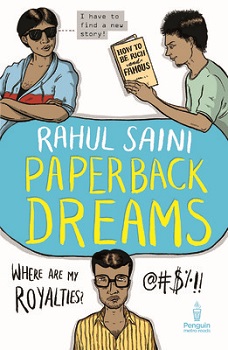
Review: ‘Paperback dreams’

Rahul Saini’s newest book is a behind-the-scenes look at the (sometimes) murky world of book publishing and the writing process.
by The Editors | editor@themetrognome.in

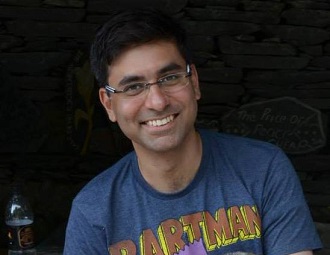
Rahul SainiIf you’ve been an aspiring author, a recently-published one, or worse, a rejected one, you must read Rahul Saini’s Paperback Dreams.

The thing with writing a book in India today is that one gets complacent even before one takes up a plot, or a story outline, or even a pen. “So much nonsense is being published every day, I can write better than that,” one says, secure in the ‘knowledge’ that publishers – all publishers – are simply waiting for one to finish their magnum opus so that printing of the book may commence. And when one’s book is out, all one has to do is sit back and rake in the royalties.

That is not so, as Paperback Dreams explains in funny, sharp detail. The book’s three protagonists – published authors Rohit Sehdev and Jeet Obiroi, and aspiring author and school student Karun Mukharjee – are presented in three parallel narratives, but are connected at various points in the story. All three are published by Dash Publishers. Rohit is a bestselling author who is being cheated out of his royalties, but he is initially too afraid to even have strong words with the publisher. Meanwhile, Jeet is cruising along with the success of his first book and his movie star looks, but he is constantly dogged by a dark secret about his book that he hopes nobody will ever find out.

Meanwhile, Karun has cracked the formula for the perfect love story – after a bit of research of best-selling authors’s works, he has finished his debut novel and is due to be published while still in school. However, he hits upon a Machiavellian plan to achieve his ends – not content to merely be published, he wants to ensure that he becomes the star for Dash Publishers as their other best-selling authors fall to the wayside.

Readers will recognise some of India’s spectacular publishing successes that Saini mentions off and on – there are references to Bhetan Chagat, for example. However, Saini’s paperback dreamslight-hearted take on the publishing industry also reveals several dark truths. It’s not all hunky dory in the publishing world – publishers routinely cheat authors of royalties, new authors’s books are not promoted or stocked in bookstores, debutant authors sometimes have to rewrite major plot points to please the publisher, and plagiarism is a common phenomenon. Also, as Saini deftly points out, it is really not that difficult to get published these days.

Overall, the book is an enjoyable read, but you will be a put off by several typos that suddenly appear in a few chapters in the middle of the book. Obviously, somebody’s been sleeping at the editing table. Other than that, you might also think that the Karun narrative is a bit simplistic, even clunky. It’s all okay till he devises his evil plan, but the methods he adopts and the results he gets seem a bit far-fetched.

The most relatable character is Rohit, for his low self-confidence, his obvious talent that he is reluctant to advertise, his constant whining about his problems while lacking the courage to take corrective action. So many of us are like that. How he finally tackles the publisher in a comical denouement would make for a good scene in a film. In fact, we rather suspect Saini wrote this book for celluloid, like a certain Mr Bhagat.

Rating: 3.5/5

Rating scale: 1 = Awful; 2 = Slightly rubbish; 3 = Tolerable read; 4 = Good; 5 = Paisa vasool.

Check out Rahul Saini’s Paperback Dreams here.

(Author photograph courtesy Rahul Saini, featured image www.compassbook.com)

Exit mobile version