Categories
Do

Tiger Cyclo Walk returns

After last year, the Tadoba to Mumbai tiger awareness drive returns – this time, it kicks off in January 2015.
by The Editors | editor@themetrognome.in

It’s a distance of 1,200 km, sometimes over difficult terrain, many times over difficult circumstances. But it’s all for a great cause, and it involves tigers.

After a successful drive last year, the Tiger Cyco Walk returns for its second edition this year, too. The initiative involves the traversing of about 1,200 km on foot or on bicycles, to spread awareness about the dwindling numbers of tigers and the lack of an ecological cover to support them.

Sunil JoshiLed by noted trekker, mountaineer and walker Sunil Joshi (in pic on left), who conceptualised the drive and conducted it last year too, the Tiger Cyclo Walk will cover the huge distance from January 1 to February 7, 2015. The drive will kick off from Mohorli Gate, Tadoba on January 1, before travelling taking a circuitous tour from Chandrapur and culminating in Mumbai on February 7, 2015 (see entire route map here). Like last year, the group managing the tour and those who sign up for the walk will involve locals in the drive by asking them to accompany them for at least one kilometre, besides showing educational clips and giving talks.

“Come what may, we will cycle the whole distance and promote the ‘Save the Tigers’ cause to the masses,” Sunil says. “On each halt, there will be slide shows, screenings of films and lectures about tigers, environment and forests in educational institutions and social organisations. We will also undertake tree plantation ceremonies en route.”

Sunil has previously walked 2,560 km in Norway, from North Cape (Northern tip of Norway ) to Lindesnes (Southern tip of Norway) while he represented India for ‘Walk Norway Programme’. “We wish to spread awareness and help people in and around the State’s existing forests to protect the jungles. The plantation of more and more Indian origin trees will balance the ecology. Protecting our wilderness will, in turn, protect the tiger,” he explains.

Those wishing to join the awareness drive can contact Sunil Joshi on tiger.cyclowalk@gmail.com/+91-92233 19216.

(Featured image courtesy www.fanpop.com)
 

Categories
Tech

Samsung launches Galaxy Alpha

Priced at Rs 39,990, the new smartphone is said to the forerunner for many more devices from the Samsung stable.
by Manik Kakra | @Manik_K on Twitter

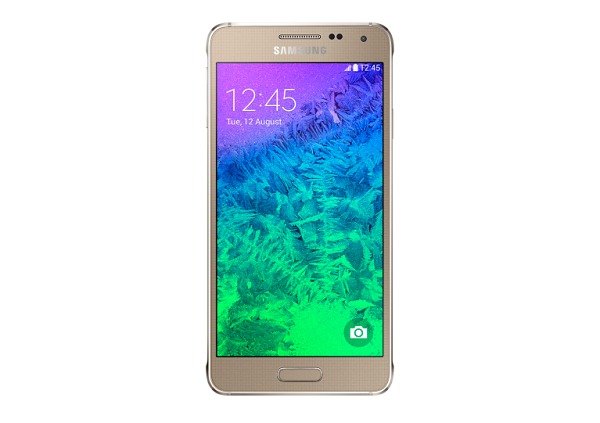
Samsung recently launched its new Android 4.4.4 smartphone in India, the Galaxy Alpha. The Galaxy Alpha, touted by the company as the beginning to many more exciting devices from them in the future, sports metallic sides and a polycarbonate back cover. Samsung is quite vocal about the phone being stylish and premium.

Galaxy AlphaWeighing 115 grams and just 6.7 mm thick, this new phone sports a 4.7-inch (1280 x 720) Super AMOLED screen, and is powered by Samsung’s own Exynos SoC (1.8 GHz quad-core processor + 1.3 GHz quad-core processor) coupled with 2 GB of RAM. Loaded with 32 GB of on-board storage, there’s no storage expansion option. On the back, there’s a 12 MP (CMOS) (AF) camera (with an LED flash) that can shoot Ultra HD videos while the front has a 2.1 MP (CMOS) camera.

The Galaxy Alpha is equipped with a 1,860 battery unit, and is compatible with the Gear line of wearables. Other features include Bluetooth 4.0, WiFi, NFC, 4G LTE connectivity, GPS, and FM Radio.

It will go on sale from next week in charcoal black, dazzling white and frosted gold for Rs 39,990.

Categories
Tech

Sony launches Xperia Z3 and Xperia Z3 Compact in India

The phones are priced at Rs 51,990 and Rs 44,990 respectively. We take a quick look at the specs on offer.
by Manik Kakra | @Manik_K

Continuing with its six-month launch cycle, Sony yesterday released its new flagship and its compact version – the Xperia Z3 and Xperia Z3 Compact in India.

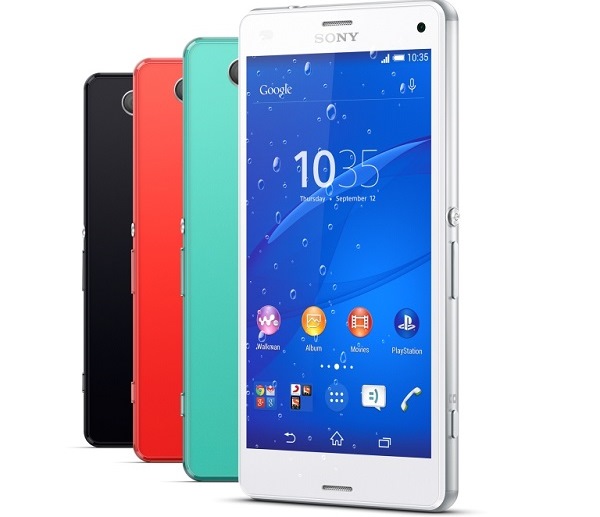
These new Sony devices are IP55/ IP68 certified, meaning they’re water-proof and dust-resistant. Both are powered by Qualcomm’s Snapdragon 801 chipset (2.5 GHz quad-core Krait 400 processor, Adreno 330 GPU), along with 3 GB of RAM in the Z3 and 2 GB in the Z3 Compact.

Measuring 127 x 64.9 x 8.6 mm, the Z3 compact features a 4.6-inch 1280 x 720 LCD touchscreen and weighs about 130 grams. On the hand, the Z3 measures 146 x 72 x 7.3 mm, featuring a 5.2-inch 1920.1080 full HD screen and weighing around 150 grams.

Z3_1On the back, they sport a 20.7 MP (EXMOR RS) camera with an ISO count of up to 12,800; while the front has a 2.2 MP camera. Sony has also updated its camera app, bringing a few more shot sets like 3D effects and sharing your other Xperia devices via WiFi to shoot videos. On the audio side of things, the phones support FLAC files natively and are loaded with 24KHz/192 sound capabilities.

Running on Android 4.4.4, the phone has Sony’s Xperia UI on top. Buyers get three months of free streaming and download options from Sony’s JIVE app.

Connectivity-wise, there is Bluetooth 4.0, WiFi, NFC, GPS, 4G LTE, and FM Radio.

While the Z3 is equipped with a 3,100 mAh battery unit, the Z3 Compact has a 2,600 mAh battery unit.

The Z3 is comes in copper, white and black colour options, and the Z3 Compact in green, orange, white and black. Both these phones are available now, with the Z3’s MRP being Rs 51,990, and the Z3 Compact’s Rs 44,990.

Categories
Eat

Go back to the kitchen

In a city teeming with processed foods, lifestyle diseases and rising inflation, cooking should be made compulsory for every individual. Here’s why.
by Ritika Bhandari Parekh

It’s time to learn how to cook. Besides getting compliments over time, cooking what you eat will help you respect your body and palate like never before.

Look around the city and you’ll find an advertisement or two on weight loss at every corner. Obesity is one of the major lifestyle diseases on the rise in our country. Blame it on the easy availability of junk food, canned ingredients, the lack of time in our busy schedules, or simply the fear of the kitchen, which has made us prone to this disorder.

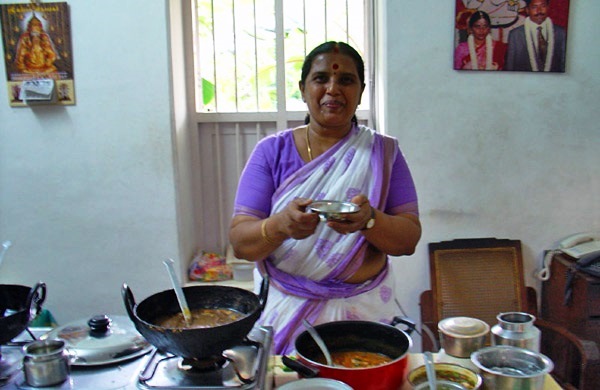
Vani HariVani Hari, a US food activist (in pic on left), famously known as ‘The Food Babe’ has a simple solution for maintaining equilibrium in a world of supermarket dinners. She suggests cooking at least 15 meals per week at home. She blogs about how to make better choices at the food section of the market and steer clear of GMO (Genetically Modified Organisms) ingredients in your plate.

Everyone – man or woman – should cook

The shocking revelations on her blog related to major food companies like Subway and Starbucks makes one realise how tricky it is to make a healthy eating choice. Luckily, most Indian cities have the advantage of a vegetable market just around the corner and so we should equip ourselves with a few cooking skills. Parents should teach not only their daughter but also their sons how to cook some basic dishes from scratch. The skills will help them survive in the maze of canned foods and their longevity will be attributed to their cooking.

Today, not even milk is free from the grip of the sugar industry, reveals British celebrity chef Jamie Oliver. He started the food revolution in the US and Britain to change the way people eat and improve the nation’s health.

Why cook at home?

In his 2010 TED talk Oliver says, “The power of food has a prime place in the house.” He reveals that most Americans have not seen their parents cook and are therefore, clueless as to how to cook besides reheating and thawing frozen food. For him, the culture of eating is passed on at the home.

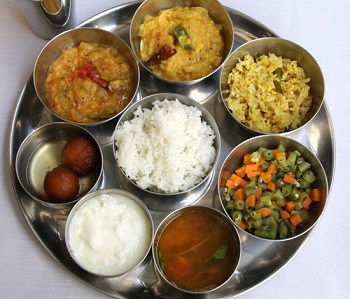
As a culture, Indian cuisine varies from State to State and even in States, from region to region. So Maharastrian cuisine differs from Konkani with the slight hint of flavours. A Google search willHealthy Indian food reveal how Indians living abroad are trying to make the most of the desi ingredients available to them and recreate the magic of ‘ghar ka khaana’.

With cooking being relegated to the status of an art and Masterchef Australia introducing us to the world of gourmet home cooking, suffice it to say that cooking at home has achieved cult status like never before. People are realizing that home-cooked food is the key to a happy and healthy body. So the next time you are at the supermarket make a better choice and try to pick more real food – one which is not processed or loaded with chemicals.

Lastly, here’s a thought by author Michael Pollanto to sum up, “The most important thing you can do with your health is cook. Cooking is more powerful than any medication.”

(Pictures courtesy www.vedicodyssey.com, wellandgood.com, www.wiseshe.com)

Categories
Event

High Street Phoenix opens its doors for art

The South Mumbai mall is currently offering visitors the chance to look at various art installations crafted by six Indian artists.
by The Editors | editor@themetrognome.in

Till the end of this month, you can walk into High Street Phoenix and get a first look at various art installations by various eminent and upcoming city artists. On from September 4, 2014, the installations will be available for viewing till the end of this month.

Mother & Child_Siddhesh ChavanFeatured artists are Sanjay Kumar Srivastava, Gajanan Choukhande, Reha Shishodia, Nayanjeet T Nikam, Abhijit Salunkhe and Siddhesh Chavan. The centre piece of this art showcase is Choukhande’s ‘Creator’, located at Palladium Level 1, symbolising how the hand is the creator and facilitator of things. Shishodia and Nikam bring together the ‘Tree Of Life’, while upcoming artist Chavan captures the friendship between a mother and her child in the namesake artwork ‘Mother & Child’ (in pic on left). Apart from this, he is also showcasing two creations from his going back to childhood collection ‘Playground’ and ‘Joyride’. Salunkhe’s works, ‘Growth’ and ‘Fish Eye’ are cast in metal and reveal meticulous crafting.

The piece de resistance in this selection is internationally renowned Sanjay Kumar Srivastava’s ‘The Ultimate Rotation’ (in pic on right) which The Ultimate Rotation_Sanjay Kumar Srivastavapoignantly captures how the hand of time is intrinsic to our existence.

Speaking about the installation, Rajendra Kalkar, Senior Centre Director, High Street Phoenix  said, “High Street Phoenix and Palladium are the centrepieces of South Mumbai’s retail space and as such deserve to reflect their ethos of being a place where form meets function in spectacular fashion. By strategically placing art sculptures and installations in various spaces throughout the mall, we are looking at creating a pleasing aesthetic which will merge seamlessly with the rest of the ambience of high-end retail spaces by creating an extremely pleasing experience for shoppers.”

Head to High Street Phoenix till September 30 from 11 am to 10 pm daily. 

Categories
Tech

Jolla launches in India

Finnish company’s smartphone priced at Rs 16,499 has a great OS, but will need more features to make a difference.
by Manik Kakra | @Manik_K on Twitter

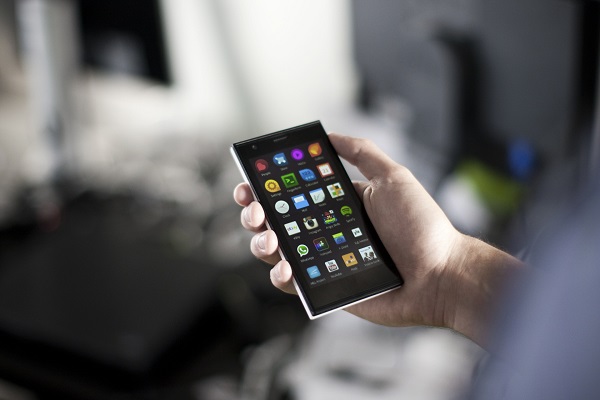
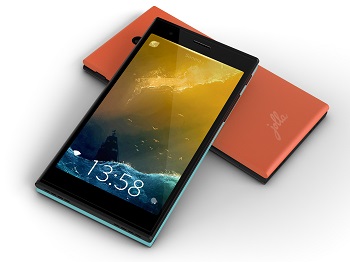
Finnish handset maker, Jolla, has officially stepped into the Indian market. The company unveiled its Jolla smartphone, which is available exclusively on Snapdeal. The phone, which has been out and released in several countries months back, is the first smartphone that runs on Sailfish OS. The OS is based on MeeGo (as well as Mer Project and Nemo Mobile), which was Nokia’s own project a few years back and is now taken ahead by some of Nokia’s ex-employees.

Jolla_Jolla (pronounced ‘Yolla’) sports a 4.5-inch (960 x 540) screen, with the option to change the rear cover as per your choice from a range of colours made available by the company. Under the hood, there is a Snapdragon 400 SoC (1.4 GHz dual-core processor, Adreno 305 GPU), along with 1 GB of RAM.

The phone is powered by a 2,100 mAh battery unit and comes with 16 GB of internal storage, which is expandable. On the back, there is an 8 MP (AF) camera (with an LED flash); while the front has a 2 MP camera.

Connectivity-wise, there is Bluetooth 4.0, microUSB 2.0, 4G LTE (limited support), WiFi b/g/n, and GPS.

The phone has been priced at Rs 16,499, and is available from Snapdeal. The first 90 buyers will also get a special VIP box with the phone.

With so many affordable, value-for-money handsets available in the market today, it’s going to be a tough road ahead for Jolla. The OS appears refreshingly different from what we have on pretty much every smartphone out there – Android, iOS and Windows Phone – but would require a lot more to get some going into the Indian market.

Exit mobile version