Categories
Tech

Review: Motorola Moto G (2nd Generation)

What’s new and what isn’t with the second generation Moto G? We do a spot check and come away impressed.
by Manik Kakra | @Manik_K on Twitter

Ever since Motorola has come back into the Indian market, the company’s motto has been to provide a richer Android experience to devices that are priced well below the flagships, something that not many have been able to achieve. The original Moto G was quite great device for its price and it did (still doing) really well in the market. With the new Moto G, Motrola has tried to keep things rather simpler – a refreshed model without too many changes. Does it live up to its predecessor’s level? Let’s try and find out.

The looks. Motorola’s new Moto G (XT1068) follows a different design than the original one, and something that, at least from the front, looks closer to the Moto E. On the white model, the (two silver strips) front-facing speakers (stereo) stand out surrounding the 5-inch 1280 x 720 LCD IPS touchscreen. While the front panel has Gorilla Glass on top, the rear is made up of soft matte plastic material with a slight curve across it.

The phone, at about 150 grams, feels hefty and fits pretty well in your hand. One half of the sides is matte (from the back) and the other is gloss (front part), giving you a solid grip. Other components on the front include the 2 MP front-facing camera, LED notification light, and sensors. The back has the ‘M’ logo placed in sort of a dimple shell, new 8 MP camera with an LED flash.

The top houses the 3.5mm headset jack and secondary mic; while the bottom gets the microUSB port. The left side panel is absolutely plain; and the right one houses the volume rockers and Power/Lock key. These physical keys are required to be pressed hard and could have been given a better finish. Just to add, the screen is, as usual, prone to smudges and fingerprints, while the matte back isn’t.

The phone is equipped with a larger 5-inch HD screen, and the panel seems to be a different one from the original Moto G. It is bright, slightly better to operate under direct sunlight, has decent viewing angles and colours also appear sharp. If you’re used to a full HD panel, you might notice pixels on the screen, but other than that, there’s not much to complaint about it.

This dual-SIM handset comes loaded with Bluetooth 4.0, WiFi b/g/n, 3G connectivity, and GPS. As far as connectivity is concerned, the phone performs well. There are no shortcomings regarding network reception, GPS locking-on or Bluetooth use.

The phone’s call quality is on par with flagships and the volume level is slightly higher than the original Moto G, if I remember correctly. Coming to the in-ear sound, the default headsets are pretty decent, but they are not comfortable to wear (depending on your size). They keep coming off when used during commuting and make for a rather sub-par experience. On the other hand, the loud speakers on the Moto G are much improved. The front-facing stereo speakers are loud and clear, though not as punchy as you would like them for your videos and games, but they are noticeably better than many handsets in the mid-range.

Camera. The camera seems much improved from the one on the original Moto G. It can not only take more detailed shots but also less grainy. You can view a few images here: http://imgur.com/a/ymXMP

As you can see, images are more detailed, less noisy and colours appear brighter. The phone’s native camera app, though, is still not very impressive. Though low-light performance also seems to score better, there is still a lot of scope of improvement in this aspect. The focus mechanism needs work. There are just a few basic settings to choose from and you might want to try third-party camera apps.

Battery. The new Moto G is equipped with a 2,070 mAh battery unit. The phone’s battery life is quite good. More often than not, it lasted me a day with around 10 per cent still in the tank. The usage mainly included almost all WiFi for Emails, Twitter, a few videos on the YouTube app, 5 to 10 minutes of calling and half an hour of in-ear music. If you are okay with the Power-saving mode, you can stretch the battery life further.

Performance and software. The Moto G (2nd Generation) is powered by Qualcomm’s snapdragon 400 MSM8266 SoC (1.2 GHz quad-core processor, Adreno 305 GPU), along with 1 GB of RAM. The phone runs on near-stock Android 4.4.4 with a few little additions done by Motorola. Motorola has included its usual set of apps and services like Assist, Help, Migrate and Alert. The phone feels smooth to operate and doesn’t stutter while browsing the Web, playing games or just navigating through the OS.

One thing worth mentioning is that going to and from one app to another, you will see that apps take a bit more time to load than on high-end phones. This is mainly due to Motorola not upgrading the RAM size. Otherwise, this is a capable smartphone that doesn’t often lag or show signs of freezing in the OS. If you have used a Nexus device in the last two years, or one of Motorola’s recent devices, you will feel at home with the new Moto G. The whole look and feel is that of stock Android 4.4.4, and the next major upgrade is in the pipeline within the first three months of Google releasing it. For storage purposes, you get over 12 GB of space and also the option to use a microSD card of up to 32 GB size.

Wrapping up, the new Moto G can be called as a slight refresh to the original one. With Motorola keeping screen resolution, RAM, SoC and battery unit the same, there mainly only a couple of big changes made. But it is not to say they’re completely wrong in doing so. With better camera, good battery life and screen, and decent design, the new Moto G is one of the best performers in this segment. If you already own a Moto G, then you’d do better not to buy this, but if you’re looking for an Android smartphone within Rs 15,000, you can surely check out Motorola’s newest mid-range offering.

Categories
Do

Join the ‘Say No, Accept No’ campaign

Two NGOs team up to present a youth-centric campaign to end gender-based violence against women in Mumbai; entries currently accepted.
by The Editors | editor@themetrognome.in

With cases of crimes against women in Mumbai and other places on the rise, the time is ripe for a deeper look at the issues plaguing men-women interactions today. Naturally, a change in mindset is required, especially at the youth level, so that young adults may grow up into responsible citizens with healthy attitudes towards sex, gender and men-women relationships at home and outside.

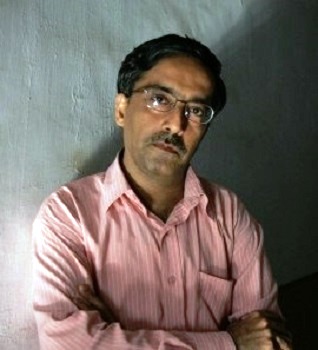
Harish SadaniTo this end, the city-based NGOs MAVA (Men Against Violence and Abuse) and CARMA (Citizens Against Rape, Molestation and Atrocities), have teamed up to present the youth-focussed campaign ‘Say No, Accept No’. Says Harish Sadani (in pic on left) of MAVA, “In today’s times, a campaign like this is essential to end gender-based violence against women. The ‘Say No’ part of the campaign deals with saying ‘no’ to situation arising from gender bias at home or in other social settings, and the ‘Accept No’ part deals with situations where a man must step back if the woman is unwilling to do something.”

As the first part of the campaign, the campaign is rolling out two inter-collegiate competitions – one is a short film contest, and the other is a poster making contest.

The films and posters may centre on one or more of these themes:

Say NO to:

– Verbal abuse/bad words directed towards mothers and sisters.

– Forced marriages.

– Domestic violence.

– Dowry.

– Marital rape.

– Unwelcome ‘friendly’ hug or touch.

– Gender bias in the family or other social setting.

– Gender discrimination at work and public places.

– Sexual harassment.

– Sex-selective abortions.


Accept NO when:

– She says ‘no’.

– She is not comfortable hugging.

– She doesn’t give consent.

– She expresses rejection.

– She doesn’t want to go for coffee or movie.

“Entries can be in English, Hindi and Marathi, and the participant must be a student of a Mumbai-based degree college,” Harish says. “Those making short films should see that their entry is not more than 30 minutes long. Similarly, those making posters should ensure that they send A3 sheets.” Entries are currently being accepted and will close on November 4, 2014.

Want to participate in the campaign or know more about it? Send your entries to MAVA, Flat no 705, Parishram Bldg., 7th floor, behind S Keer Complex, Bhandar Lane, LJ Road, Mahim, Mumbai – 400106. For details, call Harish Sadani on 9870307748, or Ashvin on 9773727887 or Aspar on 9920916736.

(Picture courtesy www.medindia.net)

Categories
Event

Attend: Book reading by Katharina Hagena

Bestselling German author Katharina Hagena will read from her book ‘Der Geschmack von Apfelkernen’ today, at the Max Mueller Bhavan.
by The Editors | editor@themetrognome.in

Katharina HagenaFor German author Katharina Hagena (in pic on left), her memories have a taste, a sapidity, an aftertaste, an aroma. Packed with gorgeous imagery and undertones of buried secrets, her book The Taste of Apple Seeds (Der Geschmack von Apfelkernen) is an international bestseller.

This evening, Katharina will read from this and some of her other books at the Max Mueller Bhavan, Mumbai. She will also have a conversation with Ranjit Hoskote and will interact with the audience.

In Der Geschmack von Apfelkernen, when Bertha dies, her granddaughter Iris inherits her house and finds herself back in the home where she and her cousin used to play dress-up in the summer holidays. She wanders through the rooms and garden, a timeless world where red currants turn white overnight, where a tree blossoms twice, villages vanish and women shake sparks out of their fingers. But the garden is now wild and overgrown. After she fell out of the apple tree, Bertha became absent-minded, then forgetful. Eventually, she didn’t even recognise her own three daughters. Iris stays in the house on her own for a week. She cannot decide whether she wants to keep it. She swims in a black lake, receives a visitor, kisses an old friend’s brother and paints a wall.

While she wanders from room to room, she gropes her way through memories and things she had forgotten: What did her grandfather really do before he went to war? Which men were Bertha’s daughters in love with? Who ate his apple with the seeds? Finally, Iris recalls the night her cousin Rosmarie had the terrible accident: What was Rosmarie doing on the conservatory roof? What did she want to tell Iris? Iris senses there are several ways to forget. And remembering is only one of them.

 Katharina Hagena will read German and English excerpts from her books. Head to the Library, Max Mueller Bhavan, Kala Ghoda, at 6 pm. 

(Pictures courtesy ebookee.org, www.zimbio.com)

Categories
Listen

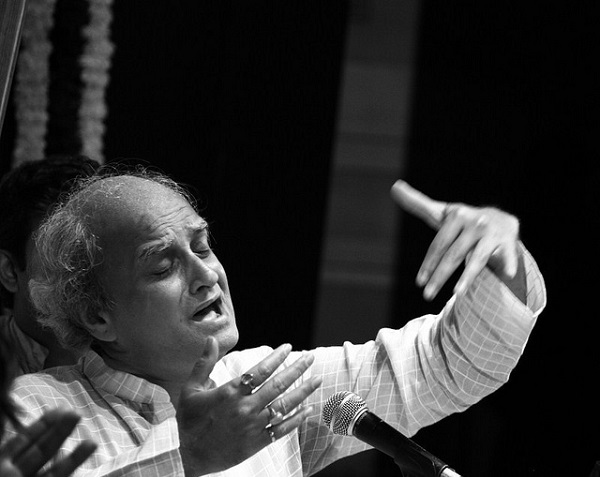
Attend: Vocal recital by Ulhas Kashalkar

Today, the NCPA will host vocalist Ulhas Kashalkar in a recital where he will present jog-ragas in his unique style.
by The Editors | editor@themetrognome.in

It’s always a pleasure to attend a vocal recital, and it’s even better when the vocalist is Pandit Ulhas Kashalkar.

This evening, head to the NCPA at 6.30 pm to hear the remarkable vocalist render jod-ragas the way only he can. The concert is being held in collaboration with Kilachand Foundation and Mariwala Foundation.

The repertoire of Jaipur gharana, to which Kashalkar belongs, is characterised by the inclusion of jod-ragas, in which two ragas are combined in such a way that both retain their individual identity, and yet create a distinct aesthetic atmosphere. Rendition of such ragas is indeed demanding, necessitating a special training.

Kashalkar has had the privilege of learning from many reputed vocalists including his father ND Kashalkar, and from stalwarts like Ram Marathe and Gajananrao Joshi. Endowed with a mellifluous voice, he has command over a wide repertoire of jod-ragas and rare ragas.

In this recital, Ulhas Kashalkar will present jod-ragas to reflect a harmonious blend of Gwalior, Agra and Jaipur traditions.

Categories
Event

Attend: Showing of artist Brinda Miller’s stunning new work

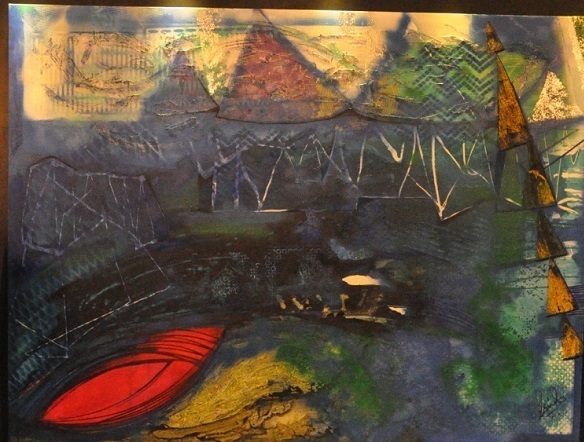
Renowned artist Brinda Miller’s new painting, titled ‘Himalayanscape’ is a customised piece of art inspired by the Himalayan mountain range.

Natural mineral water brand Himalayan recently partnered with renowned artist Brinda Miller to create a customised piece of art inspired by the Himalayas. The painting, titled ‘Himalayanscape’, was showcased at the Lakmé Fashion Week Winter/Festive 2014. It is now open for viewing at the Tao Art Gallery.

The painting is Brinda’s vision and representation of a pristine landscape, that narrates a story about water that flows from the Shivalik range in the Himalayas to an aquifer below the Earth – that is, from the source (the sky) to its eventual destination on earth.

The painting is now being displayed at the Tao Art Galleryand will be auctioned in the next couple of months. The proceeds from the auction will go towards a charity that works in the area of conservation of the Himalayas.

In Brinda’s words, “The snow-capped mountains, the layers of organic minerals, the striation of rocks, silt and gravel are metaphorically painted on the canvas – through textural chroma-zones, translucent multi- layering and opaque impasto of paint. The painting, in abstract style, is a montage of heaven, clouds, rain, earth, mountains, the forests, rocks and natural reservoirs of water.” The hues are pure whites, blues, silver and soft grey tones, with a subtle touch of turquoise and pink.

The mixed media work is a combination of acrylic paint, oil paint, handmade paper, silver leaf on canvas – (8 feet x 6 feet).

Categories
Read

‘Never aimed to discuss Ekta Kapoor’s private life’

Kovid Gupta talks about chronicling the journey of Balaji Telefilms, and why Ekta Kapoor has had a profound effect on him.
by Vrushali Lad | editor@themetrognome.in

Admittedly, Ekta Kapoor and Balaji Telefilms have had a huge impact on Indian television. From introducing soap operas to Indian TV screens to steeping each of their serials’ storylines in family values, and from introducing ‘time leaps’ to help sagging TRPs and keeping storylines fresh with multiple plot twists, Ekta Kapoor truly changed the way Indians would watch TV.

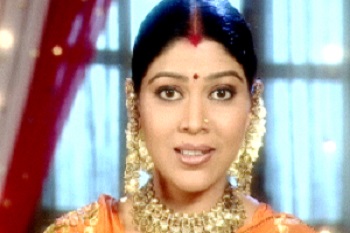
Ekta KapoorTo celebrate the success of Balaji Telefilms and tell the super studio’s story to the public, which has since also successfully ventured into film production, screenwriter Kovid Gupta recently released his deeply reverential book on the subject, Kingdom Of The Soap Queen. Kovid has been a writer on the shows Balika Vadhu, Bade Achche Lagte Hain and Chhan Chhan.

The book traces the origins of Balaji Telefilms, the journey of the studio as it brought out its first serial, the dizzying heights of success it achieved with its popular ‘K’ soaps, its sudden failures and its success with offbeat films.

In an interview with The Metrognome, Kovid discusses the book, Ekta Kapoor and why he feels there is a dearth of material on Indian TV.

Excerpts from the interview:

How long did the actual research for the book take?

The research took about six months. I would say it was an ongoing process, though, because with every new chapter I would scribble, I would learn something new about Balaji.

What did the research comprise of? How many people did you interview, how many documents did you go through?

It was an exhaustive process. I spoke with nearly 100 people, including Shobha ma’am, Ekta ma’am, and people who have been a part of various departments at Balaji. This ranged from actors to directors to writers to creative heads, to even people involved with music, costuming, and editing of the many programmes. Documents wise, I had a thorough look through various online resources; [I went through] past interviews of Ekta ma’am and soap stars and numerous Balaji articles and press releases.

What has been Ekta’s influence on you, personally?

Huge. She has been a major influence on me – especially during my teenage years. I was an avid viewer of the K soaps, and attribute a lot of my understanding of Indian culture to her programmes. I grew up in the United States for most of my life, and watching the festivals, rituals, and traditions in her shows every day provided a direct connection to India.

As a business school student, there is so much I have learned just by following her entrepreneurial career. Her spontaneity amazes me. She is able to take a mundane story plot and twist it around in minutes, often time conveying the same message in a completely unexpected way – her way of telling a story has this magic to it. As a company, Balaji’s track record is one to learn from and follow. There have been times when it has produced 18 serials at a time – that’s six hours of footage every day – the length of two Bollywood movies!

How has she reacted to your book?

The book came into the market when I was not in India. As a result, I did not have the chance to meet Ekta ma’am and present the book to her as I had hoped to do. The book would have been impossible without her blessings, though. She was a huge support to me when I was doing my research and interviews. She took out her extremely precious time to talk to me about it even though she had so many films and television shows in the pipeline.

There are not many books on the Indian television space, apart from a few fictionalised accounts. Why do you think that is?

Good question. It baffles me as to why we don’t have more material out there. With the way television is growing, along with the rising corporatisation of the industry, it has become all the moreKahaani Ghar Ghar Kii important that we have material out there for aspiring entrepreneurs to use as case studies. This book was written with that exact purpose: to research and discuss the success story of the country’s most successful television production house. Young India is increasingly becoming interested in the management of show business.

I spent my college years craving for literature on Hindi television, or episodic screenplays of our soaps. When I came to Mumbai for the first time in 2010, I remember strolling into a Crosswords to find the book Soap! Writing and Surviving Television by Venita Coelho dotting the shelves. I zealously read the book cover to cover overnight. Soon after that, I started assisting Rajesh Dubey on Balika Vadhu. Rajesh Sir wholeheartedly opened up a library of old screenplays for me to study from. Having material to read is just so vital.

As a reader, I would have loved to read more of Ekta’s quotes in the book, if not an entire chapter in her own voice. Was this a deliberate omission?

The book is called “Kingdom of the Soap Queen”. The focus of the book is the kingdom itself. It is a compilation of the many stories that made Balaji what it is today. My aim has never been to discuss Ekta ma’am’s private life or her personal journey, but instead to tell the story of the company that she has been an integral part of.  The book is about the evolution of an organisation that she has so successfully brought up from the ground. The heart of the book is the stories that people have told me, in their own voices, of the learning experiences they have had, and the roles they have each played in making Balaji the empire that it is today.

What is your personal opinion on the unique phenomenon one sees, where Ekta Kapoor the TV producer of soaps projects a highly conservative image of Indian values and family life, versus Ekta Kapoor the film producer, who comes up with edgy, sometimes dark content?

Ekta Kapoor is someone who knows her audience inside out. She realises the mass appeal of television. Unlike the majority of the West, our television shows continue to enter family-dominated spaces. Maximum number of India households continue to have one television, and families continue to eat their dinners together in the company of each other. In such a scenario, controversial content has to be carefully portrayed on television. In films, one chooses to walk into a cinema hall; a person picks the group that he or she will watch a motion picture with. The movie-going experience allows for an approach that is more novel, innovative, and cutting edge. I think Ekta ma’am works on the very solidified difference between these two forms of show business.

Any observations you wish to make about the Indian TV industry and Balaji Telefilms?

We are on the cusp of an industry-wide renaissance. The sun is setting on a mere replication of successful concepts and waves of experimentation are crashing against the status quo. The increasing number of channels is leading to a level of competition that is higher than we have ever seen before; this is pushing producers to hit their creative peaks – the sky is the limit today. I’m keen to see what the eruption of the digital volcano is going to indicate for our country. Netflix is leading Hollywood rating charts with shows like House Of Cards and Orange Is The New Black. The rapid technological shift has opened up a whole new medium of episodic entertainment for audiences in India as well. Let’s see who manages to capitalise on this growing market segment.

An excerpt from Kingdom Of The Soap Queen:

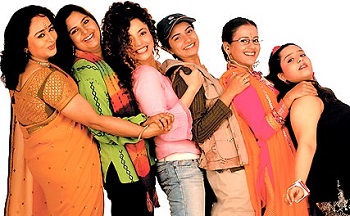
‘The teenage daughter of a huge film persona plants herself in an industry run by a handful of experienced men. She runs a company from her father’s garage and fashions a weekly sitcom about five girls around the same age as herself. While she manages to achieve some prosperity, her company is far behind those of Hindi television’s veteran producers. Balaji Telefilms seems to be an adolescent’s project that has a short life expectancy. Serious content from this company seems unimaginable.

Hum PaanchWell, at least that is what the press is saying.

In spite of dabbling with television for some time and the success of Hum Paanch, Ekta was far from receiving the level of respect, regard or even courtesy that her male contemporaries were getting in show business. The newspapers and magazines of 1995 splashed Balaji’s name around as a teenage project launched with hard-earned parental savings. Many industry people were reluctant to join hands with this fledgling company. In fact, some would have even chosen unemployment over risking their reputations by collaborating with the brand-new studio-in-the-making.

While yellow journalism tends to disconcert its victims, the disparagement had a reverse effect on Ekta. She took the belittling and used it to galvanise herself. She knew if she had the ability to make people chuckle, she also had the ability to make people sigh with the sorrow of melodrama. Her company had to somehow rise above the criticism and conquer it. It was time Balaji buckled down and showed how serious it could really get. In this pursuit of tapping the unexplored dimensions of Balaji’s creativity, Shobha and Ekta took on the tricky task of soap opera production.’

(Pictures courtesy Kovid Gupta, www.gaylaxymag.com, www.startv.in, www.scoopwhoop.com) 

Exit mobile version