Categories
Event

Enter this talent show for the elderly

Umang fest comes back with a bang, announces a talent contest for senior citizens to be held in January 2015.
by The Editors | editor@themetrognome.in

We are heartened to see several initiatives – however small – being planned for and involving senior citizens in the city. This is one group of people that require recognition and applause in its autumn years, and any initiative that celebrates them should be roundly welcomed.

In this spirit of things, the Rotary Club of Mumbai Nariman Point and Rotaract Club of Rizvi Law College are coming up with ‘UMANG 2014-15 ‘, a talent show for senior citizens, on January 24, 2015. This is an annual talent show conceptualised and executed by Silver Innings Foundation since 2008, for seniors aged 55 years and above. The programme will be part of the Rotary District 3140 Service Week from January 23 to 29, 2015.

“We have been organising this programme since 2008,” says Sailesh Mishra of Silver Innings. “As there are not enough opportunities for the elderly to show their talent, the main purpose of this programme is to provide a platform for the elderly to display their talents. This is not a competition between the elderly, but a forum to encourage them to demonstrate their hidden talent.” The event is supported by Dignity Foundation, FESCOM Mumbai, HelpAge India, Harmony for Silvers Foundation, 1298 Senior Citizens Helpline, and The Metrognome.

Umang invites entries in one-act play, singing, a solo of group musical or dance performance, skit, mimicry, drama, or any other talent which can be presented on a stage. “We are restricting the number of acts to not more than 25,” Sailesh says, adding that the organisers are currently ‘auditioning’ potential participants over the Internet (via YouTube video links of their performance). The talent show will be held at Birla Matoshree Sabhagriha, New Marine Lines, on January 24, 2015 from 10 am to 12.30 pm.

Do you want to participate in the Umang Talent Show for seniors? Call 9987104233 or 9029000091 for registration and details. Send your completed form with DVD or YouTube link of your performance to silverinnings@gmail.com, or to Silver Innings, J-47/48, Shop no.10, opposite Navgraha bldg, Poonam Sagar Complex, Mira Road East, Mumbai 401107.

(Picture courtesy www.sereneretirement.com. Image used for representational purpose only)

Categories
Read

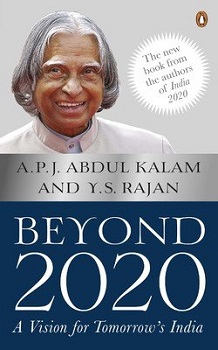
Review: ‘Beyond 2020 – A Vision For Tomorrow’s India’

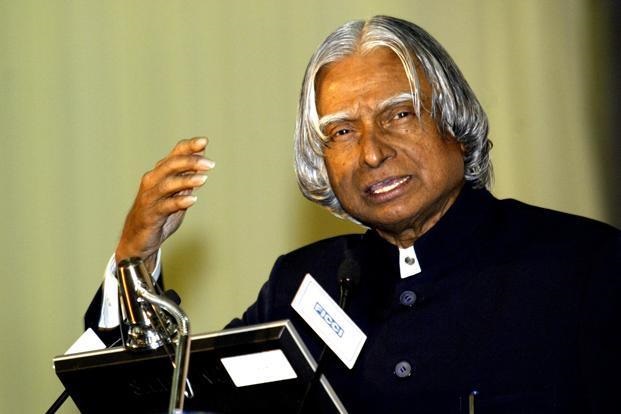
APJ Abdul Kalam’s newest book raises several questions, but sadly, does not provide any answers, nor touch upon current realities.
by Humra Quraishi

Beyond 2020 – A Vision For Tomorrow’s India is the latest book written by ex-President APJ Abdul Kalam and YS Rajan. It focusses on India’s future progress in the backdrop of the existing facts and figures and the present-day situation in the country.

To quote from Dr Kalam’s introductory chapter, “Our book Beyond 2020 has fifteen chapters with extensive details on how to take the nation from progress to progress by pushing through missions on industries, services and agriculture. I feel the crying need in the country is not a shortage of plans, but arriving at the correct methodologies to implement the plans and figuring out how to reach the benefits to the people for whom the plans are intended. Today, the challenge before India and every nation is reaching the reforms and benefits to the targeted population…”

Beyond 2020He minces no words anywhere in the volume, often coming straight to the core of the issue with refreshing candour: “Based on my work in universities in India and abroad, during my teaching and research association, I have come to the conclusion that it is essential to evolve a sustainable development system framework, in the way the Providing Urban Amenities in Rural Areas (PURA) project has taken root in India. The major research and action needed is on how the benefits of sustainable development can reach the targeted population of our country.

“Hence, we have evolved two unique systems: one is called the ‘User Community Pyramid’ (UCP) and the other the ‘Societal Development Radar’ (SDR). The UCP is an integrated solution based on technologies and applications for sustainable development with possible users at the bottom of the pyramid. You have to ask yourself, what sort of research you can focus on in the areas of water, energy, waste, pollution, mobility and biodiversity, and how it is going to be connected to the user community. The second system, the SDR reviews and monitors how the user community has benefited from the UCP.”

The book ends on two significant notes, in the last chapter titled ‘Can India do it?’ It reads, “This is our four-point action plan for the nation: Making ample water available for both urban areas and the 6,00,000 villages of the country, and for irrigation…creating an earning capacity for every family, particularly the middle class and people who are below the poverty line. This is about 150 million out of the 200 million families in the country. Working toward achieving sustainable economic prosperity of the nation with the generation of employment potential for India’s 600 million youth. Evolving great cities citizens of India.

Sadly, there is no mention of the communal strains that are once again taking root in the country and steadily spreading everywhere. I wish Dr Kalam had addressed this concern, since he speaks so movingly about the betterment of all Indians and their families.

This is a detailed and thick book, and readers would do well to be aware of recent developments in the country before reading this book. As I read it, I confess I was a little befuddled also by the scores of facts, figures and theories (many of them purely scientific in nature) laid out generously all over the book – maybe I am not of a scientific bent of mind, so I found the going a bit tough with these bits.

Also, I confess I was a little disappointed with the way several important questions and issues have been touched upon, even discussed, but not sufficiently addressed. I wonder why the author didn’t attempt to provide any solutions – even opinions – on these matters.

Get a copy of Beyond 2020 – A Vision For Tomorrow’s India here.

(Pictures courtesy www.livemint.com, www.flipkart.com)

Categories
Tech

Review: MAPS.ME app

Maps are important on our devices these days – and this app is fairly decent, though some points require work.
by Manik Kakra | @Manik_K on Twitter

A map is one of the first things we install on a new device – it is essential to one’s commute, planning and organising according to expected traffic jams. Thanks to popular options like Google Maps and Nokia’s HERE Maps, many smartphone users today find it convenient to reach a destination without having to ask around on the way.

ProMAPS.ME is another kid on the block that aims to make your mapping experience more convenient and affordable. The developer team seems quite proud of its offline capabilities, data points, etc. While we already have offline maps features on HERE and Google Maps, it is good to see more and more developers realising how handy this can be, especially when you aren’t in an area with a solid network reception quality, or are running low on data balance.

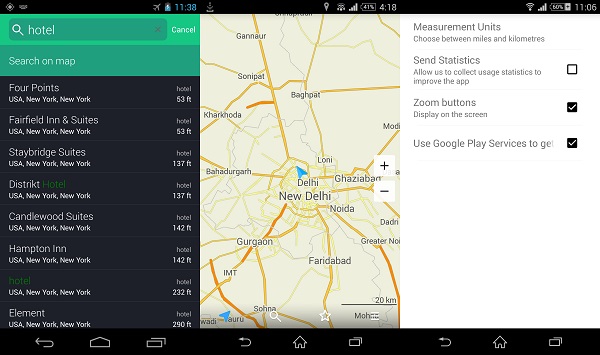
The service uses OpenStreetMap in the backend for the entire data. The app’s whole UI look and feel is nice and not shabby to use. Settings and other options are simple to reach and select without having to try too hard when using it for the first time. You can search a destination’s route, a place of interest like a food joint, hotel, and many more. If needed, you can also add a place to your bookmarks, which you can later access or check by just tapping on star on the app’s main screen.

When downloading any country’s full offline map, you get options to either download its map or a map with a driving route in place (which makes more sense for most people). As far as searching for places and locations is concerned, the app does a good job. It was able to give a list of places and points pretty much every time I searched. However, when it came to live route directions and traffic condition, MAPS.ME lacks quite a lot, at least for Delhi (where I reviewed it). The routing experience and navigation could be improved and the developers should consider adding more useful information and options on screen while the user is in between.

Plus, there’s still not enough data in place, it seems; there’s no option to check commute to even a popular place via public transport, which I found the most disappointing thing about the service. But because they are new and still cementing their place in the app market, I am hopeful that these few niggles will soon be dealt with.

If you are looking out for a maps app and haven’t given Google Maps or HERE Maps a try, MAPS.ME seems like a decent option, but only if its constrained data and options aren’t troublesome for you. Hopefully, the app will be updated regularly with some work behind the curtain as well.

MAPS.ME is a free app (it was a paid one previously), and is available for Android, iOS and BlackBerry OS 10.

Categories
Watch

Watch: ‘Kiss The Girls’

The 1997 thriller will be screened this afternoon at the US Consulate General, BKC, on a free-to-enter basis. Do not miss.
by The Editors | editor@themetrognome.in

This evening, Friday, December 19, the US Consulate General at Bandra Kurla Complex is hosting a screening of the hit American thriller, Kiss The Girls.

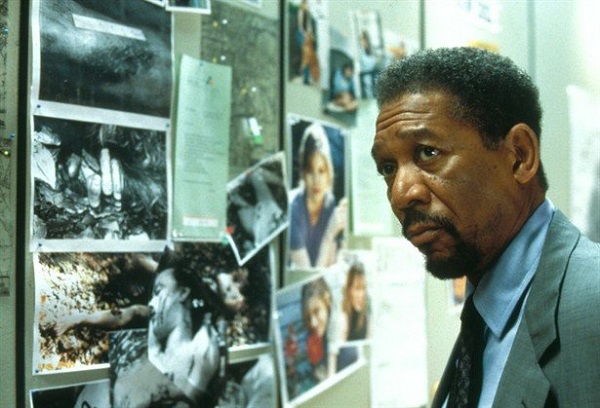
Based on a book by the same name penned by writer James Patterson, the film stars Morgan Freeman, Ashley Judd and Cary Elwes in lead roles. The film begins with forensic psychologist and detective Alex Cross (played by Morgan Freeman) going to North Carolina to investigate when his niece is reported missing from there. He finds out from the cops that his niece is one of several women recently reported missing. Soon, one of the missing women is discovered dead in a desolate forest. Almost immediately, police intern Kate (played by Ashley Judd) is kidnapped.

However, Kate is able to successfully escape from her kidnapper – she wakes up from a drugged state in a dwelling where a masked man is holding her, and probably several other women, prisoner. She sustains severe injuries while escaping, but when she recovers, she joins forces with Alex Cross to track down the kidnapper-killer.

The screening is part of the American Centre’s weekly film shows for Mumbai.

The screening is at 2 pm. Head to US Consulate General, C-49, G-Block, Bandra (East), Mumbai 400051. Call 022 26724231 for details.

(Picture courtesy www.thefancarpet.com)

Categories
Watch

Watch: 3 films at the NCPA

Three documentaries – in English, Gujarati and Assamese – will be screened this evening at the NCPA. Don’t miss these films.
by The Editors | editor@themetrognome.in

The NCPA has been hosting some truly wonderful films recently. Today, too, Mumbaikars have three good documentaries to look forward to under the aegis of ‘NCPA Reality Check’.

In collaboration with the Indian Documentary Producers’ Association (IDPA), the NCPA will screen Qissa-e-Parsi: The Parsi Story, Rahashyar Bitchaku and Resonance Of Mother’s Melody.

Qissa-e-Parsi: The Parsi Story

The film is an English-Gujarati-Hindi language documentary that aims to understand the Zoroastrian faith, and the Parsi philosophy of love and laughter that makes it so unique and loved. It is a 30-minute film that is directed by Divya Cowasji and Shilpi Gulati.

Rahashyar Bitchaku (Seven Hundred Zero Zero Seven)
This is an Assamese Film with English Subtitles and is 29 minutes long. It is based on the life of Ranju Hazarika, a popular pulp fiction writer of Assam. He has published nearly 700 books. The film is an attempt to unfold the man in an unconventional way so as to engage the audience in the world of the writer. The film has been directed by Altaf Mazid.

Resonance of Mother’s Melody
This is a Khasi Film with English Subtitles, and is 23 minutes long. Kongthong, a remote Khasi village in Meghalaya, is characterised by an age-old practice of communication: whistling. A young researcher visits the place and interacts with the village headman. She discovers that every child is given their own special tune at the time of birth. This wonderful film is directed by Dip Bhuyan.

Head to the NCPA today at 6.30 pm. Admission is on a first-come-first-served basis. NCPA members will get preferential seating till 6.20 pm.

(Featured image courtesy www.delhievents.com)

Categories
Tech

Review: Xiaomi’s Redmi Note

With the new Redmi Note, Xiaomi sets its eyes on large-screen phone buyers, with a modest under-Rs 10,000 price tag.
by Manik Kakra | @Manik_K on Twitter

Xiaomi’s entrance into the Indian market was quite a news story. While the company didn’t sell as many units to set the market on fire lots of users, especially who were active over online portals, heard and talked about them. If you remember, we were quite impressed by the Mi 3, which performed really well despite in most departments despite priced under Rs 15,000. And with the Redmi Note, Xiaomi has set its eyes over large-screen buyers with a price tag of under Rs 10,000.

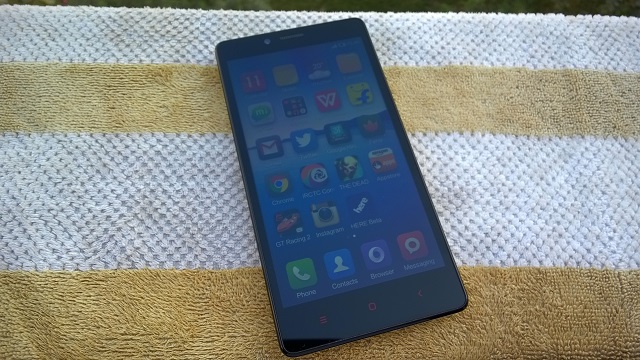
Looks and design. Xiaomi’s Redmi Note (HM Note 1W) follows the large-screen-that-isn’t-high-end trend. Weighing almost 200 grams and not being a thin device, the front has a 5.5-inch HD screen with Corning Gorilla Glass 3 on top. Three capacitive buttons – Options, Menu, and Back – below it, which glow in Red but aren’t very bright. Above the screen are the front-facing camera, speaker grill and sensors along with a tiny LED notification light.

The back has a glossy thin plastic cover, removing which reveals two SIM card slots, microSD card slot and the removable battery unit that also stretches to the sides. The back houses the 13 MP camera with the LED flash next to it, loudspeaker towards the bottom and the Mi logo in silver. No doubt had the back been a little less slippery, or with a better finish, one would have found gripping the device more comfortable.

While the sides are plain, the right side has the Volume rocker and Power/ Lock key. These keys are not very premium to look at, but they are tactile to press. At the bottom is the primary mic and microUSB 2.0. On the top, you have the 3.5 mm headset jack and secondary mic. You could say the phone looks nothing extraordinary, and we would have liked the phone to be less bulky.

Screen. Its 5.5-inch (1280 x 720) screen is just about okay when it comes to resolution for phones in this price range. Images and webpages look quite sharp on the screen, though videos tend to appear a little washed out. The screen has decent viewing angles and can brighten when needed under various conditions. Games that support the given resolution, on the other hand, look just as nice as you expect.

Camera. The Redmi Note sports a 13 MP camera with an LED flash. Here are a few sample images.

The camera is no match for even a mid-range phone and just as good as most phones priced under Rs. 10,000. It takes sharp images under favourable conditions, but don’t expect a lot. Photos in low-light, as you’d expect, are not at all worthy and you should avoid using this phone when it isn’t bright with your subject being still.

Audio. Both in-ear and loudspeaker perform decently. You don’t get any headset in the box, so you would have to get one yourself. Using a basic pair of earphones with the phone, expect a decent quality, quite loud but not too great. The loudspeaker on the back is also just okay and just about does its job while watching videos.

Battery. The device is equipped with a 3,200 mAh battery unit and it is the best thing about this device. You get more than a day of juice even with a bit of heavy usage. Having always sync on, watching videos for about half an hour, checking Twitter, playing a game like GT Racing 2 for half an hour, the phone’s battery life stretches over a day, and with moderate usage, it should go even further. Being a large device, this is definitely a plus point.

Software and performance. The device runs on Android 4.2.2 coupled with MiUi. Under the hood, there is MediaTek’s MT6592 SoC (1.7 GHz octa-core processor, Mali 450 MP GPU) along with 2 GB of RAM. The user gets about 5.8 Gb of available storage out of the box. All the apps are on your Home screen as there’s no separate app launcher. You can make folders, change widgets on it and uninstall an app right from a Home screen.

MiUi is one of the active ROMs in the Android community and there are a lot of tweaks and mods available for it, if you want to try. It has been designed well with most things, like the Notification center, toggle buttons, icons, which go well with the OS’s overall look and feel. Long-pressing the Options key gives a horizontal list of recent apps from where you can remove it; lock it apart from opening it. Or you can also remove each of those apps from the recent list and memory. Lock screen is simple yet useful: with a simple swipe-down gesture from a particular point to unlock it, or swipe it in other sides to directly open Messaging, Camera or Call Log.

The general performance of the phone leaves a lot to be bit desired. Initially, it seemed smooth to scroll, open apps and watch videos, but within two days of use, I saw quite a few issues. Many times when you come back to Home from an app, the launcher reloads; or if you go back to an app, it goes blank (works fine on other phones), which is a little surprising considering there’s 2 GB of Ram in place. Plus, the phone is running on Android 4.2.2 that was released two years back and there’s no word on when it will be updated to Android 4.4 (leave aside 5.0). Scrolling between Home screens, Settings, Dialler is mostly fine but you see signs of lag every now and then. Having said that, the phone handles games and HD videos without any troubles, this is one area that isn’t going to disappoint you. To sum its overall performance, it is not really bad, but it’s certainly not on par when you have used something like the Moto G (1st Generation) that is its competitor.

Concluding our review, the Redmi Note is a decent start from the company to kick off its ‘phablet’ plans. With a good screen, great battery life, decent camera and sub-par performance, anybody coming from a Mi 3 won’t be very happy, but for those looking for a large-screen phone under Rs. 10,000, this could become a device to consider only if the company releases OS updates for it that includes a lot of performance improvement.

Exit mobile version