Categories
Trends

Mumbai, Bangalore, blog the most in country

IndiBlogger.in and Businessworld report analyses bloggers’ preferred topics, language of communication, and how many blogs are monetised, among other factors.
by The Editors | editor@themetrognome.in

Some years ago, blogging took India by storm – suddenly, here was a free digital medium on which one could record one’s thoughts without having to worry about word counts or writing style or even presentation. Till date, it seems, India is still blogging seriously, and using the digital space for a variety of activities.

As per a report by Business World and IndiBlogger.in, titled The Indian Blogosphere 2014, it turns out that Mumbai and Bangalore have the highest numbers of bloggers and blogs in the country – both cities account for 12 per cent of all Indian blogs surveyed. Other cities mentioned are Chennai (10 per cent), Delhi-NCR (8 per cent), Hyderabad (6 per cent) and Pune (4 per cent).

The report is based on 36,464 authenticated blogs in the IndiBlogger.in database. 1,059 respondents replied to a questionnaire for the survey.

The findings

Blogging in IndiaBroadly, says the report, “Bloggers are the source of a majority of the content available on the Internet today. High levels of interaction indicate that blogs are topic-specific networks.” The report states that there has been a huge 48 per cent increase in the number of blogs from year 2012 to 2013. “In India, blogs have been the fastest growing medium across the web,” the report says.

A majority of Indian bloggers fall in the 25 to 35 years age bracket, and these account for 54 per cent of all bloggers.

As per the findings, more men than women blog today – 75 per cent men as against 25 per cent women. As many as 88 per cent of the Indian blogs are written in the English language, while the most Indian languages used include Hindi (5 per cent), Tamil (3 per cent), Marathi, Malayalam and Telugu (all 1 per cent).

Twitter is the highest used social media network – accounting for 46 per cent of use – while Facebook is second, at 29 per cent.

Interestingly, a staggering 86 per cent blogs are monetised, with Google Adsense being the most preferred monetisation tool (72 per cent), followed by advertising and affiliate marketing. Of the monetised blogs, 45 per cent blogs are being approached by brands or agencies.

Lastly, 31 per cent of most blogs’ traffic comes from followers. Blogspot.com is the most preferred blogging platform, with 63 per cent blogs present on this platform.

(Pictures courtesy gorgeousingrey.com, www.creativeeducation.co.uk)

Categories
Do

Photographers, prepare for a Sunderbans residency

Sunlight Art Funds will support five Indian artistes for a 15-day residency at the Sunderbans, West Bengal, from November 1.
by The Editors | editor@themetrognome.in

If you’re a photography enthusiast or an artist from any discipline, wanting to know all about the basic elements of the art of photography in a beautiful setting, this is your chance: the Sunlight Art Funds will provide a part sponsorship for a 15-day residency in the Sunderbans. The project, part of the ALTlab Social Photography Residency, commences from November 1, 2014.

As part of the residency, the selected artistes will receive a $550 residency fee award, and the artiste has to pay the remaining $450. As per a release for the event, “Contemporary artistes of any medium are invited to apply for the residency, those who are eager to use the darkroom and alternative processes to create images.” The release adds, “Applicants should be seriously engaged with researching and developing their own photography language. They should be open and willing to live modestly with other artists for a period. The selected residents will have to commit themselves to being present at the Sundarbans during the time of this residency programme. 
 
“Documenting the research undertaken during the residency is an integral part of the process that will shape the analysis of artist’s work and the conclusions that one may draw. Hence resident artists will be expected to carry out systematic and regular documenting of the processes explored through a blog or other media.” The processes identified for the residency are Van dyke brown, cyanotype, gum bichromates, salt prints, and albumen prints.

There is no age limit for applying.

Interested in applying for this residency? Look up www.goa-cap.com for information or write to himadri@proyedesign.com/goacap2011@gmail.com for information.

(Picture courtesy kolkataguide.starjili.com)

Categories
Learn

Who wants to learn Marathi?

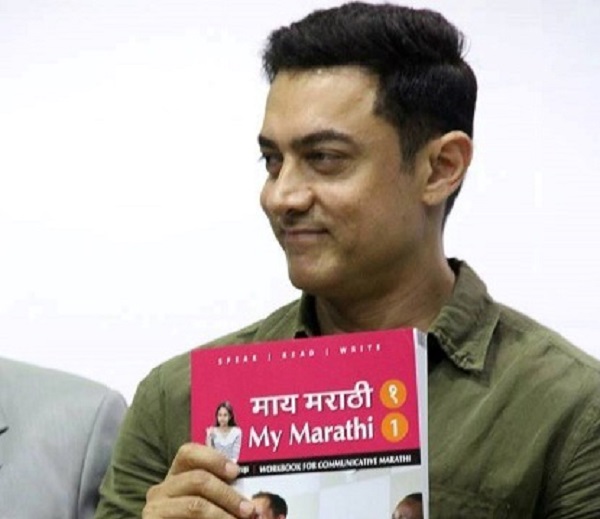
Learning Marathi is now fun and simple with the introduction of ‘My Marathi 1’, an interactive textbook that teaches communicative Marathi.
by Shubha Khandekar

Marathi, a language slated to become the sixth classical language of India shortly, after Tamil, Sanskrit, Telugu, Kannada and Malayalam acquired this status, has the fourth largest number of native speakers in India. It is now possible to learn this language through a tried and tested communicative approach used highly successfully to teach German. My Marathi 1, a textbook for communicative Marathi brought out by reputed publisher Granthali, in collaboration with the Department of German, University of Mumbai, addresses the long-felt need of teaching Indian languages through the use of innovative, integrated, modern multi-media tools and methods.

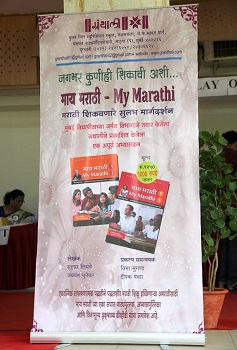
The book was released at a recent function presided over by Dr Rajan Welukar, Vice Chancellor, University of Mumbai and the guest of honour was Michael Siebert, Consul General of the Federal Republic of Germany. This event was also the celebration of the centenary of the Department of German as the University of Mumbai is the oldest Centre for German Studies in India.

MYMarathiRather than teaching by rote, as has been traditionally done, the book, which comes together with a workbook and a DVD, uses contemporary scenarios to facilitate learning through familiar concepts and imagery.

My Marathi 1 also makes beautiful use of the word ‘My’ which in some Marathi dialects means Mother, and is symbolic of the mother tongue, and strikes a deep chord in the learner right from the first lesson.

A collaborative effort between the Marathi Department of the University of Mumbai, the Marathi Abhyas Kendra of Mumbai and the Marathi Abhyas Parishad of Pune, the work has renowned actor Aamir Khan as its chief patron and financer.

Focused on proficiency in understanding, speaking, reading and writing skills, the book is targeted at a wide range of learners with different difficulty levels, such as teen and adult learners, Indian and foreign individuals and those with or without the knowledge of the Devnagari script. Pattern drills, audio and visual exercises, learning games, songs and poems, cartoons and conversations for oral practice form the backbone of the learning experience. Grammar and vocabulary are introduced in a user-friendly manner and the use of International Phonetic Alphabet (IPA) lends a global perspective of accuracy in pronunciation. Regular tests, answer keys and a comprehensive chapter-wise glossary reinforce learning through all the stages. The work is suitable for both classroom and self-learning.

Editor Vibha Surana, whose brainchild the textbook is, hopes to replicate the experiment for the teaching of Hindi too.

With this, the teaching of Indian languages in multilingual India is set to be revolutionised. This project facilitates learning of Marathi globally, bringing Marathi Language Teaching on par with European languages like German, Spanish, French etc., a consistent team of highly specialised experts from various knowledge domains like Marathi grammar, Marathi creative writers, Marathi linguists, German experts trained in the integrated communicative methods and techniques, graphic designers, photographers for topic specific original photo shoots, digital experts, multimedia experts for audio-visual DVDs etc. shall be required who commit their next five years entirely to this content generation work.

In view of the incursion of English over all regional languages, this is a welcome endeavour for giving a much needed boost to a language rich in literary tradition.

To know more, contact project coordinators Dr Vibha Surana and Dr Deepak Pawar, coordinators of the Innovative Marathi Language Teaching Project at the Department of German, University of Mumbai. Write to them at head@german.mu.ac.in, santhadeep@gmail.com, or call 9820595850 / 9820437665.

Categories
Tech

Fitness gizmo mymo comes to India

Dubai based company Tupelo launches a wearable, clip-on wireless fitness monitoring device that syncs to your iPhone or Android phone.
by Manik Kakra | @Manik_K on Twitter

Wearables, including fitness and workout gizmos, seem to be the rage these days. We have seen a lot of these being launched in the market, but not too many of them getting any decent responses from buyers. Now Tupelo, a new player in the Indian market, has come up with its mymo for Indian buyers.

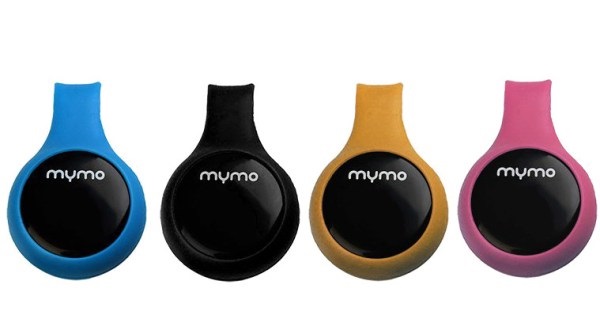
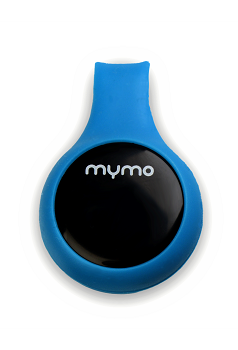
mymoMymo is a wireless clip-on device that tracks your activity during a day – steps, total distance – and then syncs them on the app on your iPhone or Android app, or even on the Web. You can clip it on your shirt, trousers or pocket and then check the relevant data later on using the apps.

Here’s what’s a little different with mymo: you can purchase the device with 12-month subscription for Rs 3,999, where premium users (Rs 9,999) can interact with Tupelo’s contracted doctors and consultants for you to understand your body data and activity level. In fact, the first 1,000 users will be eligible to win a 1 gram Swiss Gold coin if their activity level is among the highest.

Further, users earn ‘MyMiles’ and convert them to rewards to be earned in real life. Plus, if a user leaves his/her regime before completing it, they are penalised, more or less to keep them motivated to keep on working out or not leave their scheduled program.

The company is targeting the launch of more devices and services in order to get a good grip on this emerging trend of fitness wearables. The company promises mymo gives six months of battery life. You can buy a mymo from Amazon or Tupelo’s website.

Categories
Kharcha paani

Ad spends on a high this festive season

A survey on corporates’ plans to push products this festive season reveals maximum thrust will be on television, social media ads.
by The Editors | editor@themetrognome.in

We have now entered the phase known all over the country as ‘the festive season’. Starting with the Ganpati festival, the season will see Navratri, Diwali, Durga Puja and will culminate in Christmas in December.

As per a survey done by ASSOCHAM (Associated Chambers of Commerce and Industry in India), faced with a hard-sell situation, corporates are gearing up to spend about 25 to 30 per cent more on advertising this festive season as compared to the last year, with consumer durables, electronics and automobile sectors taking the lead. “But the blitzkrieg is expected in the e-commerce space vying for higher sales in mobile telephones, shoes, apparel, gifts and electronic gadgets,” says the survey.

Shopping in festive seasonThe feedback from corporates suggest that the marketing teams of the companies engaged in the Business-to-Consumer (B2C) sector have already lined up plans for their ad campaigns which will begin from Navratras and run through Durga Puja, Diwali and right up to Christmas. The period is also considered busy season for the Indian economy with the policy makers and the RBI expecting pickup in consumer spending  to rev up the overall GDP growth in the current financial year to 5.5 to 6 per cent, ASSOCHAM General Secretary DS Rawat said while releasing the findings.

“Though the corporates are facing higher cost pressure due to high interest rates, rising raw material costs and wages, marketing expenses mainly through advertisements in television, newspapers and the social media have become unavoidable with the companies in the media sector becoming the main beneficiaries,” adds the survey.

By increasing their ad spend by up to 30 per cent this festive season, corporates are hoping for a commensurate rise in their sales hoping that the consumer confidence will return with the new Modi government taking incremental measures to boost the economy, adds the paper. Big and attractive discounts are expected from the main players in the e-commerce space in tie-up with the manufacturers of mobile handsets and other electronic gadgets. In the brick and mortar model, the companies engaged in manufacture of TV sets, washing machines, microwave ovens will do some hard sell.

“They will be required to really go for hard push since the consumer durables and consumer goods sector have not been performing well, as was clear in the June IIP numbers”, said Rawat.

Seeking to build on robust sales in the past few months, supported by lesser excise duty, car manufacturers are expecting a real growth in sales, though they would need to spend more on their advertising and marketing costs, points out the paper. At least 40 per cent of the ad budget of the corporates is typically earmarked for the busy season which coincides with the change of weather and several festivals. The rural market also remains in focus, though the response this year around may not be encouraging because of scanty rainfall.

While TV remains a preferred medium for the FMCG, consumer durables and car and bike ads, the increasing penetration of the social media will also attract the marketing and media planners. The social media is far more focussed when it comes to target audience. Besides, the age profile of those using social media is a big temptation for the media spenders.

Nearly 69 per cent of marketing heads said that companies see in the festive season a perfect time to advertise their products. Even as the media cost has been rising, companies want to work closely through consumer touch points in retail outlets.

“Some of the marketing schemes will come up bundled with financing options like interest free loans, easy EMIs and extended periods of warranties”, highlights the paper.

(Picture courtesy www.dailydealmedia.com, www.topnews.in)

Categories
Tech

Motorola launches three new devices

The Moto G, Moto X, and Moto 360 came to India last week. Here’s a look at the specs for each.
by Manik Kakra | @Manik_K on Twitter

Motorola recently launched its new lot of gadgets in the Indian market. The company launched the next iteration of the Moto G, Moto X, its new smartwatch named the Moto 360, and a new Bluetooth headset called the Moto Hint.

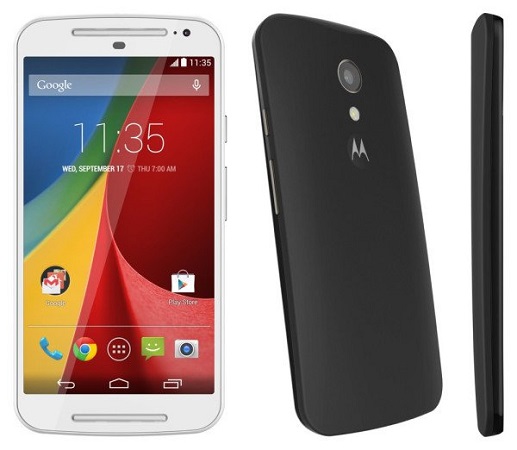
The new Moto G (in picture above)sports a 5-inch 1280 x 720 screen, and has the Snapdragon 400 MSM 8266 SoC (1.2 GHz quad-core processor, Adreno 305 GPU), along with 1 GB of RAM. The phone packs a 2,070 mAh battery unit and comes in 16 GB and 32 GB storage options and a microSD card slot. On the back, there is an upgraded 8 MP camera; while the front has a 2 MP camera. The dual-SIM version, running on Android 4.4.4, is the one to be available in India, starts at Rs 12,999 available from Flipkart.

Moto XThe new Moto X (in pic on left) comes with a 5.2-inch full HD AMOLED touchscreen. Under the hood, there’s a Snapdragon 801 (2.5 GHz quad-core processor, Adreno GPU), along with 2 GB of RAM. The phone boasts a 13 MP rear camera and a 2 MP front-facing camera. Packing in a 2,300 mAh battery cell, this Motorola device comes in 16 GB and 32 GB variants, but with no storage expansion option. Running on Android 4.4.4 with a lot of Motorola tweaks and voice-assistant stuff baked in, the phone will go on sale in about a month (no price announced).

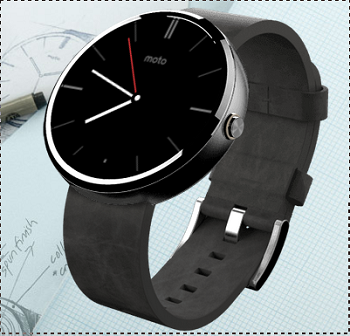
Motorola also announced the new Moto 360. The new smartwatch (in pic on right) features a 1.56-inch round display, with OMAP 3 chipset Moto 360inside, 512 MB of RAM, and 4 GB storage. There’s no official word on the availabilty or price of this IP67 water-resistant and dust-proof watch, but it will soon be available in the US for abour $150.

Another gizmo launched was the Motorola Hint. This new Bluetooth Hint is a Bluetooth headset with no separate buttons. It can be controlled using similar voice commands we have already seen on the Moto X.

Exit mobile version