Categories
Deal with it

Maharashtra’s sending medical help to Kashmir

A team of doctors and nurses wait to make their way to the disaster-affected areas in Kashmir; will send essential medicines, too.
by The Editors | editor@themetrognome.in

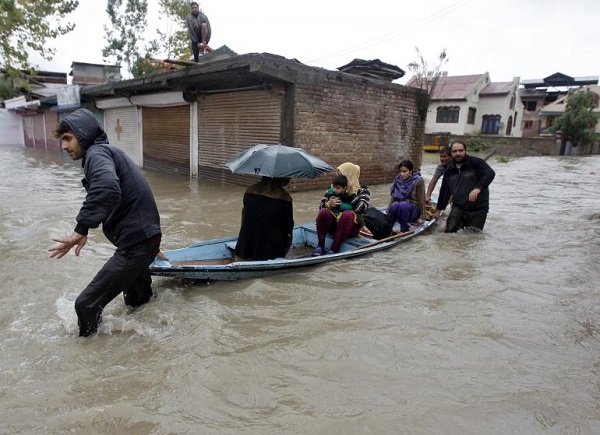
Prithviraj ChavanIt is one of the worst natural disasters to hit the country in recent times, and Jammu and Kashmir is still reeling from the after-effects of floods. While rescue operations are still on, the affected areas still house several people who wait to be rescued, and now, there are fears of epidemics spreading if the situation is not brought under control soon.

Maharashtra State is doing its bit to help the affected in J&K, by keeping a team of 25 doctors and 15 nurses on standby for the affected areas. Said State Chief Minister Prithviraj Chavan, “We have intimated their Government about our team of medical professionals that will be arriving to help. We have also asked the Chief Minister which medicines they require so that we can dispatch the same with the team. However, with communication lines down, he has not been able to reply. We are in touch with Health Minister Ghulam Nabi Azad on the issue.”

Prior to this, the Chief Minister’s Relief Fund has already donated Rs 10 crore towards the rescue and relief efforts in J&K. The State Congress unit has also dispatched 15 rubber boats to aid the relief operations. “We are reviewing the situation and we can send more boats if necessary,” Chavan said.

(Pictures courtesy www.firstpost.com, photogallery.sandesh.com)

Categories
Tech

Review: Gionee Elife S5.5

We study the world’s slimmest smartphone, its overall performance and how well it stacks up against its competition. Hint: not too well.
by Manik Kakra | @Manik_K on Twitter

Gionee launched the Elife S5.5, the slimmest smartphone, about five months back. A lot has been said and written on the device since then. Here’s my review of the phone.

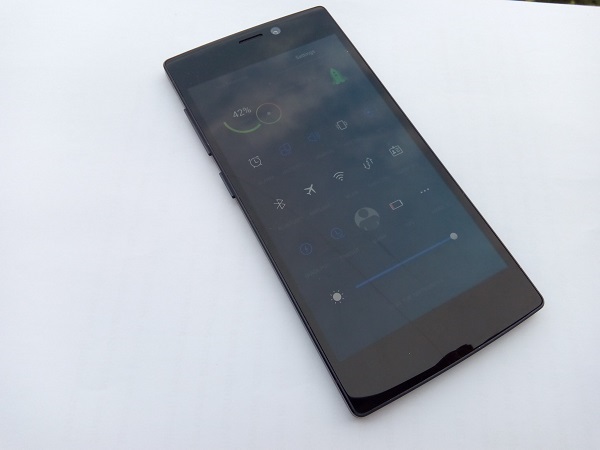
During the five months of its launch, there have obviously been several smartphone launches in India, but Gionee’s ‘slimmest smartphone’ title remains intact with it. The Elife S5.5 is just 5.5mm thick and is quite a looker. With glass on the back and front panel, this Gionee phone doesn’t follow ‘run of the mill’ material and design.

The first thing you will notice is how light and slim it is, and how well the glass has been put along on the back. Though both the front and back are prone to dust and smudges, there’s a slight oval shape with curves on the top and bottom of the phone’s body and edges, which are matte. The front also houses the 5 MP front-facing camera, receiving speaker grill, three capacitive buttons – Menu, Home, and Back – on the screen’s bottom.

The left side panel has the volume rockers and Power/Lock key, and the buttons don’t really gel well with the body. Plus, you have to press them a little firmly in order to operate. The right side panel only has the micro SIM card slot. Oddly enough, the 3.5mm headset jack has been placed at the bottom; while the microUSB port is on the top.

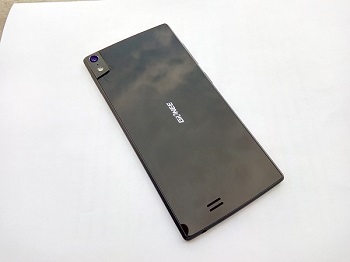
Apart from aluminum edges, one interesting thing the company has done on the sides is this slanted sides that join the sides with the rear. This should probably help you grip the phone better. Coming to the back, the 13 MP camera, along with the LED flash and secondary mic, are tucked on the left upper corner and the Gionee logo is in the middle, while the speaker grill is near the bottom. The overall look and feel of the phone is very nice and you won’t feel like there’s a loose part anywhere on the body.

The Elife S5.5 has a 5-inch 1920 x 1080 full HD AMOLED screen, which does its job well. The colours look vivid, videos look pretty decent and viewing angles are also not really bad. Though the screen doesn’t impress when used under the sun, it is more than capable for you to watch high resolution videos, or play games.

Coming to the camera, the phone is equipped with a 13 MP snapper. Gionee has done a good job with the camera. You can take a lot of good, sharp images with this phone. It tends to struggle a bit in low-light conditions and can give noisy images when used indoors. Having said that, this camera doesn’t disappoint and is capable of taking really nice photos. Here are a few sample images.

The phone’s audio quality is its weak point. The sound quality, whether loudspeaker or in-ear, is not much to appreciate. The volume misses the required ‘punch’ and watching videos on it is not a good experience, especially with how much it can distort at times.

As far as connectivity is concerned, the smartphone packs 3G connectivity, Bluetooth 4.0, WiFi a/b/g/n, and microUSB (supports USB on-the-go). Connectivity options work just fine and signal reception is also okay.

Coming to the phone’s battery life, it paints a rather sad picture. Packing in a 2,300 mAh battery unit, the phone usually gave about 16 hours on a single charge. There surely needs to be a better hardware and software combination in place so as to give improved battery life.

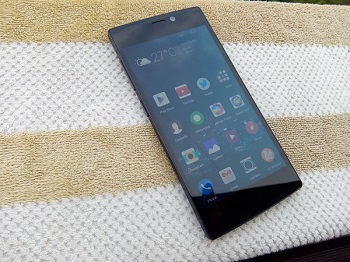
Talking about the phone’s performance, the smartphone is equipped with the MediaTek MT6592 SoC (1.7 GHz octa-core processor, Mali 450 GPU) and 2 GB of RAM. The phone runs on Android 4.4.2 (recently updated) with Gionee’s Amigo 2.0 UI on top. The software follows a similar pattern we have seen on a few other OEM skins. There’s no separate app launcher and all your apps’s icons are placed on various Home screens. You can lock the screen by swiping the clock downwards or by pressing the lock button. You can unlock the screen either from the button or by double-tapping the screen.

Gionee has made a few changes with its Amigo UI. The default music player, notification bar and icons look much better and go well with the overall look and feel of the OS. Having said that, the Amigo UI still has a lot to catch up when it comes to performance and fixing bugs. You will be disappointed to note that the phone isn’t very smooth for day-to-day usage and there are a few bugs, like the music player exits or lock screen stops to respond, that need to be fixed. With the likes of the Moto X and Mi 3 giving this phone a run for its money, it will lag behind given how slow it performs at times and how less responsive the whole software feels.

All in all, the Gionee Elife s5.5 again shows that Gionee is rather capable of producing great hardware and that they need to really pull their socks up for the software part. The phone has a lot going for it – screen, camera, design appeal, but, on the other hand, its software doesn’t give a very satisfying experience. Available for around Rs 20,000 (includes a flip cover, two screen guards), the device has a hard battle up its sleeves considering how the Indian smartphone segment is shaping up lately.

Categories
Read

This book teaches children to recycle

The TERI Press releases a new book for children, titled ‘Why Should I Recycle?’, to explain the principle of reduce-reuse-recycle.
by The Editors | editor@themetrognome.in

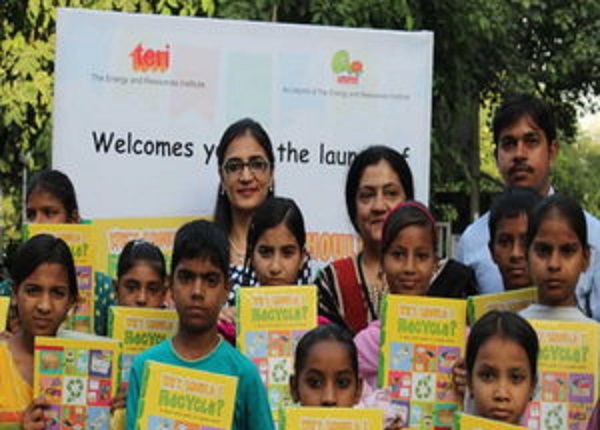
TERI Press, the publishing wing of The Energy and Resources Institute (TERI), recently released a book, Why Should I Recycle?. The book helps children understand the principle of reduce, reuse, and recycle, and how these principles can make the world a cleaner, healthier and better place.

Speaking at the book launch, Prabir Sengupta, Distinguished Fellow and Director, TERI, said “The overall perception about what is sustainable and what is not, what is ethical and what is not can only be taught through books.”

The launch of the book was followed by a panel discussion. The discussions deliberated on several issues, including the lack of availability of environmental literature for children, creating interesting books on green issues for kids, national policy perspective on environment and children literature, environmental education and the role of schools.

Introducing the book, Aanchal Broca Kumar, author of the book, said, “Teach the child not what to think but how to think, to bring about a difference.” Added Lata Vaidyanathan, former Principal, Modern School: “Attitudinal change is necessary to bring about a turnaround. Reading should be encouraged without testing or competition.”

Dr MA Sikander, Director, National Book Trust, said, “Promote reading as a natural culture and inculcate the habit in children at a very young age.”

(Picture courtesy daily.bhaskar.com)

Categories
Enough said

The Kashmir problem

What can we do to help the people in flood-hit Kashmir, before the temperature drops and reaching the area becomes next to impossible?
Humra Quraishiby Humra Quraishi

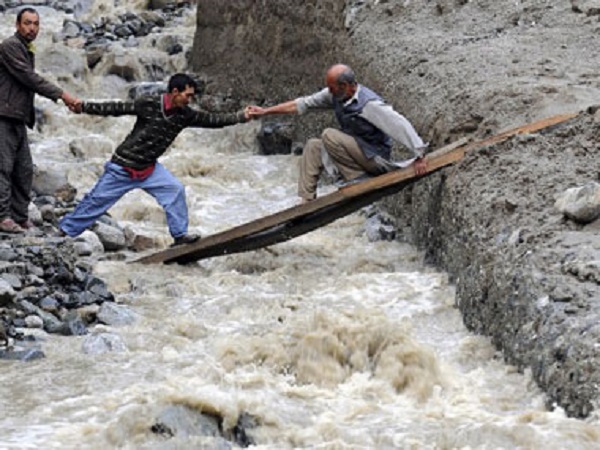
This is one of the worst tragedies to have hit the Kashmir Valley and its adjoining districts. I’m sure all of us are pained to see the television shots of the hapless trapped populace struggling to survive against all odds.

I have been wondering about the fragility of modern techniques and technology. Of what use are our modern methods of connectivity and retrieval, when landlines and mobile phones are not working, when thousands of people are stranded, and when all the so-called sophisticated modern structures in the area could not withstand nature’s fury for even seconds.

At least people are trying to help. As humans, we need to reach out immediately, without waiting for our political leaders to take corrective action. I think doctors could travel in small groups and attend to survivors, civil society could rush volunteers and teams carrying tents, blankets, food packets, bottled water, medicines, clothes and whatever else they can spare.

Whatever happens, help must reach fast. It is now autumn in Kashmir, and within the next couple of weeks, temperatures are expected to fall and the situation will worsen.

Of course, it will take a long time for Kashmir to really bounce back, even come back to the way things were. For once the situation reaches a semblance of normalcy, the restoration process will take a really long time. Rescue teams and the authorities will face a daunting task – infrastructure will have to be restored, houses will have to be rebuilt, the homeless rehabilitated, the dead and missing accounted for, the sinking roads repaired, and above all, the mess and the rot that inevitably accompany floods will have to be tackled urgently.

Humra Quraishi is a senior political journalist based in Gurgaon. She is the author of Kashmir: The Untold Story and co-author of Simply Khushwant.

Categories
Watch

Watch: A miniseries over three days

Max Mueller Bhavan, Kala Ghoda, is showing the famous German miniseries ‘Berlin Alexanderplatz’ by RW Fassbinder, from today to Sunday.
by The Editors | editor@themetrognome.in

Everybody loves watching a good miniseries. And if it’s a miniseries helmed by RW Fassbinder, about a man convicted for murder and his life after coming out of jail, it is definitely worth a dekko.

The Max Mueller Bhavan, Mumbai, is showing the 14-part miniseries Berlin Alexanderplatz, Fassbinder’s famous adaptation of Alfred Dobin’s novel by the same name. The complete series is 15½ hours long and was first aired in Germany in 1980. In 1983, it was released theatrically in the United States, where a theatre would show two or three parts per night. It garnered a cult following in the US and was eventually released on VHS and broadcast on PBS.

Max Mueller Bhavan, Mumbai will present the re-mastered version of the series from today, September 12, to Sunday, September 14, in 14 parts. Three parts will be aired today, five tomorrow and the rest on Sunday. Entry and seating on all three days is free and on a first-come-first-seated basis.

Head to Galerie Max Mueller, Max Mueller Bhavan, Kala Ghoda. Timings for the screenings are: Friday, September 12, 6.30 pm onward; Saturday, September 13, 5 pm onward; and Sunday, September 14, 11 am onward.

(Picture courtesy www.theguardian.com)

Categories
Campaign

Go back to your roots

We discourage the use of our mother tongue. But using your native language has health benefits, especially for Alzheimer’s patients.
by Ritika Bhandari Parekh

It feels that the Hindi proverb, ‘ghar ki murgi, daal barabar’ fits perfectly when someone attempts to use their local dialect.

Have you ever tried speaking in your mother tongue in public? Do you cringe when a fellow traveller speaks in theirghar ki bhasha? Why do parents ask their kids to speak in Hindi or English when they are dining outside?

The warmth brought in by speaking in the mother tongue is suddenly lost in the bevy of so-called manners. On a recent episode of the Minute To Win It game, a contestant said it was weird hearing her mother talk to the host in English because the family always used their native language, French, for daily conversations. It made me think of talking to my mother in Marwari and how when she uses Hindi, I immediately feel that something does not sound right.

HindiMother tongue or native language stands for the first language learnt at home in childhood. It lends a cultural identity to an individual and shapes his accent and approach to varied thoughts. In a world as diverse as ours, the native language binds communities in harmony. Living in a cosmopolitan city like Mumbai has its perks – you are aware of Gujarati, Bengali, Marathi and many other languages. But it is depressing to see that most parents today prefer speaking English even at home.

While taking classes in languages like French, Spanish and German is a delight, speaking with your toddler in anything but English is frowned upon. Bilingualism or speaking two languages fluently nowhere includes the learning of Indian languages. While one may proudly flaunt the French merci, getting a shukriya in Hindi is difficult.

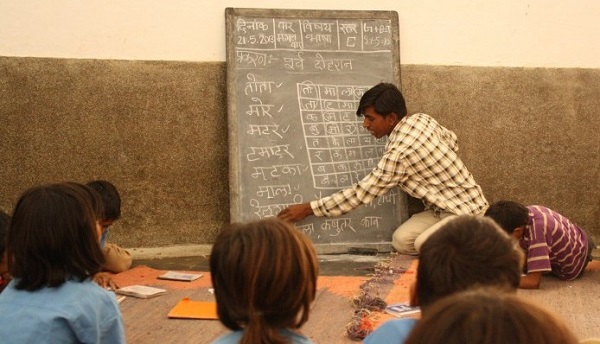
Research shows that bilingual children have a better ability to focus on a task while tuning out distractions. Also, bilingualism may delay the onset of age-related dementia, including Alzheimer’s disease in adults. So increase your brain power and become more perceptive by talking with your loved ones in your native language. Forget the ‘p’ language and speak in Sindhi, Urdu, Telugu, Kannada with your child. The grasping power of a child is higher and hence, learning native words will be a cake walk once you start speaking.  In a small way, do your bit to keep the language alive or like the dodo, this too shall be extinct.

German author Elias Canetti, who won the 1981 Nobel Prize in Literature said, “There is no such thing as an ugly language. Today I hear every language as if it were the only one, and when I hear of one that is dying, it overwhelms me as though it were the death of the Earth.”

The quote reminds me of the Busuu language from Cameroon. As of 2005, only three speakers of the language were alive. A website called ‘Save Busuu’ was started in a bid to take its heritage forward. It is time that we take pride in our local language and use it as often as possible. When PM Narendra Modi says ‘Look East!’ then let us emulate them too. Countries like China and Japan have built their economies by preserving their language and maintaining its importance.

Back home, the Kerala government has started the Malayalam Mission in the city, wherein they teach the Malayali language for free to non-resident Malayalis. The natives are not only happy but are making the most of this opportunity as it will help them get past bus signboards in Kerala.

As Indians, we need to conserve our beautiful languages and their literature. If each of us takes pride in our mother tongue, then not only does the language survive, but also our brain benefits. Every Mumbaikar will agree that Government offices work smoothly for the person who knows his Marathi. Papers get processed at a faster speed, all because you are one of them i.e. the local. Sure, that’s biased, but it shows how language can open doors.

As British writer and critic Giles Lytton Strachey said, “Perhaps of all the creations of man, language is the most astonishing.” What, then, stops us from amusing ourselves and immersing in the etymology of cohesiveness, bonding and intimacy via our native language?

(Pictures courtesy www.sevamandir.org, www.indoamerican-news.com. Images are used for representational purpose only)

Exit mobile version