Categories
Event

Attend: Showing of artist Brinda Miller’s stunning new work

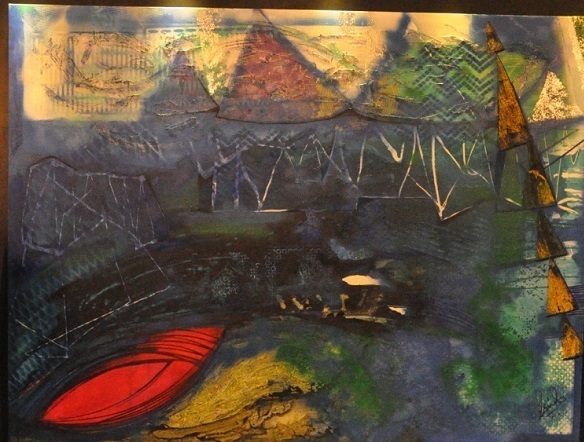
Renowned artist Brinda Miller’s new painting, titled ‘Himalayanscape’ is a customised piece of art inspired by the Himalayan mountain range.

Natural mineral water brand Himalayan recently partnered with renowned artist Brinda Miller to create a customised piece of art inspired by the Himalayas. The painting, titled ‘Himalayanscape’, was showcased at the Lakmé Fashion Week Winter/Festive 2014. It is now open for viewing at the Tao Art Gallery.

The painting is Brinda’s vision and representation of a pristine landscape, that narrates a story about water that flows from the Shivalik range in the Himalayas to an aquifer below the Earth – that is, from the source (the sky) to its eventual destination on earth.

The painting is now being displayed at the Tao Art Galleryand will be auctioned in the next couple of months. The proceeds from the auction will go towards a charity that works in the area of conservation of the Himalayas.

In Brinda’s words, “The snow-capped mountains, the layers of organic minerals, the striation of rocks, silt and gravel are metaphorically painted on the canvas – through textural chroma-zones, translucent multi- layering and opaque impasto of paint. The painting, in abstract style, is a montage of heaven, clouds, rain, earth, mountains, the forests, rocks and natural reservoirs of water.” The hues are pure whites, blues, silver and soft grey tones, with a subtle touch of turquoise and pink.

The mixed media work is a combination of acrylic paint, oil paint, handmade paper, silver leaf on canvas – (8 feet x 6 feet).

Categories
Deal with it

The not-so-Aha! moments in the lives of working mothers

Many mothers in Mumbai go to work. But is it better to have a job than be a stay-at-home mom?
Pooja Birwatkarby Dr Pooja Birwatkar

I never thought Murphy’s Law would invade my life so frequently. For the uninitiated, the Law states that ‘Anything that can go wrong will go wrong’.

Hold that thought.

So the other day, as I went home after a tiring week, looking forward to two days of blissful break from office work, Murphy’s Law came back to haunt me even before I got home. My son was down with fever, and the atmosphere at home was somber and silent. Just as I was playing nurse to my ill child, my little baby asked me the question I had been dreading for very long:

“Why do you go to office? Amit’s mom doesn’t go to office, she takes care of him.”

Aghast at having to finally face the ‘Why do you go to work when other mommies don’t?” question, I tried to give him some plausible reasons, like ‘we need the money’, etc. He wasn’t satisfied, and said he wanted to see me at home when he returned from school. I told him that if I was there, I would make him study and he wouldn’t get too watch TV.

To which my little man said, “It’s okay if I don’t get to watch TV, I just want you around.”

It broke my heart to hear him say this. And it made me think a lot, too.

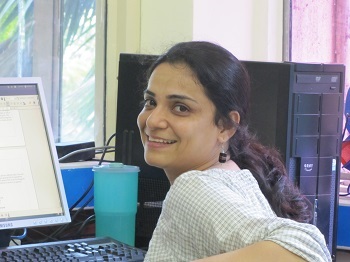
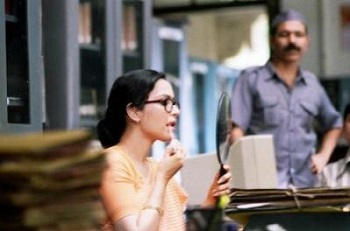
The reality of being a working mother in this busy metropolis hits hard when there are family emergencies and you are stuck between your home and your workplace. At that point, most working motherworking women would wish they were at home with their kids and family. There are times when working mothers like me get envious of the mothers who are home.

Suddenly, the lives of these stay-at-home moms seem picture perfect, while ours seem to be chaotic. Their houses sparkle, everything follows a system, their houses smell of aromatic cooking and they look relaxed all the time. These moms do the things we don’t have the time for; they do yoga and go for walks. They have the time to bargain at the local vegetable shop. They know what their children are up to all the time, and the children always finish their homework.

In comparison, our lives are an eternal cycle of chaos and mess. I try hard, but something is always amiss. I could forget to send the decorative material my boy’s school wanted, or not be able to keep up with his studies. On other days, I make some bland food and rush out the door, and at times my house is a mess. I often come home with my tired body crying out for bed.

But this happens to all mothers, working or not. The ‘working woman’ tag implies women who go to work outside their homes. But does that mean that women who stay at home are idle? I wouldn’t be too thrilled if my workplace was confined to the walls of my home. I have been a stay-at-home mother and then I went back to work, and I find both roles equally challenging. In fact, the housewives have it harder – I have seen many men introduce their wives as, “She stays at home.” What a crude way to describe the woman’s contribution to the home and its peaceful existence!

working woman 1If we analyse the psychology of stay-at-home mothers, we realise that they feel lost and find life less challenging when they are not given the credit due to them for all the hard work they put in for others – often, without any thanks. Their self esteem diminishes. We see such women socialising frequently, and we unthinkingly criticise them, saying, “Oh, but these women have nothing else to do!” What makes us working women feel that our stay-at-home counterparts are not entitled to their share of socialization?

In the end, the grass always appears greener on the other side. So many housewives wish they went out to work, so many working women want to give it all up and be at home. But would either of these women trade lives? Whichever side we pick, it’s not easy to live with it, but it’s not that tough, either. Not if we realise that life is beautiful at home or outside.

(Pictures courtesy news.nationalpost.com, www.naaree.com. Pictures are used for representational purpose only)

Categories
Achieve

Is this India’s first ‘green’ film?

How do you make sure your film makes a different statement than any other film? You take the eco-friendly route!
by The Editors | editor@themetrognome.in

It is not enough to make a film – huge marketing budgets, presence of mega stars and a variety of publicity gimmicks all effectively bury small Indian films.

So what does a new filmmaker and his team do? They take a different route, and create a “100 per cent eco-friendly and green film”.

Pocket Gangsters Vikram M Shah (1)Says Vikram M Shah (in pic on left), producer of the upcoming film Pocket Gangsters, “We adopted various green practices like reducing or eliminating the use of plastic during the pre-production, shooting and post-production, reducing power and electricity consumption, eliminating the use of fossil fuels, using hybrid sources of power including solar energy, eliminating the use of non eco-friendly paints, products and items during set construction, using only eco-friendly products and adopting several other procedures and practices like shutting down air-conditioners when not required to reduce the ecological footprint of our film.”

The makers claim that their film is India’s first one-take, one-shot and uncut film. A gangster thriller, the film is centred around the subject of kidnapping, and will mark the comeback of actor Raghuvir Yadav.

Adds director Hemant Nilim Das, “For a debutante director to create a ripple in the market, you need a unique selling point for the film. Either you work with A-list actors or you work on an A-grade concept. For me, making a full-length feature film that is more than two hours long in one long single continuous shot was not only a challenge as a film-maker but also, a first time endeavour for the entire lot of independent directors. I chose a story line that could be conceptualised and executed as an uncut, one-shot movie.”

Vikram explains, “As a producer, this project was a real challenge for me, because we worked on an uncut, green film. For the film’s showing, we are contemplating doing away with physical or printed tickets and will try to only use e-Tickets or SMS coupons for entry. This has still to be worked out between the distributor and the theaters. Everything from the air-conditioning to the use of plastic cups or bottles was cut down wherever possible on the shoot. We even reduced the intensity of the lighting as much as possible for all indoor shoots and tried to use day light or sunlight where possible.” 

What do you think of this idea? Tell us in the comments section below.


Categories
Trends

Mumbai real estate losing out on NRI investments?

If a recent real estate survey is to be believed, Mumbai is not the top investment choice for NRIs any more.
by The Editors | editor@themetrognome.in

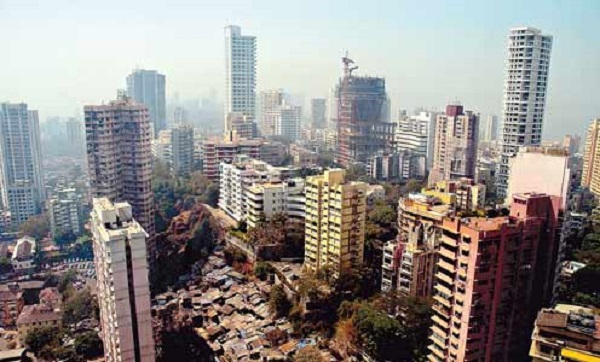
Mumbai has become a real estate nightmare, what with unrealistic, sky-high market rates making it impossible for people to buy their first homes in the city. For long, though, the real estate market in the city has somewhat been buoyed by investments from NRIs.

However, a recent report by ASSOCHAM (Associated Chambers of Commerce and Industry in India) reveals that Mumbai is no longer the first, or even second or third choice for NRI purchasers. As per the report, Bangalore is the most favourite property investment destination for NRIs, followed by Ahmedabad (2nd), Pune (3rd), Chennai (4th), Goa (5th), Delhi (6th) and Dehradun (7th).

“Indian property developers are anticipating a 35 per cent surge in inquiries from NRI-based purchasers as compared to last year about 18 per cent,” reveals the report, which was compiled based on a random survey of nearly 850 real estate developers in Delhi-NCR, Chandigarh, Mumbai, Kolkata, Bangalore, Hyderabad, Ahemdabad, Pune, Dehradun and Chennai. “NRIs feel confident about the new Government and are waiting for an investment-friendly market in various fields,” adds the survey.

The majority of real estate developers said that the NRI traffic is coming primarily from the UAE, US, Singapore, Australia, UK, Canada and South Africa. This year, the demand is more for the high-end property and commercial buildings. Said DS Rawat, Secretary General, ASSOCHAM, “With the revival in global economy, especially in the United States and Europe, people are more optimistic and looking for property to invest in. Both small and big developers are focusing on the NRI base in the US, UK and Asia Pacific Region this year.

“As per the findings, the share of NRI sales are currently at approximately 18 per cent and are likely to increase by 30 to 35 per cent in the coming year,” says the survey.

To tap a large section of the cash-rich NRIs living overseas, developers are not just conducting property shows, exhibitions and opening overseas representative offices, they are also expanding their existing distribution chains and entering into strategic partnerships to encourage investors from this cash-rich segment also.

The findings

– According to the survey, Bangalore tops in terms of investment from NRIs, who are considering settling down in India in the coming years. The major factors that drive NRIs to invest in Bangalore’s property market is the booming IT sector. It has the largest concentration of leading IT and ITeS companies. According to an estimate, there are 2,200 IT companies, over 664 MNCs, 183 biotechnology companies, and 248 BPOs operating in Bangalore.

– Growing number of IT/ITES companies in Bangalore provide lucrative job opportunities to NRIs who are considering settling in India. Moreover, exponential growth in infrastructure and real estate sector also contributes positively towards influencing NRIs to invest in the property market. The demand has also shifted from mid-segment housing to luxury housing in Bangalore.

– Ahmedabad (32 per cent) has continued to be the most stable market in terms of demand and absorption of both residential and commercial spaces.  NRI’s consider Ahmedabad as a safe place to invest in, with lenient government regulations regarding property investments by NRIs.


Categories
Read

‘Never aimed to discuss Ekta Kapoor’s private life’

Kovid Gupta talks about chronicling the journey of Balaji Telefilms, and why Ekta Kapoor has had a profound effect on him.
by Vrushali Lad | editor@themetrognome.in

Admittedly, Ekta Kapoor and Balaji Telefilms have had a huge impact on Indian television. From introducing soap operas to Indian TV screens to steeping each of their serials’ storylines in family values, and from introducing ‘time leaps’ to help sagging TRPs and keeping storylines fresh with multiple plot twists, Ekta Kapoor truly changed the way Indians would watch TV.

Ekta KapoorTo celebrate the success of Balaji Telefilms and tell the super studio’s story to the public, which has since also successfully ventured into film production, screenwriter Kovid Gupta recently released his deeply reverential book on the subject, Kingdom Of The Soap Queen. Kovid has been a writer on the shows Balika Vadhu, Bade Achche Lagte Hain and Chhan Chhan.

The book traces the origins of Balaji Telefilms, the journey of the studio as it brought out its first serial, the dizzying heights of success it achieved with its popular ‘K’ soaps, its sudden failures and its success with offbeat films.

In an interview with The Metrognome, Kovid discusses the book, Ekta Kapoor and why he feels there is a dearth of material on Indian TV.

Excerpts from the interview:

How long did the actual research for the book take?

The research took about six months. I would say it was an ongoing process, though, because with every new chapter I would scribble, I would learn something new about Balaji.

What did the research comprise of? How many people did you interview, how many documents did you go through?

It was an exhaustive process. I spoke with nearly 100 people, including Shobha ma’am, Ekta ma’am, and people who have been a part of various departments at Balaji. This ranged from actors to directors to writers to creative heads, to even people involved with music, costuming, and editing of the many programmes. Documents wise, I had a thorough look through various online resources; [I went through] past interviews of Ekta ma’am and soap stars and numerous Balaji articles and press releases.

What has been Ekta’s influence on you, personally?

Huge. She has been a major influence on me – especially during my teenage years. I was an avid viewer of the K soaps, and attribute a lot of my understanding of Indian culture to her programmes. I grew up in the United States for most of my life, and watching the festivals, rituals, and traditions in her shows every day provided a direct connection to India.

As a business school student, there is so much I have learned just by following her entrepreneurial career. Her spontaneity amazes me. She is able to take a mundane story plot and twist it around in minutes, often time conveying the same message in a completely unexpected way – her way of telling a story has this magic to it. As a company, Balaji’s track record is one to learn from and follow. There have been times when it has produced 18 serials at a time – that’s six hours of footage every day – the length of two Bollywood movies!

How has she reacted to your book?

The book came into the market when I was not in India. As a result, I did not have the chance to meet Ekta ma’am and present the book to her as I had hoped to do. The book would have been impossible without her blessings, though. She was a huge support to me when I was doing my research and interviews. She took out her extremely precious time to talk to me about it even though she had so many films and television shows in the pipeline.

There are not many books on the Indian television space, apart from a few fictionalised accounts. Why do you think that is?

Good question. It baffles me as to why we don’t have more material out there. With the way television is growing, along with the rising corporatisation of the industry, it has become all the moreKahaani Ghar Ghar Kii important that we have material out there for aspiring entrepreneurs to use as case studies. This book was written with that exact purpose: to research and discuss the success story of the country’s most successful television production house. Young India is increasingly becoming interested in the management of show business.

I spent my college years craving for literature on Hindi television, or episodic screenplays of our soaps. When I came to Mumbai for the first time in 2010, I remember strolling into a Crosswords to find the book Soap! Writing and Surviving Television by Venita Coelho dotting the shelves. I zealously read the book cover to cover overnight. Soon after that, I started assisting Rajesh Dubey on Balika Vadhu. Rajesh Sir wholeheartedly opened up a library of old screenplays for me to study from. Having material to read is just so vital.

As a reader, I would have loved to read more of Ekta’s quotes in the book, if not an entire chapter in her own voice. Was this a deliberate omission?

The book is called “Kingdom of the Soap Queen”. The focus of the book is the kingdom itself. It is a compilation of the many stories that made Balaji what it is today. My aim has never been to discuss Ekta ma’am’s private life or her personal journey, but instead to tell the story of the company that she has been an integral part of.  The book is about the evolution of an organisation that she has so successfully brought up from the ground. The heart of the book is the stories that people have told me, in their own voices, of the learning experiences they have had, and the roles they have each played in making Balaji the empire that it is today.

What is your personal opinion on the unique phenomenon one sees, where Ekta Kapoor the TV producer of soaps projects a highly conservative image of Indian values and family life, versus Ekta Kapoor the film producer, who comes up with edgy, sometimes dark content?

Ekta Kapoor is someone who knows her audience inside out. She realises the mass appeal of television. Unlike the majority of the West, our television shows continue to enter family-dominated spaces. Maximum number of India households continue to have one television, and families continue to eat their dinners together in the company of each other. In such a scenario, controversial content has to be carefully portrayed on television. In films, one chooses to walk into a cinema hall; a person picks the group that he or she will watch a motion picture with. The movie-going experience allows for an approach that is more novel, innovative, and cutting edge. I think Ekta ma’am works on the very solidified difference between these two forms of show business.

Any observations you wish to make about the Indian TV industry and Balaji Telefilms?

We are on the cusp of an industry-wide renaissance. The sun is setting on a mere replication of successful concepts and waves of experimentation are crashing against the status quo. The increasing number of channels is leading to a level of competition that is higher than we have ever seen before; this is pushing producers to hit their creative peaks – the sky is the limit today. I’m keen to see what the eruption of the digital volcano is going to indicate for our country. Netflix is leading Hollywood rating charts with shows like House Of Cards and Orange Is The New Black. The rapid technological shift has opened up a whole new medium of episodic entertainment for audiences in India as well. Let’s see who manages to capitalise on this growing market segment.

An excerpt from Kingdom Of The Soap Queen:

‘The teenage daughter of a huge film persona plants herself in an industry run by a handful of experienced men. She runs a company from her father’s garage and fashions a weekly sitcom about five girls around the same age as herself. While she manages to achieve some prosperity, her company is far behind those of Hindi television’s veteran producers. Balaji Telefilms seems to be an adolescent’s project that has a short life expectancy. Serious content from this company seems unimaginable.
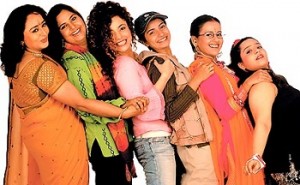
Hum PaanchWell, at least that is what the press is saying.

In spite of dabbling with television for some time and the success of Hum Paanch, Ekta was far from receiving the level of respect, regard or even courtesy that her male contemporaries were getting in show business. The newspapers and magazines of 1995 splashed Balaji’s name around as a teenage project launched with hard-earned parental savings. Many industry people were reluctant to join hands with this fledgling company. In fact, some would have even chosen unemployment over risking their reputations by collaborating with the brand-new studio-in-the-making.

While yellow journalism tends to disconcert its victims, the disparagement had a reverse effect on Ekta. She took the belittling and used it to galvanise herself. She knew if she had the ability to make people chuckle, she also had the ability to make people sigh with the sorrow of melodrama. Her company had to somehow rise above the criticism and conquer it. It was time Balaji buckled down and showed how serious it could really get. In this pursuit of tapping the unexplored dimensions of Balaji’s creativity, Shobha and Ekta took on the tricky task of soap opera production.’

(Pictures courtesy Kovid Gupta, www.gaylaxymag.com, www.startv.in, www.scoopwhoop.com) 

Categories
Tech

Google finally unveils Android One

Yesterday, three phones were launched to flag off Android One, from Micromax, Karbonn and Spice. More tie-ups are to follow.
by Manik Kakra | @Manik_K on Twitter

Google unveiled its long-talked about project, Android One, in India on Monday, September 14, 2014. The project is Google’s take on the low-end devices that do not usually get OS updates or provide a good, consistent experience. But more on that later.

First off, these phones were launched to flag off Android One – Micromax A1, Karbonn Sparkle V, and Spice Dreams Uno.

Yep, the first three OEMs to join Android One are Indian’s Micromax, Karbonn, and Spice. All these phones have the same internal hardware and run on the latest Android 4.4.4 OS (near stock Android). The differences between them arise from the colours available, material used and looks.

Karbonn-Sparkle-VThe phones sport a 4.5-inch 854 x 480 touchscreen, and weigh around 140 grams on an average. Under the hood, there is a MediaTek 6582 SoC (1.3 GHz quad-core processor, Mali 400MP2 GPU) coupled with 1 GB of RAM. On the back, there is a 5 MP camera (with an LED flash), which can record 1080p videos at 30 FPS; while the front gets a 2 MP one. These dual-SIM phones come with 4 GB of on-board storage space expandable up to 32 GB (you get additional 10 GB online storage with the Spice phone); and carry a 1,700 mAh battery unit.

Connectivity-wise, there is Bluetooth, microUSB 2.0, 3.5 mm headset jack, FM Radio and 3G support. You can buy any of these phones for Rs 6,399 from online stores, depending on which handset you want, and later they will be available in retail stores as well.

Talking about Android One, Sundar Pichai, Senior Vice President, Android, Chrome and Apps, was clear that they want to provide quicker OS updates and a better user experience for devices priced around $100. Google is joining hands with more manufacturers like HTC, Lenovo, Xolo, to name a few, as well as Qualcomm on the silicon side. The project will soon be launched in Sri Lanka, Indonesia, Pakistan, and Philippines.

Airtel users will get 200 MB of free data bundle for the first six months for their app updates and OS updates. It is not clear whether this data bundle also includes data surfing and other needs. You can order the Spice Dream Uno here, Micromax A1 here and Karbonn Sparkle V here.

Exit mobile version