Categories
Tech

Jolla launches in India

Finnish company’s smartphone priced at Rs 16,499 has a great OS, but will need more features to make a difference.
by Manik Kakra | @Manik_K on Twitter

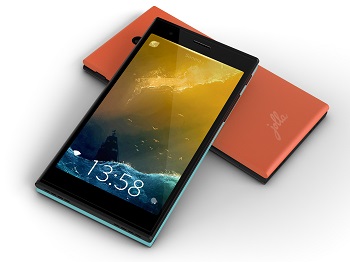
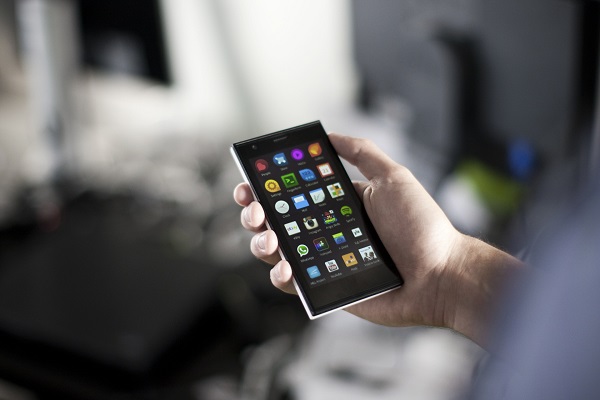
Finnish handset maker, Jolla, has officially stepped into the Indian market. The company unveiled its Jolla smartphone, which is available exclusively on Snapdeal. The phone, which has been out and released in several countries months back, is the first smartphone that runs on Sailfish OS. The OS is based on MeeGo (as well as Mer Project and Nemo Mobile), which was Nokia’s own project a few years back and is now taken ahead by some of Nokia’s ex-employees.

Jolla_Jolla (pronounced ‘Yolla’) sports a 4.5-inch (960 x 540) screen, with the option to change the rear cover as per your choice from a range of colours made available by the company. Under the hood, there is a Snapdragon 400 SoC (1.4 GHz dual-core processor, Adreno 305 GPU), along with 1 GB of RAM.

The phone is powered by a 2,100 mAh battery unit and comes with 16 GB of internal storage, which is expandable. On the back, there is an 8 MP (AF) camera (with an LED flash); while the front has a 2 MP camera.

Connectivity-wise, there is Bluetooth 4.0, microUSB 2.0, 4G LTE (limited support), WiFi b/g/n, and GPS.

The phone has been priced at Rs 16,499, and is available from Snapdeal. The first 90 buyers will also get a special VIP box with the phone.

With so many affordable, value-for-money handsets available in the market today, it’s going to be a tough road ahead for Jolla. The OS appears refreshingly different from what we have on pretty much every smartphone out there – Android, iOS and Windows Phone – but would require a lot more to get some going into the Indian market.

Categories
Trends

17,665 dispute-free villages in Maharashtra?

Over 17,000 villages in Maharashtra are reportedly free of petty and major disputes, due to a Government scheme launched in 2007.
by The Editors | editor@themetrognome.in

Is it possible, in today’s hectic times, for any place to be totally dispute-free? If findings from the State Government are to be believed, as many as 17, 665 villages in Maharashtra are completely dispute-free?

A press release from the Chief Minister’s office last week gave the findings of the Government’s Mahatma Gandhi Tantamukh Gaon Mohim (Mahatma Gandhi Dispute Free Village Scheme) launched in year 2007. CM Prithviraj Chavan said, “Maharashtra is one of the largest states in the country with a huge cosmopolitan population spread across both rural and urban centers. With such dynamics, being able to make almost 17,665 villages completely dispute-free is a proud achievement for the State. Our innovative approach has been recognised on the international platform too as a model project by the United Nations. We believe the Scheme will continue to act as a catalyst for the welfare of villagers by engaging citizens to bring prosperity through peace.”

As per the Scheme, 1,741 villages became dispute-free in 2012-2013. Now, 47 villages are set to receive the Special Peace Award. 10 out of the 47 villages are from Buldhana district, followed by Sholapur (8), Kolhapur (7), Chandrapur (7), Yavatmanl (1), Nagpur Rural (1), Parbhani (1), Ahmednagar (3), Satara (2), Jalna (1), and Osmanabad (2).

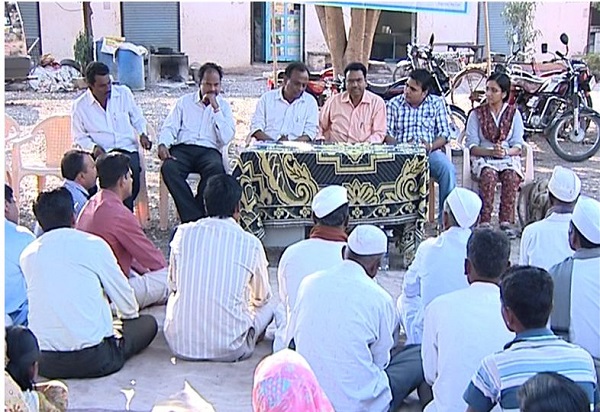
The Scheme was launched with the aim of resolving minor conflicts, land related problems, cattle grazing, cremation grounds, etc. that normally snowballed into bigger communal and anti-social issues in the State’s villages. Under this scheme, villagers come together, collect data and amicably settle the thousands of pending cases in their village. The idea of this novel experiment was to decrease the number of pending cases in the judiciaries and so it is conducted without any help of lawyers and judges but by the police officials, police jawans and the active participation of residents.

Since its inception, says the Government:

• Record 17,665 villages dispute free in Maharashtra

• Complaints Resolved – 11,00,000

• Gram Panchayats felicitated (cash prize) – 16,004

• Gram Panchayats awarded (special prize) – 1,223

(Pictures courtesy www.panchayat.gov.in)

Categories
Tech

Review: Motorola Moto G (2nd Generation)

What’s new and what isn’t with the second generation Moto G? We do a spot check and come away impressed.
by Manik Kakra | @Manik_K on Twitter

Ever since Motorola has come back into the Indian market, the company’s motto has been to provide a richer Android experience to devices that are priced well below the flagships, something that not many have been able to achieve. The original Moto G was quite great device for its price and it did (still doing) really well in the market. With the new Moto G, Motrola has tried to keep things rather simpler – a refreshed model without too many changes. Does it live up to its predecessor’s level? Let’s try and find out.

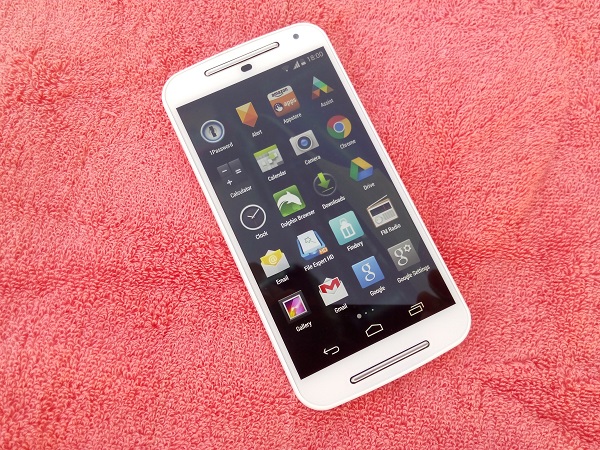
The looks. Motorola’s new Moto G (XT1068) follows a different design than the original one, and something that, at least from the front, looks closer to the Moto E. On the white model, the (two silver strips) front-facing speakers (stereo) stand out surrounding the 5-inch 1280 x 720 LCD IPS touchscreen. While the front panel has Gorilla Glass on top, the rear is made up of soft matte plastic material with a slight curve across it.

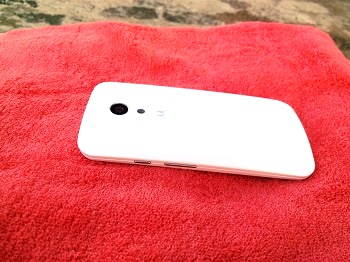
The phone, at about 150 grams, feels hefty and fits pretty well in your hand. One half of the sides is matte (from the back) and the other is gloss (front part), giving you a solid grip. Other components on the front include the 2 MP front-facing camera, LED notification light, and sensors. The back has the ‘M’ logo placed in sort of a dimple shell, new 8 MP camera with an LED flash.
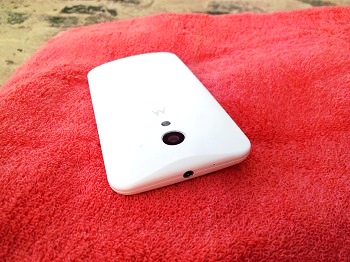
The top houses the 3.5mm headset jack and secondary mic; while the bottom gets the microUSB port. The left side panel is absolutely plain; and the right one houses the volume rockers and Power/Lock key. These physical keys are required to be pressed hard and could have been given a better finish. Just to add, the screen is, as usual, prone to smudges and fingerprints, while the matte back isn’t.

The phone is equipped with a larger 5-inch HD screen, and the panel seems to be a different one from the original Moto G. It is bright, slightly better to operate under direct sunlight, has decent viewing angles and colours also appear sharp. If you’re used to a full HD panel, you might notice pixels on the screen, but other than that, there’s not much to complaint about it.

This dual-SIM handset comes loaded with Bluetooth 4.0, WiFi b/g/n, 3G connectivity, and GPS. As far as connectivity is concerned, the phone performs well. There are no shortcomings regarding network reception, GPS locking-on or Bluetooth use.

The phone’s call quality is on par with flagships and the volume level is slightly higher than the original Moto G, if I remember correctly. Coming to the in-ear sound, the default headsets are pretty decent, but they are not comfortable to wear (depending on your size). They keep coming off when used during commuting and make for a rather sub-par experience. On the other hand, the loud speakers on the Moto G are much improved. The front-facing stereo speakers are loud and clear, though not as punchy as you would like them for your videos and games, but they are noticeably better than many handsets in the mid-range.

Camera. The camera seems much improved from the one on the original Moto G. It can not only take more detailed shots but also less grainy. You can view a few images here: http://imgur.com/a/ymXMP

As you can see, images are more detailed, less noisy and colours appear brighter. The phone’s native camera app, though, is still not very impressive. Though low-light performance also seems to score better, there is still a lot of scope of improvement in this aspect. The focus mechanism needs work. There are just a few basic settings to choose from and you might want to try third-party camera apps.

Battery. The new Moto G is equipped with a 2,070 mAh battery unit. The phone’s battery life is quite good. More often than not, it lasted me a day with around 10 per cent still in the tank. The usage mainly included almost all WiFi for Emails, Twitter, a few videos on the YouTube app, 5 to 10 minutes of calling and half an hour of in-ear music. If you are okay with the Power-saving mode, you can stretch the battery life further.

Performance and software. The Moto G (2nd Generation) is powered by Qualcomm’s snapdragon 400 MSM8266 SoC (1.2 GHz quad-core processor, Adreno 305 GPU), along with 1 GB of RAM. The phone runs on near-stock Android 4.4.4 with a few little additions done by Motorola. Motorola has included its usual set of apps and services like Assist, Help, Migrate and Alert. The phone feels smooth to operate and doesn’t stutter while browsing the Web, playing games or just navigating through the OS.
One thing worth mentioning is that going to and from one app to another, you will see that apps take a bit more time to load than on high-end phones. This is mainly due to Motorola not upgrading the RAM size. Otherwise, this is a capable smartphone that doesn’t often lag or show signs of freezing in the OS. If you have used a Nexus device in the last two years, or one of Motorola’s recent devices, you will feel at home with the new Moto G. The whole look and feel is that of stock Android 4.4.4, and the next major upgrade is in the pipeline within the first three months of Google releasing it. For storage purposes, you get over 12 GB of space and also the option to use a microSD card of up to 32 GB size.

Wrapping up, the new Moto G can be called as a slight refresh to the original one. With Motorola keeping screen resolution, RAM, SoC and battery unit the same, there mainly only a couple of big changes made. But it is not to say they’re completely wrong in doing so. With better camera, good battery life and screen, and decent design, the new Moto G is one of the best performers in this segment. If you already own a Moto G, then you’d do better not to buy this, but if you’re looking for an Android smartphone within Rs 15,000, you can surely check out Motorola’s newest mid-range offering.

Categories
Do

Join the ‘Say No, Accept No’ campaign

Two NGOs team up to present a youth-centric campaign to end gender-based violence against women in Mumbai; entries currently accepted.
by The Editors | editor@themetrognome.in

With cases of crimes against women in Mumbai and other places on the rise, the time is ripe for a deeper look at the issues plaguing men-women interactions today. Naturally, a change in mindset is required, especially at the youth level, so that young adults may grow up into responsible citizens with healthy attitudes towards sex, gender and men-women relationships at home and outside.

Harish SadaniTo this end, the city-based NGOs MAVA (Men Against Violence and Abuse) and CARMA (Citizens Against Rape, Molestation and Atrocities), have teamed up to present the youth-focussed campaign ‘Say No, Accept No’. Says Harish Sadani (in pic on left) of MAVA, “In today’s times, a campaign like this is essential to end gender-based violence against women. The ‘Say No’ part of the campaign deals with saying ‘no’ to situation arising from gender bias at home or in other social settings, and the ‘Accept No’ part deals with situations where a man must step back if the woman is unwilling to do something.”

As the first part of the campaign, the campaign is rolling out two inter-collegiate competitions – one is a short film contest, and the other is a poster making contest.

The films and posters may centre on one or more of these themes:

Say NO to:

– Verbal abuse/bad words directed towards mothers and sisters.

– Forced marriages.

– Domestic violence.

– Dowry.

– Marital rape.

– Unwelcome ‘friendly’ hug or touch.

– Gender bias in the family or other social setting.

– Gender discrimination at work and public places.

– Sexual harassment.

– Sex-selective abortions.


Accept NO when:

– She says ‘no’.

– She is not comfortable hugging.

– She doesn’t give consent.

– She expresses rejection.

– She doesn’t want to go for coffee or movie.

“Entries can be in English, Hindi and Marathi, and the participant must be a student of a Mumbai-based degree college,” Harish says. “Those making short films should see that their entry is not more than 30 minutes long. Similarly, those making posters should ensure that they send A3 sheets.” Entries are currently being accepted and will close on November 4, 2014.

Want to participate in the campaign or know more about it? Send your entries to MAVA, Flat no 705, Parishram Bldg., 7th floor, behind S Keer Complex, Bhandar Lane, LJ Road, Mahim, Mumbai – 400106. For details, call Harish Sadani on 9870307748, or Ashvin on 9773727887 or Aspar on 9920916736.

(Picture courtesy www.medindia.net)

Categories
Event

Attend: Book reading by Katharina Hagena

Bestselling German author Katharina Hagena will read from her book ‘Der Geschmack von Apfelkernen’ today, at the Max Mueller Bhavan.
by The Editors | editor@themetrognome.in

Katharina HagenaFor German author Katharina Hagena (in pic on left), her memories have a taste, a sapidity, an aftertaste, an aroma. Packed with gorgeous imagery and undertones of buried secrets, her book The Taste of Apple Seeds (Der Geschmack von Apfelkernen) is an international bestseller.

This evening, Katharina will read from this and some of her other books at the Max Mueller Bhavan, Mumbai. She will also have a conversation with Ranjit Hoskote and will interact with the audience.

In Der Geschmack von Apfelkernen, when Bertha dies, her granddaughter Iris inherits her house and finds herself back in the home where she and her cousin used to play dress-up in the summer holidays. She wanders through the rooms and garden, a timeless world where red currants turn white overnight, where a tree blossoms twice, villages vanish and women shake sparks out of their fingers. But the garden is now wild and overgrown. After she fell out of the apple tree, Bertha became absent-minded, then forgetful. Eventually, she didn’t even recognise her own three daughters. Iris stays in the house on her own for a week. She cannot decide whether she wants to keep it. She swims in a black lake, receives a visitor, kisses an old friend’s brother and paints a wall.

While she wanders from room to room, she gropes her way through memories and things she had forgotten: What did her grandfather really do before he went to war? Which men were Bertha’s daughters in love with? Who ate his apple with the seeds? Finally, Iris recalls the night her cousin Rosmarie had the terrible accident: What was Rosmarie doing on the conservatory roof? What did she want to tell Iris? Iris senses there are several ways to forget. And remembering is only one of them.

 Katharina Hagena will read German and English excerpts from her books. Head to the Library, Max Mueller Bhavan, Kala Ghoda, at 6 pm. 

(Pictures courtesy ebookee.org, www.zimbio.com)

Categories
Listen

Attend: Vocal recital by Ulhas Kashalkar

Today, the NCPA will host vocalist Ulhas Kashalkar in a recital where he will present jog-ragas in his unique style.
by The Editors | editor@themetrognome.in

It’s always a pleasure to attend a vocal recital, and it’s even better when the vocalist is Pandit Ulhas Kashalkar.

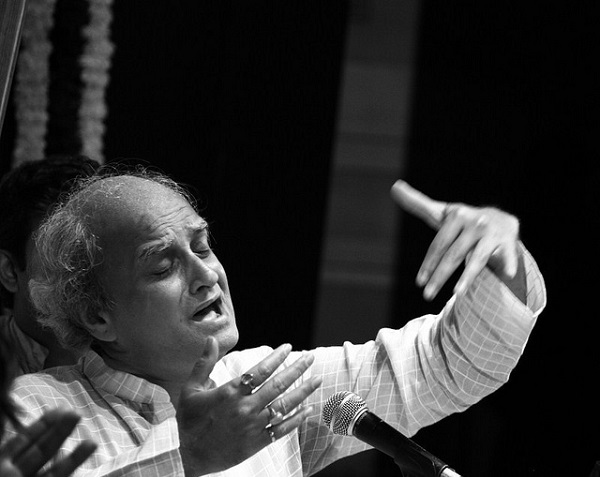
This evening, head to the NCPA at 6.30 pm to hear the remarkable vocalist render jod-ragas the way only he can. The concert is being held in collaboration with Kilachand Foundation and Mariwala Foundation.

The repertoire of Jaipur gharana, to which Kashalkar belongs, is characterised by the inclusion of jod-ragas, in which two ragas are combined in such a way that both retain their individual identity, and yet create a distinct aesthetic atmosphere. Rendition of such ragas is indeed demanding, necessitating a special training.

Kashalkar has had the privilege of learning from many reputed vocalists including his father ND Kashalkar, and from stalwarts like Ram Marathe and Gajananrao Joshi. Endowed with a mellifluous voice, he has command over a wide repertoire of jod-ragas and rare ragas.

In this recital, Ulhas Kashalkar will present jod-ragas to reflect a harmonious blend of Gwalior, Agra and Jaipur traditions.

Exit mobile version