Categories
Listen

The Arne Jensen Trio and the Jazz workshop

True School of Music is hosting a free jazz workshop today featuring the Arne Jensen Trio. Register to get seats.
by The Editors | editor@themetrognome.in

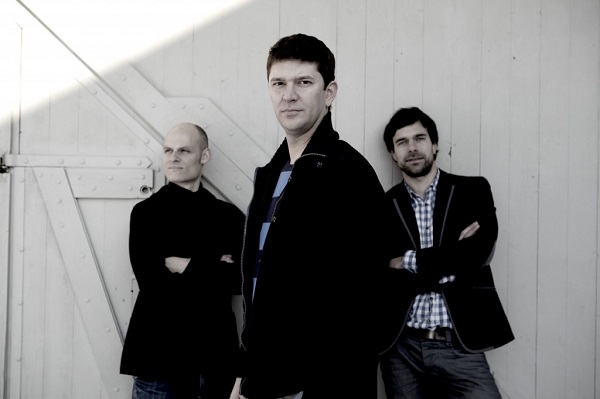
Lovers of jazz music are thrilled with the news that the Arne Jensen Trio – comprising Arne Jensen on the guitar, Eric Schaefer on the drums and Andreas Edelmann on bass – are performing in Mumbai later this week. They will be even more thrilled to know about a workshop the trio will take today in Mumbai.

The True School of Music will play host to the trio as they take a workshop from 2 pm to 6 pm today. The workshop will deal with Jazz/Rock-Improvisation/Rhythm Section and the following:

– Scales/Arpeggios, Motivic Improvisation, Motivic Development (Repetition/ Diminuation -Augmentation)

– Phrasing/Dynamic/Accentuation/How to play a melody

– Communication/Interaction in the Rhythm Section

– Comping/Thematic Comping

– Recording/Listening/Analysis

– Basic orchestration in jazz drumming)

– Playing with time (On the beat/behind the beat/in front of the beat)

Register for the workshop by emailing contact@trueschool.in or call 022 66243200. The True School of Music is located at 107, opposite Hanuman Temple, Sun Mill Compound, near Phoenix Mills, Lower Parel, Mumbai – 400013. 

(Picture courtesy www.arnejansen.com)

Categories
Do

Send your child to this football camp

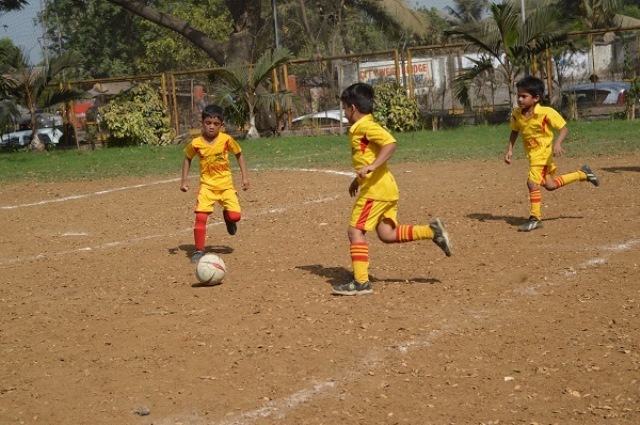
Experienced coaches will train children aged between 5 and 10 years in this four month long football camp in Borivali.
by The Editors | editor@themetrognome.in

The importance of sports in daily life cannot be underlined enough. Unfortunately, several parents don’t actively encourage their children to take up a sport.

However, football is slowly gaining prominence in the minds of parents, especially with the launch of the recent football league. Now, very young boys and girls are showing an interest and aptitude for the sport.

The Vintage Football Club in IC Colony, Borivali, has been catering to a large population of young children and teenaged footballers in the area for several years now. Prominent among its activities is the free training imparted to the children living in the Ganpat Patil Nagar slums close by. Says Conrad Pinto, one of the coaches attached to the Club, “Football is a sport that inculcates discipline, team work, solidarity and utmost fitness. We hope many more children will take up the sport in the days to come.”

In keeping with their several programmes promoting the sport, the Club is hosting a four-month football camp for children aged between five to 10 years at the ground. Titled ‘Grassroots Football Programme’, the camp starts today and enrollment for the same was opened last week to a very good response. The camp will take place between November 3, 2014 to February 27, 2014.

“The camp will be taken in the evening hours, every day from Monday to Friday,” Conrad explains. “Children in this age group are free in the evenings, and their time can be productively utilised in learning to play football.” The camp costs Rs 4,500 for four months or Rs 1,200 per month, with Rs 500 charged extra for the child’s uniform. “We are not admitting very young children as of now, because they might fall and get hurt. Broadly, we are looking at enrolling Standard I to IV for the camp.” Underprivileged children will be trained free of cost. “All children have to arranged for their own shin pads and football boots,” Conrad says.

The Vintage Football Club is located near Bhakti Complex, IC Extension, Link Road, Kandarpada, Dahisar (W). Call Neel on +91-98208 20297 for details. 

Categories
Enough said

Why Delhi hasn’t had communal clashes for years

The recent communal tensions came as a shock to one and all, given the illusion about the ‘peaceful’ years in between.
Humra Quraishiby Humra Quraishi

There have been no incidents of major communal violence in and around Delhi for years now, especially after the Babri Masjid demoltion. After the demolition, several Muslim-dominated areas like Seelampuri and adjoining places were affected, with large numbers of Muslim youth being rounded up by the police.

Thereafter, there haven’t been any riots in Delhi, and there are some significant reasons for this. For one, a large percentage of the Muslim populations resides in its own mohallas and bastis – these include Old Delhi, Okhla, Jamia Nagar, Zakir Bagh, and West Nizamuddin. Also, they do not have the grit to speak out if any wrongdoing does take place, given the fact that they are systematically, increasingly sidelined on the political, business and education fronts. They must think it is just safer, for survival, to adopt a second-class positioning. After all, who really got punished after the communal riots in Muzaffarnagar? The victims actually lost their homes and everything else dear to them, but the culprits were later ‘honoured’ by the establishment.

Another disturbing truth to emerge in recent months is that several Muslim families have been made to ‘exit’ their ancestral villages, in several villages in and around the national capital, and in particular where there have been only a dozen or so Muslim families – which have then been persuaded to ‘leave peacefully’.

Despite knowing about these undercurrents, last week’s communal clashes in Delhi’s Trilokpuri came as a big shock. Thinking about it later, I wondered why I was so stunned – going by how the BJP and the RSS normally stress their dominance by manufacturing riots and then pretending to control them, it was an incident that would have come sooner or later, especially with the Right Wing becoming stronger by the day. Who will the affected people complain to?

Humra Quraishi is a senior political journalist based in Gurgaon. She is the author of Kashmir: The Untold Story and co-author of Simply Khushwant.

(Picture courtesy firstpost.com)

Categories
Tech

Review: Oppo N1 Mini

Android phones are getting smaller and smaller with each passing day. Oppo’s N1 Mini joins the bandwagon, but not very convincingly.
by Manik Kakra | @Manik_K on Twitter

Coming up with small-sized devices seems to be the trend in the Android space for quite a few months. We have seen HTC, Samsung and now Oppo launching small variants of their previous flagships, but so far only Sony has been able to nail the concept. Many companies are unable to match the experience in their small package, citing price as the factor. Oppo’s N1 mini is the company’s latest smartphone that is touted, as per the name, the N1’s variant for those who want a smaller device. Let’s see how good this phone is.

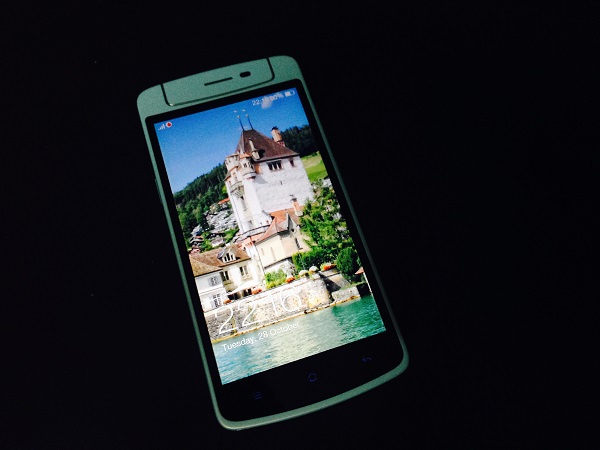
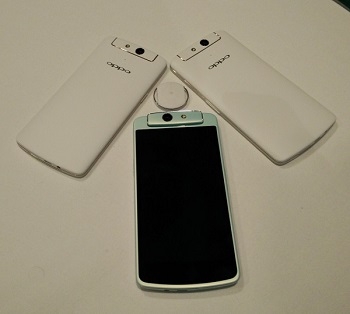
Oppo’s N1 mini (N5111) looks and feels a lot similar to the original N1. With dual silver linings running across the frame, thick bezels around the screen, rounded edges, and smooth plastic back, the phone feels decent to hold, even for large hands. With a swivelling camera module on the top and a curved bottom, there’s enough to say it’s the N1’s less-than-behemoth variant.

The swivelling module also houses the two sensors, but there’s no LED notification on the phone, something that became standard on Android phones long time back. The three navigation buttons – Menu (Options), Home and Back – get illuminated when pressed, but are not too bright.

Coming to the bottom, you have the loudspeakers, microUSB port and 3.5 mm headset connector all neatly placed. The right side panel has the volume rockers; while the Power/ Lock button is located on the other side. Even though this is a ‘mini’ phone, it is hard to see it being a relatively compact phone and that has lot to do with the phone’s thick bezels. Oh, and our unit is a unique mint colour, which looks nice.

The phone boasts a 5-inch (1280 x 720) LCD that is the USP of being smaller from the 5.9-inch one the N1 has. The screen is actually really bright with good colour contrast and viewing angles. You will mostly struggle to use it under sunlight, unless switched to the highest brightness, but on the other hand, it’s capable to be used for watching HD videos, playing games.

Talking about the phone’s battery life, the 2.140 mAh battery unit the phone comes with is, if used moderately, can last about 20 hours, but when used heavily, struggles to power the screen. You can stretch it to a day if not used for watching videos, playing music, or by using the in-built Power-saving mode, but battery life was short of being impressive.

Regarding the audio quality, the loudspeakers at the bottom are quite loud and punchy for videos and even games, provided you are okay with the placement while holding the phone in landscape orientation. Similarly, the N1 mini’s in-ear quality with the bundled headsets is also satisfactory. People used to bundled headsets should find the quality to be pretty good.

The phone’s 13 MP (f/2.0) camera is another of its USPs. Its swivelling mechanism is smooth to use and doesn’t feel like it will break anytime soon. Here are a few sample images

As you can see, the phone can take good photos. Though it struggles in low-light and close up photos, you can take decent shots in daylight. The native camera app is also similar as before and is simple to use and work around. You can try HDR, which works well, but the camera at times struggles to focus properly. For those taking lots of selfies, this camera should be more than capable.

Call quality and network reception on the phone are top-notch. There’s no trouble with these basics throughout my usage, with no network issues, strange call drops or call’s sound.

Connectivity options – WiFi, Bluetooth, NFC, and GPS – all work without a glitch.

The phone is powered by a Qualcomm’s Snapdragon 400 SoC along with 2 GB RAM. It runs on Android 4.3 with Oppo’s own Color OS 1.4 on top. It is a bit disappointing that the phone is yet to get upgraded to Android 4.4 despite it being out for months, plus, there’s no official word of when the phone is expected to be updated.

The overall look and feel of the OS is very similar to what we had on the N1 and Find 7. With the O-Click accessory and a few gestures we have already seen on the company’s previous phones, the company tries to stand apart, but doesn’t really succeed in doing so. At times, your gestures come in the way of usual navigation and get annoying when not required. The phone is no slouch, however. It can handle games and high quality videos well, with almost no lags or stuttering while going in between apps or switching between them. The OS feels polished, smooth to use and is definitely a strong point for Oppo. The company has surely done a great job with its Color OS, and it continues to show with the N1 mini. With two Home screens by default and separate panes for images and for when you have your headsets plugged in, you can edit and customize them just like any other Android phone.

In conclusion, the N1 mini has two shortcomings – its high price (over Rs 26,000) relative to other phones today and its outdated software. On the other hand, its camera, screen and performance are on course. If only Oppo gives the phone its deserving software update and maybe a needed price cut, this could then only be a very competitive smartphone in the Indian market.

Categories
Event

Dan Brown’s coming to lecture in Mumbai

‘The Da Vinci Code’s bestselling author will present a lecture for fans at the NCPA in November. Registrations open today.
by The Editors | editor@themetrognome.in

He captured the world’s imagination with his edge-of-the-seat thrillers The Da Vinci Code, Angels And Demons and Inferno, and now, Mumbai will get to meet the author of these bestselling books, Dan Brown.

Dan is set to visit Mumbai and meet his fans in November 2014, at a lecture event organised by Crossword Bookstores. This will be Dan’s maiden visit to India, and he will be present for the Penguin Annual Lecture series. One of the most prestigious cultural events of the year, the Penguin Annual Lecture series features some of the world’s most respected leaders, thinkers and writers. It is the first annual lecture to be organised by a publishing house in India and has become one of the most prestigious cultural events on the calendar.

The five previous Penguin Annual Lectures have been delivered by journalist and writer Thomas Friedman in 2007, diplomat and writer Chris Patten in 2008, Nobel Prize-winning economist Amartya Sen in 2009, eminent historian Ramachandra Guha in 2010 and renowned spiritual leader His Holiness the Dalai Lama in 2011.

Announcing the event yesterday, Kinjal Shah, CEO, Crossword said, “We are delighted to be hosting the lecture by Dan Brown. He is one of the finest international authors and we are happy that Crossword is one of the few bookstores to organise an event of this scale for his Indian readers.”

The lecture will be held at NCPA on Wednesday, November 12, 2014 at 7 pm. However, registration for tickets begins today, October 29, 2014 at Crossword Stores across Mumbai. 

(Picture courtesystatic.guim.co.uk)

Categories
Deal with it

Training parents of children with autism

Most therapies centre around treating autistic children. This centre, the only one in Mumbai, trains parents to deal with autism.
by The Editors | editor@themetrognome.in

It’s a cosy space located very close to Khar railway station, and at first glance, the hustle and bustle doesn’t reveal much of what goes on behind its doors. Frankly, SAI Connections initially seems like any other place that would counsel and house autistic children for a few hours every day, much like other therapy centres located all over Mumbai.

Then you get the chance to meet the centre’s director, Kamini Lakhani, and once she starts talking about what the Centre does and how it imparts training to parents of children suffering from autism, you begin to realise how simple and powerful the idea behind the Centre really is. Kamini says, “If you train a parent [of an autistic child to deal with autism], you’re training them for life. That training stays with the family forever.”

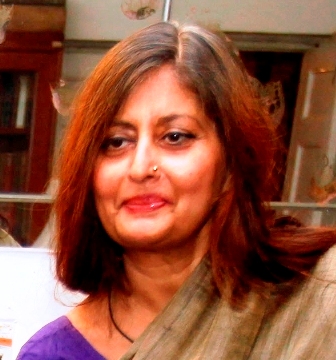
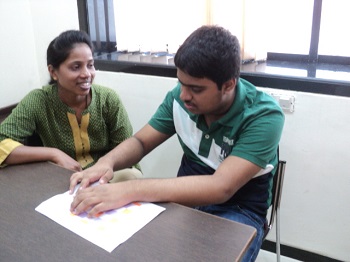
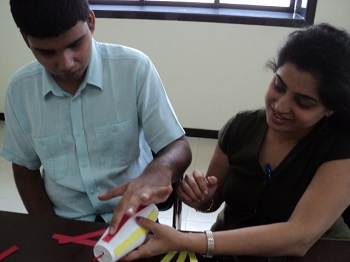
She should know. She and her husband, Anil, started SAI (which stands for ‘Support for Autistic Individuals) in 2004 for deeply personal reasons. “My older child, Mohit (in pic on left, with Kamini), was diagnosed with autism when he was three years old,” Kamini remembers. “I was completely devastated. I looked for information online and everywhere else. Then I gathered all the material I had collected and I remember flinging it in the doctor’s face, asking him how it was possible that such a bright, beautiful three-year-old boy could have autism…” she says.

After the initial phase of denial came slow acceptance. The couple was living in South Korea at the time, and made several trips to the US to get better services for Mohit. During this time, they truly began to receive an education about autism. “In the course of 15 years, I studied and trained to be the best teacher I could be for my own son,” Kamini says. She went on to become a board-certified Associate Behaviour Analyst, certified by the BACB (Behavior Analyst Certification Board), USA in June 2005. Four years later, she completed her RDI (Relationship Development Intervention) and is the only BCABA and RDI Program certified consultant in India.

She started SAI Connections in 2004 after moving to India in 2002. “I realised there was an urgent need for a Centre that would help not just autistic children, but also impart training to parents on dealing with the disorder,” she says. “Unfortunately, I still find that most intervention for autism in India happens at the level of special education and speech therapy – treatment for mental retardation. “Most people, even educators, have not heard of RDI for autism. We need to spread awareness about it to help the millions of children and their parents in the country,” she says.

What is RDI?

Relationship Development Intervention (RDI) is the process that ‘corrects’ the ‘feedback’ between an autistic child and the parent. “In a developing relationship, there is a ‘feedback system’ between the child and his parents. But with an autistic child, there is a breakdown somewhere. The child does not give feedback, so the relationship is skewed. As RDI consultants, we are trained to assess where this breakdown is, see how the parent is behaving,” explains Kamini. “This goes to the core of the issue and helps in normalising the relationship. We change what the parent is doing. This changes what the child is doing. Hence, we actually bring about a co-regulation in behaviour.”
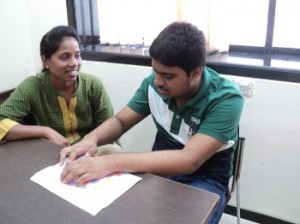
“The disorder is hardest on those who are closest to the child – the parents,” Kamini explains. “Unfortunately in India, there is not much awareness about the symptoms of autism. Even teachers in schools are unable to spot the symptoms. A child suffering from autism is normally branded as a hyperactive, troublesome child by both parents and teachers.” She adds that their inability to socialise appropriately, their non-understanding or inability to interpret social cues and the fact that most of them can’t fit in with peers, sets them up for bullying in social settings. “We need to train schools and parents everywhere. Fortunately, we are slowly seeing that schools in Mumbai are getting more open to the idea of training teachers and hosting sensitisation programmes to deal with autistic children,” she says. The training, she says, needs to focus on dealing with aggression, or a change in behaviour.

What SAI Connections does
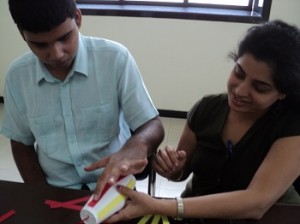
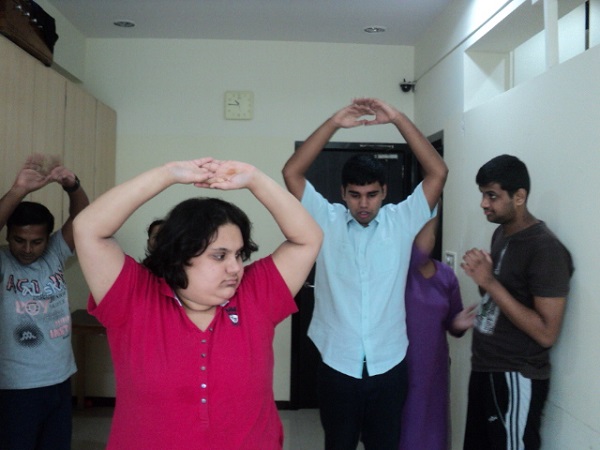
The Centre is an activity space for autistic children with active participation from their parents, and stresses on RDI. “We train them in art, cooking, vocational skills. There is also physical activity, a time set aside for music,” Kamini explains. “We have 25 special educators, one cccupational therapist, one speech therapist, five teachers’ assistants and a group of dedicated volunteers.” Parents must mandatorily be a part of the activities – they are invited to attend, be a part of the sessions or simply sit and watch. The Centre ensures transparency in functioning by involving parents in every step of the process, and every room has CCTV cameras that keep watch on all parts of the Centre.

SAI Connections has also, since last year, started a training programme for potential educators in RDI; this is a certification programme lasting over a year. “We have already trained four individuals, and many more have enrolled,” she says, adding that the programme involves training, working with families and providing consultations under supervision from programme directors, at a cost of about 9,000 USD per year. Kamini also receives many queries for online sessions and has already imparted training to individuals in Bangalore and Delhi.

“Ultimately, only proper training will help in a deeper understanding of autism. The numbers of autistic children are staggering, and so many more are not diagnosed yet. The biggest mistake people make is to think that children in the autism spectrum lack something. They are hugely capable individuals and we must never give up on them,” she says.

Connect with Kamini Lakhani at SAI Connections & SAI Child Development Center, 201, 2nd Floor, Bhagya Ratan Niwas, above Prabhu Jewellers, 3rd road, Khar (W), Mumbai. Call 022 2605 0992/ 26050991/ +91 98203 14925. Email sai.connections@ymail.com/ saiconnections01@gmail.com.

(Pictures courtesy SAI Connections)

Exit mobile version