Categories
Trends

Mumbai needs more dialysis machines

Several kidney patients in Mumbai report renal failure that requires dialysis, and their numbers are going up – requiring more dialysis machines.
by Dr Jyotsna Zope | Senior Consultant Nephrologist, Mukta Kidney Dialysis Centre

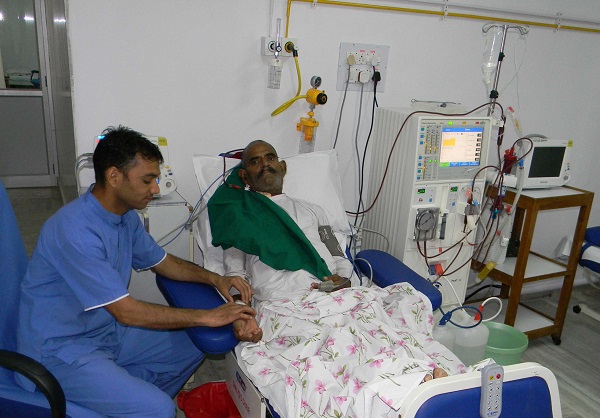
Mumbai is witnessing a long list of kidney patients waiting for treatment. With the rise in renal failure cases, the number of patients requiring dialysis has increased by many folds in hospitals across the city. As a result, despite many having multiple dialysis machines, the patients are forced to wait, said Neprologists.

Dialysis is an important component to treat the patient in case of End Stage Kidney Failure (ESRD). The kidneys help in maintaining the body’s cleanliness on the inside. Dialysis is suggested when the kidney fails to do its job. It is an artificial means to clean our blood and in turn our body. ESRD is a last stage of kidney failure. After this stage, if a person wants to clean the body, dialysis or transplant is often recommended. In India, dialysis is offered at an affordable cost, thereby trying to meet the requirements of people suffering from ESRD.

The Haemodialysis Units are, till date, mainly located in major cities. Mumbai and its surrounding areas are catering to the huge demand with almost 210 centers of various sizes from one or two dialysis stations to 25 dialysis stations. Some of the dialysis units are part of the hospitals while others are just stand-alone units catering to the maintenance dialysis Patients. These entire units together have almost 2,000 haemodialysis machines working full-time. They are taking care of approximately 22,000 ESRD patients.

Doctors attribute this surge in cases of renal failure mainly to an increase in diabetes and hypertension.Figures show that almost 30 per cent of diabetic patients develop diabetic kidney disease. And with an exponential increase in the number of diabetics in India, the number of patients suffering from diabetic kidney disease is set to rise high. According to the International Diabetes Federation, one in 10,000 of the world’s population will have diabetes by 2035. Estimates show that people living with diabetes will surge from 382 million to 592 million by 2035.

There is not just the need for haemodialysis machines, but there is also the need to maintain the quality of dialysis, which is equally important as there are higher chances of catching infection from various sources. The leaders in this field are very eager to give quality care to all their patients, but they face mountainous difficulties. They find it difficult to maintain the quality standards, amounting to paucity of funds. There is a lot that needs to be done to give long fruitful life to our dialysis patients. People need to understand that prevention is better than cure, so get yourself properly screened for lifestyle diseases, including diabetes and hypertension to prevent kidney failure in the later stage.

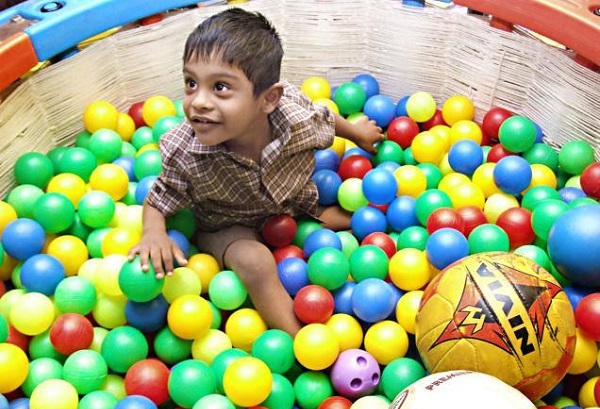
(Pictures courtesy www.ghrc-abu.com. Image used for representational purpose only) 

Categories
Do

Aarey says ‘Bachao!’

An RJ with Radio City writes about her station’s ongoing campaign to save Mumbai’s prized green lung – Aarey colony.
Archana Paniaby Archana Pania

Mumbai has two sacrosanct areas that are green covers of the city, Mahim Nature Park and Sanjay Gandhi National Park. The third could have would have been Äarey Forest, but too many have settled in, tried to make it a residential area, while forest retreat hotels have been built therein and very little has been done to maintain the sanctity of the park.

Since its high connectivity to the western suburbs and Powai, the idea of making it pivotal to the real estate agents who look for lands like vultures look for rodents, Aarey is being eyed as the next hub for commercial office space generation, a large residential base and the Metro Phase III shed to be built into!

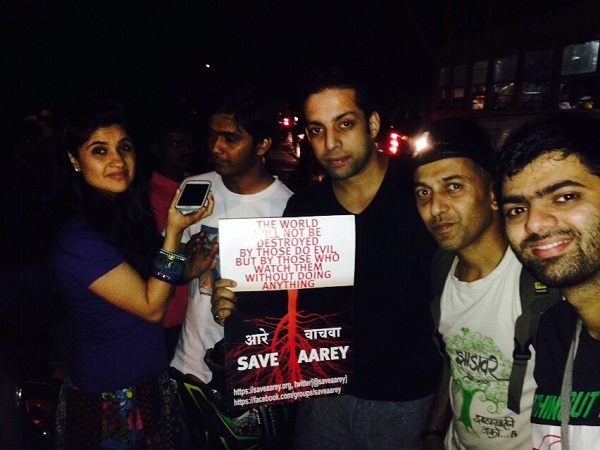
At the Radio City morning show ‘Kasa kai Mumbai’, we are huge supporters of progress in Mumbai and we want the city to converted into a world class city – but not at the cost of losing the green lungs of the city! “If Aarey colony’s 2,000+ trees are cut, I am going to leave Mumbai!” said one of our listeners! Hence, if we don’t raise our voices in support of  the trees now, we shall lose the most bio-diverse green cover Mumbai has.

Jackie Shroff, singer Shaan, Dia Mirza and many eminent personalities are all for green cover in Mumbai, and it’s time we show respect to nature, as opposed to ‘development’ in the name of progress and take the green cover away. Singer, lyricist, actor, composer Piyush Misra said “A sign of a progressive city is their parks…closer to home, there is Chandigarh or Hyde Park in London…”

Yes, we lost parts of Mulund and the Powai forest to builders, but the least we can do is save whatever is left and help make a clean and green Mumbai – but this seems only to be a text on hoardings, rather than a movement in action!|

Hence, ‘Radio City ki Treety’ is a campaign where a lot of commoner, where our radio jockeys, Sucharita, Sudarshan, Rohitvir and Gaurav, apart from others, extended their audio signatures on our TREEty!

Join in today, Mumbai. Log on to www.saveaarey.org or simply go to their Facebook page (saveaarey) and make your intent heard. We want our children to carry school bags to school, not oxygen cylinders!

Archana Pania hosts the morning show ‘Kasa kai Mumbai with Salil and Archana’ on Radio City 91.1 along with RJ Salil Acharya. She has been actively campaigning for the cause of saving Aarey. 

What do you want to do to save Aarey? Tell us in the comments section below.

Categories
Tech

Review: InFocus’s M2 phone

The US firm launches its new device, M2, in the Indian phone market; the device is good at the price.
by Manik Kakra | @Manik_K on Twitter

InFocus, the US-based firm has entered the Indian phone market with the new M2. The company gets its device manufactured from Foxconn and aims at providing a good smartphone at an even lower price point than what’s been available. At Rs 4,999, the price and specifications are tempting, but does it actually deliver?

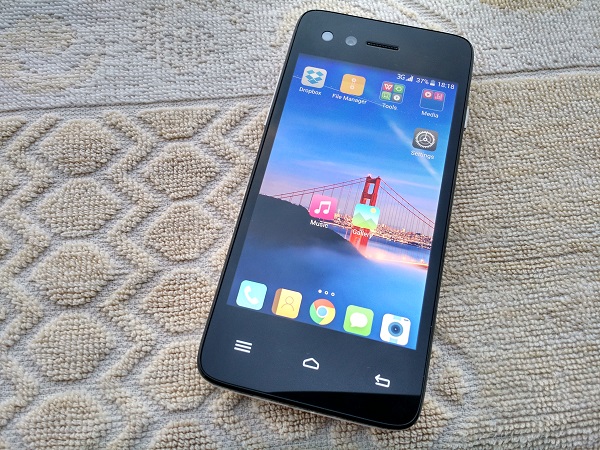
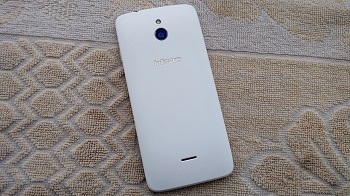
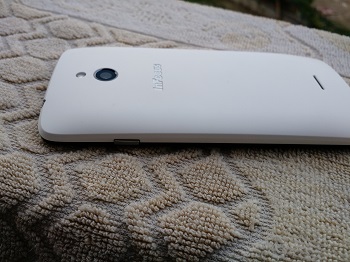
The looks. InFocus’ M2 follows a plain and run-of-the-mill design. The phone has glass all over the front and its rear cover, and which also covers the sides. As soon as you hold the device, you will notice its thick bezel and curve around the back, making it comfortable to hold. On the front, below the 4.2-inch TFT screen are the three touch keys – Menu, Options, Home and Back button – neither of these keys lit up when tapped. While on the top of the screen you have the 8 MP front-facing camera with flash, speaker grill, notification LED and sensors. The back has the 8 MP camera and flash near the top-middle, and loudspeaker placed near the bottom.

On the sides, the volume rocker is placed on the left, and the Power/Lock key on right; these keys feel quite sharp and don’t give a tactile feedback when pressed. The microUSB port and primary mic at the bottom and 3.5mm headset jack and secondary mic are at the top. Removing the back cover gives you access to the two micro SIM card slots and microSD card slot, next to the immovable battery. The phone is not large by today’s standards and is not difficult to carry around. While I won’t call it ‘premium’, it definitely doesn’t appear as a cheap knock-off.

Display. The M2 boasts a 4.2-inch (1280 x 768) LCD, same resolution as on the Nexus 4. The display is to be its biggest selling point. It shows text and images well and isn’t bad for watching HD videos either. Text appears good enough, but struggles a little under direct sunlight. From what other screens I have used from phones under 7,000 bucks, this one seems to be right up there among the brightest and best in terms of colour reproduction. You even get three colour temperature options for the screen, something we have seen on Samsung smartphones for a while.

Audio. Talking about the phone’s audio performance, it didn’t leave as good an impression as the screen quality did. The loudspeaker on the back distorts quite a lot and struggles when used for a video or game. You may feel you’re missing out on sound even after using one hand for coupling the speakers. The bundled headset is okay and better for watching videos. Don’t expect a very good output. InFocus will hopefully give audio more attention next time and put better sound drivers in place. The M2’s call quality and network reception didn’t show any issues. WiFi, Bluetooth, USB OTG function just fine and I didn’t notice any bug against any of them.

Battery. Powered by a 2,010 mAh battery unit, the phone has a decent standby time, but struggles under heavy usage. More often than not, when used for Email, Twitter, a bit of music and calls, you would have to charge it again under 17 hours, keeping one SIM card inserted (even less on 3G) and the brightness level at 30 per cent.

Camera. Here are a few sample images.

The phone’s camera actually takes good shots when in bright light. It does a good job at colour contrast, though when used in low-light, no surprise it struggles and is clearly not meant for clicking subjects in motion. It can shoot full HD videos at 30FPS. The front-facing camera is good enough for your selfie needs with its selfie smile detection and detailed shots. The camera app is simple and smooth to use. Only the usual settings are available.

Software and performance. The device runs on Android 4.4.2 with the company’s own InLife UI on top. Under the hood, there is MediaTek’s MTK6582 (1.3 GHz quad-core processor, Mali 400 GPU) and 1 GB of RAM. The user gets about 5 GB of available space, which you can expand using a microSD card.

The phone handles basic tasks like scrolling or swiping through Home screens and having a single Chrome tab open in background without breaking a sweat. But when you close and open a few apps, open multiple tabs and try scrolling through the OS, the phone clearly struggles and stutters. The notification and toggle buttons can be accessed from the same screen by swiping down. All the icons, Settings and pre-loaded apps are themed around white, pink and blue colours. These look just okay, but certainly not ugly like a few other low-priced Chinese phones do. The pre-loaded apps also work well and should cater to most users using their first Android smartphone. With your Home screens having all the icons and widgets, there’s no separate app launcher.

The lock screen allows you to keep four shortcut icons (similar to HTC phones) and even widgets in place to open them directly from the Lock screen. There’s also a launcher option with large tiles and bigger font size called EZ Launcher. It would be correct to say the phone doesn’t perform very smoothly but just satisfactorily. There’s also InFocus services Account in place, though we couldn’t find any utility for it.

InFocus seems to have done most things well with the M2, considering its price point. It has a good screen, camera and design, but its audio is clearly its shortcoming. It is still to be seen whether the company has provided any service support so far given that even the official website doesn’t mention any service centres or support number. If InFocus can get this after-sale part correct from here on, the M2 can give them a great start and make its presence felt in the online retail space.

Categories
Autism

The spirit of collaboration

Collaboration and respect – for autism spectrum children, parents and other professionals – will help in making a communications breakthrough.
Kamini Lakhaniby Kamini Lakhani | saiconnections01@gmail.com

Part 11 of the Autism Diaries – success comes with teamwork and collaboration.

You may have watched the film, The Theory of Everything. It is based on the real life story of the eminent scientist, Stephen Hawking. Directed by James Marsh, the film has some truly wonderful performances, and fetched lead actor Eddie Redmayne an Oscar performance as well.

In his 20’s, Stephen Hawking was diagnosed with ALS (which is widely known after the Ice Bucket Challenge). People with ALS are known to not live very long as their entire motor neuron system gets impacted. It is extremely painful to watch the progression of this disease. But Stephen Hawking, as you all know, has beaten all odds to survive. Not only survive, but he continues to come up with brilliant scientific theories that are mind boggling.

The triumph of emergence and victory stayed with me long after I watched the movie. The beauty and strength of the human spirit continues to baffle me and touch me in a deep way.

Having worked with people on the Autism Spectrum for the past two decades, I was also struck by the communication device that is used by Stephen Hawking. There is this beautiful scene in the film where his wife tries to get him to use a communication board, where he needs to spell out words by glancing at letters. The pain that such an intelligent and highly advanced mind goes through to function through such an elementary level was heart wrenching. I couldn’t help but think that many of my own students may be going through exactly the same thing. Having a mind and body not in sync, must be the most frustrating thing in the world.

Later on, a highly specialized augmentative communication device, a sophisticated computer with voice output is used by Hawking.

As I watched this movie, I thought about my students on the Autism Spectrum who are non-vocal.  Surely there must be communication devices that could help them too. But how should I go about this? Augmentative Communication Devices are not something that I know much about.

The idea would be to get a specialist or expert in the field of Augmentative Communication to help us with this. This is why I requested Bala Sriram to help us out – as this is her area of expertise. Bala has 40 years of experience behind her and is very well known for her good work. Here  are some sound bytes  from Bala about collaboration.

“While Collaboration and Consultation are often used interchangeably, they are quite different.

With Consultation, it is an ‘expert’ model. One professional is sharing their expertise with some other professional who is working with the student.

With collaboration, all professionals involved are equal contributors and are recognised for their individual expertise and what they have to offer to the team.

In professional collaboration, there must be shared responsibility and shared decision-making among general education teachers, special education teachers, and related service professionals.

Have the Speech Language Pathologist and or the Occupational Therapist work in the classroom with the teachers and with the parents in a home school setting.

In conclusion, a collaborative TEAM effort is the key to success.”

And this is exactly what a family and I were discussing recently. Basically, I guide the parents about restoring the guide apprenticeship feedback loop which is disrupted. As a result of this, the parent child relationship is getting normalised. We are also seeing the child improve in terms of problem-solving and development of dynamic intelligence. We have seen a surge in language, but to maintain that momentum and also to improve articulation, we would need input from a Speech Language Pathologist. The family is working with an experienced Occupational Therapist, as the child has many sensory needs as well.

As we all know, one size does not fit all. Each child on the Spectrum has unique needs. These unique needs are based on varying co-occurring conditions that exist along with the core deficits of autism. This particular child has speech and sensory needs. Another child may not necessarily have sensory needs, but may have anxiety issues along with speech issues. Yet another child may have severe aggression, behaviour issues, learning issues, epilepsy, vision problems etc.

Customisation of a programme, to the needs of a family, requires a collaborative effort.

The basis of this collaborative effort should be respect. Sometimes I feel that respect is a highly over used word and done to death! However, at the cost of being repetitive, I would like to share my thoughts.

1. Respect for the child.

We all say we respect the children that we work with. But do we continue to speak about them in front of them? People on the Spectrum who are non vocal may not ‘speak’- but that doesn’t mean that they don’t understand. This applies to parents speaking about their kids in front of them too!

2. Respect for the parents.

I have a dual role – that of a parent and a professional.  We as parents go through our own agony and stress. And we as professionals should support parents to be team members. The input that parents can provide is quite invaluable. They are also the agents who ensure that generalisation happens. Are we giving credence to their opinions? Are we nurturing them enough?

3. Respect for other professionals.

Every professional who is part of the team, has their own area of expertise. I don’t think anyone else can judge another’s field of expertise. What I find difficult to get over is how a professional from one area of specialty can run down somebody from a different specialty, and that too without understanding the other’s area of specialisation fully.

I must say that we have a wonderful group known as the ‘China Gate’ group which consists of about 80 professionals having diverse specialties. This group is moderated by the dynamic Mrs. Sriram. The aim is to have a cohesive group that can learn from each other. It is a fantastic initiative. Other such laudable initiatives include the Monitoring and Resource Committees set up by Forum For Autism.

Here are some wise words by a parent of a teenager on the Autism Spectrum. “I have always believed in team work, as long as the professionals involved are not working at cross purposes. It’s important to gain from different perspectives. I also believe totally in parent involvement in this entire process.”

Are we as professionals willing to get out of our comfort zones to support each other?

Are we as parents willing to get out of the shadows of intimidation and let our lights shine?

What is your take on this? Feel free to share your thoughts with me at saiconnections01@gmail.com.

Kamini Lakhani is the founder of SAI Connections. She is a Behaviour Analyst, an RDI (Relationship Development Intervention) Consultant, Supervisor and Trainer responsible for RDI professional training in India and the Middle East. She is the mother of an adult on the Autism Spectrum. She is also a member of Forum for Autism.

(Picture courtesy www.thehindu.com)

Categories
Watch

Film screening: ‘My name is Salt’

Watch the critically acclaimed and multiple award winning documentary ‘My name is Salt’ this evening; being screened at the NCPA.
by The Editors | editor@themetrognome.in

A powerful story well told, has an impact like no other.

This evening, the critically-acclaimed and much-feted documentary film, My Name Is Salt, will be screened at the NCPA in collaboration with the Indian Documentary Producers’ Assocation (IDPA). The film is a sensitive, searing look at the many families who come to Kutch to extract salt, for a long eight months with the harsh sun beating down on them.

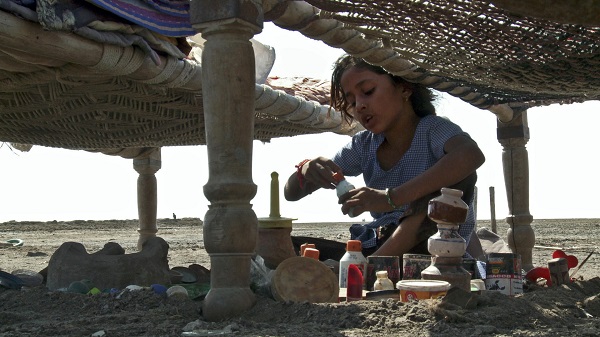
Describes a blurb on the film’s website, ‘The desert extends endlessly – flat, grey, relentless. There is not a tree or blade of grass or rock. But there is one thing in abundance: salt. Salt is everywhere, lying just beneath the cracked, baked surface of the earth. This is the Little Rann of Kutch, 5000 sq kms of saline desert. And for eight months of the year, the salt people live here – laboriously extracting salt from this desolate landscape. They have been doing this for generations.

Year after year, they migrate from their villages, 40,000 of them, to live on this bleak land without water, electricity or provisions. Arriving just after the monsoon, Sanabhai and his family will live here from September until April. Their nearest neighbour is a kilometre away. They communicate by flashing mirrors in the sunlight. Sanabhai’s wife Devuben walks across the bare, trackless desert to chop firewood. They buy the family’s water supply from a private tanker that comes once a week…’

Watch the trailer of the film here:


The film is the journey of Chhanabhai and his family who live without water, electricity or provisions for eight months of the year – tirelessly extracting salt from this desolate landscape. Under the blinding glare of the sun, they work on the salt fields until large crystals have formed. Their labour is rhythmic, a dance that mirrors the dance of the mirages on the burning horizon.

Written and directed by Farida Pacha, the film has won several awards at international film festivals.

Admission is on a first-come-first-served basis. NCPA members will get preferential seating till 6.20 pm. The film begins at 6.30 pm and is 92 minutes long.

(Picture courtesy mynameissalt.com)

Categories
Tech

This just in: two tabs for children

Eddy launches two new tablets for kids; both the new infotainment based tabs include games based on Cartoon Network characters.
by Manik Kakra | @Manik_K on Twitter

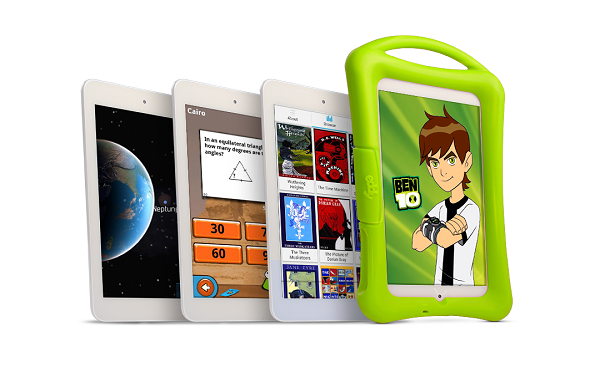
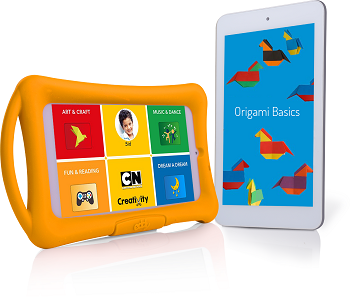
Eddy has recently launched two new tablets for kids. Metis Learning, the start-up behind Eddy, has collaborated with Cartoon Network to come up with Ben 10 and Creativity Tablets. Equipped with a 7-inch (1024 x 600) screens, the tablets are successors to Eddy’s first Learning tablet that was launched last year.

The Ben 10 tablet comes with a lot of games based on Cartoon Network characters and stories and it’s themed completely on Ben 10, the popular cartoon series. It comes loaded with 1,000 minutes of Ben 10 videos, books and interactive learning games.

CreativityThe Creativity Tablet comes loaded with various art and craft apps, role-playing games, Tabla app, and many more activity apps based on the show M.A.D.

Mr. Bharat Gulia, co-founder of Eddy said, “We build technology for young superstars. In every child there could be a reading superstar, a creativity superstar, a tech superstar, a math superstar or some other inherent talent. Our tablets provide excellent and fun content to bring out and nurture the superstar that lies in every child. Instead of spending thousands of rupees on toys, video games and other merchandise, parents can gift their kids one of these tablets that not only provide unlimited learning and entertainment, but are also much safer compared to any other tablet.”

Based on Android 4.2.2, the tablets come with Eddy’s proprietary Athena OS for better learning experience and parental controls, as per the company. Both these tablets are powered by Intel’s Z2520 Atom chip coupled with 1 GB of RAM. There’s 16 GB of on-board storage, which is expandable up to 32 GB. There’s a 2 MP rear camera and a 2 MP front-facing camera. The tablets come fitted inside removable drop-safe bumpers made of food grade silicone to prevent damage from falls. Equipped with 2,800 mAh battery, the tablets sport Bluetooth, WiFi, and 3G via a supported dongle. While the Ben 10 tablet has been priced at Rs 9,999, the Creativity tablet comes for Rs 8,999, with offers from Amazon.

Exit mobile version