Categories
Autism

A rich tapestry of insight

Mothers who are exposed to Relationship Development Intervention are better able to visualise the future for their autism spectrum child.
Kamini Lakhaniby Kamini Lakhani | saiconnections01@gmail.com
Part 12 of the Autism diaries. 

I recently had a meeting with parents of a five-year-old. The mother did not seem to understand what was going on with the child. She felt that because she had left her child alone for one day, his autistic symptoms had aggravated overnight. I could see that the child was very clingy, he was not able to communicate and had a very low body tone. Even though he was clinging to his mother, the eye gaze was out of sync and he seemed disconnected. What the mother said concerned me even more – she was worried about what would happen to her child in his later years. She was not clear about what she wanted for her child – her major concern seemed to be about his speech.

This is a very common scenario. I definitely don’t mean to belittle the mother or her feelings in anyway. She needs help in terms of acceptance of the situation, pacing herself to focus on the present and worrying less about a distant future. The feedback loop between the mother and child is compromised and definitely needs rebuilding. The core deficits of autism stood out menacingly with this child – his lack of motivation, emotional sharing, meaningful communication, etc. All this would warrant the implementation of the RDI Programme (Relationship Development Intervention). In addition to all of this, his speech and motor issues would need to be handled by experienced Speech Language Pathologists and Occupational Therapists.

This scenario stayed with me through the next day – to my weekly group meeting with my empowered moms, who have been on the RDI programme for two years. I now wanted to see where they all stood. So I gave them this little exercise to do: they needed to put down their thoughts regarding the following questions – What is it that you want your child to achieve? Suppose you did not have any restrictions in your life (in terms of money, family situations, etc.) what kind of optimal educational scenario would you visualise for your child to achieve the vision that you have of him or her?

The mothers started to write quickly.  When they read out what they had written, I was amazed by the clarity of thought. Even more amazing was the fact that each mother had understood her child’s potential and strengths accurately.

Here are some examples:

Viji: “I definitely want to work on repairing the core deficits through RDI. Besides a good GPR (Guided Participation Relationship) with me, Vishal should be well connected with other family members and friends. I want him to develop his culinary skills in order to develop an option for future employment. I want to hone his musical skills so that he spends his leisure time fruitfully. He should also be physically active and be part of some outdoor games such as cricket, basketball. He already does take part in some of these.”

Uma: “My daughter Shraddha should be able to engage in deeper level thinking, so that she is like any other typical girl. I want her to have meaningful communication, which will lead to an independent life (since she is very skilled too) I want her to be able to handle money efficiently and that will require some specialised training. I also want her to engage in some sports activity in the evening so that she can spend her evenings in a meaningful manner.

Priti: “I want my son, Tanay, to be totally independent. For this he requires training with self help skills, communication and language development. Through the RDI Programme, he has developed in terms of social and emotional connectedness and awareness.  For further independence, he needs to also learn basic math and proper use of money. I also want him to engage in some painting, cooking, pottery or music. These could be looked at as leisure skills and these will enable him to spend his free time meaningfully.”

My heart was filled with joy. Two years ago, these women were just like the young, vulnerable mother described at the start of this column. Look at what a long way they have come! What beautiful empowered moms! I am impressed with their understanding and their voicing of opinions with authority.

We’ve all come a long way. I think about one of Dr Gutstein’s power point slides which I had encountered during my training.

•ASD children teens and adults with average and above IQ, represent about 2/3 of all people with ASD:

(About .66% of the world’s population or 40 million persons worldwide)

Only 10% find employment

Only 3% live independently

Real friendship and marriage is less than 1%

This slide that had shaken the daylights out of me. This had actually goaded me to train professionally as an RDI Consultant.

Can you imagine what will happen if all parents start feeling empowered and start thinking positively and proactively? Hopefully, the above slide will be modified! The sky is the limit. These mothers are so motivated that they will reach for the stars! As their consultant, I feel like I’ve accomplished my mission!

India has a handful of RDI Consultants, reaching out and guiding parents. Are you interested in becoming an RDI Consultant?

I invite you to join me in creating these beautiful rich tapestries for each family. The weave of your thread in another’s life may create a legacy – which will remain even when you no longer do…

Please feel free to reach out to me for more information, at saiconnections01@gmail.com.

This column concludes the series on Autism Diaries. Kamini Lakhani is the founder of SAI Connections. She is a Behaviour Analyst, an RDI (Relationship Development Intervention) Consultant, Supervisor and Trainer responsible for RDI professional training in India and the Middle East. She is the mother of an adult on the Autism Spectrum. She is also a member of Forum for Autism.

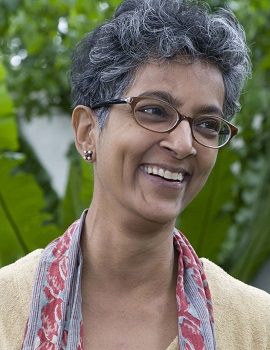
(Picture courtesy www.mindfulguideconsulting.com. Image used for representational purpose only)
Categories
Tech

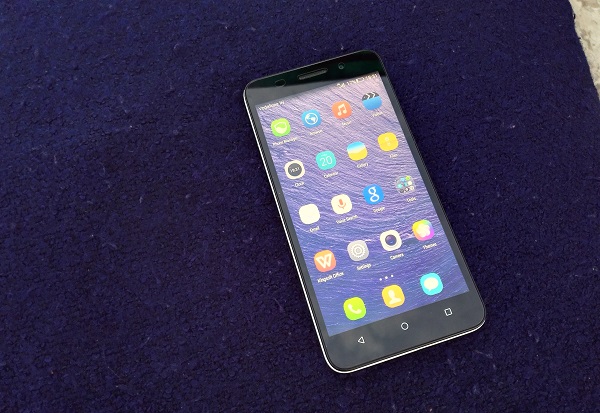
Review: Honor 4X by Huawei

Huawei brings two new Android smartphones in the Indian market. We review the mid-range Honor 4X and come away impressed.
by Manik Kakra | @Manik_K on Twitter

Huawei has been trying to make a comeback into the Indian market for a few months now. The company launched the Honor 6 last year, and seemed to have got a decent response. It is selling quite well, but Huawei probably needs much more. Now, it has come up with two new Android smartphones under its Honor series, which is how it plans to brand itself in India – Honor 4X and Honor 6 Plus. Let’s take a look at the Honor 4X, that is priced at Rs 10,499.

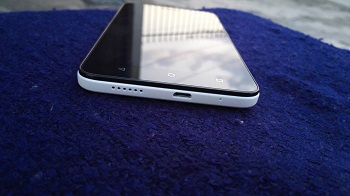
The looks. Huawei’s Honor 4X is not a small phone to hold. With a 5.5-inch HD display, weighing 165 grams and thick bezels on the side, it isn’t a compact phone. The phone follows a white and black colour scheme on the back and front, respectively. The back cover extends to the sides, which sport the white volume rocker and grey Power/Lock key on the right, while the left side panel is left plain.

Removing the cover gives you access the two SIM card slots (micro SIM cards) and the sealed battery unit. Below the screen you see three touch White-marked keys – Back, Home, and Menu/ Options (going from left to right). Above the screen are the ear speaker grill, 8 MP camera and sensors tucked near to the LED notification. While the front has glass on it, the white plastic back has a nice diagonal pattern, plus, with the bold Honor branding in the middle and circled (slightly protruding) camera sensor with the LED flash, the rear side appears simple. The microUSB port sits at the bottom next to the loudspeaker and primary mic, while the top has the 3.5 mm headset jack and secondary mic. Most people will find this phone difficult to carry around.

Screen. The phone boasts a 5.5-inch (1280 x 720) IPS LCD. It is quite sharp, has decent colour depth, but where it lacks is when used under direct sunlight. Due to its reflective nature, the screen needs to be used at a high brightness level. Plus, it gets a lot of smudges and fingerprints in a matter of minutes, so keep a spare wipe cloth handy. But, on the other hand, it isn’t a bad screen at all for watching HD videos and is decent for viewing high quality images.

Camera. Check out these sample images. The 13 MP camera can take detailed shots. You can choose whether you want a 13 MP or a 10 MP image from the camera settings, along with a few other basic options. Contrast level is decent and colours come out nicely in these photos. But the camera gives grainy photos in low light, struggling to perform in dark conditions. This seems to be a common factor in mid-range phones. Having said that, when it comes to daylight performance, the Honor 4X’s camera is among the best in this price segment and most people should find it good enough.

Call quality and network. The phone handles call quality and network reception really well. WiFi, Bluetooth work fine, but USB OTG isn’t supported as of now. Audio quality from the loudspeaker at the bottom is also not bad. Users may need to put a hand over the speaker while watching a video or playing a game thanks to its placement, but the actual output is decent for these two uses. There’s no bundled headset with the phone.

Battery. The phone is equipped with a 3,000 mAh battery unit. More often than not, it required to be charged within a day. With brightness level set at 40 per cent, using one SIM card, Email, Twitter, a few minutes of videos and surfing the Web, the phone struggled to last a full day. It gave about 18 hours of juice, which you can expand using the extreme power-saving mode, giving you only basic functions in hand. I was expecting a bit more on the battery side of things.

Software and performance. The Honor 4X is powered by the Snapdragon 410 SoC (1.2 GHz quad-core processor, Adreno 306 GPU), with 2 GB of RAM. Running on Android 4.4.2, it comes loaded with Huawei’s Emotion UI on top. The user gets about 4 GB of storage space, which is expandable via a microSD card. The OS follows Home screen pattern with all the icons and widgets on spread across your Home screens with no separate app launcher. There are pre-loaded apps in folders, which are not allowed to be renamed. You can create and name your own folders, though.

Long-pressing on any Home screen gives you the option to change its wallpaper, swiping effect, put a widget and change icon layout (4×5 or 4×4).The notification bar and toggle buttons look black on white, completely different from any other Android OEM skin. All your notifications are placed on the left panel, and swiping right to left lands you to all the toggle buttons. All the icons, third-party and Huawei and Google apps, get redesigned into circular icons, as per the Emotion UI.

This was one of my gripes with the UI. A lot of apps’ icons seemed weird (as per your chosen theme for icons) and weren’t any good with this circular trend (default style). It would have been much better had icons remained untouched and allowed to remain as they originally are. For customisation, you can choose a particular theme (Lock screen and Home screen), and choose icons from another theme or font style from another, certainly a nice option to have for users looking to edit just about everything on their phone’s OS.

The Lock screen gives you a glance to your notifications. You can unlock it by swiping anywhere in the middle, swiping up from the bottom on the Lock screen brings up basic toggle switches (similar to iOS). There’s also a Suspend button that gives you functionality of Home button and Menu button (again similar to iOS’s Accessibility feature). The phone supports double tap to wake and it worked well. As far as the general performance is concerned, I found the phone to be fairly responsive and able to handle apps and tasks well. Swiping between Home screens and scrolling through Settings aren’t a problem. While I wouldn’t call it being a very smooth device (it stutters a bit when using multiple tabs with an app like Email opened), it isn’t a slouch and can handle most things without struggling.

Wrapping up our review, the Honor 4X has a good screen, decent battery life, capable camera and good performance from an otherwise okay OS. By now, there are already a lot of good phones available in this price range, from the likes of Motorola and Xiaomi, and this is why the Honor 4X may find it hard to prove its worth. It could enhance its position a bit by providing Android 5.0 and further updates quicker than they have in the past. There’s not much wrong with the phone, but how it performs in an already competitive price segment in a long run remains to be seen.

Categories
Hum log

His first best dance experience

Choreographer Longinus Fernandes talks about directing the dances for The Second Best Exotic Marigold Hotel, which is earning rave reviews.
by The Editors | editor@themetrognome.in

Longinus FernandesC​horeographer Longinus Fernandes is excited and happy – and with good reason, because his work in the just-released The Second Best Exotic Marigold Hotel is being appreciated in all quarters. After working with the likes of Danny Boyle (Slumdog Millionaire) and John Madden (The Best Exotic Marigold Hotel) and doing the choreography for a Chinese film My Amazing Trip To India, Longinus is really upbeat about his latest Hollywood outing.

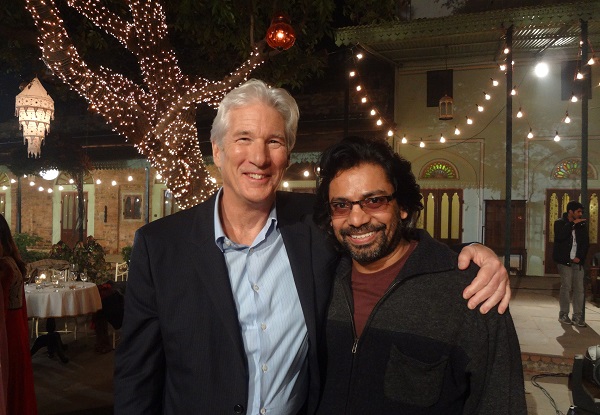
In the sequel to John Madden’sThe Best Exotic Marigold Hotel, Longinus has brought his unique style and fabulous moves for a special wedding sequence in the film. “What makes it so special is that I got to work with some of the best actors in the world, like Richard Gere, Judy Dench, Maggie Smith, Lillette Dubey, and Dev Patel and got them to dance to the beats of the Hindi film song ‘Jhoom Barabar Jhoom’,” Longinus grins.

He explains how he became a part of The Second Best Exotic Marigold Hotel. “Since I had done the choreography for Slumdog Millionaire, Eat Pray Love, Bollywood Hero and a couple of ad films for the India Take One Production house, I suppose they (the makers) were very comfortable with my working style. I personally feel blessed to be repeated for their projects again and again. I must mention Tabrez Noorani for being instrumental in shaping my career internationally. He actually makes it a point that I get on board for everything that demands choreography and this is what happened when the planning of this venture began. To my luck, I happened to be in Mumbai when they called me for a meeting and after that there was no turning back.”

The brief Longinus got from John Madden was a straightforward one. “All he said was, ‘This is a wedding sequence. There will be a few awkward jigs initially but ultimately I want it to look stunning.’ He said he was sure I would do my best to make it look special. I replied, ‘You got it,’” he says, adding that working with John Madden was simply fantastic.

Creating a dance sequence is always a job by itself, especially when the choreographer has to work with various artists and numerous back up dancers. The entire cast and were so busy with their respective schedules that Longinus and his associates had to wait three weeks before they could see everybody together. “I had stand-ins for everybody and staged the act to perfection and displayed it to John, who loved it so much that he decided to extend the sound track by a minute. He made it a point to be present for almost every rehearsal and ensured that every artist would be present as well.”

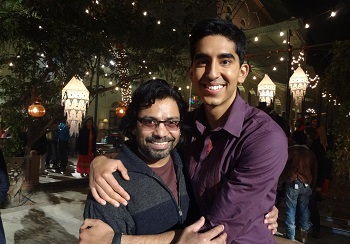
Longinus says he loved catching up with Dev Patel, who he knows since their time together on Slumdog Millionaire. “He has improved tremendously. When I first met him, he was so shy and now Longinus Fernandes and Dev Patelhe is so outspoken. I was very happy to watch the effort he took to get all the moves right…he has a peculiar style, which will surely catch on sooner or later. Tina Desai just loves dancing and enjoys every bit of it. She is also blessed with a wonderful body that compliments her dance moves.” But the biggest surprise was Richard Gere, who was very punctual and diligent with rehearsals.

He suggested the song ‘Jhoom Barabar Jhoom’ which Madden immediately liked, but took some time to get approvals for. “Honestly, working with him (Madden) has been a wonderful experience. Despite a challenging shoot, especially in the cold weather, he made sure everyone was very well taken care of with heaters, bonfires and hot coffee. The shoot went off very well under him,” Longinus says, adding that the unit was “stunned with how exuberantly Judi Dench and Maggie Smith danced.”

Categories
Wellness

Are you not getting better? Your diet is the culprit

Dr Nandita Shah gives a simple mantra to completely reverse diabetes, cardiac problems, and even cancer – the right diet.
by The Editors | editor@themetrognome.in

India leads the world in diabetes, depression and heart disease. The numbers of cancer, HIV-AIDS and other auto-immune disease cases is also on a daily upswing in the country. What are we doing wrong?

Dr Nandita ShahDr Nandita Shah, Founder, SHARAN, tells The Metrognome about what we’re doing to make ourselves sick – eating all the wrong food. She insists that simply cutting down on meat, salt, oil and sugar will not do the trick, it is time we all went completely vegan. In a freewheeling chat, Dr Shah explains the benefits of veganism and why it is the best option to reverse the most serious illness.

Excerpts from the interview:

How did you stumble upon the concept of reversing diseases through diet?

Being a doctor myself, I realised through my practice that real health is not about giving medicines to get rid of symptoms of a disease. I practiced homoeopathy, which is a holistic system of treating diseases. But even with that, people would get better with a remedy, but soon return with the same problem.

In 1981, when I began my practice, diabetes, hypertension, and cancer were rare and usually occurred only in the aged. Today, these diseases are not just striking a lot of the population, but even young people are developing them. Our bodies are designed to heal themselves, but we come in the way of the healing process. Observe animals in nature – they know how to heal themselves. They don’t need hospitals and doctors to the extent that humans do. I asked myself, ‘Are we causing our own diseases? And if so, how?’

We have a herd mentality; we do what others do. This also applies also to what we eat daily and how we choose to treat ourselves when we are ill. For instance, a diabetes doctor will ask you to cut sugar and carbs from your diet to lower your sugar levels, and we do this blindly even though we know that no one gets well from this regimen. Sugar is not the cause of diabetes, high blood sugar is the result of it.

The food we put into our bodies has a direct effect on our health.

What is the principal problem with our dietary habits that causes diseases?

The biggest problem is that we will put anything into our months. Eating is a completely instinctual exercise – all animals in nature eat according to their instincts but we don’t know what our instincts are. Take the example of a child. He will refuse to drink a glass of cow’s milk. So his mother coaxes him to drink it with sugar and chocolate powder added to it, knowing that these substances are harmful for him. No other animal, except humans, will drink another animal’s milk.

We are constantly brainwashed by the media and by other people to eat all the things that we shouldn’t eat at all; sugar, refined and processed foods are at the top of this list. The first thing I do in my practice is to connect patients to their instincts. I teach people to eat the right food. You would be surprised to know that even a long-standing 30-year-old diabetes can be completely reversed just by correcting the diet. Our bodies are interested in healing, but we don’t allow the healing to happen.

How does a vegan lifestyle impact the diseases or disorders we may be experiencing?

Like I said earlier, we eat anything and everything that comes our way, and this causes sickness. The first thing to do is, make a list of everything that’s being advertised, and then refuse to eat it. No one would spend money on advertising foods that are instinctual. We already know that we should eat them. Cut out sugar, cooking oil, animal products (including milk), and refined and processed foods from your diet, and see the difference it makes. When preparing food, use grated coconut or crushed peanuts in place of oil. Sweeten your food or drink with dates and raisins.

What has been your most interesting experience in reversing a disease in your patient?

That the ones who have minor illnesses are resistant to change, but those to whom doctors offer little hope will do anything to get better! I find that those who are willing to think and stand up for themselves, get better. People must realise that expensive treatment systems are not aimed at making you better, because they do not address the cause. They must understand that the solutions are often simple and available in nature, there is no need to take medicines just because everybody else does.

(Pictures courtesy SHARAN and abcnews.go.com)

Categories
Kharcha paani

Shops now want to remain open 24/7

After the Maharashtra Government recently allowed small shops to remain open on all days, traders now want shop timings relaxed.
by The Editors | editor@themetrognome.in

Last week, the Maharashtra State Government decided to allow medium and small shops to remain open on all days of the year, earning a rousing cheer from traders all across the State. Now, shops are aiming to remain open for 24 hours, if not all year, then at least during the festive seasons.

In a letter addressed to Prakash Mehta, Minister of Labour, Government of Maharashtra, the Federation of Retail Traders Welfare Association (FRTWA) has requested the State to allow shops to remain for all 24 hours; failing the granting of this request, the FRTWA has asked for a relaxation of shop timings at least during festive days. In the letter, which has been signed by Viren Shah, President, FRTWA, traders across the State have called for shops to remain open up to 00.30 am for 10 days during Diwali, Christmas and Eid every year, apart from other festival days “which can be mutually discussed and decided.” Writes Shah, “We would also request that shops remain open for 24 hours on the day of Eid, when the moon is seen. Also, AHAR (Association of Hotels And Restaurants) would be happy if restaurants were kept open 24×7.”

Says Shah, “We have made this request so that business and employment will receive a boost in Maharashtra. Already, 35 lakh small and medium shops across Maharashtra are affected by the Government’s decision to allow shops to remain all days of the week, 365 days of the year.” He adds, “We are hoping that the Minister (Mehta) will invite us for a meeting to discuss our request further.”

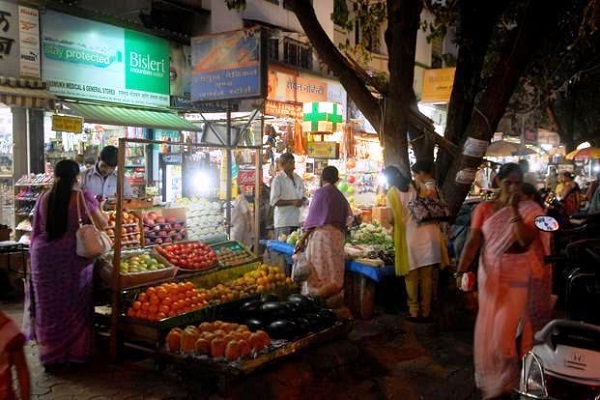
(Picture courtesy www.livemint.com. Image used for representational purpose only)

 

Categories
Places

‘Blind copying is not exemplary or inspirational’

Veteran architect Dulal Mukherjee talks about his exciting new project – it is the country’s biggest convention centre in Kolkata.
by Subhasis Chatterjee

All good artistes have a strong inspiration, and Kolkata-based Dulal Mukherjee is no different. The famous architect confesses to designing from the heart and being inspired by the vastness and the majesty of nature. His designs, he says, have always tried to be “embellishments in the wide canvas of the Earth’s natural beauty.”

The Metrognome caught up with Dulal on the sidelines of his firm’s current project – the State Convention Centre in Kolkata, the country’s biggest such centre thus far. Over a freewheeling chat, Dulal talks of his work ethic, his wonderful journey since the upheavals of the 70, why nature matters in his work and what future architects need to watch out for.

Excerpts from the interview:

Tell us about your firm and its journey.

An award won for the interior work of the International Terminal of Kolkata Airport at the National Design Competition served as a catalyst in setting up the firm Dulal Mukherjee & Associates (DMA) in 1968.

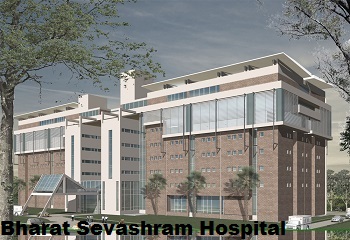
Those were the times of great political turmoil in Bengal, which affected the architectural fraternity also as there was hardly any scope for any significant work. The firm survived its initial years by Bharat Sevashram Hospital, Jokaundertaking various interior designing projects. The situation, however, started changing for the better from 1972 as building activity in the city slowly started regaining its footing. DMA, which had so far been a fledgling firm, started branching out, although mostly in ownership apartment designing.

After the 70s, we did a lot of Government and institutional projects, and the building boom of the late 80s and early 90s gave us an opportunity to grow and further spread our wings. We have done prestigious projects like the State Legislative Assembly Complex in Dispur, Assam, and the State Convention Centre in New Town, Kolkata.

While running your firm since 1968, you must have seen and experienced a lot of change in the Indian architectural scenario. How would you explain these changes?

During my formative days as a student of architecture and as a young practicing architect, the Indian architectural scenario was ruled by the ilk of Charles Correa, BV Doshi and Achyut Kanvinde. Though influenced by international stalwarts like Le Corbusier and Louis Kahn, Correa, Doshi and Kanvinde brought in an Indian flavour that left an indelible stamp of creativity and spawned a new modern Indian architecture.

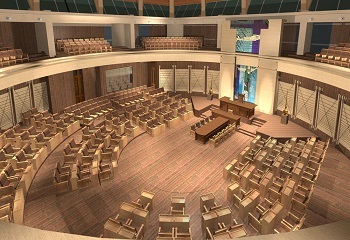
State Legislative Assembly Building, Guwahati, AssamUse of concrete in its bold, majestic form and softened by use of Indian elements like jalis, hanging balconies and punched out courtyards were there to stay for decades to come and was carried forward on the able shoulders of Raj Rewal, Uttam Jain and Ajoy Chowdhury. These were examples of inspirational architecture in the late 60s and 70s. Side by side, a mundane match box like architecture with use of hackneyed screens was mushrooming out in a desperate bid for urbanization in India.

From 1990s, a new style gradually emerged, that were more contemporary and international though with an individualistic stamp in the works of Sumit Ghosh, Sanjay Puri and Sanjay Mohe. The styles of Shirish Beri, Dean DeCruz and Gerard Da Cunha had infused a sense of local flavour typical of a region that was wholly individualistic.

The new age of ‘camouflaged architecture’ was brought in from the new millennium with extensive use of curtain walls, glass screens and aluminium cladding. Broken and sculptural forms found importance but the entire trend is very international that transcends all geographic barriers and culture. Use of cutting edge technology both in the constructional system as well as in the designing of the engineering services has found more predominance.

You are a firm believer in celebrating Earth’s natural beauty and that is always reflected in your work. Considering today’s demands, how far can you stick to your architectural philosophy?  

I grew up amidst lush green rural settings of the Dooars in North Bengal which infused in me a deep sense of reverence and inspiration from nature. Even in the present day, with the need for maximum utilisation in the face of plummeting land cost, I try to create my buildings in harmony with nature. The site constraints with regard to existing trees and natural contours are respected in my solutions, and I try to create my designed spaces around the existing flora. Natural contours are respected to preserve the quality of the top soil and in the absence of existing flora; greenery is created both through ground level and terrace level landscaping.

Which one of your projects is closest to your heart? What kinds of projects you are handling these days?

I am really excited about the current projects we are handling. A project, close to my heart, is the Assam State Legislative Assembly complex in Dispur, which I’ve won in a competition. It is a State icon and we’re taking pains to research the local architectural style, the materials and culture such that they are reflected in the design.

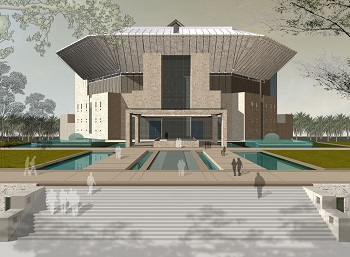
Another inspirational project is the proposed State Convention Centre in New Town, Kolkata. The design boasts of the largest convention hall in the country with a sizeable hospitality facility.

I do not have any particular preference while choosing a project as I find all solution process a great stimulus.

Can you share details of the state convention centre project in New Town?

With a built-up area of 64,360 square metre, the State Convention Centre for HIDCO at New Town campus comprises the main Convention Hall of 3,000 seating capacity, two smaller capacity Proposed Drawing of State Convention Centreauditoriums, four large exhibition halls including a State banquet, spacious pre-function areas, extensive food and beverage facilities and a garden food court (in pic on right).

The business hotel will comprise a business centre, 100 twin-bedded rooms, a business club and a spa with a roof top pool. The convention centre will have a multilevel parking block.

The Rs 250 crore project is being developed as a ‘green’ building project with all modern amenities and services like HVAC, illumination with LED fixtures and auto control, dual plumbing, audio visual systems, fire detection and suppression system, CCTV, security and surveillance and IBMS.

While executing a project, what are you keen to concentrate on?

I am very sensitive towards an environmentally-conscious architecture and feel it’s a predominant factor during scheme development. My designs strive to establish a relation between the interior and exterior such that there is complete harmony between the built and unbuilt. Respecting the local climatic and environmental constraints helps in the seamless co-existence of man’s creation with nature.

Have you ever noticed differences working in Kolkata, compared to other parts of the country or abroad?

My experience is restricted within this country though I’ve executed projects in Nepal. The experience in Kolkata is very similar to those in other parts of the country where construction technology is limited and restricted to a very limited number of agencies working at a national level. Sluggish work culture is prevalent everywhere, though it has definitely improved in recent years. We are definitely lagging behind our counterparts in the West with respect to technology adaptation and discipline.

How are you inspired at this age to design and create landmark structures one after another?

I am never content or satisfied with what I do at present. My intrinsic dissatisfaction nudges me towards something better in future. I am of the strongest opinion that whatever I have created in the past can be always improved upon and this conviction drives me for greater perfection in the future.

Any message for young architects?

There are quite a few talented architects making their mark in the profession to whom I could only say that there is no end to learning and no shortcut to success. The remarkable creation of our forefathers may be adopted with individual interpretations and local flavours, but blind copying is neither exemplary nor inspirational for the future generation.

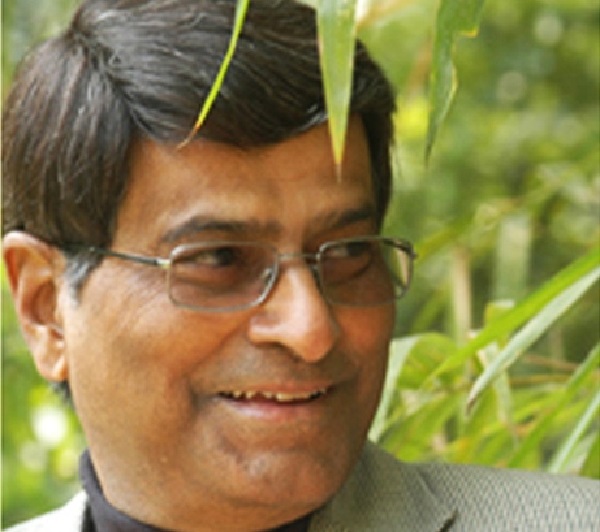
 (All pictures courtesy Dulal Mukherjee Associates)  

Exit mobile version