Categories
Tech

Review: Moto E (2nd Generation)

Motorola’s low-range phone is a good device, but buyers in this segment may opt for other models with enhanced features.
by Manik Kakra | @Manik_K on Twitter

It would not be wrong to say Motorola’s comeback has been a successful one, but the company has been doing really well to storm into at least the budget segment of the smartphone market. With the original Moto E and Moto G, it was clear that Motorola was here to make an impact, giving a good experience without costing a bomb. With the new Moto E, the objective seems to be the same, but expectations are now higher. Does the Moto E (2nd Generation) live up to those expectations or not? Let’s try to find out.

The looks. Motorola’s new Moto E (XT1506) isn’t too different from the original Moto E in terms of looks and feel. It follows the familiar Motorola curved back design, except the new Moto E doesn’t have a removable back cover; instead it has a unique rubberised band across the edges, covering the micro SIM card and microSD card slots. You can change this band with another band of your colour choice (called Motorola Bands).

The entire front panel is covered with Gorilla Glass 3 and the screen has anti-smudge coating that is quite effective. On the front, the big silver stereo loudspeaker and ear-speaker grill stand out, sitting next to the front-facing VFA camera and sensors; while there are no physical keys at the screen’s bottom. On the right side panel, you have volume rockers and Power/Lock key, which are tactile and firm to press.

At the top, there’s the 3.5mm headset jack, and the microUSB sits at the bottom. On the rear is the Motorola logo inside a little dimple, while the 5 MP rear camera (encircled in a chrome ring) is placed on the top-middle. The phone is compact, nicely built with no loose points.

Screen. The device features a 4.5-inch (540 x 960) IPS LCD, so it’s a little bigger than its predecessor but has the same resolution. The screen has good colours and viewing angles for a phone at this budget. It’s quite bright but just about okay outdoors. Where it lacks is sharp resolution for images and videos. It’s probably the biggest downside to the new Moto E, not bumping the screen resolution or improving outdoor visibility when there are better screens on phones priced similarly.

Camera. Here are few sample images from the phone’s 5MP rear camera (f/2.2).

The camera takes decent bright images outdoors, but struggles in low-light, whether it is to focus or capture details. It can capture still shots quite well, but don’t expect good performance for objects on the move. The camera app is similar to the previous Motorola Camera app, smooth in use, with basic options like HDR and Panorama to choose from. By default, it captures by a tap, but you can choose to focus by a tap and then capture an image by tapping again.

Audio and reception. Basics like call quality, dual SIM handling, 3G, WiFi and Bluetooth 4.0 connectivity are all in place. In-ear call audio is quite loud and clear, while network reception was never a problem throughout my usage. Audio quality from the front-facing stereo loudspeaker is actually pretty good, and one of the loudest outputs from a phone in this price category, so your audio needs for video and games have been taken care of well. The in-ear headsets, though, are just about okay, which is what you would expect from a budget smartphone.

Battery. As far as battery is concerned, the Moto E has a 2,390 mAh battery unit, and it lasted me about 18 hours on moderate usage. With two SIM cards in use, battery life decreased by two hours. The phone was kept at 30 per cent brightness with Email, Twitter, a few calls and music in use.

Software and performance. The phone runs on Android 5.0.2. Under the hood, there is the Qualcomm Snapdragon 200 (1.2 GHz quad-core processor, Adreno 302 GPU) coupled with 1 GB of RAM. In general, the new Moto E is reasonable. I wasn’t really blown away with how it fared in day to day usage. The original Moto E, running Android 4.4, was noticeably snappier. The new Moto E struggles slightly while running a few apps at once or while switching between a couple of heavy apps. It might be because of the new Android Lollipop and how it is more focused on animations and design, but I won’t call it the smoothest Android phone out there.

The new Android 5.0 OS is really refreshing and better-looking than Android has been. With flatter Menu icons, status icons, Settings, UI elements, there’s Material Design everywhere. The notification bar shows you notifications in one swipe and you have to either swipe with two fingers to swipe once again to access quick toggle buttons. You can now check and access notifications from the Lock screen, though Widgets are not supported on the Lock screen. Volume Settings have also been changed a bit, as you can now choose what type of alerts are allowed to notify you or not. There’s obviously the Google Now launcher in place with Google Now cards accessible by just swiping left to right on main Home screen.

The style of pop-up dialogue box, the dialogue box (appears near the bottom) have also changed and look much better now. There’s also multi-user support, so you can switch to Guest when you are giving your phone away to somebody and don’t want them to have access to your phone’s data.

Motorola Display is on this phone; as soon as you pick the phone, the Lock screen previews any notifications and you can access the relevant message right from there. There’s no need to unlock and light the whole screen up. Very neatly done, but if you already have the phone in your hand, you would have to unlock it and Moto Display doesn’t work then. The user gets a little under 5 GB of storage space, which is expandable up to 32 GB via a microSD card. Motorola hasn’t touched or changed stock Android much, as expected, but has done the usual and a few new touches to keep the experience good.

To sum up, the new Moto E (3G) is a decent buy at Rs 6,490, but it seems to lose out when compared to new phones in the Indian market, and even when you compare it to its predecessor. Still, it is a good phone for somebody buying their first Android smartphone and not wanting to shell out a lot. However, potential buyers in this price range are looking for much, so don’t be surprised if this phone is overlooked for a phone with a better overall package – even the Moto E’s 4G variant.
Categories
Enough said

Mass murders destined for pages of a diary…

The recent development in the Hashimpura murders of 1987 has led one to believe that there’s no countering State-sponsored violence.
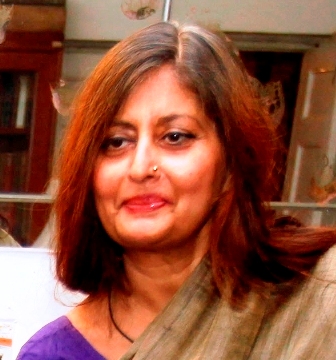
Humra Quraishiby Humra Quraishi

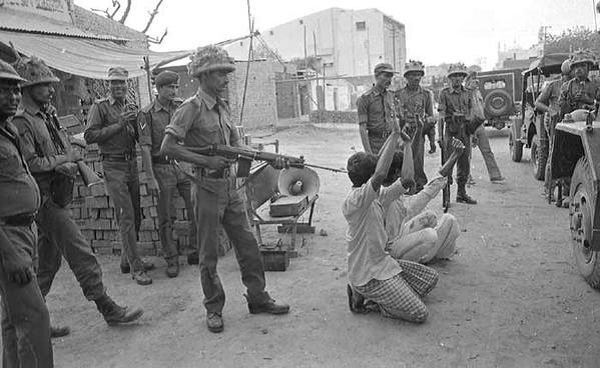
It is painful to even think of this subject, but think about it we must. For those survivors who witnessed the May 1987 massacre of 42 innocent Muslim men at the hands of Uttar Pradesh PAC cops in Meerut’s Hashimpura locality, these last 28 years must have been a torture of a different sort. The country is pained, disgusted and angry that the 16 cops accused of killing those young Muslims have been acquitted by a Delhi court – for lack of evidence!

This is just another instance of State-sponsored mass murders getting brushed aside so casually, it boggles the imagination. Maybe the incident will remain forever tucked away in the pages of a survivor’s diary, to probably be destroyed (if found) by vested interests. I would expect that by now, at least a couple of books on the incident would find their way to publishing houses, but that hasn’t happened. I suppose we have stopped reacting to State-sponsored terror.

“The judge tried hard to persuade me to withdraw the petition and suggested I move to Allahabad. I refused. That judge later became the first Chairman of India’s Human Rights Commission.”

Activist lawyer ND Pancholi says that Nandita Haksar had filed a petition in the Supreme Court in 1987 on behalf of the People’s Union for Democratic Rights (PUDR), praying for the investigation into the Hashimpura incident and payment of adequate compensation for the victims. She had argued the case in person and the Supreme Court was constrained to award an amount, albeit nominal, for Rs 20,000 per victim. She has mentioned this case in her book, Framing Gilani, Hanging Afzal – Patriotism in the time of terror (2007).

I quote from the book, “And no one has apologised to the people of Meerut’s Hashimpura in May 1987. It was Syed Shahabuddin Sahib who had requested me to go to Meerut and intervene. He told me about the 33 men who were picked up by the PAC and taken to Murad Nagar and shot one by one near Ganga Nehar. I filed the writ as a petitioner in person (on behalf of PUDR) before the Supreme Court. The judge tried hard to persuade me to withdraw the petition and suggested I move to Allahabad. I refused. That judge later became the first Chairman of India’s Human Rights Commission. No one has been punished for those murders so far. It is not even on the agenda of any political party.”

What are your thoughts on the Hashimpura case? Do let us know in the comments below.

Humra Quraishi is a senior journalist based in Gurgaon. She is the author of Kashmir: The Untold Story and co-author of Simply Khushwant.

(Picture courtesy muslimmirror.com)

Categories
Hum log

A sweet little cheese story

You’ve eaten ghar ka makhan, but have you tasted handmade cheese yet? Enter Mausam Jotwani and her awesome cheesy tales.
by Ritika Bhandari Parekh

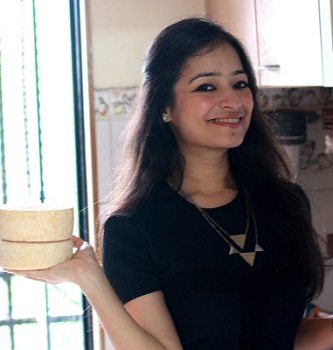
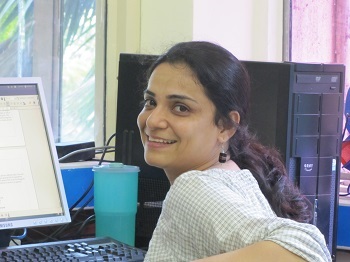
Imagine an alternate universe where Willy Wonka was not a chocolatier, but a cheese maker in the concrete jungle of Mumbai. With no space for a factory, he decided to convert his refridgerator into a temperature and humidity-controlled cave to get through his cheesy ways. Now also imagine Mr Wonka to be a 28-year old woman, and you have Mausam Jotwani, an urban cheese maker with the brand ‘Eleftheria Cheese.’

Mausam JotwaniAn HR professional at CapGemini, Mausam doesn’t remember the last time she had processed cheese sprinkled on her pizza because she makes her own cheese and sells it too. Her fresh, spreadable cheese also known as Fromage blanc is what finds its way to a crusty baguette. “It all started when I had gone to Germany as a teenager. I was studying the German language and that is the first time I had artisan cheese,” she says. Unlike the Amuls and the Brittanias, her palate was exposed to a gamut of handcrafted cheese which were fresh and interesting.

Her tryst with Germany continued through her work commitments. She continues, “Every time I would try different varieties of cheese and sourdough breads there. I was actually, quite amazed with the explosion of flavours. I never thought cheese could taste so good and that’s how I got very interested in it.”

The journey

She remembers how in 2011, when she was completing her masters in HR in the United Kingdom, cheese became a part of her daily diet. “Just like we have vegetables, I had it in my fridge all the time. Once I was back, I missed eating it. At that time, handmade cheese was not readily available. And because I had tasted the good stuff, I decided that if I can bake my own bread then why not make my own cheese?”

She read, googled, watched videos and graced her bookshelf with the Fundamentals of Cheese Science. The science and art behind creating cheese intrigued her and when her first batch flopped, she realised it was not that simple. She imported the ingredients and made another batch of fromage blanc. “I took it to my office and gave it to my colleague. And the next day, she had made a cheese cake out of it!” she exclaims. “I was like, is this my cheese? My colleague loved the consistency and texture and was willing to pay for the next batch.”

Amazed and stumped, Mausam loved the appreciation and the fact that somebody would pay for it excited her. Started as a hobby, soon the joy of creating and making cheese with her own hands from scratch prompted her to come up with Eleftheria.

Hobby to side-business

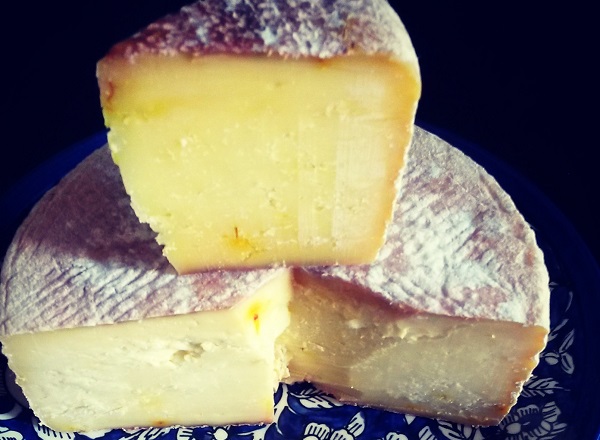
“Eleftheria actually, means ‘freedom’ in Greek. While brainstorming for the name, the thought process was to choose something that I would like even 10 years down the lane. The word ‘freedom’Cows Milk Fetta_Eleftheria Cheesepopped in my head as it gives me immense freedom to go out there, explore and experiment. It gives me freedom from the corporate world as well. And in the end, it is freedom from processed cheese,” she grins.

Mausam’s passion for cheese and learning new languages combines when she has to decide names for the different cheeses that she makes. “Recently I made this saffron-infused cheese and I call it Netania. You see the famous cheese names like Mozzarella, Brie, Gruyere and more can’t be used as they are protected. So unless I use the milk from the same breed of cows and buffaloes they use, I can’t term them so. This gives me the pleasure to invent and christen my cheese creations, which I love.”

Her struggles

A mini cheese appreciation club – that’s what she calls the feedback session from her friends. “Making cheese is not about just reading a recipe and reproducing it. It is about the raw material, mainly milk, that goes into it. One has to understand how milk reacts at different temperatures, which cultures go into it, how do these cultures behave, what role does temperature and acidity play and more such small details,” she explains.

With the weather in Mumbai acting up, she had to constantly reassess and modify the recipes. “Also good quality milk is of paramount importance, because your cheese is as good as your milk. How you actually separate the milk solids and what you do with these solids, gives each cheese its own character.” Hence, feta tastes different than a parmesan and cheddar. Today, she sources her milk from a farm in Igatpuri and maintains high quality standards.

Another battle on her home front was convincing her parents. “I was working seven days a week and they thought I had gone mental. So it was a task to make them realise that the cheese we were eating was not actual cheese, but a homogenised version with 51 per cent milk and rest all preservatives and emulsifiers. And the reason my cheese tasted different was due to the freshness.”

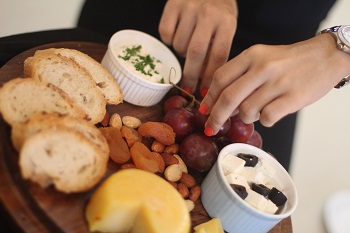
IMG_8798Luckily, they sensed her passion. So when she is out on exhibitions, her brother helps while her bhabhi is the official taster. Mausam also has a mentor who guides and fine tunes her recipes. “He is a pioneer in the cheese making industry. He started 20 to 25 years ago, when people didn’t know what mozzarella was. I have been fortunate enough as it has been a constant learning process, under his tutelage.”

Her dream

“With Eleftheria, I want to give an Indian touch to cheese. I wish to make a fresh, handcrafted cheese with locally sourced ingredients that is inspired by Mumbai and India.” So while paneer is Indian cheese, she would love if someone visiting Mumbai would make a point to try and take back Eleftheria cheese for being tasty.

With plans only for quality stuff and iconic cheese, Mausam hopes that cheese finds a way to be a staple part of the Indian diet. “It is not only a concentrated source of protein, but also elevates the mood just like good chocolate. It is a healthy choice for breakfast, too.”

She leaves us with this anecdote: “Cheese is milk’s sleep into immortality.”

To order your own handcrafted artisan cheese, follow Eleftheria Cheese on Facebook or visit their website www.eleftheriacheese.com

(Pictures courtesy Mausam Jotwani)

Categories
Beauty

The 3 best mud masks for your skin

Summer is here and the heat is on. Here’s presenting three natural mud masks to protect your skin this season.
by Rohit Soni

The skin is one of the most important organs of the body and everyone wants to have beautiful and healthy skin. A number of products are available in the market that claim to do wonders and make you beautiful. But instead of opting for a cosmetic product, why not go the natural way? Getting healthy and a beautiful skin is very easy if you use natural products, especially with the help of simple mud masks. These masks can help you get rid of a number of skin problems like acne, pimples, spots, aging etc.

Try these masks:

Anti-acne mask

One of the major problems that everyone faces is the problem of acne. No matter who you are or what your age is, the problem causes severe distress. Excessive oil and extreme dryness are the major reasons for acne breakouts, but you can get rid of the problem by using these masks.

For oily skin: Take some green clay, yogurt and rose water. Mix the clay powder and yogurt and add a few drops of rose water. Apply the mask to your face and let it set for about 20 minutes. Once the mask dries, use cold water to rinse it off.

For dry skin: Mix white clay powder, honey and rose water and apply over the face. Wash off after half an hour.

Anti-aging mask

The appearance of aging on the skin is enough to embarrass you. Several factors like nutritional deficiencies and a sedentary lifestyle may lead to aging, as also stress and pollution, but you can easily reduce aging marks with this mask.

Prepare a mask using sea clay powder, egg white, lemon juice, green tea extracts and rose water. Mix the clay and lemon juice, and add green tea extract and egg white. Add rose water last. Apply the mask to the face and wash off when dry. Use this mask regularly.

Fairness mud mask

Pollution, oil, dirt and exposure to sunlight can affect the beauty of your skin and make it skin look dull. Therefore it is advisable to use a fairness face mask that will restore your complexion.

Make a mask using green clay, mashed cucumber, mashed strawberry, milk and honey. Start by mixing the clay powder, honey and milk to make a smooth mixture. Next, add mashed cucumber and strawberry to the mixture. Apply this paste over your skin and allow it to set before you wash. Rinse it off using lukewarm water. Do this regularly to get clearer and fairer skin.

So girls, get ready to dazzle the world with your skin with these simple mud masks – without ever stepping out to buy a mask ever again.

Do you have a natural mud mask recipe? Tell us in the comments section below.

(Picture courtesy www.jumia.com.eg)

Categories
Do

Get into a ‘curator se charcha’ at Bhau Daji Lad Museum

Photographer Pa Madhavan invites Mumbai to discuss his curated exhibition ‘The Whole World is My World, Humanity is My Fraternity’.
by The Editors | editor@themetrognome.in

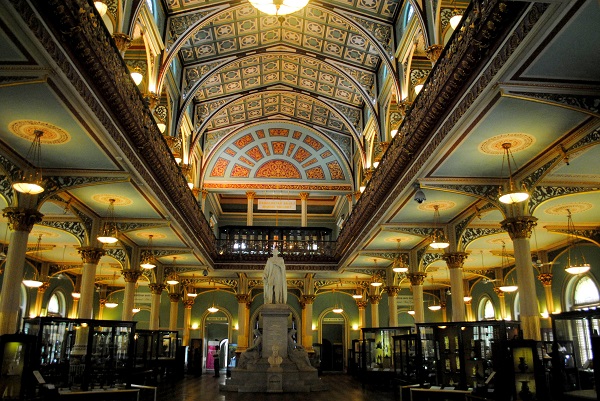
Bhau Daji Lad Museum in Byculla is currently hosting the wonderful photography exhibition, ‘The Whole World is My World, Humanity is My Fraternity’, which is a collection of works by 20 artists. This exhibition is the result of a worldwide ‘Call For Entries’ by FOCUS Photography for photographers to submit work on the festival’s theme. Photographers were invited to explore, investigate and visualise the ‘cultural crossover’ that has given rise to new forms of hybridisation and homogenisation of culture. Works of 20 selected photographers from around the world are on display, chosen by an international jury comprising of London-based photographer Suki Dhanda, Indian artist, writer, activist and curator Sunil Gupta, photographer Isaac Pereira and photographer and Founder of Ojo de Lata, Karlo Sosa.

Focus Festival 2015The exhibition is curated by Pa. Madhavan, Founder of the Wanted Series and Executive Director of the Goa Centre for Alternative Photography.

In an interesting twist, Madhavan invites Mumbaikars coming to the exhibition to sit down and have a chat with him about the photographs on display. He says, “You can find me sitting in the corner quietly reading a book on Mahatma Gandhi. You are most welcome to take a seat next to me. We exchange cards, introduce ourselves and ….let’s start the charcha.” He will talk to visitors about his kind of curation and photography, the philosophy behind the curation and his understanding of photography. “At the same time I would like to hear about their kind of photography and their understanding about the images in the exhibition. We may disagree, debate and confront each other,” he says.

He also invites visitors to walk around the gallery with him and talk about the images.

The exhibition is only only till Thursday, March 26, till 3 pm.

(Picture courtesy en.wikipedia.org)

Categories
Bombay, bas

Dear Mumbai, I am leaving you

A Mumbaikar writes with sadness about being unable to cope with the madness of Mumbai – and asks for forgiveness.
Pooja Birwatkarby Dr Pooja Birwatkar

Dear Mumbai, I am sorry but I have decided that eventually, I will leave you. Not that I don’t love you or take pride in being a Mumbaikar. I am a Mumbaikar to the core of my heart and you are my eternal abode. My most memorable years of life have been spent in your shelter. However, I am really shaken at how you have transformed over the last few years.

I owe you everything for making me strong and independent, but I am unnerved by the state of affairs. As I advance in years, the Mumbai lifestyle is becoming increasingly difficult to cope with. My reserves of endurance are draining at the crammed trains, buses, roads and traffic signals. I begin to freak out now when I wait endlessly in a traffic jam. It is wonderful that the city is getting its various mono and metro rails, and over bridges and freeways, but I shudder to think how Mumbai will cope with the herds of immigrants crowding into it every day.

A few years from now, I anticipate that all our modern infrastructure will only be bursting with people. The many freeways and bridges built to make commuting easier will simply crumble under the weight of so many people. Eventually, everything will sag under the burden of catering to the huge population. How many more bridges will we make, how many other developments of such type will take place? There is simply no space left any more.

My Mumbai, I loved you in the monsoon when you looked so beautiful under a canopy of clouds for almost three months. The arrival of monsoon was timed to perfection, but for the last few years, the rains have been a cause for much nail biting and stress for me, as I wonder if I or my loved ones will be stuck in a deluge. Or the rains are so poor that our water reservoirs have no stocks left. And then there are the potholes, making my body ache and causing so many accidents every year.

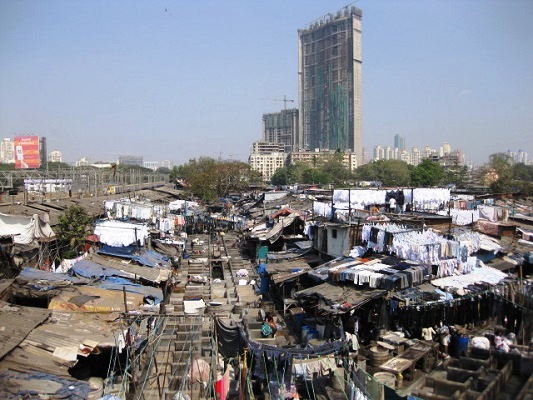
Water shortage is now an accepted part of our lives, and soon, power cuts would be, too. If it’s not water cuts, it’s the fear of dengue, malaria and swine flu. I get goose bumps when I see an Dirt in Mumbaiambulance stuck in traffic pleading to pass through the merciless traffic, and I torture myself thinking that I am in that ambulance and not able to make it in time.

The city’s busy life gives us just enough time to meet our loved ones on the weekends. We have lost the luxury of catching up with our neighbours over cups of tea after a long day of work – because we know we would be intruding on their private time, of which all of us have so little. I like to imagine that I will spend my retirement years in a garden in front of my house with a cup of tea and my husband and friends for company. Sadly, I don’t see this dream taking place in Mumbai. Leave alone a garden, I have started envying those Mumbaikars who have balconies in their houses.

I am pained and saddened that my formerly ‘safe’ city is no longer so. My life’s story too may end up like so many elders in the city who are alone, their children having left home for better pastures. The ghastly stories in newspapers about acts of organised gangs targeting seniors fill me up with fear.

Dear Mumbai, if I am so stressed out, imagine the pressure you are under! You also must long for shady roads and clean air, quieter festivals and open spaces for citizens. You must long to look prettier and not so dirty all the time. Do you even remember a time in your past when we didn’t shamelessly rob you of everything you had and not give you anything in return?

I am sorry to be selfish and abandon you, my home land, and I expect that you would forgive me some day.

Dr Pooja Birwatkar is currently pursuing post doctoral research and working in the area of science education. She has been associated with the field of education in the past as a teacher educator, and her area of interest is research in education. 

(Pictures courtesy badabingbadabambadaboom.wordpress.com, knowledge.allianz.com)

Exit mobile version