Categories
Eat

5 must-visit eateries to beat the heat

We pick five of Mumbai’s best juice and falooda centres that whip up awesome concoctions to cool you off this summer.
by Ravi Shet

The mercury is rising by the day and making us more tired, thirsty and craving for cool food. This summer, beat the heat by consuming fresh fruit juices, ice creams, faloodas, and kulfis.

In our endeavour to keep the citizens of this great city well hydrated and healthy this summer,we present a handy list of places to help beat the heat with their mind-blowing concoctions and versatile variations! Read on…
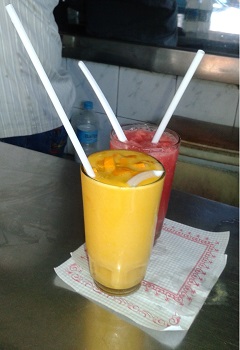
Watermelon Juice n Mango Milkshake, GunjalGunjal Juice Center, Dadar TT

Established in 1960, this place has been a haven for riders passing from Tilak Bridge towards Khodadad Circle, Dadar TT. The centre is open between 10.30 am and 11.00 pm. All juices are made as per order; they don’t stock any of their juices and they never use stale fruit. The ever-smiling manager Swapnil Karale says that their lemon juice (Rs 15), watermelon juice (Rs 40) and mango milkshake (Rs 100, in pic on left) are hot selling items in this season.

Must try – Watermelon juice and Mango milkshake.

Apple A Day, Khar West

Looking for healthy, fresh vegetable and fruit juices with no sugar or additives? This little place in Khar is worth a visit. Founded by the Sakpal brothers – Kiran and Sanket– in May 2013, this place is a boon to the people who believe that they should consume their juices in a fresh and natural form.Chopping and blending of vegetables and fruits are done only once you place the order. Their Carrot-Beet-Ginger-Mint (Rs 69), Carrot-Cucumber-Celery (Rs 69) and Wheatgrass Shot (Rs 69) are really worth trying. Kiran Sakpal, co-founder of this establishment says that even though they have a menu, they offer customised preparations as per customer’s requirements. For instance, if you don’t want ginger in your Carrot-Beet-Ginger-Mint juice, they will do it for you, as also whip up a juice with the ingredients of your choice.

Must try – Carrot-Beet-Ginger-Mint and Carrot-Cucumber-Celery juices to combat the heat.

Baba Falooda, Mahim

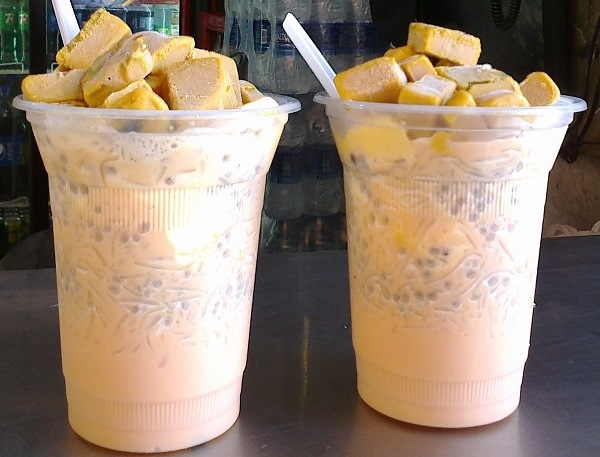
Look no further for cool and quick service than Baba Falooda (see their kulfi falooda in pic above). Irfanbhai, the son of owner Abdullah Bilakhia, says that they have been in the business for the past 34 years and believe that all the 20-odd items on the menu are quite popular among the people who throng to their place. Hence, they do not believe in adding 100 more recipes to the menu, focussing instead on delivering what the public loves. The Baba Special Falooda (Rs 100), the Dry Rabdi Kulfi Falooda (Rs 100) and Baba Double Special Falooda (Rs 130) are my personal favourites from this place.

Must try – Baba Special Falooda and Dry Rabdi Kulfi Falooda for sinful gluttony.

Prabhu Ice Cream, Mulund West

Situated diagonally opposite Mulund railway station, this place has been a hit among Mulund residents for years now. Established Kulfi Falooda Rabdi, Prabhu Ice Cream24 years ago, they have been serving people from 9.30 am to 1.00 am from the time of their inception. Sunil Karle, manager, says that their customers demand their kulfis and mango milkshake more during the summer season. I love their Kulfi Falooda Rabdi (Rs 60) served in a flat dish and their Mango Thick Shake (Rs 50) in the summer. Also, their Mango Sandwich Ice Cream (Rs 30) which consists of a slab of mango ice cream in between two wafer biscuits, is really good.
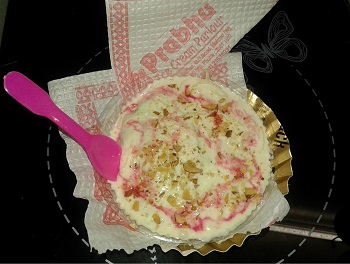
Must try – Mango Sandwich Ice Cream and Kulfi Falooda Rabdi.

Sukh Sagar Juice Centre, Girgaon Chowpatty

This place has been a wonderful source of refreshment for people staying near Girgaon Chowpatty for their fresh fruit juices and faloodas. In operation for the past 50 years, they have been catering to their customers with good quality and service. Their Mix Fruit Sundae (Rs 175), Special Dry Fruit Falooda (Rs 170) and Mango Milkshake (Rs 170) are the best picks for summer.They are really busy after 7 pm every day as they take orders for faloodas and milk shakes, so you might want to visit or place your order earlier.

Must try – Mango Milkshake and Special Dry Fruit Falooda.

(All pictures courtesy Ravi Shet)
Categories
Tech

Review: Huawei’s Honor 6 Plus

Huawei’s flagship device, the Honor 6 Plus, has a battle on its hands cracking the Indian market at its price.
by Manik Kakra | @Manik_K on Twitter

Huawei has been quite busy in the Indian market lately. The company launched two smartphones (we reviewed the Honor 4X a few days ago) and now the company’s flagship, the Honor 6 Plus, has arrived. Priced at a little under Rs 26,000, the phone clearly has an uphill battle against their rival’s offerings. So let’s try and see of the device is up to the task or not.

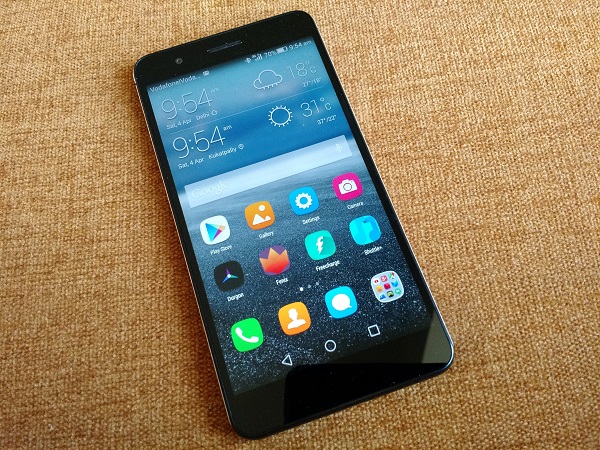
The looks. The new Honor 6 Plus (they really could have done with a better model name and not a known one) follows a glass and metal chassis design. What you will notice the first time you hold the device is its use of glass and metal frame (except for the bottom). The 5.5-inch full HD screen is accompanied by the front-facing camera, speaker grill and sensors at the top, and plain bezel at the bottom, as the phone had all on-screen navigation keys.

The left side panel has been left blank, making the right one look a bit busy with the Volume buttons, Power/Lock key, which are followed by nano SIM/ microSD card slot and micro SIM card slot. The keys don’t feel very tactile and firm, though. You can either use a nano SIM card or a microSD card, while using a micro SIM card in the other slot.

At the top, you have the Infrared port, 3.5mm headset jack and secondary mic, while the plastic bottom gets the microUSB port in the middle. Coming to the back, the subtle pattern looks nice. The dual-lens camera and the LED flash sit at the top right corner while the Honor logo is imprinted near the middle. The phone is quite big, but not too heavy for its size, its metal sides and glass back don’t feel slippery, but the metal sides get scuffed and dented even with minor falls and slips.

Screen. Speaking about the phone’s (1920 x 1080) LCD with Gorilla Glass on top, I don’t have too many complaints with the display, which looks quite sharp with decent viewing angles; it is quite bright and not bad for use outdoors in sunlight. Colour reproduction does seem a bit off, as the screen goes a warm yellow when viewing images.

Camera. One of the USPs of the phone, as per the company, is its dual sensor 8 MP camera. Using the dual sensor with the wide aperture mode on, you can change the focus area in an image as an after-effect. This ‘trick, previously seen on the HTC One (M8), Galaxy S5 among a few more, is becoming somewhat common in phone cameras these days. Here are a few sample images.

The camera on the back is pretty good, actually. It can take detailed and sharp photos in daylight conditions, and not too bad in low-light (if you don’t try zooming in). Colours come out quite bright, and the overall performance seems to be on par with best phone cameras (the Mi 4, LG G2) in this price range. The Wide Aperture mode for changing focus does work well if used in correct settings, and many users will like using it. The 8 MP front-facing camera is more than capable of taking good selfies and do video calls, so there’s not much to complain with what you use the front-facing camera for.

Battery. The phone is equipped with a 3,600 mAh abtetry unit, making it one of the largest among the smartphones available in the Indian market. The device lasted me a day, more often than not. With Email, Twitter, a bit of YouTube and music playback, I was able to get over 20 hours of usage a lot of times, and its battery was never really a big concern throughout my usage. Of course, with a lot of HD videos, games and camera usage, it is bound to go down.

Call and sound quality. The phone supports 3G, 4G LTE (no CDMA), WiFi and Bluetooth, all of which worked well for me except for the nano SIM card slot thata didn’t work on my review unit. Call quality and network reception hold fine on the device with no troubleshooting required.

Sound quality from the rear-facing loudspeaker is just about okay, though, getting the job done for games and videos, but I was expecting a better output from it considering how vocal Huawei has been about the phone’s multimedia performance. It might have helped if the speakers had dual speaker openings.

Software and performance. The Honor 6 Plus runs on Android 4.4.2 with Emotion UI 3.0 to go on top. Under the hood, there’s Huawei’s custom SoC HiSilicon Kirin 925 (1.3 GHz quad-core + 1.8 GHz quad-core, Mali-T624 GPU) along with 3 GB of RAM. The overall look and feel of the OS is very similar to that of the Honor 4X. I wish Huawei did a little bit of work to get their icon set and fonts look better or give more options than what they currently do under Themes. Since this is Huawei’s flagship device, it should be updated to Android 5.0, in my opinion, but there’s no official word when it’s going to be.

Messaging, dialer and Clock apps have been loaded with useful features (like blocking features in Messaging and Dialer) and gel well with the overall look and feel of Emotion UI. There’s one nifty little feature – where you can mark a particular WiFi access point to be a hotspot, so that the phone uses it just like your network operator data and not a full-fledged WiFi connection, meaning you save on data.

Performance-wise, the phone is just about okay. It handles most apps and tasks fairly well, but I wouldn’t count it as the smoothest smartphone in this price category, and rank its day-to-day performance below the Xiaomi Mi4 and OnePlus One. A few places like multi-app view, or three-four tabs in Chrome, show you where the OS stutters and doesn’t give a very smooth performance.

The Huawei Honor 6 Plus is pitched against the likes of the Nexus 5, Mi 4 and OnePlus One, so it surely has an uphill battle on hand, but from what I have seen and tried, the phone isn’t too behind its competitors. To buy an Honor 6 Plus, you have to register for Flipkart’s flash sale and then manage to order it when goes on sale. Huawei is offering decent promotional offers With Freecharge, Hungama, which makes a better deal. So, with a good screen, capable camera and satisfactory battery, the phone does have quite a few things going its way and it will be interesting to see how well it performs in the market against those three devices.

Categories
Places

Ter excavations to throw light on ancient Roman trade

Some evidences of Indian trade with Rome, and a flourishing ancient civilisation, were recently unearthed at Ter, in Maharashtra’s Osmanabad district.
by Shubha Khandekar

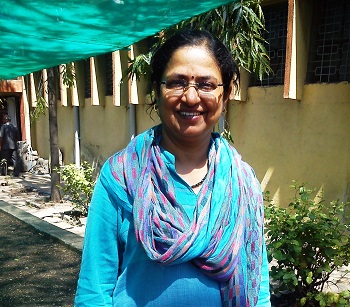
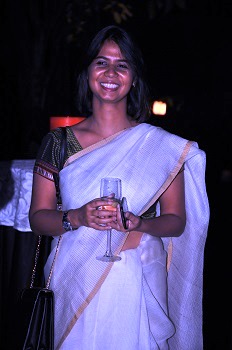
Dr Maya Sahapurkar PatilAfter a gap of nearly almost 40 years, the Directorate of Archaeology and Museums, Maharashtra State has resumed excavations at Ter, by the Terna river in Osmanabad district, a village in Maharashtra, under the leadership of Dr Maya Sahapurkar Patil, Deputy Director (in pic on left). She has been a teacher of archaeology at Solapur earlier and has authored three books. Shubha Khandekar spoke to her on site.

Shubha: Why is the site important and what was the reason for choosing Ter for excavation after so many years?

Dr Sahapurkar Patil: Ter is the modern name of the ancient town Tagar, the Mumbai of those times in terms of brisk commercial activity between India and Rome. Various kinds of textiles, beads and jute were exported from here to Rome. The local people imitated the fine Roman pottery, with a characteristic red polish, that came with the Romans. Tagar is mentioned in the Periplus of the Erythrean Sea by a Greek author 2000 years ago. It says that Tagar is a 10 days’ journey from Pratishthan (today’s Paithan), which was the capital of the Satavahana rulers. Periplus also tells us that Tagar was the important market town for merchandise originating on the east coast of India. The famous British archaeologist Henry Cousens, then working with Archaeological Survey of India, first explored this site in early 20th century and recorded his observations, pointing to unmistakable trade links with ancient Rome. On the basis of copper plates found outside Ter, which mention ‘Tagar nivasi’ Ter has been identified with the ancient Tagar.

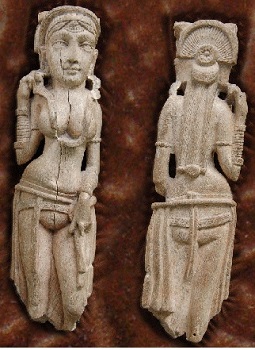
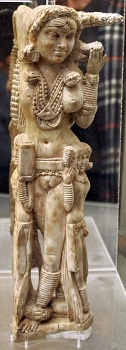
Meanwhile, Ramalingappa Lamture, a merchant from Ter became fascinated with the surface finds and the visits of the British who came looking for them and Pompeii_Terto visit the nearby Jaina Dharashiv caves. He started collecting these finds, such as figurines of baked and unbaked clay, beads, pottery, shell bangles, ivory objects, stone grinders and coins. It became a large collection and was taken over by the Government in 1978 and expanded to house this private museum, consisting today of over 20,000 artefacts, testifying to the cultural glory and prosperity of the Satavahana days.

Are you the first one to excavate Ter?

No. It was first excavated in 1958 by KN Dikshit, who found a large brick stupa. Dr BN Chapekar continued with the work in 1967-68 and found a large number of mother goddesses in the Lajjagauri form from the mound called Renuka Tekdi. A team under Dr SB Deo from the Deccan College again excavated it in 1974-75 and published a brief report. After that, two small scale excavations were undertaken by the State Department of Archaeology which revealed a stepped reservoir. And now it has been entrusted to me and my team.

What are you looking for?

(Smiles) I have a special interest as I belong to this region. Of the seven mounds here, named Sultan, Kaikadi, Mulani, Renuka, Bairag, Mahar and Kot, the first Pompeii_Bestthree are greatly disturbed by modern habitation and hence we have chosen to dig at Bairag and Kot. Our two objectives are to define parameters of the ancient trade with Rome, to trace the material culture of the early Satavahana phases and to find evidence to fill the gap between the Satavahana period and the mediaeval period remains that overlie them.

And what have you found?

We have found a well of mediaeval times and associated structures in which the earlier bricks of Satavahana times have been reused. A plan of a house has been traced. There is evidence of timber construction which has been mentioned by earlier excavators, too. Apart from that, there are several ivory objects such as dice, comb and a rod to apply kajal to the eyes. An important find is the rim of a pot on which some letters are inscribed in Brahmi. We have sent the piece to experts for reading. Beads of carnelian, agate, jasper, lapis lazuli, faience shell and terracotta have been found. Bangles of shell, terracotta and multi-coloured glass, ear-rings and gamesmen also have been found. Female human figurines of terra cotta and kaolin show that the local people had adopted the Roman technique of double mould manufacturing.

What is your message to the people?

People are very fond of saying how great their ancient culture is, but when it comes to taking action, one sees nothing but callous apathy and mindless destruction of our precious heritage. Sculptures of excellent workmanship and immense historical value are lying waste all over the State. From what I have seen, we have the potential to build a local museum in every district. People should take the trouble to conserve this rich legacy. They can either set up a museum of their own, as done by Lamture, or donate the local findings to the government or to a museum for maintenance. This is not just the Government’s but everybody’s responsibility, and the awareness should be created right from school days.

Categories
Little people

‘Nutri gardens’ for children

Children in tribal areas of Maharashtra are overcoming malnutrition with a garden and organic farm concept launched with farmers’ associations.
by TERI Features Service

Three and a half-year-old Manish Hiraman Gowari, a resident of Khanivali village in Thane district, Maharashtra, was detected with severe acute malnutrition in 2013. He weighed just 9.9 kg then, when the standard prescribed by WHO is above 16 kg. Due to the introduction of a concept called ‘Nutri-Garden’, his life changed forever. Regular intake of protein supplements and balanced diet as advised by the project partners and doctors enabled Manish to increase his weight by more than 26 per cent in just three months.

Many children like Manish in the tribal areas of Maharashtra have benefited from a project launched by The Energy and Resources Institute (TERI), Indian Oil Corporation Ltd. (IOCL) and the Thane Zilla Parishad (TZP), which was implemented with the help of Kisan Seva Kendras (KSKs) of IOCL and TZP. The project has today reached out to more than 900 children in 42 villages in the district.

Methods and measures

Khanivali village in Wada block was selected to implement a pilot project between June 2013 and February 2014. The project aimed to address the prevailing issue of malnourishment among Severe Acute Malnourished (SAM) and Moderate Acute Malnourished (MAM) children and to assess if SAM and MAM children could be brought into the normal category.

“To ensure sustained positive health impacts on the SAM and MAM children, it was not only essential to provide enriched nutri supplements like protein powders, vitamin tablets, but also include appropriate nutritious food ingredients in their daily diet,” says Dr. Anjali Parasnis, Associate Director, TERI. While assessing the potential of available resources like land, water and manpower, TERI promoted the concept of “Nutri-Gardens” to ensure local availability of four focused ingredients, namely spinach, papaya, sweet potato and mushrooms, which could be easily cultivated in the region, and if cultivation is not possible, the same are easily available in the market at affordable rates throughout the year.

Given that women play an important role in the health and wellbeing of a family, the focus of the program was centered on the mothers of SAM and MAM children and aanganwadi sevikas (child daycare centre workers), responsible for providing mid-day meals to these malnourished children of Khanivali village. They were provided with a “Nutri Kit” comprising resource material in local language elaborating on the crux of the issue of malnutrition, the strategies to overcome it, easy-to-follow recipes, seeds and methods to grow the identified food ingredients.

Regular awareness programs, encouragement to consume the identified food ingredients and monitoring helped bring down the number of malnourished children. When provided with protein rich milk supplements as a short-term strategy, along with balanced diets, to the targeted 140 malnourished children for a period of three months, it was observed that around 68 per cent children, who were earlier designated as MAM, showed improvement in health and were assigned into a normal category, whereas, 32 per cent SAM children were upgraded to the MAM category.

“Given the ease of adopting the concept of “Nutri-Garden”, its long-term impact and encouraging results, the concept has tremendous potential for replication in other areas,” adds Dr Parasnis. Furthermore, TERI is currently focusing on the issue of malnutrition in both rural and urban areas through its program called PROTEIN — Program to Revitalize the Overall health of the Tribals/Teenagers by Ensuring Intake of Nutritious food products.

For more information on the project, please contact Dr. Anjali Parasnis, Associate Director, TERI (anjalip@teri.res.in).

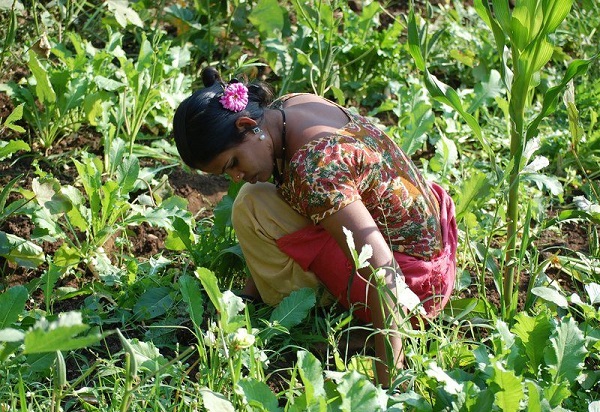
(Picture courtesy www.thebetterindia.com. Image used for representational purpose only)

Categories
Overdose

Help save Mumbai

A Mumbaikar makes a fervent plea for all of us to be more involved in saving Mumbai, our home city.
Jatin Sharmaby Jatin Sharma | @jatiin_sharma on Twitter

Mumbai…

We have always spoken this name with a positive emotion.

The city’s name invokes a great sense of pride in the minds of those who live in it. Others swear by its spirit, its bravery, its innate humanity.

But if we’re so proud of the city, why are we murdering it?

Mumbai is being killed in bits and pieces by those who felt they were its legal custodians. They wanted to claim first rights to its guardian of a city that they never made in the first place. We have so many guardians now that everyone has been killing it slowly and softly. From the real estate mafia to the babu taking bribes under the table, to the politician diverting funds meant for the city’s improvement to his own bank account, this city is now reduced to a shell of its former self.

Over the years, the sentiment of Mumbaikars has changed from “I love this city!” to “I love this city’s people!” Because that spirit is still intact. Everything else is just falling apart. The city is now just a facade that tries hard to show that it is still as fabulous as it used to be. The middle class of this city is still its middle class – in the current atmosphere of inflation and corruption, it can hope to do no better – when it could easily count as the upper middle class in other towns, even other metros.

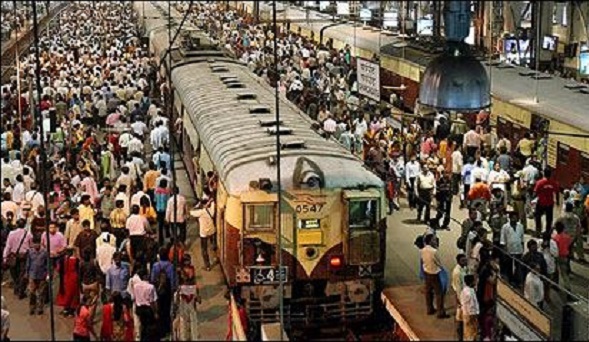
The filth we see all over the city refuses to abate. The hardworking citizen is still part of an unwanted sandwich in local trains, the sincere Mumbaikar is still mocked at by the real estate prices in the city. Over two and a half lakh houses have been unsold in the city for about two years now, but still the builders will not lower prices as it would result in a huge real estate crash. And how would they recover the money they’ve pumped in to build those homes, plus the bribes they’ve paid to get the requisite permissions?

But this is not somebody else’s problem. It wasn’t just ‘other people’ who ruined the city. We did, too. In earlier years, we could get away by saying, “We didn’t know these problems existed.” But now there is an unprecedented amount of activism, news reaches us the moment it happens. There is no excuse to “not being aware” any more. Sure, most activism these days is driven by agenda. But not everything people do is driven by commercial interests. When we circulate Facebook messages about a lost senior citizen in Mumbai and discover that widespread sharing helped find the person, there is no commercial agenda driving it. When we share pictures of men harassing women travelling in public transport and get them booked, there is no commercial agenda driving it. When we band together as citizens to save the Aarey stretch, where is the commercial interest for us?

Today, Mumbai’s largest green tract, the Aarey zone, is facing an enormous problem. In a city fast losing its last vestiges of green, the trees in Aarey are going to be chopped. We have had many parks, many open grounds forcibly taken away from us by the corrupt. Isn’t it time we banded together to claim our city?

And if you think, “Why should I bother about Aarey?”, I have just one reply: You should bother because you are losing your city.

Jatin Sharma is a media professional who doesn’t want to grow up, because if he grows up, he will be like everybody else. ‘Overdose’ is Jatin’s take on Mumbai’s quirks and quibbles.

(Picture courtesy lifeinmumbai.co.in)

Categories
Become

A Mumbai girl discovers her passion in wine

Najeshda Deshpande started out in Financial Accounting and Auditing, but found her vocation during a chance meeting with surfers in Australia.
by Salil Jayakar | @Salilicious on Twitter

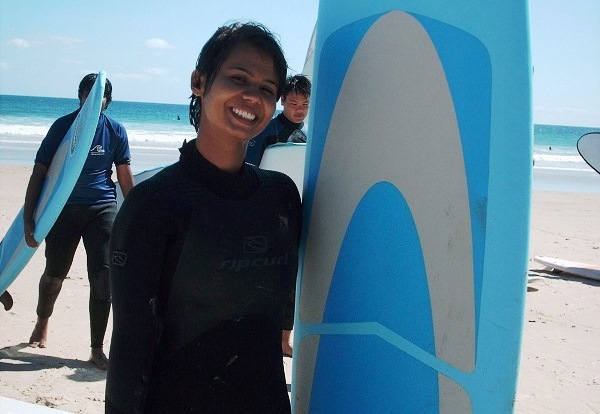
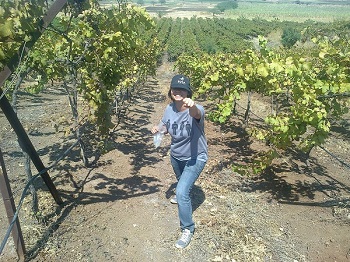
At SulaFest 2015, the oenophile in me was quite delighted to see that winemaker Hardys was on board as wine partner. Holding forth on their wines and food pairings was the bubbly Najeshda Najeshda Deshpande, Sula Vineyards(‘hope’ in Russian) Deshpande (in pic on right), Sula’s import manager. A short conversation later I learnt that she was a Mumbai girl (from Vile Parle, no less) and that we had common friends. Intrigued by this Marathi mulgi’s career choice, I dug deeper only to learn that Najeshda’s love affair with wine started quite by chance on a holiday in Australia. “I was done with number crunching and didn’t quite know what to do next. I made friends with wine-making surfers and here I am today,” she told me.

Read on to know more about Najeshda’s career journey, the work she does and why she loves what she does…

Tell us about your days in college and the career choices you made. 

College was a bit of a blur for me. I got myself into Financial Accounting and Auditing at the start of my B.Com but spent far more time on various student activity committees, clubs and causes than in a classroom. At the end I had a ‘respectable’ degree and I was finally free to find myself a real passion. It is an education that stood me in good stead later on in my career but I never saw a future for myself in it.

How did your interest in wine come about? 

Looking back I’m fairly certain it was destined to be. I had a number of run-ins with the thought of working in wine. It offered the romantic notion of travel which immediately appealed to me. Steeped in existential angst and completely unable to stomach the idea of a career in finance, my family in Australia was kind enough to let me sulk around for a summer in 2005. My grandmother took me to Esperance in Western Australia one week on a camping trip to Hell Fire Bay. Having trekked across a small hill to a secluded beach one morning, we chanced on three surfers. They turned out to be winemakers at the only winery in the area. We got talking and they told me a girl who wanted to travel – needed to be in wine. That simple! Their crazy passion about all that they did was mesmerising. I wanted to feel that strongly about what I did for a living. It was a slow burn but the surfing winemakers and their passion is what stuck. I have seen it since in some of the best in the wine industry.

So where did you study and what was that experience like?

After college and my summer away, I got into the post graduate diploma programme in advertising and marketing at Xavier Institute of Communications (XIC), Mumbai. It was fun and I loved my first job as a copywriter; I had almost forgotten about wine. Just as I was beginning to settle in I found a brief for a wine company lying on my desk one day. Working on that account brought back memories of the winemakers. It reminded me also of my brief (failed) attempt to work on a Sula marketing group project at XIC. Not everyone shared my enthusiasm at the time. I wished I had stayed in touch with the winemakers.

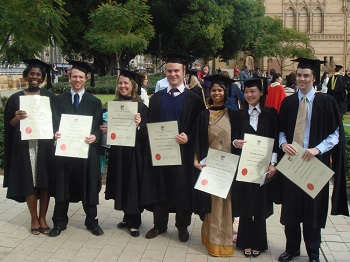
Class of 2008 Adelaide Uni Ms Wine BusinessI had three months to get into the Masters in Wine Business programme at the University of Adelaide. I had no wine experience and was deemed too young for the course. A fervently passionate essay on my belief in the future of the wine industry (in India) is what worked in my favour. We started as a class of 20. A year and a half later of oenology, viticulture, winery management, wine tourism, international wine laws, global trade trends and a thesis in consumer behaviour, only 12 survived. We had access to some of the best in the business – a winery on campus, two vineyards and researchers from the Australian Wine Research Institute (AWRI). My days in Adelaide were filled with weekend trips to Barossa or McLaren Vale, occasionally hopping across to Mornington or Yarra, a part time job to fund my travel and a lot of time at the massive oenology and viticulture library at the Waite campus to ensure I stayed on par with the rest of the class – older, more experienced and far more knowledgeable in wine than me. I’d jumped in at the deep end and loved every challenging minute of it!

Apart from our industry projects, I got myself an internship at the Australian Wine and Brandy Corporation over the summer in Adelaide. They had projects for me in the international market development and export compliance cells. It was the first time I had clarity in a profile – three years on, Sula modified an existing opening for their import department and offered me my dream job.

How did your parents react? 

My parents were extremely supportive. They understood the potential for the industry in India; understood I was asking them to invest in an education from one of the best schools in the field. Eventually though, it was the first time they’d seen me passionate and committed to a vocation.

Tell us about your role at Sula.

A job posting on a blog and a Skype interview with the head of International Business and I was in. Today, I work as the Import Manager at Sula. My job is to understand and decode the Indian market for some of the biggest wine companies in the business and convince them to invest in India. The two aspects of my job I enjoy the most are the annual reviews for new brand additions alongside industry veterans, sommeliers and the occasional visiting winemaker from Nasik – always ground for a very lively debate. The other aspect is the chance to travel often to our key markets Sampling at Dindoriacross the country. Events and exhibitions, F&B trainings and feedback from our regional offices are invaluable opportunities to learn from. Understanding the commercial, marketing needs of each market and gaining insight to the ever evolving Indian wine consumer fascinates me no end. To then also be allowed to use this insight and become a part of our future offerings in imported wines, beer and spirits is simply thrilling.

Travelling across India for work led to me discovering a whole new side of the country. I’ve gone exploring in Hampi, scuba diving in the Andaman’s and my world came full-circle last year when I discovered surfing in Pondicherry.

What’s the best part of your work? And challenges? If yes, how do you overcome them? 

The best part of my job are my peers from across the industry. Internally too, Sula’s work force largely consists of self-motivated, entrepreneurial kindred spirits. The company of those who are so passionate about their roles is the reward and the challenge. In the end, the common goal and zeal of representing Sula gets us through the day.

Your advice to those who want to make a career in the wine industry? 

A big heart, an insatiable quest for knowledge and a strong constitution.

Famous last words…

Do the things that scare you…you will surprise yourself!

 (Pictures courtesy Najeshda Deshpande)

Exit mobile version