Categories
Learn

10 things to know about Yakub Memon

This chartered accountant will be the first to be executed among those accused for the 1993 serial bombings in Bombay.
by The Editors | editor@themetrognome.in

The country is currently discussing the upcoming execution by hanging of Yakub Memon (52), one of the many accused in the horrific 1993 bomb blasts of Bombay. A Mumbai resident, Yakub is a chartered accountant by qualification, and has been lodged in lodged for the last 21 years.

But who is this man, and why is his execution so significant? Here are 10 pointers on his involvement in the case.

1. Yakub is the younger brother of underworld don Tiger Memon. They grew up with their family in Byculla, Mumbai, in a largely Muslim neighbourhood. Tiger later shifted to Mahim with his family. The Memons were known to be hospitable and generous, often inviting everyone for family celebrations.

2. Yakub studied chartered accountancy from the Institute of Chartered Accountants of India, Mumbai. He completed his course in 1990. Previously, he studied for M.Com at Burhani College of Commerce and Arts.

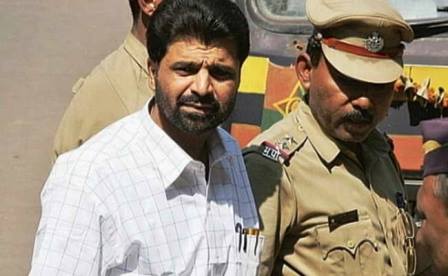
Yakub Memon3. He was arrested from New Delhi in 1994, though he has maintained all along that he and his wife surrendered to the police instead of fleeing the country. His confession about the 1993 blasts and the roles of everyone concerned was compiled into a thick dossier that laid out the entire conspiracy with names and timelines. He admitted that the plot was masterminded by his brother Tiger, who has since fled the country and is said to be living in Pakistan and UAE.

4. Handsome and articulate, Yakub was the obvious choice for his role as bookkeeper and back end planner for the 1993 blasts operation. He confessed to keeping a track of expenses, arranging for funds, ensuring money reached the handlers, and also arranged for some of the vehicles used in the bombing.

5. Judge PD Kode, who presided over the 1993 bombings trial at the TADA Court, held Yakub guilty on four charges: Criminal conspiracy, Aiding and abetting and facilitating in a terrorist act, Illegal possession and transportation of arms and ammuntion, Possessing explosives with intent to endanger lives.

6. While in prison, Yakub added to his educational qualifications with two Masters degrees – one for English literature and the other for Political Science – from Indira Gandhi National Open University (IGNOU).

7. Yakub’s lawyers previously argued for leniency in his case, citing schizophrenic tendencies in their client. However, this appeal was later dismissed by the court.

8. In all, Yakub has filed three appeals for clemency in the matter. After the third was rejected by the Supreme Court of India, the Court upheld the Government of Maharashtra’s demand for Yakub’s execution.

9. Jab We Met and Highway director Imtiaz Ali played Yakub Memon in director Anurag Kashyap’s critically acclaimed film Black Friday, which was based on the 1993 serial bombings.

10. Yakub will turn 53 on July 30, 2015, the day of his execution by hanging. He will be hanged at Nagpur Central Jail.

(Pictures courtesy www.talaippu.tkwww.ndtv.com)

Categories
Trends

The mistakes of a start-up owner

Where every second person is the owner of a ‘start up’, business owners would fare better after changing their mindset.
by Reyna Mathur

Are you an entrepreneur with a fresh start up company just waiting (or struggling) to get off its feet? After the first heady rush of getting your ideas into action, securing funding for your venture, even getting a partner or two on board, buying or renting an office premises and hiring a certain number of staff members, it is time to ask – Now what?

Why do so many start-ups fail?

Most start-ups are born for a reason, fuelled by a passionate dream. They even find financial backing from partners who are as invested in that start up’s vision as the founder himself. And yet, once the first few days, then weeks, then months roll by, several start-ups fall by the wayside. Several shut down after the first year of operations, others scale down considerably, while still others cut their losses and sell. Many others continue to struggle, before finally giving up in the face of mounting losses.

1. Allowing the dream to die. “The thing to remember is that whatever happens, closing down is not an option,” says Manali Sengupta (34), who founded an online cooking class a few years ago. She is now based in the US. “What most people do is spend a lot of time gathering their resources for a year, maybe two years. What they don’t spend enough time is on internalising their vision, making it so powerful that even in times of obstacle, their dream should pull them through. A friend of mine also started a similar venture like mine, but she gave it up in a few months because she couldn’t find many interested takers.”

It is said that those who let their dreams die do not dream hard enough. The trick is to pull on and motivate yourself to push ahead, especially on the bad days.

2. Not doing market research. What may seem like a great idea to you might have already been implemented by somebody else. Take the time to study the potential market and the need for your business in it. If there are 10 people already doing the same thing that you are doing, you need to ask yourself if following on their footsteps is the right way to go. You might have to tweak your idea to come up with a better solution than your competition.

Studying your market with an expert and then floating the idea to people you trust will help you get initial feedback which is most crucial for any start up.

3. Not being innovative. Again, this deals with not thinking through your business objective enough, but we’re going to go a step ahead and explore the possibility where a person owns a start up with a great idea but whose mode of operations is about 20 years old. “A student of mine started a small news website two years ago,” says Geetha Sukumar, a media professional from Chennai. “She worked very hard at it, but she ran it like she would run a print publication. Very soon she began to struggle because she was not able to attract ad revenue to it. I advised her to reassess the medium she was dabbling in – digital is an instant medium, so you cannot give delayed updates. She quickly regrouped and now she owns five other web platforms.”

4. Trying to reinvent the wheel. In a world where zany ideas are being pitched by the second, it is next to impossible to create a concept or product which may be an actual new invention. It is sometimes enough to just give a new spin on a contemporary idea – instead of reinventing the wheel, it is sometimes sufficient to let the wheel assume a new avatar which others have not thought of before. Take the case of two Mumbai-based sisters who came up with a blanket that protects the wearer from mosquitoes. Instead of spending months in researching and trying to come up with skin creams or products to kill mosquitoes at their breeding sites, they simply understood that humans are at their most vulnerable when they are asleep – and hence created a protective layer against dengue and malaria-causing mosquitoes. Today, their patented blanket is being sold in large numbers and they have orders from all over the country.

5. Trying to make money from Day 1. Any good businessperson will tell you that a new venture takes a minimum of two years to make good money, and a further three years to stabilise. Sure, you may start making money in the first few months, but remember that each period of monetary gain is followed by a plateauing of creativity and funds. Only perseverance and more hard work can help you tide over these bad phases.

(Picture courtesy www.theocmx.com. Image is used for representational purpose only)

Categories
grey space

If Piku was a man…

What if ‘Piku’ had been the father’s story, and if the protagonist was a man? Does the story play out differently?
Pooja Birwatkarby Dr Pooja Birwatkar

Piku released recently to an almost unanimous vote of approval from audiences. The story of a daughter fast approaching middle age taking care of her hypochondriac old father while juggling personal problems and a career, made for an engrossing subject. While tracing the nuances of the father-daughter bond, the film made an angel out of the distressed daughter caught in two worlds, courtesy her difficult father.

As per Indian standards, Piku should have been married and settled in life, raising her kids. However, Piku is ‘deprived’ of this set pattern of life as her life’s focal point becomes her difficult and demanding father. All sympathies are bestowed on Piku as some sort of ‘victim’ who suffers a trail of misfortunes. Out of all this, the biggest point to stand out was that Piku is a girl. A girl of marriageable age who has ‘compromised’ on life for the duties she has taken upon herself.

While the film’s makers may have given a nod to gender equality by making the protagonist a woman and not a man, yet the way the ‘sacrifice’ was highlighted did not celebrate the equality of sexes. If Piku had been a man, there would have been no discussion on his marriage and sexual needs. There would be no dialogues about Piku’s virginity (she talks about her sexual needs as well). We wouldn’t think the man was making a sacrifice – rather we would take him to task for not taking care of his vulnerable parent. Piku’s pains would be his duties. Oddly enough, we cannot picture the girl Piku bringing home a husband who lives with her father and shares their daily struggles. Even her father does not give her this liberty. A man in her place enjoys the privilege of bringing home a wife who would look after his parents, while men are not expected to do so for their wives’ parents.

Elders in IndiaWe find many Pikus in our metros. Why is this? If we look at life from the standpoint of her father, we would discover many ugly truths about life in the metros. While it is true that Piku’s father is an extreme hypochondriac, there wasn’t anything very unusual about the way he behaves. Each of us has this sort of senior in our homes, neighborhood and even extended families.

A typical couple in Mumbai goes through the expected struggles of setting up home and fulfilling all their dreams. Their entire life passes by in the pursuit of these goals. Finally, they retire to the peaceful confines of home and solitude, thinking of what might have been. In their golden years, loneliness silently creeps in and becomes the sole companion of their grey years.

Many aged people behave just like Piku’s father – they become maniacal about their health as they age, overly critical, and always apprehensive about their future. Though the film shows this behaviour as ‘selfish’, there is an empathetic note to be taken here is that severity of this behaviour can be linked to the lack of confidence one has about the smooth transition to old age and death.

While health scares, medical expenses, lack of care providers all plague our senior citizens, the biggest scare is that of being left alone. Are we doing enough to make Mumbai a blissful retiring space for our elderly? If not, why not? Are our senior citizens not justified in being overly possessive and critical?  They must think with a shudder of themselves being stuck in an ambulance on a busy road, or dying alone at home while their children pursue their own lives abroad.

When Piku’s father’s dying makes life easier for everyone around, the question remains: what of those who are still alive? Aren’t the elderly justified in wanting to go back to their roots, to be near their loved ones, to be like a child again? We come full circle when we reach old age, reaching for those things we held so dear as children. Understand from the senior’s lens: it is not easy to start losing everything you worked for all your life.

We all took heart from knowing that we are not alone, that we are Pikus too. But spare a thought to the thousands of elderly citizens who are forced to depend on their children in their old age. Maybe we could then think of our parents and elders in a different way.

Dr Pooja Birwatkar is currently pursuing post doctoral research and working in the area of science education. She has been associated with the field of education in the past as a teacher educator, and her area of interest is research in education. 

Grey Space’ is a weekly column on senior citizen issues. If you have an anecdote, or legal information, or anything you feel is useful to senior citizens, caregivers and the society at large, feel free to get it published in this space. Write to editor@themetrognome.in or on Facebook at www.facebook.com/Themetrognome.in and we will publish your account.

(Pictures courtesy zeenews.india.comhealthintelasia.com. Images are used for representational purpose only)

Categories
Kharcha paani

6 ways to make a sale

Making a sale is not difficult if you follow certain rules and have good people skills. Follow these 6 steps.
by The Editors | editor@themetrognome.in

The first time you are called upon to sell a product or a service is surely the most daunting one. It is often said that marketing and sales requires a certain kind of work ethic and mindset – either you have them or you don’t. It is a difficult niche to crack in any business, and it requires perseverance and a never-say-die attitude.

However, though most of us are not natural salespeople, there may be a point in our professional lives when we may have to try and sell an idea, a product or a service. It is wise to hire a professional to do this task for you if you are not up to it, however, in the absence of outside help, you may have to do it yourself. Though initially difficult, you can soon get the hang of the process if you follow a few ground rules:

1. Do your research. Find out all you can about the person or business you are approaching with your sales pitch. You must know how big their company is, what are the goods and services they deal with, and the projects they normally associate with. Then step back and analyse what you are trying to offer that company or individual. Ask yourself: if I was in their place, would I be interested in associating with this idea? After doing this, find out the details of the person you will be meeting at that company, and make sure to get his or her name right.

Making a sale2. Prepare a good presentation. This is a tricky one, and your final product will depend largely on how the company prefers to get information. Find out if the company only looks at PowerPoint presentations, or if they are open to reading information from a compiled document as you speak. Some offices ask for audio-visual presentations, so you can make a short creative film to get your point across. The essential thing is to gather and put together all the relevant data in one file or dossier so that the company has all the information it needs in one place. Then you can think of presenting it cleanly and in a way that gets their interest.

3. Be on time for meetings. A sales job requires you to travel to several offices, so you will have to master the knack of winding up earlier meetings and reaching the next one right on time. It is tacky to reach a meeting late, especially if you have requested it. Unless there are extenuating circumstances, like an accident or a terror attack or a transport strike, you have no good excuse to be late for a meeting. When you walk in, make sure you are not sweaty and your face is fresh. Keep a sanitiser in your bag because you will need to shake hands before the meeting starts, and nobody wants to shake an unclean hand.

4. Be polite, firm and confident. Your manner while speaking to a potential client goes a long way in cementing the deal. When making your presentation, be polite, put your point across with as little speech as possible, invite the client to ask as many questions as they want to, and field each query with confidence. Do not ever use the phrase “I am not sure of this” or “I have not thought of the point you are raising” because it just tells the client that your concept and pitch is half-baked. Take some time to rehearse your pitch at home, or hold a mock presentation for your boss or staff and invite suggestions. The better you perfect this step, the more effective your presentation will be.

5. Be consistent, not persistent. You should have enough acumen to gauge in the first meeting if the client is interested in pursuing the idea further or not. You have to set the bar on how much room for negotiation you will allow, and stick to it. When you sense that the company is open to discussing further, set a date for the next meeting at once. Ideally, ask for a meeting not later than three days after the last one, so that the client does not lose interest in the project. When you ask for follow up meetings or make a telephone call to find out what the company is deliberating, don’t grovel or plead to be considered. Also, don’t hound them with emails and calls every single day. Allow them time to revert to you.

6. Be prepared for a long slog. Making a sale is not easy for one primary reason: you are asking an individual or corporation to part with money. Any monetary decision, big or small, takes time to reach a successful conclusion. Be patient and prepared to have a series of meetings to try and convince them that they will gain from associating with you. If it is your first project, be prepared to slash your prices drastically. You might even face a situation where the deal is struck off at the last minute. Don’t take it personally; they are not rejecting you, they simply don’t see the merit of your idea or probably don’t have the wherewithal to come on board. You can approach them with another pitch in the future.

(Pictures courtesy mashable.comwww.thepersonaldevelopmentcompany.com. Images are used for representational purpose only)

Categories
Film

Review: Bioscope

Four different films set in one big canvas, Bioscope is a compilation of four poems interpreted by four Marathi filmmakers.
by Ravi Shet

Rating: 4 out of 5

Bioscope is a compilation of four films by four directors, made into a single film. These individual films are not connected in terms of plot or characters; however, the connection between them is all the four stories are based on poems by renowned poets.

The first one is Dil-E-Nadan directed by Gajendra Ahire, based on Mirza Galib’s ghazal of the same name. It tells the story of classical singer Padma Bhushan Nirmaladevi Indori (Neena Kulkarni) and Sarangi player Miyaji (Suhas Palshikar), who make a living selling almonds. An undelivered letter from Delhi gives a possible hint for an invitation to perform almost after two years. The emotions expressed through the ghazal connects the pain of ingnomity for Nirmaladevi and Miyaji. Watch out for the sets and art direction of this film, as well as the screenplay and crisp dialogues by Gajendra Ahire. Neena Kulkarni and Suhas Palshikar are top notch in this one.

This is followed by Viju Mane’s Ek Hota Kau based on Saumitra’s poem by the same name. This one starts with Swapnil (Kushal Badrike) who is called ‘Kavala’ (due to his dark complexion) jumping from one building to another on a daily basis to catch the glimpse of his love Paakali (Spruha Joshi). Paakali likes him too, and throws hints at him, but our mechanic hero thinks he is no match for her due to his dark complexion. Several scenes show crows cawing at each other – this is a metaphor for the hero but it becomes repetitive. This film rides on Kushal’s excellent performance.


The third film Bail directed by Girish Mohite is based on Loknath Yashwant’s poem. Panjab (Mangesh Desai), a cotton farmer from Vidharba, comes to Mumbai to participate in a rally that’s protesting against prices given to cotton farmers. He lands up in a shopping mall and sees the prices of cotton shirts being sold – this frustrates him and he agonises over farmers not getting their dues. He stays back to work hard and earn money, so that he can clear off his debts. The end scene of this film brings a lump in the throat. I loved this take on insensitive urbanisation and pathetic conditions of our farmers today. Mangesh Desai’s performance and dialogues by Abhay Dakhane are the highlights of this film.

The final film is Mitraa, directed by Ravi Jadhav, based on Sandeep Khare’s poem and Vijay Tendulkar’s story. This one is in black and white since the plot is set in pre-Independence India. Student Saumitra (Veena Jamkar) lives in a hostel in Pune. Vinayak Joshi (Sandeep Khare) is her best friend who has romantic feelings for her, which he expresses in a letter; however, Saumitra has feelings for her roommate Urmila. Saumitra describes how she discovered at age 14 that she was different from other girls. Veena Jamkar has given a heartfelt performance and the direction is good, too.

Bioscope is a collection of different genres and human emotions woven through four different movies which are unrelated; however it keeps the audiences engaged. Don’t miss the Bioscope song sung by Raghuvir Yadav in the end credits.

(Picture courtesy marathistars.com)

Categories
Tech

4 ways in which Gmail is really awesome

We bet you didn’t know about these little Gmail tricks. Find them, and more, to have the best Gmail experience.
by The Editors | editor@themetrongome.in

Gmail is undoubtedly the most used email platform globally, with a host of unbeatable features. The best part is, though we’re using Gmail regularly, we’re nowhere close to knowing just how awesome Gmail is – because most of us are using only a small percentage of its features!

All we do with Gmail is send and receive emails, and run the occasional search to look for an old email. Still others are creating folders to categorise their emails, while some are adding filters and installing blocks to keep out unwanted mailers. However, there’s a big recreational element to Gmail as well, which makes the sending and receiving of emails a great experience. Plus, there are some hacks you can adopt to safeguard your privacy, protect yourself against possible phishing attacks, even reply to emails without typing out the reply.

Here’s presenting , in no particular order, 4 awesome Gmail tips:

1. Know who’s legit. Say you’ve recently opened an account with a payment gateway, and you’ve been corresponding with them regularly till your account is fully activated for use. However, one day you receive an email with the subject ‘Your ___ account has been compromised’ and asks you to open and fill out Gmaildetails in an attached document to verify your account and activate it again,

Do this: Go to Settings > Look for ‘Authentication icon for verified senders’. Enable this feature.

Once you’ve activated this feature, the first time a company sends you an email will be earmarked by Gmail. Every time a genuine email comes from this company, it will be indicated by a small yellow key. If the key is missing, you’ll know it’s a hoax mail or probably a virus.

2. It doesn’t matter if you type the Gmail ID wrong. Sure, email IDs are case sensitive and the slightest character out of place will make the email you sent bounce back to your inbox as an ‘unsent’ email. But Gmail is made of sterner stuff. If the email you are sending to the sender with the ID, say ‘ritwik.shah@gmail.com’, it won’t matter if you send the email to ‘ritwi.kshah@gmail.com’ or even ‘r.i.t.w.i.k.s.h.a.h@gmail.com’. Gmail will still send your email and it will safely reach the sender, because the dots don’t matter to Gmail’s algorithms. Plus, you can send it to ‘Ritwik.shah@gmail.com’ and the email will still reach because Gmail disregards the capital letter you mistakenly put.

Gmail is awesome3. Send a reply without typing a word. Sometimes we receive emails to which we give the same standard reply over and over again. Say you often receive email invitations to attend seminars by a reputed management college. You don’t want to attend the seminar, but you don’t want to mark their emails as ‘Spam’ because they sometimes send useful information. Nor do you want to offend them by asking to be unsubscribed from their mailing list. In this situation, simply keep a standard response ready which you will not have to type out every time they write to you. Go to Settings àLabsàLook for ‘Canned responses’ and enable this feature. After this, compose the reply you want to send and save it under ‘New canned response’. The next time you receive a pesky email, simply go to ‘Canned responses’ and select the reply you have already created.

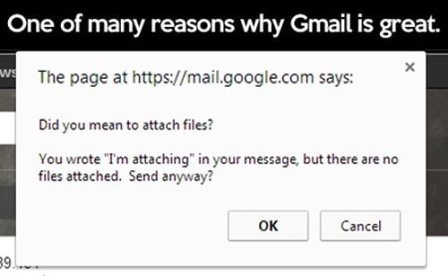
4. Never forget to include attachments. If you’re sending an important email, you take care to compose the body text but after you’ve sent the email, you are horrified to realise that you forgot to attach the files with it. Then you have to send a follow up email informing the receiver that you forgot to add the attachment. Instead of going through this embarrassment, take corrective action: Go to Settings àLabsà Look for ‘Forgotten attachment detector’ and click ‘Enable’. Once you save the changes, Gmail will alert you every time you try to send the email without the attachment.

(Pictures courtesy www.funnyjunk.comwww.digitaltrends.comwww.makeuseof.com)

Exit mobile version