Categories
Eat

5 restaurants for awesome pizza in Mumbai

If you love pizza – and there is hardly anyone who doesn’t – you should check out these lesser-known eateries.
by Ravi Shet

Originally from Italy, pizzas – loaded with cheese and toppings – have always been a hit among Indians. Be it a birthday party or a farewell event, people are quick to order pizza – the more cheese, the tastier it becomes!

Since we love pizzas so much, here’s a list of 5 lesser-known pizza joints in Mumbai. Go ahead, satisfy that craving!

  1. Chilli Flakes, Dadar (East)

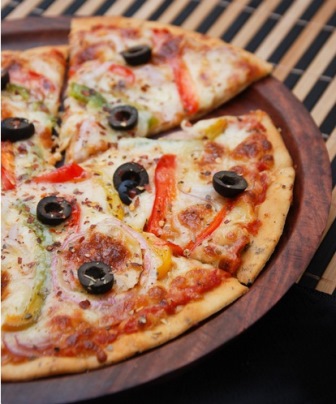
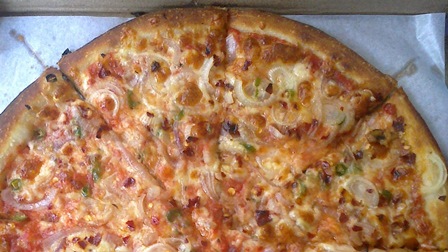
Pizza_Chilli FlakesSituated near Five Gardens, this place is founded by Areez Patel in April 2011. They have been serving gourmet style 8”, 10” and 12”pizzas to their customers on all days from 11 am to 11 pm. Their Santa Fe Veg Pizza (Rs 190 for 8”) topped with tortilla chips, onion, roasted pepper, tomato, roasted garlic and coriander and Pesto Shrimp and Chicken Pizza (Rs 260 for 8”) with alfredo pesto sauce on the base and topped with bell pepper, mushroom, chicken, chilli garlic shrimp are really worth the price.

  1. Laziz Pizza, Lower Parel

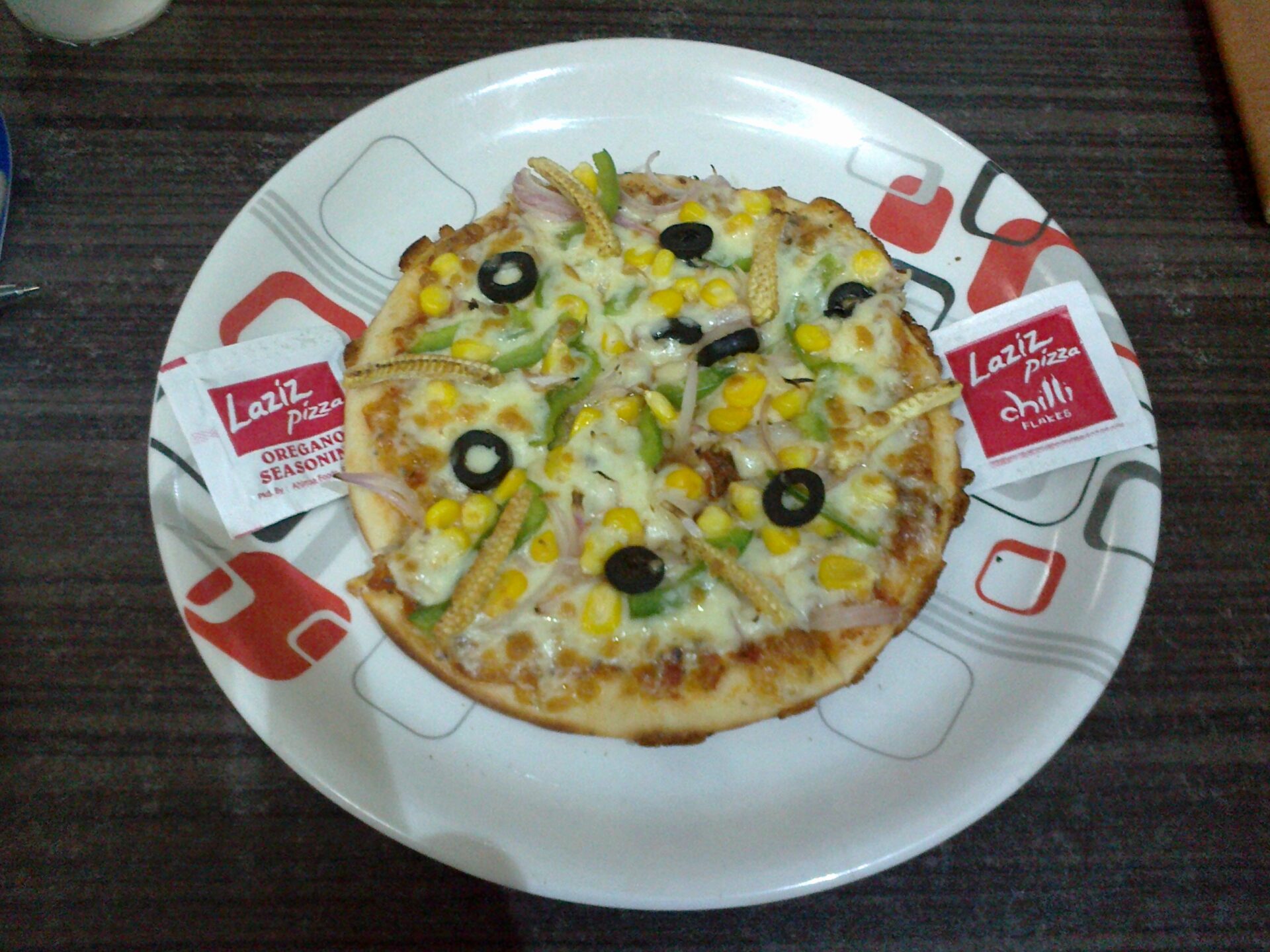
This outlet founded in March 2014 is at a walkable distance from Lower Parel railway station and opposite Peninsula Laziz-E-Super Veg_Laziz PizzaCorporate Park. They serve fresh pan based pizzas in 6”, 8” and 10” sizes along with the option of thin crust pizzas from 10 am to 10 pm, except for Saturdays. Laziz-E-Super Veg Pizza (Rs 160 for 6”) – loaded with cheese, baby corn, black olive, sweet corn, onion and capsicum and Laziz-E-Hurricane Pizza (Rs 220 for 6”) consisting of cheese, chicken tikka, spicy chicken keema and onion are really worth trying. Also they have a Make-Your-Own-Pizza option, called the Laziz-E-Special Farmaish priced at Rs 200 for 6”. Sagar Shah, franchise owner says that evenings are busy affairs on Fridays and Sundays, along with regular delivery orders by people working in the corporate park.
  1. Pizza Box, Vile Parle (East)

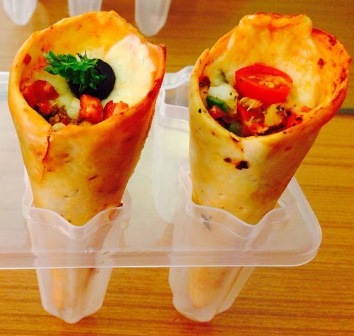
Pizza Cone_Pizza BoxFounded by four women – Uma Joshi, Vaishali Samant (playback singer of Aika Dajiba fame), Kirti Joshi and Sarita Dande – in November 2014, this place has been an instant hit among the people residing in the area. Located at Hanuman Road near ICICI Bank, this place is open on all days from 11 am to 11.30 pm and serves 7”, 9”and 12” pizzas. Their Pahadi Chicken Pizza (Rs 275 for 7”) consisting of chicken in green chutney, onion and capsicum and Balsamic Mushroom Pizza (Rs 250 for 7”) loaded with mushrooms in balsamic reduction are seriously yummy. The Paneer Peri-Peri Cone (Rs 50) is a pizza made into cone shape and stuffed with paneer, onion and capsicum. Uma says, “Our Millet Sprout Pizza and Millet Chicken Pizza with the bajra base is a new addition to the menu, especially for health conscious people.”

  1. Pizza Cafe, Khar (West)

This place was founded by father-daughter duo Ali Charania and Shabana Charania in May 2015, and it is located off Pav Bhaji Pizza_Pizza CafeLinking Road next to Den. It is open on all days from 11 am to 11 pm serving 7”, 9’ and 11” pizzas. The Pav Bhaji Pizza (Rs 390 for 9”) is a double decker pizza soaked in butter, vegetables, masala and onion and Lucknow Chicken Keema (Rs 275 for 7”) loaded with chicken keema, onion, tomato, capsicum, cheese and coriander are gastronomical delights. Shabana says, “The evenings and late nights are busy, especially on weekends.”
  1. 1 Tablespoon, Matunga

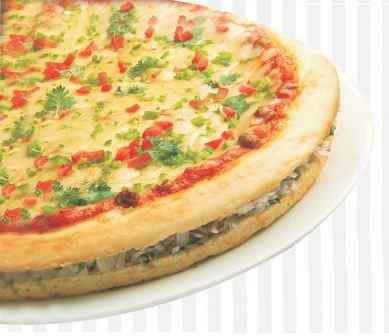
This place situated behind Aurora theatre has been serving its customers 100% vegetarian pizzas from August 2012. They serve only 11” pizzas in Artisanal and Italian crusts. Blowing Fire (Rs 350 for Italian crust) having tomato sauce at the base and topped with green capsicum, onions, mushrooms, jalapenos, cheese and tandoori paneer and Fiamma Pizza (Rs 310 for Artisanal crust) having tomato sauce at the base and topped with crispy onions, cheese, chilli flakes and green chillies are my best picks here. Varun Sheth, owner of the eatery, says, “This restaurant started out with passion and love for pizzas. Rather than keeping more options, we have stuck to a simple menu so that we can deliver consistently in terms of taste and experience to our customers.”

Categories
Event

The pianos play for 150 years of music

Attend Con Brio 2015, a special event that celebrates 150 years of Furtados. The recital is this evening at NCPA.
by The Editors | editor@themetrognome.in

An NCPA and Furtados presentation, this Western music and piano competition has been organised to celebrate 150 years of Furtados.

The special programme has been devised consisting of works for multiple pianists at multiple pianos. The programme will include highlights from past Con Brios: Glazunov’s Festive Cantata with the Paranjoti Academy Chorus, Bach’s Concerto for four keyboards with the Bombay Chamber Orchestra and Gershwin’s Rhapsody in Blue.

The Paranjoti Academy Chorus and soloists will give the world premiere of the wedding scene from Vanraj Bhatia’s opera Agnivarsha. The programme will end with a special arrangement of the finale from Beethoven’s 9th Symphony for chorus and 8 pianos sung collectively by several of Mumbai’s well-known choruses. The programme will feature Paul Stewart, Marialena Fernandes, Patricia Rozario, Mark Troop, Karl Lutchmayer and several others.

Head to NCPA at 7 pm. Tickets are available at Book My Show.

(Picture courtesy NCPA Mumbai)

Categories
Deal with it

BMC goes after diabetics in Mumbai

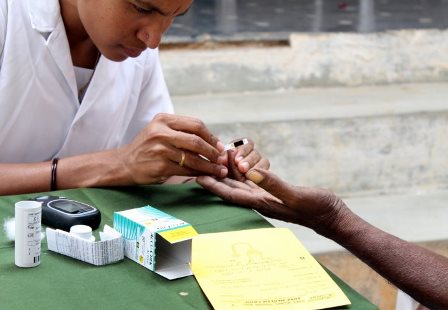
BMC will set up special OPDs, dispensaries and new hospitals in the city to deal with high diabetic patient load.
by The Editors | editor@themetrognome.in

The highest numbers of diabetics are found in India, and many of them are concentrated in the metros. Naturally, the current public health facilities are overstretched in dealing with the large numbers of patients seeking treatment.

Recently, the Confederation of Indian Industry (CII) in partnership with Eli Lilly announced that it had developed a unique platform that not only deliberates on the rising menace of diabetes, but that it had submitted actionable recommendations to help strengthen policies and Government programmes [such as NCPCDS] related to the management of diabetes.

The BMC is now coming up with special OPDs, 80 dispensaries, 18 peripherals and 3 major hospitals in Mumbai to address the ‘increased NCD patient load’ under NCD Programme Services initiative. “The Corporation is trying to inculcate the habit of eating healthy food amongst the citizens of Mumbai”, said Dr Daksha Shah, Deputy Executive Health Officer (NCD) RNTCP, Public Health Department, Municipal Corporation of Greater Mumbai (MCGM). She added that the novel initiative involves intensive regional consultations with relevant experts to draw up comprehensive suggestions, best practices, challenges and enablers faced by service providers in Government and private sectors in day to day management of diabetes patients.

Said Dr Ashok Kirpalani, Professor and HOD, Nephrology, Bombay Hospital Institute of Medical Sciences (BHIMS), “There is a need to check diabetic nephropathy at an early stage before the need of dialysis sets in. The ability of microalbuminuria test to pick up renal failure at an early stage needs to be recognised as there is only 3 per cent mortality in test positive patients.”

Dr. Manoj Chadha, Endocrinologist, PD Hinduja National Hospital and Medical Centre, said, “High blood pressure needs to be recognised early and treated appropriately with ACE inhibitors/ARB”. He added that “Hypertension is also an important contributor to morbidity and mortality in Diabetes Mellitus.”

(Picture courtesy www3.imperial.ac.uk. Image is used for representational purpose only)


Categories
Kharcha paani

Reverse the earn-spend cycle

People follow a wrong spending pattern and fritter away their salaries. Reversing or changing spending habits will help you save more money.
by The Editors | editor@themetrognome.in

Khush hai zamana, aaj pehli tareekh hai!’ exulted the popular ad for a chocolate brand a few years ago, and the country agreed with the sentiment. Most of the workforce in the country is a salaried one, and the first of every month is an occasion for celebration in most households.

Naturally, the first two weeks of the salary reaching us is spent in settling bills, making grocery purchases, settling our house rents or EMIs, and then shopping for ourselves and our families. Add to this expenses for food, daily travel, children’s school and tuition fees, and money spent on recreation, and it is little wonder that most of us are broke by the end of every month. Then the salary comes in the next month…and the whole cycle gets repeated again.

Wrong assumptions about salaries

Our basic assumption about the money we make from our jobs is that we are ‘safe’ for a month till the next pay cheque arrives. While that is true, the notion is also flawed on several levels – if the salary is a safety net for us, how is it that we use this safety net so carelessly instead of keeping it as our second or third option?

One might argue that with high inflation and no other sources of income, it is obvious that only our salaries will save us. However, stop to think: what if we are using this basic asset wrong? Is there a way to save more instead of going broke every month?

Check out these ways to reverse your spend-save cycle.

Save moreChange your mindset. At the very outset, you must change your thinking about how you are going to spend your salary. Do you think of saving only after you realise that you are going broke every month? Do you consciously set aside a sum of money every month as savings? If the answers to both questions is ‘No’, you need to rethink your spending patterns.

How much are you really making? You are making a big mistake by assuming that the entire salary you receive is at your disposal. At the start of the fiscal year, calculate the total gross income you will make by way of salaries. From this, deduct taxes that you will pay the company at the end of the financial year. Now deduct the premium you will pay on any insurance policies or mutual funds at the end of the year. After this, subtract your fixed monthly spends on EMI or house rent, school tuition fees, school transport, domestic help salary, building society charges, for a full year. Subtract any other fixed monthly spends as well, for the whole year. The amount you are left with is the amount of money you are earning.

What state is your income in? After following the above step, consider that you will have to also count other monthly expenses on groceries, commuting, etc. which can change from month to month. After all these deductions from your annual pay, if you arrive at a negative number, it means your spending habits are completely wrong. If it is a positive number, it means you are saving at least some money. The higher the positive difference between income earned and money spent, the more you are saving per year.

How to increase money saved? Every month, remove a chunk of the salary and set it aside as mandatory saving for the month. Compel yourself to spend only from the money that is remaining after deducting the saving. Consciously try to set aside bigger sums every month as savings, and do not dip into this money unless there is a big emergency. Do not be tempted to use this money to shop on things that are avoidable for the moment. When you have saved a sizeable chunk of money, open a Fixed Deposit account or opt for a Recurring Deposit to maximise the savings. Alternatively, you can open a Public Provident Fund (PPF) account and put the monthly savings in it; however you cannot withdraw the amount you save in PPF till at least five years have elapsed, and you get only a percentage of the total money deposited at that point.

(Pictures courtesy blog.creditkarma.commusingsofahomemaker.com. Images are used for representational purpose only)

Categories
Wellness

5 super foods for health and vitality

These 5 super foods pack a potent punch to protect you from a host of diseases and strengthen your immunity.
by Beverley Lewis

You don’t have to be a vegan or vegetarian to reap the benefits of these particular foods. These vegetarian/vegan foods are not only packed with vitamins, minerals and fibre, but promise to fight free radicals in the body, thereby preventing disease and slowing down the ageing process. Listed below are our top 5 favourite vegetarian/vegan super foods.

Sweet potatoesSweet potatoes: These humble tubers are loaded with vitamin C, D and B6 and potassium and also contain iron. They are also high in magnesium, which is important to maintain a healthy heart, blood, bone, muscle and nerve function. And since sweet potatoes are high in beta carotene, they may help improve one’s eyesight and boost one’s immunity.

Amaranth or Rajgira: This gluten-free grain is not only high in protein, but is also gluten-free. It is also high in folate, B6, fibre and vitamin C. Rajgira also contains more than three times the average amount of calcium and is also high in iron, magnesium, phosphorus and potassium. This tiny grain contains the amino acid lysine, which is needed to metabolise fatty acids, absorb calcium and is essential for thick, strong hair. Rajgira also has twice the amount of calcium as milk, thereby reducing one’s risk of getting osteoporosis.

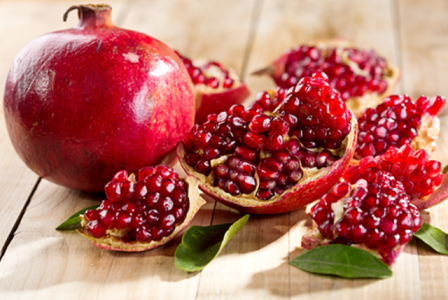
Pomegranates: Are high in phytochemicals, vitamins C and B5 and are full of antioxidants. They also contain large amounts of vitamin K, which helps to support bone health. They are also packed with manganese, which is required to form bone structures and potassium and helps maintain cellular functions and balance fluid levels. If you regularly consume pomegranates, you will be able to protect the skin against free radicals caused by sun damage and sunburn. The oil of a pomegranate contains the antioxidant ellagic acid, which may help to inhibit skin tumours and protect the body against skin cancer.

Turmeric: This golden-yellow spice is both an antibiotic and anti-inflammatory and may help fight cancer and Alzheimer’s. Studies show that Curcumin, a Turmericcompound found in turmeric, may reduce swelling and help ease symptoms of osteoarthritis and rheumatoid arthritis.

Kiwi: This fuzzy looking fruit contains large amounts of vitamin C and is a good source of potassium, fibre and vitamins A and E. They also contain the antioxidant lutein, which is needed by the body to maintain good vision and a strong heart. Kiwis also increase collagen production and brighten the skin.

(Pictures courtesy www.morningagclips.comturmericworld.comwww.drfuhrman.com)

Categories
Tech

Review: LG G4

We check out LG’s newest smartphone and find that the Rs 45,000 phone has great hardware but its software needs improvement.
by Manik Kakra | @Manik_K on Twitter

For the last two-three years, LG has been one of those Android players that are slowly but steadily climbing the market ladder thanks to their improved offering. It started with the Optimus G, then came along the G2 and G3, has now culminated with the G4.

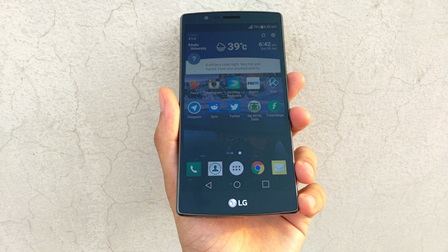
The looks. We go the Korean LG G4 (F500L) unit for review, which is different from the Indian SIM unit one. The phone follows a similar design language as the G3. With the volume rocker and Power/Lock key placed at the back, the phone carries no keys or slots on sides. It comes in plastic and leather options. The back has a nice vertical double lined stitching across the body center, which seems quite unique for a smartphone today.

The keys are more tactile and require a little getting used to. You can remove the rear cover to access the SIM slot, microSD card slot and 3,000 mAh battery unit. On the front, the phone has slightly different, less shiny chin with the LG logo. Just above the screen is the LED notification, sensors and 8 MP front-facing camera. The top has the secondary mic and small infrared port; while the bottom houses the 3.5mm headset jack and primary mic.

Apart from the curved top and bottom curvature, the phone is noticeably curved, that and less pointy edges make the G4 more comfortable to carry around. While the 5.5-inch (quad HD screen) still makes it a big phone, thinner bezels and less slippery plastic ensure it grips well.

Screen. The device sports a 5.5-inch (2560 x 1440) LCD with something called quantum dot technology. The screen is covered with Gorilla Glass on top and is quite prone to smudges and fingerprints. The screen has much better colour reproduction, brighter and just generally nicer to look at than the G3. It is also more usable under direct sunlight.

Camera. LG has been quite vocal about the G4’s 16 MP (f/1.8) camera with enhanced OIS. Here are a few sample images.

You can quickly launch the camera by double-tapping the volume down button. The camera is fast to focus. The camera app itself is okay. As for camera performance, the G4 generally performs really well. Photos are detailed, have a lot of saturated colours, and even in low-light, the camera’s wide aperture sensor doesn’t disappoint.

Battery. Coming to the battery life, the G4 carries a 3,000 mAh battery unit. I hardly got a day’s usage from the device. With brightness level set at 30%, two Email Accounts in sync, a bit of HD videos on YouTube, a lot of Web browsing and Twitter, the phone couldn’t last 24 hours on a single full charge. It supports QuickCharge 2.0 and takes around two hours to charge from zero to full.

Network reception. Bluetooth 4.1, WiFi, NFC, 3G and USB OTG didn’t cause a problem, and while Delhi has just got its first 4G LTE service (Airtel), I am yet to get my hands on a 4G SIM card here, so I couldn’t really test the phone’s 4G capability. In-ear call quality and mic perform like a flagship device should and so did overall network reception, which didn’t require any troubleshooting.

Software and performance. The device is equipped with a Qualcomm Snapdragon 808 chipset (hexa-core processor – 1.8 GHz dual core + 1.4 GHz quad-core, Adreno 418 GPU) along with 3 GB of RAM. The phone runs on Android 5.1 with LG’s new UX 4.0 on top. The G3 had its share of problems when it came to performance and software design.

Does the G4 do any better on those points? Yes and no. While the device’s general performance seems much better, the software look and design have a lot to improve on. Scrolling Settings, navigating the OS work well, but there’s still occasional stutter a few times in a day. LG’s icon, general UX design has still require a lot of work. The whole design is inconsistent just doesn’t feel like something from a company in smartphone business for this long.

While LG says a lot has been done to refine their skin, it doesn’t seem so on the ground. Home screens now have Smart Bulletin on the left-most screen that provide one-stop center for your fitness, calendar schedule, and something called Smart Settings. Through Smart Settings, you can configure your phone to open certain apps or perform tasks based on your location. For example, programme it to switch on WiFi when you are at home, or open an app when you plug in your earphones. The user gets about 22 GB of storage space, which is of course expandable up to 2 TB using a microSD card.

The G4 is one of the best smartphones out there for when it comes to hardware — fantastic camera, great screen, unique design. While the software leaves a lot to be desired, it’s not that big an issue for some considering the phone holds quite well in general day-to-day usage.

(Pictures courtesy Manik Kakra)

Exit mobile version