Categories
Guest writer

Of Ajmal Kasab and Chinese cemeteries

An insider on the monorail system writes on the challenges of the project and why Mumbai will benefit from it.

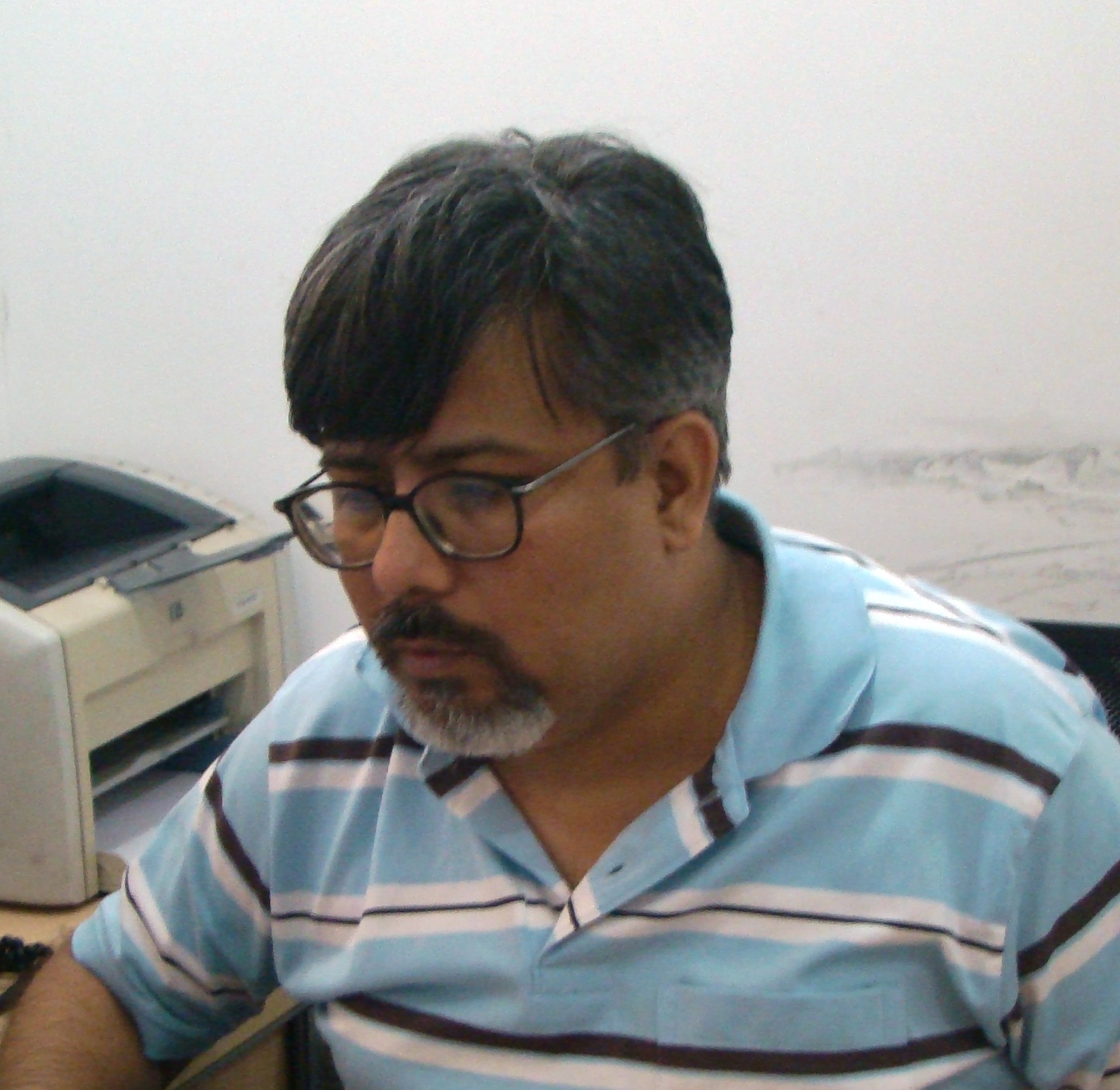
by Kanesan Velupillai

Mumbai is a densely populated and busy city. It is estimated that over 11 million people here travel by public transport daily, of which more than 60 per cent commute by the suburban railway networks. A huge chunk of the masses commute by state buses, across long stretches from one corner to another. So there is a constant pressure on the existing systems to cope with the urban populace. This highlights a need for better mobility.

The city today requires a transportation network that would act as a feeder service to connect the mass transport systems like the existing suburban rail and the upcoming metro rail in the city capable of serving maximum traffic. Thus, the monorail will be the most suitable mode of travel in Mumbai due to its manoeuvrability that improves connectivity to a great extent. It will easily move through the city’s narrow corridors, taking tight turns, thus saving much travel time and decongesting road traffic to a great extent. The route being linked through major areas in the city will benefit the commuters who travel longer distances with a much better and safer mode of transportation.

In 2008, Mumbai Metropolitan Region Development Authorities (MMRDA) proposed to implement a proven and established Monorail System in various parts of Mumbai Metropolitan Region (MMR). Scomi Engineering, in collaboration with its consortium partner Larsen & Toubro secured the Mumbai Monorail project from the MMRDA for an amount of USD 545.02 million for a dual phase construction. The first phase runs from Jacob Circle to Wadala and the second from Wadala to Chembur. The other contenders included Hitachi, Bombardier etc. who were bidding in consortium with Indian infrastructure developers.

Why a monorail?

The monorail, as a mass rapid transit system, comes with the minimum infrastructural needs that make it the most viable commute option in Mumbai. It does not involve dismantling of existing buildings and structures for construction. It is made to move in routes where there is no scope for road widening. The lighter and smaller monorail coaches also reduce implementation time. It has also proved to be highly cost-effective when it comes to machinery in its construction; it requires only a single beam and is elevated, so it calls for a smaller section of footprint than other rail networks. This leads to lesser space for tracks, and demand for less material. Hence, there are no constructional hazards in setting up the monorail.

The first 20-kilometre corridor of the system in Mumbai is established in dual phase – it runs across Chembur-Wadala-Jacob Circle area, which is the second longest in the world after the 23.8 km long monorail corridor in Japan. A monorail with four cars will have a capacity to ferry 562 passengers, while one with six cars will be able to accommodate 852 commuters.

Some challenges and a surprise

The few challenges that we faced were in terms of getting clearances from different concerned departments, specially the stay in construction work of the monorail line near Arthur Road where terrorist Kasab was housed in a jail following the terror attacks in 2008. While working, we also discovered that the monorail alignment passes many interesting parts of Mumbai, including a Chinese cemetery!  It was surprising to find this out.

Current status

In association with MMRDA, we have completed a successful trial run on the Chembur-Wadala route in February 2012. The second phase of testing and commissioning is scheduled in November 2012, followed by the commencement of commercial services in January 2013.

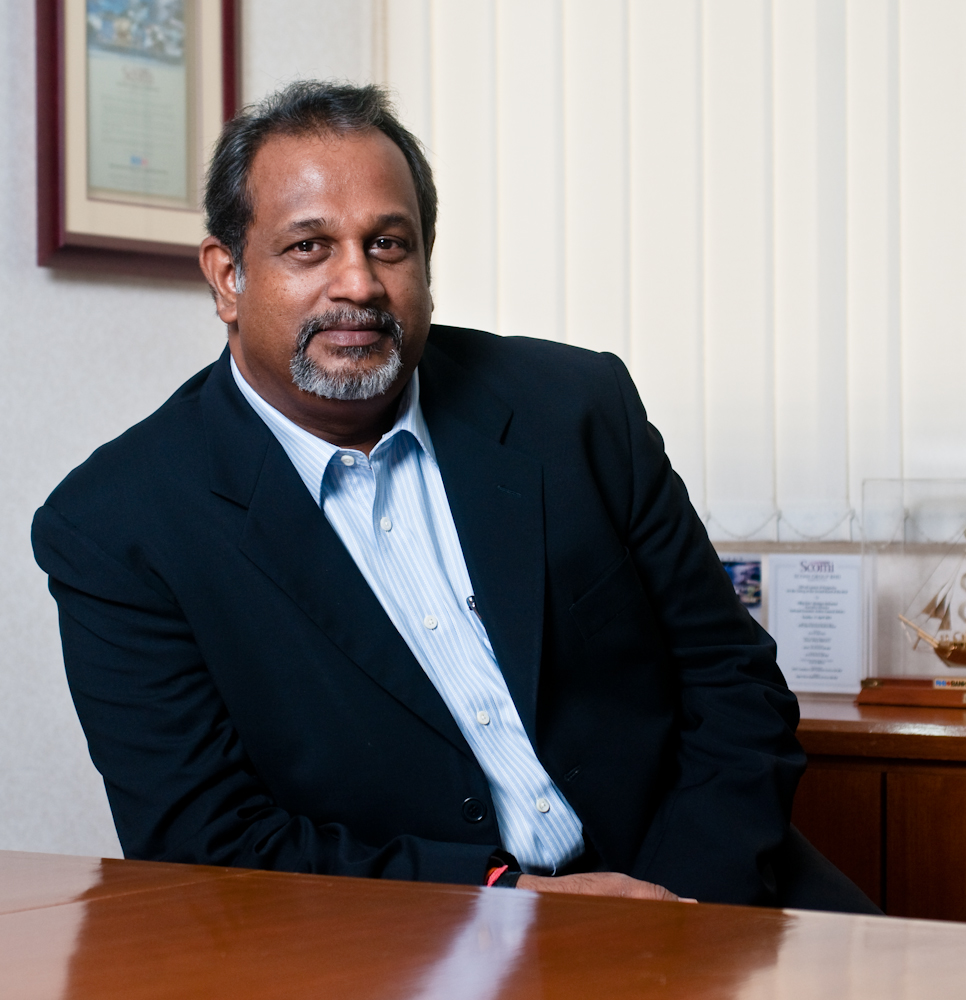
Kanesan Velupillai is Group Chief Operation Officer, Transport Solutions, Scomi Group Berhad, that is a Malaysia-based firm bringing the monorail to Mumbai.
Categories
Listen

A half-done Chutney

Do you like unfunny jokes and stereotypical ‘humour’ in your songs? You will love Vir Das and the Alien Chutney.
by M | M@themetrognome.in

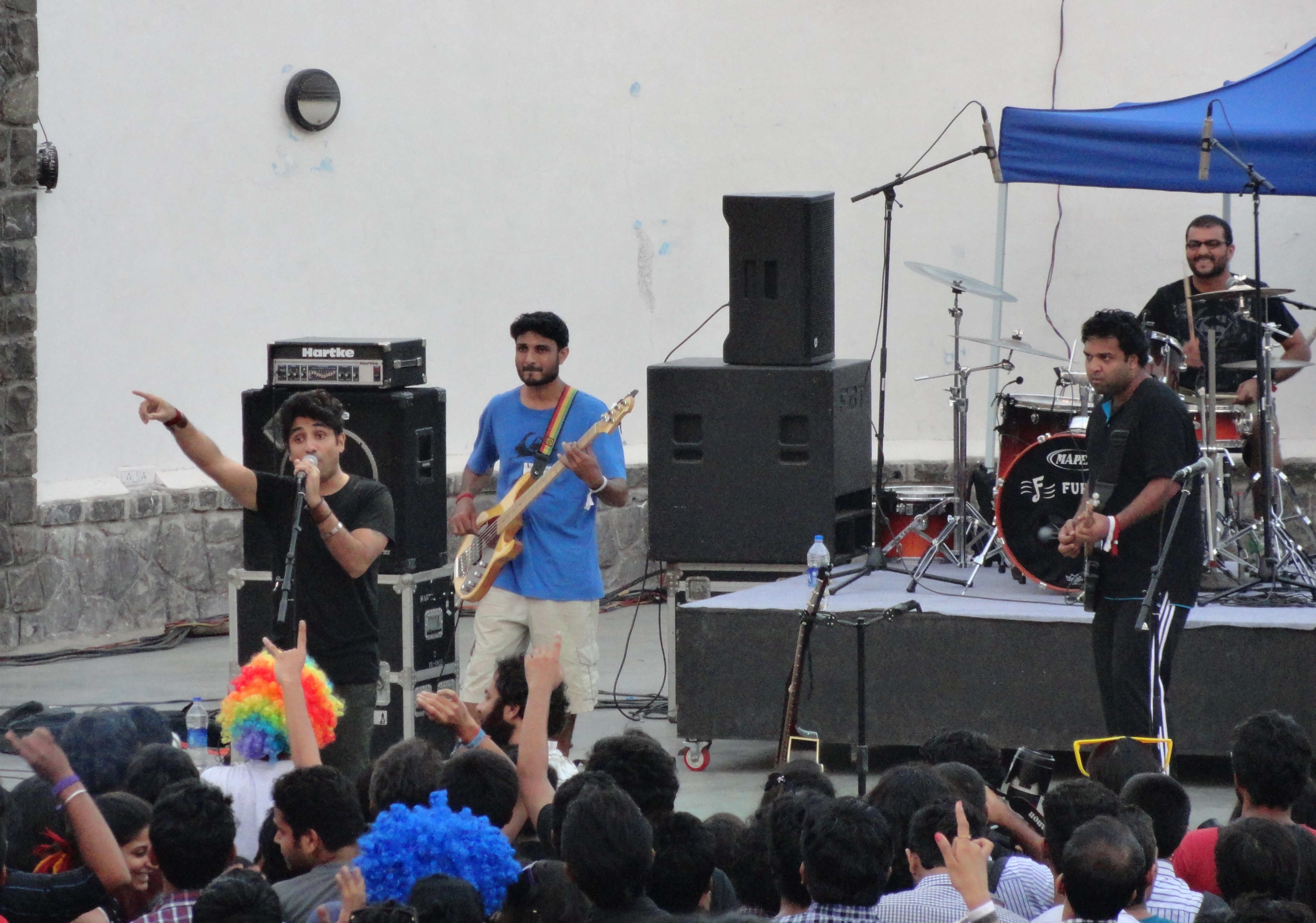
How do you know if people have been to the NH7 weekender? They will tell you that they watched Vir Das and the Alien Chutney perform on Sunday, not an act they’d be able to see in the normal course of their lives.

Vir Das and the Alien Chutney is India’s first comedy rock band with a punch line that says ‘Romedy Cocks!’ (I am not making this up) The band has been active for over a year now, performing live at various gigs across the country, and seemingly specialises in sleaze, lacing all its songs with sexual innuendo for extra pleasure.

At NH7, they opened their act with the words, “We don’t care about the critic reviews, we are here for your entertainment”. As if music critics over the country were rushing to review a ‘Romedy Cock’ band. Thankfully, the performance itself was brief, full as it was of songs insulting Delhi girls, Punjabi men, and parodies on heavy metal bands, Gangman Style, Himeshbhai and Harry Potter. I appreciate Vir Das and the Chutney for attempting to create original music, but their lyrics are difficult to follow. The words seem forced on the tunes, and would better suit a stand-up comedy act.

One of the songs was called Village Man. The build-up to the song was a pop poll on how many girls had slept with Haryanvi men. The song itself was about – you guessed it – a Haryanvi man’s attempt at sexual intercourse and how he breaks the girl’s arm because he gets distracted by a squirrel and tries to grab the squirrel instead of the girl.

Next was Punjabi Men and their Man Boobs and a ballad on Delhi Girls, who are supposedly gold diggers. Both these songs’ lyrics were examples of blatant stereotyping of North Indian men and women. We’ve all heard the material several times over already, across several different platforms, and I can’t believe people are still making songs on man boobs.

The parody on heavy metal music was seasoned with names of actual metal like iron, zinc, copper and many more from the periodic table, along with jolts of double bass. Just when we were beginning to think the lame sex jokes were over, BANG! Out came lame jokes on other issues. The parody on Harry Potter was very offensive, and again, we didn’t get the joke – the chorus went: ‘Harry Potter is a Randi, Hermoine is a Randi, Dumble, Riddle, et al is a Randi…’ and so on.

The only parody remotely close to funny was the Gangnam Style one. The lyrics were actually laugh-inducing and contextual to the original song. In a gist, it was about how we don’t understand a single word of the song and throughout the song eagerly await the chorus just to watch a chubby Korean dance funnily. Of course, it had enough profanity to make PSY very angry.

I think the band doesn’t live up to the genre it claims to create. It takes much more than just mocking famous personalities and insulting communities to make people laugh. We are not asking for all-clean, sans profanity songs (after all, we are not the Censor Board), but at least give us a good joke.

If this is Vir Das’s attempt at matching the musical parodies on Saturday Night Live or the famed troupe ‘The Lonely Island’, then he needs to work much harder. The standards set by artists of the comedic music genre are very high already, and plain mockery and insults won’t help. Sexual innuendos are fine, but too much is too much. Agreed, breaking new grounds is tough, and full marks to the band for attempting that, but I strongly feel there is no need to take this on a live platform.

Next time I’m not going to stand in the middle of the day to watch Vir Das and the Alien Chutney rant about Himesh Reshamiya’s nasal hair, a joke done to death. I’d sooner watch them online, with the comfort of having the option to ‘close window’.


Categories
Eat

Restaurant review: Bong Bong, Bandra

This Bandra-based Bengali restaurant opens its doors to the public today. Salil Jayakar reviews the new addition to the suburbs.

Bandra’s long list of restaurants has a new addition – Bong Bong – an almost hole-in-the-wall sit-down place you’re likely to miss if you don’t know where it is!

Owned and run by young entrepreneurs Surjapriya Ghosh and Kanika Saxena, Bong Bong offers traditional Bengali food with a contemporary European twist. The cooks are from the City of Joy and the recipes have been co-developed by Surjapriya and the executive chef.

First up were the starters – pieces of fried fish and fried cheese and spinach croquettes. Both were served hot with just the right crunch to the outer crispy coating. Do try these with the accompanying dips – a tomato-mustard sauce and the famous Bengali plastic chutney made from papaya. The former has a quite a tangy taste to it, while the latter is sweet. A winning combination!

The main course dishes we tried were the green chilly lamb, chicken kosha and chingri macher malaikari, or prawns cream curry made in coconut milk. These were accompanied by steamed white rice and parathas. Though all the portions were served quite cold, I couldn’t really complain about the flavours, since a Bengali friend who accompanied me vouched for their authenticity. The lamb was not chewy or overdone and the prawn curry had just the right undertone of sweetness brought out by the coconut milk. Being quite the prawn lover, I couldn’t help but ask for more! Dessert was a lone baked rasgolla that ended the meal quite well.

From what I gather, the highlight of Bong Bong’s menu will be the pork dishes, especially the pork ribs served in a classic Bengali sauce. They’ll also serve burgers, sandwiches and kathi rolls, all with a Bengali flavour, of course. I’m going to be a little lenient and make concessions for the slow service and not-too-hot main course. After all, it was only their second day of running a full, busy kitchen.

Prices start upward of Rs 69 for the simple potato and peas vegetarian roll. The most expensive item is the boneless crab in a Bengali style mustard sauce at Rs 449. Hopefully, the portions are not too small.

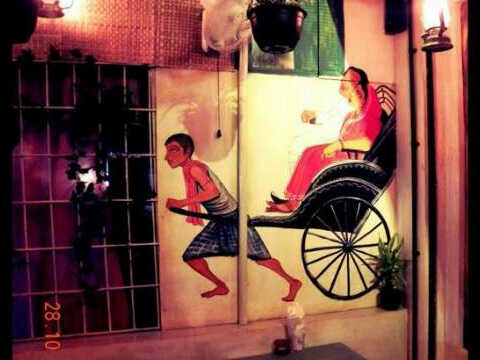
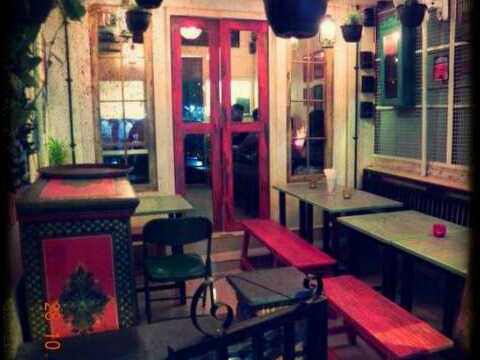
If the trial tables are anything to go by, Bong Bong will have Bandra’s food lovers crowding in once its doors open. The place is quite unassuming, with murals, old lanterns, wooden tables and steel folding chairs that are meant to evoke nostalgia of old-world Kolkata. And if you listen hard above all the noise, the music you’ll hear is from the original (Pakistani) Coke Studio.

Bong Bong is situated right next to Khaane Khaas on 16th Road, Bandra West. Pictures courtesy Bong Bong.


Categories
Big story

City’s children less malnourished than before

But many women are marrying as minors and several are not breastfeeding their baby within an hour of giving birth.
by The Editors | editor@themetrognome.in

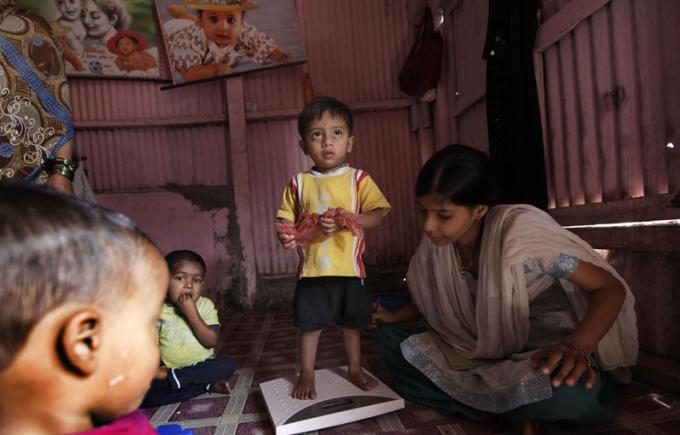
At long last, it’s good news on the state’s malnutrition front. For the first time in a decade, Maharashtra’s malnutrition figures have shown a very positive trend – the Comprehensive Nutrition Survey in Maharashtra 2012, released by the state’s Chief Minister Prithviraj Chavan yesterday, reveals sharp declines for malnourished children under two years of age for such parameters as stunting (too short for their age), wasting (too thin for their height) and underweight (too thin for their age).

Heartened by the numbers, Chavan announced that the state would widen the scope of its malnutrition efforts November 14 onwards, with a special focus on fighting malnutrition in Mumbai and other urban pockets in Maharashtra. The survey was conducted by the International Institute of Population Sciences (IIPS) in association with the UNICEF.

The survey is the first state-specific nutrition survey conducted with a focus on infants and children under two years of age, and their mothers. A representative sample of children under two years of age was selected from each of the six divisions of the state – Mumbai, Pune, Amravati, Aurangabad, Nagpur and Nashik. Data was collected between February and May 2012, and indicators from the National Family Health Survey (NFHS) – 3 of 2005-2006 was used as the foundation for advocacy, policy and programme action for maternal and child nutrition.

Stunting, in which a child is unable to grow normally because of poor or non-existent nutrition, was seen to have declined to 22.8 per cent from 33 per cent from the NFHS findings. Similarly, the percentage for wasting  dropped from 19.9 per cent to 15.5 per cent, and underweight dropped from 29.6 per cent to 21.8 per cent. Also, infant mortality rates (IMRs) was found to have dropped significantly from 36 per 1000 live births in 2005-06 to 28 per 1000 live births in 2011-12, and 25 per 1000 lives birth in 2012-13.

Now for the bad news

However, of the 1,346 mothers surveyed in the state’s urban pockets, only about 55 per cent were found to have breastfed their newborn baby within an hour of birth. Studies have shown that breastfeeding a newborn child within the first hour of its birth is the best way of building the baby’s immunity and arresting incidences of malnutrition and neonatal deaths; the same logic applies to babies exclusively breastfed for the first six months of its life.

Also, over 23 per cent of surveyed women in the urban pockets said that they had been married before age 18.

As part of the survey, 2,694 mothers with children under two years of age were surveyed for such parameters as work status, marriage and fertility, antenatal and delivery care, lifestyle indicators, and anthropometric measurements. Of these women, the ratio of breastfeeding in rural pockets was found to be better than that in the urban areas. Only 49 per cent women in urban pockets said that they had breastfed their babies exclusively in the first six months of life. Findings also revealed that bottle-feeding and early complementary feeding was on the rise and was very common, especially in the urban areas.

Chavan was concerned with these findings. “Low breastfeeding percentage within an hour of birth even as over 90 per cent mothers are having institutional delivery suggests that private nursing homes are not encouraging breastfeeding enough,” he said.

(Picture courtesy www.caravanmagazine.in) 


Categories
Hum log

‘It scares me when people retweet my cartoons’

We chat with DNA’s chief cartoonist Manjul on cartooning in today’s times, the journalism space, and coming to work without a clue.
by Vrushali Lad | vrushali@themetrognome.in

In the early 1990s, a class 11 boy went to the Dainik Jagran offices in Kanpur and applied for a cartoonist’s job. “I had no idea that nobody is there at newspaper offices at 12 noon. There were just a few features guys there and I met the features editor. She asked me to leave my work there and they would get back to me.”

He returned the very next day for a reply. “I was determined to be a newspaper cartoonist when I was in class 8. But the editor told me she couldn’t employ me. She had shown my work to one of the artists at the newspaper, who felt that my ‘lines had no power’ and stuff like that – which may have been true, because I was very young, and my drawing used to be terrible when I was younger. I was disappointed, but to my good luck, I bumped into Rajani Gupta (one of the owners) on my way out, and I had met her only the previous day for the first time. I told her that I hadn’t got the job, but she got it for me,” he grins.

Now, over two decades later, he is the chief cartoonist at Daily News & Analysis (DNA), a position he has held since the paper’s inception in Mumbai in 2005. Manjul, the only part of his name he is willing to give (even his visiting card reads ‘Manjul, Chief cartoonist’), says he was hired because DNA’s owners wanted to ‘revive the dying art of cartooning’. “I feel that DNA has done journalism a big service by carrying cartoons daily,” the 40-year-old says, explaining that in 2005, the city’s newspapers, even the The Times of India, did not have cartoons in their pages. “Only Mid Day had cartoons by Ponnappa and Morparia. DNA introduced cartoons under ‘Nobody’s business’ in its DNA Money edition. It was a great chance for me to be part of the biggest product launch since independence and have a dedicated cartoon slot in the paper’s pages,” he says with quiet pride.

Drawing on life

Manjul’s parents were unhappy with his chosen vocation, but that didn’t stop him from working at a newspaper. “I was studying Science. They thought I was ruining my future, a very middle-class concern. My father would say that I would make more money selling potatoes! Later, I ‘ruined’ my brother’s career – he followed me into journalism!” he laughs.

He didn’t have a background in drawing – “I think I got it from my mother, whose drawing was very good” – and at his first job, he quickly learnt that repetition honed his skill. “We didn’t have computers in those days, so if there was any redoing to be done, you had to do the cartoon all over again. But on paper or on the screen, I find that drawing again and again only makes the cartoon better,” he explains.

Though thrilled with the chance to work with a behemoth like Dainik Jagran , he realised that he didn’t want to be stuck doing comic strips. “I wanted to do serious political cartoons. Soon I moved to a daily newspaper for a while, before going to a newly-launched paper in Lucknow in 1992.” He loved his time in a new city, learning from and mingling with several senior journalists.

“I understood that you can’t become a cartoonist just by drawing well. You must assess what you are trying to say, and your reader must instantly grasp your meaning.” But he had to quit the job in 1996. “I was offered a bribe for not drawing against chief minister Mulayam Singh Yadav. I ignored it for a while, till one day my editor told me not to draw a cartoon against him, when I decided to move to Delhi.”

Computers and cartoons

He was probably among the first cartoonists in the country to draw on a computer. “Dainik Jagran got a computer before everyone else. I familiarised myself with it, working on an extremely slow vector drawing software. But you couldn’t control everything on it, and drawing by hand was faster,” he laughs. “Later in Lucknow, when the paper became a colour paper, I used my skills to draw by hand, scan the drawing and colour it by hand again.

When I first told the processing team that we could do the colouring work at the office, they didn’t believe me. I persisted, saying that they could make separate CMYK plates, and when they tried it, the colours came out well,” he explains.

 English press, ahoy!

Manjul was lucky to get a break into the mainstream English press when he bagged a cartoonist’s job at The Financial Express in 1996, where Prabhu Chawla was the editor. “It was a big deal to come from the Hindi press and get a job with a big English paper. A year later, I moved to India Today after he (Chawla) moved there. They were technically the most advanced, and I got the chance to use a stylus there for the first time.”

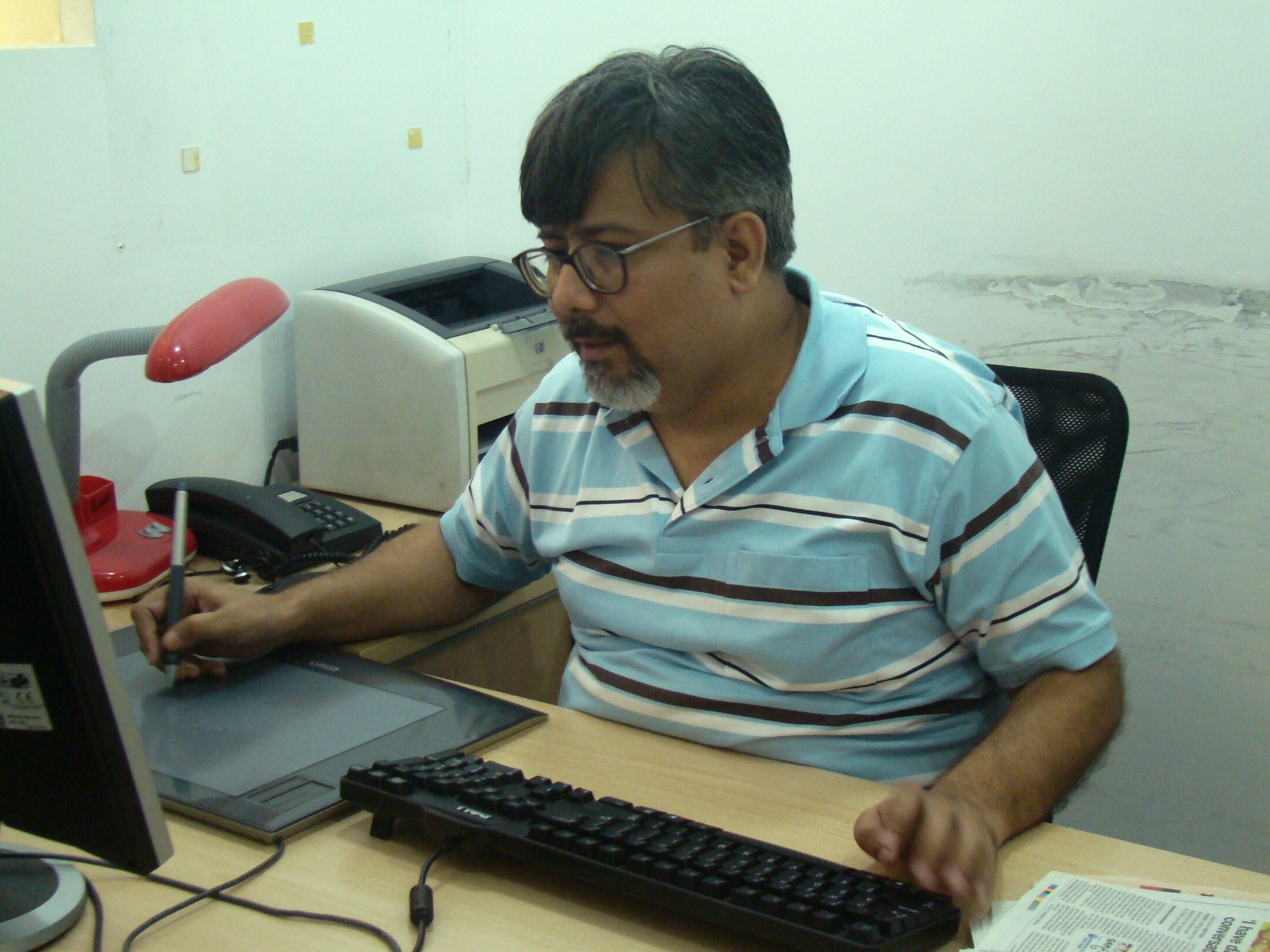
The only difference between using a paper and a stylus was the hand-eye synchronisation with the latter. “But the stylus saves a lot of time,” he says.

Throughout all of this, he was learning just how impactful his job could be. “Observation is a big part of a cartoonist’s job. I still struggle every day, it’s never easy. I come to work with no ideas. Often I find that five cartoonists are saying the same thing, in slightly different ways. The best cartoons make fun of somebody without him realising that you are making fun of him.”

Working and networking

Journalists, whether reporters or cartoonists, must work for their readers. “A journalist is only as good or bad as their editor,” he says. Another consideration is the reach and speed of social networking in disseminating information. “Every time people retweet my cartoon, it scares me. It puts additional pressure on me to top my last effort,” he says. “But I must point out that social networking gives people a reference point. To understand a cartoon, you must be aware of the background information. Social networking has actually made my job easier, it makes so much information available that you are never out of ideas,” he explains.

He feels that Facebook and Twitter help him gauge readers’ thought processes, but he doesn’t want to be addicted. “So many editors are constantly tweeting. When do they read their papers, when do they prepare their editions? Also, so many print journalists tweet some really interesting things, but their published stories are rubbish. You can’t take social networking so seriously,” he says.

His story today

He says that the exposure with Hindi newspapers is tremendous, with higher circulation and readership, but he has been happier with editors in the English press. “An editor’s job is to pull you back when your cartoon is too harsh, and I welcome that. Freedom of expression comes with certain boundaries.”

He adds, “Cartoons are art. Art ceases to exist when something is created just to irritate somebody. Cartooning is not about insulting or unnecessarily provoking somebody. Bad cartoons are those that insult, that are created just to prove that you can draw whatever you please,” he says.

Manjul has also written opinion pieces, but only when he is unable to convey the depth of his feeling in cartoons, like after Mario Miranda died. “Also, I wrote a piece when I visited Jaitapur. If I don’t draw a cartoon, I become uneasy. But I regret not travelling more in India, not knowing a lot of things. Right now, this is too exciting for me, so I am not going to take a vacation till 2015,” he grins.


Categories
Places

A taste of rural Indian hospitality

Salil Jayakar took a day trip to Jwahar taluka and came away charmed by the tribals and their simple lives.

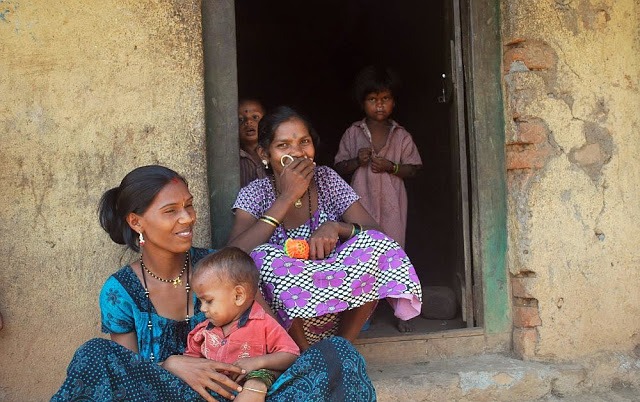
Drive outside of the city from the Western Express Highwayand you’ll find yourself in what is Jwahar taluka of Thane district, home to several adivasi or tribal villages. As you make your way past small tiled roof huts, children walking their way to school – often kilometres away – and women working in the fields, you’re taken in by the lush countryside.

It’s not hard to believe that just three or four hours away from the city, these tribal villages exist in a world of their own where basic amenities like clean drinking water, education and healthcare are hard to come by. Despite the hardship they face, these tribals will welcome you with smiles, shy no doubt, and give you a taste of what rural Indian hospitality is all about.

But enough of romanticising this India, so ably done by all those diaspora writers.

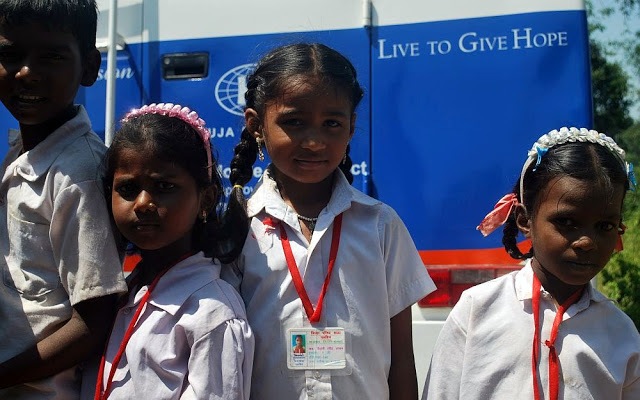
It is here in Jwahar taluka that the Hinduja Foundation in association withHindujaHospital runs its mobile health units (MHU). These MHUs provide some much-needed basic diagnostic healthcare facilities to the tribal villages in the area. The largest of the three is an air-conditioned bus that has been specially designed and fitted to provide basic healthcare. It has an examination bed, a blood testing and X-ray facility, etc. It is serviced by a doctor, a nurse and lab technicians. Given its size, the bus is parked on the outskirts of the largest village that is most easily accessible by road. Two smaller MHUs have recently been deployed to target villages that lie further inside. These MHUs also have the basic diagnostic facilities and are manned by a doctor, a nurse and lab technicians four days a week from Monday to Thursday for which staff fromHindujaHospital is rotated on a weekly basis.

During the couple of hours I spent at one such village, nearly 50-odd villagers lined up for their check-up. Girls in school uniforms smiled shyly for the camera I aimed at them. At the local village school, which has just 16 students (if I remember correctly), desks are a luxury. They sit on the floor. As I walked around, the women grinned. It’s altogether another thing that my accented Marathi drew quite a few amused looks as well. You can’t but notice the simplicity of their lives as they sit about their thatched huts or go about their daily chores. Interestingly, I saw more women than men. I’m guessing the men must be working in the city. I couldn’t see any signs of electricity, no overhead wires or TV antennae that jutted out on the skyline. But near the village school, much to my surprise, a telephone rang! Out walked a woman from the house nearby to answer it. Wonders never cease.

After spending a couple of hours at the village cluster, we drove further inside to the local ashram school as it is called. The school is a residential school for tribal children, is powered by solar energy and is situated on the banks of a river. Quite an idyllic setting, this. Needless to say, any visit here is met with much curiosity by the kids who – when they are not attending class – are running around in glee. Again, my accented Marathi meant a few crooked grins for the lens. As I walked around, I was taken in by the simplicity of the teaching methods and the discipline that the teachers try to instill. A board outside the principal’s office listed a daily time-table of activities starting with a 6 am wake-up and exercise call to the day’ lessons, homework and self-study time. How many of us have led such a disciplined life of academic rigour? Even more interesting was another board that listed the day’s meals – from breakfast and lunch to an evening nashta and dinner – an all-vegetarian affair. I didn’t see any signs of a TV for some much needed entertainment. Catch-catch by the river or a swim, perhaps?

I don’t mean this piece to be a sermon on what we need to do at the grassroots level. Let me also clarify that I work for the parent organisation (Hinduja Group) that runs both the Hospital and the Foundation, so this is not meant to be a publicity post either. It’s just a simple narration of my trip.

Aside: On our way back to the city, we took a detour near Naigaon off the Western Express Highwayto Bhajansons Dairy Farm, which is quite popular in the area for their lassi and sweets. And I couldn’t but smile when I read ‘Black buffalo is the black beauty but gives us white milk for nourishment’ on a board outside one of the tabelas. C’est la vie! No?

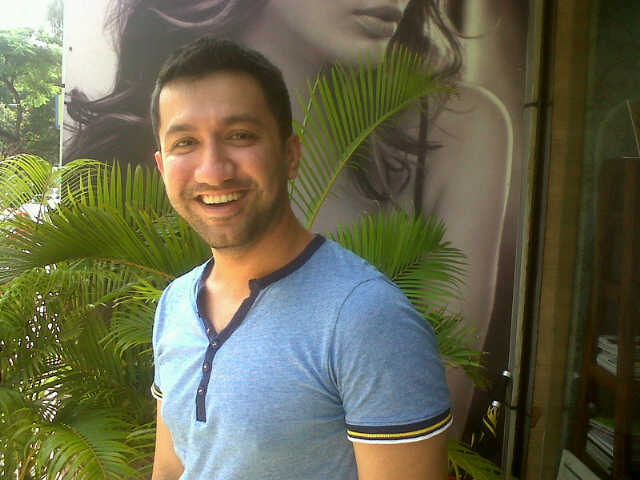
Salil Jayakar is a 30-something Bandra boy who loves Mumbai and London in equal measure. A journalist turned digital marketing consultant turned corporate communications professional, all by accident, he loves to cook and dreams of being on Masterchef – the Australian one – some day. 

(Pictures courtesy Salil Jayakar)


Exit mobile version