Categories
Learn

Secret key to stop exam paper leaks

Government recommends exam papers be sent online to centres; papers will be encrypted and opened for printing by special passwords.
by The Editors | editor@themetrognome.in

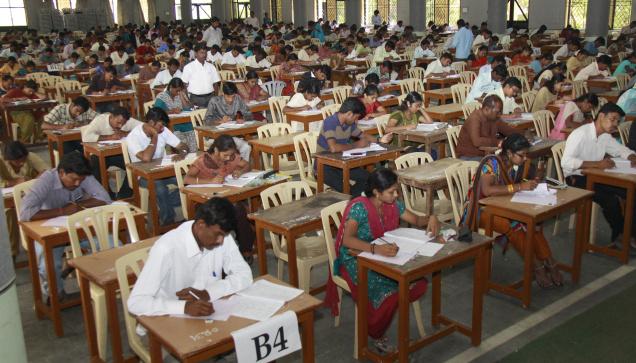
Come  university exam time, and rising cases of examination paper leaks end up with exams being cancelled or postponed, and students collapsing in a heap of anxiety and frustration. Concerned by a spate of exam paper leaks in Mumbai and the rest of the State this year – some of them pertaining to engineering exams – the Maharashtra State Government decided to draw up a series of recommendations for university exam centres to follow to minimise paper leakages.

A Government Resolution to this effect was passed on July 20, 2012 by the Department of Higher and Technical Education, to ensure that examinations all across the state were undertaken in a secure and fool-proof manner with the use of Information and Communication Technology (ICT). In accordance with this, an 18-member committee comprising members of the education department, vice chancellors of several Maharashtra universities and knowledge partners was constituted to meet and draw up a set of recommendations for all universities to study and implement as a pilot study prior to final exams in the year 2013.

The recommendations

As per the 207-page report titled ‘Report on reforms in examination system in universities of Maharashtra through use of Technology’, submitted by the Committee to the Governor K Shankarnarayan on November 3, the Committee studied the best practices of over 10 universities (in Maharashtra and outside) that have attempted to minimise or eliminate malpractices and errors in examination practices.

As per the report, “In order to eliminate the threats and challenges faced in distribution and delivery of question papers to the respective institutes, the universities should adopt Information Technology Solution for secure delivery of question papers. The Committee also recommends that each university should implement this system on pilot/experimental basis for exams conducted in first half of 2013. Following this, by 2014, it should become a matter of practice. However, if any university can implement this system fully before the suggested dates, it would be a very welcome step.”

The key suggestion in this regard is: “The question paper once randomly selected/generated from the question paper bank is encrypted and transmitted over a secure channel to the examination centres just one hour before the examination. At the examination centre, it is decrypted with the key/password and printed. This will overcome the leakage of question paper during transportation and printing.”

The Committee hopes that this above objective will be achieved by the all-important ‘secret key’, which “should be generated by the system and delivered securely to the concerned persons before the examination, there should be secret keys for individual papers, there should be a provision to deliver secret keys by email, SMS or using the ITS, and there should be a secret key verification system for printing of question papers. Besides this, there should be a well-defined time duration for question paper upload, secret key delivery and question paper printing.”

There is also a recommendation that by the first half of 2012, “all universities should use OMR (Optical Mark Recognition) and Barcode Technology in cover page of answer booklets of University Examinations on pilot/experiment basis. Following this, by 2014, universities should use this technology for all examinations.” This will curtail such malpractices as dummy candidates taking the exams, or wrong entry of data by the student.

Other recommendations include online registration of students for issuance of hall tickets (details taken will include student’s mobile number as well), question bank or question paper bank generation, digital scanning and onscreen evaluation of answer sheets, online application for re-evaluation and dematting of degrees and certificates etc.
Categories
Big story

Bombay HC will have a General Manager

State okays creating 45 court manager posts for the HC and district courts, GM’s monthly salary will be Rs 76,600.
by The Editors | editor@themetrognome.in

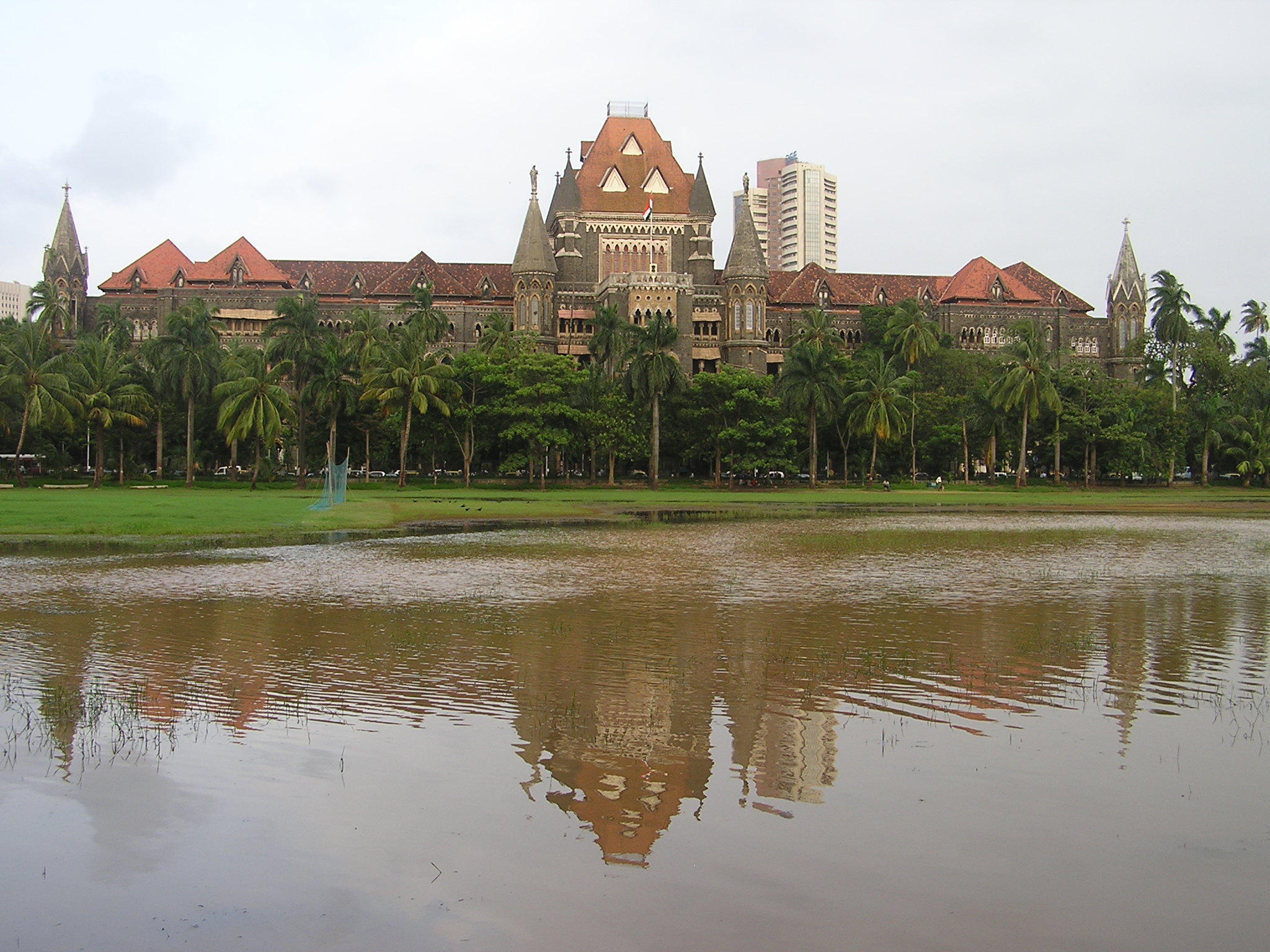
The Bombay High Court (HC) is about to get a general manager soon.

As per a recommendation by the 13th Finance Commission, 45 new posts for court managers for courts in Maharashtra were to be created; these managers would look after daily administrative tasks to take some of the load off judges. These court manager posts would comprise the posts of General Managers, Senior Court Managers and Court Managers.

As per a notification issued by the Bombay HC in the last week of October 2012, four General Managers were likely to be posted at Bombay HC, and its benches in Nagpur and Aurangabad, while Senior Court Managers are likely to be posted in district courts at the divisional headquarters at Nagpur, Amravati, Aurangabad, Nashik, Thane and Pune. Court Managers are likely to be posted in district courts at any of the district headquarters in the State.

Yesterday, the State Cabinet approved the creation of these new posts, which will cost the exchequer Rs 3,07,00,000; this sum will be granted by the Centre. The court managers will look into such work as sanctioning leaves and maintaining leave and attendance records, among other things.

What’s the pay like?

The GM’s job will fetch a monthly salary of Rs 76,600, and the candidate must hold an MBA or advanced degree in general management, with a personal work experience of eight or more years in a government organisation. Similarly, the educational qualifications for the other two categories remain the same as the GM’s, but Senior Court managers will earn Rs 66,400 per month, while Court Managers will earn Rs 52,900 per month.

To be appointed, candidates will have to sit for written exams and appear for a viva voce. The application fees for general candidates is Rs 1,000 and for reserved category candidates is Rs 500.

(Picture courtesy www.charlesayoub.com)

Categories
Event

Celebrating Obama’s win in Mumbai

See pictures of the US Election Returns party organised by the American Centre of the US Consulate at HRC, Mumbai.

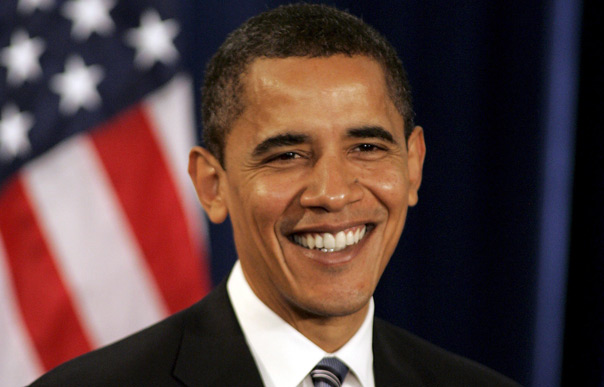
Barack Obama won a second term in the White House, after he defeated Mitt Romney to take charge as US President again. Several parts of America and the world erupted with joy at the news. In Mumbai, the American Centre of the US Consulate organised a breakfast part at Hard Rock Cafe to bring in the news of the new President with a packed room of US nationals and Mumbaikars. We bring you a few pictures of the event, courtesy the American Centre of the US Consulate.


Categories
Patrakar types

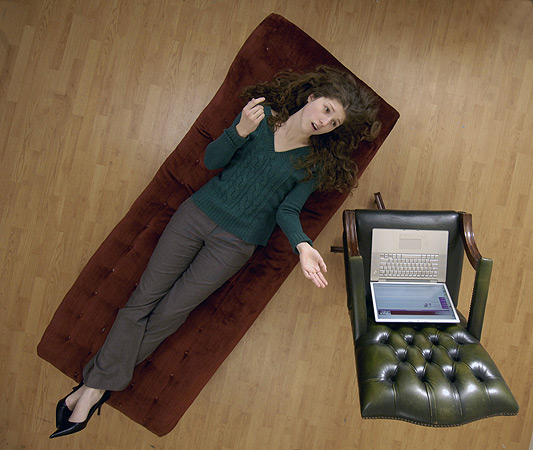
The Internet as therapist

Why are we increasingly seeking validation for our actions from strangers online? Whatever happened to dealing with personal crises, personally?
by Vrushali Lad | vrushali@themetrognome.in

Early this week, Twitter users in Mumbai were outraged and astounded by the story of a Mumbai-based writer who blogged about physical abuse at the hands of her boyfriend. The post went viral in minutes, and several Twitter users rallied around the girl and heaped suitable abuse and condemnation on the perpetrator of the beatings, punchings and head-on-wall slammings that the girl said she had been subjected to. For five days, the story played out on Twitter over and over again, with almost all the junta saluting the girl’s courage for speaking out against abuse, and several more promising support and help.

She did not go to the police for personal reasons.  Meanwhile, the boyfriend suspended his Facebook account and went silent on Twitter. There were a few who felt that the matter should not have been aired on a public platform like Twitter at all – that it was a matter to be solved between two adults, privately. Those who expressed this opinion were quickly attacked by the outraged majority, with such analogies as, ‘That is like saying murder should be solved between the murderer and the victim’.

A friend of mine was telling me about a woman she barely knows, who uploads a new picture of herself every day on Facebook, and who recently took an opinion poll on whether her FB ‘friends’ would like to see pictures of her actually giving birth to her son. My friend and I took respective mini Twitter and Facebook sanyaas with these goings-on, moving on to solving our little crises on our own, without a lot of strangers looking in and offering support and encouragement.

It’s not like I don’t want support, it’s just that I don’t need it from a bunch of people I don’t know.

I’m not trivialising anybody’s crises, least of all domestic abuse – it is a sad evil that must be spoken against and more importantly, acted upon – and I’m not getting into the whole ‘Haw! How can he beat?’ debate either. I actually couldn’t care less because I don’t know either the beater or the beatee. Yes, the issue bothers me, just like paedophilia and marital rape bother me. But I am surprised that we are increasingly turning to our computer screens for solutions to our problems.

We are buoyed by retweets from perfect strangers. We are excited by glowing reviews of a new pic we just uploaded on FB. It thrills us to know that complete strangers are recommending our blog posts, tweets and status messages to the world. If we break up with our partners, we tell the virtual world about it and wait for commiserations. We even live tweet the births of our babies (and open Twitter accounts for them). And when people we don’t even know write back to us saying, “I know just how you feel…” we are quietly proud of how someone out there ‘gets’ us.

It seems that we are increasingly looking for validation from an unknown mass of people, and what’s more, looking to be liked. Criticism from unknown quarters stings us. The virtual unknown is important to us, sometimes to the exclusion of family and friends. We’re having dinner with our families, but not participating in the discussion happening over our heads because we’re tweeting about what a good time we’re having at our family dinner. We’re out drinking with friends, but we want to offer immediate proof of what a good time we’re having, so we put up pictures of us pulling monkey faces while we show our drink glasses to the camera. Then the next morning, we explain how those pics were not supposed to be uploaded, that we didn’t know what we were doing because we were so drunk, lolz.

It seems to me that while we’re reaching a lot of people today than we used to, we’re actually unloading on the virtual world a bit more than we used to as well. We’re so connected, the lines between personal and private are not lines any more, but mere specks. Everything is up for evaluation – our personal crises, our major and minor tragedies, our trivialities and successes. And though our world view is much wider in scope as well, we’re expecting strangers to agree with us, to hold our hands through our decisions, to tell us what to do.

I don’t know about you, but if I need help, praise or support, I’ll get it from people I know. The Internet is too creepy a therapist.

Vrushali Lad is a freelance journalist who has spent several years pitching story ideas to reluctant editors. Once, she even got hired while doing so.


Categories
Uncategorized

Easy breezy

We tell you how to dress comfortable and smart in Mumbai’s current dry, hot weather. Plus, season-friendly fabrics and styles.
by Kavya Kolli

The dry heat seems to be making it quite a challenge to dress for comfort while still keeping it stylish. Keep your cool, because we’ve rounded up some simple, effective shopping tips that’ll help you achieve the effortless chic look.

Silhouette Science

The ideal silhouettes for this weather are ones that are airy and flowy. Anything that’s tight and fitted will make the heat that much intolerable, because it won’t allow your skin to breathe.

If you’re dressing for work, shift dresses and A-line dresses are a great style. They look formal and are comfortable to wear. You can also pick a dress that is loose, but has an elastic or a drawstring at the waist. This will add shape to your figure and give it an hourglass-like definition.

If you’re a wearing a skirt, A-line skirts are a good idea. Again, a perfect silhouette to beat the heat because they’re not constricting. You can pair it with a blouse, shirt or a loose top.

Wide legged pants are also a great option. They’re a huge trend this season and you’ll find them everywhere. They’re only fitted at the waist and slightly on the hips and then move away from the body. Not only are they airy and practical for this weather, but also flatter every body type. They can be paired with all kinds of tops to create great looks for work as well as casual and dressy occasions.

For casual and dressy styles, take the Bohemian route – flared dresses, tunics, full length dresses, maxi skirts etc. They’re fun, super chic and their flowy silhouettes will allow ventilation. Bright neon colors will look great during the day. Prints too will look fabulous. You can choose from a variety- ethnic, abstract, animal prints, quirky ones or even simple dots or stripes.

Fabric play

Natural fabrics like cotton and linen are most suitable for hot weather. They’re light-weight, and allow your skin to breathe. These fabrics are also great absorbents, so they’ll keep you cool and dry.

Fabrics with cutwork are also a smart option. The holes in the fabric are great for ventilation. Light weight denims, jerseys and knits are also great in this weather.

Apart from these, you’ll also find blended fabrics. The combination and percentage of each fabric is mentioned on the care tag attached to the inside of the garment. You’ll find natural fabrics blended with natural fabrics and also natural fabrics mixed with synthetic ones. If you’re going for the latter, then make sure the blend contains a higher percentage of the natural fabric. The synthetic fabric is used to add functionality and practicality to the fabric – like making it wrinkle-free or stretchable. The natural fabric will add its properties of making it breathable and airy.

Natural fabrics also have the advantage of containing fewer chemicals so they tend not to cause allergies or irritation to the skin.

Kavya Kolli is a Mumbai-based fashion stylist and avid writer, with an obsessive interest in fashion and beauty.

(Picture courtesy www.rgratzvm.com)

Categories
Big story

Maharashtra in Top 5 ragging cases list

UGC anti-ragging helpline shows several cases received from Maharashtra; one Mumbai and three state colleges still have active complaints on.
by The Editors | editor@themetrognome.in

It is a telling comment on the times we live in, that while the State Government releases a thick report on reforms in examination systems in the State’s universities, Maharashtra consistently features in the Top 5 states in the country from where the most incidents of ragging are being reported.

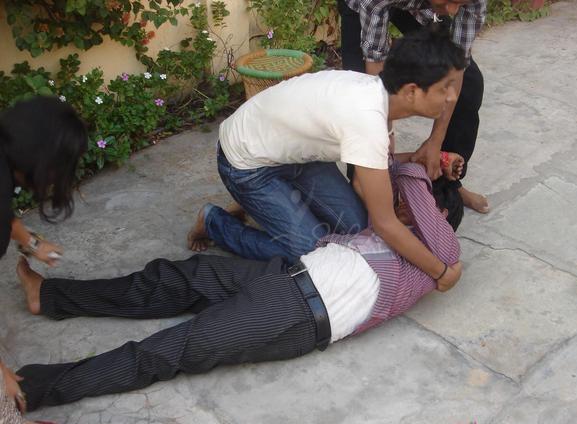
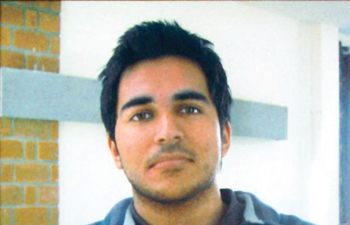
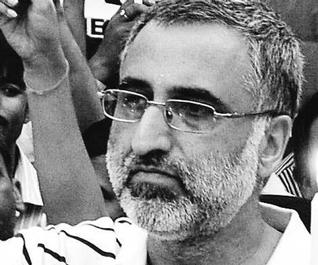
While The Metrognome accessed the National Anti Ragging Helpline website to check the responsiveness of the helpline to those calling in to report ragging incidents, we got in touch with Professor Raj Kachroo, the father of the late Aman Kachroo (in pic), who died after being ragged and beaten to death by his seniors in 2009 (see his inputs below). Raj handles the operations of the helpline and coordinates information between complainants, colleges and even the police.

The helpline 1800-180-5522 was set up in 2009 by the University Grants Commission. Ragging is now a cognisable offence that is punishable by suspension from the concerned university or college, and even imprisonment for serious crimes. Even those universities and colleges not responding to complainants’ grievances are now in the ambit of the law.

Where Maharashtra stands

Raj sent us latest report sheets of the numbers of calls and incidents reported, counted from 2009 to October 29. The most numbers of cases, some of them categorised under ‘Extremely serious’, come from Uttar Pradesh (355 complaints), followed by West Bengal (222), Orissa (171), Madhya Pradesh (132) and Maharashtra (90).

Similarly, numbers of complaints received after April 14, 2012 are thus: Uttar Pradesh (49 complaints), Orissa (34), Bihar (21), Rajasthan (12) and Maharashtra (10).

One Mumbai college complaint still active

There are a number of ‘active complaints’ on the list; these are complaints that have not yet been resolved or are in the process of being resolved, and are not classified as ‘closed’. Of the four active complaints from Maharashtra, one is classified as ‘Serious’ and comes from Mumbai’s Nirmala Niketan College of Social Work. The remaining three come from Nagpur’s Tirtude College and Government Ayurved College, while the fourth is from the Marathwada Agriculture University.

What Prof Raj Kachroo, Founder Trustee, Aman Satya Kachroo Trust, and who monitors the National Ragging Prevention Programme on behalf of UGC, says on the subject:  

On monitoring the National Ragging Prevention programme:

For the first two years the programme was monitored by a company called DRSL and EDCIL. The latter is a Government of India Company.  When they did nothing, it was only then that our Aman Satya Kachroo Trust took over the management and monitoring of the programme. We started from the beginning of 2012.

On why several cases of ragging come from Madhya Pradesh, Orissa, Uttar Pradesh and Maharashtra:  

The authorities in these states is not taking the matter of ragging very seriously. And I believe there has been a strong tradition of ragging in these places in the past as well.

On the procedures followed to examine a case:

At our level, we do not examine a case. Our job is to communicate with the concerned college authorities and with the police, if the matter is serious. It is the Anti Ragging Committees of colleges that examine the matter and the college authorities if found guilty are punished.  Our job is purely of a secretariat.  We log the complaint, communicate with the college, keep records of the communication and keep voice recordings of phone calls. We also follow up with reminders, and if the college authorities do not do anything, then we forward the case to the UGC and/or regulatory authorities for action.

A case is not closed until the complainant confirms on phone that he/she is satisfied with the action taken by the College.  A written letter is not sufficient. We keep the phone recording.

On the punishments meted out to those found guilty:

The punishment to be given depends on the college. Those found can be guilty can be fined, or even suspended.

(Pictures courtesy www.hillpost.in, www.she.sulekha.com and www.thehindu.com) 

Exit mobile version