Categories
Film

Scripting right with the stalwarts

Nihit Bhave attended a screenwriters’ conference held in Mumbai, which had the biggies in Indian cinema share their writing secrets.

If you’re a writer, you know the ‘blank document’ syndrome, otherwise known as the blinking-cursor-is-judging-you syndrome. It is the awkward pause between opening a document and writing its first word (I would have said ‘pregnant’ pause, but a writer never feels more impotent than at that stage, so I shall refrain from adding salt to the wound). It was certainly a big relief to know that this impairment hasn’t spared the best of the best.

“As a writer, my biggest challenge is a blank document,” said Juhi Chaturvedi, who wrote the film Vicky Donor.

Thankfully, the recently concluded event, ‘The 3rd Indian Screenwriters Conference – Untold Stories: Screenwriting And Truths Of Our Times’ was able to throw up many remedial suggestions for such syndromes, and also went on to shed light on some of the most pressing issues today’s young writers are facing.

Unfortunately, due to my own ignorance and complacency, I missed the first day and apparently a brilliant key-note speech. But going by Day 2 and Day 3, I can safely say that Act I must have been totally worth it.

Day 2 was primarily about the upcoming talent and the hurdles they face taking their stories from paper to producer, and from producer to the parda of cinema. The first session of the day, ‘The charge of the new ‘write’ brigage’ included panelists like Juhi Chaturvedi (Vicky Donor), Sanjay K Patil (National Award winning Marathi film Jogwa), Reema Kagti (Talaash, ZNMD, Honeymoon Travels, etc), Habib Faisal (Ishaqzaade, Band Baaja Baaraat, Do Dooni Char) and Akshat Verma (Delhi Belly) and was moderated by Pubali Chaudhari (Rock On!!, Kai Po Che). The insights from this session were unparalleled. From a coy Habib Faisal to an outspoken Akshat Verma, and from a commercially successful Reema Kagti to a relatively underrated Sanjay Patil, the writers put forth their points about creativity, content, contemporary challenges and personal hurdles for writers.
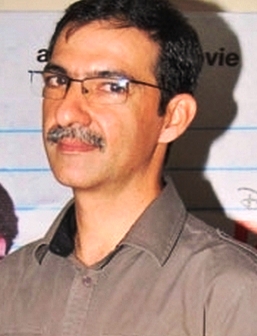
“I’ve never set out to write earth-shattering cinema. In fact, I’ve never done anything original. I’ve done clichés with my own twists and gotten away with it!”, Habib Faisal  (in pic on left) said.

Speaking about the very unusual storyline for Honeymoon Travels, the film’s writer and director Reema Kagti said, “When I was writing Honeymoon Travels…it was the story of a pitch-perfect couple who then turns out to be a superhero couple, but since no Indian producer would let me make a feature film on it, I added six other short stories and juxtaposed this one with those!”

Other memorable quotes during this session came from Sanjay Patil, who spoke of his Marathi film Jogwa thus: My film Jogwa was lying with me for 12 years because throughout the film, both the heroine and the hero were in sarees.” Juhi added, “Nothing scares producers like a writer who can’t categorise his own work. I did not know whether Vicky Donor was a rom-com or a social message film, so I said ‘drama’ and that threw people off.”

The second session, and the most entertaining one at that, was ‘Is the old order cracking?’, where moderator Govind Nihalani (Ardha Satya, Dev, Thakshak) quizzed panelists Urmi Juvekar (Oye Lucky…, Shanghai), Sanjay Patil, Bejoy Nambiar (David, Shaitaan), Rakeysh Mehra (Rang De Basanti, Delhi 6) and Abbas Tyrewala (Jaane Tu…Ya Jaane Na, Maqbool, Main Hoon Na) about the age-old three-act structure of screenwriting, linear and non-linear narratives and challenges writers face with them.

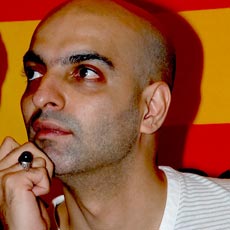
Abbas Tyrewala (in pic on right) was a revelation in this session. His explanation of a ‘structure’ for writing films was incredibly clear. “Imagine this. A smoker feels the need to smoke because he ‘imagines’ that his mind and body are lacking something. After a cigarette, a sort of ‘high’ replenishes this missing element and the person reaches the same level of normalcy (that a non-smoker is always at!) Similarly, when a viewer walks into a theatre, they’re at a level of normalcy. Your story has to create a trough and a consecutive crest – a conflict and a resolution – but with the effect of a (cinematic) high that will ensure that the viewer exits the theatre at the same normalcy level, but with an enhanced experience.”
It was interesting to see the linear v/s non-linear narrative debate between these young writers and Javed Akhtar, who nonchalantly took them on from his seat in the audience.

After two more sessions on TV content and the (hypothetical) revolution that’s in store for us on the small screen, the evening was concluded by a ceremony awarding special FWA honors to Gulzar and Salim-Javed. The awards were presented by Hema Malini.

Day 3 forced writers to face their fears and talk about what they hated the most – numbers, contracts, statistics, constitutional acts, royalties, infringements, arbitrations, etc. So after a brief morning session, ‘The empty playroom: why such few children’s films?’, led by Gulzar and Nila Madhab Panda (I Am Kalam) amongst others, we proceeded to the dark side and shed light on the things that also matter.

This day also proved fruitful, as the people at Film Writers’ Association managed to string together lawyers, Producers’ Guild representatives and writers on the same stage to discuss minimum basic contracts for writers, copyright issues and the implication of the amendments to the Copyright Act 1957.

FWA also celebrated the work of the father of Indian TV, late Manohar Shyam Joshi, who created mega TV serials Hum Log and Buniyaad.

Just to be in the same room as Gulzar and Javed Akhtar, Rakeysh Mehra, Zoya Akhtar and Reema Kagti and listening to them talk about screenwriting, made attending the event worth it. There was surely a lot to learn and understand. Because unlike what we’d like to believe, screenwriting is much more complicated than putting pen to paper, words to a story and a climax to a beginning.

Nihit Bhave is a film journalist based in Mumbai. 

(Pictures courtesy piquenewsmagazine.com, firstpost.com, c2ctara.com))
Categories
Event

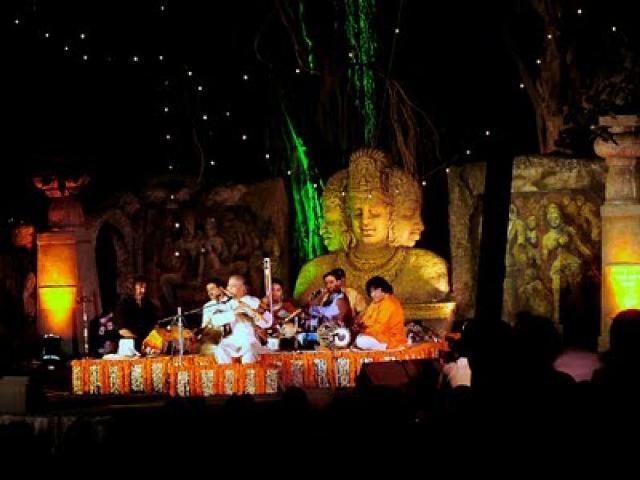
Elephanta Festival kicks off over the weekend

The theme for the noted musical fest combines Hindustani classical music with western fusion, and invites amateur painters as well.

This unique music and art festival was shifted from its excellent location two years ago, but it is back where it truly belongs. The Elephanta Festival 2013 kicks off at the Elephanta Caves on Saturday, March 2 and ends the next day. As always, stalwarts in music comprise the lineup of performers at the fest this time around, too.

Organised by the Maharashtra Tourism Development Corporation (MTDC), the fest will be officially announced by State Tourism Minister Chhagan Bhujbal tomorrow. This year’s edition of the Elephanta Festival will witness performances in both Hindustani classical and Western fusion music.

Dr Jagdish Patil, Managing Director, MTDC, says, “While the festival will include some of the best performers from across the globe, the theme will retain its objective to promote Indian culture and expose it to the world and the nation. The participation by international artists in Indian art forms will position the festival as a leader in promoting Indian heritage not only in the State, but across the nation and in the international circuit, putting the Elephanta Festival on the international tourism map.”

The fest also invites professional as well as amateur painters irrespective of age and experience to attend the event. Organised in association with the JJ School of Art, the theme of the painting competition is to paint the Elephanta caves and statues at the location on both days from 10 am to 2 pm. “The art materials would have to be carried by the participants, and they have to register at the venue and submit the entry at the location itself,” says Dr Patil. The top three prizes comprise cash amounts of Rs 50,000, Rs 25,000 and Rs 10,000 respectively.

For history and heritage enthusiasts, there are  guided tours of the Elephanta caves under the guidance of Dr GB Deglurkar, President, Deccan College, who will share his knowledge on the detailing of the sculptures and caves of Elephanta Island. Also, noted artist Chandrajit Yadav will replicate the cave sculptures in mud during the Festival.

Line up of artistes slated to perform:

March 2, 2013, Day 1:

7:00 pm – 7:30 pm: Shweta Pandit (opening ceremony with Saraswati Vandana)

7:30 pm – 8:15 pm: Sannidhi, confluence of seven Indian Classical Dance Performances by Parvathy Dutta

8:45 pm – 10:00 pm: Vishnamo, Shujaat Khan (Sitar and vocals); V Selvaganesh (Kanjira); Ganesh and Kumaresh (Violin); George Brooks (Saxophone)

March 3, 2013, Day 2:

7:00 pm – 7:45pm: Prabhakar Karekar, Hindustani classical vocals

8:00 pm – 8:45 pm: Manjari Chaturvedi, Sufi Kathak; Awadh Gharana musicians

9:00 pm – 10 pm: Ranjit Barot (Drums); Punya Srinivas (Veena); Elie Afif (Upright and electric bass); Harmeet Manseta (Keyboards); Aditya Benia (Guitar)

(Picture courtesy meriyatrra.com. Image is a file picture)

Categories
Big story

Student stabbed for mistakenly kicking co-passenger

Simmering city is increasingly ready to fight back and pull out its weapons and attack, sometimes at the slightest provocation.
by The Editors | editor@themetrognome.in

Call it the stress of living and struggling to get through the day in a city becoming increasingly unfriendly to its citizens. Or call it plain intolerance. Whatever the reason, we’re sure not able to keep our tempers under check as much as we need to.

Yesterday, a student was stabbed and grievously injured when he happened to kick a person by mistake. The incident occurred in broad daylight, with several people present.

16-year-old student, Sushil Nihal Maurya, was travelling to his home in Powai in BEST bus no 195 at about 5 pm. Alighting from the crowded bus, and being slightly jostled by those behind him, Sushil inadvertently kicked his co-passenger, Dinesh Soni (20), who was alighting before him.

Dinesh was enraged and swung around to confront Sushil. The latter is said to have told cops that he tried to reason with the man, telling him that he had kicked him by mistake. However, Dinesh pulled out a knife he was carrying and stabbed Sushil just below his ribs, seriously injuring him. Even as shocked passengers rallied around to save Sushil and drag Dinesh away from the boy, the latter reportedly kept issuing threats to him.

The attacker, a mechanic and a resident of Vakola, was later arrested by cops from Andheri police station. Sushil is recuperating at Cooper Hospital.

In recent times, incidents of stabbing have gone up dramatically in Mumbai, the most famous one being the attack on Keenan Santos and Rueben Fernandez, two youths who were stabbed to death after they protested against a boy misbehaving with their female friend.

(Picture courtesy mid-day.com. Image used for representational purpose only)

Categories
Patrakar types

Security? Who’s that?

Fresh out of a serial bomb blast strike in Hyderabad, you’d think the police everywhere would wise up, right? Wrong.
by Vrushali Lad | vrushali@themetrognome.in

Correct me if I’m wrong, but it seems to me that the police are a bunch of dodos. What else could explain what I’m about to describe next? And, trust me, this has happened before as well.

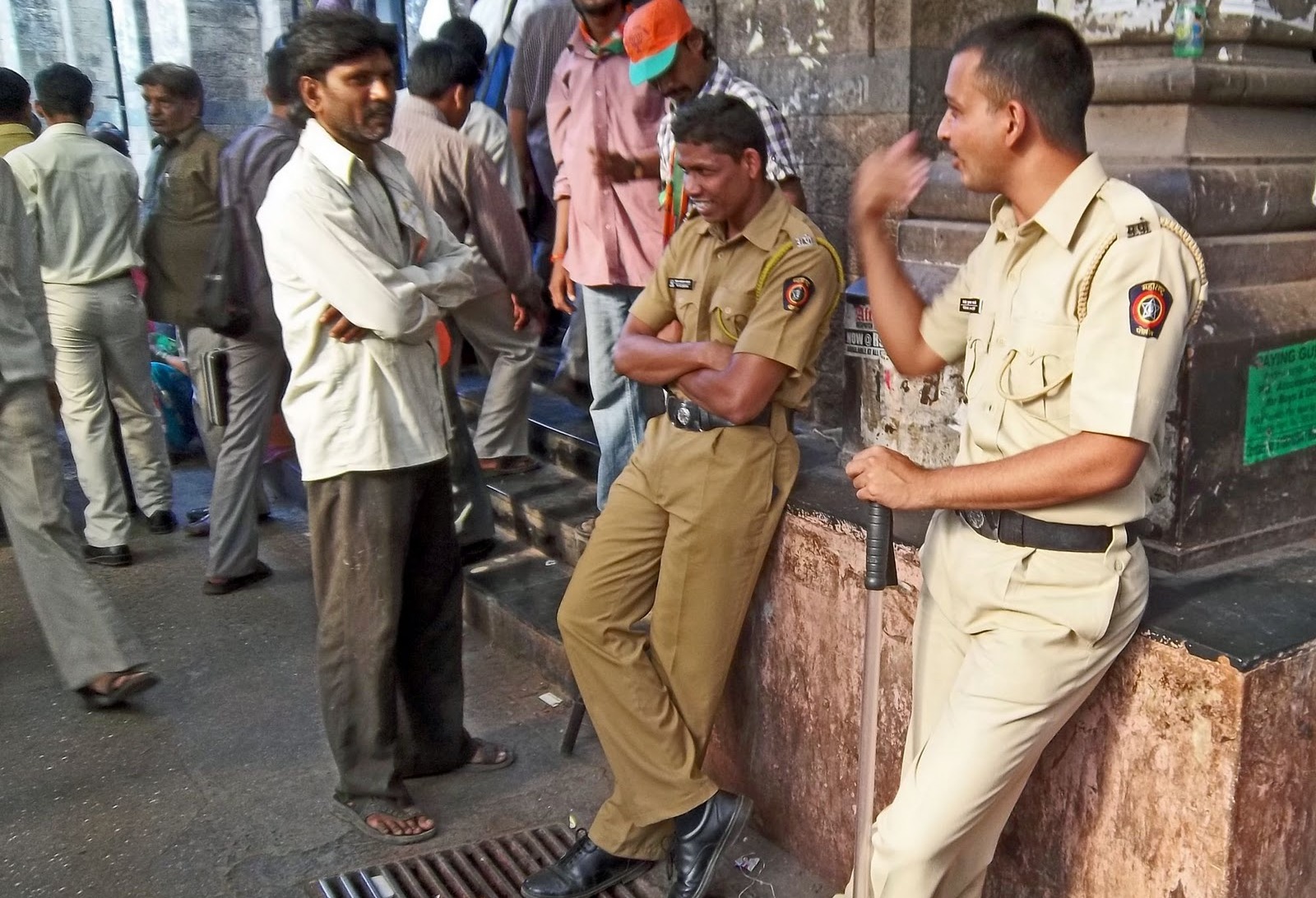
A few days ago, I was looking for a Borivli-bound train at Churchgate station. If you’ve been to Churchgate station, you’ll know it is characterised by three things: its subway, its Wimpy restaurant right opposite the public restrooms, and the benches on which bored policemen and policewomen sit and chat with each other, occasionally taking down details and checking bags of random commuters.

It was to two of these policemen that a scared-looking young man, probably on his way home from work as well, ran up to, breathless with excitement. “Sahab, wahan ek bag pada hai! (Sir, there’s a bag lying there!),” he said, pointing in the direction of Platform 4. His face was flushed, and I noticed a tremble in his hands. “Please come with me,” he implored the two cops.

To his chagrin, the two cops merely glanced at each other sleepily. “Tu jayega ki main jaoon?” one asked the other. (I swear I am not kidding). As if by some tacit consent – one of them probably owed the other some small debt – the sleepier of the two rumbled to his feet. “Chalo,” he said to the young man.

I followed the two to see what would happen next. If there was an unidentified bag with a potential bomb in it, I wanted to witness the action.

The cop followed the young man, unhurried and supremely bored. The young man, meanwhile, raced ahead looking for the spot that he had seen the bag in. When he found it, his face lit up with the glow of achievement – he was, after all, rendering a great public service by pointing out unidentified baggage, which is what public service announcements exhort us commoners to do all the time.

The bag was finally found, and I confess my heart sank when I saw it. A black rucksack, placed next to a pillar, adjacent to Platform 4. It was bulky and could have held practically any kind of explosive. The young man pointed at it and backed away, eyes wide.

The cop, whose name should ideally figure in next year’s Gallantry Awards list, nonchalantly approached the bag, and I swear I am still not kidding – poked it with a finger, then pulled open a zipper and started rummaging through its contents.

The young man backed away, horror written all over his face. With a last look at the cop happily emptying the bag of its contents  (a few books, some loose papers, an ID card, stray stationery), he walked away and soon melted into the crowds. I wanted to stop him and tell him to not be horrified. Because I have seen cops do exactly the same thing every time a citizen points out suspicious baggage on railway platforms or on the streets or inside trains – they start by tapping the baggage with their lathis, then poke and prod with their fingers, then empty out its contents before pronouncing, “Kuchh nahin hai ismein.”

At the risk of sounding extremely uncharitable, if there ever is a time for a bomb to go off, that time is when a lazy, foolish policeman approaches suspicious baggage and starts poking it. Too bad we citizens are not empowered to call the bomb squad ourselves.

Vrushali Lad is a freelance journalist who has spent several years pitching story ideas to reluctant editors. Once, she even got hired while doing so.

(Picture courtesy stockpicturesforeveryone.com. Image used for representational purpose only)

Categories
Film

‘People can protest, but State cannot pander to them’

This, and other illuminating thoughts from film personalities, at a talk on 100 years of Indian cinema at St Xavier’s.
by Vrushali Lad | vrushali@themetrognome.in

Cinema, especially Indian cinema, is increasingly being derided for being the opium of the masses – something which it is praised for, in equal measure, but in the light of negative portrayals of women in films and the recent Delhi gangrape and murder, what we are choosing to watch is as important as what filmmakers are choosing to show us.

“It’s been only a little more than a century that we have understood our own evolution,” said independent filmmaker Anand Gandhi. “And it’s been just two or three decades that we’ve realised that culture mimics life. So when we talk of a century of Indian cinema, we have to understand that we have had very less time to really understand the question: does cinema imitate life?”

Anand was speaking at ‘Century of Cinema – the challenges in the next 25 years’, a talk held at St Xavier’s Multimedia Centre, recently. Joining him on the panel were film scriptwriter, filmmaker and member of the Central Board of Film Certification (CBFC), Anjum Rajabali, and current Managing Director of the National Film Development Corporation (NFDC), Nina Gupta. Film theorist and researcher Narendra Panjwani chaired the panel.

Anjum replied to a question on why non-masala films were not marketed enough in India, or why they faced a distribution problem, by saying, “If a product has to connect, it does. Look at a film like Ardh Satya (starring Om Puri). It was a disturbing film that ended on a note of despair. It barely had conventional, masala elements in it. And yet it ran for 20 weeks at Novelty Cinema in 1983 – in those days, if a film ran at Novelty and Chandan (considered the massiest cinema halls of Mumbai) for a long while, it was considered a sure hit. Despite the likes of Salim-Javed and Manmohan Desai being immensely popular at the time, writer Vijay Tendulkar had still penned a script that connected.”


He also responded to a question on the portrayal of women in cinema. “Yes, the portrayal of women is a concern. We have to examine how popular culture portrays them, and does it have an effect on social psyche? There are no easy answers, but a collective interface is needed and we need to be conscious of why certain characters are shown a certain way. Filmmakers must be careful, because the audience may see things shown in films as endorsements of behaviour.

For instance, the portrayal of Sonakshi Sinha in Dabangg. Is her character’s portrayal a recommendation of that film for how women should behave? If not, why has she been portrayed that way? These are questions that filmmakers need to ask themselves,” he said.

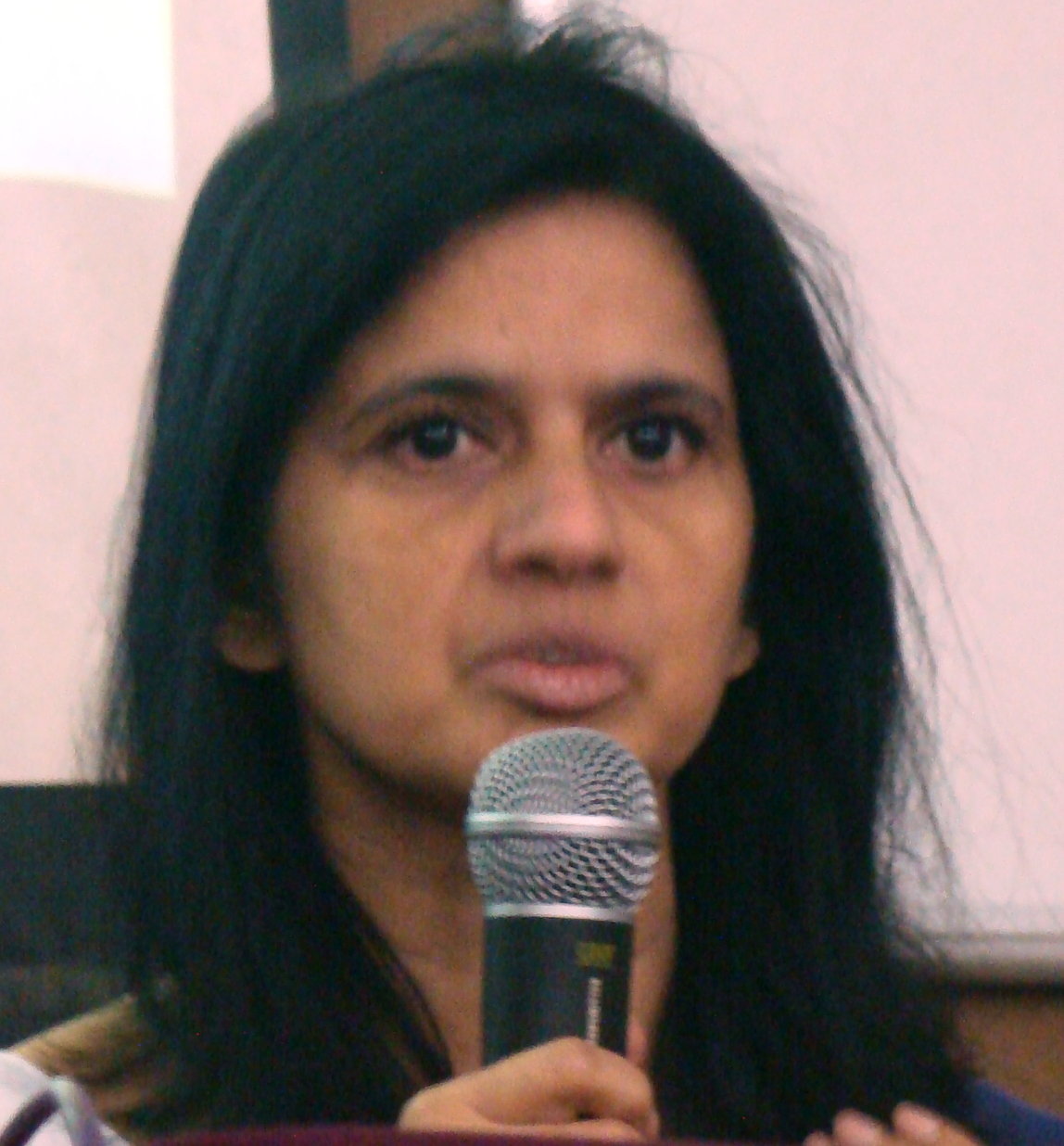
To a question on whether good Indian cinema could possibly become mass, even as films like Rowdy Rathore and Dabangg ran to packed houses across the country, Nina (in pic on right) said, “Films combine an element of art and an element of commerce. The reason films are so expensive to make, is because a film requires a huge collaborative effort from several different people who must all be on the same page. With such a big canvas, the element of risk is greater. If a certain kind of cinema, parallel cinema for example, does not have an audience, it is not going to be made.”


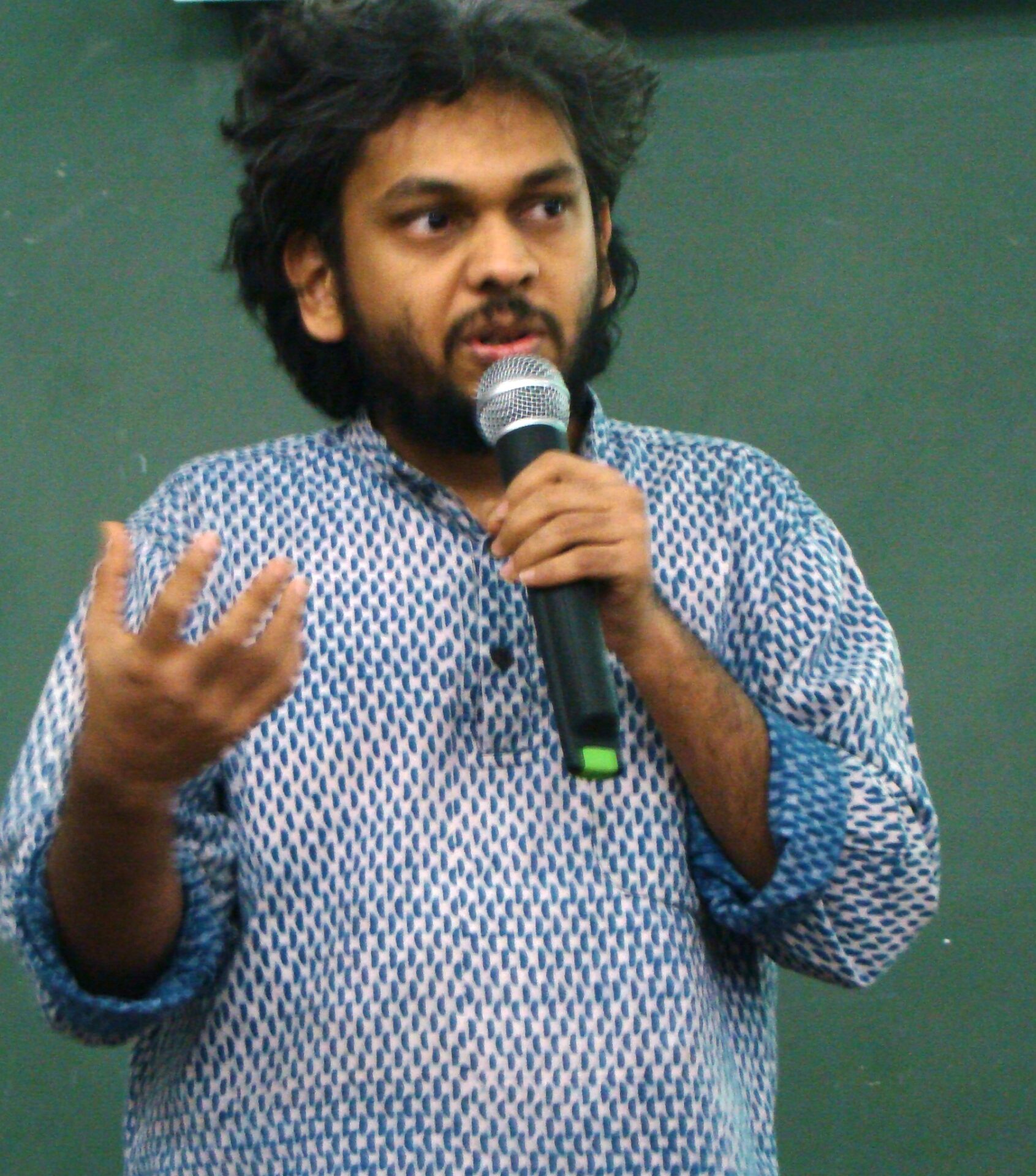
Anand (in pic on left) interjected when an audience member said that mass entertainers only dwelled on escapism, “Cinema serves extremely complex functions. Films do mirror who we are, our relationships, the times we live in, but they also mirror our aspirations, dreams and memories. A film is an anthology of our responses. Films that mean something to me have reflected the environment I have been in, and my introspection. So I don’t think that idealism and realism can be mutually exclusive of each other in cinema.”

An audience member asked Anjum if he felt that cultural and political interference in films could be a factor to consider for the Censor Board in the coming years. He replied, “Look, certain statutory guidelines are very strongly put down while passing a film. The Constitution does guarantee freedom of expression, but with the rider that we should be sensitive to others.

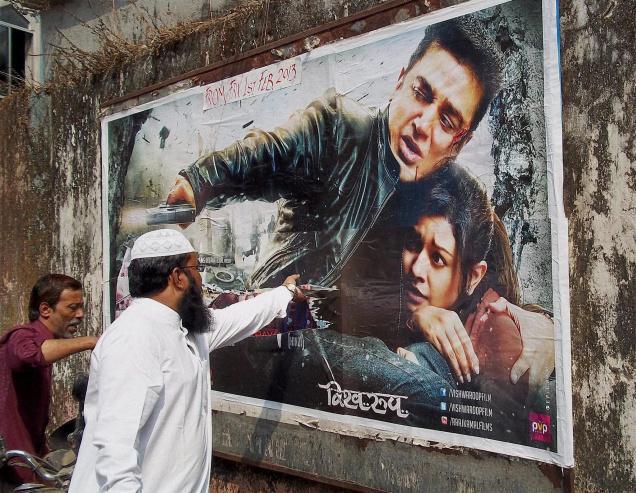
Coming to the point of bans and protests, let me give you the example of the film Aarakshan (directed by Prakash Jha, and which Anjum wrote). Even before the film’s showing, a preemptive ban was imposed in three States, which the Supreme Court struck down. The film ran in theatres and there were no protests after release. But in the case of Vishwaroopam, a ban was imposed because the State chose to pander to protests. In my opinion, we should give groups the right to protest, but the State has no business pandering to these groups’ emotions, which are not in the guidelines of the law. If you play to the gallery, there will be several threats to the identity of artists.”

Categories
Kharcha paani Learn

Iran wants to do business with India

Speaker of the Iranian Parliament, Ali Ardashir Lajirani, wants India to throw its doors open for Iranian students and businesses.

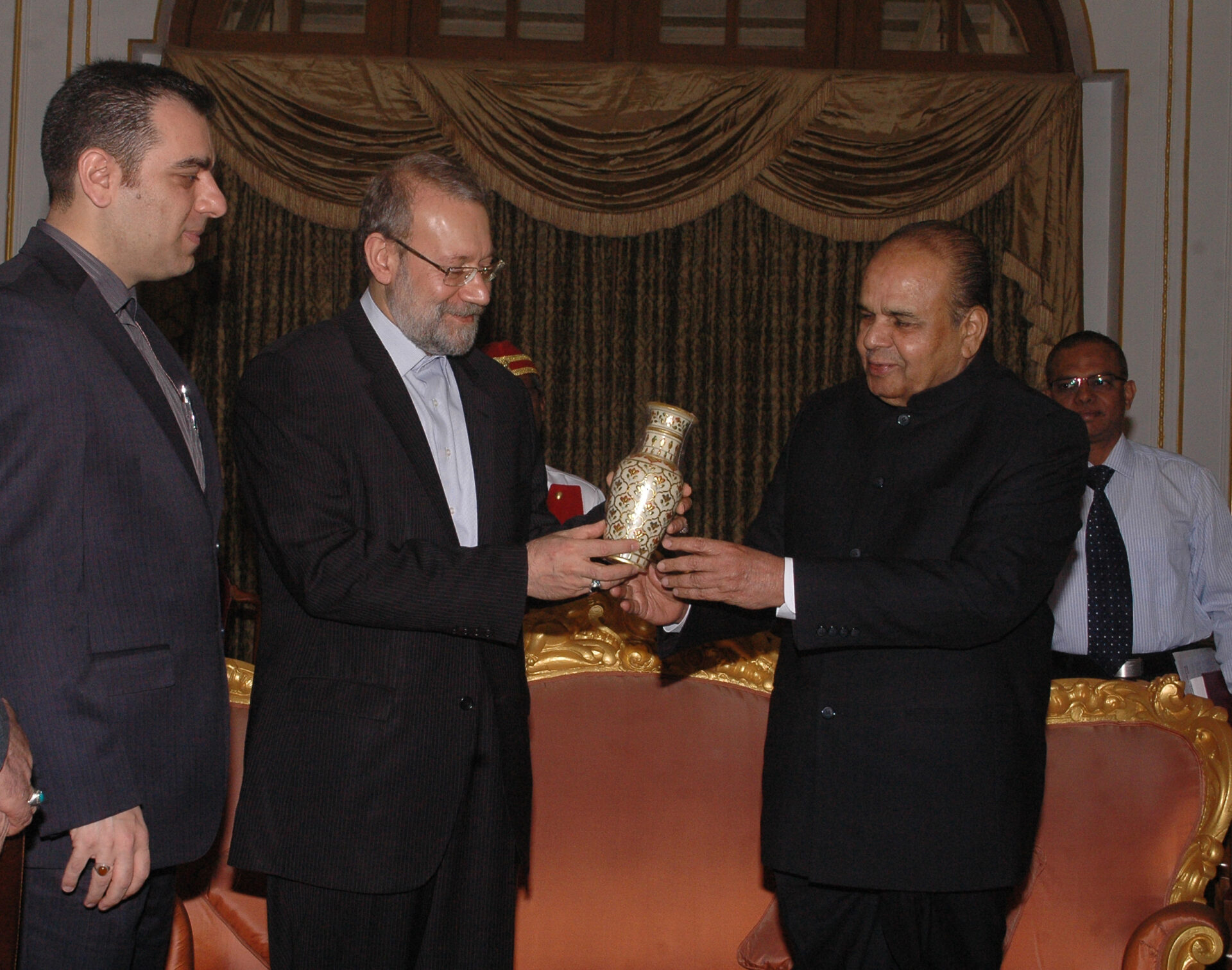
The Speaker of the Iranian Parliament, Ali Ardashir Larijani visited the Governor of Maharashtra K Sankarnarayanan at Raj Bhavan, Mumbai, today. During the visit, he said that business leaders from Iran were keen to further develop business and trade contacts with India, and expressed the hope that India would provide opportunities for Iranian business leaders to explore its business potential.

Stressing the need for greater academic collaboration between the two countries, he said that addressing small issues like expediting issuance of student visas by India would help more students from Iran to study in India.

Complimenting India for achieving significant progress in various areas during the last few years, Larijani said, “The Parliament of Iran is determined to enhance and facilitate relations with India so that the trade between the two nations will further increase from the current $15 billion.” He said that trade can be enhanced by increasing cooperation in areas like energy resources and industries.

The Speaker was accompanied by a large delegation of Parliamentarians and Ministers and is currently on a visit to India.

He added, “Social, cultural, educational and trade relations between Iran and India are deeply rooted in history and both the nations have influenced the cultures of each other during these contacts.” He said that the people of the East such as Iran and India have a lot of commonalities such as morality, ethics and family values.

Exit mobile version