Categories
Beauty

Smooth moves

Soft and silky legs are what every girl wants to flaunt in cute skirts and sexy shorts during the summer. Follow these simple tips for the smooth legs you always wanted.
by Beverley Lewis

A lot of people advise against it, but shaving can actually get you the smooth skin you want, provided you do it right.

– The trick to shaving legs is to wet your skin and let it soften from the heat and moisture. When you shave in the shower, make sure that the water is warm and not very hot as this will dry out your skin.

– You cannot shave dry skin. Shaving is a natural exfoliater and if you try to dry shave, you run the risk of clogging up the razor with dead skin while putting yourself at risk for nicks and razor burn. Be sure to exfoliate your skin before shaving. It gets rid of all the dead skin cells.

– There are several ways to exfoliate. You can use exfoliating gloves or dry brush before you shower or use a mild scrub.

– Next, finding a razor that works well for your skin, given the pressure you use while shaving, the texture of your skin, and the density of hair growth, takes some experimentation. No single type of razor works well for everyone, though the newer triple blades seem to work wonders.

– After finding the one that works best for you, the main thing is to change the blade frequently—dull razors make for poor shaving results. There’s no need to waste your money on shaving creams formulated especially for women, they are virtually the same as the creams sold for men. Avoid shaving products that contain irritants (such as alcohol, menthol, and peppermint). Used over newly-shaved skin, irritating ingredients can cause red bumps and ingrown hairs.

– If you find yourself without shaving cream in the shower, use hair conditioner or body wash instead. This is far easier on the legs than shaving with a bar soap or bar cleanser. For best results, shave against the growth of hair using careful strokes and applying even pressure.

– After you’re done, apply moisturiser and remember, if your legs are going to be exposed to sun, apply a moisturiser with sunscreen (SPF 15 or greater) that contains the UVA-protecting ingredients avobenzone, titanium dioxide, or zinc oxide.

Beverley Lewis has worked with beauty magazines and has amazing tips to share. Have a beauty question? Send it to us at editor@themetrognome.in or tweet it @MetrognomeIndia and Beverley will answer it for you.

(Picture courtesy missbudgetbeauty.co.uk) 

Categories
Do

This Bulb has some bright ideas

Blue Bulb acquaints you with fun, sometimes OTT things to do. If you’re a Mumbaikar, you can de-stress with them.
by Medha Kulkarni

“Malls, cafes and bars. Meh. What else is there to do in Mumbai on weekends?”

An oft-heard lament of most of the regular office-going crowd who are too busy to do anything during the week, weekends become repetitive after a while. Joining structured classes, say for dance or art etc. is out of the question for mumbaikers, as work hours are long and erratic. This is precisely the problem that the founders of Blue Bulb saw and sought to fix it.

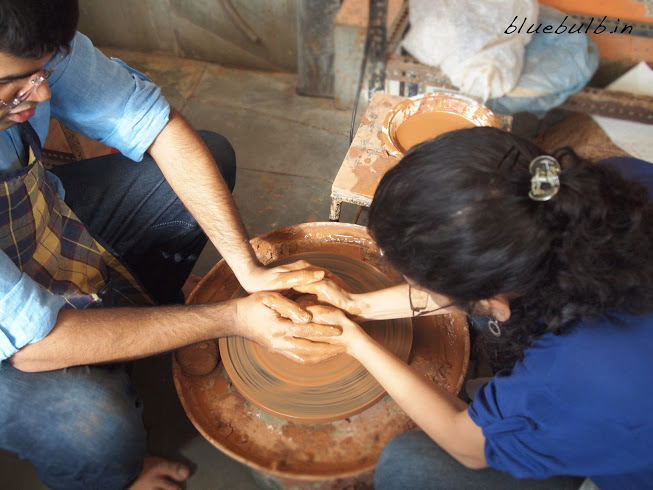
This is precisely the gap that Blue Bulb seeks to fill. Started in 2011 by Mumbai-based Regan Rodricks, Blue Bulb is a company that offers people in the city a plethora of things to do. They organise sessions for everything from hula hooping to Parkour to pottery and beyond. Most of these sessions are spread over a weekend, lasting from a few hours to an entire day, depending on the activity, and are designed to be taster or introductory sessions that give you the chance to try something new. Blue Bulb organises special activities for children and even has packages for couples. The best part about it? They’re all totally affordable!

“We look out for people doing interesting things and then try to see if more people would be interested in doing something like this. For example, I was introduced to a professional fire breather at a party. We got talking and before I knew it, I was on the terrace with fuel in my mouth about to breathe fire. And that’s how the Fire Breathing Experience became part of Blue Bulb. We also get contacted by instructors wanting to be part of Blue Bulb. But every experience and instructor is first tried by us to ensure quality. Our experience partners are individual instructors, clubs and professional performers who do this activity for a living,” Regan explains.

With over 50+ activities on at the moment (excluding a dozen-odd that they have as one-offs, such as the Hula hoop workshop) what is the most popular activity offered? “One of the most interesting experiences is the 1 Day Paragliding Training. We take absolute beginners, people who have never seen a paraglider before, and by 3 pm, they are flying on their own at 800 feet!” Regan says.

However, sometimes it can get difficult dealing with demanding customers. He recollects a parent who wanted to enrol their 10-year-old child for fire spinning. “We politely refused,” says he. “We get the most outrageous demands from parents, especially in the summer vacations. “

Priced in an affordable range, the rates vary depending on the activity. “But as a rule, we say ‘How much would you spend on a Saturday evening?’ and try to keep the price in that range. Ordinarily, a movie, popcorn and dinner would set you back by Rs 1,500/-. But most of our experiences cost less than that. And honestly, you will forget what you ordered for dinner a month ago. But you won’t forget the day you made your first clay pot or learnt to drive a bullock cart.”

For kids, they have a number of interesting sports like rock climbing, archery, and golf, and experiences like the cupcake workshop, doughnut baker experience, pottery, etc. One of Blue Bulb’s new experiences is the Pilot Simulator, where kids learn to fly a jet plane in an actual plane simulator. The simulator is a stationary cockpit which pilots use for training.

Each session is conducted by a trained professional and the team at Blue Bulb is very thorough and ensures that your experience lacks nothing. What I liked best about the way Blue Bulb organises these sessions is that they are never overbooked. Despite the steadily increasing demand, Blue bulb continues to retain its ‘First come, first serve’ policy and stick to their cutoff. This is good because a limited number of people per class means more personalised attention from the instructor and puts lesser pressure on resources.

Book an activity or experience with Blue Bulb here.

(Pictures courtesy Blue Bulb)

Categories
Learn

Asses on stones

Markers of a distinctive, historical past, stones showing donkeys in sexual congress with a woman abound in Mumbai and Maharashtra. Sadly, they are victims of neglect.

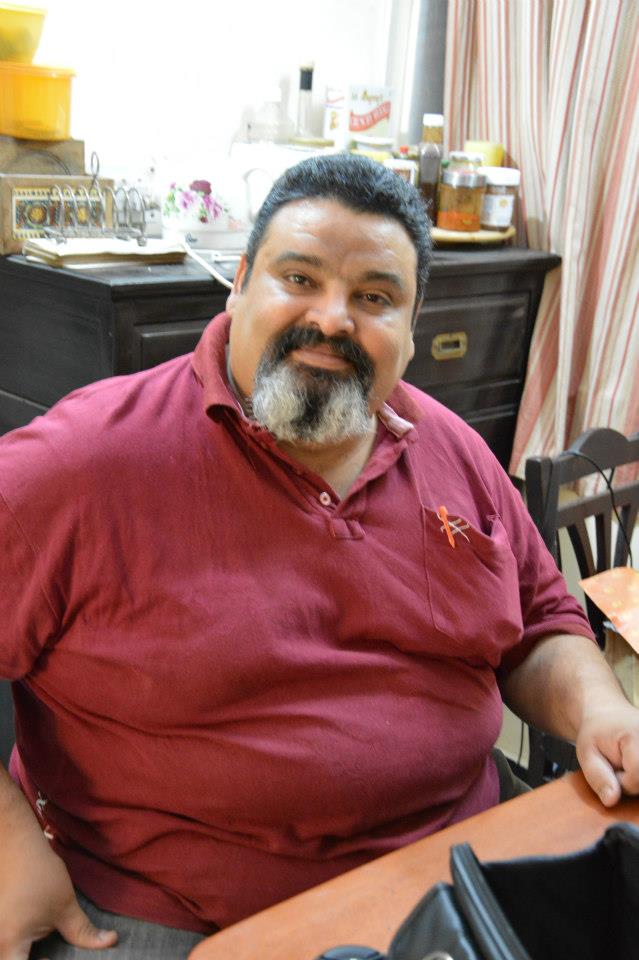
Shubha Khandekar spoke to Dr Kurush Dalal (in pic below), who teaches archaeology at the Centre for Extra Mural Studies (CEMS), Mumbai University and who has done extensive archaeological fieldwork in Chandore (Maharashtra), Sanjan (Gujarat) and Balathal (Rajasthan), about gadhegals, which have a quaint and fascinating history.

Shubha: What is a gadhegal?

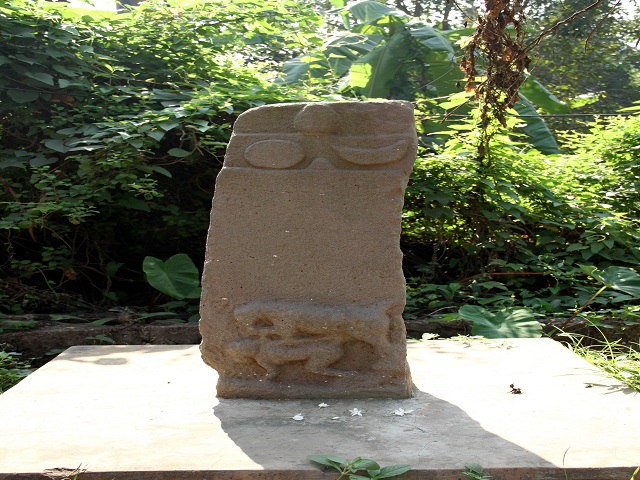
Dr Dalal: A gadhegal is essentially a three-part stone slab in which the top part shows the sun and the moon, with or without a kalasha. The middle part consists of an edict, the shilalekha, which is usually the grant of a plot of land and sometimes of a house to a benefactor. The lowest part of this stone justifies its name gadhegal: it explicitly shows a donkey in sexual congress with a woman.

S: Why such a strange depiction?

Dr Dalal: A gadhegal needs to be seen in its totality, as therein lies its importance as historical source material.

The sun and moon symbolise perpetuity, the kalasha indicates prosperity. The graphic has evoked different interpretations: some feel that anyone who dares to violate the royal decree is being threatened with the most disgusting of punishments: that his mother would be violated by an ass. Others feel that it symbolically represents Mother Earth, and the ass (the vehicle of the goddess of pestilence and plague – Sheetaladevi) represents drought, famine, desolation that would come visiting anyone who defies the royal edict. A gadhegal is thus an Ass-Curse-Stone.

S: What is its significance for the study of history of Maharashtra?

Dr Dalal: These gadhegals are the markers of the Shilahara period as, being essentially land grants, they indicate the extent of the empire of the dynasty and sub-dynasties. The Shilaharas who reigned from the mid 10th to 13th centuries, were the first purely Maharashtrian dynasty that ruled the coastal areas of Konkan. They were initially the feudatories of the Rashtrakutas, who were responsible for the creation of such monumental beauties as the Ellora and Elephanta caves.

The earliest inscriptions in Marathi (in Maharashtra) are seen on gadhegals. A large number of early medieval land records and place names are also found on these gadhegals. The locations indicate the distribution of the cadet branches of the Shilahara dynasty, namely the Northern, the Southern and the Kolhapur Shilaharas. The language is either heavily Sanskritised Marathi or Sanskrit.

The word ‘gal’ means a stone in Kannada and is a common term associated with hero-stones (Veergal) and Sati-stones (Satigal) which saw their probable origins in Karnataka but they abound in Maharashtra too, and have evolved in a distinctive form. The gadhegals though are unique to the west coast of Maharashtra and Goa with a single exception from Gujarat.

Related to gadhegals are the sati stones and the hero stones. These often bear inscriptions in Karnataka but sadly not in Maharashtra. That is how the gadhegals in Maharashtra have evolved from their earlier avatars.

S: Where and how many gadhegals are there in Maharashtra and how are they different from those in Karnataka?

Dr Dalal: In Mumbai itself there are/were at least 12. There are about six or seven gadhegals with the Chhatrapati Shivaji Maharaj Vastu Sangrhalaya in Mumbai. There is one at the Ram Mandir, near Charni Road, there is one from Nalasopara, one from Powai and one from Vasai. There is one recorded from Jogeshwari which is now in Portugal, and there are probably others in the environs of Greater Mumbai which haven’t been identified.

There are many more on the Western coast. One has been reported from Porbander, Gujarat, perhaps relocated from Maharashtra. Gadhegals are strewn in the belt from Thana to Goa. A few are inland: there are two at Tuljapur, one at Satara and a couple in Kalyan.

However, this being a poorly-researched subject, who knows how many would be lurking in the fields, homes and shrines of the Konkan?

S: Which are the most famous gadhegals in Maharashtara?

Dr Dalal: Eminent Marathi scholar SG Tulpule has identified a gadhegal at Akshi (there are two here) close to Alibaug in the Raigad district as the first ever inscription in chaste, though archaic, Marathi. It is a land grant by King Keshideva. Fortunately, it has a date on it: Shaka 934, which works out to 1012 CE, which means, as of today, this gadhegal is exactly 1,000 years old! This should have been the occasion for great celebration. But instead, we see only neglect, apathy and ignorance from all quarters! Wind, rain and sun have almost completely erased the inscription today due to our apathy.

Another at Diveagar issued by King Anantadeva records the donation of land and a house. It is datable to 1137 CE. This gadhegal, whose original provenance is not known, was rediscovered and reinstated by the efforts of the Centre for Extra Mural Studies (CEMS), Mumbai and India Studies Centre (INSTUCEN) Trust.  Two more in a damaged state have also been found in the vicinity.

Interestingly, a gadhegal issued by King Aparaditya I, originally at the Jogeshwari caves, was taken to Cintra in Portugal and was published from there. It has 22 lines in Nagari script which record a donation of houses to important people in the royal court.

What are your suggestions for the conservation of gadhegals?

The inscriptions are in low relief and hence they get weathered and worn out fast. Intensive conservation efforts are needed to protect this heritage. A simple initial step could be the erection of a small shed over the stones and a careful photographic recording along with their impressions.

CEMS is currently working on three gadhegals at Diveagar and another one close by at Deokhol.

For conservation it is necessary to harness popular support by making the people aware of what these gadhegals are.

Possibly with the best of intentions, the villagers often wash and scrub them, and coat them with vermilion. This has to stop. They must be told not to move them and instead erect a shed around them for protection against the sun and rain. The historic gadhegal at Akshi has weathered so much that but for a faint trace of some letters, all of it is blank!

Private agencies and the local Government must come forward to create resources for the conservation and the government must provide generous support. They are today lying in isolated places, scattered all over the countryside. We must create local museums where these artefacts are displayed. We should create fibre glass replicas for sale to generate revenue.

The tradition of gadhegals continues right up to the Bahamani period. At Dabhol has been found a gadhegal that has inscription in Arabic and Marathi, but no graphic representation.

If the local people, local panchayats and the State Government join hands and also get private agencies involved, conservation can bring knowledge, pleasure as well as revenues.

(Featured image courtesy Dr Kurush Dalal. Image shows an Akshi Gadhegal dated 1012 AD by SG Tulpule and which according to him contain(ed)s the oldest Marathi inscription in Maharashtra.)


Categories
Event

Walk of art

Artist Renu Mital is showing her work at The Trident, Nariman Point, starting from today. Do check out her interpretation of ‘Survival’.

Too often, we complain of the city not hosting enough art events every week. For a city teeming with talent, and teeming even more with people wanting to see the work of young artists.

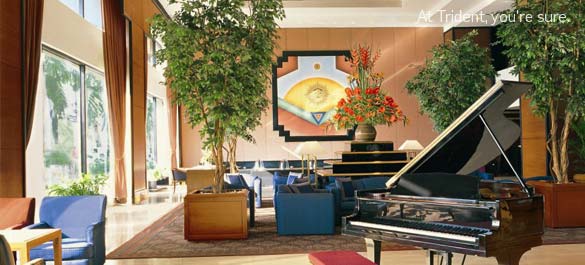
Since 1996, The Trident, Nariman Point, claims to have recognised these needs, and put up the Trident Art Walk for lovers of art in the city. The Art Walk claims to showcase “talents evolved by the magical triplet of brush, paint and canvas,” and takes place every fortnight in The Oberoi Shopping Arcade.

Starting today, artist Renu Mital is showing her work at The Art Walk, till April 14. Titled ‘Art Treasures’, Renu’s work deals with the theme of survival, through oil on canvas. Check out her work below.


Categories
Tech

Book your next holiday at a kiosk

MTDC to install touch screen kiosks to help users book holidays at MTDC resorts; first one installed at Marine Drive.

It is summer time and everyone’s heading for a holiday. To make the process of booking accomodation for your holiday easier, the Maharashtra Tourism Development Corporation (MTDC) has hit upon the idea of installing touch screen kiosks at various spots in Mumbai and the State.

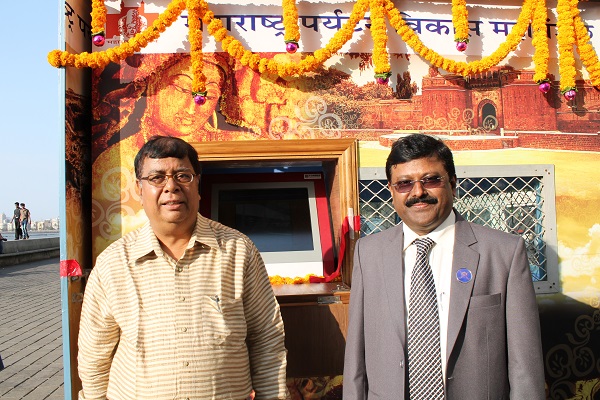
To this end, the first such kiosk was installed a couple of days ago at Mumbai’s Marine Drive. The kiosk and others like it will enable users to get information about tourist destinations in Maharashtra, in both Marathi and English. Plus, once you browse the information and make a destination choice, you can book your stay at an MTDC resort in that destination, as well as book train tickets to get there.

As per a release from MTDC, the plan is to “set up 300 such kiosks at various tourist destinations in Maharashtra, at Government offices, railway stations and airports. Within Mumbai, the kiosks will be put at CST, Dadar, domestic and international airports, Sanjay Gandhi National Park etc.”

(Picture courtesy MTDC. Image shows Jayant Kumar Banthia. Chief Secretary, Government of Maharashtra and Dr Jagdish Patil, Managing Director, MTDC, inaugurating the kiosk at Marine Drive)

Categories
Overdose

Feel the like

Jatin Sharma writes about how social networking has helped us endlessly ‘connect’ to virtual worlds while ignoring the real one.

We are the Internet generation. We are the generation of gadgets, of tablets and social networking sites. We are the Facebookers and the Twitterati. We are the people who are lost in the virtual world.

The world is closing in and our emotions are shutting down. Thanks to the virtual world, we have changed the basic definition of emotion. Earlier, an emotion used to be a feeling, now it has become a message on the wall. Earlier, birthdays used to be a celebration, now they have become a reminder of an event in our phones. Earlier, the world and being social in it was a real activity, now it has turned into one big facade.

Look at photographs; how they were all about memories and capturing a particular time. Now, photographs are judged on the basis of whether they are FB-worthy or whether they will get minimum 50 likes. The human mind is now full of unnecessary information as we have started demeaning our lives. We are becoming slaves to technology and our emotions, or the showing of them, have become a formality.

It seems quite funny to me when people prefer to Skype or chat on FB for about 10 years, and tell each other that they have been in constant ‘touch’ for so long. Ipso facto they may have met just once. Even when it comes to relationships and love affairs, people like to announce them as their relationship status. One fight and the status becomes complicated; and if the matter gets more serious, the boyfriend or the girlfriend gets to know of it on Facebook where the girl’s/boy’s friends have like the update of ‘XYZ changed their relationship status from ‘It’s complicated’ to ‘Single’.

Our emotions have become so frail in today’s times. People form an opinion, then mentally compose a clever line in order to be able to tweet about a trending topic and get as many retweets as possible. Our speech is no more about putting our thoughts into words, it’s all about getting ‘likes’ and retweets and being ‘favourited’.

We are so engrossed in this virtual world that even when we are out with our friends, we are glued to our smart phones. We are becoming ‘virtual Mayors’ of markets and restaurants, and are Whatsapping and putting out our current activities as our status messages. The whole joy of socialising is not about meeting people anymore. In fact, social networking sites should also get a Nobel Peace Prize, for the outcome of most of our fights is now decided by ‘unfriending’ or ‘blocking’ or ‘unfollowing’ a person. These are now considered to be a very fierce punishments in social networking.

Our minds are completely lost in this virtual jungle. And we are not realising that this is slowly and steadily going to ruin our basic human interactions. We all need to feel, touch and hear words in order to survive. Depression is on the rise in the world and I strongly feel that the Internet is responsible for it. The little joys of life are the ones where you can actually feel them. Don’t dedicate yourself to social networking sites. Life is much more than that which exists inside your phone or computer. For once, try to liberate yourself and be a human being. Meet people, don’t ‘poke’ them. Spend some quality time, don’t get hynotised by your phone screen. Feel like a human being. Speak, don’t just type. Feel the like, don’t just click on LIKE.

Jatin Sharma is a media professional who doesn’t want to grow up, because if he grows up, he will be like everybody else.

Exit mobile version