Categories
Tech

This just in: Motorheadphones

A new range of headphones, designed in collaboration with rock band Motörhead, are targetted at rock and pop-loving music listeners.

They were launched in Europe very recently, and have now launched in India. The Motorheadphones, designed in collaboration with the rock band Motörhead by Krusell International, are meant to ‘deliver everything louder than everything else but with the sort of range, clarity and true rock reproduction one would expect from a rock performance on stage.’

The headphones, called Motorheadphones, have been rated amongst the top 5 out of the 10 best headphones in the market at present. The makers insist that these headphones will focus on the rock/pop audience, target groups that are critical listeners, and hence, the design and build go with the attitude that rock stands for.

What’s more, most models are said to be smartphone-ready while two of them will be equipped with the new developed microphone ‘Controlizer’, which the makers claim is one of the ‘most advanced remote controls on the market.’ The products will be available with leading CE and music retailers.

The headphones are available in the range Bomber, Ironfist, Motorizer, Overkill and Trigger range. Go to www.motorheadphones.com for details.


Categories
Enough said

The divorce conundrum

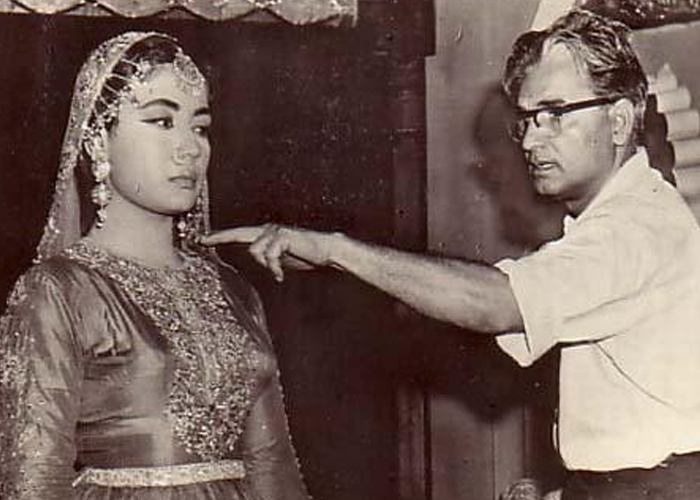
Humra Quraishi writes on two high-profile divorces – one of them is the story of Kamal Amrohi and Meena Kumari.

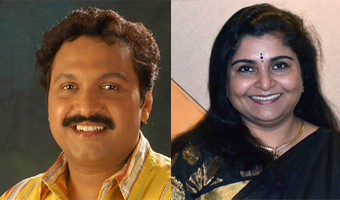
What a storm has arrived in Kerala…all hell broke loose after minister Ganesh Kumar filed for divorce from his wife of 16 years, Yamini, on grounds of harassment and manhandling. And though marital storms hit most marriages at some point of time, in our country we are seemingly well-trained in perpetuating the myth of happiness even when we’re trapped in loveless, incompatible marriages.

The question remains: why carry on a mismatched marriage and drag it to the point that it blows up all over, or in Ganesh Kumar’s case, all over the State? What is this madness of dragging along a dead marriage, whether at the ministerial level or at own homes?

Today, of course, there are some brave souls who are choosing to part ways once they sense their onw incompatibilities, but most people don’t. This latter class of people chooses to be stifled and stranded in suffocating marriages for the sake of others.

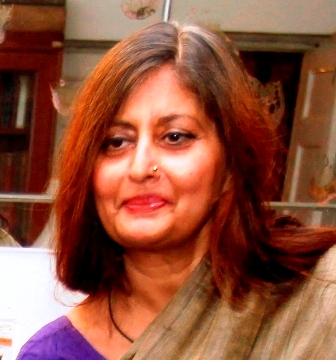
Socially, the very word ‘divorce’ is still a taboo in our society, and the minute you declare your divorced status, you are looked at with different eyes. Even strangers throw weird glances at you, if not come right out and comment on the collapse of your marriage. When I opted for a divorce after trying to drag along a mismatched marriage for 28 long years, I can’t begin to describe how people’s attitude changed towars me. Several of my so-called friends also became fence-sitters, and from their safe perch, they would throw a lot of inquisitive questions at me.

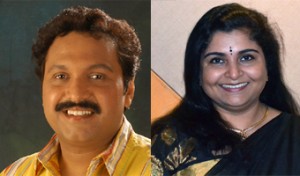
But in the last few years, I’m seeing many people ending their marriages. In my own clan, there have been eight divorces and many more are announcing the end of their marriages. It is tough to announce it, and then face the world while you soldier on alone, on a rather rough path. If only Ganesh Kumar and Yamini (in pic on right) had done exactly this, then things would probably not have taken such an ugly turn, with everyone commenting and throwing in their two cents’ worth of knowledge on the subject.
The Meena Kumari story

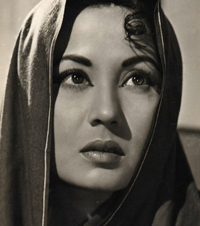
However, I still say that divorce should be one’s very last option, and it should come into play if there’s complete incompatibility and a complete breakdown of the relationship. Even as I write, I am reminded of the unhappily-married film star Meena Kumari. She died on March 31, 1972, so the last weekend was her 41st death anniversary.

I’d once interviewed her stepdaughter, Kamal Amrohi’s daughter Rukhsar-e-Zehra. I quote her from that interview, from what she and her mother went through when they’d heard that Kamal sahib was re-marrying, and marrying Meena Kumari, at that. Zehra said, “No doubt he was a romantic. Much before his crush on Meena Kumari, he was involved with Madhubala. They were about to get married, but one sentence from her – ‘Kamal sahib, leave your wife and kids and I will give them four lakh rupees – finished it all.

“And my father, whom I’d called baba jaani, had told Madhubala that he does not buy or sell relationships, and severed all ties with her…Later, during the shooting of Mahal, my mother fell ill. Her already-strained nerves could take it no longer, and I recall how baba jaani told us to go to Amroha for a change. It was while we were in Amroha that magazines carried details of his wedding to Meena Kumari.

“I also remember how the children of the locality used to whisper if I was the daughter of Meena Kumari and Kamal Amrohi. But somehow, I was never upset, because the way my mother explained it all to me didn’t make it appear like he’d done anything wrong. My mother adored him and would say with immense pride, ‘Main Kamal sahib ki begum hoon.’ People wondered how she could tolerate a ‘co-wife’, but all those talks didn’t really bother her, and that was why we children never felt bitterness towards him, nor were we affected by his second marriage.

“My mother had realised that hers was an ill-matched marriage and it took place only on the grounds that the elders wanted these two cousins to marry. She had the rare nerve to calmly break the news of baba jaani’s remarriage to me. All she said was, ‘Don’t worry.  Now you will have another ammi, chhoti ammi, to look after you.’ With such an introduction, how could I be angry with either my father or Meena Kumari?”

I’d asked her about what had gone wrong with Kamal Amrohi and Meena Kumari’s marriage. She began by telling me how comfortable she was with the late actor. “When I was 13, I went to live with chhoti ammi and baba jaani and she wasn’t the stereotypical stepmother. Initially, I wasn’t very comfortable with her, but she would tell me, ‘Jo kuch chahiye mujhe batlao, jaise tum abba jaan se kehti ho (If you need anything, let me know the same way you would let your father know).’
She would leave for her shoots early after instructing the servants that I had to be looked after properly. On her return, if she wasn’t tired, we would sit and play carrom or just talk. Though her spoken English was rather poor, she had picked up a few words to speak with me. She respected my father’s sentiments of never encouraging me to join films. I grew rather fond of her as time went by. For, besides caring for me and my two brothers, (who initially stayed with her and were later sent to hostel) whenever my mother visited  Bombay, Meena would treat her with respect and would tell her, ‘Apa jaan, yeh ghar aap ka hai (Dear sister, this is your home).’

“I never saw any clash between her and my mother. On the contrary, if my mother stitched ghararas, it would always be six – two for me, two for herself and two for chhoti ammi…’

But a discord between the husband and wife did exist. Zehra told me, “The first time a major fight took place between the two was over the abortion issue. Baba had gone out, and without his knowledge, she’d decided to abort the baby. Months after that, she went in for a second abortion. There was a severe showdown this time, too. My father was very keen on having children with her, but she wasn’t keen on it. The deterioration in their relationship started with that. Then she took to the bottle and started having flings.

“As far as I can remember, she started taking brandy as a cure for insomnia, but knowing that my father disliked any sort of alcohol, she’d have it kept in Dettol bottles and sip it on the sly in the toilet. As to why she left the home, I don’t know the finer details. That day, on returning from school, I learnt from the servants that she’d left. My father went out to try and get her back (she had gone to actor Mehmood’s house), but she was determined never to return.

“My father really loved her. Several years later, when I asked him if he still loved her, he said, ‘Yes.’”

Humra Quraishi is a senior political journalist based in Gurgaon. She is the author of Kashmir: The Untold Story and co-author of Simply Khushwant.

(Pictures courtesy ndtv.com, divorcedwomenonline.com, nowrunning.com, bollyspice.com)

Categories
Big story

Governor receives 60 representations on Sanjay Dutt pardon

Individuals and organisations have written to the Maharashtra State Governor for or against a pardon for convicted actor Sanjay Dutt. 25 petitions oppose pardon.

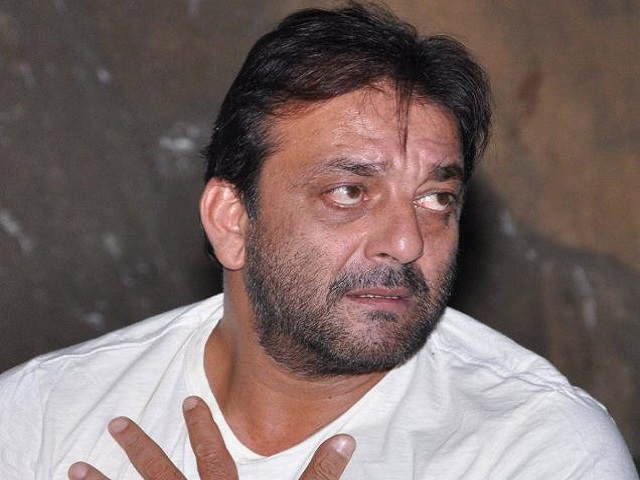
While there’s been a bit of a brouhaha over whether actor Sanjay Dutt should be pardoned for his role in the 1993 serial bomb blasts in Bombay, even as his jail stint of a little over three years comes up as decreed by the Supreme Court, the Governor of Maharashtra’s received and sent representations in the matter to the State Government for review.

As per a press release issued by the Raj Bhavan, the Governor K Sankaranarayanan’s official residence in Mumbai, the Governor has received and now sent 60 representations and petitions received by him from various individuals and organisations both seeking and opposing clemency for Sanjay Dutt. The petitions and representations have been sent for review to the State Home Department.

In a letter dated April 4, 2013 addressed to the Additional Chief Secretary to the Government of Maharashtra, Home Department, the Secretary to the Governor Vikas Chandra Rastogi has sent copies of all the representations received by the Governor during the last few days to the State Government.

The Governor had received representations on this issue from citizens and organisations from all parts of the country. These include those sent by Justice (retd) Markandeya Katju, Chairman, Press Council of India, and others. Earlier the Governor had sent the petition received from politicians Amar Singh and Jaya Prada, MP, to the State Home Department on March 282013.

Interestingly, at least 25 individuals and organisations from out of the 60 petitioners have opposed pardon for Sanjay Dutt.

What’s your opinion on the matter? Do you think Sanjay Dutt deserves a pardon?

 (Picture courtesy timesofindia.com)


Categories
Tech

Facebook announces ‘Home’ for Android smartphones

Announces the advent of the launcher, which will allow users to check their Facebook right from their phone’s home screen.
by Manik Kakra

Yesterday, Facebook held an event at its HQ, during which Mark Zuckerberg announced new paths for Facebook’s mobile users.

First of all, Facebook has launched ‘Home’. What is it? Basically, it is a launcher for your Android smartphone. But there are plenty of launchers available from the Play Store, so what’s so different about this one, you ask? Well, we haven’t yet got our hands on the launcher, as it’s going to arrive on April 12, but what is clear from the event is that, the launcher will allow users to check Facebook right from their phone’s home screen.

This means you don’t have to go into any particular app to browse through your Facebook feed. You will also get notifications, messages, photo updates, etc. right on your home screen.


Chat Head is another feature of Facebook’s new launcher for Android; with chat heads you will get to see instant message on top of whatever app you’ve currently opened on your phone. Home is where you will have all the apps from the launcher, and it will be a unified hub for Facebook on your Android smartphone. So, this Cover Feed tries to make a deeper Facebook integration in your smartphone.

Next, Facebook and HTC announced HTC First It’s a new Android smartphone, which comes pre-loaded with Facebook Home. There are no official statements about the hardware specifications or Android version that power the phone.

The HTC first sports a 4.3-inch 720p screen, and is powered by Qualcomm’s 1.4 GHz dual-core Snapdragone 400 processor, along with 1 GB of RAM. The phone comes in black, white, light blue, and RWhat’s know and will go on sale on April 12.  It costs $99.99 (approx Rs 5,485.50, on the US’s AT&T network). Zuckerberg also announced that Facebook has signed with, apart from HTC and AT&T, Sony, and Samsung. This new launcher will be supported for HTC One X, One X+, One Samsung Galaxy SIII, Note II at the launch.

There is no news about the global launch of any device that comes preloaded with Home.

We can’t say how good or bad the launcher or its implementation is, but one bad thing is that it will soon have ads. Yes. Ads right on your home screen. Let’s see how the launcher cops up in day-to-day use.

Categories
Hum log

‘The only obligation you should have is to your craft’

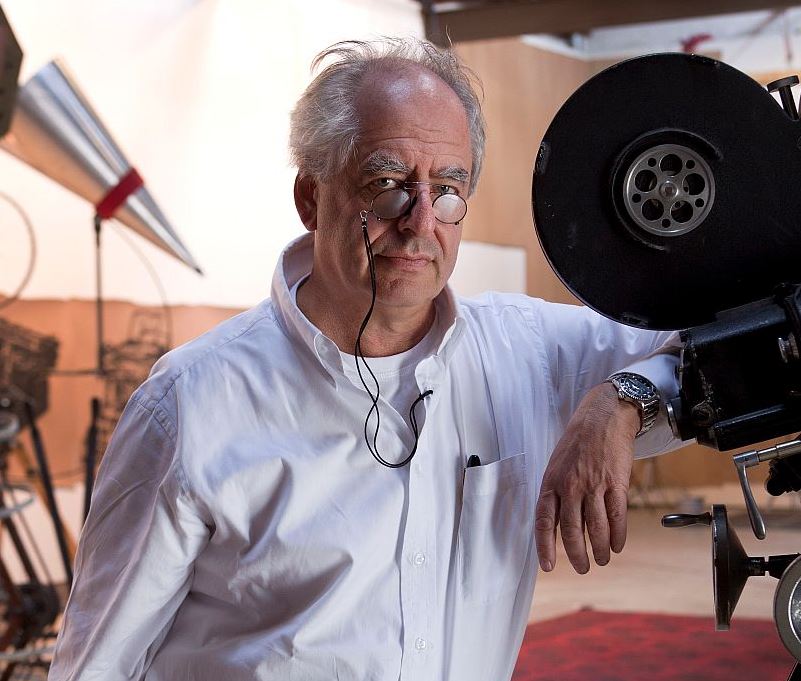
SA artist William Kentridge’s mantra is amazingly simple: he believes that to appreciate art, one just needs an open mind.
by Salil Jayakar

On a visit to India, South African artist William Kentridge and his wife were taking a walk through the lanes of Colaba, Mumbai. His wife saw a sign pointing to Tushar Jiwarajka’s Volte Art Gallery, where the artist and the gallery owner had a chance encounter. Jiwarajka expressed his desire to exhibit Kentridge’s work and the rest, as the saying goes, is history.

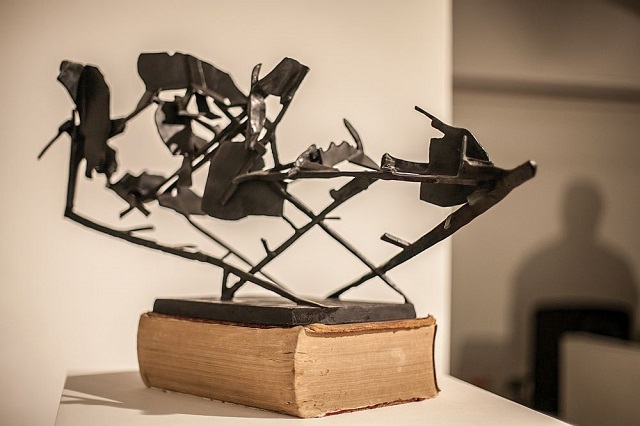
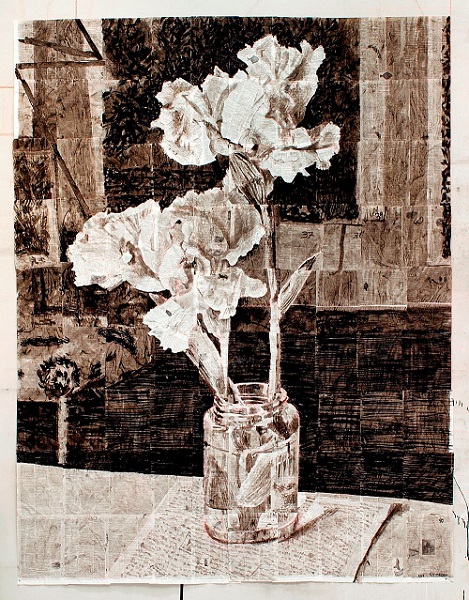
‘Poems I used to know’, Kentridge’s first solo India exhibition was showcased at Volte for nearly two months from February to March this year. It included ‘I am not me, the horse is not mine’, an installation of eight projected film fragments, a series of flipbook films, two large drawings over multiple book pages, fragmented sculptures, a large tapestry, and several prints.

Now back home in South Africa, Kentridge expressed his “delight” to have an exhibition in Mumbai. “I was curious to see how my work would be received in a post colonial country other than South Africa, outside the periphery of Europe or America where I usually showcase my work,” he says.  According to him, the reality of atrocities isn’t native only to South Africa or India. “Every country has had its fair share of demons to deal with. The core theme of many of my works wishes to drive home the unifying point of finding that elusive form of optimism amidst the disparaging gloom surrounding us.”

An artist, painter, sculptor and theatre and opera director, Kentridge’s work has been seen at the Metropolitan Opera and the Museum of Modern Art (MoMA) in New York, the Louvre and the Jeu de Paume in Paris, the Albertina Museum in Vienna and La Scala in Milan. He received the Kyoto Prize in 2010. Yet, for all his work with different mediums and formats, charcoal paintings are a favourite. “All my work is rooted in drawing, as a primary medium. I guess charcoal paintings would be a personal favourite,” he says.

Kentridge confessed that he has a limited understanding of the art in India and knows very little about India’s art world. At the same time he saw a lot of similarities between the work done here and in his home country of South Africa. As he puts it, “I am astonished at the range of work and the ambition of scale that is being done here. Having seen work by a few well-known Indian artists, I look forward to discovering more in my subsequent visits to the country.”

For artists worldwide who are constantly in conflict with people and religions for offending sensibilities or hurting religious sentiments, Kentridge firmly believes that an artist has no obligation to either. “Your art is your own and the only obligation you should have is to your craft.”

Finally, for the layman who has no knowledge of art, Kentridge has these words of advice, “Anybody can appreciate art. You don’t have to be an art aficionado. All you need is an open mind to embrace creativity.”

(Pictures courtesy William Kentridge)

Categories
Event

Osian’s Indian miniatures auction on April 13

Historically-significant Indian miniatures, modern art pieces include Mandi School works which had left India in 1960s before being purchased back.
by Osian

Opening its new annual calendar of auctions, Osian’s is bringing together a wide range of historically significant Indian miniatures and modern art in its Forty Masterpieces Auction to be held on Saturday, 13 April 2013, in Mumbai.

The opening preview exhibition of the Auction will be held at 7 pm on Friday, April 5, at the Osian’s Headquarters at G-2B Nariman Bhavan, Nariman Point. The Auction lots will be available for private previews at the same site from April 6 to April 12, 2013.

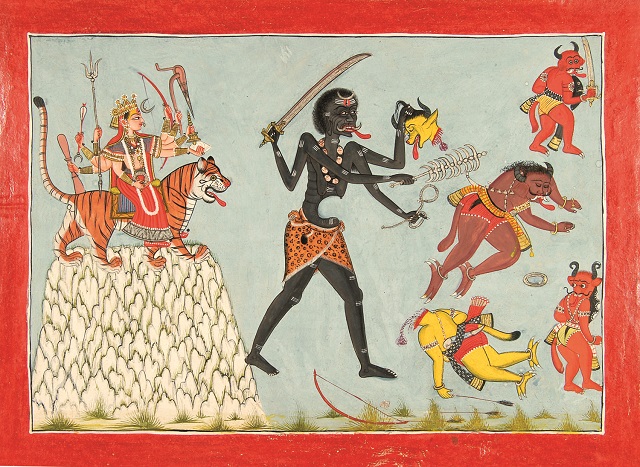
The auction comprises of 40 lots and is valued at the lower estimate at approximately Rs 5.6 crore (higher estimate Rs 8.4 crore; with average estimated lot price range Rs 14 to 21 lakh). Among the highlights in the section on Indian miniatures, there are some brilliant Mandi School works from the Ramayana and Devi Mahatmya series originally from the Royal Mandi Library Collection, which had left India in the 1960s and was purchased back by Osian’s from various Sotheby’s auctions to bring them back to India in 2005-2006. These works cannot be exported out of India now.

A few highlights among the masterpieces of the Modern Art Section include the works of Modern Masters of the Bombay, Bengal and Baroda School. The Auction includes a very rare and brilliant little work by early academic school modern master, Rao Bahadur MV Dhurandhar; rare and important paintings by Abanindranath, Gaganendranth and Rabindranath Tagore; a magnificent large oil on canvas painting by the master artist of both India and Pakistan, Ustad Allah Buksh; Jagdish Swamninathan’s  famous ‘Bird, Tree, Mountain’ Series purchased from the artist in 1979; the very best early etchings by master printmaker Laxman Goud on which his fame was established; leading British sculptor, Sir Jacob Epstein’s famous bronze Head of Pandit Jawaharlal Nehru; Himmat Shah’s uniquely brilliant signature style terracotta heads; an impressively large commissioned portrait by Hemendranath Mazumdar and powerfully evocative paintings by the masters DP Roy Chowdhury, Ramkinkar Baij, Sanat Kumar Chatterjee, and Nikhil Biswas among many others.

Regarding the consolidation and re-strengthening of the Osian’s Group and the Auction House, Neville Tuli, Chairman, Osian’s Group says, “For the first time we have a fixed annual calendar for the Auction House, ranging from auctions for the antiquities, fine and popular arts, to film and sporting memorabilia, to rare books, prints and photographs. The Auction House has been separated from all other activities (eg. the film festival, the conservation laboratory, the museum, and the like) so as to make it a specialised leader once again and to start rebuilding the market for the India’s arts, culture and heritage. The last few years have seen immense pressures and challenges, and they have only made us recognise that the unique business model for the arts needs ever more diligence, buffers and care. A strong art market is pivotal for the growth of knowledge and the spreading of awareness and sensitivity regarding one’s cultural heritage.”

(Pictures courtesy Osian’s) 

Exit mobile version