Categories
Cinema@100

‘Pakeezah and Umrao Jaan were first made in Pakistan’

Pran Nevile, the man with a passion for musical tribute concerts, talks about organising a music concert night in Pakistan.
by Humra Quraishi

Pran Nevile is passionately obsessed with the bygone era. For one reason or another, this retired diplomat is rather fascinated by the past, and the dominant personalities of the day. This is amply evident from the volumes that he has authored: Love Stories from the Raj, Nautch Girls of India, Beyond the Veil, Rare Glimpses of the Raj, Stories from the Raj: Sahibs Memsahibs and Others, K.L. Saigal: Immortal Singer, and Lahore — A Sentimental Journey.
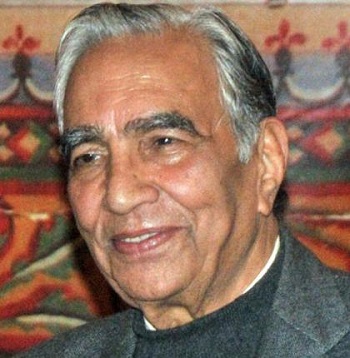
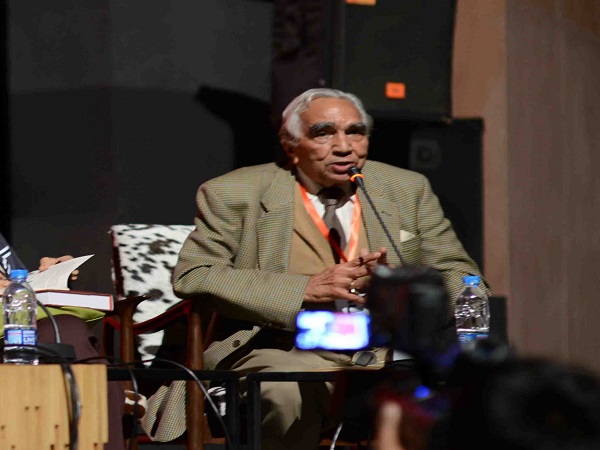
pran nevileIf one were to move from the books he has authored to the musical programmes he holds, then once again, what strikes you is his focus on stars, singers and performers of yesteryears — right from KL Saigal, Suraiyya and many others who have left a mark on generations of filmgoers. Credit goes to Nevile for putting together ‘gems’ from old music albums, recordings and more.

Pran Nevile, the man
As a retired civil servant he could have sat back and relaxed with the comforts that come with retirement, but he chose to pick up a pen and write. “No, no typing on computers for me,” he once told me. “I have written several books with my pen.”

Nevile is rather obsessed with the bygone era and the characters who flourished then. His focus is on that period, and even the musical programmes he arranges focus on yesteryear stars. Each of these musical evenings has seen a packed auditorium with the audience sitting lost in nostalgia.

Perhaps he is able to strike a chord because he carries a welter of emotions within, something which probably started when he was forced to leave Lahore as a very young man. As he writes in his preface to his book on Lahore, “This book on the Lahore of my days was conceived in the lonely dining room of Hotel Astoria in Geneva in November 1963. I was having breakfast when I heard someone calling out to me in Punjabi, `Motian aleo, Hindustan de o ke Pakistan de?’ (Prince of Pearls, are you from India or Pakistan?)’

“I looked back, responding promptly, `Bashao aao baitho, main Lahore da han‘ (Your Royal Highness, please come and sit down, I hail from Lahore). In no time we became very friendly, a blend as it were, of ghee and khichdi (clarified butter and curried rice) and talked about our glorious city. The conversation released a flood of memories deeply impressed on my mind for decades. I have tried in these pages to commit them on paper.”

The Pakistan angle

And what is refreshing is that in the epilogue, written after he revisited Lahore after several decades, in 1997 and again in 1999, he does not indulge in bitterness or Pak-bashing.
Recently, on May 16 to be precise, I spoke to him in the backdrop of Nawaz Sharif coming to power in Pakistan. Was there, I wondered, a chance of improvement in Indo-Pak ties, and does he plan to take his musical concerts across the borders to the country of his birth?

“I plan to go to Pakistan around September this year,” he said, “and in all probability, I plan to show this documentary I have made there. It is called Indo Pak Musical Journey.”Pakeezah
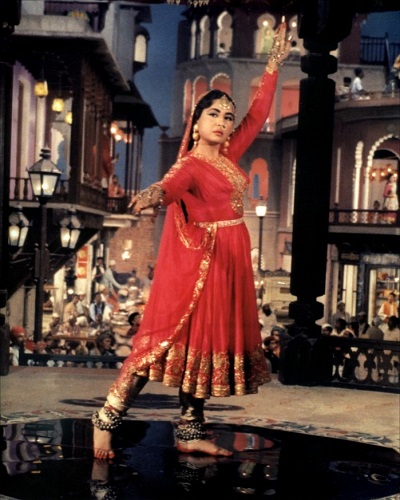
He chatted on about the similarities in the cinema of the two countries. “When in India we made the film Anarkali, they later made the film in Pakistan with the same title. Then Pakistan made Pakeezah and Umrao Jaan, before these films were made in India (see pic on right). One Pakistani film, Naukar Woti Da, was copied in India totally, scene by scene. The only thing they did was change the title from Punjabi to Hindustani, making it Naukar Bibi Ka.”

I asked him how the common people of both countries could relate and co-exist, and he said, “The bureaucracy doesn’t seem interested in people connecting. What happened to those earlier talks of ‘no visas for senior citizens’? There are so many over 60 years of age keen to visit each other’s countries. All those promises of people visiting each other from across the border…the bureaucracy is not really bothered to see this happen.”

(Pictures courtesy www.thehindu.com, www.lahorelitfest.com, bollyspice.com) 
Categories
Achieve

The artist of the opera

Mumbai’s Ratnadeep Adivrekar is the first Indian artist to exhibit his work at Wagner’s magnified opera in Germany, this month.
by Medha Kulkarni

It is said that when art beckons, all one can do is follow it.

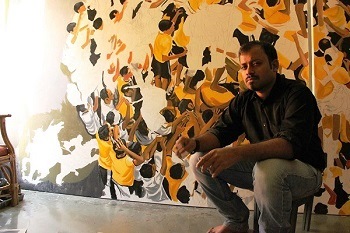
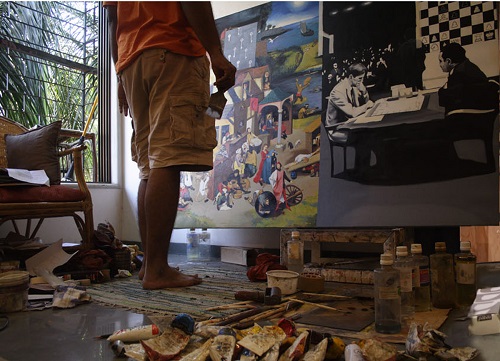
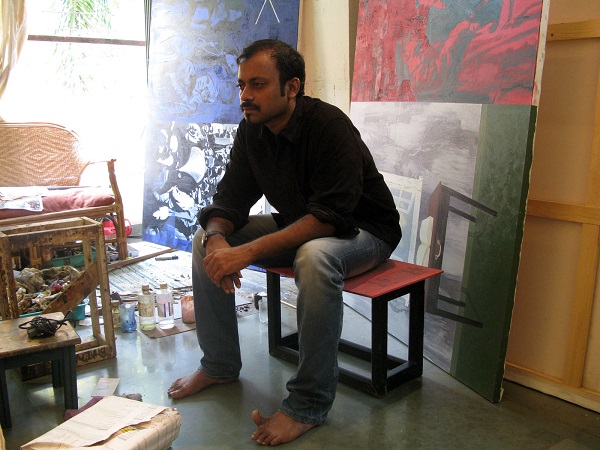
Ratnadeep in his studio This was certainly the case with Goregaon-based artist Ratnadeep Gopal Adivrekar. The son of two artists, Ratnadeep (39) grew up in a home surrounded by art, and rebelled against it by opting to study Science instead. He pursued the subject determinedly until one day, in a sudden moment of clarity, he realised that all he wanted to do was paint. Since that day Ratnadeep has not looked back.

His journey as an artist began in 1997 and the road came with its ups and downs. However, Ratnadeep relentlessly pursued his art and today he is poised to become the first Indian artist to exhibit at the internationally celebrated Wagner’s magnified opera.

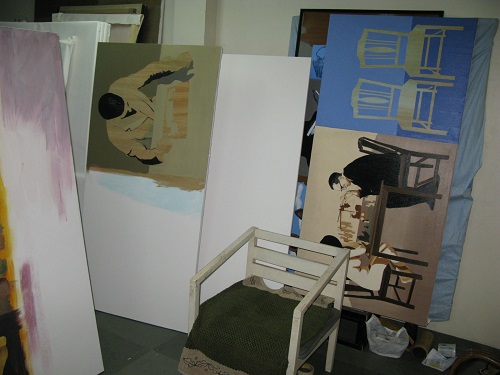
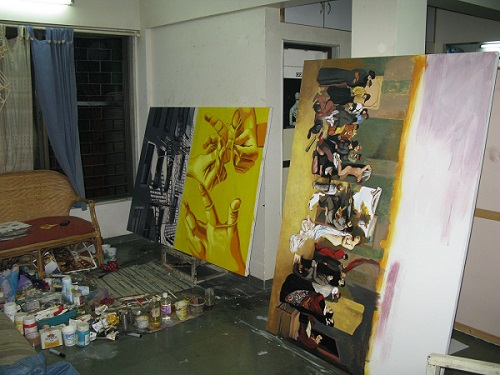
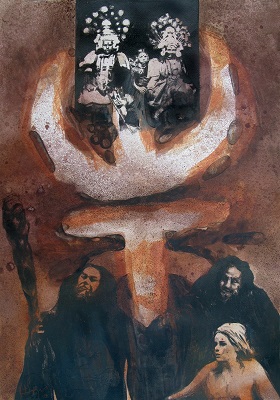
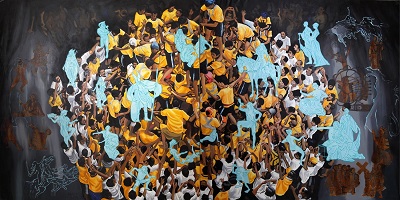
The exhibition consists of 16 works (see two examples below left and right), 10 of which are oils on canvas and the rest are charcoal and acrylic works. The works will travel to different cities in Germany for three weeks before being housed in the permanent collection at the Wagner Museum on July 19. The oil paintings represent iconic scenes from Wagner’s most celebrated operas and the charcoal and acrylic works try to paint a picture of the man himself, his life and the magic that has kept his works alive.

One of Ratnadeep's works to be shown at GermanyWhen asked what the most challenging part about working with his chosen medium was, he said, “Oils are suitable for large works, but the advantage of working with oils is also its disadvantage. The idea has to be pre-determined. One cannot go with the flow as is the case with charcoal and acrylics. However, with charcoal and acrylics, there is no room for error. One wrong brushstroke, and I have to start from scratch.”

It took one and half years of gruelling work to make this exhibition a reality. Ratnadeep spent some time in Germany, studying Wagner’s works. He also went to several operas and met with distinguished opera conductors to understand the nuances of an opera. “Western music is very different from Indian music, but Wagner’s operas have a lot of themes which are common to the Mahabharata as well, and that’s where I drew my inspiration from,” he says. Wagner operas were inspired by Nordic tales and the themes of love, power, greed etc. are common to those as well as the Mahabharata.

The conceptual style of the works shows layering and this reflects the multi-layered nature of Wagner’s operas themselves. Synthesia means a direct visual translation of music into paintings. “I didn’t experiment with synthesis as it tends to create very subjective work. I wanted my works to be accessible by a broad cross-section of viewers,” explains Ratnadeep.

According to him, the Wagner show is his “greatest artistic achievement to date”. The most challenging part, he elaborated, about working on this imageshow was the pan-cultural association. However, the works have been received well and he’s looking forward to the opening of the show on July 19.

On being asked if he would do more shows based on music he laughed and said, “No. Not for a long time at least.” Ratnadeep also has a solo show at the Tao Art Gallery in Mumbai later this year.

(Pictures courtesy Ratnadeep Gopal Adivrekar)

Categories
Event

You can now study the Aryan problem

Sathaye College launches three beginners’ courses on ancient Indian culture, Buddist Studies and Sanskrit in collaboration with Vikas Adhyayan Kendra.
by Shubha Khandekar

To a lay person, the historical ‘Aryan problem’ means only two things: one, the Indians who claimed this identity and composed the Rig Veda in the hoary past and two, the ‘Aryan race’ that became the chief intellectual weapon of Adolf Hitler for unleashing World War II.

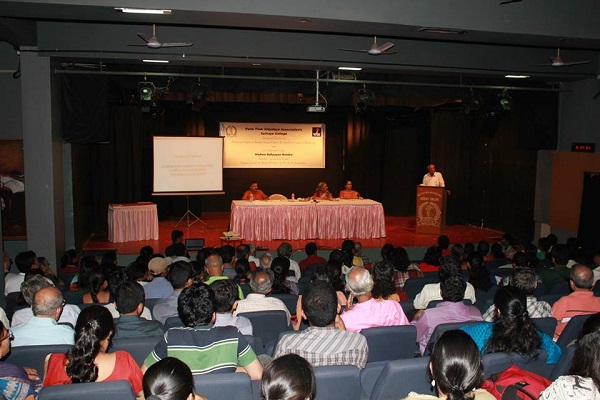
Aryan ProblemBut as Dr AP Jamkhedkar, former director of the department of archaeology, Maharashtra state and vice president, the Asiatic Society of Mumbai,  explained the genesis, development and the current status of “The Aryan Problem”, the audience sat, rapt, at Sathaye College as the multidimensional nature of this centuries old academic challenge unfolded before them.

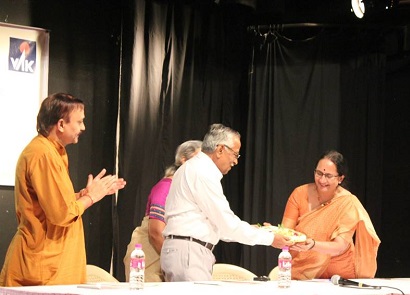
He was speaking at the inaugural function of three beginners’ courses launched by the Sathaye College in Vile Parle on Saturday, July 6, which also happened to be his 74th birthday. Professor Gauri Mahulikar, head of the department of Sanskrit, Mumbai University presided over the function.

The three independent but organically inter-related courses are Ancient Indian Culture, Buddhist Studies and Sanskrit, in collaboration with Vikas Adhyayan Kendra. They will be run as part time one-year courses during weekends and the only qualification for admission, as announced by the principal Kavita Rege is, “the passion to learn”. Sanjay Kelapure of Vikas Adhyayan Kendra revealed that the Kendra is engaged in creating an India-centric world view by promoting Sanskrit even in the neighbouring countries of the subcontinent.

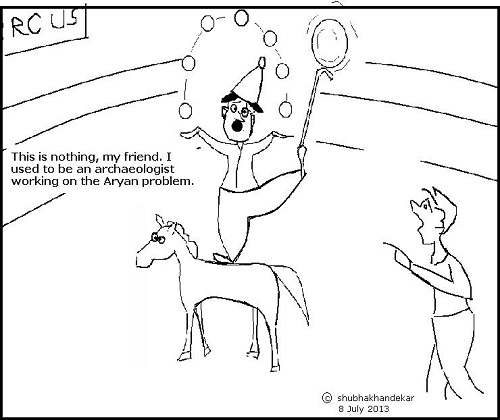
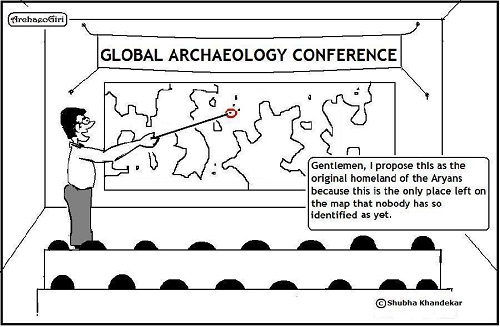
It would be rare to find an archaeologist in India who has not been tickled by the ‘Aryan problem’ at some stage in his Aryan Problem, cartoon by Shubha Khandekarcareer. Tracing the emergence of the theories about the original homeland of the Aryans from the Arctic Circle to Scandinavia to Central Asia to India, Dr Jamkhedkar meandered through the contributions of the linguists, anthropologists, historians, archaeologists, mythologists and many others towards an identification of the elusive Aryans. The crux of the problem is, that although the Rig Veda constitutes the oldest extant corpus of hymns composed by people who proudly declared themselves to be Aryans, they seem to have left behind no archaeological remains anywhere in the world that can be unequivocally correlated to the Rig Vedic narrative.

Dr Jamkhedkar described how linguistic similarities were noticed by early Europeans who stepped into India and thus evolved the concept of a common Indo-European ‘mother language’ in the past. “As evidence piled up from across parts of Europe and Asia, it became necessary to search for corroborative archaeological proof of the Aryans,” he said, describing how the Bogaz Koi inscription dated to 1380 BCE, the Avesta, the Andronovo culture of Western Siberia, the domestication of the horse – an animal so highly extolled in the Rig Veda, and the soma plant – all were harnessed towards the identification of the Aryans – to no avail!

“A search nearer home yielded some clues in the form of recent archaeological material from sites in Haryana as well as those in West Asia. Records found in West Asia, which are contemporary with the Indus-Sarasvati civilisation, considered pre-Aryan, have about 40 to 50 names of Sanskritic origin! This could mean that the Indus-Sarasvati civilization was not Dravidian in character as has been claimed for long by many scholars. And it could also turn on its head the earlier theory that the Aryans were neither the destroyers of the Indus-Sarasvati civilization, nor immigrants pouring in peacefully in groups after groups, but were in fact part and parcel of the Indus Sarasvati civilisation!”

AryanHome_01Many scholars in India, particularly Dr MK Dhavalikar, have proposed, on the basis of circumstantial archaeological evidence, that the so-called Late Harappan people, the residue of the glorious Indus-Sarasvati civilization, were in fact the composers of the Rig Veda, and hence, by inference, the Aryans.

To unlock this ‘riddle, wrapped in a mystery, inside an enigma’, a description that Winston Churchill had used for Russia, but could well fit the ‘Aryan problem’, Dr Jamkhedkar said that a thorough knowledge of Sanskrit has emerged as the main key. “For this reason, the courses on Sanskrit and Ancient Indian Culture started by Sathaye College become complementary and integral to each other,” he said.

Dr Mahulikar pointed out that since a lot of Buddhist and Jain literature is composed in Sanskrit, “political biases should not be allowed to stand in the way of acquiring knowledge of this classical language, which is crucial for unravelling the secrets of the past.”

Admissions are open till Saturday, July 13, 2013. Contact Suraj Pandit on 9930830834/surajpanditkanheri@gmail.com, or Sandeep Dahisarkar on 9930774241.

(Pictures courtesy Siddharth Kale, cartoons by Shubha Khandekar)

Categories
Learn

SMSes to remind Mumbaikars on eco-friendly Ganpati

BMC is, once again, stressing on eco-friendly Ganesh idols and less banners this year. Question is, are the citizens listening?
by The Editors | editor@themetrognome.in

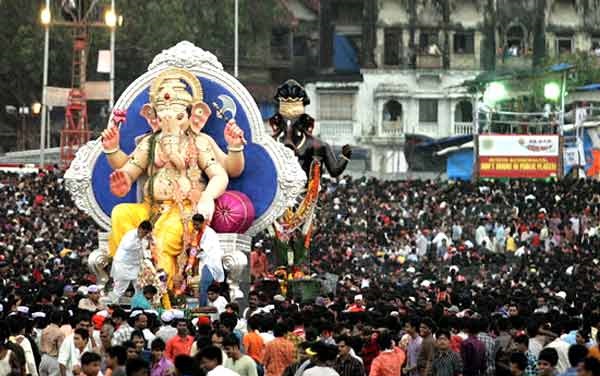
Ganesh Chaturthi is still two months away; September 9, to be exact. But preparations for the Raja of Mumbai are already underway, with idols being prepared and readied for private residences and public pandals all over the city.

And like every year, the Brihanmumbai Municipal Corporation (BMC) is exhorting citizens to opt for eco-friendly idols, not Plaster of Paris (POP) ones.

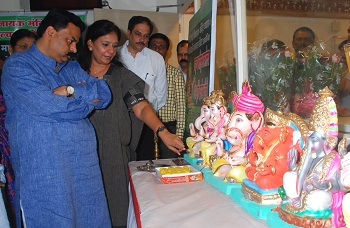
Eco friendly idolsTo this effect, says Mayor Sunil Prabhu (in pic on left, inspecting eco-friendly idols in Vile Parle), the BMC will also send out regular text messages to people in Mumbai to create awareness of the issue – recently, the Chief Minister and Deputy Chief Minister of Maharashtra, Prithviraj Chavan and Ajit Pawar, had taken the phone route to send personalised voice messages asking people to save water during Holi. Prabhu says, “Apart from sending text messages, we are hoping to create awareness about the many benefits of purchasing eco-friendly Ganesh idols.

Not only do these idols dissolve completely during visarjan, thus sparing us the horrifying spectacle of half-dissolved POP idols still left behind in the city’s major water bodies, but these idols afford employment to several women’s groups and marginalised sections in society. We are even charting out a plan to go door-to-door in the city to ask people to buy eco-friendly idols – they are just as beautiful without any of the environmental hazards associated with POP idols.”

Interestingly, despite repeated requests every year, the city’s major Ganpati pandals still boast of POP murtis.

The BMC is also going to insist on only two banners announcing each sarvajanik Ganpati in the area, and will take strict action against those who festoon the streets with lots of banners.

(Pictures courtesy festivals.iloveindia.com, BMC)

Categories
Overdose

Sar utha ke jeeyo

When will we finally realise that a beautiful world full of wonder exists around us, not inside our smart phones?
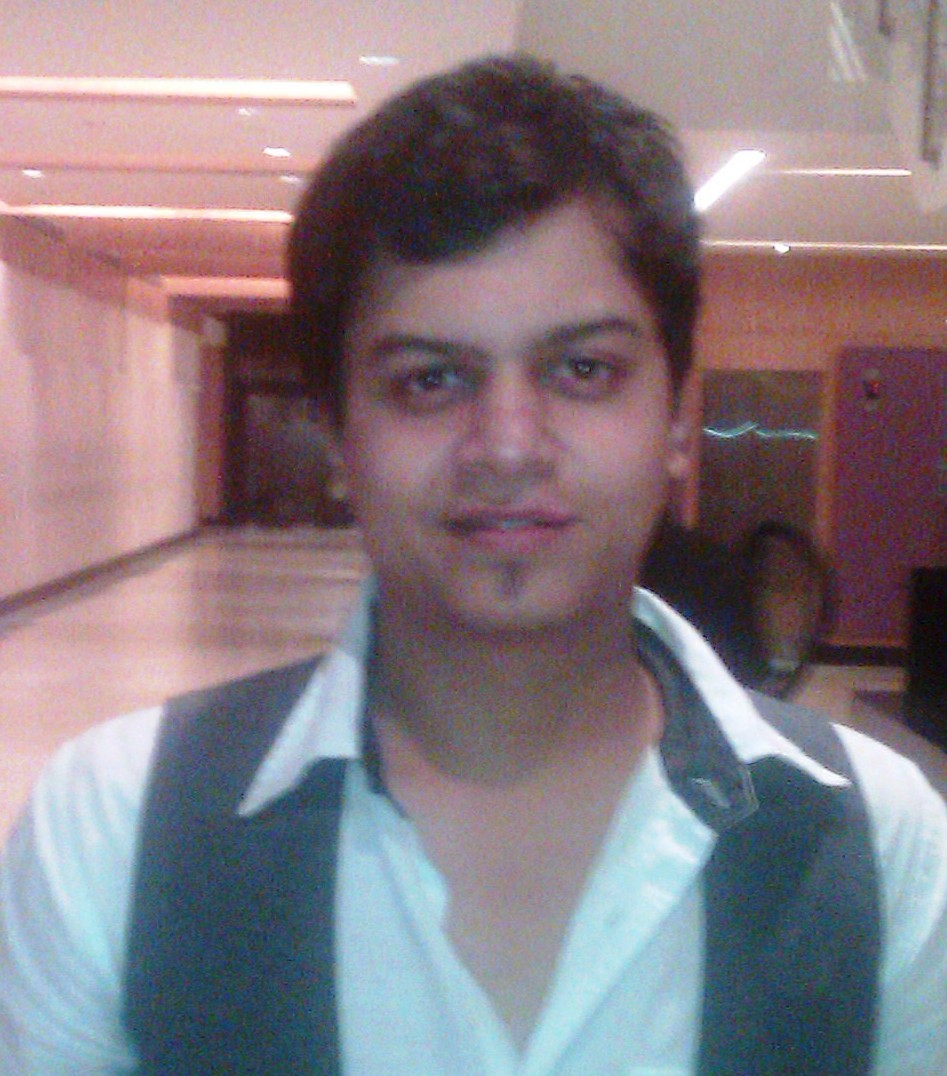
Jatin Sharmaby Jatin Sharma

I read recently about this girl in Mumbai who was listening to music on her phone while on the street. She couldn’t hear the sounds around her, was hit by a bus or truck and she died.

While I commisserate with the girl’s family over this tragedy, I must say that I was not very surprised to learn of this fatality. Let’s just say I was even expecting to hear about something like this for some time.

There is a new disease afflicting most of us in the world. It’s called ‘phone-buried’. Earlier, people used to walk straight-backed, with a purpose. Now they slouch, not seeing what’s happening around them. Even if they were to be hit by an oncoming truck, they wouldn’t even time for the proverbial famous last words in a speech as they died, but their last words would be capsuled in a text message they would be typing at the time of impact. Or they would probably even take a pic of the incoming truck and tag it with,”Woohoo you won’t believe a truck is gonna hit me!!!!”

The disease of being phone-buried runs so deep that even when one meets friends for dinner, all of them are engrossed not in actual phone dinnerconversation with each other, but in Whatsapp. And when their food arrives, they take a million pictures of their food to show the world where they are, prefixing everything with “YUM!!!”

The essence of NOW is slowly killed as we always live in the past and the future, where we are either reading the comments received on our pics or contemplating how many likes our pics are going to get. If we are ever in the present, we are wondering which pics to still add to complete our virtual album.

What’s even more disheartening is that even when we are out having a walk with a loved one, we are glued to our phone all the time. I consider this a social crime punishable by hanging to death, at least in my head. How can you treat someone who is with you at that very moment like dirt? And when it comes to that, how can you be on the phone ALL the time?

phone sexWe eat, drink, breathe and think only about the virtual world nowadays, and that’s because of our smartphones. A simple ‘Like’ or a ‘retweet’ is what we crave for, and when we do get them, it’s like we’ve won the Nobel Prize. Whatsapping and looking at the ‘last seen’ column gives us the satisfaction of actually looking at that person.

The social life that used to be has all but disappeared because of our preoccupation with our virtual social networks. The people who are physically present around us are no more important; they are just background noise! The rising sun and the sunset are just mere subjects for Instagramming. Sadly, all beautiful natural phenomena exist today in a world where gadgets are taking over human emotions.

Even our sleep is now not without its share of interruptions – we hear our phones buzzing at regular intervals and keep checking our phones for new emails and alerts. Our phones are becoming a nightmare that for now, to phone users, seems like the most beautiful dream.

It’s time that we open our eyes and give value to the real things around us. Like the words that touch our hearts and not the emoticons that remind us of an emotion. Like the people smart-phoneswho are really our friends and standing next to us and not the ones who are tweeting or retweeting or liking where we are, at their convenience. Do respect the people who are around you, because burying yourself in your phone when in company is a sign that you are a dumb person with a smart phone.

And hey, watch out for that truck.

Jatin Sharma is a media professional who doesn’t want to grow up, because if he grows up, he will be like everybody else.

(Pictures courtesy www.dialaphone.co.uk, www.mid-day.com, mattjabs.com, www.chatelaine.com)

Categories
Enough said

All things bright and beautiful

A new book on the ancient Indian ‘shringara’ tradition brings to mind all that’s best in our beautiful country.
Humra Quraishiby Humra Quraishi

I believe that our lives in the good old days were simple and good for our overall psyche. Those ways should be brought back. Our food and lifestyle, our ideas of beauty, even the very fabric we chose to wear next to our skins jelled with the climate and our living conditions.

Cottons and khadi are apt for our summers and the humidity, yet we ditch them for synthetics and polyesters. This brings to mind an incident, several years ago, when Delhi- based art historian Jyotindra Jain had gone to meet writer Mulk Raj Anand. The first thing that the writer did was to send Jain to the nearest Gandhi Ashram so that the latter could change his clothes – his trousers and synthetic shirt – and slip into a more comfortable and suitable khadi kurta pyjama!

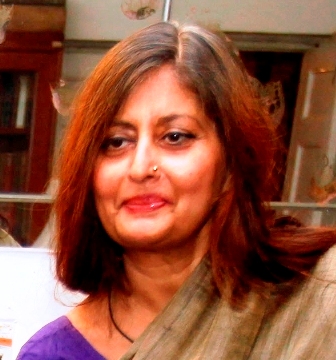
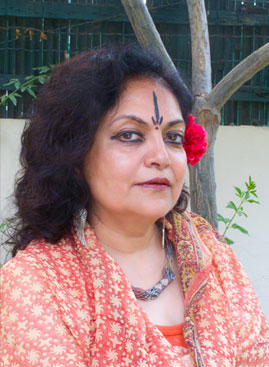
Another thing to bring to mind my present preoccupation (for this column) with healthy living and beauty, was writer Alka Pande’s alka panderecently published book, Shringara – The Many Faces Of Indian Beauty.

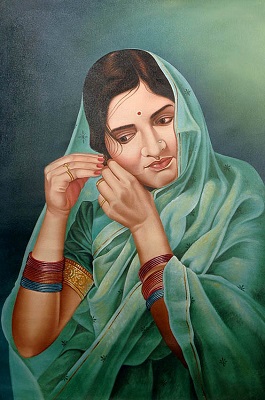
Right on the front cover is this overwhelming photograph of Indian woman clad in ethnic clothes, while the back cover has a woman from a bygone era getting her somewhat bare body massaged; she is in a semi-Kamasutra pose, but as you sift through the pages, you understand that the underlying theme is shringara. The book takes you through shringara in verse, paintings, architecture, form and figure.

As Pande elaborates, “As an art historian, I’m often asked to define beauty in a word, phrase or even as a concept. I see beauty essentially as a value connected to the perception of different alternative aspects of human emotionality. When we perceive something that is in harmony with nature and generates a feeling of joy and pleasure within us, we describe it to be beautiful…”

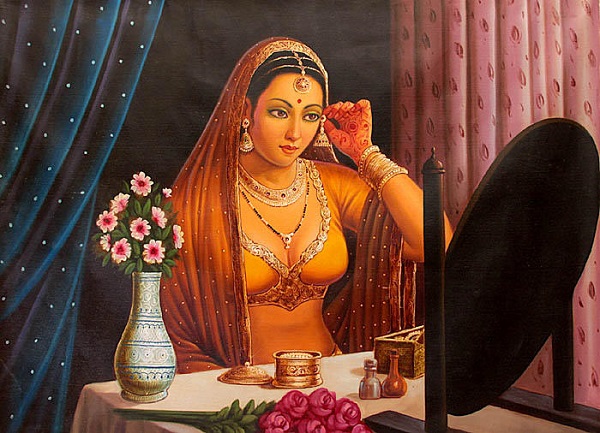
shringar of the ladyShe adds, “Today, the cultural diversity of India faces the pulls and pressures of tradition and modernity, rural and urban, folk and classical, and most importantly, local and global. Shringara, too, faces the challenges of perception, where the beauty of adornment and the beauty of ugliness are two sides of the same coin…this is a time to ask important  questions on the concept of beauty: Has the morphology of the old nayika been given up for more westernised perceptions? Has there been an Indian renaissance, apart from path-breaking initiatives of AK Coomaraswamy and Rabindranath Tagore? Who are the new patrons of Indian art?”

What I took away from this book was not just the easy flow of words, but also the pictures and graphics that merged seamlessly with the narrative. It nudged me to introspect, perceive more, think of all that’s beautiful in our land.

(Pictures courtesy alkapande.com, www.exoticindia.com)

Exit mobile version