Categories
Kharcha paani

Single? Want to rent a house? Read this.

Buildings try to discourage single women from renting homes. But there are ways to get the house of your choice.
by The Editors | editor@themetrognome.in

In recent years, we have heard of incidents where single women found it difficult to rent their own house in Mumbai. The reasons for this are wide-ranging – while some building societies have been openly hostile, putting up circulars restricting the renting out of homes in their premises by single women, others have been more covert.

By law, nobody has the right to refuse a person wishing to buy or rent a house on any basis except non-conformity to rules and bylaws, and on no grounds can religion, caste, personal habits, occupation and gender play a role. However, increasingly, these very factors are coming into play.

Why target single women?
Traditionally, our society’s patriarchal mindset accepts the image of the man as being the provider. Hence, any transactions of property and major investments are ‘supposed’ to be the purview of the man. “There are many people, even in this day and age, who insist on renting their homes out only to families, and definitely not to single women,” says Rajendra Patil, an estate agent based in Borivli. He says that some home owners feel that ‘single women will not pay the rent on time, they will bring men home, and that families are more reliable.’

“We receive many requests for homes from single working women, but I have had to turn them away on several occasions.” Patil says that two flats that he has been hired to broker come with the strict instruction that the flats would not be given to any single women or men. “Not all home owners are this rigid – but most of them are,” he says.

Adds Richen D’Souza, a real estate broker from Vasai, “I think people became more wary [of renting out/selling flats] after some crime incidents came to light involving single women (such as the Neeraj Grover case, the Alok Tikku murder), and even if single women can rent flats, their backgrounds are checked first. And women from the film and TV industry are not given flats at all.”

What do the bylaws say?

handing over house keys“According to bylaws, a society can never have an official rule that disallows single women from buying or renting property, whatever industry or caste they belong to,” says Pankaj Ahuja, a partner at a real estate firm in Juhu. “But building societies do impose their own rules. A woman belonging to the entertainment industry is a big negative, and recent high-profile crime incidents are responsible for that. Another major hurdle is the unofficially designated ‘vegetarians only’ societies, for example, where a majority of the society’s members are vegetarians. In such cases, others can’t even order non-vegetarian food. There are many societies that insist on only vegetarians buying or renting the flats.”

Says Khyati Parmar, a PR professional who has leased a house in Andheri, “I had to use a contact in the local police station so that my police verification process (after the registration of lease was done) would go smoothly and I would get the house. I also ingratiated myself with the building secretary and chairman, so that they would have a good opinion of me. Before this, I was turned away by at least three buildings that did not want to rent the flats to me despite the flats lying vacant.”

How can you bypass these obstacles?
It seems unfair to be refused a house because of your religion, occupation or gender, but you must be careful and look for ways to get the transaction on the board. Try these tips:
– Do your research. Ask your single friends where they stay, and how the building society treats single women tenants. Look for a house in the same building, or in the same locality. Not all building societies impose a blanket ban on single women.

– Approach a real estate broker who can help you zero in on a location, because they know which client will be favourably disposed to renting to a single woman.

– Always insist on your rent agreement being registered, for your own safety. This will ensure that you are not unfairly evicted without sufficient notice. Also insist on a lock-in period of six months, during which the owner cannot evict you to accommodate another party paying a higher rent.

– If you are working and single, says Ahuja, you can try and put the building at ease by furnishing a work experience letter and character certificate from your company. “Or even better, look for a company lease, wherein the company directly pays the lease from your salary,” he says.

– You have the right to refuse to furnish a proof of income.

– Try not to force your way into a transaction. “You may be right from a legal standpoint and you may get a house after throwing a lot of technical jargon at the building society,” says Ahuja. “But if the society is vindictive, it will get back at you in some way. There was a case when a woman was given a nightmare of a time by the society, till she finally left.”

– If you work in the entertainment industry and are a single woman, you will have to be extra careful. Says Ahuja, “Look for a building which is planning redevelopment soon. The people in these societies are keen to get anyone to ensure they get rents till the building actually goes in for redevelopment.” Again, an estate agent can help you find such buildings in the locality.

– Understand the society’s rules. However, do not agree to any rules that will impede your timings or lifestyle. “Some buildings insist that all members should be inside the premises by 11 pm or they will lock the main gates. Such restrictions cannot work for those whose offices are located far away or whose working hours are erratic,” says D’Souza. Additionally, insist that your flat owner cannot visit you unannounced.

– Take care to not disturb other members or have people walking in and out of your flat all the time. “Though who comes to your house is your business after you sign the lease, buildings still look for ways to curb visits from outsiders,” Patil says. Try not to throw parties at your place, and if you must have friends over, ensure that they don’t make noise and that your visitors don’t step outside your house after 10 pm. Visitors must also not insist on using the building’s parking space.

– Ahuja cautions single women from going the other extreme, however, and having nobody ever come home. This can put the woman in a vulnerable position as well. “Ask a family member to stay with you for a few days each month, so that the building society knows you are not alone,” he says.

– Ensure that you get an expert to look into the various clauses of your agreement. “Some owners try to act extra smart with single women, especially single women with children,” says D’Souza. “They wrongly assume that women don’t much look into the technicalities of the transaction and will blindly follow instructions. It is better to hire an estate agent you can trust, and even better to take the agreement copy to an expert who can see if whatever is being promised will be delivered in the deal.”

 (Pictures courtesy houseplansandmore.com, anchorsholme.org.uk)
Categories
Cinema@100

Finding her feet after marriage

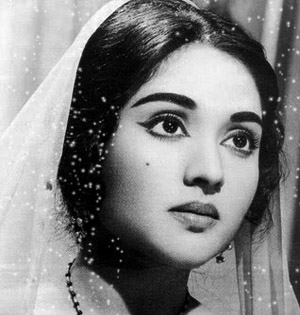
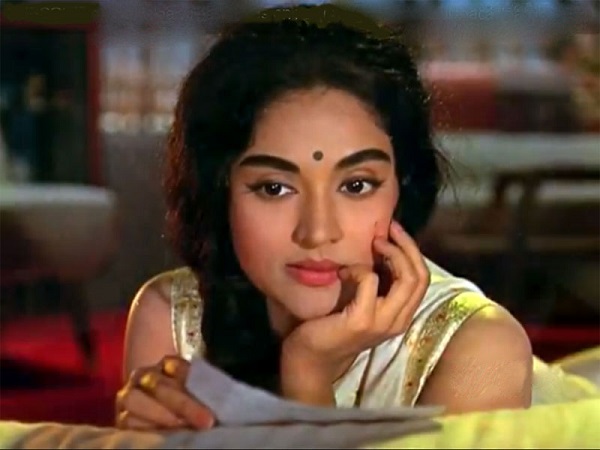
Vyjayantimala Bali combined beauty with formidable dancing and acting talent, but it was her marriage that actually helped her blossom.
by Humra Quraishi

I first met dancer and actor Vyjayantimala Bali in the spring of 1990, here in New Delhi, at the Kamani Auditorium. But whenever I met her even after that first meeting, she always stopped to chat warmly. I have always found her to be extremely cultured and friendly as a person.

When I first met her, she had been rehearsing for her solo performance, ‘Om Shantih! Om Shantih! Om Shantih!’ It had been just a day after her show, but she was completely relaxed, dressed casually in a cotton salwar kameez, her short hair tied back in a ponytail, her manicured fingers sporting several rings. “Through this form of art – dance – I want to convey the message of peace…I carry my ‘Om Shantih books, manuscripts on dance, just about everywhere. I am doing research on the traditional temple dance forms, and I am curious and want every detail explained to me by scholars and pundits.”

VyjayanthimalaShe firmly believed that there was something very spiritual about Bharatnatyam, or what could explain how it had survived the ravages of time? But then we moved on to chatting about her career as a successful actor who was known for her formidable dancing talent, her inclination towards dance, her marriage to an unassuming doctor, and how it is difficult for a woman to survive in a man’s world.

She said, “As a shy five-year-old, I performed Bharatnatyam for the Pope in Rome.” She went on to add that as a studious, introverted Class 10 student, her dance performance – this time for a Madras audience – caught the attention of the producers of AVM Production, and her very first film, Bahaar, with its emphasis on dance, left the audience spellbound. “Of course, my other 54 or more films continued to do, till 1968, when I opted for marriage. Thereafter I did not retire, but I relinquished films,” she quipped.

Excerpts from an interview:

When you were so inclined towards classical dance, why did you move towards films and put dance in the backseat, that too in the most creative years of your life?

First of all, even in my films, my dancing influenced the films and not the other way round. All through my film career, my dancing continued. In fact, after shooting, I’d return home to a totally, non-filmi atmosphere, where I would only have traditional arts and music and dance.

Also, I never opted for films. I joined the film industry only incidentally. I come from a traditional South Indian family, and being the only child, I led a very protective life. My grandmother wanted me to study further, but one of the directors of AVM Productions was a close family friend and when he saw one of my dance performances, he coaxed and convinced my grandfather to let me take a role. It wasn’t a romantic role but one that centred on dance. At that point, I didn’t even realise what acting was. The film was a big hit, and other films followed.

Did you ever repent joining the film industry?

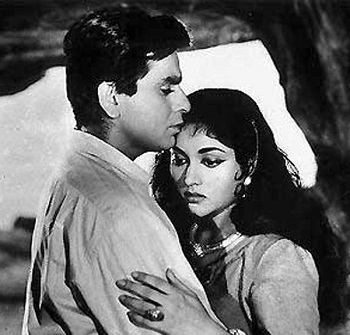
Never. I have no regrets. The film industry treated me with so much love and affection.vyjayantimala bali and dilip kumar

Your name was linked with the Raj Kapoor camp…

(Looking straight at me) That was gossip. Gossip will always be there. As a film star, you are in the public eye. All this was a lot of exaggeration, especially where the RK camp was concerned. Tell me who wasn’t linked with them? In fact, all these ‘links’ are needed to boost the film, [they are] publicity gimmicks. Even in the West, all actors are linked with their co-stars for this very purpose.

Which, according to you, have been your most memorable films?

What I consider to be my best are Ganga Jamuna, Madhumati, Amrapali, New Delhi and Naya Daur.

And your favourite co-stars? 

Well, I did the most number of films with Dilip Kumar…

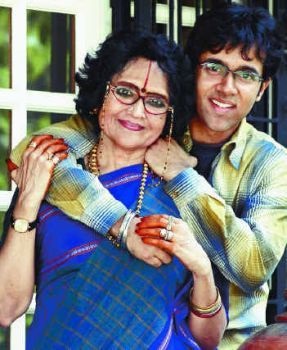
When your son Suchindra sees your films, how does he react?

(Laughing) He’s quite appreciative but when he’s watching one of my films and I happen to be sitting nearby, he looks at me in wonder and says, ‘Mummy, is it really you who has done all that!’

And how do you react?

I am no different. I feel the same way. I really can’t believe it’s me.


You quit films after marriage. You are still being offered roles but you refuse them. Why?

See, after my marriage, it was a mutual decision that I should relinquish films. And I feel that it was a very wise decision, because at that time I was at the top. Even now I am being offered roles, but I decline them. Why would I play mothers’ roles?

It is said that your late husband, Dr Bali, wanted you to quit the film industry and that’s why you did so.

No, it was a mutual decision. He was too gentle and considerate and suave to ever force his views on me. He was a Godsend to me (throws up hands as if thanking God)

How did you meet him?

That was the most interesting phase of my life. During a film shooting in Bombay, I wasn’t too well so the director got him to treat me. That’s how it started. And slowly I realised that when he didn’t come to see me, I missed him a lot. That’s how I knew it was love.

How long did it take you to realise that you were in love with him?

He told me that I realised it much later, though he had realised it earlier. I loved his company. He was a very gentle and kind person.

With her son SuchindraHow did you drift towards politics?

My husband thought that I had the makings of a politician, so he wanted me to join politics. It happened over time…in the beginning, we toured Tamil Nadu and saw the chaos around us, how funds were being misused, the people’s disillusionment with the administration. Whenever we toured, we saw another reality: how people loved Mrs Indira Gandhi. So when we visited New Delhi, we met her and told her the state of affairs, and about my inclination towards politics. She was very encouraging.

But weren’t there any apprehensions, with you being former film star?

People knew I was a very serious person. I wasn’t simply hopping from one profession to another. I quit the film industry in 1968 and entered politics in the early 1980s. Nor was I a party jumper; people knew about my integrity.

It was said that your husband was the guiding force and didn’t let you take any independent decisions…

That’s wrong. But it is a fact that I never said ‘no’ to whatever he said, because I had faith in him. I knew whatever he advised me or did was for my good. We had that kind of bond, our relationship was very strong.

Once you took up politics, was he ever uneasy with you being away from home for days?

We always traveled together. Why should I have traveled alone? Even on the tennis courts or golf course, we were always together. I changed totally with him in my life; earlier I was known to be introverted and closed, but with him around, I was full of confidence and courage. I’d developed an interest in tennis and golf, and my interest in dance became an obsession because he loved Bharatnatyam.

How did you cope after his demise?

After his death, I thought of leaving everything – dance, politics – but then I’d think, how could I leave these things? He’d have wanted me to continue.

“Dr Bali died in 1986 because of a brain haemorrhage and the unavailability of a life-saving drug, glycerol. We needed 10 bottles of glycerol, but managed to procure only one bottle. It wasn’t available at any cost. You can imagine how I must have felt! With all the resources at our disposal, we couldn’t save him because that particular drug wasn’t available. And with that I decided to set up the Dr Bali Pharma Trust, so that we could provide life-saving drugs to those battling for life.”

There was a controversy about your husband’s will, which was contested by his first wife and her sons. How did you fight that legal battle?

My son and I won in the Court. Truth does prevail. Unpleasant things keep happening, what to do? But one must have faith in oneself. I believe in this line, ‘Thus, above all, to thine own self be true’.

Is it tough for a woman to survive in politics?

Yes, it is very tough for a woman to survive. It is dominated by men. Even on all these marches or walks or public meetings, women are jostled and pushed around. It is truly terrible.

(Pictures courtesy www.kino-teatr.ru, photogallery.indiatimes.com, www.hindu.com, filmsplusmovies.com)

Categories
Places

Of destination weddings and road trips

What’s hot, green and great fun on the beach? A road trip combined with a Konkan beach wedding, that’s what!
by Salil Jayakar

Destination weddings have always fascinated me. Imagine taking your vows at a sunny, beach side ceremony on one of Goa’s beaches or kick-starting a new life adventure among creatures of the wild at the Kaziranga National Park in Assam. While such a wedding does throw up questions like who will foot the bill – for the more expensive ones – they nonetheless are a great experience for the couple-to-be and family and friends. Throw in a road trip, a bus load of family and friends, the scenic beauty of the Konkan coast – and you have the perfect ingredients for adventure!

wedding in KonkanIn May this year, my friend – the bride – decided to tie the knot at Chivala, an almost sleepy, beach side village in Malvan on the Konkan coast of Maharashtra. I was among the fortunate few friends invited. A bus was arranged for 20-odd people who’d make the overnight 12-13 hours journey and rooms were booked in a comfortable hotel with air-conditioning. The summer months in Maharashtra (and most of India) can be unfailingly cruel. Yes, AC rooms are a must.

On the evening we were to depart, I met the other invitees from the girl’s side. I was the only boy in the entourage. An otherwise privileged position to be in, but not when you have to share a room with two girls whom you barely know! For someone who finds travelling with and sharing rooms with friends problematic, this was a challenge of mountainous proportions to say the least. The finer details of sharing-a-room etiquette will be dealt with later.

As far as bus journeys go, I’ve done very few long-distance, overnight ones and I was woefully unprepared. Words of wisdom – wear comfy pyjamas and if you must wear shorts, don’t forget to carry a blanket to keep you warm. For the long-legged, grab a solo seat at the back so that you can stretch in comfort. I had a bruised knee from the constant bumps as my knee knocked into the seat in front. A 12-13 hours journey turned out to be over 15 hours long, thanks to a longer route and a breakdown.

It is here, in a nondescript village, that I was surprised over and over again: at a wine shop where we bought some beers and drank on the road (girls included) and no one batted an eyelid, on spotting a canary yellow Vespa parked in front of a green shuttered shop door by the dusty village road that said “this is India” and that elderly woman who cleaned a bike chivalawith jet-sprayed water with much gusto for nearly 30-odd minutes! Surely, India never ceases to surprise…or is it just the city-born-and-bred me who is delightedly fascinated by what must be everyday occurrences in a rural setting?

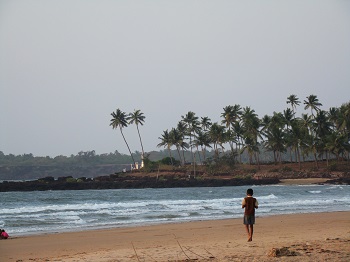
We finally reached Chivala as the evening sun was setting. Roofed houses dotted the landscape and its people went about their work, throwing a cursory glance at what must seem to them yet another tourist busload. Tired as we were, we set out for the first of the wedding ceremonies – the haldi function. We walked towards the beach enclave where a shamiana had been set up. Harsh halogen lights threw shadows of the tall palms all around and the gentle waves of the Arabian Sea made a soft whispering sound as they gently beat against the sandy beach. When was the last time you saw a night sky filled with stars in Mumbai? At Chivala, the night sky was littered with a million stars! We lay flat on our backs on the sand and tried to spot our favourite ones…in the revelry, surrounded by people, I had never felt more alone, so fortunate.

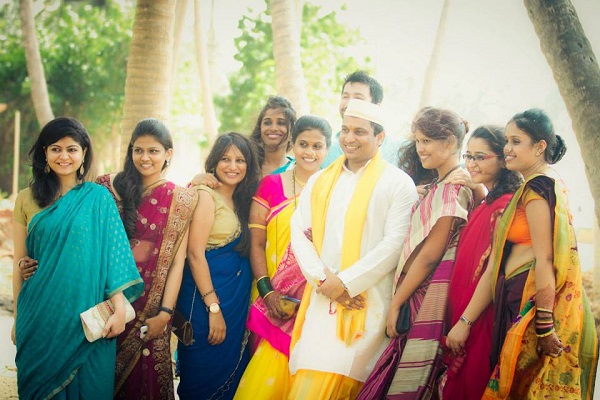
The traditional Maharashtrian wedding ceremony the next morning – at the same beach enclave – was beautiful, to say the least. The bride looked stunning in her traditional lemony yellow saree while the groom made for a dashing figure in a matching yellow dhoti and kurta. We, the bride’s entourage, made heads turn – shades of blue and red dominated and were stand out colours against the sand, sea and sky! The ceremony went off well, we giggled our way through a series of photos and made our way back to a sumptuous traditional lunch with aam ras, too!

Post lunch, half a day at our disposal, it made perfect sense to head to nearby Tarkarli with its sandy white beach and promise of water sports. The local rickshaw driver gladly wedding in Konkanaccommodated all four of us – one in the front next to him – as he made his way through meandering village lanes towards the MTDC resort, a sort of entry point to the beach. I’d heard a lot about Tarkarli’s beach and it did not disappoint. Looking out towards the sea, I could just about make out Sindhudurg Fort, a mere 30 minutes away by boat. I don’t know what to say here…a beach side walk is exhilarating! There’s something about sun, sea and sand… it brought a smile to my face and warmth in my heart I can’t explain.

As far as road trips go… this one did not have many stops along the way. But the journey was memorable, nonetheless. Strangers became friends along the way and new bonds were formed. On our way back, as the bus’s headlights shone down the twists and turns of the Western Ghats, my mind was a whirling dervish of the smells and sounds along the way…from the roadside beers and moong dal pakodas at the village where our bus broke down to adrakwali chai and kanda bhajia at Chivala market…not to mention the intoxicating aroma of the local garam masalas that I bought along the way.

For what is any road trip without car or bus trouble, roadside food and memories?

(Pictures courtesy Salil Jayakar)

Categories
Tech

The best apps for your WP smartphone

Have a Windows phone but not the apps to go with it? Check out our app list to get started.
by Manik Kakra

Announced more than two years ago, the Windows phone has been a refreshing new OS in the smartphone world. The OS is on the third place, and though it still needs lots of apps, services, and improvements, there’s no doubt that Microsoft has got a lot of great applications for users.

This is a list of apps you should definitely try on your shiny new WP handset.

rap dialerRap Dialer: WP has got some decent native apps, but its dialer seems a bit uncooked. Rap Dialer (in pic on left) is what you should try if you feel the same about the stock dialer. Rap Dialer has got a few interesting gestures, and has got features you need from your phone’s dialpad, right there.

The alternative? People Search

Twabbit: If you’ve been using a smartphone for some time, chances are you would be quite active on Twitter. I never really liked the official Twitter app for WP, and I would recommend Twabbit. This app has got a great features list, from streaming, push notifications, image preview, custom theme, to mute filters. This feature-packed app is surely worth an active Twitter user’s bucks.

The alternative? Mehdoh

WhatsAppI wouldn’t have mentioned it here had the developers not brought about the major update this app required. With the last few updates, this chat client has become much more reliable, and has got much better reviews from what users had to say about it earlier.

The alternative? LINE

UC BrowserIn order to get a better Web browsing experience than what the IE10 Mobile offers with its less-than-required number of features, download the UC Browser (see pic on right). This UC browserbrowser has been on the scene since Symbian days, and has got a lot of features in its WP avatar. From offline mode, to custom font and speed dial, this free browser is a worthy addition to your WP tiles.

The alternative? Surfcube

BaconitWant to check Reddit on the go? Well, Baconit is probably the best Reddit client on WP. It’s fast, well-designed, and has all the features you might need.

The alternative? Baconography

Besides these apps, you should also check out apps like MapmyIndia, MetroTube6stagram (coming soon), WikipediaAvirall, Camera360ZomatoNextgen Reader, 4th & Mayor and games like Gravity Guy4 Pics 1 Wordand N.O.V.A. 3

Do let us know if we’ve missed out on any of your favourite WP apps, and if any other apps require a mention here.

(Pictures courtesy www.thelostogle.com, www.windowsphone.com, www.funkygadgets9.com)

Categories
Big story

Dengue, TB, cholera rise in Mumbai

Praja Foundation report on state of city’s health throws up some grim truths on public health care in the city.
by Nidhi Qazi

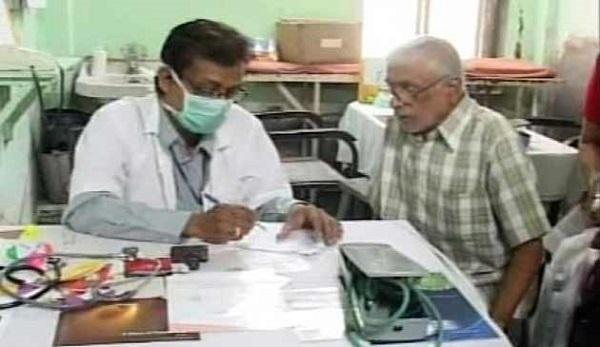
In a recently-released report on the city’s health, the Praja Foundation has found an increase in the number of dengue, tuberculosis (TB) and cholera cases, though there is a decrease in the cases of malaria.

Praja, founded in 1997 by a group of eight Mumbaikars, released its white paper on ‘The State of Health of Mumbai’ last week. The data is based on information gathered through RTI from municipal dispensaries, hospitals, State Government dispensaries and hospitals and other Government health care centres.

Nitai Mehta, Founder Trustee, Praja, said, “BMC needs to be complimented on reducing the increase in malaria cases drastically from the peak of 2010-2011 (over 78,000 cases) to less than 22,000 cases reported in 2012-2013. But there is little reason for complacency. Cases of dengue have shot up drastically. TB incidences are also on the rise. Deaths due to cholera have almost tripled from the previous year.”

The data collected from MCGM dispensaries and hospitals and State hospitals and other Government health centres shows that in 2012-2013, there were 4,867 dengue cases as opposed to 682 cases in 2008-2009. Last year, 36,417 cases of TB were reported from municipal and Government dispensaries and hospitals, of which 6,921 patients died of TB.

Additionally, cholera incidences have once again started increasing in the city. Nine deaths were due to cholera in 2012-13 against three in the previous year.

Milind Mhaske, Project Director at Praja, added, “From another perspective, if we had to depend on this data for the entire city, in 2012-2013, 1 out of 567 people in Mumbai suffered from malaria, 1 out of 2,555 people had dengue (last year 1 out of 6,617 had dengue), one in 341 people had TB and cholera hit 1 in 63,000 Mumbaikars! The ratio has been on an increase since last year for all major diseases.”

Andheri (East) leads in diseases among all the municipal wards. The ward (K/E) has shown highest incidences of malaria, dengue and TB. Kurla (West), L ward of the MCGM has the highest incidence of diarrhoea, almost double its nearest rival.

According to surveys conducted by Praja, over 70 per cent of Mumbai’s population visits private health care centres for treatment and 35 per cent visit municipal and Government dispensaries and hospitals.

But since there is no way to track any data from the privately-owned health care custodians, Mehta rues, “How can civic authorities frame any health care policy for our megapolis when it does not have access to health care data from the private doctors, clinics and hospitals visited by a distinct majority of our city population?” The reasons for the poor data-tracking vary from fear of income tax scrutiny to increase in paperwork to sheer apathy.

Mehta concludes, “The report on the state of health of Mumbai raises pertinent questions of grave consequences for the city that our policy makers ought to consider seriously and expeditiously.”

See the full report here.

(Picture courtesy ibnlive.com)

Categories
Overdose

Death is just a number

In a land where millions die of hunger and poverty, stray deaths here and there are statistics consigned to history.
Jatin Sharmaby Jatin Sharma

5 is the new number attracting us all at the moment. The moment I write ‘5’, those who are aware of happenings in our nation and who care enough to share their opinion on various social platforms, are straightaway going to point that number to our ‘friendly’ neighbour and say they killed ‘5’ of ours. And this ‘5’ is going to remind me of something that our PM has been maintaining for long – silence, for 5 years.

Every time someone in India dies, there is an outrage in the media and then in society, where everyone tries to pinpoint who exactly is to blame for the death. Every time a farmer commits suicide, a new number finds our mind space, and we wonder who is responsible for so many deaths. Every time a celebrity drives his car on to the pavement, a fresh number replaces the old number of pavement-dweller deaths, and we start discussing about how our law is inept. Every time a riot breaks out and one religious mob slaughters another, a blood-soaked number cries out for our attention and we start talking about how the CM of that State was unable to control the situation.

Currently, we’re talking of the dead sailors aboard the ill-fated submarine off Mumbai’s coast. Again, the numbers change as more bodies are retrieved.

The truth is, we have too many issues to grapple with in our country, and none of those in power have a clue how to solve them. None of our people, even those who keep shouting for change, know how to bring this change about. And since we are at the mercy of those who have the power to crush and change us at will, we the people look at all these deaths around us as just a number. The death of the boy who died when Delhi police fired at motorists during stunts is just another number. The deaths of those as a result of fake police encounters and even the ‘accidental’ deaths of activists are just statistics.

Children die after eating mid-day meals because the food served to them had expired, people die when the illegal building they live in collapses suddenly, people die because the environment they live in is astoundingly filthy. These things happen and we move on in minutes. The point is that death is just a number because we have now seen so many of our people dying, and nobody is interested in saving them. The country is becoming a monster that eats its own eggs without a qualm.

On the other hand, we don’t even know what works if we decide to raise a voice. We may raise our heads only to be shot at, prompting others to keep quiet. In the name of survival, we have sold our soul to bribes and we just don’t care any more. We’ve come to a point where we may push somebody out of the trains if they make us uncomfortable, we may get them thrown out of our building society if they are different from us, we may not say a word when they die mysteriously because for us, death is just a number.

We looked at our neighbour to the North when they attacked us on 26/11, and we said we will take action. Nothing happened. We did nothing. Even then, death was just a number. Numerous others added to that number subsequently, and we just segregated them as people killed by terrorists and those trying to be safe from terrorists.

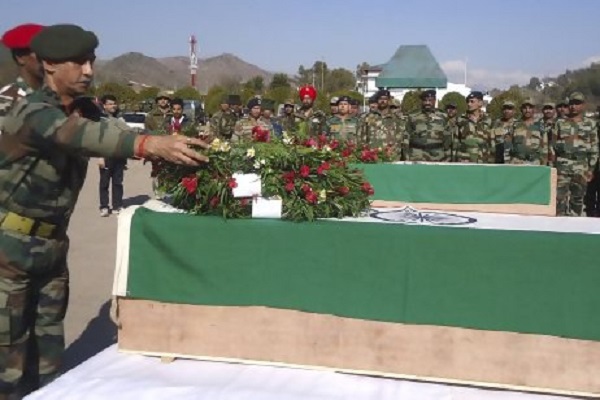
We didn’t do anything when two of our soldiers were beheaded. We didnt do anything when people in Bihar were attacked. Five of our soldiers were killed, we still did nothing. The number rises, but it makes little difference.

Where there should be a raging fire over the death of those who protect us at the country’s borders, there is nothing. Nothing over our sovereignty being attacked. When will we demand an answer, when will we be confident in knowing that our soldiers are not dying in vain? Till that happens, these deaths are just additions to the statistics we already have, and we will feel content in calling our dead soldiers martyrs. In a country where millions die of hunger and ignorance every day, who really cares? Like I said, death is just a number.

Jatin Sharma is a media professional who does not want to grow up, because if he grows up, he will be like everybody else.

(Picture courtesy www.thenational.ae)

Exit mobile version