Categories
Enough said

A dash of humanity

Three academics in Delhi have set up a trust that will encompass the spectrum of Humanities Studies in the country.
Humra Quraishiby Humra Quraishi

Last week, I wrote about Kolkata’s Presidency College introducing ‘Love’ as a subject in its curriculum. Now there’s another bit of good news from the world of academia – three senior academics in New Delhi, Rakesh Batabyal, Mahalakshmi Ramakrishnan and Antony Thomas have set up the Humanities Trust.

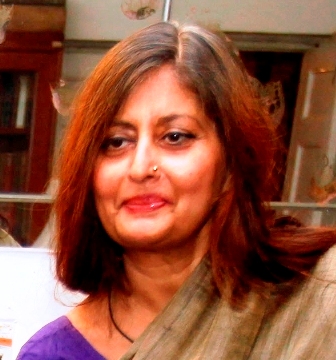
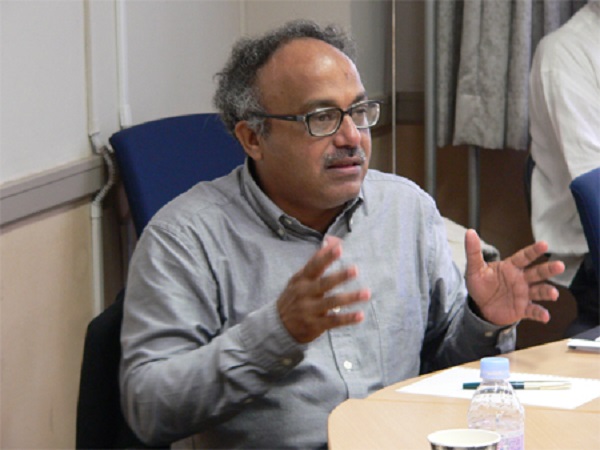
What for, you ask. I quote Dr Batabyal (in pic above), “The Trust will try and encourage high quality in humanities education, which will include research and publication in different languages of Indian and other societies. The Trust also seeks to come to help the teachers of classical languages, liberal arts. Its centre for advanced study will try and spread the message of Indian philosophy and culture, through high standards of research that it will try and promote.”

This Humanities Trust has a definite plan to set up several concrete platforms to reach out to the masses. In fact, these academics want to reach the masses through this Trust by setting up the Institute of Advanced Studies (HTIAS), Curriculum Resource Centre (CRC), Humanities Bibliospaces and Espaces: New libraries for schools in remote areas and for students from deprived sections (HBE), Centre for the Study of Philosophy of Religion and Secularism (CSPRS), Centre for Studies on Institutions (CSI), Centre for Indian Nationalism (CIN), to name a few initiatives.

Dr Batabyal adds, “With the declining quality in education, particularly in public education delivery, there is an urgency to intervene in the education system by starting an Institute of Advanced Studies. The Institute will house scholars from across the country and the world who would use its residential character to congregate and discourse on issues and areas designed broadly by the Institute. The active training, publication and seminar programmes of the Trust aims at disseminating the work of these scholars and their discussion to hundreds of other institutions of education, which would bring the cutting edge knowledge paradigms closer to those who do not have access to these.

“The  Curriculum Resource Centre (CRC) shall be an ongoing archive, documentation and facilitation centre for curriculum development across education segments. These will be made available to institutions to enable long-term development as well as for short-term modules. The centre will provide the training for educators in the using of these curriculum frameworks as well. The Trust shall also seek to develop a centre for the study of religions – the philosophies, history and evolution of newer belief-systems. It will also seek to promote the understanding of secularism through research, seminars and teaching modules on conceptual issues, thinkers, philosophical questions related to the subject.

“The endeavor is to truly integrate the idea of humanism with that of inquiry. The Trust shall study the origin and trends in the growth of institutions across the world, particularly the democratic institutions. Legislation has been the finest art of human kind and therefore study of legislating institutions shall be studied in close conformity with the changing patterns of humanistic expressions.”

He signs off by saying, “The study of the unique phenomenon of Indian Nationalism will be encouraged in the context of its anti-colonial past and globalized present. There will also be emphasis on the comparative history and process of nation-building in different parts of the developing world.”

Humra Quraishi is a senior journalist based in Gurgaon. She is the author of Kashmir: The Untold Story and co-author of Simply Khushwant.

(Picture courtesy utcp.c.u-tokyo.ac.jp)
Categories
Cinema@100

Sita was a politician, too

She was television’s heartthrob in the 1980s. But after her marriage, actor-politician Dipika Chikhlia completely vanished from the television scene.
by Humra Quraishi

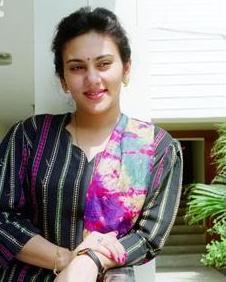
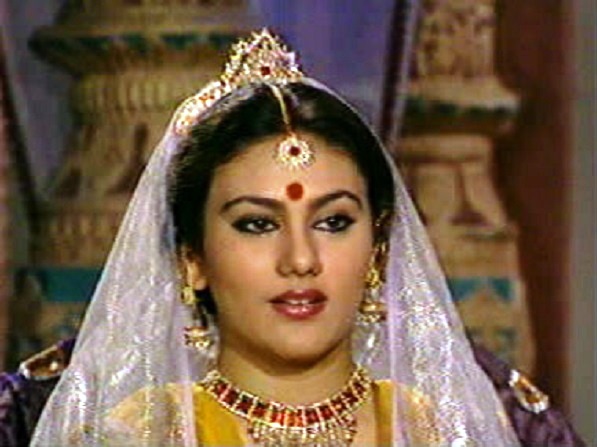
I had interviewed Dipika Chikhlia in the summer of 1992 in New Delhi. She had already finished playing Sita on the small screen adaptation of the Ramayana, and was wildly popular for her on-screen demure grace and good looks. That year, she had also been elected as the Bharatiya Janata Party’s MP from Baroda.

It was said that after her phenomenal success as Sita, Dipika received scores of marriage proposals, at least one a day. From doing a few roles in minor films to suddenly becoming the nation’s darling to then entering politics, it was one big non-stop journey for Dipika as she juggled fame and recognition with a desire to work for people. Today, she is well-settled into family life in Mumbai, and has two lovely daughters.

After trying to get through to her for three consecutive days, I finally had the chance to fix an appointment with her. She answered the phone herself, speaking in a low voice. She consented to giving an interview but with a polite request, “It shouldn’t be more than a few minutes long. I have to leave for Parliament at 11 am.”

We met in a cramped room in Gujarat Bhavan in New Delhi. She looked so different from the glamorous girl that had charmed the nation as Sita. The sari she was wearing was a simple print on cotton. Her hair was tied up in a neat plait, and her long nails were painted in a shade of mauve. Her lips had the faintest touch of lipstick.

She sounded earnest enough throughout the interview, giving the impression of a young woman sincerely wishing to contribute to the political sphere, but she also sounded somewhat confused. She even contradicted herself a couple of times, but with every such contradiction, she carried on with a gentle smile.

Excerpts from the interview:
Why did you join the BJP?
Why not? Actually, my grandfather had actively worked for the RSS (Rashtriya Swayamsevak Sangh), so I had an RSS root in my family.

Do you agree with the opposition parties’ charge that the BJP is a party with a communal outlook?
No, it’s not entirely communal. Maybe it has a tinge of communalism. That’s all.

Just now you said that your party, the BJP, has a tinge of communalism. Do you feel this is okay in the national perspective?Dipika Chikhalia
I meant that others think that the BJP has a little bit of communalism. Not that it is actually there.

Then why don’t you clear this misunderstanding?
Why? What’s wrong with it?

You won the elections on the BJP ticket. Did other parties also want to give you a ticket?
Yes. Other parties also wanted to give me a ticket, but why talk about that now?

You are going to get married shortly. How will you manage your political life?
Yes, my marriage is fixed for November 22. Regarding my television work, I am winding it up. And as for my political work, I am appointing managers to look after my constituency. Actually the Baroda electorate cannot be taken for a ride. I just could not say to them, ‘Thappa kamal par lagao (Cast your vote for the [BJP’s] lotus’. I had to really work hard.

Do you think you won because of the Sita image you portrayed on the small screen?
No, not really. They voted for me because they found me to be a young and enthusiastic woman.

Did you have any problems with your electorate because on the small screen, you started by portraying Sita and then played Hyder Ali’s Muslim wife?
No, why should the electorate object? As an artist, I can portray any character, be it Christian, Sikh, Hindu, Muslim. I respect every religion.

What are your comments regarding the Babri Masjid?
No comments. I don’t want to give any personal comments.

Is your engagement to the owner of Tips And Toes’s Hemant Topiwala an arranged match or a love one?
It’s a totally arranged marriage. Both the families have known each other for years, but before giving the final consent, I went out with him. Then I said yes.

You are most famous for playing Sita. But in one of your earlier films, you played a character that was near vulgar. Why were you so desperate to get any role at all?
Yes, I admit that in one of my earlier films, I was badly conned. It was my biggest mistake. It wasn’t like I needed the money or that I was desperate for a film role, I was just conned. I am a practical and straightforward person, and I could not understand the shady ways of that film producer.

(Pictures courtesy myvideos.in, www.india-forums.com, www.theunrealtimes.com)

Categories
Beauty

Goodbye, acne

Suffering from acne? Get some help with these five easy DIY ways to fight acne for a blemish free skin.
by Deepa Mistry

The weather is currently yo-yoing, unable to decide between rainy gloom or sudden bursts of sunshine. And this causes breakouts on your face and other parts of the body.

treat acneEvery woman dreams of having a clear skin, but waking up with a giant zit is a horror that each of us experiences from time to time. A pimple always catches you off guard on the day you want to look your best. Most of us would just cover it up with lots of makeup, but no matter how much foundation and concealer you slather on, it’s just a temporary remedy.

Acne can be very distressing; and though your pimples can be treated with various treatments, they leave permanent scars. People believe acne happens only to teens or people in their late teens, but we find that breakouts are increasingly caused in adults due to stress, lifestyle choices and hormonal changes.

Dr Manisha Shah, dermatologist, says, “Acne is mostly seen on the face, but it can also occur on other parts of the body, such as on the neck, back and the shoulders. A pimple arises due to some sort of skin damage; during the healing process, the body creates new skin cells and collagen fibers – this repair process leads to the formation of acne scars.

Its full form is Acne Vulgaris. Acne is also caused during adolescence, ovulation, menstrual cycles, pregnancy or if birth control pills are taken. Blood impurity causes acne breakouts too, so avoid oily and junk foods.”

But all is not lost – you can combat acne with a few simple home remedies. Try these five simple tricks:
Aloe vera: It is most easily available in almost every household. The magic lies in the gel-like substance found in its leaves, which has the ability to heal skin problems. Peel the green upper portion of the leaf, and scoop out the gel with a spoon. Apply a little quantity to the scarred tissue. Apply twice a day, leave it for half an hour and wash with water. Over a few days, you will notice that not only does the acne scar become undetectable, but your skin also feels tighter and gets a distinct glow.

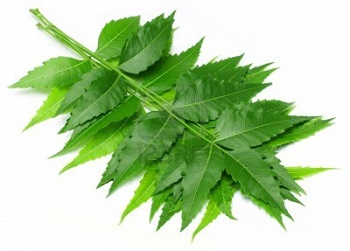
neem leavesNeem leaves: Neem contains alkaloids which have antibacterial, antiviral and antifungal properties. This makes it effective against a wide range of skin problems, right from acne and eczema to ringworm, because it also has the property of cleansing the body of toxins. Make a neem paste with a little water and apply on the affected area for some time. You will see the difference over a period of time.

Baking soda: This handy kitchen must-have is the simplest and fastest cure for acne. Mix a teaspoon of baking soda with water to form a paste. Just slather it over your zits before you go to bed and rinse it off in the morning. Similarly, a corn starch and water mask also helps exfoliates skin.

Toothpaste: For a quick anti-redness remedy, cover your pimples with toothpaste, leave for 10 minutes or so, and then rinse. For a deeper cure, apply toothpaste on your pimples before going to bed and cover with a bandage or soft cloth, and leave overnight. Wash the toothpaste off in the morning. If you have sensitive skin, do not opt for toothpaste with whitening properties.

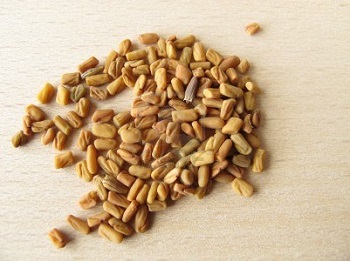
Fenugreek and cumin seeds: The most recommended remedy for pimples. A fenugreek paste made with water is the fenugreek-seedsperfect aid to avoid further breakouts. A paste made with cumin seeds mixed with water is a must as it is a rich source of zinc.

Apart from the above tricks, the two key ingredients to use are cucumber paste and lime juice. Cucumber applied daily removes dead skin cells and cleans pores, while keeping skin hydrated and moisturised to remove extra oil. Lime juice also plays a key role in preventing acne; it not only does not allow pimples to dry out, but it also kills acne bacteria, providing a calming effect to the skin. Besides, its vitamin C content maintains healthy and glowing skin. Simply rub a cotton ball dipped in lime juice on your face every day and rinse.

The simplest remedy is detox. Drink a lot of water, eat garlic every day, and consume foods with a high content of vitamins. Try including eggs, carrot juice, lean meats, green leafy vegetables, chicken, oats and mushrooms in your diet. Cut down on oily food, caffeine, alcohol and carbs.

Avoid oil-based cosmetics and try some deep breathing exercises, as stress is a major cause for acne. Nowadays acne-curing pills are also easily available in the market, but they contain hormone affecting properties which can harm you. Pimple extractor creams are also available, but they can cause skin irritation and can leave marks.

(Pictures courtesy www.drkabra.com, www.123rf.com, lanasbeautyzone.com, www.biobloomonline.com)

Categories
Trends

Fine dining gets dearer as rupee falls

Sliding rupee hits imports and impacts eating out at five star hotels and restaurants. Drinks and spirits become costly, too.
by The Editors | editor@themetrognome.in

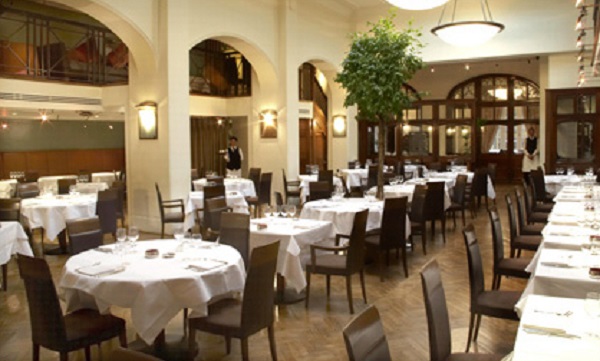
It’s not just the prices of onions that are making us cry. Rising inflation and the sliding rupee are taking away the joy of shopping or even going out over the weekend. And among those rethinking their recreational habits are the people who indulge in fine dining quite regularly.

rupee slideAs per a survey conducted by trade body ASSOCHAM (Associated Chamber of Commerce and Industry of India), five star hotels and fine dining restaurants have registered a significant decline to the extent of 20 per cent in the last three months due to the falling rupee. Releasing the ASSOCHAM paper on ‘Weak rupee dampens spirits of fine dining restaurants’, DS Rawat, Secretary General, ASSOCHAM said, “Due to a fall in the rupee, five star hotels and fine dining restaurants are revising their menu card rates as the weak rupee pushes up prices of imported food ingredients and spirits.”

With negative market sentiments of an economic slowdown and weak rupee, the fine dine market segment may lose its sheen. The paper further highlights that the fine dining market registered a decline of over 20 per cent than last year in the major metropolitan cities like Mumbai, Delhi-NCR, Chennai, Hyderabad and Ahmedabad.

The paper further points out, “Due to the rupee depreciating against major foreign currencies, prices of imported products have shot up by as much as 30 to 35 per cent. Some restaurants import 85 per cent of its ingredients from Japan, France, Italy and Thailand for its signature dishes.”

Rawat added that premium hotels and restaurants use imported olives, olive oils, legumes, meats like salmon, tuna steak, porkfish sushi roll pepperoni and turkey ham, Italian and French cheeses, fine wines and spirits to tickle the taste buds of Indians. Nearly 45 to 60 per cent of the food cost of specialty restaurants, depending on their cuisine, accounts for the cost of imported food products. “The rupee devaluation has majorly impacted imports, from meats and seafood to cheese and legumes. Nearly 60 per cent of the food produces at specialty restaurants are imported and does not have local substitutes here in India. As a result, restaurants are bound to revise the prices of their menus,” adds the paper.

The current size of the Indian food industry stands at Rs 2,50,000 crore per annum and is expected to grow at 12 per cent to touch a staggering Rs 4,25,000 crore by 2018. The size of the gourmet food market in India is Rs 7,500 crore, growing at a CAGR of 20 per cent. The market is expected to cross Rs 15,000 crore by 2015. The Indian gourmet food market includes fine dining restaurants, café markets as well as food retail.

The availability of imported ingredients is another factor for growing demand for fine dining restaurants. Ingredients such as truffles, artichokes, asparagus, Australian lamb and Norwegian salmon have found their way into the Indian food and beverage space. The paper also highlights that imported spirit prices increased between 7 per cent and 12 per cent in the last three months, where bars and nightclubs have also seen a similar slump.

                                                                                                                                                           (Pictures courtesy louisekwoods.wordpress.com, www.finediningindian.com, www.theunrealtimes.com)

Categories
Bombay, bas

Eat, play, love and sex

Fort offers good options for eating, street art and buying sexual implements, which come in both plastic and rubber variants.
by Nidhi Qazi

I was at Fort over the weekend, just taking in the sights. Exploring the city is something I enjoy in my spare time, and my afternoon was a highly educational one. I ate at Irani cafes, strolled the archways at MG Road and had an awkward, dildo-related conversation, and finally landed at Kala Ghoda, where I got arty with some street artists.

EAT

KyaniOld furniture. Old pictures. Simple decor. Cheap food. History couldn’t get better. Yes, history I say. The number of famous and not-so-famous Irani cafes in the city are live archives of the city’s past and present. They stand out among their swanky contemporaries in all aspects, be it the choice of food, the decor or the experience. On a weekend, what better than a cup of Irani chai, bun maska and the home-like custard?

I started my food walk with Kyani & Co., where I enjoyed their bun maskas, a range of omlettes, burgers, cakes and custard. According to the co-owner, Farokh Shokri, “The old-world charm of this place is what people admire and they come here for the experience. It reminds them of the past. And since nostalgia can’t be captured in a photograph, we maintain it the way it has always been, since 1940.” He adds, “Even if we had to refurbish this place, we’ll have to then increase the pricing, which we don’t want. We earn honest profits by catering to the masses and we don’t want to lose them.”

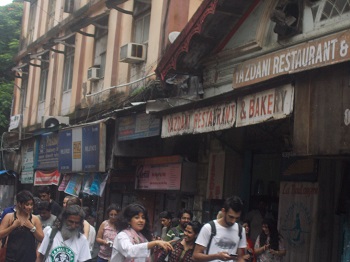
Point noted. I then moved on to Yazdani Bakery, which is famous for its brun maska, khaari, coffee, chai and apple pie. Again, this is the place to be when you want to devour freshly baked breads, puddings and pavs. And don’t forget to wish the Yazdaniowner. He’s an adorable oldie. Just chat him up and get a few insights into the history of India, Parsis, current politics, and other items of interest.

Still looking for more eats in the area? Go to Sassanian Boulangerie. Their famous dishes are chicken dhansak, chicken sali boti and raspberry drink.

PLAY

There are stars and there are stars. Likewise, there are artists and there are artists. On the street outside Jehangir Art Gallery is a world of these artists, uncelebrated but highly talented. They lag behind their most established brothers when it comes to showcasing their work, but thanks to Kala Ghoda Association and the popularity of street art, Mumbai has its own street art outside the Gallery. Chatting up to a few of them reveals some stories.

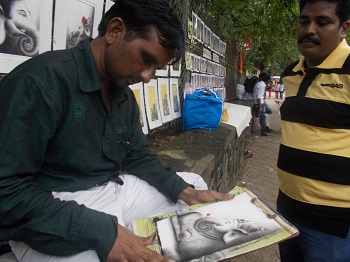
Dhammpal KiradakArtist Dhammpal Gyanrao Kiradak (in pic on left), a resident of Kalyan, originally from Akola district, rues the lack of visibility artists like him suffer from, thanks to bigger artists. “The selection body of Jehangir Art Gallery selects an artist based on the market value. We may not have the market value, but we are no less when it comes to talent,” he declares. Showing his work of art, he adds, “Art festivals don’t exhibit the real art work. It is plain show, wherein the rich get their way. We are poor. Humein koi kuch samajhta nahi (Nobody gives us our due).”

But he is thankful that artists like him have the entire street to showcase their work, at the very least. The artists mostly present their work on the stands (except for the monsoon season) provided by the Kala Ghoda Association, which charges Rs 100 a day for the using the same. Kiradak’s paintings are priced at a minimum of Rs 500 and go up to Rs 10,000.

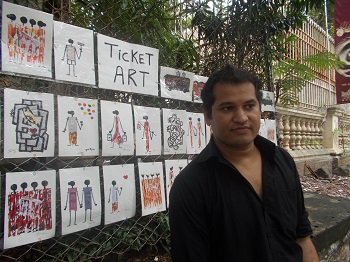
Further down, I browsed the work of artist Swaroop Kaintura, and immediately spotted its novelty. He does ‘Ticket art’, which ticket artincorporates used tickets of buses and trains in his work and builds a story around them.  “It is my creation and I feel happy doing it. It makes people happy, too,” he says. Take a close look at his work and you’ll realise the beauty of this amalgamation of drab-looking tickets and the bright colours, which tell their own little stories. Each of his creations is priced at Rs 500.

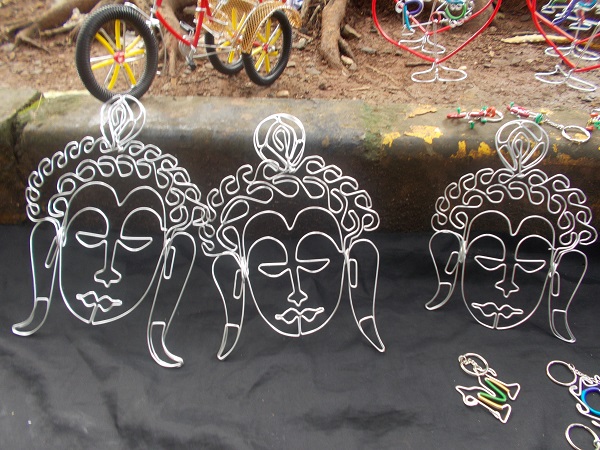
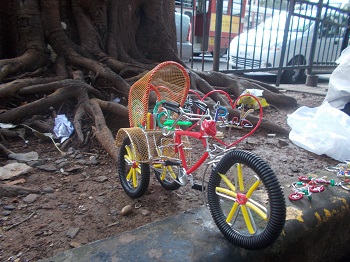
Another interesting artist here is Munna wirewallah, who is a unique talentwallah! His talent lies in his ability to twist a single wire into anything – from a simple key chain, Buddha’s face, to 3D objects like bicycles, bikes, flower vases and puzzles etc. (see pic below). Behind the popular name, Munna is sexagenarian Harish Kumar Bhanusha, hailing from Gujarat, who came to Mumbai to earn.

wire artHaving been on the pavement since 1972, Munna started playing with wires and made random objects till he realised it was actually fetching him money. He then shifted from junk wires to better finished ones and started making new things. His creations were bought by ‘Lataji, Raj Kapoor and others,’ he says. In fact, he adds, Ashaji had also ordered some stuff from him, but as time passed she never visited again, because “Woh toh ameer ban gayi aur hum gareeb reh gaye (She became rich while I remained poor).” His pieces are priced from Rs 20 to Rs 700.

LOVE and SEX 

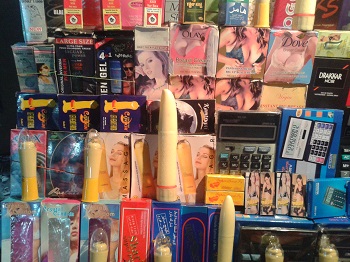
In one of the lanes around Fort is a busy lane, turning left to the Mahatma Gandhi Road. This lane is an open one (figuratively) for it showcases the hidden and the hush-hush – the vibrator. For those uninitiated, a vibrator is a sex toy and resembles a phallus (see pic below). This entire lane has a lot of shops selling them. As for my conversation with a vibrator-seller, here’s how it went:

Me (after pretending to be interested in umbrellas and hair dryers) : Bhaiyya, yeh kya hai?

vibrators on sale

Vendor: Madam, yeh vibrator hai.

Me (pretending to be really innocent): Iska kya use hai?

Vendor: Yeh sex ke liye use hota hai. Chahiye? 300 rupees ka hai.

Me : Nahin bhaiyya, thanks.

Vendor: Le lijiye, bahut kaam ki cheez hai. Aap ko 250 mein de denge. Yeh achcha nahi laga toh rubber ka bhi hai.

I run.

Bombay, bas is a weekly column on getting around the madness of Mumbai and exploring the city with a fresh perspective. 

(Pictures courtesy Nidhi Qazi)

Categories
Places

Get out this weekend

Make the most of this long weekend with these six getaways around Mumbai – all within reasonable driving distance, too.
by Deepa Mistry

Weekends are always looked forward to, irrespective of how busy your week might have been. Weekend monsoon vacations are popular amongst everyone – who doesn’t like to sit by a waterfall or simply admire lush greenery? This is also the perfect season to go trekking.

This weekend, make the most of the sporadic rain showers and rejuvenate yourself in the lap of nature. Since a lot of places are considered ‘off-season’ at this time of year, this is actually the best time to go to these places as they aren’t much in demand and you can have a peaceful holiday. But since this weekend is a long one – with the Independence Day break on August 15 followed by Saturday and Sunday, you would do well to pre-book your holiday resort.

If you’re making plans for this weekend, we can help you out with six destinations around Mumbai:
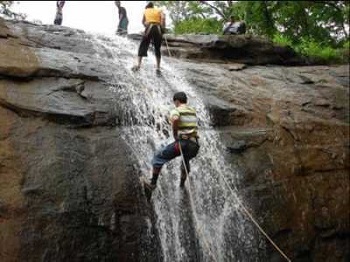
Kolad: A three-hour drive from Mumbai will bring you to the beautiful marshlands of Kolad, with the majestic Sahyadris that form the best backdrop to the magnificent valleys. Kolad offers the chance to play various adventure sports like white-water river rafting, kayaking, trekking, and river crossing at Kundalika River. You can have your own bonfire and camp alongside the river. A lot of resorts have a one-day package for all these adventure sports as well.

Lonavala-Khandala: Monsoons are the best time to experience a blissful natural paradise. These valleys become lush green in the rains and the hill sides become the bearers of lonavalainnumerable waterfalls. Khandala is located at about 100 kms from Mumbai; the easy accessibility this place affords makes it one of the most popular quick getaway destinations from Mumbai. Don’t miss the beautiful and tranquil Bhushi lake, the Tiger’s Leap and the Amrutanjan point which offer an awesome view of the lush valley, the Duke’s Cliff and the Buddhist Caves of Karala and Bhuja. The Lion’s Point offers an amazing view of the valley and a plate of corn and onion bhajjis are a must-have at this point. Besides its natural beauty Lonavala is famous for its chikki.

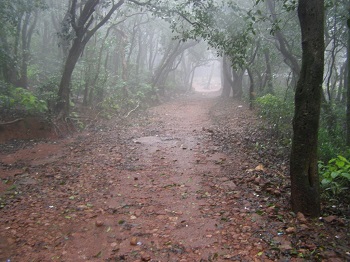
MatheranMatheran: This beautiful hill station is located at about 100 kms from Mumbai, in Raigad district. A popular weekend destination, this is an eco-sensitive region, as no motorised vehicles are allowed within the town. One can travel around Matheran on foot, horse backs and hand-pulled rickshaws. During monsoons, clouds practically descend on the town and the view of the adjoining valley is totally breath taking; the many natural water falls magnify the mesmerizing effect. The beautiful Lake Charlotte, the ancient Pisarnath Mahadev (Shiv) temple and the Madhavji Garden and several other points are some other attractions of Matheran. This picturesque town is dotted with many beautiful colonial bungalows and a few local eateries. The mini train that connects Matheran with Nerul station is convenient, but the train doesn’t operate during the monsoon. When it starts again in October, you will see that it is a two-hour train ride that takes you across dense forests and lush hilly areas.

Lavasa: The ideal time to visit Lavasa is this season, owing to the pleasant weather that allows the exploration of natural wildlife and waterfalls located in the region. Lavasa is among the planned cities in India located in Pune – it is 65 km from Pune and 180 km from Mumbai, located behind the dam of Varasgaon. Due to its awesome location, people find it an ideal place for mountain climbing, hiking and trekking. Popular attractions here include Lakeshore, which provides an opportunity for adventure activities like boating against the water currents, cruises and jet skiing. It is an all-weather favourite getaway with the climate remaining salubrious throughout the year.

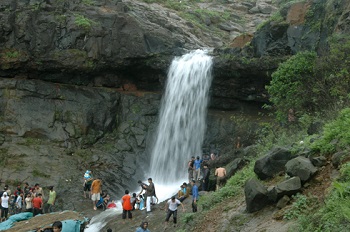
Durshet: Nestled in the lushness of the Western Ghats, Durshet (see pic on right) is a trekker’s paradise during the monsoons. This less frequented getaway is about 70 kms from Mumbai, in Raigad Durshetdistrict. The natural waterfalls spring to life during the monsoons, to provide an amazing experience to anyone who desires a respite from the grind and cacophony of daily life. Durshet is home to several species of birds and fauna. The view of the Sahyadri ranges from this place is spectacular. A jungle safari in the densely wooded region is a delight, as is a visit to the Sri Baleshwara Ashthavinayaka and the Shri Varad Vinayak temples, both dedicated to Lord Ganesha.

Kashid: Located about 30 km from Alibaug, the beach is a popular weekend holiday destination for residents of Mumbai and Pune, and is situated between two rocky hillocks on the Alibaug-Murud road. Kashid beach is known for its clear water and white sandy beach. Kashid is also a good place for some dolphin spotting, but the best time to see the gentle creature of the sea is November to January. Locals operate ferry services to help tourists spot dolphins in the sea. Unlike other beaches of Maharashtra, the Kashid beach is less commercialised and is more peaceful than the other beaches around Alibaug. Moreover, shacks run by locals line the beach and are a good place to taste some local cuisine.

(Pictures courtesy koladrafting.com, www.traveldealsfinder.com, www.holidayiq.com, www.placesnearpune.com)

Exit mobile version