Categories
Beauty

Work-outs made simpler

This is the season of unpredictable, heavy showers. So what do you do when your outdoor exercise plans fall through?
by Deepa Mistry

The weather may be rainy, gloomy, dull and it’s always humid, since the rains have become so unpredictable. This has affected so many of our outdoor activities like shopping, exercising or even going to the gym. Rains have disturbed our regular exercise routines on many occasions, but don’t let this season deter you from a great workout even if it means you have to do it at home.

Try these:

skipping– It is a good idea to invest in a skipping rope. If you are used to going out for an early morning walk or jog, a sudden shower can delay or derail your plan. But stick to your daily cardio kick: warm up with a few stretching exercises, followed by jogging on the spot. Once you’re done stretching your legs and arms, skip for 15 minutes. This provides the same or more of the benefits of a jog, and it will tone your leg and arm muscles.

– Get a pair of dumbbells, as they help burn fat when used in various exercises. Do curls, squats, lunges, rows and kickbacks using dumbbells for an effective workout.

– Also try push-ups, sit-ups, chin-ups, pull-ups and chair dips. These will tone your arms, shoulders and ab muscles.

– If you are not a gym person, sit-ups, waist bends, knee bends, and calf exercises are a great way to flex your muscles. Pick a spot in your home that lets you hold on to a support and also provides ample space to spread yourself.

– Enroll in a kickboxing class. Kickboxing is a fast and energetic workout which burns several calories per hour, faster than burning kickboxingcalories on an exercycle or a cross-trainer.

– Dancing is the best workout for everybody. Just turn up the volume and dance like no one’s watching. This makes the body flexible and is the most enjoyable workout.

– If you’ve been thinking of investing in a treadmill this maybe the best time to buy it, as it will last you a long time and you don’t need to go out for your walk or run.

– Yoga is the most recommended indoor exercise. Practice simple asanas to keep yourself fit. Yoga also helps reduce respiratory problems that are very common during the monsoon season. Encourage your children and family to practice pranayam daily, as it increases concentration and reduces stress levels. Besides, yoga is very beneficial for pregnant women and heart patients. Suryanamaskar should be practised atleast five times daily, early in the morning.

– Don’t be a couch potato; ditch the television and opt for cleaning. It has been found that sweeping and mopping the floors provides as much exercise as 10 minutes on the treadmill. Even tidying up your room, making the beds, cleaning the ceiling fan are activities that burn calories and tone your arms and shoulders.

– Exercise balls are another useful tool for home exercise programmes. They may be used for balance and proprioceptive training, core strengthening, and as a bench to perform your bench press on. They come in different sizes and will often include an entire workout programme for you to follow, so choose one based on your requirements.

– Skip the lift and take the stairs. This is a very effective for fat burn. On the days that you can’t go out and exercise, walk up and down the stairs at a constant speed for a good workout.

– YouTube has several exercise videos to choose from, and several TV channels offer fitness programmes. Choose from a traditional or step aerobic workout, belly dancing, yoga and other formats. These programmes have a host who explains the exercises and how to do them. Alternatively, invest in a fitness trainer who will design an indoor workout for you.

(Pictures courtesy alyssaeleven.wordpress.com, houstonblackbelt.com, www.goodhousekeeping.com)

Categories
Learn

100 beds for injured Govindas

Today, all revelry comes to the fore with Gopalkala and dahi handi. The BMC has announced 100 beds for casualties.
by The Editors | editor@themetrognome.in

It’s that time of the year again. Today, most of Mumbai will move around in a big mass taking in the sight of several grown men ascend higher and higher into the air, standing atop sturdy human shoulders, reaching out with excited hands and shining eyes towards a pot of dahi, money and other things.

dahi handiEvery year, Mumbai celebrates Gokulashtami with great gusto, and the city also collectively feels sorry for those Govindas who crash to the ground during their many attempts to get at the pot and suffer fractures, or worse, death. Every year, as prize money rises and the handis are tied higher and higher to add to the thrill of the chase, we hear of several Govindas suffering major injuries and wonder why they do it all.

But since the spirit of the festival refuses to abate, the BMC is going all out to ensure that there are adequate beds and medical facilities available for those sustaining injuries today. As per a press release issued by the BMC’s publicity department, “At least 100 beds will be made available at the city’s prominent civic and Government-run hospitals. Smaller hospitals have also been instructed to be on standby to admit any casualties.”

According to the BMC’s directives, the Sion-based LTMG Hospital and the Parel-based KEM Hospital will reserve 40 beds each for injured Govindas. The Mumbai Central-based Nair Hospital will reserve 20 beds. Additionally, civic hospitals in each ward in the city will have 10 beds reserved.

(Pictures courtesy www.cuisinecuisine.com, www.indiatvnews.com)

Categories
Wellness

Vaginal discharge: good or not?

Not all vaginal discharge is bad. You only have to start worrying when it changes colour or develops an odour.
by The Editors | editor@themetrognome.in

It’s annoying and sometimes uncomfortable, but there’s no getting away from it – vaginal discharge is a necessary evil in every woman’s life.

Vaginal discharge serves a primary function: it is secreted as a ‘clean up’ mechanism for a woman’s reproductive system, especially in the days immediately after the end of the monthly menstrual cycle. Its function is to rid the uterine and vaginal tract clear of old cells and fluid, and it is nature’s way of keeping the uterus, cervix and vagina clean.

How much discharge is normal?
vaginal discharge symptomsSays gynaecologist Dr Prachi Kakkar, “The amount of discharge varies from woman to woman, so what’s normal for one may be abnormal for another. Besides, the amount and intensity varies on other factors such as stress, an infection, an illness, use of antibiotics, ageing and pregnancy.”

While some women can experience a discharge daily, not counting the days they have a period, others can have occasional discharge. “As long as the discharge is transparent or slightly whitish, without an odour and it is not thick, the discharge is considered normal,” says Dr Kakkar.

When you should worry
The first sign of some distress in the uterine tract is normally exhibited through the vaginal discharge, says Dr Kirti Soman, Nagpur-based gynaecologist. “Whether a localised infection or a larger issue like a fibroid, the vaginal discharge will give the first indication of the condition,” Dr Soman says. “You might experience a sudden, heavy discharge. On the other hand, you might experience extreme dryness in the vaginal area with no discharge at all. Either way, it should sound an alarm bell.”

Additionally, the discharge may change appearance, which is when you should be concerned. “If it changes colour – becomes yellow or greenish or clotted white, like curd – and if it develops a strong fishy or unpleasant smell, then it means you have developed an infection. It may be a yeast infection or vaginosis or even a sexually-transmitted disease like gonorrhoea. The good news is that these infections can be treated with oral medication and if doctor’s orders are strictly followed, they can clear up in a few weeks,” Dr Soman explains.

How will you know if you’ve got a problem?
– If you experience sudden heavy discharge, try and chart for how long you’ve been suffering it. Ditto for sudden dryness and lack of discharge for days, if you’ve previously had doucheregular discharge. Ideally, you should not wait for longer than a week to see a doctor.
– A change of colour and smell of the discharge is an indication of an infection. An infection exists if the discharge is yellow, greenish, grey or curdy in appearance, and if it smells bad.
– You may get an infection if you have sexual intercourse with a person infected with chlamydia or gonorrhoea.
– If you’re experiencing pain during intercourse or if the vagina is swollen/dry, you may have an infection in the cervix.
– Do not try to treat yourself at home using douches (in pic on right) or vaginal washes purchased off the market without a doctor’s advice. There is a high chance of you killing the healthy cells in your system if you use a douche, or certain cleansing solutions in your vaginal area.
– Some infections recur, so if you’ve been treated once, don’t assume you won’t ever need treatment again. Consult your doctor when making lifestyle, food and medication choices.

(Pictures courtesy www.didibahini.com, www.ladycarehealth.com, www.women-health-info.com)

Categories
Big story

Maharashtra promulgates superstition ordinance

Read the full text of the promulgated ordinance; was pushed through after Dr Narendra Dabholkar’s murder in Pune last week.
by The Editors | editor@themetrogome.in

Everybody’s in for it now. At least, those who are in the business of black magic, superstition, being holy and possessing curative powers, or simply people who still believe in human sacrifice, or the practice of inflicting pain on others to achieve success or make money, are truly in for it in the State of Maharashtra.

Unfortunately, it took the murder of activist and key anti-superstition luminary in the State, Dr Narendra Dabholkar, last week in Pune, for the Government to finally get going on pushing the Maharashtra Prevention and Eradication of Human Sacrifice and Other Inhuman and Aghori Practices Bill, 2011, which has been pending with the Legislative Assembly for two years now. However, in light of recent events, the Government feels that, “from the implementation point of view, the Government considers it expedient to make a law, after modifying certain provisions of the Bill, by promulgating an Ordinance.” (Read the full document as ratified by the State Governor today, below).

As per the Ordinance, any person indulging in acts of superstition, black magic and sacrifice, apart from other related acts, will be liable for the severest punishment. Charges made out in these cases will be non-bailable and cognisable. A special authority is to be set up to monitor such acts and to ensure that the process of prosecution is handled well.

black magic ordinance 26.8.2013 English

(Picture courtesy unseenrajasthanparanormal.blogspot.com)


Categories
Big story

Global survey on violence against women journos launched

All women journalists can participate in survey that maps the global situation of women in the line of journalistic duty.
by The Editors | editor@themetrognome.in

The International News Safety Institute (INSI) has launched a global survey on violence against women journalists in collaboration with UNESCO as part of promotion of the safety of journalists and the issue of impunity. All news media workers, and particularly women journalists, are invited to participate in the survey, which will run until September 20, 2013.

The survey is supported by the Austrian Federal Ministry for European and International Affairs and was created together with the International Women’s Media Foundation (IWMF). It is aimed at looking into the global situation of female journalists and the nature of the dangers they face in connection with their work.

“In many parts of the world, women are threatened and attacked for the work they do – work which, in some cultures and countries, challenges gender stereotypes,” said Hannah Storm, Director of INSI.

According to her, these attacks take the form in sexual assaults, rapes, cyber-bullying, emotional harassment and threats against their loved ones. “Sadly,  many of these crimes are not reported as a result of powerful cultural and professional stigmas,” she added.

The findings of the survey will serve as the basis for INSI to work further with field experts, which will be followed by a series of recommendations to increase the safety of women journalists.

This survey will allow news producers to confidentially share the experiences of women journalists, in order to get a real sense of the dangers and threats they face in their day-to-day work, and work to find ways to make the situation safer for them and their families.

The survey itself will contribute to the “UN Plan of Action on the Safety of Journalists and the Issue of Impunity” which is based a multi-stakeholder approach to create a free and safe environment for journalists and media workers, both in conflict and non-conflict situations.

The survey also complements INSI’s on-going efforts in the issue of safety of journalists, acknowledging that danger also spans all genders. Prior to this survey, INSI has published a publication titled No Woman’s Land – On the Frontlines with Female Reporters and has kicked off with a safety training programme specifically aimed at female media workers in various parts of the world.

Women working in the news media are especially invited to participate in this survey, although men with information to add are also welcome. The survey can be accessed here. Last date for completion is September 20, 2013.

(Picture courtesy peaceisthenewblack.blogspot.com. Picture used for representational purpose only)

Categories
Swaad 'Anu'saar

Chutney bana do

What’s food without chutneys, right? Savour your food with three delectable ones – our food writer dishes out three recipes.
anurita guptaby Anurita Gupta

Maar maar ke teri chutney bana doonga! We can’t get enough of this Bollywood dialogue, right? After all, chutney is super important in our desi lives.

Jokes apart, the incredibly delicious ‘Indian chutney’ has spawned many foreign copy cats with fancy fruit and what-not. But asli chutney is something else! With the perfect balance of khataas, mithaas and mirchi masala, it features at the top of any Indian’s culinary list. Of course, be it Mumbai ki chaat or Gujarati thaali, everything is incomplete without chutney. Not only can it make bland dal chawal a lot more interesting, but is a power-packed source of nutrition as well.

Considering that it has both fruit and spices, the nutritional benefits are doubled wonderfully, namely that chutneys aid digestion. Chutneys come in several flavours, which make them naturally sweet or sour, depending on the kind of fruit or vegetable used.

This brilliant Indian sauce has in fact travelled the seven seas. The West has pretty much accepted it as part of their culinary existence, with it being almost as popular as Basmati rice. It can be bought over the counter, but it tastes the best when made absolutely fresh in the mortar and pestle, just the way our grannies used to.

For us Mumbaikars, it is impossible to imagine sev puri or bhel without the khatti meethi, green and red chutneys.

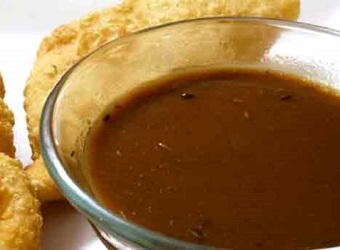
imli chutneyThe khajoor and imli red chutney: This chutney is the life line for all kinds of chaat. My favourite way to enjoy this one is when it is liberally garnished fresh dahi wada. This one is a sure shot hit with anything from ragda patties, to khaman dhokla, samosa pav, to sev puri and my favourite, dahi batata puri.

Here’s how you make it: In a thick-bottomed pan, pour 3 cups of water and add a ball of imli (about 200 gm), a handful of dates and 150 gms of sugar, and let it simmer till the mixture becomes mushy. Then take it off the flame and let it cool. Once cool, whizz in a blender until smooth. Put this mixture back in the pan, on a medium flame and add one teaspoon each of saunf (fennel), roasted and ground jeera (cumin seeds) and chilli powder and salt according to taste. Once the sauce is boiled, take it off heat. You can add water or cook it down based on the consistency you want.

Hot tip: Try adding thin slices of banana to this imli-khajoor ki chutney and enjoying it as a fruit fondue of sorts with apples, mango, chikoo and pineapple.

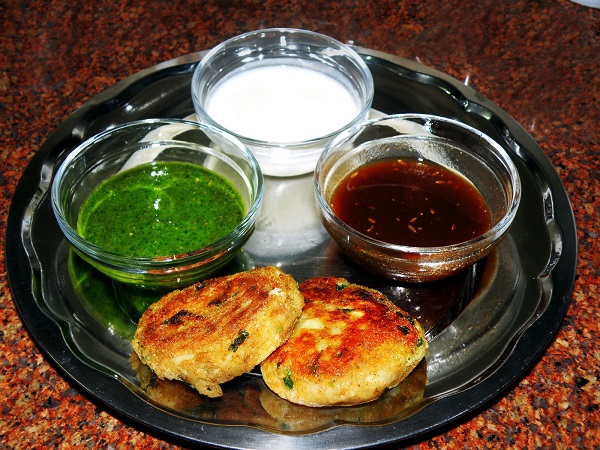
Green dhaniya chutney: This one is the more robust version from the khatta family of chutney. Usually seen as an accompaniment to succulent kebabs, it can be made with lots of green chillies to add a special smack of heat. Again, this is a universal companion to all chaats and of course, the bhajjis and pakoras. My favourite way to enjoy it is with palak patta crisp pakoras.

Here’s how you make it: In a blender, put a big bunch of dhaniya patta (coriander leaves) and whizz until the leaves turn to puree. To that add 7-8 cloves of garlic and an inch of ginger. You can also add a few chillies depending on the amount of teekha you can handle. Then add a teaspoon of dry mango powder or juice of two lemons and salt to taste. Blend again with a little water. Now you can add some mint puree or some curd or even the tamarind chutney to make your own concoction.

Hot tip: Try adding a little radish (mooli) along with curd in dhaniya chutney and enjoy with besan ka cheela (gramflour pancakes) on a rainy evening. You can also add dry pomegranate seeds to mint and dhaniya chutney. It tastes absolutely brilliant and is known to augment digestion.

Garlic chutney: This one is also a hot favourite amongst Mumbaikars. Its dry version is made with sun dried garlic and chilli. It tastes superb with vada pav. The wet garlic chutneygarlic chutney goes famously with the South Indian cuisine. You can enjoy stews with appam and this heady mix of onion garlic and tamarind.

To make this, put 10 cloves of garlic, 5 red chillies and 5 small onions with a teaspoon of tamarind pulp in the blender. Heat one teaspoon of oil in a pan. Add half a teaspoon of mustard seeds and some curry leaves. Once they splutter, add this mixture and cook on medium flame. Keep adding water in order to prevent from getting too thick. If the chutney starts sticking then keep on adding oil little by little.  Once the chutney is thoroughly cooked, take it off heat and let it cool. I personally prefer this one to its traditional coconut counterpart.

I guess I can go on talking about various chutneys that adorn the Indian dining table! But the craving that has set in thanks to writing this column is forcing me to run to the bhelwallah downstairs and enjoy his special dahi batata puri with loads of imli chutney on top. Slurp!

Anurita Gupta is a media professional who is passionate about two things – food and radio. Her love for all things food makes her a foodie with a cause.


(Pictures courtesy commons.wikimedia.org, bombybo.com, priyaraosrecipes.blogspot.com, vineelascooking.blogspot.com)

Exit mobile version