Categories
Learn

Governor wants Women’s Grievance Cell on campus

Governor K Sankaranarayanan wants eve-teasing, lewd comments, inappropriate language and gestures to be reported, women to feel confident of redressal.
by The Editors | editor@themetrognome.in

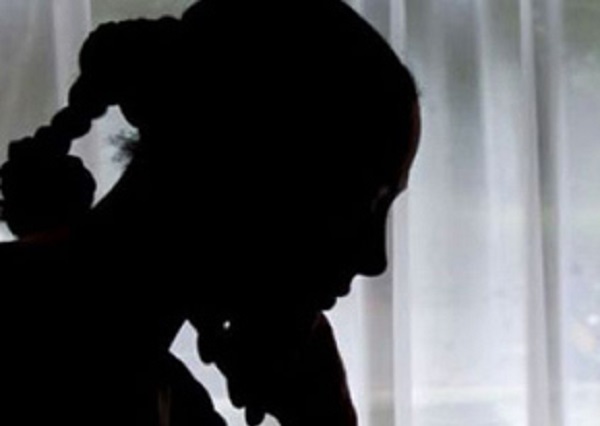
The Governor of Maharashtra K Sankaranarayanan on Saturday asked educational institutions in the State to ensure that a Women’s Grievance Cell is active and functioning in educational institutions. He also asked educational institutions to instill confidence in girl students, so that they would report incidents like eve-teasing, taunting, use of inappropriate language, indecent gestures and inappropriate physical contact to the cell.

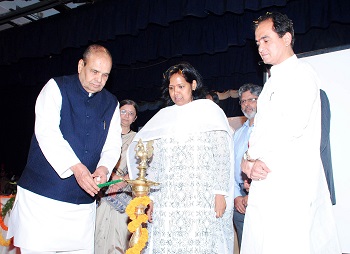
Maharashtra Governor starts the sessionThe Governor was speaking at a sensitisation workshop on ‘Measures to Tackle the Menace of Sexual Crimes against Women’ at SNDT Women’s University, Mumbai on Saturday, August 31. The workshop was organised by the All India Council for Technical Education (AICTE) at the instance of the Ministry of Human Resource Development. Sankaranarayanan said that on the opening day of the college, all the girl students should be assured of their safety and security and informed of the mechanism to redress their grievances relating to sexual harassment and violence.

The Governor asserted that the girls have the right to an environment of safe learning. “Apart from the Government, parents, society and educational institutions have the responsibility to ensure that girls are safe and supported in their colleges, homes and in society. The attitude of Indian society towards women suffers from deep-rooted prejudices and bias. The first survival test a girl has to face is when she is still in her mother’s womb. The biggest challenge is to change the mindset of society, of parents, of brothers and also of women towards a girl,” he said.

Minister for Women and Child Development Varsha Gaikwad, Minister of State for Higher and Technical Education DP Sawant, Chairman of AICTE SS Mantha, Vice Chancellor of SNDT Women’s University Vasudha Kamat and representatives of technical education institutions in the State were present on the occasion.

(Pictures courtesy dawn.com and Raj Bhavan, Mumbai)

Categories
Event

Bakin’ Huddle at Gorenje Studio

Foody Breaks’ baking class at Gorenje Studio combined a lot of fun with loads of learning, under chef Kunal Arolkar.
by The Editors | editor@themetrognome.in

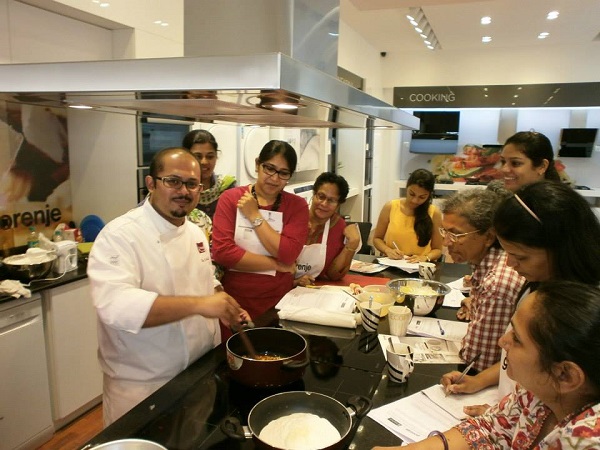
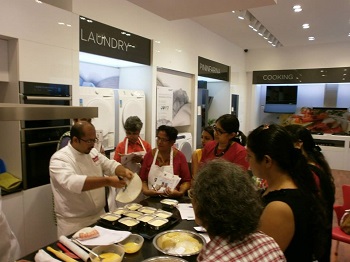
Bakin' Huddle1We were proud to partner Foody Breaks for ‘Bakin’ Huddle’, a baking class for Mumbaikars, on August 31 at Gorenje Studio, Lower Parel. The event was a lot of fun, with 11 Mumbaikars from different walks of life turning up to learn how to  put together five kinds of desserts, under the teaching of chef Kunal Arolkar.

Says Kunal, “We carried out a brief introduction of Gorenje India and Foody Breaks and I spoke of why I prefer Saturdays as the most preferred day to conduct such classes since you can use the following Sunday to practise what you learn, almost immediately. About 11 Mumbaikars turned up for the class, apart from two bloggers.”

Four products were taught over five recipes, as a few products had sub-recipes in them. “There was a highly interactive session with anBakin' Huddle2 effective Q&A, as there were quite a few questions from the participants. Plus there was a good coffee and product tasting round as well, to ensure everyone had sufficient energy to sit through the four-hour session,” Kunal says.

Kunal is happy to host more such classes. If you want to be part of the next class, check out our Contests and Promotions page for details.

(Pictures courtesy Kunal Arolkar)

Categories
Overdose

Hope is a four-letter word

When did we totally abandon hope and resort to cynicism in our daily lives? And who caused this to happen?
Jatin Sharmaby Jatin Sharma

Hope. It’s a four-letter word that is missing right now in our lives. With countless scams and rapes and the daily humiliation of the Indian public; hope is becoming an endangered species. With the falling rupee and with our politicians just playing the blame game, hope is being bashed every day.

That hope that was filling India with pride every day that Indians are different, that we run the IT sector so well that nobody can touch us when it comes to computers, that NASA would always have the most numbers of Indians on its roster, that Indians would be the torch bearers of progress worldwide…where is that hope today? I thought I would never leave India…I confess I am not so confident of that today.

Where did all the hope go? Our current crop of politicians are not newly-corrupt, at least not more than those who ruled when the rupee was 48 against the dollar. This is also not the first time that onions have become as expensive as gold. Then why are we feeling more hopeless today?

One reason could be that because recently our media has just been reporting the bad parts of our lives. When you pick up your daily newspaper, it seems like the bad news of yesterday was printed again today, with a few details changed. About 40 per cent of political reportage is about scams and bribes, 30 per cent comprises things that are not right with the city, 17 per cent is about rape, murder and someone committing suicide, 10 per cent is about sports and the economy and the remaining 3 per cent is about one or two good things that are happening in the city.

bad news in the newspaperYes, people can argue that this is a way that revolution can be brought and we are questioning the wrong. But are we looking at the side-effects? How many times have you heard people reading a news story and saying, “Iss desh ka kuch nahin hoga“? The news is filled with so many negative stories and the positive stories receive such less space that there seems to be a determined effort to make cynics out of all of us.

There are so many positive things that happen in society, there are so many who do little things that speak of big change. People who refuse bribes. People who insist on their roads being repaired right away. Politicians who genuinely work for the people. Policemen and taxi drivers who are honest and help others. Why is it that the media only thinks of making a splash with news that are negative, while the positive stories appear in a little corner of the newspaper, or not at all?

Is it because hope is quite an expensive thing?

We all need hope. We all train our eyes on the US and comment on how well they have done for themselves. But we don’t see that they have a legacy of 234 years, while we are a 67-year-old country that doesn’t believe in bombing people for oil. We have done well enough for ourselves to rise and carve a niche. Yes, we are facing a lot of serious issues at the moment, but which country is not? The world is going through a bad phase (and some people hint at US credit card bills as the reason for economic hiccups all over the world). We are a country who made the British leave and flagged off the end of imperialism. We can take a little tumble in order to get back on our feet.

But all of this, if we only have hope. That hope will come from reading the right things, not just about scams and killings. It is time to pack a punch with hope and faith. We should all be able to say, “Iss desh ka sab kuch ho sakta hai, agar main chahoon toh.” And that can happen only if our media starts printing positive stories too so that the current generation starts believing that perhaps this country is not so bad. And we are not in a pit hole where no one can come to us and save us.

It’s just a four-letter word. But it can and will save us.

Jatin Sharma is a media professional who does not want to grow up, because if he grows up, he will be like everybody else.

Categories
Achieve

Mumbai boy wins national DJ finals

Mumbai’s DJ Roane Ace won against 12 other shortlisted DJs; he will represent India at London in October this year.
by The Editors | editor@themetrognome.in

The DMC World DJ Championship, which is the prominent showcase for DJ talent around the world, held their India national finals two days ago. The finale had 13 top DJs from all across the country battling it out for the winner’s spot.

The shortlisted contestants were DJ Monty (from Pune), DJ Eshwar (Mumbai), DJ Manoj (Mumbai), DJ Skip (Delhi), DJ Craig (Chennai), DJ Kave (Chennai), DJ Raw-Z (Chennai) DJ V-key Arora (Delhi), DJ Navendu (Delhi), DJ Nipun (Mumbai), DJ Rahil Khan (Mumbai), DJ Roane Ace (Mumbai) and DJ Ishy (Delhi).

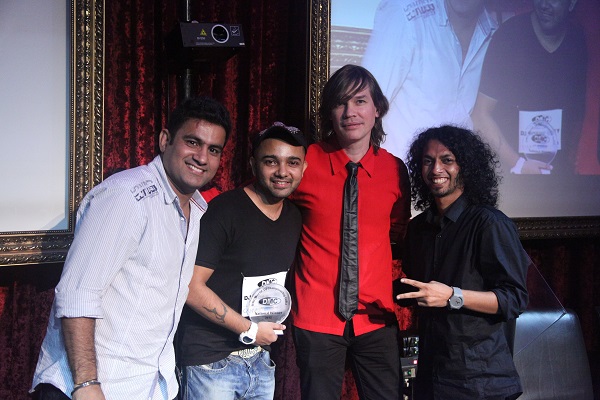
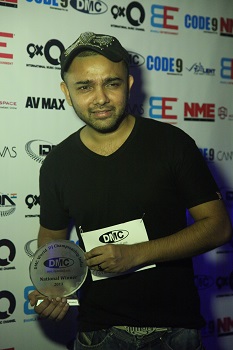
DJ Roane AceDJ Roane Ace (in picture on left) was chosen as the winner by an esteemed jury comprising Luke Kenny, DJ A-Myth and Sumit Shenoy. Leading turntablist DJ and artist URI Solanki hosted the event.

Roane Ace’s winning entry has earned him a chance to represent India in the world finals which will be held on October 5, 2013 in London. Additionally, the winner and the runners up of DMC 2013 will represent India at IDA that shall be held in Poland on December 7 this year.

On the eve of the finale, Abdul Salam Shaikh from Code 9, the firm that brought the championship to India said, “We had conceptualised this [event] with the aim of being able to recognise exceptional work in the world of DJing in India. It was exhilarating to witness the championship take shape, thanks to our esteemed partners and our esteemed panel of judges, who came on board to support this initiative.”

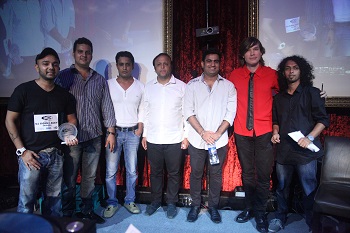
A spokesperson from DMC said, “The Indian finals were conducted on par with international standards, the audience received an opportunity to Judges with the winner DJ Roane Aceview some excellent sets by the contestants.”

Luke Kenny added, “I am overwhelmed by the unprecedented response received in the first installment of this championship. This platform was much needed to encourage, support and award the best budding DJs in India.”

 (Pictures courtesy Code 9)

Categories
Enough said

Come September…

A word to the wise as World Alzheimer’s Day approaches this month. But how much do we know about Alzheimer’s?
Humra Quraishiby Humra Quraishi

World Alzheimer’s Day is weeks away – it falls on September 21 every year. But days and weeks before that day, I sit introspecting on this baffling disorder, Alzheimer’s. Ever since my father was struck down by this disorder, (he died in the winter of 1996), I have been trying to focus attention on this disorder, together with ways to cope with and handle the patient. Today, with life spans on the rise, the numbers of Alzheimer’s-affected are on the rise.

Yet, there is little awareness of the disease.

Alzheimer’s is a progressive, degenerative disease that attacks the brain and results in impaired memory, thinking and behaviour. With memory cells shrinking fast, there is a gradual loss of memory, decline in the ability to perform routine tasks, disorientation with regard to time, personality changes and a difficulty to express and communicate. An estimated 26.6 million people worldwide were afflicted with Alzheimer’s in 2006; and this number may quadruple by 2050. There could be hundreds and thousands more affected by it, as the symptoms of this disorder are often mistaken to be age-related, or manifestations of stress or some form of ‘madness’.

Perhaps the biggest tragedy is that till date, there is little remedy in terms of a cure. There is no medical breakthrough yet in terms of Alzheimer'sharnessing memory cells. In the disorder, the memory reservoir becomes ‘polka dotted’, and the patient may remember his present and past life in fits and starts, or not at all.

With this in the backdrop, the role of caregivers and family members is of the utmost significance. The affected person needs to be handled with love and sensitivity. The caregiver must try to keep the patient in her or his familiar surroundings and preferably in the home environs, listen to them and try to talk to them, make them feel wanted. That  bonding helps even if the patient has reached the very last stage of the disease – when he or she is unable to recognise even close family members or children.

My own father was somewhat comfortable and happy if we’d clasp his hand and hug him. He would talk of his childhood, of his mother. Often, he would sob like a child, going from room to room looking for his mother, as though she was still alive…

I could write volumes on Alzheimer’s, but I must emphasise this: if there is an Alzheimer’s afflicted person you know, handle him or her as you would handle a baby, with a lot of love and care and sensitivity. There’s no substitute for human warmth. A great majority of diseases could be alleviated by just a touch of warmth and a bit of bonding. Clasping the person’s hand or giving them a gentle hug could provide them the comfort they need as they battle their confused thoughts.

Humra Quraishi is a senior journalist based in Gurgaon. She is the author of Kashmir: The Untold Story and co-author of Simply Khushwant. ‘Enough Said’ is her weekly column on current affairs, social issues and other musings.

(Pictures courtesy www.indianexpress.com, www.ekantipur.com)

Categories
Cinema@100

The man and his road to Mussoorie

A writer for all seasons – and who periodically interests Bollywood – Ruskin Bond talks about writing, India, and sex.
by Humra Quraishi

What’s Ruskin Bond doing in New Delhi at this time of year? This is exactly what I asked him, in our very first meeting, this week. Though I have been reading him for years, I never got to meet him. And when I finally did, the conversation between us simply flowed. I think popular and ‘ongoing’ writers (he has been writing for over half a century) like him follow certain basics and that’s what attributes to their success – besides good writing, of course.

The contributing factors are being absolutely down to earth and no shying away from talking about the twists and turns of their lives.

Ruskin Bond’s writing has attracted Bollywood on three occasions – Shashi Kapoor made the film Junoon based on Bond’s novel The Flight Of Pigeons, while Vishal Bharadwaj adapted two of his stories, The Blue Umbrella and Susanna’s Seven Husbands (which was named Saat Khoon Maaf), both of which were critically-acclaimed.


Anyway, getting back to the basic question, why did the very private man leave Mussoorie and land here now, and he said: “For one, I had to interact with children from three schools — two Delhi schools and one in Karnal and then one of my new books gets launched.”

The 79-year-old Ruskin Bond’s latest work is Hip Hop Nature Boy, a collection of short stories released in 2012, while Roads To Mussoorie was launched here in New Delhi in 2005, when I met him for the first time. He had this to say right at the start of our conversation, “Instead of a Foreward I am writing a Backward, because that’s the kind of person I have always been. Very backward. I write by hand instead of working on a computer. I listen to the radio instead of watching the television. I don’t know how to operate a cell phone”.
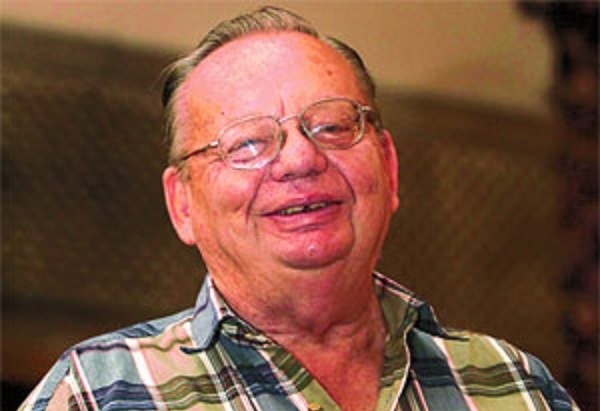
ruskin bondHe adds, “Sometimes, I read books upside down. If I have to read a modern novel, I will read the last chapter first, usually that’s enough. Sometimes, I walk backwards. In this book, I take a backward look at people I have known and interesting and funny things that have happened to me on the way up to the hills or down from the hills”.

Focusing his attention to the present-day situation in Delhi, I asked him about the spurt in rape cases. He said, “It could be the sexually explicit films being screened on the television, affecting young minds. Then, they are never told that romantic love is one thing and sexual anarchy is different. Our society is too repressed, so people try to break free and go on a rampage. Crime is worsening here, the situation wasn’t so in the 60s when I had lived here with my father who was an Air Force officer.”

Going by the photographs I had seen of Ruskin Bond, I was sure the writer would be one of those ‘difficult-to-draw-into-a-conversation’ types. But then, as they say, looks can be deceptive. And last week, in New Delhi’s heat and dust, he and I sat and chatted for almost 45 minutes. He was spontaneous, straight forward, and absolutely down to earth.

Excerpts from the interview:

Have you ever experienced loneliness? You haven’t married and have no constant companion.

I stay with an ‘adopted’ family, so that way the apartment is full of people. The apartment has four rooms and we are twelve people living in it. The family consists of a set of parents and their two sons who are both married and have children. Also, this profession – writing – is such that you can only pursue it in solitude. You have to be alone so that you can write. In the evenings I do go down to some friend’s home for a chat and a drink. I have two or three such close friends.

A lot of your readers, including me, have this little complaint about your writings – there’s very little focus on sex or say sexual romance. Why?

(Smiles, nods) You’re saying this, but once, during the Emergency, I was hauled up in court on charges of obscenity. Yes I was, for my novella titled The Sensualist. I had to appear in court, though I was later acquitted. And I must tell you that there was nothing explicit in the book — maybe some sexual references in a romantic context.

Why do you think there’s this sexual fury and madness today, in the form of so many rapes taking place?

Sex in a context – that is, sex in romantic love – is one thing, but sexual anarchy is totally different. Our society is too repressed and so people are breaking free and going on a rampage. Sexually explicit films are shown on television and this affects viewers as well.

Why did you decide to settle down in India, when you had the option of moving to the United Kingdom?

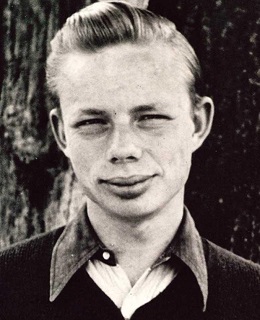
My mother did send me to England, but I returned. I wanted to be back and live here in India, although my two siblings are settled in Canada. I chose Dehradun and later moved to Ruskin Bond in his teenage yearsMussoorie, because earlier my mother and step-father (my mother had re-married, a Punjabi businessman) lived there. Later, I didn’t want to live in a town which was too far from New Delhi, because of my writing and meetings with my publishers.
You have always worked as a freelance writer. How difficult does it get on the financial side?

Financially, the going has been tough. All my life, I have lived in rented accommodation. It was only in 2004 that I managed to buy an apartment in Mussoorie. I wrote and wrote, for just about any publication in the country, be it a sports publication or Yojana. In fact, I must tell you this funny incident – that time Yojana was being edited by Khushwant Singh and though I’d sent a romantic and sexually explicit story, he published it in Yojana!

How do you manage with writing long hand in this age of computers and laptops?

Earlier, I used the typewriter but lately I had a back problem so I stopped typing. And now I use longhand. That’s the way I give my manuscript to my publishers. It’s a fairly neat hand!

You are a white person with a Christian name. Have you ever felt insecure on account of your minority status?

No, not now, maybe when younger. In fact, during the Independence phase I remember being hit by a stone in Dehradun. But nothing now.

You had just mentioned that your mother had married a second time – a Punjabi businessman. Do you have any half sisters or brothers and how did your stepfather treat you?

Yes, I have a half sister – Premila Singh – who lives in Ludhiana. She is about ten years younger to me. She even visits me at Mussoorie. Regarding my stepfather, he was okay. I was free to do what I wanted, he didn’t interfere in my life.

This interview was first published in The Tribune.

(Pictures courtesy www.indianexpress.com, www.memsaab.com, www.hindu.com,

Exit mobile version