Categories
Places

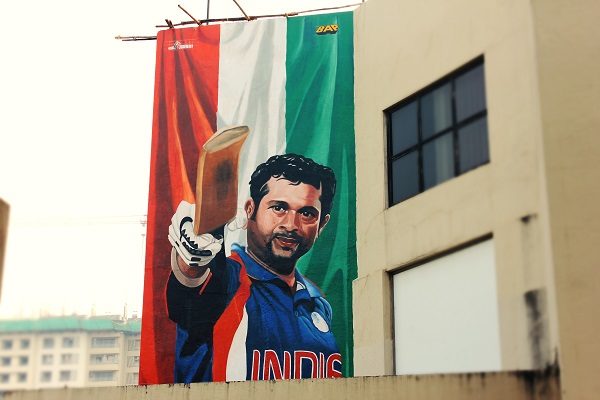
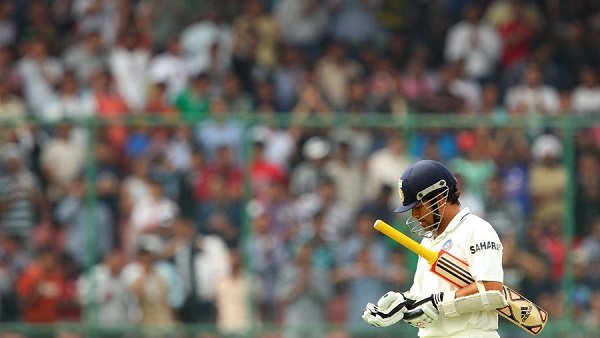
A 31′ x 15′ tribute to Sachin

Visual Disobedience and Ranjit Dahiya pay tribute to Sachin Tendulkar by covering MIG Cricket Club’s front facade with massive mural.

As the Diwali weekend began, Visual Disobedience, a platform for emerging and unconventional artists, got together with artist Ranjit Dahiya, known for the Bollywood Art Project, to pay tribute to the greatest cricketer of our times, Sachin Tendulkar. In light of his announcement to retire from all forms of international cricket, it was decided that Visual Disobedience (VD) should pay tribute to him through a permanent mural, one that becomes part of the cityscape.

However, it wasn’t just about painting a mural; it was as much about where the mural would be. “A set of brainstorms ended up being cyclical discussions in vain – I guess we could call them vainstorms – before someone suggested we approach MIG Cricket Club, Bandra (E),” says Suprateek Chatterjee, Editor, VD. “After all, that is Tendulkar’s home turf – a ground not too far from his residence where he has routinely trained for nearly 18 years and, what’s more, where his son Arjun comes to train.

“We approached the MIG Cricket Club management who welcomed the idea and offered us the front face of their building as a canvas to be covered by the mural, which Visual Disobedience shall maintain for perpetuity,” Suprateek explained.

The mural is 31 feet in height and 15 feet in width, making it the tallest existing mural in Mumbai. It has taken 10 days to complete. It required Ranjit to dangle in mid-air for long stretches and even a near accident.

“As the final Test match between India and West Indies, to be held at Wankhede Stadium from November 14 to 18 draws closer, our hope is that this mural will stand as a permanent reminder of what a life spent dedicated to sporting excellence can lead to,” Suprateek said.

“I have been painting for nearly two decades and have painted several murals all over Bandra under the Bollywood Art Project. Cricket is a religion in India and Sachin is a national treasure, and since he is going to be playing his last ever match in this city, I wanted to pay tribute to him. I chose to paint an image of him that is truly inspirational and conveys the passion and intensity he brings to the game,” said Ranjit.

(Picture courtesy Visual Disobedience) 

Categories
Become

Two sewing machines and a loan

That was how fashion designer Anita Dongre started her business, a multi-crore enterprise today. Anita talks about her incredible journey.
by The Editors | editor@themetrognome.in
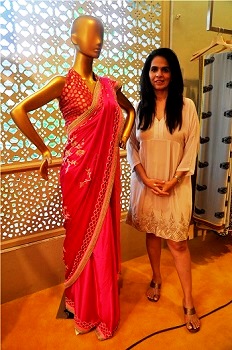
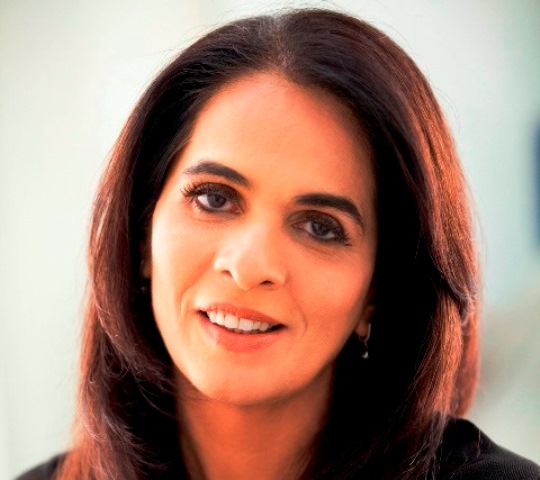
Anita DongreAnita Dongre (50) always knew that her true calling was in fashion. She also knew that her vision – for women across the country to have access to affordable, trendy wear – would hold her in good stead. From initial hiccups to a business that is now synonymous with chic, reliable and gorgeous design, Anita has come a long, long way.

Her journey, where she began her business from her bedroom to today, where she is slowly going global, is the kind of story that should inspire others with a similar dream. Anita spoke to The Metrognome about her work, walking the ramp for the first time, her favourite designer and what it really means to dream big.

Excerpts from the interview:

When was the first time you realised that you wanted to be a fashion designer?

Ever since I was a child I knew I would become a fashion designer. Also during my growing up years, I spent a lot of time in Rajasthan and developed an almost divine connect with the place which was also a source of inspiration for me, and continues to be so.

What was your family’s reaction to your fashion aspirations?

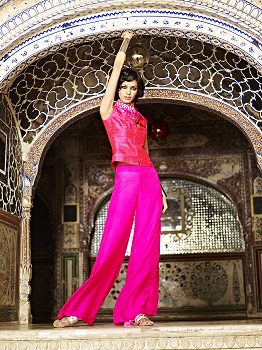
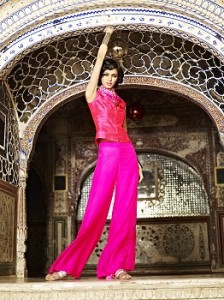
Making a career in the fashion industry was definitely not a common choice back then, and of course, I had to face a fair share of opposition from Interpret- Hot Pink Palazzo pants and Raw Silk Bandimy family who were resistant to the idea of me becoming a fashion designer – they did not take me seriously. No woman in my family had worked before and it was an unheard-of concept when I broached it more than two decades ago. My conviction and relentless pursuit of my dream changed their mindset.
What were your fashion studies like? How did the training help?

I studied fashion design at SNDT fashion institute in Mumbai. A formal training definitely gives you a better understanding of the industry and helps you hone your creative skills.

How did you start working? Didn’t you start with two sewing machines in your bedroom?

I did start small with two sewing machines in my bedroom and seeing my drive and passion for fashion, my father finally offered me a small loan to kickstart the business. I started AND in 1998 at a time when women used to get their outfits tailored. I wanted to give them a ready-to-wear affordable brand, offering western contemporary wear – [something] that they could visit and pick up outfits straight from the shelves. Moreover, the affordable pricing ensured that the wearer never runs out of options.
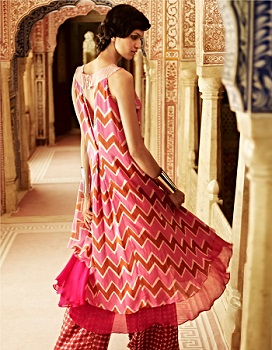
Block Print tunic with palazzosFrom a small start, you went on to retailing at malls under the AND label. What was that journey like?

It continues to be a very exciting journey. My vision, when I launched AND, was to reach out to every woman in this country with styles and designs that were not only pocket-friendly but bang on trend, [and which were] versatile and comfortable. The idea was to make AND a part of every Indian wardrobe and that could be achieved with accessibility of the brand. Today, we have 41 standalone AND stores and continue to retail from 250 points of sale across multi-brand outlets like Shopper’s Stop, etc.

So many labels to your name and a multi-crore business…how did you make this possible?

My conviction and relentless pursuit of my dream has made all this possible. And to date, it is my unrelenting passion and drive to be a creative fashion force that makes me what I am today! Along with a supportive husband, I have supportive in-laws and my parents who chipped in and helped me out whenever I needed them. The business is managed jointly by me, my sisters and my brother- they have been a huge support system in my life

What are the values you stand for at the workplace?

Hard work and passion is my mantra. If you’re passionate about what you do, working towards your goals is an effortless exercise and roadblocks seems like minor obstructions leading to a glorious, satisfying destination. The biggest example of this would be the three different and diverse labels that we launched since 1999 (AND, Global Desi and Anita Dongre, with sub-brands Timeless, Interpret and AD Menswear) and the growing reach and visibility of each brand, so much so that we went global this year with the launch of the first Global Desi store in Mauritius.

Please tell us about an interesting incident from your formative years as a designer.

I remember when I was just starting out as a designer, a close friend of mine pointed out how most Indian women either got westernwear tailored or bought clothes during foreign visits. That’s where the seed of launching AND was planted in my mind and I thought of creating a label that offered stylish westernwear, was affordable and would cater to the fashion Timeless- Ink Blue Raw Silk Lehenganeeds of women across age groups and sizes. And so AND was born.
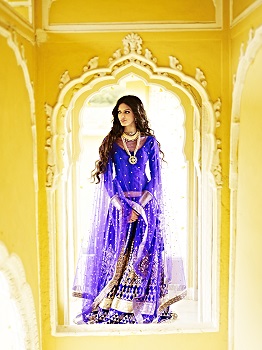
Which was your first fashion show (that used your clothes?)

My first fashion show was when I was studying fashion design at SNDT. I also walked the ramp for that show! It was an exhilarating experience and a truly memorable one

Who are your favourite designers?

I have always admired Giorgio Armani – for his creativity, his philosophy of style and the subsequent empire that he has created. I love his simple, clean and classic silhouettes, where he acknowledges the elegance of the uncomplicated.

What has been the biggest compliment you’ve received thus far?

That my clothes make women feel confident and great about themselves.

What’s next for Anita Dongre?

On my wish-list was a bespoke jewellery line, and after a year of creative labour, my wish was granted. I launched a line of jadau gold jewellery called ‘Pinkcity’ in association with Pradeep Jethani of Jet Gems. I started out designing jaali work-inspired gold buttons and cufflinks for men, and eventually did an entire collection for both men and women! Pinkcity is a natural extension of our fashion line as jewellery forms an integral part of the wedding trousseau.
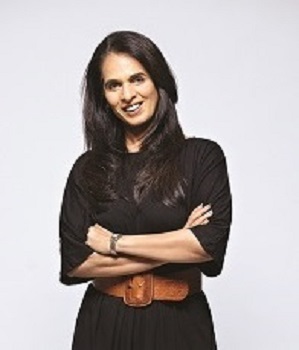
Anita DongreOn a larger scale, my vision is to go global with all my brands – AND, Global Desi and Anita Dongre. This endeavor too, is taking shape since we have very recently opened the first Global Desi store in Mauritius

What are your words of advice for other aspiring designers?

There is a lot of scope and opportunities for young designers to showcase their talent today. You have to be passionate, driven and always remember that there is no shortcut to success. Learn and imbibe as much as you can from your seniors in the industry.

(Pictures courtesy Anita Dongre)

Categories
Big story

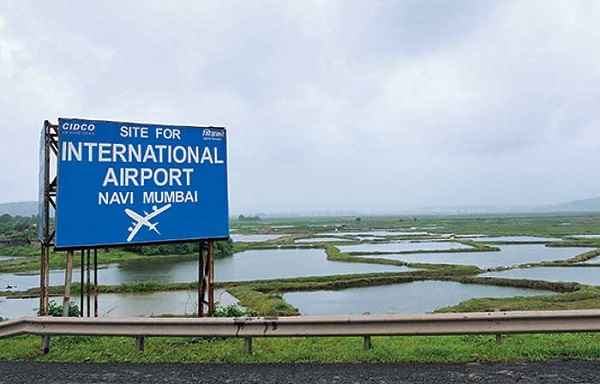
Decks cleared for Navi Mumbai Airport plan

Protesting farmers and Maharashtra State CM Prithviraj Chavan finally reach an agreement over compensation and land package for the sale.
by The Editors | editor@themetrognome.in

In a meeting that lasted over two hours on Monday, November 11, 2013, the State Government of Maharashtra and farmers from Ulwe village (Panvel) finally reached an agreement over the compensation package for the land sale over the Navi Mumbai airport issue.

In a press release issued from State CM Prithviraj Chavan’s office, the Government is said to have agreed on giving 22.5 per cent land back as developed plots out of total land acquired from the farmers whose lands will be affected as part of the airport project. Earlier, the farmers had insisted on 35 per cent land back as part of the compensation.

Once complete, this will be the city’s second airport.

The press release says, “The 22.5 per cent land back offer (12.5 per cent from State and 10 per cent from CIDCO) was agreed to by the representatives of the farmers. The State has decided that each farmer that will be displaced by the project will get a house that is triple the size of his existing house. Further, the land that will be given as compensation will be close to the airport project, so that the end beneficiaries may gain commercially from their proximity to the airport.” It is being discussed that the land will be developed with modern infrastructure as well, and will be called ‘Pushpaknagar’.

However, the package comes with a rider from the CM – if the project and the rehabilitation component is perceived as ‘too costly’, the State will remain free to explore “other options”, he is learnt to have said during the meeting.

The Navi Mumbai airport project is spread over 1,160 hectares of land, out of which 685 hectares were already in the possession of the City and Industrial Development Corporation (Cidco), which officiates as the nodal agency for the project. The Central Government had granted the necessary environmental clearances to the project over three years ago. However, farmers’ agitating over the lack of clarity over compensation from the State had held up progress in the matter till date, over the remaining 475 hectares. The required land surveys for the project will begin soon, and the CM has instructed that a review meeting with the project-affected farmers/their representatives be held every week from now.

(Picture courtesy shaikhhashim.blogspot.com)

Categories
Kharcha paani

Want to see Sachin play? Get tickets online

There is a clamour for tickets for the Wankhede Test match from all over the world. Ticket sales begin today.
by The Editors | editor@themetrognome.in

Sachin Tendulkar is retiring soon, and there is a growing clamour for tickets to see him play for the last time, from all over the world. The Mumbai Cricket Association (MCA) is reportedly fielding calls from Indian and international VIPs, as well as citizen and religious organisations, for tickets.

The initial plan was to sell tickets exclusively through the ticket windows at Wankhede, where Sachin’s last match begins on Thursday, November 14 – however, given the high demand for tickets, tickets will now be sold online. Ticket sales begin today.

It is learnt that the Australian High Commission is among the international VIPs asking for tickets. Even the press box, which accommodates 250 journalists, has over 1,000 applications this time. Politicians from across party lines, sportspersons and embassies of other cricketing and non-cricketing nations have also put in ticket requests.

As of now, there are only 5,000 seats open for the general public. Wankhede seats over 32,000 people – however, the BCCI has 2,500 tickets, 12,000 tickets are to be given to gymkhanas and Garware Club members, Sunil Gavaskar has asked for 75 tickets and Sachin himself has been given 500 tickets by the MCA.

The price range for the online tickets is Rs 500, Rs 1,000 and Rs 2,500. Only two tickets will be issued per person. The ticket pick-up counters will be set up at the Mumbai Hockey Association (next to Wankhede) November 12 onwards.

Read more on the story here.

(Picture courtesy www.ipl-6.com)

Categories
Event

John Abraham, Raageshwari flag off ‘diabetic walk’

PD Hinduja Hospital, Mahim, marks World Diabetes Day with over 125 participants from the hospital to Shivaji Park and back.

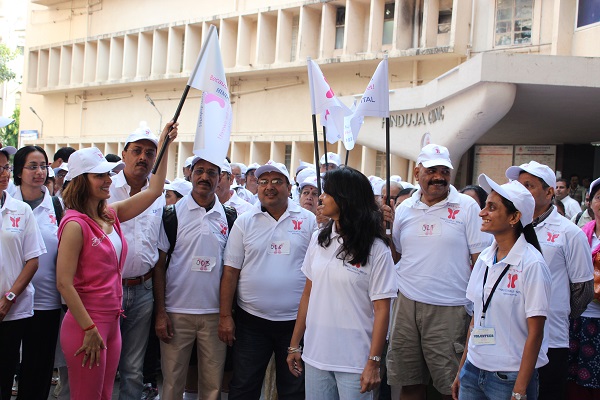
Bright and early on Sunday, November 10, 2013, Mumbai witnessed a one-of its kind ‘Diabetic Walk’ anchored by PD Hinduja Hospital to mark World Diabetes Day (WDD). WDD is observed every year on November 14.

The Walk saw the participation from over 125 people from Mumbai, and was flagged off singer Raageshwari. The event also saw the presence of actor, producer John Abraham at the awareness programme held later by the hospital staff. The participants began the walk from Hinduja Hospital, Mahim and moved on to the prominent landmark of the city – Shivaji Park – before returning to the hospital.

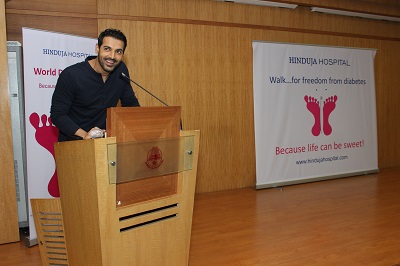
John Abraham addressing the audience  at the Diabetes Awareness Programme by P D Hinduja HospitalFitness enthusiast John extended his support to the Diabetes awareness programme and addressed the participating group, wherein he shared insights on the importance of exercise in order to maintain a healthy lifestyle, especially for diabetic patients. In addition, educative talks were also held by doctors and dietitians from the hospital’s endocrinologist department to reiterate the importance of maintaining a healthy lifestyle to both prevent and live with the disease.

Speaking on the occasion, Dr Phulrenu Chauhan, Consultant Endocrinologist and Head, Department of Endocrinology and Metabolism, said, “Diabetes has emerged as a major healthcare problem in India. It is estimated that every fifth person with diabetes will be an Indian. The transition from a traditional to modern lifestyle, consumption of diets rich in fat and calories combined with a high level of mental stress and lack of physical activity in daily life has compounded the problem further. Due to these sheer numbers, the economic burden on account of diabetes in India is amongst the highest in the world. At our hospital, our vision is to get the masses to take notice of the ailment and prevent it through physical activity and lifestyle modifications, along with medications. If not controlled, the hazardous complications invariably follow in a poorly controlled diabetic.”

Some facts and figures for diabetes:

– India has 61 million diabetics between the ages of 20 to 79 years, according to the International Diabetes Federation.

– By 2030, this figure is estimated to go up to 101.1 million

– Maharashtra State ranks second in the country as regards to the total number of young diabetics. These young diabetics can be as young as 20 years of age.

– 35 minutes of exercise may reduce the risk of diabetes by 80 per cent.

– Burning 100 calories a day through walking, running or other exercise may help you prevent gaining about 2 to 5 kilos a year.

Categories
Enough said

The mark of a journalist

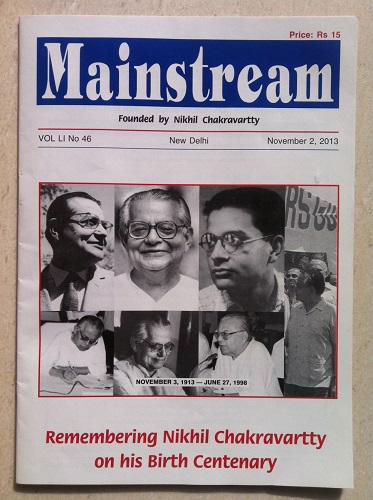
Nikhil Chakravartty was everything a journalist should be – ethical, simple and scholarly. They don’t make journalists like him anymore.
by Humra Quraishi

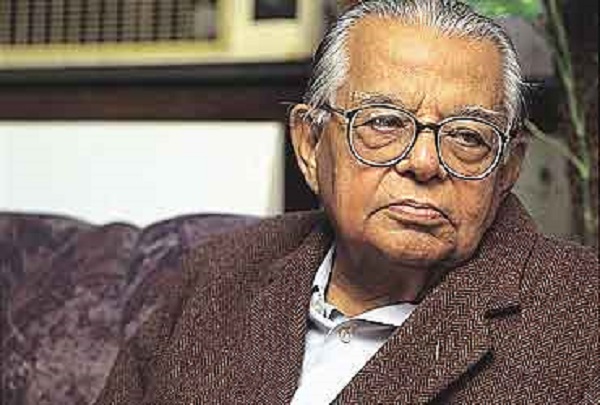
This year, on November 3, noted journalist Nikhil Chakravartty would have turned 100. On the occasion of his birth centenary, there were several people from the fraternity and outside it, who got together in New Delhi for a two-day international conference organised by the Editors Guild of India, India International Centre, Nikhil Chakravartty Foundation and the Centre for Media Studies (School of Social Sciences, JNU).

I loved what Bangladesh’s former Foreign Minister, Dr Kamal Hossain said. “As we look forward to a common future for South Asia, we should begin to identify basic common objectives. Clearly, the first on the list must be peace and stability in our region in interests of the poor and the deprived in each of our societies. Development, in this context, must mean sustainable human development that must be sensitive to environment and social concerns. A sound test of a people-centred development is how it improves the conditions of the bottom 50 per cent of our populations?” he said.

birth centenaryI first met Nikhilda in the spring of 1987. He was then the Chairman of NAMEDIA, editor of the weekly Mainstream, and his column in the Sunday Observer was said to be the ‘pulse of the country’s political scenario’. He used to stay in New Delhi’s Kaka Nagar, a typical government colony, but his ‘D11’ type apartment stood out from the rest with its post office-red gate. I was so impressed by the colour that the very next day I went out and bought the same paint and painted all the doors and windows of my house with it!

There was something about his personality, too, that stood out as much as the red gate of his home. Forthright and bold, he never looked hassled or angry, and was one of those few journalists who spoke and wrote fearlessly against the political establishment and the mess in society. He was one of those veterans in the field who believed in delving right into the causes of issues, fishing out the details.

I asked him, “How do you travel for work?” He replied, “Well, I catch a bus. I have no reservations about that. And I prefer to travel alone. For my profession, travelling is a must, as I want to see for myself the situations and ground realities as they unfold, whether here or in Iran, Poland or in Afghanistan. You have to travel and meet the masses.”

I mused on that for a while, then said, “What would you say about the hypocrisy in society, affecting our attitudes towards women?”

He said, “It is a complex situation. Our society is one of extremes – either we are totally withdrawn [from issues] or we are head over heels in love. The balance is missing. It is deep rooted because of our social background, which is a mix of feudalism and modernisation. But someday, we will be able to get out of this. Take the example of China, where women were oppressed, but Mao’s revolution changed the whole nation.”

I asked him his opinion on modern India. This is what he said, “In modern India, society has less taboos and individual freedom is encouraged. But do let me add, with emphasis, that with all our modern living, a great amount of insensitivity has crept in. Norms have been shattered. There is no ‘Indianness’ left, the only views thriving belong to the RSS and Arun Shourie. We have not developed culturally, and that’s the root cause of our decay.”

Humra Quraishi is a senior political journalist based in Gurgaon. She is the author of Kashmir: The Untold Story and co-author of Simply Khushwant.

(Pictures courtesy www.outlookindia.com, wearethebest.wordpress.com)

Exit mobile version