Categories
Big story

‘Blood on call’ to be operational from tomorrow

In case of an emergency, you can call a helpline and get blood delivered to your doorstep within the hour.
by The Editors | editor@themetrognome.in

It is a novel attempt, and the country’s first, to have a ‘blood delivery’ service operational. Maharashtra will formally roll out its ambitious ‘Blood On Call’ or the ‘Jeevan Amrut Seva’ emergency blood supply service all over the State from tomorrow, January 7, 2014.

The Government has been testing the service for a year now – the pilot project was launched in Satara and later Sindhudurg, last year. Tomorrow, the State’s Health Department and Maharashtra Chief Minister Prithviraj Chavan will inaugurate the service for all of Maharashtra at the State-run JJ Hospital, Byculla. The inauguration will take place at 4 pm.

What’s the service about?

“Too often, people requiring blood of a certain group have to run from pillar to post to get it. If it’s an emergency, every minute counts. With the ‘Blood On Call’ service, people can simply dial the toll-free number, give the details of the blood group and the reason for requiring it, and the blood will be delivered within one hour,” explained State Health Minister Suresh Shetty. The blood will be priced “at pre-decided Government rates” and will be of “good quality”, the Minister assured. Users will need to dial 104 and the required numbers of packets will be delivered in sealed containers in an hour. The call centre for the service is currently based in Pune. However, coordinating centres in 10 major cities in the State will be fully operational in the next four months, Shetty said. For now, existing blood banks in the State are part of the network for this service.

When the coordinating agency sends its representative to the patient, a quick cross-match of blood type is done via a blood test. Once the blood type and specific requirement (for plasma, RBC, platelet or whole blood) is ascertained, the packets will be sold to the patient at a rate of Rs 450 per bag. Transport costs will also have to borne by the patient – Rs 50 for a distance of up to 10 km, and Rs 100 for up to 40 km.

The service will be operational in Mumbai and rest of Maharashtra from January 7, 2014.

(Picture courtesy zetco.pk)

Categories
Hum log

The all-in-one autorickshaw guy

A resourceful autowallah in a city known for awful drivers, Deepak Shewale is clued in to passengers’s likes and preferences.
by Nidhi Qazi

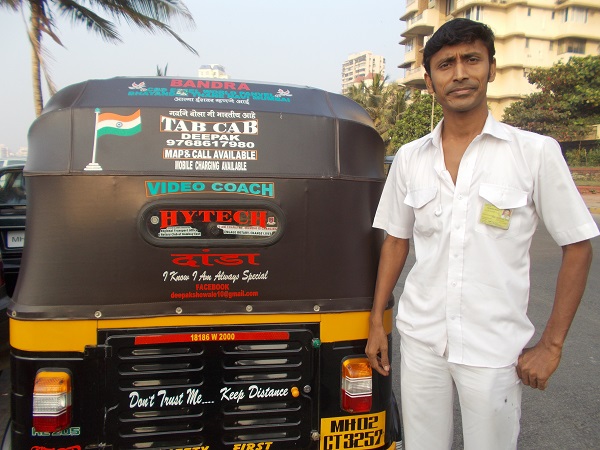
In a city full of autorickshaws, there is one among a few which stands out. And why? Because the machine, the mode of transport is more than that – a machine – for its owner Deepak Shewale, an autorickshaw driver in the city for the past 13 years.

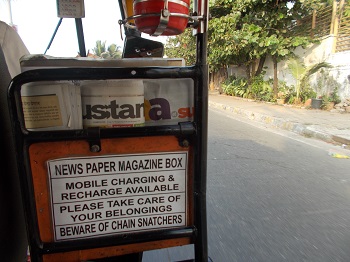
Deepak’s auto is anything but boring. From inspirational quotes stuck on the insides of the auto, to a tablet, to mobile recharge vouchers, Deepak has a lot to offer. It doesn’t stop here. Passengers also get the privilege of reading the day’s newspapers, fresh drinking water, and even medical care, with basic medicines like Crocin and Combiflam on offer. He has also put up pictures of a few celebrities how have boarded his auto in the past.

For the 35-year-old Deepak, a resident of Khar-Bandra, and a native of Baramati in Maharashtra, his auto has garnered him popularity from passengers. He says, “There has been an increase in the number of passengers. Moreover I also have passengers who call me regularly for services and have now become my fixed clients.”

Why is his auto so different from the others that ply on Mumbai’s roads? He says, “After the 26/11 terror attacks, I understood the true meaning of emergency. I got inspired to do something for my passengers.” The amenities in his auto serve his passengers and him both. For instance, the tab helps him navigate the city better – he uses Google Maps to reach his destination and also offers the service to his customers – besides entertaining present company with songs and movies.

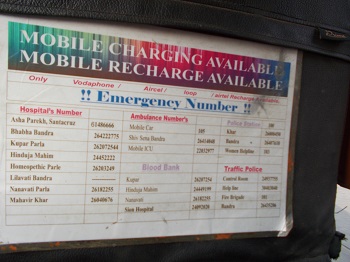
The passengers also have the convenience of emergency helpline numbers. But what makes Deepak really stand out from most others of his creed is that he plies passengers who are in need even after working hours. “Even if I am done for the day and headed back home, I take passengers in an emergency aboard,” says Deepak, who mostly plies around Bandra and Khar.

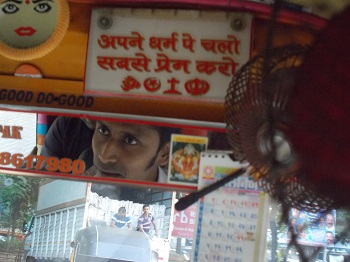
Another interesting aspect of his auto is the variety of posters and quotes he has put up, ranging from the philosophical to the funny, and from the religious to the informative. Here’s how one goes: ‘Gussa kya hai? Kisi ki galti ki saza khud ko dena (What is anger? It is punishing yourself for someone else’s mistake)’. Another one reads, ‘Think good, do good’. A little fun one says, ‘Paise ko jeab mein rakho, dimaag mein nahi (Keep money in your wallet, not your head).’ There’s also a poster displaying scientific trivia, a nod to Deepak’s interest in the Discovery channel.

Deepak was recently felicitated by the RTO and the Rotary Club of Mumbai for his ‘Social work for Community’.

The social media fad has also caught this auto driver, and he also has a page on Facebook. “A customer gave me this idea so I created a page on Facebook. It doesn’t really help me but it is okay,” he says.

With an income of Rs 20,000 a month, don’t all the amenities cost him extra? “No, because most of them are a one-time investment like the TV, the tab and the music system. Moreover, my passengers feel happy that I provide all these services and say that this is a really nice initiative.”

Deepak also takes inputs from his passengers. For instance, the quote, ‘Give Respect , Get Respect’ was changed to ‘Respect is commanded, not demanded’ when “a passenger pointed out that there is a better way of saying the same thing.”

What is that keeps him going at all of this? He grins, “Initially it was to help people; now also it’s the same but it has become of a hobby which I like pursuing. I keep thinking of ways to improve the auto and the experience of my passengers.”

Shewale plans to fix a cooler to fight off the heat and install a CCTV in the coming days. “CCTVs can come in handy in keeping a watch and being vigilant in the case of fishy passengers,” he explains, adding that he is also thinking of garnering advertisements for a better income.

For the time being, though, he prefers to keep going in his extremely colourful autorickshaw. As he takes my leave, he adjusts his converted recliner seat and drives off with a smile.

To book Deepak Shewale’s auto, call 97686 17980.

(Pictures courtesy Nidhi Qazi)

Categories
Kharcha paani

DIY sales for first-timers

It’s daunting to balance the creative and sales sides of your company, but it sure makes you a complete entrepreneur.
by The Editors | editor@themetrognome.in

Contrary to popular belief, it is not that tough to be both the creative brains of your company, and its chief sales officer. With several start-ups springing up all over the country, it is time that entrepreneurs learn how to crack the sales code.

Gone are the days when you could be just the ‘creative guy’ in the company and sit back and wait for your business to make money. Yes, you can hire a sales and marketing team to get the revenues for your business, and many do, but with an increasing number of people opting to start their own companies with little capital, they realise that they must know a little about each aspect of running their own firm.

Take for instance, Shambhavi Gupte, a hairdresser who has now started her own line of natural hair products. “When I started, I got a website made and decided I would sell to those who placed orders. I had a big network of customers who were regular buyers. But later, I realised that I had to offer something different, I couldn’t depend only on orders to grow my company. I decided to tie up with partners from the industry to get some funding.”

Shambhavi couldn’t afford to hire a full time sales manager, so she played it smart – she connected with her contacts and got the names of marketing heads from various companies and vendors in the hospitality industry. “It was tough – I didn’t know how to make a sales pitch, I didn’t even know how to prepare a PPT. But after initial hurdles, I cracked my first deal.”

Says Harish Gadre, marketing head at city-based dentistry chain, “Too often, creative departments are snobbish about considering the sales aspect of an idea. Sales is what gets the money in, but creatives tend to look down on it. However, start-ups’ very existence depends on sales, so increasingly, many new companies are working seamlessly between their creative and sales sides.”

If you’re a start-up owner, consider this:

sales planUnderstand how sales work. Sales and marketing goes way beyond strolling into a client’s office, explaining one’s project and walking out with a sponsorship deal or advertisement. Companies see several sales pitches on a daily basis, and the sales personnel has to be very alert in seeing which rivals have already approached a client. If you’re taking the plunge into sales, be armed with information about your client, what initiatives the client would be most interested in, how the client can be persuaded to deal only with you, and most importantly, be persistent but not pushy. You might have to make multiple trips to crack a deal.

Design a sales plan. No sales plan is identical. You have to tweak it based on which client you are approaching. For this, you will have to research your client’s preferences, the time of the year when they are most likely to spend for advertising or funding, past campaigns that worked for them, and what kind of value your tie-up with them can offer you both.

Besides this, most companies prefer to study a PPT presentation outlining your pitch. Study the best marketing plans before you proceed to formulate your own.

Get as creative as possible – within bounds. It is one thing to devise a campaign using the most creative methods, but will it get the campaign any money? If your campaign will drain more resources than bring revenues in, it is time to plan again. If you can’t work out the financials yourself, hire a sales manager on a project basis who will design a plan best suited to the market and your campaign. The sales manager will make a percentage of money based on your overall revenues. It is also important to compile a list of media contacts, in case your campaign’s success hinges heavily on publicity.

Set up a meeting. This one can get tricky, especially if you’re about to get a meeting with the company for the first time. Try and find out which mode of communication the concerned person is most comfortable with before you contact them. When you eventually establish contact, explain about your company as concisely as possible, and that you are requesting a meeting to discuss business. If the person doesn’t revert immediately, try getting the appointment again, but don’t stalk them.

The meeting itself. Dress smartly and carry a presentable briefcase or folder to the meeting. All the information about your company should be with you in printed form, so sales meetingyou can hand out a copy if asked to do so. Your sales pitch should also be printed out and an extra copy made for the client to study. Some marketing managers may immediately indicate that they would want to associate with you. For them, you should have a clear agenda on how you will proceed with the association, what the client is expected to do next, and what the terms of payment will be. Always carry your company’s tax details, bank account details and PAN number with you.

Converting the Nays into Ayes. No client, whether somebody you know well, or somebody you’re meeting for the first time, will immediately acquiesce with your ideas, however brilliant they may be. Ultimately, the client has to part with cash, and each company has a fixed spending budget per year. Be patient and open to negotiation on a reasonable basis. You may have to curtail your potential revenue to secure that client’s business, so when you design your plan, realise that negotiations might arise and cut into your income.

Some clients are clear that they want to do business with you, but they want a discount. In case you offer a discount, make sure the client knows that this is a special consideration you are offering them. If possible, try to widen the scope of the contract to benefit you, since you are effectively taking lower money from the client.

Offer a come-back-to-us plan: So you’ve secured business from a good company, but how do you ensure that a rival doesn’t poach your client? What if the client decides to try a new partner once your association ends? Keep studying your client’s business, and constantly stay in touch. You might want to send personalised gifts on that company’s special occasions, or offer a mid-contract discount, or even a free service. You have to ensure that the relationship, starting on a purely business level, slowly transforms into a personal one. If you are also providing value to the client, the company will think twice before opting for another partner in the future.

(Pictures courtesy www.wisegeek.org, victorycircles.com, www.datadrivensalesmanagement.com)

Categories
Enough said

Starting the new year on a high

While the AAP has brought new energy into our politics, lit fests are striking the right note in civil society.
Humra Quraishiby Humra Quraishi

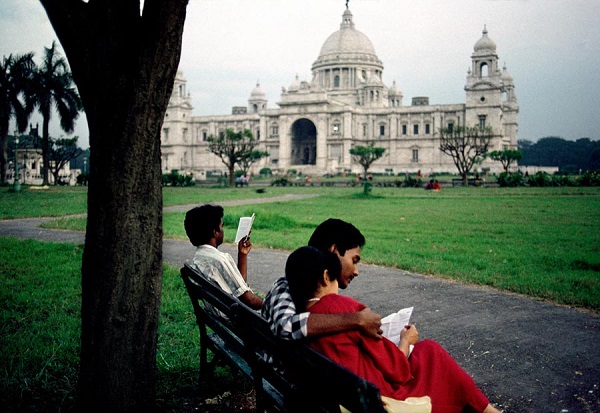
This new year has started on a note of hope. Yes, the Aam Aadmi Party (AAP) wave has a lot to do with that, at least here in the capital city. Everyone has a wish for the new year…mine is that AAP’s branches, offices, and the enthusiasm of its volunteers and workers spreads to other locales in the country and reaches the people across communities. I would dearly love to see the AAP dent the supposed strongholds of the BJP-RSS and the Congress and SP all over the country.

The other thing getting me considerably excited is the wave of new book releases. I particularly loved this line I recently heard: ‘Tomorrow is the first blank page of a 365-page book. Write a good one.’   

Books and literary festivals are back on the circuit. Even sleepy little towns are planning to host literary dos. And why not! If we can have a newspaper, Khabar Lahireya, published and compiled by a women’s group in the rural stretch of Eastern Uttar Pradesh, we can certainly have small towns hosting literary meets. Still, I was surprised to hear that two literary festivals could be coming up in Lucknow and Gwalior and Bhopal. The list is long: already about a dozen cities of this country are hosting these meets – Mumbai, New Delhi, Jaipur, Cochin, Bangalore, Agra, Chandigarh, Hyderabad, Chennai, Goa, Kolkata and Kasauli.

And I hear that an Urdu Literature festival is starting in Patna. Rakhshanda Jalil is organising it in collaboration with the Government of Bihar on January 4 and 5, 2014. Called Jashn-e-Urdu, it will have panel discussions, book exhibition, film screenings, mushaira as well as ghazal singing and a play by Tom Alter.

Can other cities and towns and villages start hosting such meets? I have been telling my writer friends living in different parts of the country to get together and organise a literature fest. But most of them look worried and nervous – of course, organising such an event cannot be without its pitfalls and stress, but there is no need to get too ambitious or go overboard. These fests could be small, and manageable to host, expanding gradually over the years.

But why do I insist on more literature fests? Because nothing unites and educates like the pen does. We saw this during the days of the Raj, when rebel writers and poets unleashed their disgust against British brutalities through their writings. What can be better than uniting our present-day society than a literature festival that educates as well as entertains?

Humra Quraishi is a senior political journalist based in Gurgaon. She is the author of Kashmir: The Untold Story and co-author of Simply Khushwant.

(Picture courtesy stevemccurry.com)

Categories
Kharcha paani

Marine Drive, other S-Mumbai roads to be strengthened

BMC’s Standing Committee hopes to pass proposal to repair, rebuild and concretise South Mumbai roads at Rs 150 crore cost.
by The Editors | editor@themetrognome.in

That Mumbai is fast becoming synonymous with bad roads and even worse road repair is fairly known. But in yet another attempt to strengthen the existing road network in the island city, the Brihanmumbai Municipal Corporation (BMC) is about to launch a road concretisation drive in South Mumbai.

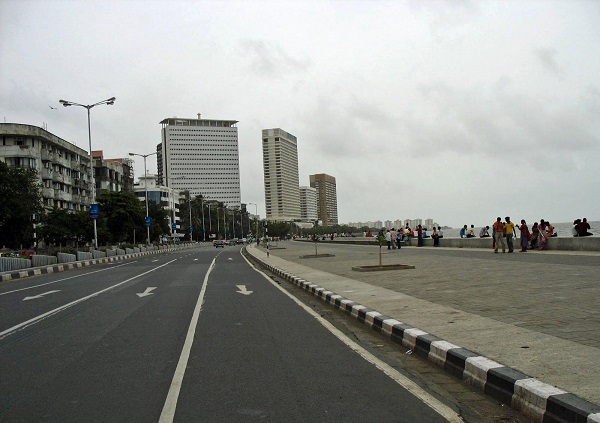
On the anvil are the most-visited Marine Drive, which was last concretised in the year 1940, and other smaller roads in South Mumbai. Says Standing Committee Chairman Rahul Shevale, “Marine Drive is a tourist spot in itself, with Mumbaikars, visitors from other States and foreigners coming to see it daily. The road’s concretisation had happened many years ago, and the materials used have now reached the end of their life. It is important that such a major landmark in the city should be in good condition.” To this end, the Committee has prepared a Rs 150 crore repair and rebuild proposal for several small and major roads in South Mumbai, and hopes that the proposal will be passed in a meeting today.

However, the huge Marine Drive stretch will have to be dug to lay new mastic on. “We hope to use mechanised mastic on the roads to be build so that they last longer and the work can progress faster,” says Shevale.

(Picture courtesy www.stockpicturesforeveryone.com)

Categories
Read

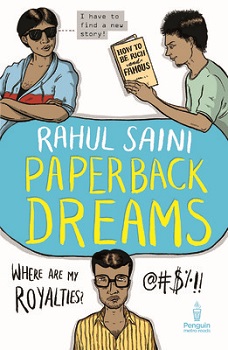
Review: ‘Paperback dreams’

Rahul Saini’s newest book is a behind-the-scenes look at the (sometimes) murky world of book publishing and the writing process.
by The Editors | editor@themetrognome.in

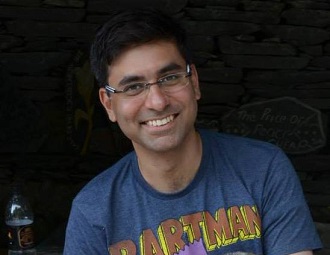
Rahul SainiIf you’ve been an aspiring author, a recently-published one, or worse, a rejected one, you must read Rahul Saini’s Paperback Dreams.

The thing with writing a book in India today is that one gets complacent even before one takes up a plot, or a story outline, or even a pen. “So much nonsense is being published every day, I can write better than that,” one says, secure in the ‘knowledge’ that publishers – all publishers – are simply waiting for one to finish their magnum opus so that printing of the book may commence. And when one’s book is out, all one has to do is sit back and rake in the royalties.

That is not so, as Paperback Dreams explains in funny, sharp detail. The book’s three protagonists – published authors Rohit Sehdev and Jeet Obiroi, and aspiring author and school student Karun Mukharjee – are presented in three parallel narratives, but are connected at various points in the story. All three are published by Dash Publishers. Rohit is a bestselling author who is being cheated out of his royalties, but he is initially too afraid to even have strong words with the publisher. Meanwhile, Jeet is cruising along with the success of his first book and his movie star looks, but he is constantly dogged by a dark secret about his book that he hopes nobody will ever find out.

Meanwhile, Karun has cracked the formula for the perfect love story – after a bit of research of best-selling authors’s works, he has finished his debut novel and is due to be published while still in school. However, he hits upon a Machiavellian plan to achieve his ends – not content to merely be published, he wants to ensure that he becomes the star for Dash Publishers as their other best-selling authors fall to the wayside.

Readers will recognise some of India’s spectacular publishing successes that Saini mentions off and on – there are references to Bhetan Chagat, for example. However, Saini’s paperback dreamslight-hearted take on the publishing industry also reveals several dark truths. It’s not all hunky dory in the publishing world – publishers routinely cheat authors of royalties, new authors’s books are not promoted or stocked in bookstores, debutant authors sometimes have to rewrite major plot points to please the publisher, and plagiarism is a common phenomenon. Also, as Saini deftly points out, it is really not that difficult to get published these days.

Overall, the book is an enjoyable read, but you will be a put off by several typos that suddenly appear in a few chapters in the middle of the book. Obviously, somebody’s been sleeping at the editing table. Other than that, you might also think that the Karun narrative is a bit simplistic, even clunky. It’s all okay till he devises his evil plan, but the methods he adopts and the results he gets seem a bit far-fetched.

The most relatable character is Rohit, for his low self-confidence, his obvious talent that he is reluctant to advertise, his constant whining about his problems while lacking the courage to take corrective action. So many of us are like that. How he finally tackles the publisher in a comical denouement would make for a good scene in a film. In fact, we rather suspect Saini wrote this book for celluloid, like a certain Mr Bhagat.

Rating: 3.5/5

Rating scale: 1 = Awful; 2 = Slightly rubbish; 3 = Tolerable read; 4 = Good; 5 = Paisa vasool.

Check out Rahul Saini’s Paperback Dreams here.

(Author photograph courtesy Rahul Saini, featured image www.compassbook.com)

Exit mobile version