Categories
Achieve

Rural journalism goes Web 2.0

The Khabar Lahariya newspaper, born in the Hindi hinterland and run entirely by women, launched its website in Mumbai yesterday.
by Nidhi Qazi

What happens when a group of 40 women journalists come to the city for the launch of online edition of their newspaper Khabar Lahariya? A platform full of experiences, energy and enthusiasm opens up for discussion.

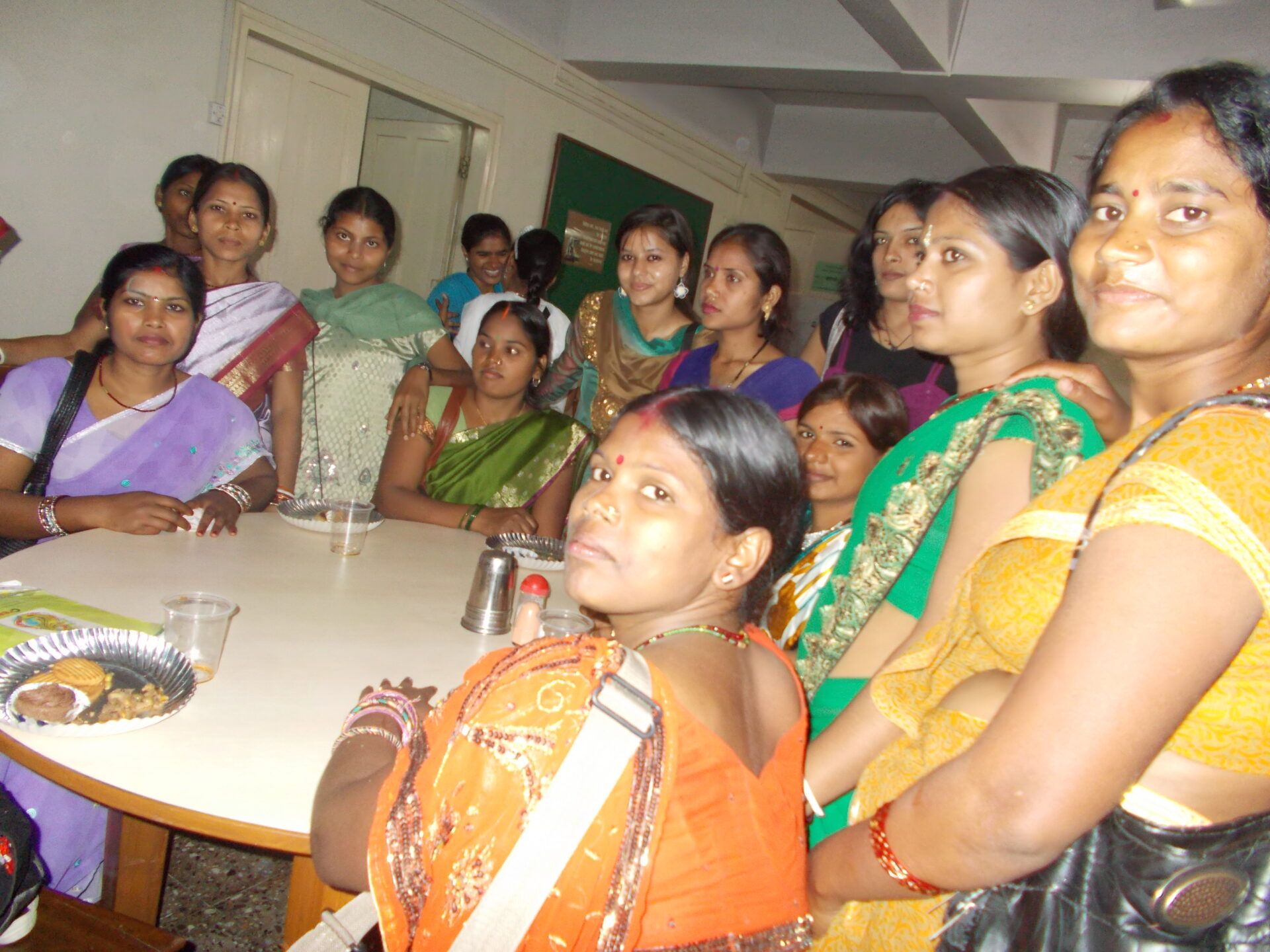
Wednesday witnessed women empowerment when the all-women’s team of the publication travelled from the districts of Uttar Pradesh and Bihar to Mumbai. From impact journalism to personal histories and journeys, they all had something to say.

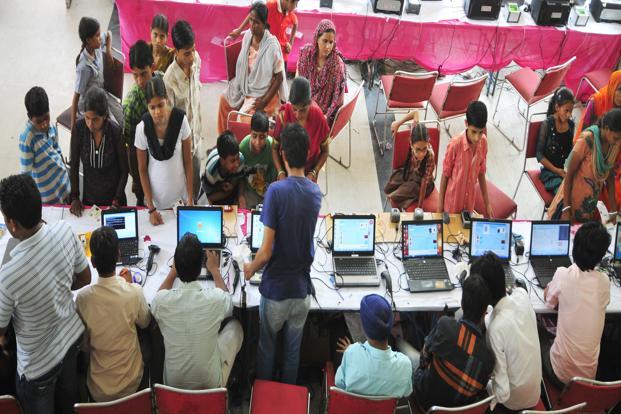
Take the case of Meera, Editor of the paper, and who hails from Banda district, UP. She narrated how she is now at ease with the big machine that is the computer. In her own words, “I never thought I could operate this machine. In fact, I always used to think that something would go wrong if I touch it. But that fear is gone. We use computers to search for information, making pages and what not.”
For the uninitiated, Khabar Lahariya is a weekly newspaper produced by women from the marginalised sections of society. It is the brainchild of Nirantar, an organisation that works towards empowering women through education.

Launched in 2002 in Chitrakoot district of UP, the newspaper has expanded to Bihar and today runs six editions. The editions are from five districts of UP – Chitrakoot, Banda, Lucknow and Benares and Sitamarhi district in Bihar. The newspaper is published in regional languages such as Bhojpuri, Awadhi, Bundeli, Bajjika and Hindustani. With a readership of 80,000, the paper has its presence in 600 villages and sells for Rs 2.

With its print edition well in place, what made the newspaper launch online despite the fact that villages don’t have easy Internet accessibility? “The idea behind the online edition is to not just spread the newspaper, but the phenomenon that Khabar Lahariya is,” said Meera. “Apart from visibility, the online edition will also provide information on various rural developments and news which the mainstream media doesn’t report much,” she adds.

Khabar Lahariya uses social media marketing as a major tool. From Facebook to Twitter, they use it all. And all this is managed by the women themselves. The reporters are given an ICT workshop which includes training in the use of the Internet.

The newspaper depends mainly on funding from such sources as the Dorabji Tata Trust and UN Democracy and Equity Fund, though a sustainable model is what they aim for in the long run. Their margin for advertising revenue is low and they also get funded through the various awards they win.

As for the recruitment of staff, the team gives out ads. “The prospective reporters are selected after a formal interview process. We then train them for a week in writing, editing, video-making, photography and page-making,” says Kavita, who joined the paper in 2002.

Short stories

For Shanti, one of the paper’s oldest reporters and who has been associated with the publication since its inception, “It’s a privilege to have travelled so far when all others from my community (she belongs to the Kol tribe of UP) haven’t even dreamed about it.” She also takes pride in the impact the paper’s stories have made. “Our efforts for three months resulted in the suspension of a police officer who refused to entertain us ‘women’ in the case of violence against a woman,” informs Shanti. It is this attitude of ‘How can women be journalists?’ that bothers people around, she adds.

Susheela, a Benares-based reporter, talks about personal issues. “My mother-in-law didn’t approve when I decided to work in 2012. She boycotted us and eventually I, my husband, three kids and husband’s grandmother had to leave our family house. But mother-in-law imposed a condition that if I give her Rs.3,000 every month, she would accept us back in the house. I refused.” For Susheela, her husband has been a big support.

For many, reporting gives a chance to explore and experience all that is around them. From MNREGA payment issues, pension hassles to civic problems, women’s issues and success stories, these women report it all.

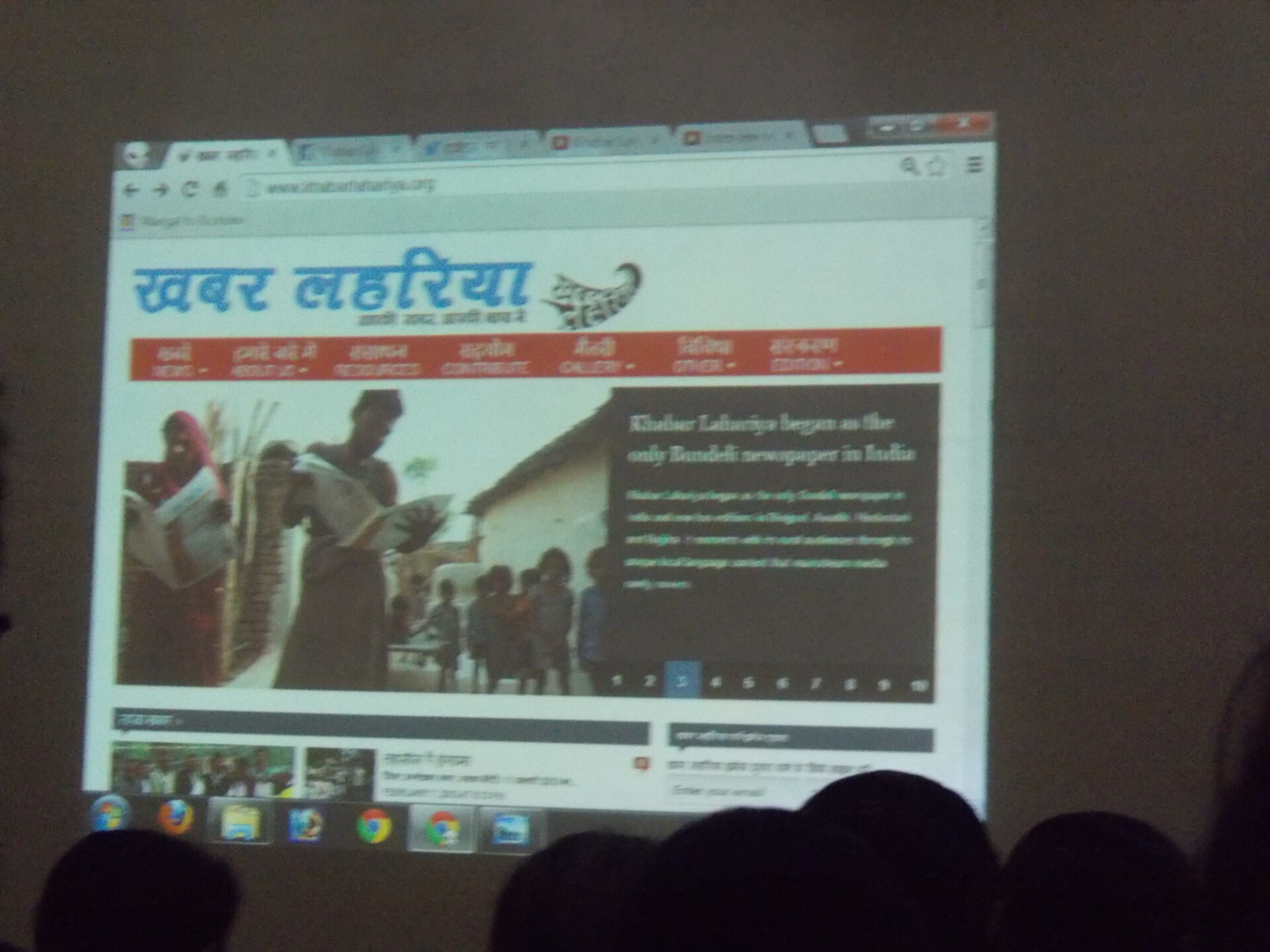
Khabar Lahariya is now live on www.khabarlahariya.org.

(Pictures courtesy Nidhi Qazi)
Categories
Do

Help out on V-Day: ‘Love’ this NGO

City-based Men Against Violence and Abuse (MAVA) hopes to win $5,000 Fetzer Institute prize in online contest for global NGOs.
by The Editors | editor@themetrognome.in

It’s the day to show some love! And while you’re celebrating Valentine’s Day, you might consider showing some love to a city-based NGO, which could stand a chance to win $5,000 if it receives enough ‘Love’ .

The NGO Men Against Violence and Abuse (MAVA) has entered an online competition run by the US-based Fetzer Institute on its website www.tellusworld.org, which invites voluntary organisations to share their stories on how they are promoting love and forgiveness in the communities they work for. MAVA, it may be known, is an organisation that works to fight violence against girls and women in India by involving men in their efforts.

Said Harish Sadani (in pic), Honorary Secretary of MAVA, “We hope we receive enough votes on the site. The organisers have liked our story and the concept behind our NGO.” Voting begins from today – all you have to do is hit the ‘Love’ button on this link. You can also peruse other entries and vote for the ones you like. You can vote only once per entry.

(Picture courtesy changemakers.org)

Categories
Big story

2 dead, five injured as car takes wrong turn at Bandra

The Honda Accord missed a turn and rammed into five other vehicles, killing two. Driver of the car was arrested.

A horrifying accident took place at Bandra’s Linking Road near the famed Amarsons store this morning, when a Honda Accord reportedly took a wrong turn after missing a No Entry sign. The accident caused a smashup of at least three cars in all, apart from an autorickshaw and a bike.

Two people were pronounced dead, while five others suffered serious injuries and were being treated at the Bandra-based Bhabha Hospital. One woman was being treated at Lilavati Hospital.

The errant car is said to belong to a foreigner who was in the car at the time of the accident. The driver of the car has also been admitted to hospital after being arrested for rash and negligent driving.

More details are awaited.

(Picture courtesy ibnlive.com)

Categories
Learn

First preference to LPG holders at UID Centres

State extends deadline for LPG holders to get UID enrollment, by a month. The new deadline is March 15, 2013.
by The Editors | editor@themetrognome.in

If you are an LPG holder and still haven’t got yourself enrolled for an AADHAR card, you have just received a reprieve from the State Government – though the cut-off date for enrollment for LPG holders to avail of the Government’s scheme to transfer cash directly into the holder’s AADHAR-linked saving’s bank account for not more than nine gas cylinders per financial year, was February 15, 2013, the State decided to extend this date by a month.

Hence, the new cut-off date for enrollment is now March 15, 2013, said Chief Secretary Jayantkumar Banthia in a meeting yesterday.

Moreover, such LPG holders would receive first preference at UID enrollment centres across the city and State throughout this month. There would be separate lines for them. However, the enrollment process for others will also continue simultaneously, till December 31, 2013. Obviously, non-LPG holders would do well to attempt enrollment after March 15 to prevent additional chaos at each centre.

The subsidy will be transferred directly into the holder’s bank account if he/she provides the bank with the AADHAR number and ask for the AADHAR number to be linked to their account.

(Picture courtesy livemint.com. Picture used for representational purpose only)


Categories
Do

Rise. Stop violence against women

One Billion Rising exhorts the city to raise a voice and fight for the women who are assaulted and raped.

We’re sure you have elaborate plans for Valentine’s Day, but this year, if you could take the time and head to the Bandra amphitheatre at 5.45 pm, you could help towards making a significant difference to women and society.

For, the One Billion Rising – an initiative by Change.org to end violence against women globally – will take place on V-Day, kickstarting a dialogue between society and helping to end, slowly but surely, this grim statistic: globally, one in three women will be raped or beaten in her lifetime. That’s a staggering one billion women across the globe.

Change.org says, “On February 14th, 2013, we are inviting one billion women and those who love them to walk out, DANCE, RISE UP, AND DEMAND an end to this violence. One Billion Rising is a promise that we will rise up with women and men worldwide to say, ‘Enough! The violence ends now.’ This day has been marked as ‘the global day of action’.

All you have to do is dance in solidarity for women worldwide.

Sitar player and actor Anoushka Shankar has endorsed the event and shot a promotional video for the movement.


You can sign the petition for One Billion Rising here. More to the point, be there at the event on Valentine’s Day.

The Metrognome supports ‘One Billion Rising’ and has signed the pledge. We urge you, if you are reading this, and regardless of where you are placed geographically, to sign the petition and help further the cause.

(Picture courtesy photo.net)

Categories
Big story

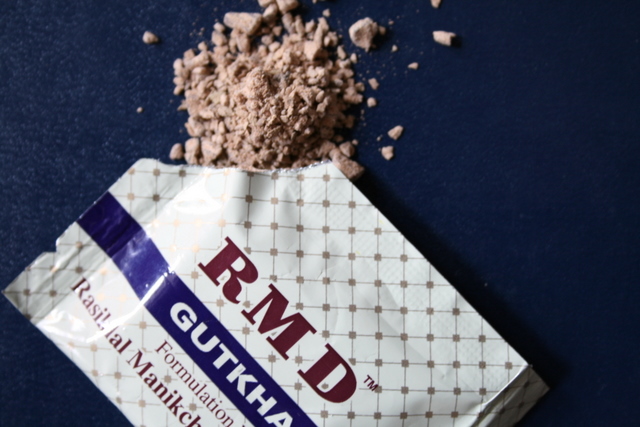
After gutkha, doctors want ban on supari, zarda and paan masala

The Indian Dental Association recently wrote to the PM, asking for all smokeless tobacco substances to be banned from sale.
by Krishnaraj Rao

Doctors, more specifically dentists in the country, are increasingly up in arms against the sale of chewable tobacco in any form. Several state branches of the Indian Dental Association (IDA) have addressed a letter earlier this month to Prime Minister Manmohan Singh pointing out the while banning gutkha was good, it was not good enough.

The letter said, “We the dentists who are responsible for oral health, are extremely worried about rising trends of mouth cancer especially amongst the youth. This epidemic is the result of rampant use of tobacco and areca nut in different forms. As per Global Adult tobacco Survey, 2010 released by Ministry of Health, 22 crore Indians are chewing this deadly concoction. We would like to thank the Government for banning gutkha in several states under the Food Safety Act.

“However, gutkha chewing accounted for only 10 per cent of all smokeless tobacco consumption. Regional consumption of smokeless tobacco product is diverse and smokeless tobacco product is been flavoured and packaged in different pouches and sachets. The major chewing is in the form of Jarda, Surti, Khaini, Mava, Kharra,Paan etc apart from Paan Masala (supari/betel nut) with or without tobacco. Supari (betel nut or areca nut) is a confirmed cancer-causing substances and leads to many other diseases. Despite plethora of knowledge against it, supari is being sold as a mouth freshener under brand name of Paan Masala or Supari Mix.

“The epidemic of mouth cancer cannot be curtailed without a comprehensive prohibition of selling these lethal products freely as packaged mouth fresheners. We sincerely hope that you will use your good offices to prevent premature deaths in our country by strict implementation of section 2.3.4 of Food safety and standards (prohibition and restrictions on sales) regulation 2011 to ban all flavored and packaged smokeless tobacco product across country. Please prohibit the packaged and misleading areca nut preparation in the form of pan Masala, Supari Mix etc,” the letter says.

“I request the PM to urge the remaining eight states to ban gutkha for effective implementation of the ban across the country to save millions of lives, especially, youth from this killer product,” said Dr Ashok Dhoble, General secretary, IDA Head Office.

While the tobacco bans passed by states earlier in 2012 were strictly restricted to gutkha and paan masala containing tobacco, some of the later ones have been tending towards taking on other forms of chewing tobacco also. For instance, see Mizoram’s ban order, which says, “complete ban on sale of gutkha/paan masala/zarda or other chewable products containing tobacco or nicotine with immediate effect and until further order.” This is also one step ahead of most other states, which have put a one-year tenure on their ban orders.

The death knell for the chewable tobacco industry first sounded on August 1, 2011, when a new rule was notified under Central Government’s Food Safety and Standards Act (FSSAI). It said: “Tobacco and nicotine shall not be used as ingredients in any food product.” Soon afterwards, 20 states banned gutkha, namely: Madhya Pradesh, Kerala, Bihar, Maharashtra, Himachal Pradesh, Rajasthan, Haryana, Jharkhand, Chattisgarh, Gujarat, Punjab, Uttarkhand, Mizoram, Delhi, Sikkim, Andhra Pradesh, Odisha, Nagaland Uttar Pradesh, Jammu & Kashmir and four Union Territories  – Chandigarh, Daman & Diu, Dadra and Nagar-Haveli and Andaman-Nicobar.

(Picture courtesy wahid.fr. Image used for representational purpose only)

Exit mobile version