Categories
Become

A DIY filmmaker

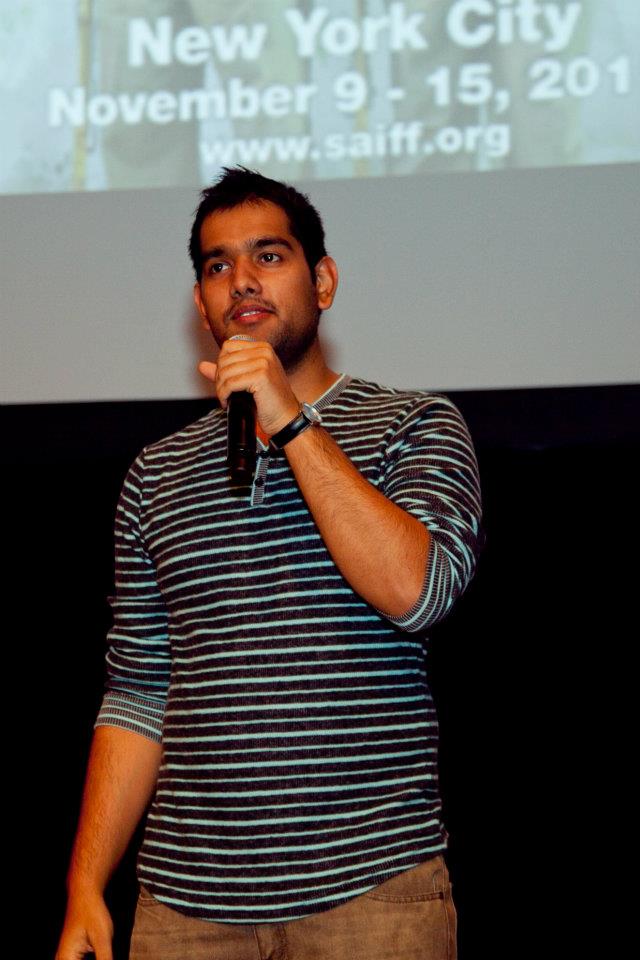
Mihir Desai talks about making independent films and how overcoming several challenges makes the overall process that much more fascinating.
by Swaraj Dhanjal

When it comes to films, the first names of movies that come to our mind belong to Bollywood and Hollywood. In recent times, though, while these two mega film industries remain the largest producers of films between them, these aren’t the only sources of films in our country. We are increasingly seeing more documentaries, independent films and DIY films being shot and released by film enthusiasts.

In India, the indie and DIY movement is gaining momentum.  Lower Parel resident Mihir Desai is one such independent filmmaker, who has made short films that have been hailed at international film festivals.

Early beginnings

“I’ve been interested in the arts since my childhood,” Mihir tells The Metrognome, adding that he has always relied upon visual arts as a tool to convey his thoughts and stories. It all began when his father got a handycam for the family. Mihir used that camera more than anyone else in the family. “I would always play around with it, try and stage scenes with objects, friends and sometimes myself. I had found a new medium to tell my stories,” he says.

To pursue his interest seriously, he enrolled for some summer filmmaking courses at the Senseindia Foundation when he was 16 and directed a short film titled Fate and Dreams with a few friends. The film made it o the Miami and San Francisco International Short Film Festivals in 2004. Seeing his interest and quality of work, his family sent him to pursue a Bachelor of Arts in Film and Video in film making to the Columbia College Chicago (CCC) in 2006.

Learning to be a filmmaker
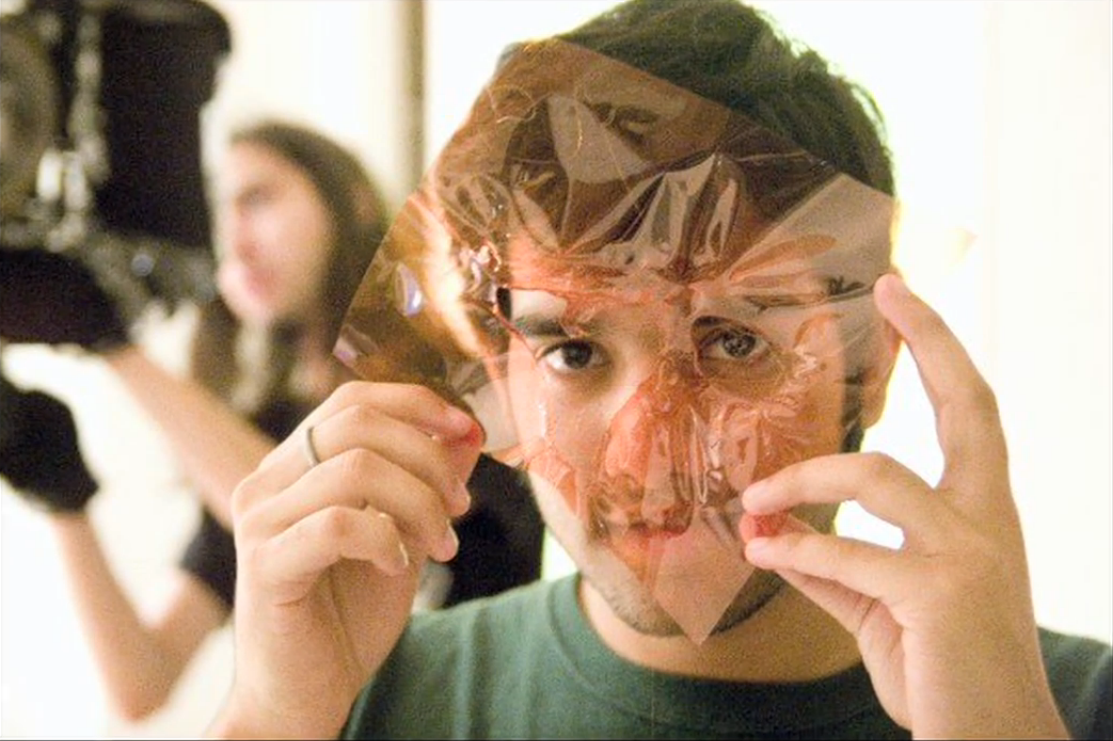
“CCC was an ideal film school because they allow you to break rules,” says Mihir. He says the school allowed students a great degree of freedom; students would literally be on their own with a handful of film equipment and a license to experiment. “At CCC I worked on all mediums, from 16 mm to digital,” says Mihir, explaining that this was crucial training as it ensured that students didn’t take the digital medium for granted.

“We were taught to make the best of limited resources, hence helping us make confident decisions at times of crises,” he says. CCC also taught him that filmmaking was not just about creativity, it also encompassed team building, trust and collaboration. Mihir spent most of his time at CCC doing practical work and picking up the key skills that he would need for future.

Why go independent?

The idea to start his own filmmaking company, Auteur Mark, occurred to Mihir soon after he graduated from CCC in 2009. Since its inception, the company has worked mostly on corporate ventures, PSAs and independent short films, with a thrust on being economical and resourceful.

“There aren’t too many resources at our disposal, like big studios and fancy equipment , so we make the best of what we have without sacrificing the quality of the final product,” says Mihir. Technology has made this possible for them. Currently they are looking to produce interesting short films and will venture into feature production in near future.

Great expectations

The independent filmmaking scene in India is very challenging, says Mihir, and he has faced numerous challenges in the initial days of setting up Auteur Mark. “The biggest challenge with going DIY is that either people don’t take you seriously or they bracket you as a person with a specific skill set,” he explains.

Corporate videos are a major source of income for Mihir. He has worked with clients like DHL, Acumen Fund and Teach For India. “Getting corporate clients is all about networking, it is either through social media or through references,” he says. Corporate videos take from a few days to a few weeks depending on the clients requirements. He believes that doing corporate films is a tad easier as most of the research is done by the client themselves as compared to independent films, which require you to read a lot of literature and talk to a lot of people.

Apart from doing corporate videos Mihir also works as a freelancer; shooting and editing films to raise funds for his independent   projects. “So far most of my projects have been short films which tend to be inexpensive, hence I haven’t had the need to raise huge sums of money,” says Mihir. He has invested from his own pocket for basic equipment and rents only stuff like lighting and sound systems. “Also, I like to keep my teams small and I usually work with just four people on any project.”
Current project

Mihir is currently working on a project called Common Thread, a documentary on cotton and how it brings people together. “It’s a hypothesis, based on the premise that the clothes we wear were probably made in another country and its raw material grown in another. “Somehow there is a connection between you and the farmer, Common Thread is an exploration of that,” he says.

Farmers from India and the USA were compared and contrasted for their lives, family tradition and history of cotton. The inspiration for this film came from his father, who was a cotton trader for a long time. The film features farmers from various parts of the country like Maharashtra, Gujarat, Karnataka and Tamil Nadu, as well as the US, and cotton buyers and traders. Common Thread has taken more than a year to shoot and is still a work in progress.

The most time-consuming aspect was the research, which required them to travel long distances to meet farmers. Another challenge was the fact that whenever they went out they would end up shooting a lot of footage, not knowing where to stop. “Finally we came to a point where we had to tell ourselves to stop!” Mihir laughs. The film is now under editing and Mihir expects it to be ready for release by end of 2013 or early 2014.

Learnings from DIY filmmaking

Social media has gone a long way in helping Mihir – he uploads his work on his website and blog and shares those links with people on social networking sites. Showcasing his work through Twitter and Facebook has helped him reach his work out to people. “In this industry, it’s also important to build a network and Twitter has really helped me with that,” he says.

His journey in independent filmmaking has taught Mihir to be a better listener and to be more patient. “Most importantly, I’ve learnt to ignore what is useless and stay focussed on the useful,” he says. He feels that other young and upcoming independent filmmakers like him should build a strong film community to keep their kind of cinema alive and kicking.“We need to learn to co-exist, be more open with each other as artists, share, cross-promote and learn to collaborate better.”

Mihir has a few ideas lined up for his company’s future. The first step, he says, is to rebrand. “We are also working on a couple of scripts, for two shorts and one feature film,” he says.

Auteur Mark welcomes short film scripts; if you’ve been writing a script, send it to them at contactus@auteurmark.com

(Pictures courtesy Mihir Desai)
Categories
Event

Raj Bhavan produces ‘King of roses’

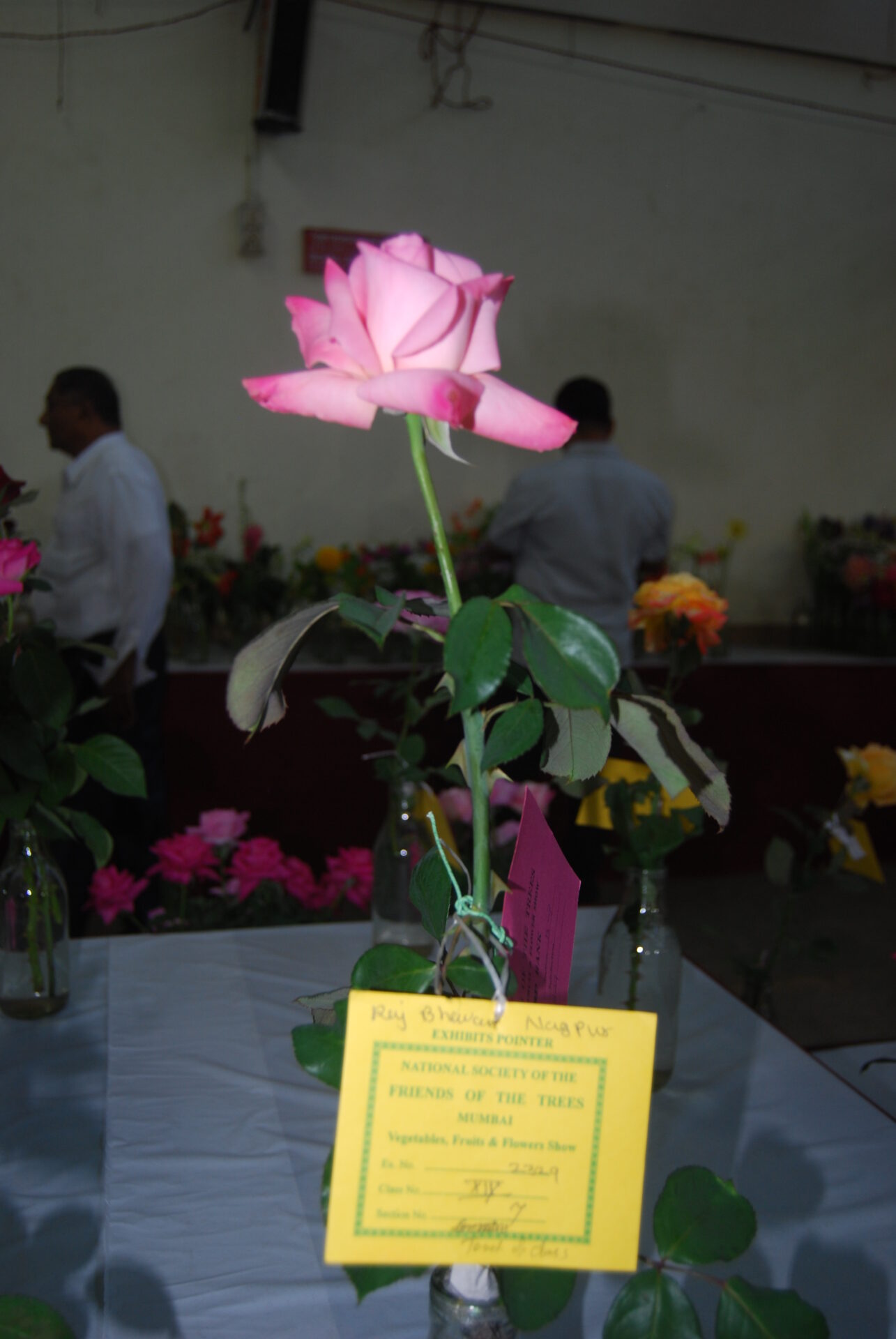
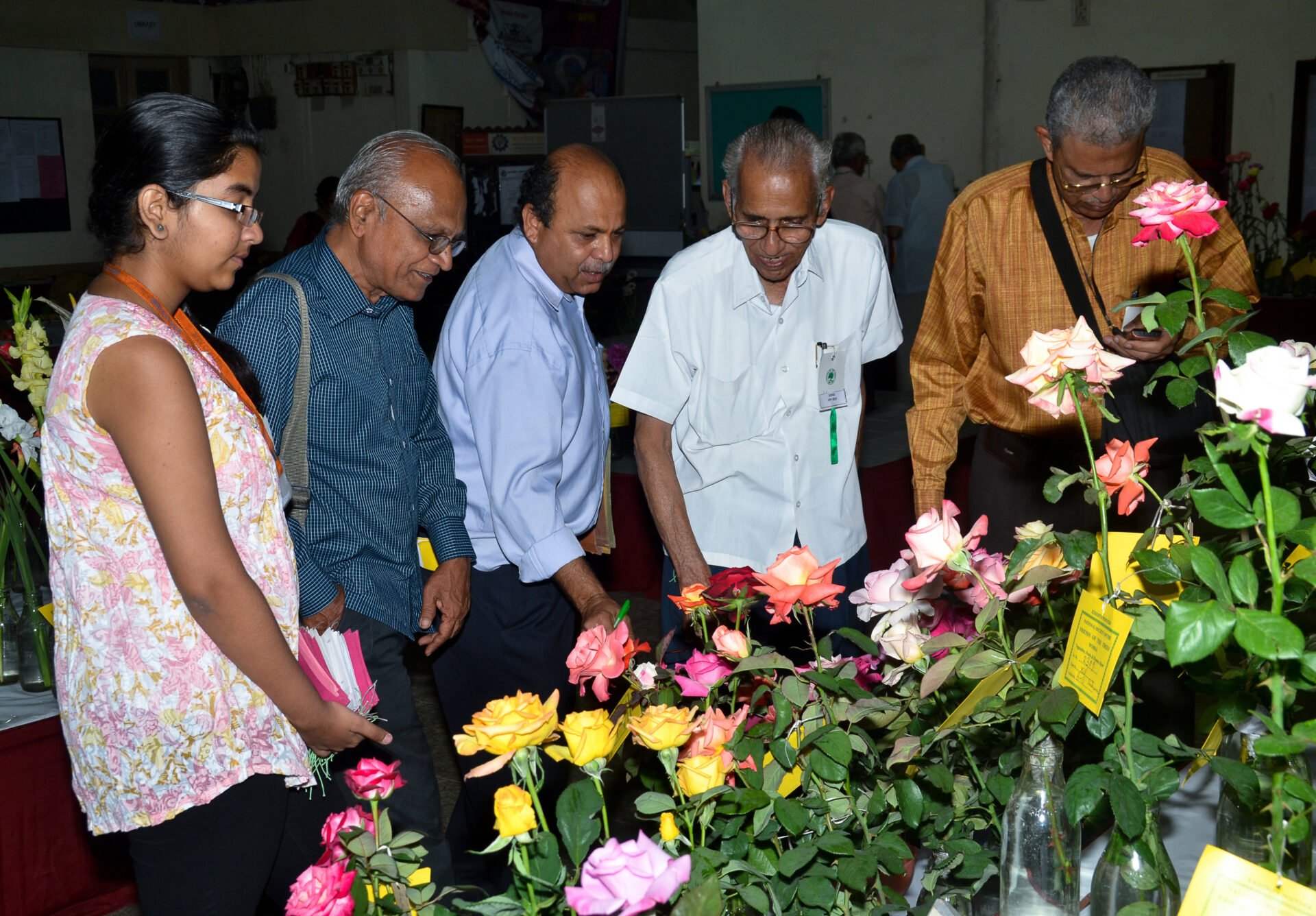
A rose from the State Governor’s official residence, Raj Bhavan, was selected as the winner in flower show at VJTI.

Sure, a rose by any other name would smell as sweet, but it wouldn’t necessarily win first prize. Raj Bhavan Nagpur yesterday was adjudged the winner at the VJTI’s flower, fruit and vegetable show. The show is organised annually by the Friends of the Trees and had about 200 organisations plus individuals participating.

A rose grown at Nagpur Raj Bhavan’s Biodiversity Park was adjudged the winner by a committee of experts. Interestingly, another variety from Raj Bhavan had won the first prize at the All India Rose Flower Show at Jabalpur recently.

As per the organisers, “More than 500 varieties of different species of vegetables, fruit, flowers and shrubs, and trees are displayed under 100 different categories at the show. A large number of orchids, cactii, fern, medicinal, aromatic plants, hanging baskets, sunny and shady plants, landscapes and artistic display of fruit, flowers and vegetables can be seen at the show.” The show concludes tonight.

Organisations such as Raj Bhavan, Central Railway, Western Railway, Parks and Gardens and organisations from the private sector such as Godrej, Hiranandani, Tata Power, Raheja and Reliance participated in the show.

Categories
Enough said

Defending Afzal Guru

What did it take to defend Parliament attacker Afzal Guru in court? In her book, lawyer Nandita Haksar explains all.
by Humra Quraishi

I confess I am appalled by the Afzal Guru hanging. Hanged and buried in absolute secrecy, without informing his family and without sensitivity to basic human rights – but there is also a bigger picture here.

I did not know Afzal Guru and had never met him. A few years ago, I read his lawyer, the respected activist and human rights campaigner Nandita Haksar’s book, Framing Geelani, Hanging Afzal: Patriotism In The Time of Terror. Published six years ago by Bibliophile South Asia, I had attended its launch here in New Delhi, where some of our best-known academics spoke as well.

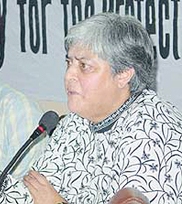
Former Vice Chancellor of Delhi University, Professor Upendra Baxi was one of the speakers, and all of them focused on some harsh realities in terms of human rights violations, biased machinery, communal politics and so on. Reading the book later, several more realities hit me, through the series of open letters that Nandita (in pic on right) writes, including one to Prime Minister Manmohan Singh, where she highlights the brutalities this system heaps on its people.

If the top rung of our current leadership would take the time out to read this volume,  they would not be able to sleep at all. The 348-page volume carries all the possible facts about SAR Geelani and Afzal Guru in the context of this case, and the serious offshoots that follow.

I reread this book on Saturday, as the morning brought the news of Afzal Guru’s hanging.  I quote Nandita from her book, more specifically from the chapter, ‘Letter to Prime Minister Dr Manmohan Singh’:

‘I am sure you know that I have been part of the defence team of SAR Geelani, the man who was first sentenced to death on charges of conspiring to attack the Indian Parliament, and then acquitted by the High Court of Delhi. I have been accused of being anti-national and people have expressed shock that a daughter of a nationalist father should betray his ideals. I feel the need to explain why I took up the case and what I learnt about our country in the course of this case…

‘I do not know how many Kashmiri prisoners there are in Tihar Jail. Most of these men are locked inside the high security cells of the jail. They are denied basic facilities and are subjected to torture and brutalities inside the jail, and often their lives are in danger. There were at least two attempts on the life of Geelani while he was in jail. More recently, two other prisoners have been attacked inside the high security cells of the  Tihar Jail.

‘I have details of other atrocities, brutalities and crimes committed by the jail authorities. Where do I go and file a complaint? I feel so helpless, despite being a lawyer and well-connected in society, what do you think the Kashmiris feel? Can we win the hearts and minds of the Kashmiri people by treating them like subhuman beings?’

With that start, she takes the reader to what’s been happening inside and outside our jails and prisons, and in the corridors of power and in those international and national conferences. This volume is a must-read for those who want to study the facts around the Afzal Guru case in the context and backdrop of the prevailing political  scenario. Nandita has laid out every single detail, right from the basic ‘why’ she took up this particular  case, to the very system and police machinery, and everything else in between.

I also known Afzal Guru’s other lawyer, ND Pancholi. On two earlier occasions, I had asked him about Afzal’s conduct in jail. He had said, “He keeps reading the Quran and praying…he is kept in isolation, but he is calm.” Pancholi was also of the firm view that Afzal was implicated in the case would never get a fair trial.

After the hanging, our ‘democratic’ setup gagged the protests and mourning in the Valley with a curfew. Here, in New Delhi, right wing goons blackened the faces of left wing protestors, all under the watchful eyes of the cops. Added to this, senior journalist Iftikhar  Gilani (who works with DNA) and his family were detained and questioned for several hours in their South Delhi home.

I end this piece with lines by Turkish poet Nazim Hikmet, who spent 35 years in prison because he was a Communist:

‘The  moment you’re born

they plant around you

mills that grind lies

lies to last you a  lifetime.

You keep thinking of your great freedom

a finger on your temple. Free to have a free conscience.

Your  heart bent as if half –cut from the nape,

your  arms long, hanging,

you saunter about in your great freedom: you’re free

with the freedom of being unemployed.

You love your country as the nearest, most precious thing to you.

But one day, for example,

they may endorse it over to America,

and you too, with your great freedom – you have the freedom to become an airbase.

You may proclaim that you must live, not as a tool,

a number or a link, but as a human being.

Then at once they handcuff your wrists.

You are free to be arrested, imprisoned and even hanged.

There’s neither an iron, wooden

nor a tulle curtain in your life;

there’s no need to choose freedom:

you are free.

But this kind of freedom

is a sad affair under the stars.’

Humra Quraishi is a senior political journalist based in Gurgaon. She is author of Kashmir: The Untold Story and co-author of Simply Khushwant.

(Featured image courtesy deccanchronicle.com)

Categories
Watch

VIDEO: Painting his love for Madhubala

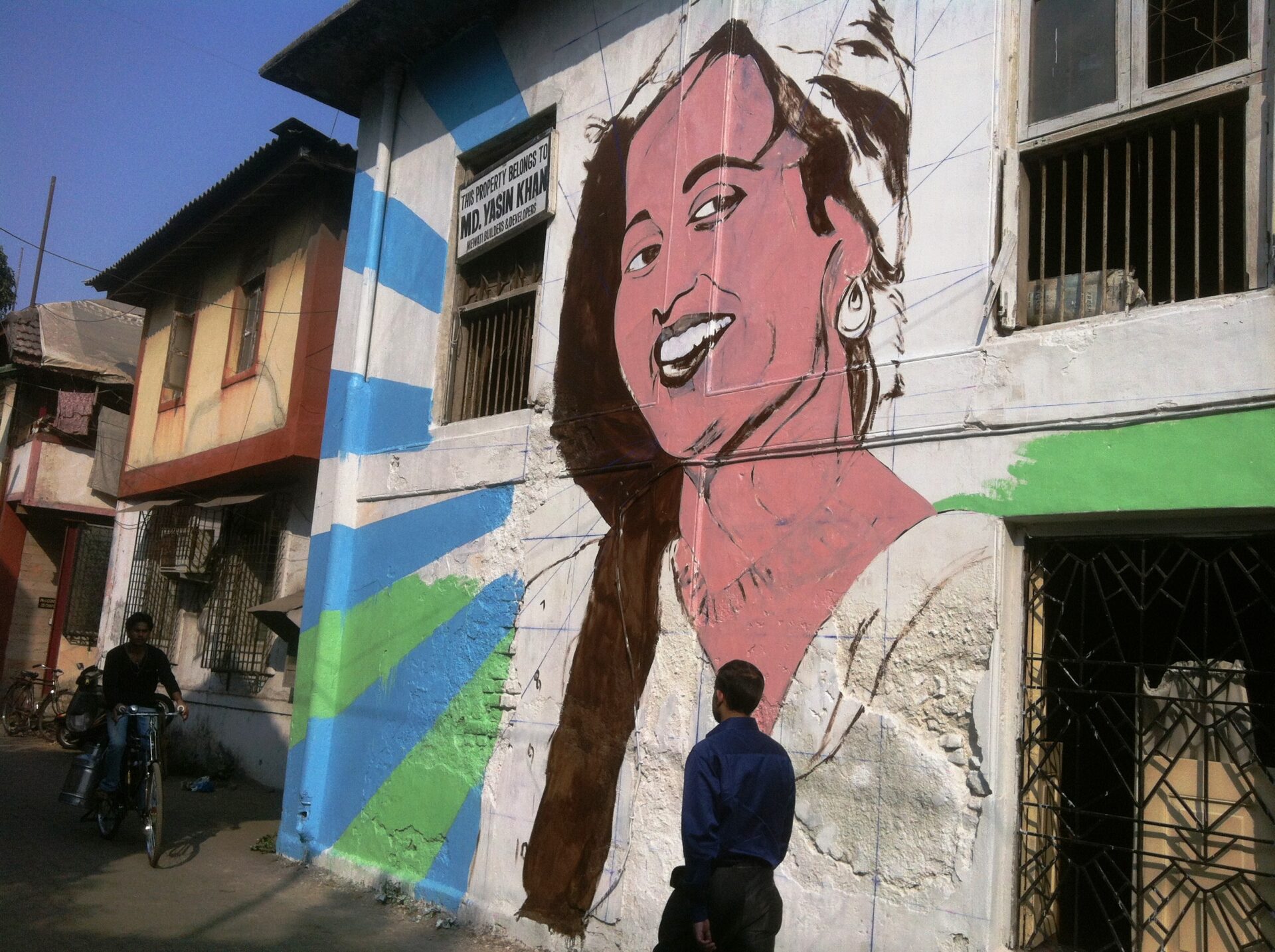
Artist, painter Ranjit Dahiya is hard at work on his Madhubala mural at Bandra. The painting will be complete tomorrow.
by The Editors | editor@themetrognome.in

Ranjit Dahiya (slowly gaining fame for his much-feted ‘Bollywood Art Project’) is currently doing what he is best known for – painting huge murals of yesteryear Bollywood stars. He is currently painting eternal Queen of Hearts Madhubala right next to his last smash hit, a mural of the film Anarkali.

He started painting the mural two days ago, timing the activity to coincide with Madhubala’s birthday on February 14. “I was looking for a particular image of her, and I spent some time looking for it on the Internet,” he told The Metrognome. The harsh weather and long periods of standing on a shaky ladder are taking a toll on him, but Ranjit was still going strong on Day 3 today. “I’ll finish most of it tonight, and tomorrow after a few final touches, it will be complete,” he said.

If you’re in Bandra today and want to cheer Ranjit on or simply gawk at the big canvas he’s working on, head down Chapel Road and ask for the artist who painted Anarkali. Or head to the site tomorrow to view the completed work. With his track record, this one’s going to turn out well, for sure.

Watch Ranjit in action on Day 3:


(Featured image courtesy Ranjit Dahiya. Video by The Metrognome) 

Categories
Do

Want a better Mumbai? You have a week to do it

Volunteer for a Better India’s Mumbai week starts from tomorrow. Railway station cleanups, traffic management, and medical camps seek participation.

Starting tomorrow, you can quit cribbing about the deteriorating state of the city and actually do something about it. The Volunteer for a Better India initiative is starting its Mumbai week tomorrow onwards, and you can volunteer to clean up railway stations, learn and help in traffic management, participate in patriotic hour, or help at medical camps in slums. This is a social initiative by the Art of Living Foundation.

“Between February 10 and 20, several activities around the city will be initiated,” the organisers say. “A diversified choice is given to people, so that they can easily participate in the activities of their interest.”

If you want to participate, you can choose from these activities:

Western Railway clean up 

Sr.No

Station Date

Time

Contact

1

Goregaon 16-02-2013

9am-11am

Mamta- 9867697989

2

Kandivali 19-02-2013

9am-11am

Rakhee-9967661920

3

Borivali 17-02-2013

9am-11am

Satish -9987031401

 4

Bandra 19-02-2013

9am-11am

Vinita -981906408

5

Dadar 17-02-2013

6am-9am

Shibani-98212028854

6

Andheri 16-02-2013

9am-12pm

 Tejas-9867323388

Central Railway cleanup

Sr.No

Station Name

Clean Up Date

Clean up Time Contact

1

Ulhasnagar

18/02/13

8am-11am  Akshata -7738383930

2

Dombivili & Mulund

17/02/2013

8am-11am  Akshata -7738383930

3

Thane

16/02/13

8am-11am  Akshata -7738383930

4

Ghatkopar

16/02/13

8.30am-11am  Akshata -7738383930

5

Dadar

19/02/13

8am-10am Akshata -7738383930

Patriotic Hour

Patriotic songs, music and skits will be performed to revive the love for the country. During this hour, awareness campaigns for Railway safety rules will also be launched.

Sr.No

Station Name Date Time Contact

1

Goregaon 18-02-2013 5pm-8pm

Siddharth -8097080908

2

Kandivali 21-02-2013 5pm-8pm

Siddharth -8097080908

3

Borivali 20-02-2013 5pm-8pm

Siddharth -8097080908

4

Mira Road 19-02-2013 5pm-8pm

Siddharth -8097080908

5

Bandra  19-02-2013  5pm-8pm

Siddharth -8097080908

6

Dadar 19-02-2013 6pm-8pm  Shibani-98212028854

7

Andheri 18-02-2013 6.30-8.30pm  Tejas-9867323388

Medical camps in slums

To be held at Bhagat Singh Nagar, Goregaon (west) and in Motilal Nagar, Goregaon (west), on February 17, contact Sukeerti on 9987688005.

(Picture courtesy fusionview.co.uk) 

Categories
Guest writer

Why there can be no other Madhubala

A fan speaks about her fondness for yesteryear actor Madhubala, reminiscing about the late beauty on the latter’s birthday yesterday.
by Mamta D

February 14 is a day that has become popular in recent times as Valentine’s day. Few people know that this day also marks the birth of one of the most beautiful Indian actresses ever to have graced the silver screen. Madhubala, or if you prefer her real name, Mumtaz Jahan Dehlavi, was born on February 14, 1933.

I was but a child when the movie Mahal was being played for the umpteenth time at a local open air theater. It had first released in the ’50s, but was very popular even in the ’70s and ’80s. I still remember the awe with which I, as a child, first saw her stunning beauty. The pure innocence of the song ‘Aayega aayega aanewala’ overrode the surrounding suspense (the movie was a suspense thriller). The child that I was, I couldn’t comprehend the suspenseful story but was captivated by the gorgeous beauty who lit up the screen.

In the ensuing years, I came across many other movies starring this beautiful actress and I learnt to look beyond her obvious beauty at the talent she possessed. Those were the days long before the advent of the Internet, and all we had were film glossies if we wanted to know more about stars and their human personas (aside from their celluloid personas, that is). Some of these glossies carried write-ups on yesteryear actresses. It was in one such glossy that I chanced upon an article about my favorite actress. I read about early successes (she was a child artiste before she went to do lead roles), her relationship with Dilip Kumar, her marriage to Kishore Kumar, and finally her tragic death at a young age. Reading about her personal struggles only served to increase my respect and love for this iconic actress who, if she had lived longer, would have continued to rule the silver screen.

Even back then or until much later, I had no clue about her illness or about how she suffered for years.  I just knew that she had died young. Born with a heart defect, a “hole in the heart” condition as it is commonly called, she kept her ailment hidden from the film industry and cinema audiences, which though full of adulation for a beautiful and successful star, could also be cruel and insensitive.  Stoically, she continued to make films despite the illness getting worse with time. In her personal life too, she faced many hardships and unhappiness. A fallout with the man she truly loved, a short-lived marriage to Kishore Kumar, and a terribly demanding shooting schedule all took a toll on her.

Unaware of all these details, back then, all I (and countless others like me) could see was the beauty we beheld before us, and the talent that shone through. Bedazzled and smitten, we yearned for more. When she giggled and pranced, our hearts sang with delight. When she became melancholic, we grew somber and gloomy. Such was the power she held over us. The mellifluous songs picturised on her are hummed even today. And yet she had been long gone by the time I was born. Unlike the stars of today, whom you can spot in person, interact with on Facebook or tweet with on Twitter, in those days, there was no means to contact the star. Madhubala, in particular, was quite reclusive, in that she even declined to make public appearances or give interviews.

Despite some of her films not being huge box office successes, she was still one of the most sought-after actresses. Many actresses in recent years have been said to be new-age Madhubalas. But to hardcore Madhubala fans like me, no one can even hold a candle to her.

Mamta D works in the IT industry. Beyond her job, she writes, travels, paints and experiments with various side projects, among other things. 

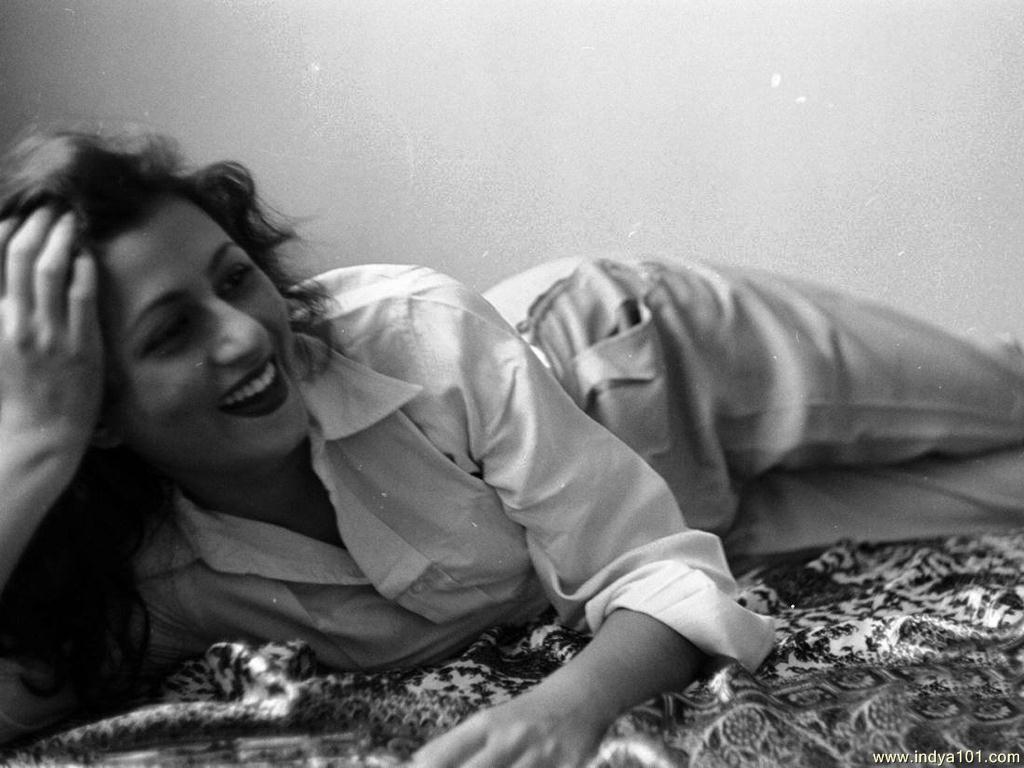
(Picture courtesy indya101.com)

Exit mobile version