Categories
Overdose

A taste of two Indias

Jatin Sharma writes about how we’ve spoken enough about taking control, and that now’s the time to actually do it.
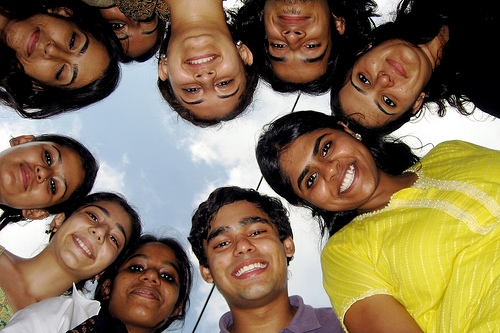
I live in two countries now. No, I don’t travel a lot. In fact, I don’t travel at all. My passport is still a virgin. But yes, every now and then, I feel that I have been teleported to a country where I don’t belong. I stay in India but every now and then, reality strikes me and lets me know that I am also in Bharat.

A Bharat where people judge others what they wear, a Bharat where girls don’t have any power and the boys are the laadlas, a Bharat where if girls enjoy their liberty, they are being ‘adventurous’ and if boys down a few pegs, they have become adults.

I live in a Bharat where people are biased and the leadership is weak. I live in a Bharat where my leaders can classify a rape as a ‘rarest of rare’ rape. And this last statement can come from a State whose Chief Minister is a woman.

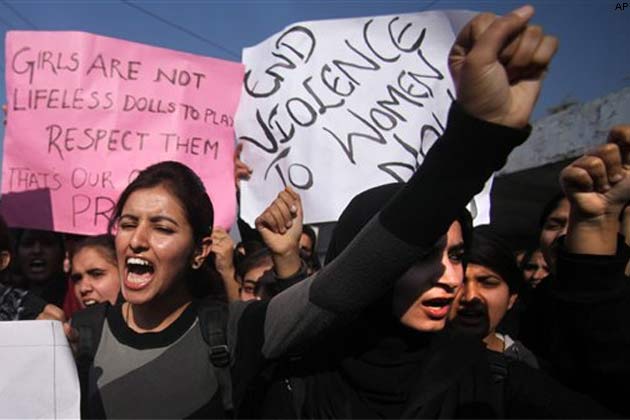
I live in a Bharat where the police don’t shy away from hitting women who are protesting and asking for justice. I live in a Bharat where the Government’s precautionary measure to reduce rapes is to ask people to confine themselves in their homes post-1 am. I live in a Bharat where those in power think that the best way to control crime is to make the victim understand the anatomy of the crime, and not the criminal.

Bharat has committed a lot of mistakes. Grey hair and bodies corrected by surgery are deciding, time and time again, how the country is to run. I am not asking for anything more but for the powers that be to realise that the majority population of my nation is young and raring to go; it is the real India.

But enough has been said by all quarters about how India needs to unleash itself now. It’s time that we start controlling Bharat; for once I feel that we do need retirement houses for these old people who are just a step away from sitting in wheel chairs permanently, but who are presently running Parliament.

But how does that become a reality? By sitting in protest at India Gate? By descending on Jantar Mantar? By sitting in front of your laptop and sharing a few pics and videos? Or by really going out to achieve our kingdom, our country, a country where the shameless are shamed and criminals are punished hard?

We need to repair Bharat so that it becomes our India. And that would be possible when India reclaims Bharat. Today, these leaders are in their high offices only because India sits or goes out on a vacation when elections are announced. They are ruling us, because we only raise our voices when something really gory things happen to us, and not when things  go wrong in other spheres. We don’t raise our voices when a criminal fights an election, we don’t say much when a Facebook user is arrested. We don’t raise our voices when we have to give a tenner to get a cop off our backs.

We’ve theorised enough. Let’s go out and do something that makes a difference, and not something that is merely symbolic.

Jatin Sharma is a media professional who doesn’t want to grow up, because he feels that if he grows up, he will be like everybody else.

(Picture courtesy antarmukhi-ashu.blogspot.com)
Categories
Hum log

The maestro in his home

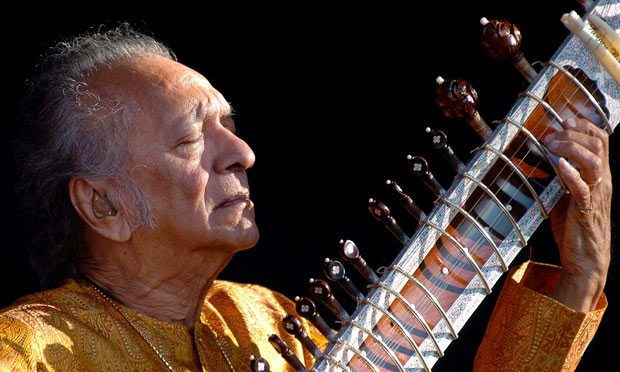
Humra Quraishi met Pandit Ravi Shankar at his Delhi home before he moved to the US. This is her story.

I can never forget my first meeting with sitar maestro Pandit Ravi Shankar. It was around the time of his 70th birthday, and as I sat sipping my tea at his Lodhi Estate home, I got so terribly nervous that the entire cup crashed to the carpet of his living room. With that disaster, my nervousness peaked to such an extent that I could barely ask more than the basic, customary questions.

But  Panditji had simply smiled and tried his best to make me feel at ease.

It was only after a longish gap that I’d mustered enough confidence to try and meet him again. This was in early 1993. He’d looked frailer and quite sad. He’d told me that he’d been left totally devastated by the recent death of his only son Shubo. That was the time he and his second wife Sukanya were planning to shift base from New Delhi to San Diego, California.

When I asked him why he was moving to the US, the couple gave me a set of reasons. “The mess in the country is painful for me. Even a place like Delhi is becoming unfit for living. With everything else, the pollution here is killing,” he said. Sukanya stood close by and added, “The politicians and pollution have finished the city. We have already bought a Spanish villa in California and now I’m doing it up my way.”

To that he’d added, “For me, the house is a very important place. Since I was 10, I have been travelling, living in hostels, so I value my home. That feeling of warmth, coupled with a comfortable middle class lifestyle. Nothing gaudy or vulgar. Somehow, I totally dislike the Delhi concept of showing off. A dignified, balanced and comfortable way of life is what I like.”

He went on to tell me details of the very first house he had built for himself in Benaras. “I don’t know why I decided to build that house in Benaras. Probably because I was born and brought up in that city…and though I’d built it in the early ‘70s, within years I decided to abandon it. All sorts of crude elements had sprung up around me, those decaying values stifled me, so I decided to shift out of Benaras. I’m not a fighter. I’m a musician and I can’t stand vulgar people, besure log.”

Their Lodhi Estate home was really simple. There wasn’t a trace of any ornate furniture, no porcelain ware, no elaborate bedroom bandobast. In fact, the only room which looked well done up was the music room; with sitars, surbahaars , tanpuras neatly placed in stands and the walls of this particular room adorned with prized photographs capturing Panditji with John Lennon, Uday  Shankar, Baba Allauddin, Pablo Casals, Mariam Anderson, Pandit Jawaharlal Nehru and Indira Gandhi.

The maestro’s bedroom had only a double bed and a fax machine in it. As we neared the puja  room, he told me, “This isn’t just a puja room but my private corner. This is where I meditate, do riyaz, pray. For me, religion is a very personal thing. I am certainly not ritualistic. In fact, like me, most musicians are broad-minded.

When I was 18, I went to live with my ustad, Baba Allauddin, and though he was a devout Muslim, his home in Madhya Pradesh’s Maiher was full of photographs of Kali, Krishna, Christ, Mary…music makes you more tolerant. I only wish our present-day politicians were more musically-inclined; then there’d be more harmony and not the present-day cacophony!”

I asked him, “If religion is so personal to you, why is there such a bold ‘Om’ inscribed on the very entrance gates to your home?”

He didn’t just explain this with words, but he also wrote in my notebook. I quote him, “Om or Aum is the primordial sacred sound that has been uttered, chanted and sung by yogis, musicians and the common man for thousands of years. In music, Omkar plays a very important and a very great part. Mian Tansen and his family gave great importance in their singing to the aalap, which starts with the words ‘Hari Om’. This gradually changes to nom, tom etc…To me, as a musician, this sound signifies a deep spiritual vibration, mentally as well as physically.”

 (Picture courtesy guardian.co.uk)

Categories
Diaries

News event of the year

The Palghar Facebook arrests showed us the foolhardy side of police action, thus forcing the Government to make swift reprisals.
by The Editors | editor@themetrognome.in

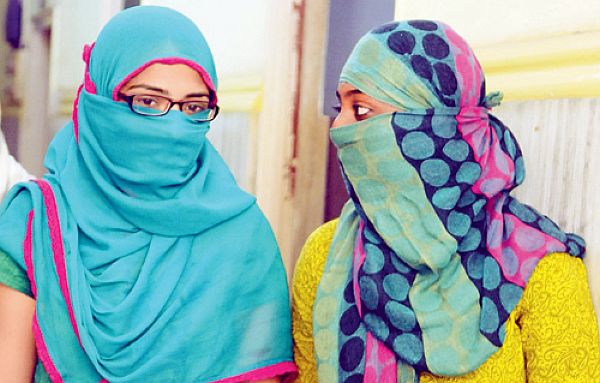
It was an innocuous post on Facebook, as most posts go. A student from Palghar, 21-year-old Shaheen Dhada, was upset over the total lockdown of Mumbai and its outlying suburbs after the death of Shiv Sena chief Bal Thackeray on November 17, 2012. Taking to Facebook to vent her anger, little did Shaheen know that a simple post questioning the logic behind the shutdown would soon get her arrested.

Similarly unaware of the impending storm was her friend Rinu Srinivasan, also 21 and also a Palghar resident. Rinu ‘liked’ the post.

And there the matter would have rested.

However, the post was brought to the attention of Bhushan Sankhe, Palghar’s Sena shakha pramukh,  who was suitably upset by Shaheen’s remark and Rinu’s appreciation of it. Very soon,  a mob of Shiv Sainiks was mobilised into action, they went to Shaheen’s house, vandalised her uncle’s clinic, and that night, Shaheen and Rinu were arrested.

These arrests marked a watershed moment in a year that saw the imprisonment of cartoonist Aseem Trivedi and the taking down of his website, the jailing of a Kolkata professor after he forwarded a cartoon of Mamata Banerjee over email, the abrupt cutting off of video channels like Vimeo at the hands of entertainment giants like Reliance and the mass blocking of Twitter and Facebook accounts in the aftermath of the Assam violence, to name a few.

The public, already bewildered by the seemingly indiscriminate clampdown on its internet freedom on various pretexts, was pushed past the boiling point after the two girls were arrested. Already furious over being forced to wait out Thackeray’s funeral in their homes, the city erupted in protest after Shaheen and Rinu were not just arrested, but a local magistrate awarded them a 14-day judicial custody term.

Spurred into action by the rising protests, first from Mumbai and then from all over the country, the State Government ordered a probe into the matter, then after the police action was deemed inappropriate and hasty. The girls were finally let off, the charges against them were subsequently dropped, and both the girls are now back on Facebook.

But perhaps the biggest offshoot of the entire incident was that the public, used to not voicing its opinions on the Shiv Sena, went full throttle in its criticism of the party’s strong-arm tactics.

‘Diaries’ is a series of stories on one theme. The Yearender Diaries seek to capture the most telling moments, happenings and people in the city this year. Watch out for Personality of the Year tomorrow.

(Picture courtesy indiavision.com) 

Categories
Diaries

Event of the year

The biggest funeral in Maharashtra this year, after Dr Babasaheb Ambedkar’s in 1956, came with its fair share of controversies.
by The Editors | editor@themetrognome.in

Part 2 of our Yearender Diaries 

It was expected to be a funeral of somewhat large proportions. The city of Mumbai was to pay a silent homage, and was told to be off the streets. Some unkind people even said that if you had the money and the muscle power, it wasn’t that tough to get a big crowd together. That fear of retribution would force people to attend the funeral, just as fear had compelled every Mumbaikar to silently take whatever the dead man had thrown at the city all his life.

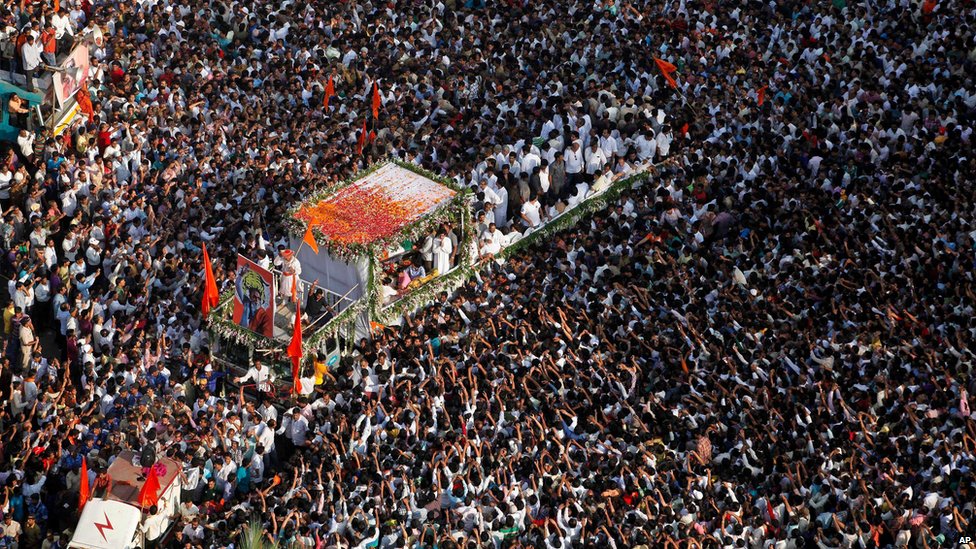
Bal Thackeray, founder of the Shiv Sena, passed away on November 17, 2012. It was a Saturday, and when the announcement was finally made from his residence, Matoshree, it was 3 pm. In a few minutes, the city began to shut down – first the shops, then its offices, then its transport. As the grieving at Matoshree began, so did another momentous phenomenon: a bandh which the late leader had not called for, for the first time the Sena’s life.

It was probably a fitting tribute to Thackeray; bandhs had characterised his party’s workings for a better part of forty-odd years, and a bandh it was that saw him through on his last journey.

Everything remained shut till Sunday night, by which time the late leader’s funeral had already taken place at Shivaji Park. But those two days of a total lockdown were difficult to get past – most people, accustomed to doing their shopping on Saturday evening, found they had no milk, vegetables or anything to eat. Sunday dawned without respite, and in some places, without newspapers. By evening of that day, all entertainment channels on TV had been blocked. So all one could do was watch the funeral live.

On the other side, there was a genuine outpouring of grief. Not after Dr BR Ambedkar’s funeral in 1956 had Maharashtra witnessed such a deluge of mourners descending on the city in such a short span of time. It would be churlish to say that all of those gathered were Shiv Sainiks and their families alone – the crowd largely comprised Sena voters and Bal Thackeray admirers – and nobody was ordered to be part of the funeral procession.

And even before his mortal remains had reached the cremation grounds, rumblings over what the party would do without his stewardship began. Questions about the Uddhav-Raj equation resurfaced. Declarations of ‘The Shiv Sena is finished!’ were made, sometimes on TV. But all the screaming rhetoric quietened as the body was finally laid to rest. When the funeral pyre was lit, everybody cried.

It has been over a month since his death, but the man is anything but forgotten, and not just because of controversies linked to where his memorial should be, or if people should be arrested merely for stating an opinion on a social networking site. It is said that the measure of a man’s life is made by the numbers of people who show up at his funeral. If the numbers at Bal Thackeray’s funeral were anything to go by, he lived a very successful life indeed.

‘Diaries’ is a series of stories on one theme. The Yearender Diaries seeks to capture the most telling moments, happenings and people in the city this year. Watch out for News Event of the Year tomorrow.

(Picture courtesy bbc.co.uk)

Categories
Enough said

Help victims, not the accused

Humra Quraishi writes on the malaise of rape and how a lack of policing is helping rapists get away it.

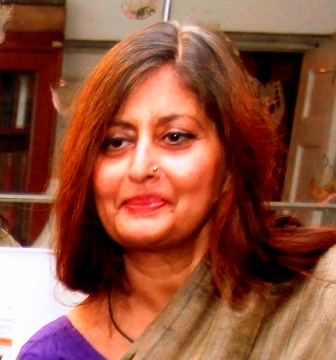
Another gang rape has taken place in New Delhi. No, it’s not really surprising, for eve-teasing is so rampant there that no woman is actually safe on the roads or lanes of this city. After dusk, it’s risky for a woman to commute, unless of course, she is a top politician or a senior civil servant or Somebody Important, in which case she has adequate security as she goes about her daily tasks.

And before I write any further, let me mention that even young men and teenage boys are not safe in Delhi either. With this, another point that cannot be ignored is that people’s faith in cop and the policing system is nil. The average citizen is apprehensive about entering a police station to lodge a complaint, because that one act results in a hundred different offshoots, with him or her facing some unsavoury consequences. There are several horror stories to be told about the city’s lockups, the police thanas, the interrogation and detention centres. The worst crimes take place right there, under the watchful eyes of cops.

In fact, there are no records and statistics to show how many cop-rapists and molesters have been hanged thus far. They get away because of all the possible loopholes in this system.

So where do you and I go for help if we are molested or raped or eve-teased? It sure does require nerves of steel to report these crimes, and that’s why most of these crimes go unreported. Reporting them is, perhaps, the last resort for most people.

I am of the definite view that hanging is not the solution. Are we so short-sighted to think that hanging a couple of men will solve all crises, be it related to terrorism or rape? Death isn’t a remedy for such ills. Those off-with-your-head orders were fine when given by rulers of bygone days, because the rule of the law was paramount then. Here, when every fifth or sixth man is trying his level best to grab an opportunity to touch or intrude on a woman’s personal space, how many men can be hanged? We will upset the gender ratio if we hang every eve-teaser and rapist.

Another important point, which most of us ignore, is what we are seeing on the big and small screens today –  obnoxious item numbers, with even more obnoxious lyrics, and our top heroines dance in them without the slightest trace of embarrassment. There are disgusting image portrayals, but there doesn’t seem to be any effort being made to stop this kind of objectification.

Today the situation is so pathetic that we have moved backwards, beyond the medieval ages. If you are planning to move out of your Delhi home after dusk, you to yourself well and try and return before it gets late. Men friends or a male companion cannot be of much help if such a situation happens to you, because rapists attack in groups, and are often deranged with drink that only a policeman can probably stop them.

Humra Quraishi is a senior political journalist. She is the author of Kashmir: The Untold Story and co-author of Simply Khushwant.

(Picture courtesy ibnlive.com)

Categories
Big story

Off with his hands! (And feet. And eyes)

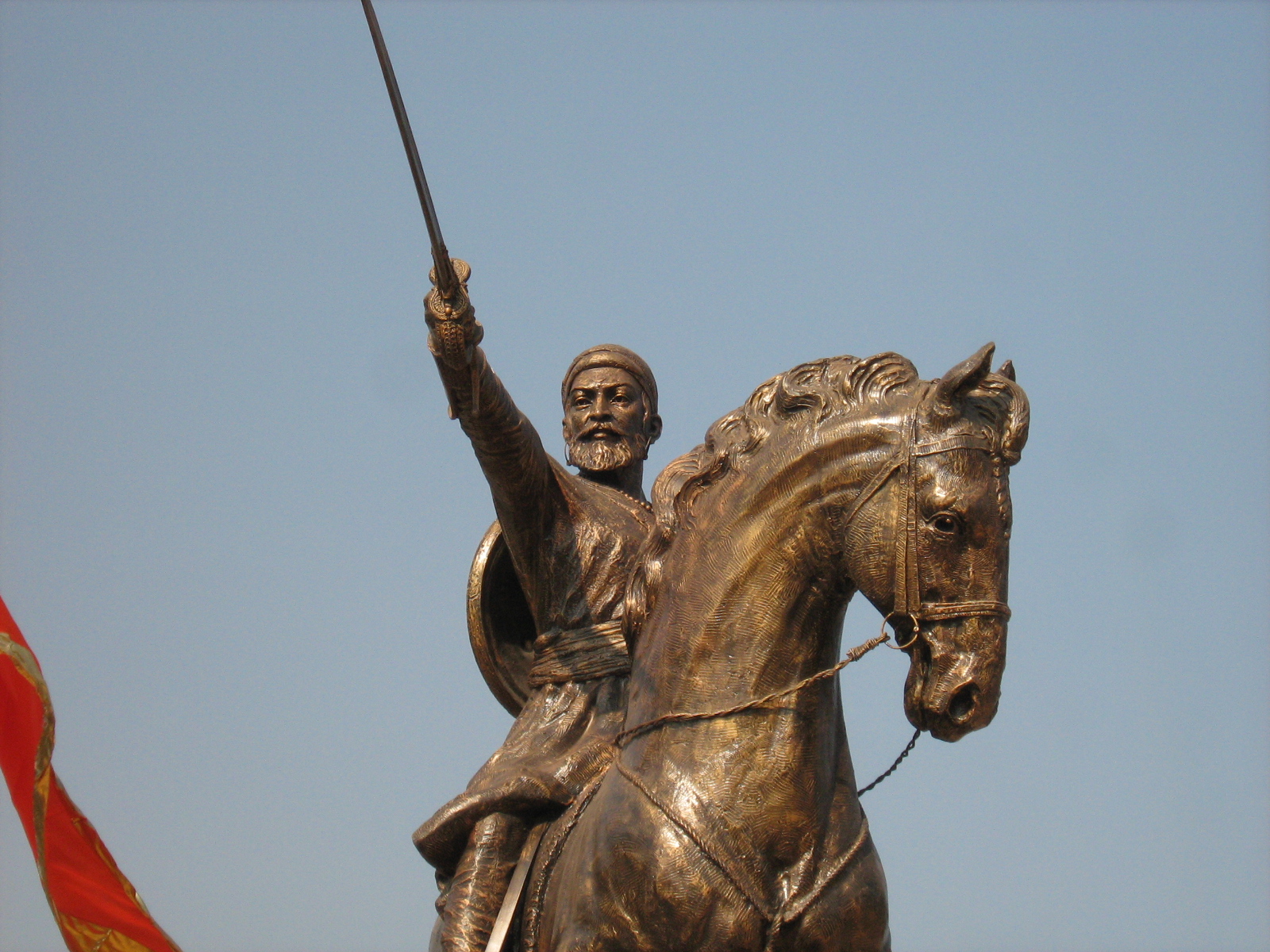
Shivaji’s punishment for rape was to sever the man’s hands and feet, or gouge out his eyes, ancient manuscript reveals.
by Shubha Khandekar

That Maratha warrior king Shivaji was a ruler and a thinker way ahead of his times is well-documented, but a recent historical discovery has once again underlined this fact. At a time when might was right, and women were often commodified to the extent that they were included in the spoils of war, Shivaji’s orders for men who raped women were clear: cut off his hands and feet.

Historians in Pune have recently discovered a dated manuscript (see pic on left) in which Shivaji had ordered the hands and feet of the headman of a village in Maharashtra be cut off as punishment for raping a woman. In another incidence of rape, in which the accused was a military general who raped a woman who had defended Belwadi Fort before surrendering, Shivaji ordered that the man’s eyes be gouged out.

“This is the oldest and the most indisputably authentic manuscript of Shivaji,” said SM Bhave, secretary of the Bharat Itihas Samshodhan Mandal. The manuscript had mysteriously disappeared after it was originally reported by researcher SG Joshi  of the Mandal in 1929, 83 years ago. A Marathi translation of it was published in Vol II of the sources for the biography of Shivaji, compiled and published by the Mandal in 1930. The manuscript, wrapped safely in old handkerchiefs of a Mandal researcher, was rediscovered recently among old files in the Mandal office. The manuscript is written in the Modi script, which has been in use in Maharashtra for the past 700 years.

English translation of the manuscript of Shivaji (dated 20 Jilhez, according to the Mandal)

From the office of Rajashri Shivaji Raje.

Scribes: Clerks Deshmukh and Deshkulkarni.

May it be known that while the headman Bavaji Bhikaji Gujar (Patil) was heading the said Ranje village, he committed an offence, which became known to Saheb  (Shivaji), following which he had him fetched here. On inquiry it was revealed that the news was true, whereupon his ancestral domain was merged with the royal kingdom and he was dismissed from the headman’s post after severing his hands and feet. At that time one of his relatives, namely Sonji Bajaji Gujar pleaded for getting the custody of Bavaji. In consideration of this request he was charged a fine of 300 Padshahi hons, after paying which Bavaji was handed over to him. Since Bavaji was childless and Sonji is his kin, Saheb compassionately passed on the headmanship to Sonji, for which he was asked to deposit  200 Padshahi hons into the royal treasury. May nobody hinder the carriage of this order. This original letter may be given to him for execution.”

The manuscript

“Our experts have thoroughly investigated, verified and confirmed the authenticity of the manuscript,” said historians Dr Anuradha Kulkarni  and Ajit Patwardhan in Pune. “It clearly mentions the name Bavaji Bhikaji Gujar (Patil), the headman of the Ranje village near Kondhanpur, and the punishment awarded to him by Shivaji, of cutting off his hands and feet for having misbehaved with a woman.”

Giving details of the above instance, Govind Pansare, whose booklet Who was Shivaji? sold 22,000 copies and has gone into four editions from 1988 to 1991, narrates that the Patil abducted the young daughter of a poor farmer and raped her, after which she committed suicide. The whole village, intimidated by the tyrannical Patil, sympathised but remained passive and helpless after the girl’s death. “But when Shivaji heard of it, he had the man arrested and brought to Pune, after which he pronounced the punishment to him,” the book says.

In another instance, described in the same book, Sakuji Gaikwad, a military general laid siege to the Belwadi fort, being defended by a courageous woman called Savitribai Desai in 1678. She held out for 27 days before surrendering. Euphoric over the victory, Sakuji captured the fort and raped the defeated Savitribai. As Shivaji got to know of it, he was infuriated and had Sakuji’s eyes gouged out. Sakuji was also thrown in jail for the rest of his life.


Exit mobile version