Categories
Trends

More Americans studying in India

12 per cent increase in numbers of Americans studying in India; however, India sent fewer students to US last year.
by The Diarist | thediarist@themetrognome.in

The numbers of foreign students coming to India and its metros to pursue education are only increasing every year. And while the US still remains the destination of choice for most Indians wishing to pursue a post-graduate degree, a new trend to emerge in recent times is the rise in numbers of American students coming to India for studies.

As per the Open Doors 2012 report for 2011-2012, published by the Institute of International Education, a not-for-profit educational and cultural exchange organisation in the US, 273,996 American students studied abroad for academic credit, an increase of one percent from previous years. The report says, “US students studying abroad increased in 17 of the top 25 destination countries. Five per cent more students studied in China and 12 per cent more students studied in India than in the prior year.”

Open Doors further reports that while the United Kingdom was still the top destination for American students , as also Italy, Spain, France and China, an increasing number of Americans were opting to study in “several non-traditional destinations outside Europe, such as Brazil, Costa Rica, India, and South Korea.” The increase in numbers of Americans coming to India in the 2011-2012 academic year has thus made India the 11th leading destination for away studies.

Further, in an effort to increase opportunities to study abroad in priority countries, the “State Department’s Bureau of Educational and Cultural Affairs awarded 10 grants to expand capacity of American institutions to send US students abroad, and the capacity of host institutions overseas to receive them.”

Says Adam J Grotsky, Executive Director, United States India Educational Foundation (USIEF), “US universities are making strategic efforts to engage in India, which include comprehensive initiatives on India at their home campuses. US universities and study-abroad consortiums have developed more programmes in India, and I believe more American students are attracted to India because of the efforts made at their home institutions to teach about the economic, strategic and cultural importance of this region of the world.”

But Indians going to US have decreased

As per the report, there were increases in the numbers of students going to the US to study from 12 of the top 25 places of origin such as Brazil, China, France, Indonesia, Iran, Mexico, Russia, Saudi Arabia, Spain, the United Kingdom, Venezuela, and Vietnam. “At the same time, numbers declined from several major sending countries, including India (down by four per cent), South Korea, (down one per cent), and Japan (down six per cent). The factors driving these declines may include global and home country economic factors, growing higher education opportunities at home, and stronger employment opportunities at home after graduation.”

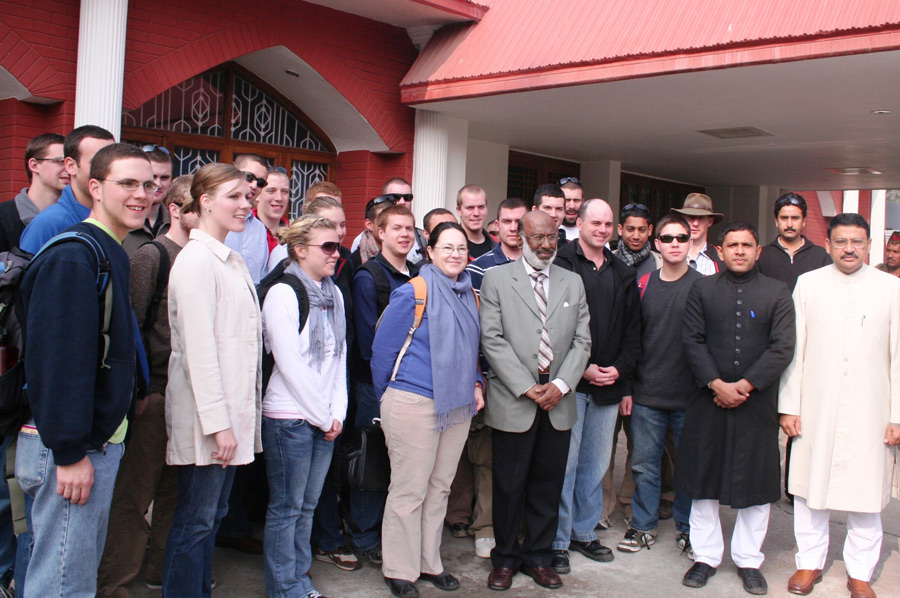
(Picture used for representational purpose only. Picture courtesy www.nvonews.com) 


Categories
M

Don’t judge a film by its promo

M writes about how film promos these days are different from the storyline, and tagged to the last Bollywood hit.

Once, in a fit of momentary madness, I decided to watch Aiyyaa on DTH. Suffice it to say that I should have been paid to watch that film, even if I did watch it at home.

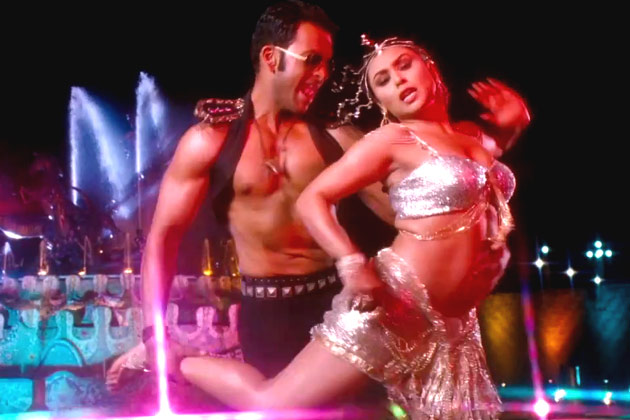
Apart from being an utter and complete waste of time that I could have employed in other pursuits, I was annoyed at how the film kept drifting from the main plot every five minutes. But my disappointment was not with the film itself, or its actors. It was the way the film was promoted. The promos led me to believe that it was the story of a small town girl and her romantic escapades. Shots of two very sleazy songs in the film constantly reminded the audience of The Dirty Picture. With such a preamble, naturally the audience expected much more masala in the actual film. Instead, when you watch the film you realise that it is actually the innocent love story of an extroverted girl and a devil-may-care guy.

Marketing a film is as critical as the creative aspects of making one. The marketing peg can bring or take the audience away from the theatres. Unlike a brand, marketing a film is different. While launching a new product in the market, the brand custodians will work on solid background data and create campaigns around the footprints of their Target Audience (TA). But a film is assumed to work for the entire mass. Cinema, being a mass medium, garners interest across gender, ethnicity, age, etcl. But in Bollywood, it seems minimal efforts are spent on a film’s strategy and the sole objective is to play on the last successful film; in case of Aiyyaa it was The Dirty Picture.

There are many films that have gone wrong with their marketing, and many ‘brilliant’ ideas have also mercifully been rejected in the board rooms. One such spin-off attempt happened not very long ago. The film was a rundown romance spread across three generations, with all three pairs being played by the same lead actors. Clearly, there was nothing to go on in terms of the storyline, so the fallout plan was to create hype around the stars of the film.

So the usual gimmicky stories were prepared for release in the media – like the off-screen romance brewing between the actors, the petty fights on the sets, etc. But one of the film’s producers came up with a peculiar idea. The idea, according to him, was a two-edged sword – if implemented, it would promote the film and dilute Salman Khan’s fan following. The truth is that any producer who has not worked with Salman has tried, at least once in his life, to sabotage the actor’s staggering popularity by one means or another. So far, in vain.

So, the big idea was to play on the fact that the lead actor’s mother was of the Muslim faith. Hence, just before release, the actor would visit a famous shrine of a Muslim saint in the city and the same would be projected as the actor’s efforts towards reconciling with his Muslim mother – this would impress and sway the Muslim audiences towards this actor. Let me mention, as an aside, that Muslim audiences are seen as Salman’s key fan base.

But in reality, the lead actor of this film was a staunch follower of the Hindu spiritual guru Sri Sri Ravi Shankar. This idea had to be shot down by the other producers.

There are many recent films that have been presented differently in their promos than what the actual script is. Jism 2 and Ishaqzaade are two films that firmly fall under this category, but don’t go checking them out. With lack of good storylines, I suppose filmmakers must do whatever they can to get their films some attention; be it projecting a film untrue to its plot, adding tons of sleaze or even recreating celebrity personas that do not actually exist.

Sharp as a tack and sitting on more hot scoops than she knows what to do with, M is a media professional with an eye on entertainment.

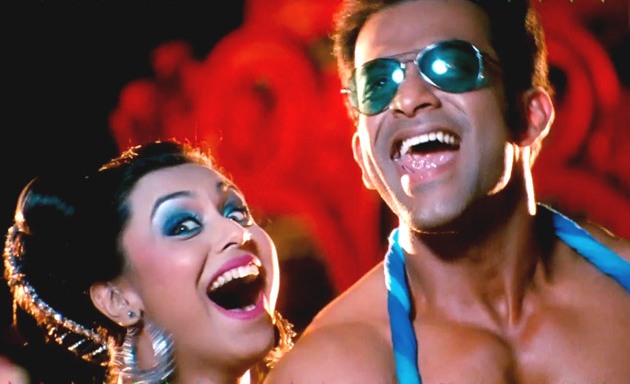
(Pictures courtesy www.ibnlive.com)

Categories
Places

When I nearly lost my life

A student trekked to Torna and found her life flashing before her eyes between a rock and a rough place. But the rest of her trek was great.
by Bhagirathi N

Amazing, superb, challenging, tiring, fun – all of these adjectives together fail to express how the my recent trek to Rajgad was.

According to our itinerary, we started from Borivali on November 31 2012 at 7 am and reached Gunjawne village at 1 pm. From there, we started our actual trek. The instructions to us were brief and strict – there were no toilets, so you could defecate in the open if you wished, you couldn’t wear sandals, slippers, or any fancy footwear, you had to carry at least two litres of drinking water, mobiles, cameras and other expensive equipment was to be carried individually, no stinking socks, no talking while trekking.

We also carried caps, carry mats to sleep on, bedsheets or pullovers, warm clothes, torches, and haversacks. The plan was to stop at a temple near Rajgad fort and stay there overnight for the first day. There was also a rescue team accompanying us; these were regular trekkers carrying a lot of equipment. One of them, named Richard, is not only a regular trekker but an experienced climber, too. Mangesh Karandikar, one of our professors, had planned this entire trek for us. He was leading the team. While, the rescue team was supposed to ensure that none of us was left behind.

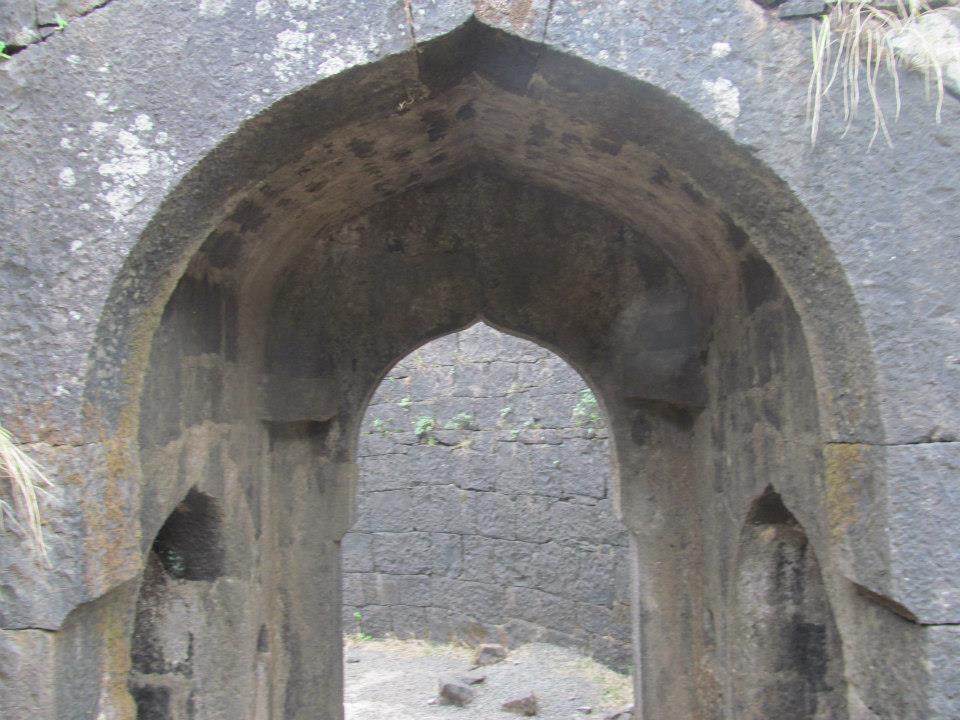
We reached the temple, crossing rough, rocky patches, and entered Rajgad through the Chor Darwaza around 4 or 5 pm. The temperature was below 20 degree Celsius. A little later, we chanced upon a dirty pond that held drinking water, and a dirtier pond next to it for washing purposes. There came a woman with a bottle of chhaas – which was the only drink we could afford at that point of time.

We lost half of our number who decided to climb down from Rajgad because they didn’t think they were fit enough to trek further to Torna. The rest of us went to bed at about 10 pm near a camp fire. Rising at 5 am the next day, we started our trek two hours later, after filling our water bottles. There are no water bodies on the route to Torna, and even the one-and-half litre bottle I was carrying was not enough.

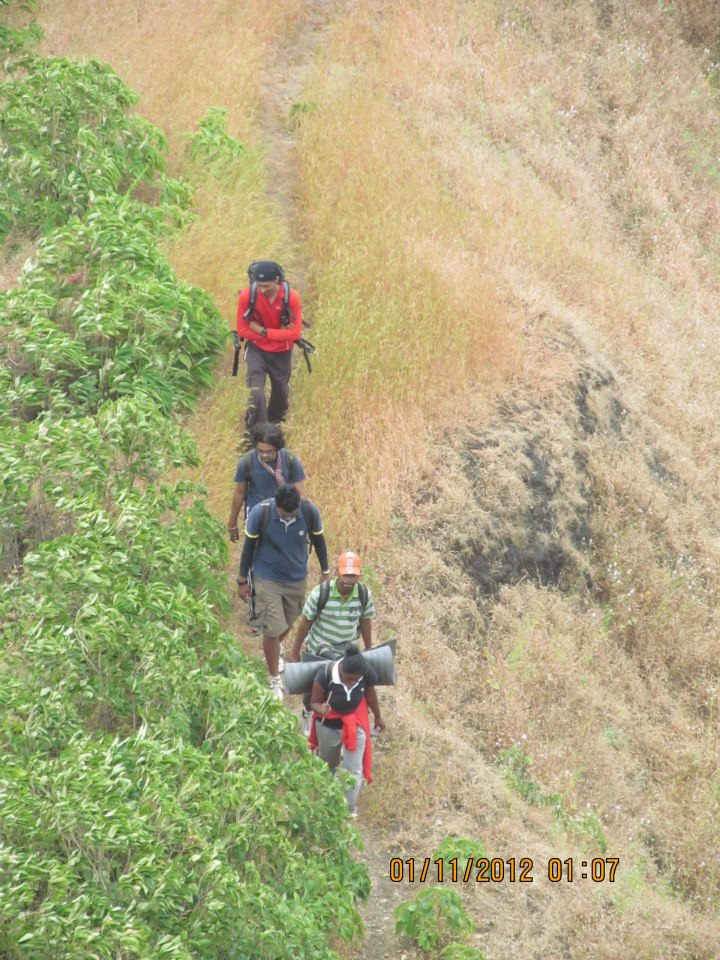
That second day posed the greatest challenge to my endurance. We walked, walked, and walked. It was fun trekking through rocky terrain, slippery ridges, and small unprotected forests. We took small breaks after every hour. I was the slowest trekker on Day 2.

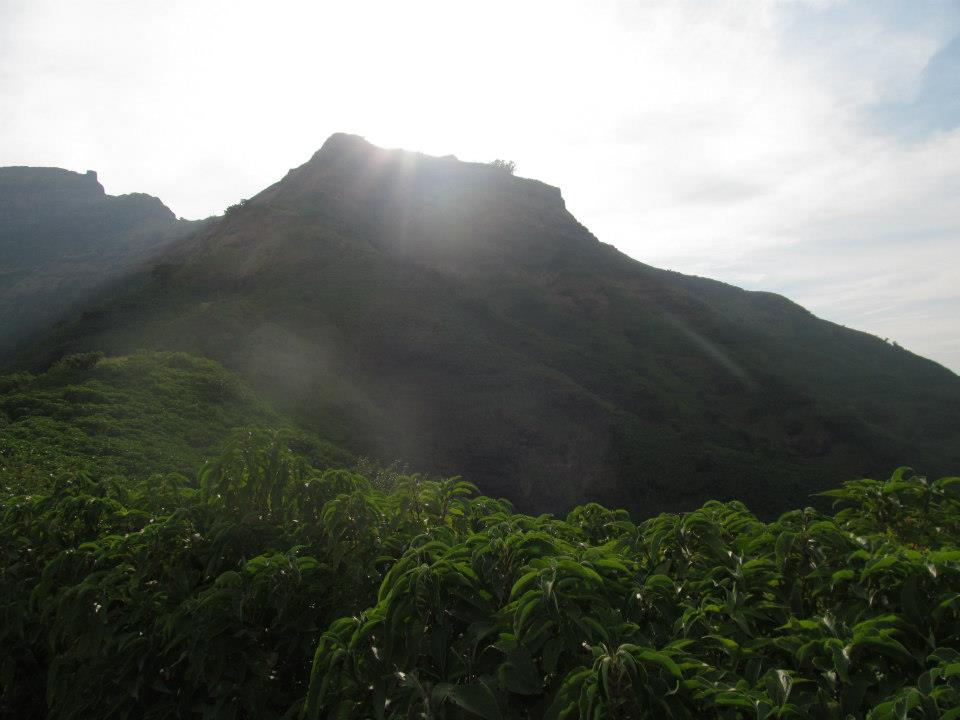
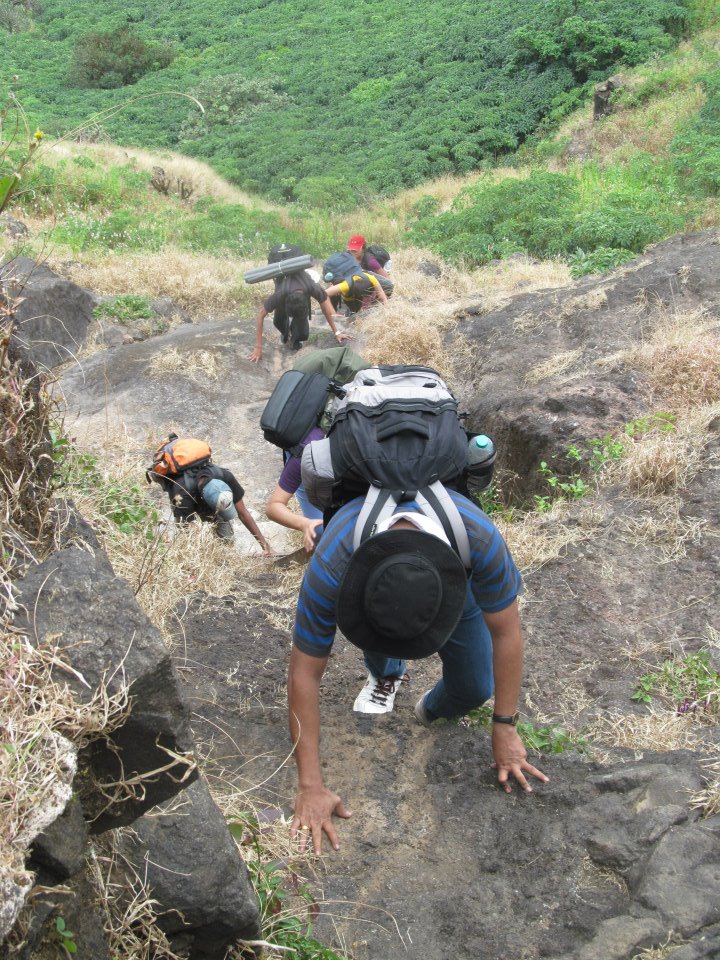
We crossed several mountains. The next was my favourite part of the trek – over 4,000 feet high, the temperate was 18 degrees  Celsius. We were completely exhausted, and then a steep ascent faced us. I climbed up, which was easy, but was taken aback to see two huge rocks with narrow lanes to walk along, joined by a single ridge which could hardly accommodate one of your feet at one time. Richard offered to help, and all I had to do was follow his footsteps and balance my body and my huge bag. Miss a step, and you could die.

I climbed down the first rock holding Richard’s hand; he was standing on the second rock welcoming me. As soon as I climbed up the second rock and let go of his hand, I realised I was losing my balance. My life flashed before me, and so did glimpses of silly ads for Mountain Dew and Thums Up. Frightened, I called out “Richardddd…” and tried my best to balance myself. And before Richard could reach me, I swiftly reached level land.

After an hour, around 3 pm, we reached Torna and desperately looked for water and found it soon. About 45 minutes later, we started the descent from Torna. This time, I was accompanied all the way by by Ninad, a fellow trekker.

I’ve brought home a snake skin which one of my friends had found during the trek. My only regret is that I wasn’t carrying a good camera on the trek.

Bhagirathi N is a first year student of Masters in Communication and Journalism.

(Pictures courtesy Bibin Alexander)

Categories
Big story

Bal Thackeray is critical

Amid swirling rumours, thousands of Shiv Sainiks and general public flock to Matoshree; all cops’ holidays cancelled till further notice.
by The Editors | editor@themetrognome.in

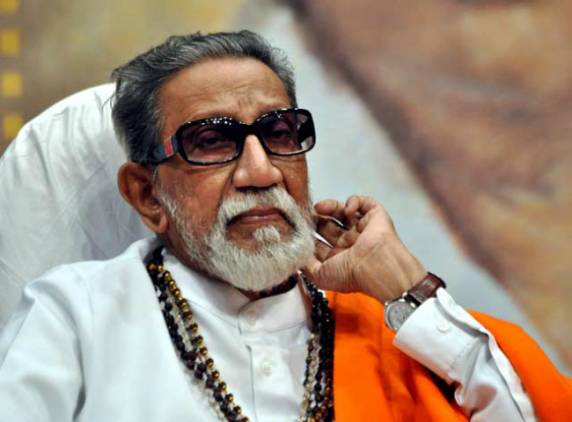
Shiv Sena chief Bal Thackeray (86), who has been battling a pancreatic ailment for a long while now, has been in a critical condition since late evening yesterday. His condition is said to have worsened over the night.

Thackeray’s son and party executive president Uddhav appealed to the assembled party workers to keep calm and not spread or listen to rumours. “I am confident that he will pull out of this, his willpower remains as strong as ever,” Uddhav said in a 2.15 am personal appeal made from outside Matoshree. “I appeal to you with folded hands to keep calm. I have not yet lost hope and neither should you. I don’t want to hear any news of any of you misbehaving (in the light of his father’s condition),” he added. Balasaheb’s estranged nephew and Maharashtra Navnirman Sena (MNS) chief Raj Thackeray also exhorted party workers to await news of further developments and to keep calm.

Rumours swirled all over the city and country as crowds waited to hear about the exact status of Thackeray’s health. Media personnel and police were seen in large numbers outside Matoshree; however Shiv Sainiks asked the waiting cameramen to switch off their cameras. At about midnight, the cordon around Matoshree was further increased by the cops.

Meanwhile, President Pranab Mukherjee cancelled his two-day visit to Maharashtra.

 (Picture courtesy www.deccanchronicle.com)

Categories
Learn

Illegal Bangladeshis working on infrastructure projects

1,121 illegal Bangladeshis arrested this year; Special I Branch has carried out drives at major Mumbai construction sites and malls.
by The Editors | editor@themetrognome.in

Where are the necessary security checks when they are needed the most? Though terror attacks keep striking the city with alarming regularity, and even as the Mumbai police and State Government admitting that the illegal entry of Bangladeshi migrants into India poses a major security hazard for the state and country, the police have rounded up Bangladeshi migrants illegally working in the city from – surprise! – two big-ticket infrastructure project sites in Mumbai.

In a special drive conducted by the I Branch of the Mumbai police last week on November 8, the cops raided the monorail project site undertaken by L&T, a site where beams for an MMRDA flyover were being made by the J Kumar company, and a 50-acre project being developed by L&T and Lodha Builders in Wadala. Of the 2,200 workers rounded up and questioned, 48 were found to be illegal Bangladeshi migrants.

The four contractors working on these sites and who had hired these migrants have been arrested. The incident raises concerns about valid security checks that major companies are supposed to undertake before hiring help on their projects – such as issuing ID cards after verifying the workers’ credentials, checking their antecedents, etc. With such lapses occurring on major infra projects, it is little wonder then, that the city’s housing societies are often guilty of not verifying security personnel’s credentials before hiring them.

A question of security

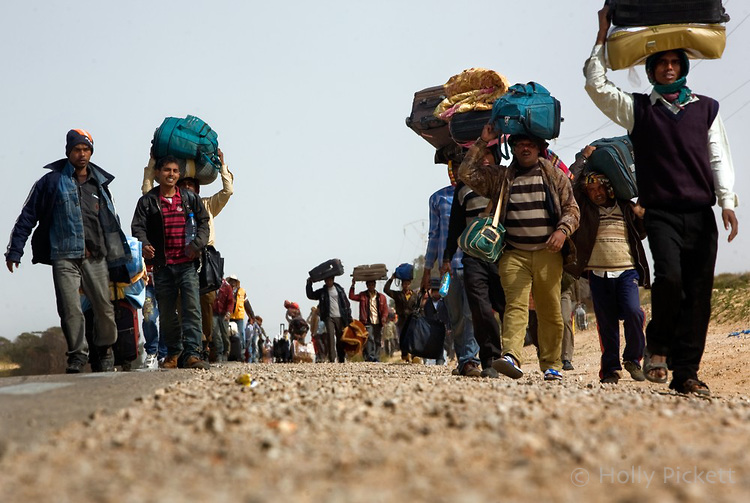
The I Branch had, earlier this year, identified the problem of Bangladeshis entering the country illegally and taking up work on construction sites, factories and malls, and started conducting regular drives from June this year. In the period from June 2012 to November 8, the Branch picked up 734 illegal migrants from various spots in BKC, Ghatkopar, Kurla, Pant Nagar, Byculla, Parel, Dadar, Worli and Vikhroli. Till date, 1,121 such illegal migrants have been arrested in 2012, and 250 more have been deported to Bangladesh.

As per a press release issued by the Branch, “India’s security is at stake with the entry of illegal Bangladeshis. These migrants have also been found to part of several fake currency rackets operating in the country, and in helping terror outfits.” The release adds, “Bangladeshis enter the country via West Bengal, and the contractors over there send them for work purposes to Mumbai. They are paid very little wages, and since they are here illegally, they cannot complain about the low wages they are paid.”

(Picture courtesy www.hollypickett-com.photoshelter.com. Image used for representational purpose only)

Categories
Listen

A cracker of a song

We wish you a Happy Diwali and present to you 9XM’s firecracker jugalbandi song – and how it was created.
by Prashant Shankarnarayan | prashant@themetrognome.in

Artists have used their voices, daily items and even trash to create music, but have you ever heard of creating music by bursting firecrackers? This Diwali, 9XM came out with an innovative classical jugalbandi – one between Konnakol and firecrackers. The music channel’s in-house team came up with the concept of juxtaposing bursting fireworks with vocal percussions in the Carnatic style, called ‘Konnakol’. The music video’s plot revolves around a strict TamBrahm music teacher forcefully teaching his disinterested students on Diwali, even as people burst firecrackers outside their homes.

Jugalbandi, also referred to as ‘Sawaal-Jawaab’ in Indian classical music, is when two or more musicians challenge each other to a musical duel by singing or playing instruments. While embarking on this project, the team did face three major challenges – to find clean sound samples of fire crackers, to interpret the sounds musically, and lastly shoot it within city limits.


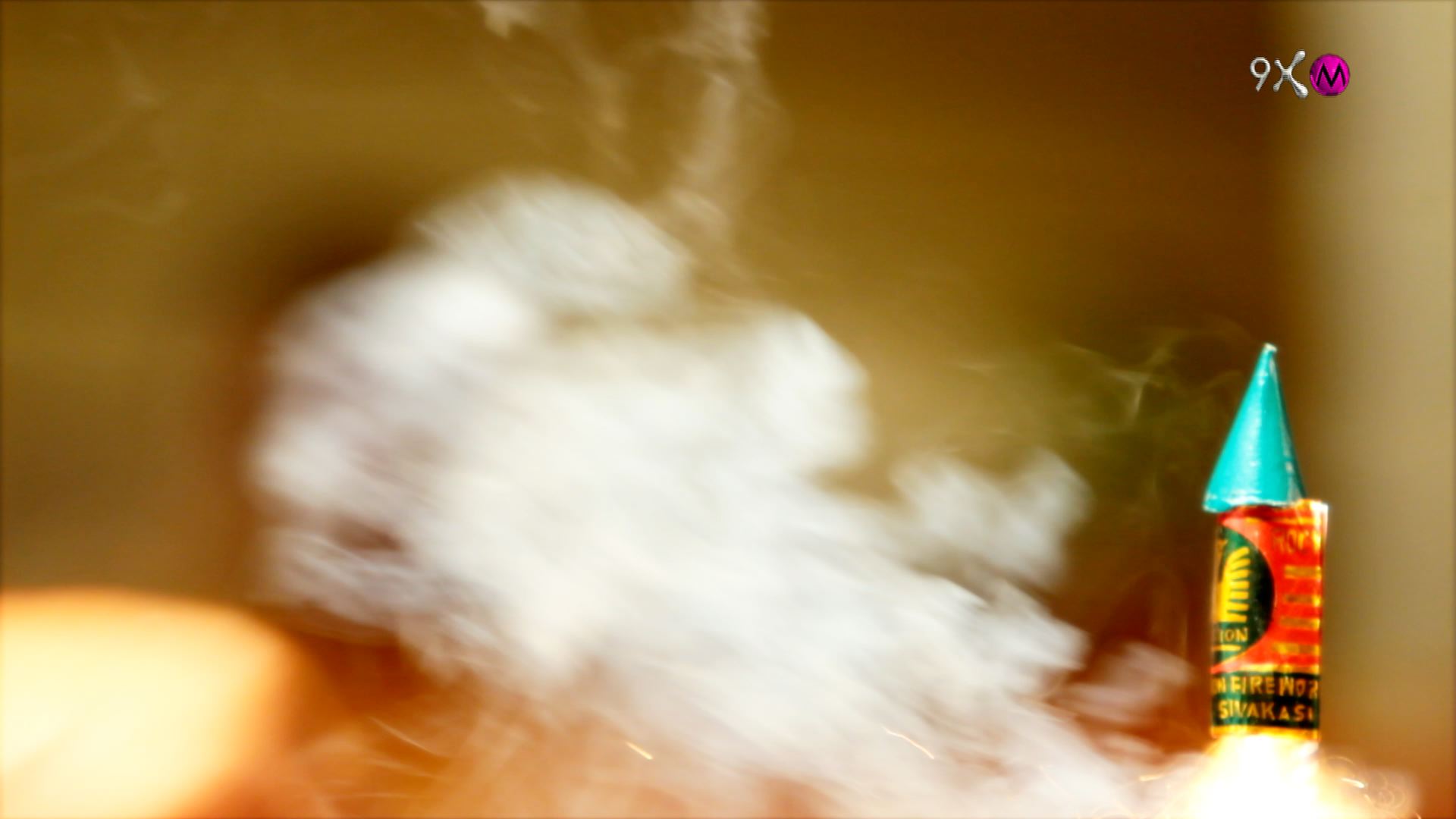
To tackle the first challenge, the team decided to record real firecrackers for the project as clear sound samples  of crackers were not available easily. So, armed with a stash of rassi bombs, lavangis, Red Forts, laars, anars, sparklers, whistling rockets, etc. the team headed for an isolated bungalow in Khandala where they burst crackers till their palms turned silver. Every cracker was recorded in mono, stereo and with a lapel as well as a boom mike.

Then came the next challenge, of musically interpreting these crackers and creating a music piece out of it. A responsibility that was handled with utter ease by a Mumbai-based percussion band named ‘Dipesh Verma’s Indian Beaters’. The artists created rhythmic patters with the firecracker sounds in sync with their Konnakol, and later added percussion instruments to the track. Says Dipesh Verma, whose band composed the track, “Initially when we got the brief from 9XM, we were a bit skeptical. But when we started mixing the firecracker sounds to create music, we realised that we were onto something utterly fresh, wild and fantastic.”

As for the music video, the programming team converted the Saraswati Vidyalaya in Chembur into a housing colony. There were many safety concerns raised as the plot involved children and firecrackers, and was being shot in a residential area. But timely police permissions, crowd control and apt handling of the fireworks saved the day. The team considers itself plain lucky to pack up the shoot without any complaints from nearby residents.

Says Sunder Venketraman, Content Head, 9XM, “Other than interpreting noisy crackers musically for the first time, the music video also highlights the idea of going back to our roots and celebrating festivals with our near and dear ones, something that seems like a lost trait in our times.”  The music video went on air on November 7 and is already being shared as a viral on the Internet.

Prashant Shankarnarayan was a part of the creative team at 9XM that conceptualised and created this music video.

Exit mobile version