Categories
Big story

It was an accident

An unexpected twist in the death of Bidushi Dash Barde reveals that she died accidentally. Case will now be closed.
by The Editors | editor@themetrognome.in

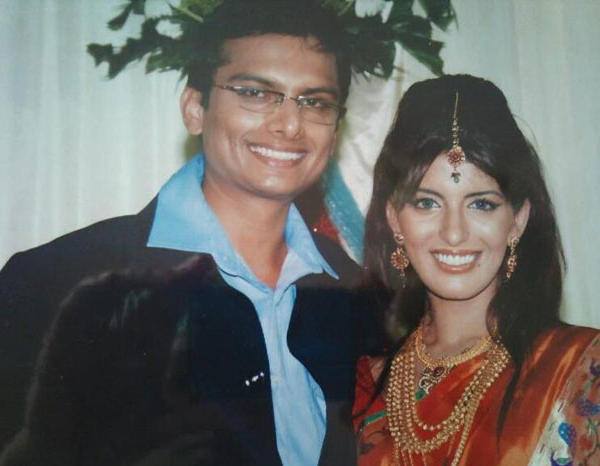
It was one of the most shocking incidents last year, adding to the numbers of women who died mysteriously or were killed in their Mumbai homes in 2011. Coming just a few months after the noted Pallavi Puryakastha case (the young lawyer was assaulted and killed by the building security guard), the mysterious death of 23-year-old model Bidushi Dash Barde in her Versova home in October pointed to foul play.

However, doctors at JJ Hospital have now concluded that the death was an accident.

The model lived in a rented apartment with her engineer husband Kedar. Bidushi had been ailing for a while before her death – she had diabetes and was prone to blood pressure problems, which caused her to faint frequently – and on the day of her death, Kedar found her with deep cuts to her neck and face, and cuts on her arm, a glass shelf shattered on the floor around her. Police instantly suspected Kedar in the death; it was reported widely that he had called her just once during that day, despite knowing that she was unwell, a domestic help working in that building had told police that she had seen a man in the flat that morning, and forensic experts said that it was practically impossible for Bidushi to sustain such severe injuries by falling on a glass shelf.

With the JJ doctors’ pronouncement, cops will now move to close the case and file a C-Summary report, ie for a case registered because of misunderstanding.

Investigations into the case did not yield any concrete clues to the mystery, from the start. There was no clear evidence to support the murder theory, and if somebody had assaulted Bidushi or pushed her onto the glass shelf, there were no clues pointing to this chain of events, either.

The doctors’ final report is awaited.

(Picture courtesy haryanaabtak.com)

Categories
Big story

25 fast track courts for rape cases?

Chief Minister Prithviraj Chavan feels chemical castration is not a good idea, but speedy justice will bring rapists to book.
by The Editors | editor@themetrognome.in

Chief Minister Prithviraj Chavan is seemingly quite proactive on the issue of rape in the State of Maharashtra. But while some of his party workers and even such luminaries as Tamil Nadu Chief Minister J Jayalalithaa have demanded chemical castration as a punishment for rapists, Chavan is not in favour of the idea.

However, the Government is seriously looking into speedy disposal of rape cases. To this end, Chavan had a meeting with Bombay High Court (HC) Chief Justice Mohit Shah yesterday. The meeting centred around the Government’s plans for setting up 25 fast track courts to deal with rape cases. During the meeting, Chavan is said to have requested CJ Shah to expedite the filling up on 26 vacant judges post in the State’s courts.

As with other major States in the country, Maharashtra has a very high pendency rate for rape cases. “Rapists should be dealt with severely and swiftly. Pendency (in rape cases) is unacceptably high (in Maharashtra,” Chavan told a newspaper, adding that justice in rape cases must be meted out swiftly; there was no logic to the punishment if it was handed out years after the incident had occurred.

Chavan is likely to have another meeting with CJ Shah next week, when the Government will have a clear action plan in place as regards the fast track courts.

However, the amendments in rape punishment laws cannot be done at the State level – it is for the Parliament to suggest and make any suitable amendments, which the country’s States will then follow.

(Picture courtesy indiatvnews.com)

Categories
Big story

Off with his hands! (And feet. And eyes)

Shivaji’s punishment for rape was to sever the man’s hands and feet, or gouge out his eyes, ancient manuscript reveals.
by Shubha Khandekar

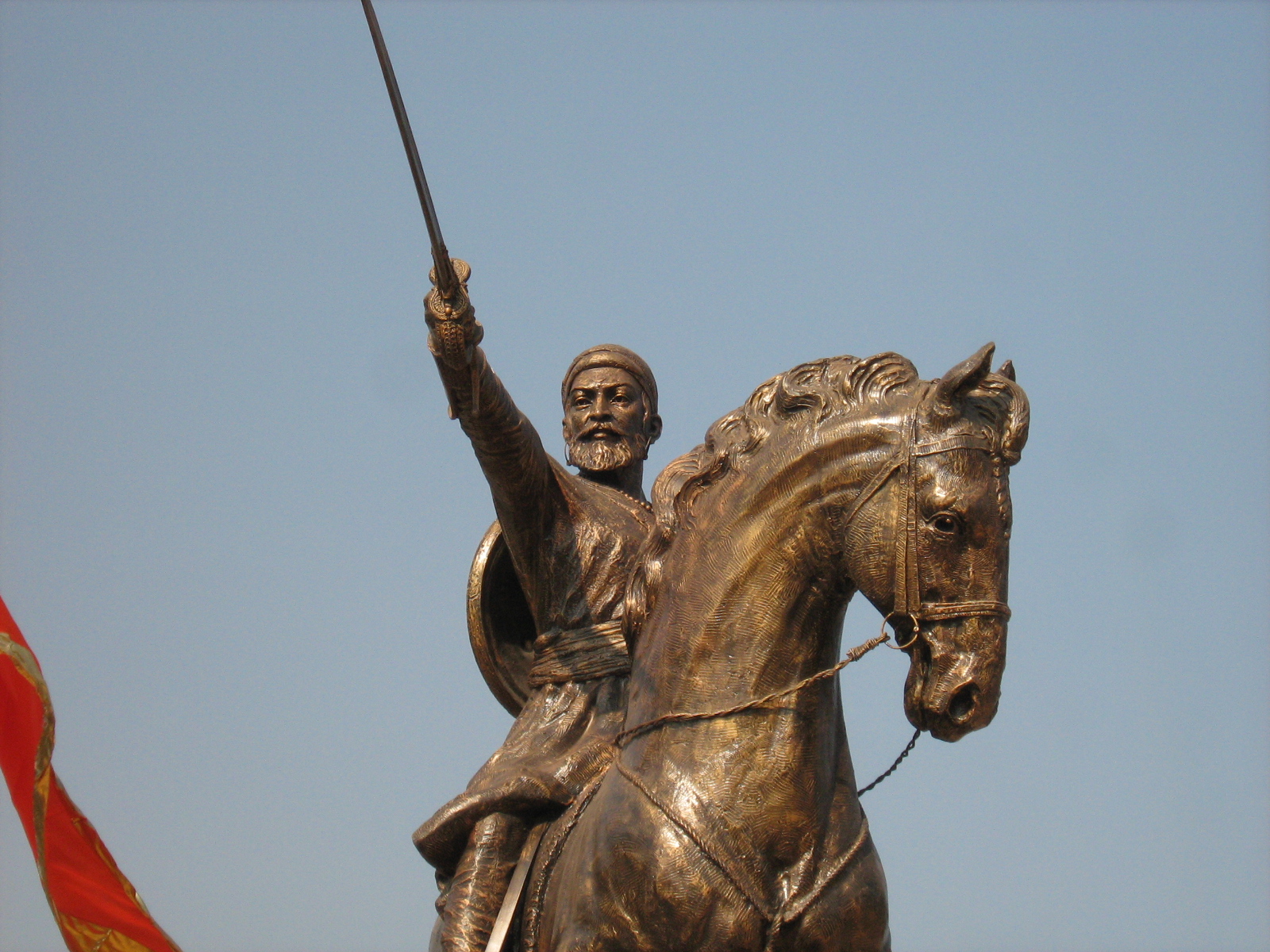
That Maratha warrior king Shivaji was a ruler and a thinker way ahead of his times is well-documented, but a recent historical discovery has once again underlined this fact. At a time when might was right, and women were often commodified to the extent that they were included in the spoils of war, Shivaji’s orders for men who raped women were clear: cut off his hands and feet.

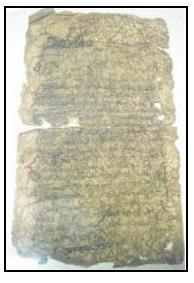
Historians in Pune have recently discovered a dated manuscript (see pic on left) in which Shivaji had ordered the hands and feet of the headman of a village in Maharashtra be cut off as punishment for raping a woman. In another incidence of rape, in which the accused was a military general who raped a woman who had defended Belwadi Fort before surrendering, Shivaji ordered that the man’s eyes be gouged out.

“This is the oldest and the most indisputably authentic manuscript of Shivaji,” said SM Bhave, secretary of the Bharat Itihas Samshodhan Mandal. The manuscript had mysteriously disappeared after it was originally reported by researcher SG Joshi  of the Mandal in 1929, 83 years ago. A Marathi translation of it was published in Vol II of the sources for the biography of Shivaji, compiled and published by the Mandal in 1930. The manuscript, wrapped safely in old handkerchiefs of a Mandal researcher, was rediscovered recently among old files in the Mandal office. The manuscript is written in the Modi script, which has been in use in Maharashtra for the past 700 years.

English translation of the manuscript of Shivaji (dated 20 Jilhez, according to the Mandal)

From the office of Rajashri Shivaji Raje.

Scribes: Clerks Deshmukh and Deshkulkarni.

May it be known that while the headman Bavaji Bhikaji Gujar (Patil) was heading the said Ranje village, he committed an offence, which became known to Saheb  (Shivaji), following which he had him fetched here. On inquiry it was revealed that the news was true, whereupon his ancestral domain was merged with the royal kingdom and he was dismissed from the headman’s post after severing his hands and feet. At that time one of his relatives, namely Sonji Bajaji Gujar pleaded for getting the custody of Bavaji. In consideration of this request he was charged a fine of 300 Padshahi hons, after paying which Bavaji was handed over to him. Since Bavaji was childless and Sonji is his kin, Saheb compassionately passed on the headmanship to Sonji, for which he was asked to deposit  200 Padshahi hons into the royal treasury. May nobody hinder the carriage of this order. This original letter may be given to him for execution.”

The manuscript

“Our experts have thoroughly investigated, verified and confirmed the authenticity of the manuscript,” said historians Dr Anuradha Kulkarni  and Ajit Patwardhan in Pune. “It clearly mentions the name Bavaji Bhikaji Gujar (Patil), the headman of the Ranje village near Kondhanpur, and the punishment awarded to him by Shivaji, of cutting off his hands and feet for having misbehaved with a woman.”

Giving details of the above instance, Govind Pansare, whose booklet Who was Shivaji? sold 22,000 copies and has gone into four editions from 1988 to 1991, narrates that the Patil abducted the young daughter of a poor farmer and raped her, after which she committed suicide. The whole village, intimidated by the tyrannical Patil, sympathised but remained passive and helpless after the girl’s death. “But when Shivaji heard of it, he had the man arrested and brought to Pune, after which he pronounced the punishment to him,” the book says.

In another instance, described in the same book, Sakuji Gaikwad, a military general laid siege to the Belwadi fort, being defended by a courageous woman called Savitribai Desai in 1678. She held out for 27 days before surrendering. Euphoric over the victory, Sakuji captured the fort and raped the defeated Savitribai. As Shivaji got to know of it, he was infuriated and had Sakuji’s eyes gouged out. Sakuji was also thrown in jail for the rest of his life.


Categories
Big story

56 Mumbaikars v/s city’s Housing Federation

Citizens fought against ruling clique that held elections in violation of rules, and got a stay from the High Court.
by The Editors | editor@themetrognome.in

Last week, an email from activist Krishnaraj Rao did the rounds. In reality, the email was a letter that was meant to be signed by Mumbai citizens and which was later forwarded to Chief Minister Prithviraj Chavan. The letter was about how a few persons who controlled the Mumbai District Cooperative Housing Federation Limited, had hastily declared elections just days before the official release of the Cooperatives Commissioner’s order dated November 30, 2012.

“A handful of persons in control of Mumbai District Cooperative Housing Federation Ltd – which is officially recognised as Mumbai’s nodal agency for Cooperative Housing Societies (CHS) – are virtually carrying out a daring daylight hijack. In a last-ditch attempt to hold onto their positions of power, they declared elections just days ahead of the official release of the Cooperatives Commissioner’s order dated 30th November 2012. They are sidestepping the order that mandates that cooperative society elections must be conducted after their bye-laws are amended, and in compliance with the 97th Amendment. They have taken this mala fide step knowing that as per the 97th Amendment, Maharashtra will soon have to appoint a proper authority for ‘superintendence, direction and control of the electoral rolls, and conduct of all elections to a cooperative society’ before February 2013,” the letter said.

“Led by Late Dr Raghuvir Samant’s son Shri Pradeep Samant, who is Vice Chairman, and Shri Anil Jadhav, who is Chairman, the ruling clique has taken evasive action by announcing elections 15 days before its official release of the Cooperative Commissioner’s order, to which they were privy as insiders. On 16th November 2012, the Federation announced the election on 16th Feb 2013. The returning officer is an advocate arbitrarily appointed by themselves, letting them avoid conducting free and fair elections. Shri Samant & Jadhav have thrown the Federation into a gray area,” the letter further alleged.

What does it mean for housing societies?

“About 50 lakh people reside in Mumbai’s cooperative housing societies. As the Federation has the powers to hear grievances and give a verdict, its elections determine whether these 50 lakh people will get their Fundamental Right guaranteed under Article 14 – “Equality Before Law & Equal Protection of the Laws” during the next five years. Hence, this is not a matter between rival contenders; the Federation election concerns the larger public interest,” Krishnaraj told The Metrognome.

Incensed by this development, housing society activists and others got together and signed the letter that Krishnaraj drafted. “Till December 10, we had 56 signatures,” he says, adding that the same were forwarded to the CM. The letter has been endorsed by such luminaries as Dr LB Tiwari, advocate and President, Sahayak NGO, Vinod Sampat, advocate, Pearl Goswami, committee member of Bandra Commonwealth CHS and JB Patel, CHS activist, among others.

“Currently, out of 38,000, the Federation has enrolled only 18,000 CHS and no efforts are made to enroll the remaining 20000 CHS,” says Krishnaraj. “Again, out of 18,000 societies, only 17,093 CHS has been listed as members of Federation who can vote provided they clear their dues. No details about the dues from these 17,093 members are made available. This enables the Federation directors to allow or reject the voter without any accountability.”

Another issue is that through “systematic manipulation”, the Federation’s “ruling clique is preventing majority of Federation member societies from voting, so that the small number of votes that they command, about 3,000 votes, lets them repeatedly win elections virtually unopposed. This is how the same group of people have been getting re-elected for several decades,” he adds.

Current status

However, on December 13, the Bombay HC issued an order that stated “List this matter on 22nd January, 2013…In the meantime, however, in the interest of justice, the petitioner can continue with the Election process up to finalisation of Voters’ list and not further”. Vinod Sampat says, “There is an inevitable postponement of about 35 days in the entire election schedule because of this order.”

It seems that even if the High Court delivers a favourable order to the writ petition, the elections may be held in mid or late 2013, as the election schedule will have to be drawn up from scratch, and communicated to around 18,000 Cooperative Housing Societies in Mumbai months in advance as required by law.

(Featured image courtesy chsguru.com)

Categories
Big story

Maximum AADHAR enrollments in Mumbai

Most enrollments have happened in 31 to 45 years age group. Enrollment peaked twice this year, was lowest in December.
by The Editors | editor@themetrognome.in

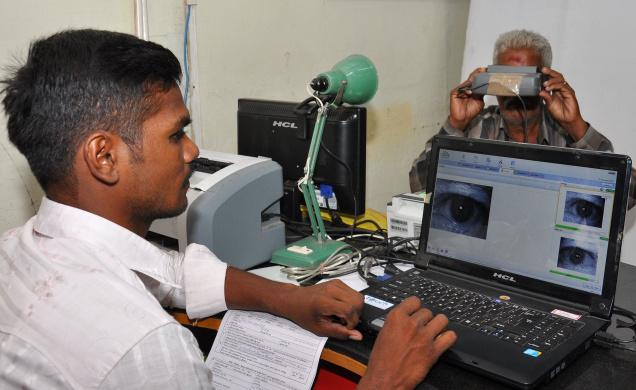
Mumbai leads the state of Maharashtra in the numbers of people enrolling for the AADHAAR cards, as per data published by the Unique Identification Authority of India (UIDAI) figures compiled up to December 15, 2012. Mumbai has seen 62,45,862 enrollments thus far.

Up to December 15, Mumbai has had 62,45,862 enrollments in all. This number accounts for Mumbai Suburban, Mumbai City and Navi Mumbai. However, figures for Mumbai City are low; as per UIDAI figures, there have been only 43,299 enrollments in Mumbai City.

In the Mumbai Suburban zone, Kurla has the maximum numbers of enrollments at 1,26,877, while Borivali has had only 19,626 ernollments.

The most numbers of enrollments come from the 31 to 45 years age group, with second largest numbers coming from the 16 to 30 years age group. More males than females have registered for the UID cards in Mumbai. Enrollments peaked during March and November this year.

Elsewhere, Thane follows Mumbai in the total number of enrollments, with Thane’s figure pegged at 35,50,601.

See the statistics for Mumbai and Maharashtra here.

 (Picture courtesy thehindu.com)

Categories
Big story

Shiv Sena gives in on memorial issue

The Chief Minister didn’t relent. The BMC chief remained firm. Other parties attacked the idea. Shiv Sena now gives in.
by The Editors | editor@themetrognome.in

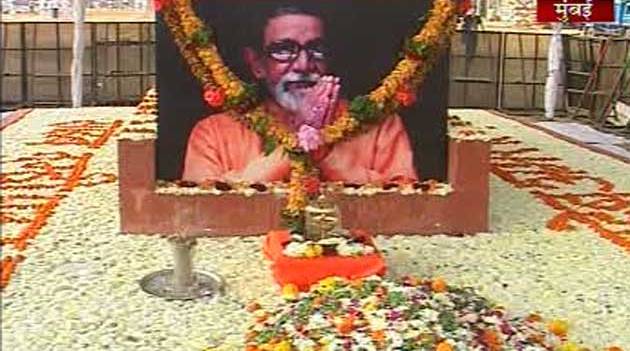
It started as a raucous free-for-all, even before the ashes of the late Bal Thackeray could be immersed in the ocean and a reasonable period of time could elapse after his death, for a controversy using his name to begin and burn harder by the day. But a controversy did erupt, about making the makeshift memorial dedicated to Thackeray a permanent site, and as the days passed, the Shiv Sena’s stubborn demands began to be viewed with annoyance.

Now, after the State Chief Minister Prithviraj Chavan and the Brihanmumbai Municipal Corporation (BMC) chief Sitaram Kunte remained firm on their stand that the makeshift memorial would have to be removed – the CM even refused to grant permission for a permanent memorial at Shivaji Park citing ‘legal issues’ – the Shiv Sena has reluctantly agreed to dismantle the makeshift memorial.

Replying to the December 3 notice that Kunte had sent to Sena MP Sanjay Raut and mayor Sunil Prabhu, asking them to remove the temporary structure at the earliest, Raut has now agreed that the Shiv Sena will remove the structure and level the ground over which it stands before handing it over to the Government.

This comes days after hundreds of Shiv Sainiks arrived at the spot to ‘guard’ the memorial from BMC action, in day-and-night shifts. The party had previously sworn to guard the memorial come what may, and that if the BMC tried to forcibly remove the memorial, Sena MP Sanjay Raut had said, “there could be law and order problems in the city.”

Earlier this week, as news of BMC’s vans being readied at their Worli garage to arrive at Shivaji Park did the rounds, six vans were vandalised by Sainiks. The BMC chief then called for the vandals to be suitably penalised, while holding firm on the notice sent to the Sena on removing the memorial.


Exit mobile version