Categories
Achieve

Playing God with the inanimate

We catch up with Mumbai’s first 3D designing and printing firm that brings all your fantasies to life – seriously!
by Ritika Bhandari Parekh

It looks like a scene from the future – jewellery being printed from a printer. And no, it isn’t paper jewellery. We are talking about wearable jewellery, from earrings to rings. Intrigued? We were too.

Siddharth Sah

When 28-year old Siddharth Sah finished his MBA from California in 2012, he decided to fuse his love for design with his inherited business genes. The result: a one-of-its-kind 3D Design Studio in Churchgate, called Make Whale.

Be it jewellery or a carved bottle to hold your messages, a Ganpati idol or a wacky creation of your company logo – Make Whale gives you an opportunity to go wild in your thoughts and shape them. Intricately carved or flexible in design, the design studio gives you complete freedom to mould your creations and showcase them.

“Our thumb-imprinted cufflinks are gaining much popularity these days. As each product is designed from scratch, we have no inventory as such. Also depending on the style, designs and colours, we choose the material which will fit best for the product. So while sandstone allows for a multicolour product, it is difficult to have interlocking designs in the same material,” he says. “Steel helps to give various finishes, for instance gold-plated jewellery. But there are design limitations, too.”

Sah tell us how 3-D printing as a technology has been around for 30 years, but its advancement began only in the lastGanapatifive years. “I remember taking a joint class in design as a business student, to understand the world from their angle. The first-time I witnessed 3D printing at the prestigious Art Center College of Design, Pasadena, I was hooked.”
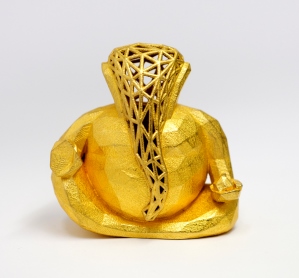
Studying the market and understanding if all the hype around 3D printing – does it have or not have substance – led him to opening the business venture. “After a lot of research and development, we started in August 2015. I have a team of product designers who help with the gift designs and an experienced automotive engineer,” he explains.

A graduate of Jai Hind College, this SoBo man believes that besides bobble heads, the market for 3D printed gifts is still in its nascent stage in India. With the focus on designing, Make Whale wishes to plunge deep into the elite society weddings and corporate gifting arena. “Whether customising candle stands or napkin rings with the initials of the bride and groom, the possibilities are endless. Our focus is on the consumer and once we are a bit more settled, we wish to bring out ceramic plates and mugs which adhere to the food safety standards,” he says.

Spicy1Their office has an in-house 3D printer to give the consumer an idea of how his creation will look as a prototype. And that is where the magic happens. A loop of material attached from the rear is heated till the design from the SD card finally takes shape in its current avatar. The designing process takes from a week to 10 days’ time, while the 3D model prototype arrives within a couple of days. Once approved, the final product takes three weeks to be created and delivered.

In a small way, 3D printing gives mortals like us a chance to play God. Inanimate gifts are created, designed, re-designed and produced. The limitation is only your imagination and the materials, to some extent. Sah signs off hoping to see you the next time brandishing your creative juices, keeping your gifts anchored in fantastical reality and designing it with Make Whale.

To know more about Make Whale and their products, log on to http://www.makewhale.com. Look up more images on our Facebook page.

Categories
Guest writer

Are youngsters a generation tainted by ego?

A reader pens down her thoughts about a generation that marks happiness by its bank balance, not its personal ties.
Photoby Vidya Rekha

Looking through the window, a thought popped into my mind one day…Why does the younger generation not take responsibility? Responsibility at the job, in their personal lives, with their parents? We are always taught to be responsible, to always emanate the spiritual thoughts within us. But I increasingly see that the younger generation doesn’t want to be inside the boundary of responsibility – within the bounds of marriage, within the bounds of authority.

Youngsters today want to be autonomous in their thoughts and actions. Ostensibly they want to be with someone who can share the same conception as theirs and enjoy the colours of life without binding to any obligation. While this sounds attraction on the surface, it comes with its own pitfalls. Not everyone is able to comprehend this style of living and thinking. Soon, marriages lead to divorce. Personal relationships break down. It is disturbing to see so many newlyweds separate before they celebrate their first wedding anniversary.

At the root of most of these troubles is money. Most women today are financially empowered, they are accomplished in their careers. So they think, ‘I have no need to obey a man’. Likewise, men think that when they earn and take care of their families, their responsibilities do not include listening to or taking advice from a woman. They simply presume that girls should be meek to them, regardless of their employment.

Many girls today easily agree to get married to a man working overseas, under the false impression that they will get a queenly lifestyle abroad. Once they actually reach there, they realise that living in comfort abroad requires hours of work. Most women fail to remember their own parents’ initial struggles to raise a family and run the house. It is also disturbing to see how many people are unhappy about attending to the brood waiting for them back home, and more so, about taking care of their parents.

Simultaneously, the bone of contention between many couples is: Why should I take care of your parents? Meanwhile, more and more couples are increasingly opting to live in with their partners, since this arrangement does not come with the complications of marriage.

But this kind of autonomy, both in marriages and live-in relationships, can come with a price. There is no substitute for the guidance and wisdom of elders in our lives.

Life is all about giving and gaining. The full form of the word ‘Ego’ currently is ‘Edging God Out.’ This means we have no time or inclination for introspection, that we are completely devoted to our own interests. We will soon become people who are selfish, concerned only for our own welfare, whose God is money and material comfort.

Instead of money guiding our choices, it should be our higher self doing so. If the choice we make brings us a sense of peace, then that is our higher self at work.

Vidya Rekha is a graduate from Mysore University, and works as HR professional for the JGI group. She loves reading books and listening to music. The views expressed here are her own.

(Picture courtesy www.moneycrashers.com. Image is used for representational purpose only)

Categories
Deal with it

Mumbai gets registry of organ donors

IMA Kalyan ties up with LH Hiranandani Hospital to compile data about voluntary organ donors and also record their consent letters.
by The Editors | editor@themetrognome.in

This one’s a great initiative to increase the numbers of organ donors in the city.

Indian Medical Association (IMA), Kalyan has come up with a plan with LH Hiranandani Hospital to create a voluntary registry of organ donors with details of people who are willing to donate their organs and their consent letters. The registry will contain the consent letters of those willing to donate their organs and their health status along with other details.

At the moment, about 7 kidney donations happen every month, and about 4 liver donations. These numbers need to be much higher – for this, more awareness is essential. During a recent programme at the hospital, around 350 doctors and more than 500 people came forward from various walks of life to give their consent letters to join the registry, said Dr Anjum Syed, President, IMA Kalyan and gynaecologist attached with various hospitals in the region.

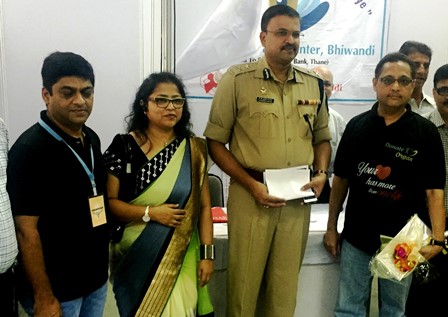
Traffic police, volunteers and others signed up to donate organs for the initiative

Heart Transplant surgeon Dr Anvay Mule said “There are thousands of patients who are waiting with hope. Such activities are required to create awareness and increase organ donation.”

Elaborating on the organ donation scenario in India, Dr Syed, said, “Figures show that India’s current organ donation is 0.05 per million populations (about 50 cadaver donors per year). The number of transplants per year is in the range of 3,000 to 3,500 with barely 5% coming from brain dead patients. The annual requirement is about 1, 50,000 donations. However, if we can improve it even to 1 per million donations, we could take care of some of the organ shortages in India. At 1 per million donation rate, we would have 1,100 organ donors which could take care of almost all current demands for organs in India.”

“The rate of renal transplants in our country is actually quite dismal, as more than 1,00,000 patients are waiting for renal transplants, and less than 5,000 happen every year. It is much worse for cadaver transplants as less than 1,000 happen per year. In comparison, Mumbai city does less than 300 renal transplants every year, of which only 30 to 40 will be cadaver donations. So the people requiring dialysis has steadily gone up, putting a lot of strain on the infrastructure to accommodate all these patients,” added Dr Syed.

ORGAN DONATION KIDNEY LIVER LUNGS CORNEA HEART
LIVE ORGAN DONATIONS FROM 1995-2015 8,061 202 NA
CADAVERIC (FROM BRAIN DEAD PATIENT) 546 150 2 19,285 (from June 2006 to June 2015 3

 Requirement in Mumbai and Thane

KIDNEY LIVER LUNGS CORNEA HEART
2800 210 10

Source: Maha Arogya Seva Mandal, Thane

“Aiming at increasing the number of donors by creating awareness on organ donation is required. From increasing the current 5,000 to lakhs and more, IMA Kalyan has joined hands with many private hospitals to spread awareness on importance of organ donation. This is the first step to reach among the educative society,” says Dr Syed.

Dr Pravin Shingare, ZTCC committee member, added, “Our aim is to remove misunderstandings among public regarding organ donation.”

(Featured image courtesy zeenews.india.com)

Categories
Deal with it

Luv Thy Farmer: The Ek Glass Mosambi Juice Challenge

Mumbai’s Ranjit Pawar initiated the ‘Luv Thy Farmer’ movement under which an Aurangabad mosambi farmer reaches his produce directly to consumers.
by Shubha Khandekar

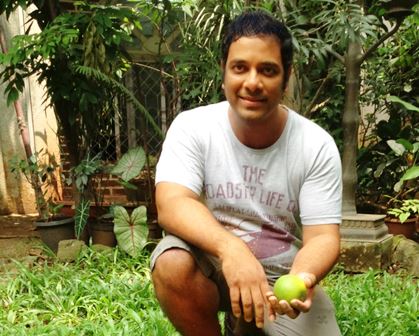
Weekends are no longer a breather for Ranjit Pawar from a hectic 10 hour job with a reputed multi-national corporation, where he works as a business manager. Rather, it’s a break for frenzied phone calls to volunteers, customers and transport operators who are pouring into his rapidly expanding loop of the Luv Thy Farmer initiative, launched to help Aurangabad’s mosambi producer Shivaji Gaikwad get respectable returns on his produce, against the backdrop of the farmers’ dismal plight in Marathwada.

“I have known Shivaji Gaikwad from before,” says Ranjit, whose father owns a farm in Satara district. “I’ve grown up on a farm and spent every vacation on one. Hence it was easy for me to feel his pain; he was being offered no more than Rs 15 per kilo by traders, which sells for anything from Rs 30 onwards in Mumbai. He can’t even break even on these terms.”

Having worked earlier in a mobile info system for farmers, Ranjit realised that the e-commerce platform for B2C transactions is available to a producer of every commodity, except to a farmer. The result is that both the producer and the consumer are being left out of the benefits of the e-commerce platform. He thought of tapping the Internet and the social media to address the issue. In less than a month, over two tonnes of mosambis have already been delivered in Mumbai and its suburbs and in Pune, purely through voluntary efforts of well-wishers who needed no persuasion to pitch in.

kids_mosambi“That’s all it takes,” he laughs. “Just the click of a mouse can place a farmer directly on a global e-commerce pathway, and open up unlimited vistas for marketing his produce.  Along with other volunteers I have merely acted as a facilitator and enabler,” he says, after having delivered some 1,500 orders to total strangers!

Ranjit found willing takers for his idea. He trusted Gaikwad for the quality of the produce while Gaikwad too was convinced of Ranjit’s intentions. Volunteers came forward and on September 6, he flashed the ‘Luv Thy Farmer’ page on Facebook, followed by the website of the same name created overnight by a volunteer from Germany. Prof Kurush Dalal in Kharghar, Anuradha Pawar in Prabhadevi, Varuna Rao in Thane, and Vaishali Narkar in Chembur kept their doors open for 24 hours as pick up points for the stocks rolling in every day.

“It’s a highly scalable, replicable model and volunteers can help without leaving their homes,” says Ranjit, who now has support from diverse quarters. “It’s not too expensive either, even though Gaikwad has arranged to pack the mosambis in 5 kg bags, and pays for the farm to city transportation. Hence, of the Rs 60 that the end consumer is paying for a kilo of mosambi, nearly Rs 30 to Rs 40 goes to the farmer, and transportation and labour costs take up the rest. Logistics players have come forward to help out and they are ready to work on a no-profit-no-loss basis. We are working on streamlining the transportation, using vans, bikes and even public transport, so as to further improve the farmer’s profit,” he says.

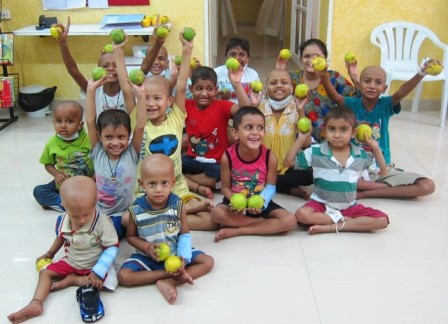
The ripple effect of Luv Thy Farmer has created beneficiaries in unexpected quarters. Hence, while one person in the US made an online purchase for donation to an old age home in Mumbai, a senior marketing manager at a pharma company donated a bulk purchase to a hospice for children in Mumbai.

Ranjit proposes to make the facility available to growers of strawberries, bananas, pomegranates, rice, organic jaggery, wild honey, tur dal and many other agro-products who are approaching him every day.

“The next challenge is to make Luv Thy Farmer self-sustainable,” he says.  “I wish to explore such options as angel funds and crowd funding for projects that many farmers cannot implement. This could give a boost to entrepreneurship in the agro sector, so that the farmer can thrive without depending upon a single market.”

Categories
Wellness

5 ways to beat stress in every day life

On World Heart Day, we present to you five easy ways to slow down and remove stress from your life.
by Beverley Lewis

Most of us experience some form of stress in our jobs and personal lives. So, the first step to boosting one’s mood is to identify the cause and then treat it. If stress is left untreated, it can cause serious health problems like insomnia, muscle pain, anxiety, a weakened immune system and high blood pressure. However, if you adopt positive, healthy ways to beat stress, you can prevent a host of illnesses from occurring.

Here are five healthy, easy to adopt methods to fight stress and increase your happiness and well-being.

1. Exercise daily: If you indulge in physical activity on a daily basis, you can reduce and prevent the effects of stress. Studies show that just 30 minutes of exercise a day can help prevent stress. Cardio exercises like aerobics and dance are also great for releasing pent-up stress and tension.

2. Follow a healthy diet: If you want to fight stress, it is important to eat healthy, because a well-nourished body finds it easier to cope with stress. So, eat small meals throughout the day and include plenty of fruits, veggies, nuts, grains and lean protein in your diet. Also, remember to start your day with a healthy breakfast to keep your energy levels up. It is also important to reduce sugar and caffeine from your diet, to help you feel more relaxed and sleep better.

3. Get social: If you are stressed out, call a close friend and talk about the problem. This will enable you to share your thoughts and feelings on the subject and relieve your stress levels. But remember that it is important talk to someone you trust.

4. Take up yoga or meditation: Meditation and yoga can help the mind and body to relax and can also increase one’s concentration. Meditation can also help people get a new perspective on things and develop self-compassion and forgiveness.

5. Learn to say ‘no’: If you are one of those people who find it hard to turn down any requests made on your time, it is time you learnt to say ‘no’. Saying ‘yes’ to everything comes at a price, increased stress and no peace of mind. So, learn to take some time out for yourself without feeling guilty. This will help prevent stress and boost your mood.

 (Picture courtesy www.marksdailyapple.com)

Categories
Beauty

10 reasons to rock those curves

In an age where fat shaming and body image issues prevail, we list 10 reasons why you should celebrate your curves.
by Beverley Lewis

Skinny models have always been featured on catwalks, pages of fashion magazines and coffee table books. The status quo, in fashion, has always been the skinny girl. But, things are now changing for curvy women, thanks to some bloggers, plus-size models, fashionistas and even advertising campaigns, which have been gushing about curvy women. Even popular artists like Meghan Trainor have been pushing the body positive manifesto with songs about embracing one’s curves. So, without further ado, here’s are our top 10 reasons for embracing and flaunting your inner Vidya Balan.

1. You don’t need to spend your hard-earned money on padded bras or implants.

2. If Danish researchers are to be believed, curvy women are more likely to live longer than their skinny counterparts because our hip fat contains anti-inflammatory properties, which may prevent the arteries from getting clogged. So, good news for most Indian women.

3. Curvy women’s bodies are perfect for cuddling and hugging.

4. Some of the sexiest women like Beyonce, Sonakshi Sinha and Salma Hayek have stunning curves, which they are not afraid to flaunt.

5. Most curvy girls enjoy a hearty curry now and again and are not afraid to reach for seconds and then finish off with dessert.

6. Since most curvy girls like eating good food, we do know our way around the kitchen.

7. We still haven’t jumped on the whole gluten-free bandwagon and enjoy a dish full of pasta or a nice big bowl of rajma chawal, guilt-free.

8. According to a study conducted by Oxford University, curvy women with big butts are more likely to have healthy children because their bodies contain high amount of Omega-3 fatty acids. Another reason to celebrate that booty.

9. Just walk into the Louvre or simply visit the temples of Khajuraho and you’ll see that in the past, curvy women have always been associated with beauty and sex appeal.

10. Men can’t resist women with curves. Scientific research proves that men are genetically wired to be sexually attracted to a woman with curves.  So, go ahead ladies, shake what your mama gave you.

(Picture courtesy wallpapers.brothersoft.com)

Exit mobile version