Categories
Tech

Review: Samsung Galaxy Grand 2

A good screen, decent audio and camera come with Samsung’s latest release, but will the phone compete well with rivals?
by Manik Kakra

Samsung’s Galaxy Grand was a hit in the mid-rane segment. Many were attracted by the large-screen size and decent package it provided, but were left unsatisfied by the laggy performance and below average battery backup. With Grand 2, Samsung has made a few changes, so let’s see how good the Galaxy Grand 2 really is.
Hardware and design

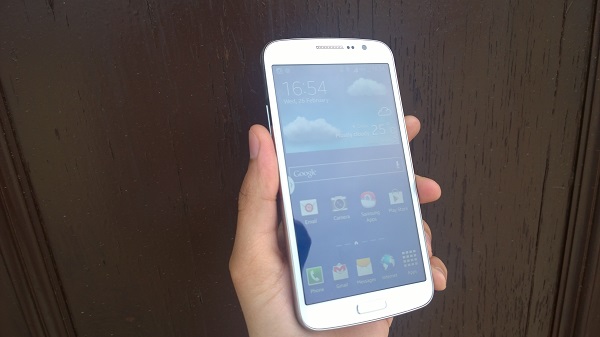
Samsung’s Galaxy Grand 2 (G7102) follows pretty much the same form factor and material like the Grand and S4. The square looks combined with average matte plastic material make the Grand 2’s build and design. Having slightly thinner bezels than its predecessor is certainly a welcome change.

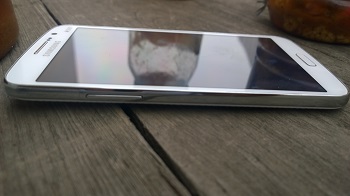
On the front is a raised Centre (Home) Button with chrome-like ring around it, Back button on the right, and Menu/Option on the left. Above the 5.2-inch screen are the Duos branding, front-facing camera and the usual sensors.

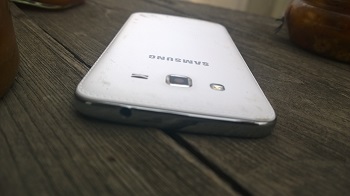
Things get interesting on the back. Samsung has gone with the same faux-leather, seen on the Note 3, back cover on the Grand 2. It looks decent, but as soon as you hold the device and start checking it, you get a clear idea that this is plastic and not leather. With stitching surrounding the back’s boundaries, it does look nice. On the rear is the 8 Mp camera along with an LED flash, loudspeakers grill right next to them, and Samsung branding towards the middle.

On the sides, there are the Volume rockers on the left, and Power/Lock key on the other side. The sides have a silver line across them and the buttons follow the same layout. These buttons are raised enough to give you a good feedback on being pressed. Again, the material and finish of these buttons could have been better. On the top, you have the usual 3.5mm headset jack, while the bottom sports the microUSB port.

Pulling off the rear cover reveals the 2,600mAh battery cell, two SIM slots and the microSD card slot, apart from circuitry, other bits and pieces of the camera module.

Camera
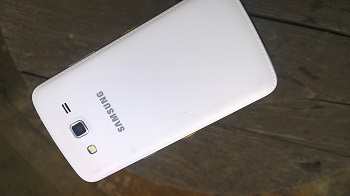
The Grand 2 boasts an 8 Mp camera along with an LED flash. The Camera app comes with a host of modes, settings and editing options, which are not difficult to use. Samsung has done a good job in the Camera UI department, making most of the settings accessible without too many taps. See a few sample images here.

The camera performs well. You get clear, decent colours, while low-light performance isn’t too impressive; the camera is more than capable of taking good shots in decent conditions.

Speakers

The speakers on the Grand 2 are pretty loud and audio is mostly clear. In-ear with the default headsets is clear, quite loud and doesn’t disappoint.

Screen

Coming to the 5.2-inch 1280×720 screen, it doesn’t let you down. The colours appear quite vivid, with a much higher resolution than the original Grand (and rightly so), and videos come out richer. The screen is definitely one thing that needed to be improved and Samsung seems to have done exactly that without over-sharpening the colours.

Call quality

As far as call quality is concerned, there’s nothing to complain about. I didn’t notice any unusual network reception, and was satisfied with the call and network reception of the phone.

During my usage, I got about 20 hours of backup from the phone battery on a single full charge. With sync on, lots of emails, Twitter, (brightness at 50 per cent) a few videos and calls, you would have to charge the device within a day, more often than not.

Software and performance

The Grand 2 runs on Android 4.3 Jelly Bean, along with Samsung’s TouchWiz UI on top. The overall look and feel of the whole UX very similar to what we have seen on the Note 3 and S4. You get five Home screens by default, and can customise them as and when you want – the usual Android manner.
Swiping top from the bottom of the screen opens up My Magazine, which Samsung’s style of Flipboard – giving you personalised content from your pre-selected online publications. Seen previously on the Note 10.1 2014 Edition, it is a good idea and helpful when you just want to glance through the entire day’s updates for a day.

You can access most of the settings right from the drop-down Menu along with your notifications. Lock screen, which, too, can be customized, gets unlocked by swiping in any direction (default way). App drawer, multi-app view and other nitty gritties remain the same that we have been used to seeing on Samsung’s Galaxy devices. You get around 5.5 GB of storage space (8 GB in total), and can expand storage via a microSD card.

This phone is a much better performer than the original Grand 2. After a few days of usage, you will realise there is a definite improvement in smoothness, resulting in better user experience. Having said that, we have Samsung’s own devices with better performance like the Note 3, but this comparison won’t be a fair one. TouchWiz does take its toll, but it certainly gives the user a few useful additions – Camera app, app folders, etc. – of stock Android. Google Now has been there for quite some time now and Samsung’s devices also come with the proprietary S Voice. It is basically a voice assistant that is far from being integrated into the OS and helpful than Google Now. I hardly ever used it, mainly because it recognised my voice less frequently and the overall experience was just average.

Concluding this review, the Grand 2, with its good screen, decent audio and camera, does bring a lot of things to the sub 23k phone range.  Performance isn’t really bad, but we could have had a much better material quality, especially now that Samsung admits slimy plastic isn’t always the way to go with its Galaxy range of devices. There are a few worthy devices that the phone competes with – Nexus 4, Lumia 820 – and it will be interesting to see if Samsung is able to continue its growth in this product range this year.

Categories
Tech

WordCamp Mumbai arrives this month

All WordPress bloggers and developers, beginners and experts can be part of two-day WordCamp event on March 15 and 16.
by The Editors | editor@themetrognome.in

This is one event that users and developers of WordPress.com should not miss – WordCamp Mumbai 2014 comes to the city on March 15 and 16, 2014, and all users are invited.

The event will take place at Manik Sabhagriha, Bandra Reclamation. For event details and list of speakers, see here.

As per the organisers, “[The event] promises a lot of learning and interaction between a vibrant WordPress community of bloggers and developers.” Also, the event is a ‘Pay what you want’ one, where the attendee decides the price of the ticket you want to buy. However, the minimum amount payable is still Rs 300.

(Picture courtesy WordCamp Mumbai on Facebook)

Categories
Tech

Update: The Mobile World Congress

The MWC 2014 concluded very recently. Here’s a lowdown on the major happenings in this year’s event held in Barcelona, Spain.
by Manik Kakra

The world’s largest mobile phone show – the Mobile World Congress 2014 – concluded recently in Barcelona, Spain. It is estimated that over 75,000 people attended the do. Here’s a look at the new devices unveiled during the event.

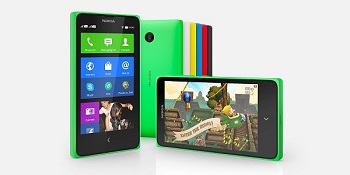
Nokia-X-DualNokia: Nokia’s Android devices were expected to be unveiled at MWC, and that’s exactly what the company did. Nokia’s X series consists of three Android 4.1.2 smartphones – Nokia X, X+, and XL. All these smartphones have Nokia’s own WP-like UI on top, and Nokia likes to call the whole UX as Fastlane. The company says users will be able to run about 75 per cent of Android apps, which can be downloaded from the Nokia Store. The Nokia X runs on 1.5 GHz dual-core chipset (with Adreno 203 GPU), and 512 MB of RAM. Boasting a 4-inch 800×480 screen, 3 MP fixed focus camera, and is powered by 1,500 mAh battery. The Nokia X+ comes with a higher optimics 5 MP camera; 2 MP front-facing camera, the same 4-inch screen, but 768 MB RAM. The Nokia XL has got a bigger 5-inch screen 480×800 screen, 5 MP camera, powered by 2,000 mAh battery. The Nokia X is expected to go on sale in India in a week for under Rs. 9,000.

SamsungSamsung unveiled their much-awaited Galaxy S5. The S5, as expected, comes loaded with lots of features and latest hardware in place. Under the hood, there is Qualcomm’s Snapdragon 801 SoC (2.4 GHz quad-core processor, Adreno 330 GPU), along with 2 GB of RAM. Samsung has equipped the phone with 2,800 mAh removable battery. On the back, there is a 16 MP (AF) camera that can shoot 4K videos. Running on Android 4.4.2 with Samsung’s TouchWiz UI on top, the S5 also comes with something called Heart Rate Monitor to measure your pulse rate, which could be done (sort of) with an app, too. Other features include Bluetooth 4.0, NFC, microUSB 3.0 and LTE. The phone is said to be launching in as many as 150 countries by mid-April 2014.

Samsung also announced their new Galaxy Gear 2 and Fit. The former being Samsung’s second take at smartwatches within a year, and the later two being more of a fitness band that can be connected with your smartphone or tablet. As of now, both are expected to only work with Galaxy devices, and there’s no launch date or pricing known.

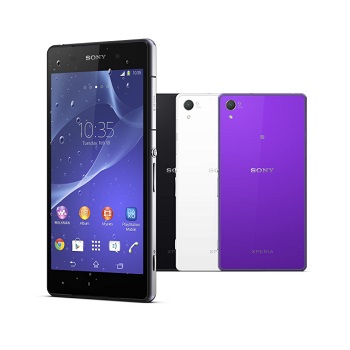
SonySony wasn’t going to be the one to stay behind in the MWC show, and unveiled its new Xperia Z2 smartphone. This phone boasts a 5.2-inch full HD screen, and, like its Xperia Z2predecessor, is IP58 certified water-proof and dust-resistant. The Z2 is equipped with a 20.7 MP camera that can also shoot 4K videos. Powered by the Snapdragon 801 SoC and 3 GB of RAM, Sony has fitted 3,200 mAh battery. The phone will come in black, white, and purple colour options.

Sony also showcased its new mid-range handset – M2. The M2 has a smaller 4.8-inch 960×540 screen, and has got a 8 MP rear camera. Underneath it packs a 1.2 Hz dual-core processor, along with 1 GB of RAM, and packs in 2,300 mAh battery.

At last, Sony also came out with the successor to its Xperia Z tablet – Xperia Z2 tablet (in pic on right). Having the same IP58 certified rating and chipset as the Xperia Z2, the Z2 tablet is a 10-inch full HD tablet with an 8 MP rear camera. Being as thin as 6.44 mm, the tablet doesn’t fall short of needed features – WiFi, Bluetooth, 3.5mm headset jack. This one packs 6,000 mAh battery, and there’re no official dates or pricing.

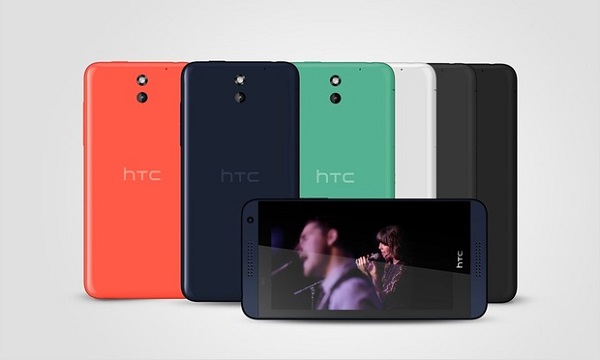
HTCHTC’s corner at MWC wasn’t very exciting except its last year’s release, One, won the Mobile Of The Year Award, and it showcased two Android smartphones – Desire 816 and desire 610 (in main image above). The desire 816 is a high mid-range Android 4.4.2 device that comes with a 13 MP snapper; and 5 MP front one. It has a 5.5-inch 720pscreen, and is powered by a 1.6 GHz quad-core Snapdragon 400 SoC. You get the similar BoomSound front-facing speakers, as well as the new Sense 6.0 UI. On the other hand, the Desire 610, running on Android 4.3, has a humbler 4.7-inch 960 x 540 display, and 8 MP rear camera and 1.3 MP front-facing camera.

LGLG was awarded the Most Innovative Company Of The Last Year Award, and they announced two new phones based on their existing smartphones. The new G2 Pro has got the same back-placed volume and camera buttons. The phone has a 5.9-inch full HD display, and a 13 MP camera that can shoot 4K videos and has also got OIS in place. Powered by the Snapdragon 800 chipset, the G2 Pro has 3 GB of RAM under the hood. It comes in black and white colours. The G2 Mini is a tinier version of the G2, but with also specifications do not feel really great. The phone sports a 4.7-inch 960×540 screen, and is powered by either Snapdragon 400 or tegra 4i chipset – two variants. This Android 4.4 phone packs in decent 2,440 mAh battery.

Categories
Tech

We recommend: The best camera phones in the market today

Our tech writer lists the five best camera phones you can buy in India, and what makes them so great.
by Manik Kakra

Cameras on phones have come a long way. From using them once in a while upon finding something interesting, to using them pretty much every hour to click a thing, ourselves (selfies, yeah), or anything we find amusing or worth sharing. The technology used on cameras on our phones has evolved by leaps and bounds – camera phones today have better and bigger sensors, improved performance under low-light conditions, they are faster, come with accessories, and more.

Here’s my list of the best camera phones available in the market today:

Samsung Galaxy Note 3: Samsung’s Note series has done a great job of proving that many people do want bigger screens on their phones, and has been consistent about improving cameras used on these devices. The Note 3 has a 13 MP (AF) camera that can shoot 1080p videos at 60 FPS. Its camera can take some seriously detailed images, and videos look very nice (and heavy sized). You’re pretty much sure with a Note 3 that its camera performance is going to be good most of the times, and plenty of editing options are in place in case you require any.

Sony Xperia Z1: Sony’s past efforts with cameras on its flagship handsets haven’t been very impressive, but with the Xperia Z1, especcialy after its latest update, the company has a really good camera performer. Its 20.7 MP camera can take some detailed and sharp images, and the camera app provides loads of shooting and editing options for later. The camera is quite smooth, takes less noisy images after the last update, and provides good video recording quality, too.

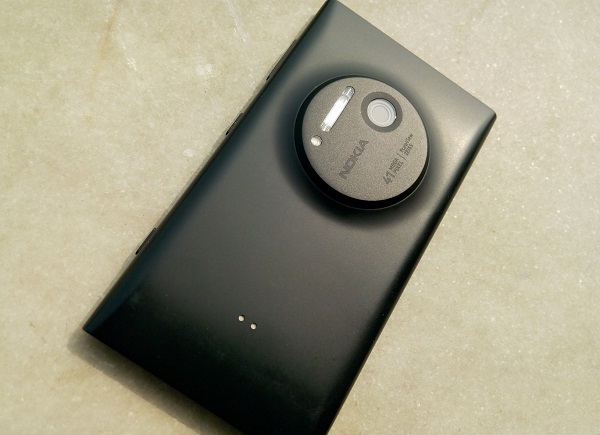
Nokia Lumia 1020: Bet you saw this one coming as soon as you read the headline. The Nokia Lumia 1020, with its huge 41 MP sensor, is pretty much the king of camera phones today. Whatever you want from a camera phone – daylight shots, low-light shows, change focus of an image after clicking it, settings not found on any other company’s phone camera (focus, ISO, etc. Xenon + LED flash, RAW [DNG support]), this Lumia is a one-fit-for-all photography enthusiasts.

LG G2: The G2 has probably the fastest camera of all these. Its camera takes an image the fastest, but without compromising on quality. The 13 MP shooter on its back can take some rich, sharp images, and can also shoot high quality full HD videos with decent audio in place. And thanks to its OIS feature, you need not worry much about getting blurry images due to your hands shaking while taking a photo.

Nokia PureView 808: This is, in my opinion, the best camera performer of the lot. It’s hard to find this Symbian phone today, but it definitely deserves to be named here. The 41 MP, with loads of settings in its camera app, fantastic image quality, great video quality, is really Nokia’s answer if anybody asks about their imaging technology in place. Last officially available for under Rs. 20,000, you could buy one as the last legacy Symbian device that’s equipped with a stunning camera.

Other than these, there are a few that need to be mentioned: Samsung’s Galaxy S IV’s camera is pretty much the same as the Note 3’s. HTC’s One, with its 4 MP ‘Ultrapixel’ can also not be ignored because of its impressive low-light performance and making the OIS feature more common in smartphone cameras today. Also, Apple’s iPhone 5s can take some seriously good photos, videos, is fast in snapping photos and has some decent editing options.

Categories
Tech

LG launches G Flex, its first curved smartphone

The new smartphone will retail at Rs 69,999 in India, and also comes with a ‘self healing’coating at the back.
by Manik Kakra

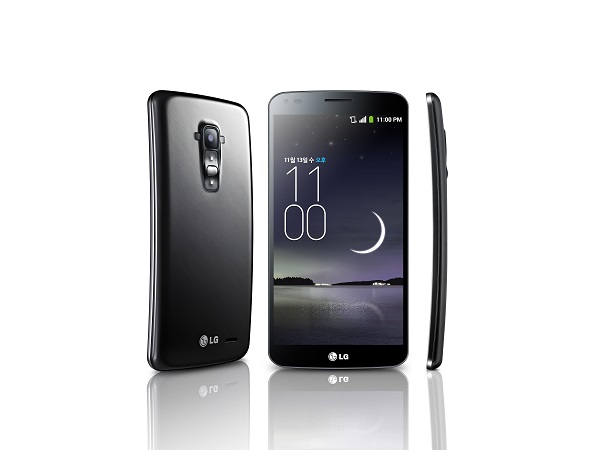
After launching the phone in several international markets, LG today launched the G Flex in India. Its USP, as the name suggests, is its 6-inch 720p OLED screen that is curved at the centre, thus making a curvature when you hold it in your hand. The device also bends a bit if you apply pressure using your hand against the curved design.

Under the hood, similar to the popular LG G2, it has the Snapdragon 800 SoC (with Adreno 330 GPU), along with 2 GB of RAM. The G Flex follows the same ‘Power/Lock and Volume buttons on the back’ approach, and has the same 13 MP rear camera; and a 2 MP front-facing camera.

Another unique thing about LG’s G Flex is that its back carries what LG calls as ‘self-healing’ coating, which means any scratches and marks on its surface are ‘healed’ automatically. Running Android 4.3 with the Optimus UI on top, this LG phone boasts of a 3,500 battery.

While it is yet to be seen what all real life advantages this curved screen brings you, the launch price seems steep. Priced at Rs 69,999, the G Flex comes with a flip case and will be available for sale within a week.

Categories
Tech

Moto G launches in India, starting at Rs 12,499

Motorola is back in India, with a new smartphone – Moto G, a dual SIM phone available in two models.
by Manik Kakra

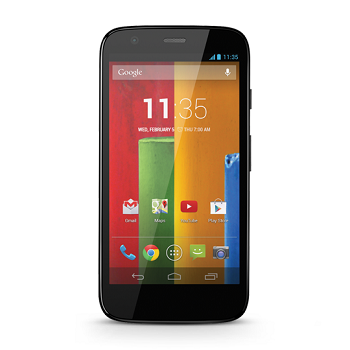
Motorola has returned to India, and has launched its Moto G smartphone in the country. This Android 4.3 device comes with a 4.5-inch 720p screen, with Gorilla Glass on top. It is powered by Qualcomm’s 1.2 GHz quad-core Snapdragon 400 chipset (with Adreno 305 GPU), along with 1 GB of RAM.

Moto GMotorola has launched the phone in dual-SIM avatar (GSM + GSM), and says it will roll out an Android 4.4 upgrade for the phone within two weeks. Also, the company has set up, thanks to some tie ups, about a hundred service centres in the country.

Under the hood, there is a 2,070 mAh battery cell. Other features include 3G connectivity, A-GPS, WiFi, Bluetooth 4.0, and FM Radio.  On the back, there is a 5 MP camera (with an LED flash) that can shoot 720p videos at 30 FPS; while the front side has got a 1.3 MP camera.

The phone has been priced at Rs 12,499 for the 8 GB model, and Rs 13,999 for the 16 GB model, but will only be available online starting tomorrow. Flipkart has a few deals for early buyers, which include Rs 500 off on books, to 70 per cent off on various coloured back shells for the Moto G.

Exit mobile version