Categories
Watch

In pictures: The Big Door

Vivek and Sunita Gupta’s decor and jewellery store at Pali Hill is an opulent tribute to Indian art and heritage.
by The Editors | editor@themetrognome.in

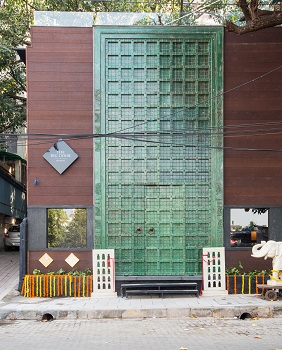
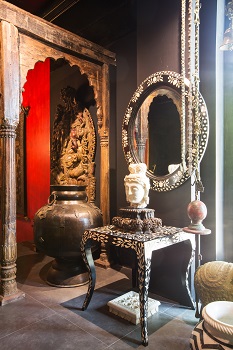
It’s a place that’s really hard to miss – located at the foot of Pali Hill, it stands behind a massive door that opens on knocking with an old-world brass knocker. Inside, its plush interiors take the breath away.

“We opened operations in September last year, and the response has been phenomenal,” says Amrita Kakka, Marketing Manager, The Big Door. “Most of our clientele comes from the nearby areas, and there is a fair smattering of expats doing the rounds of the store, too,” she says.

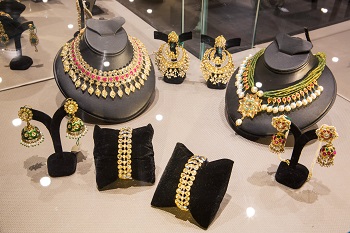
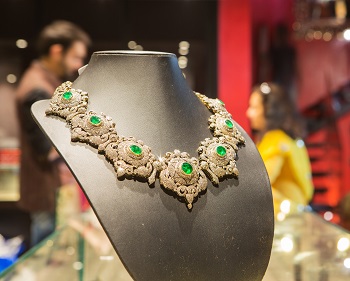
Presented by Vivek and Sunita Gupta, the store tries to make “art and grandeur a part of life.” Spread across 7,500 square feet over two floors and a big terrace space, the store houses Mughal, Nizam and Rajput inspired jewellery from Ravi Jewels, Jaipur, apart from precious and semi-precious jewellery, set in gold, silver and silver-gold plated metal, to Victorian, polkis and jadau pieces. The silver jewellery pieces are a huge hit with customers, says Amrita, since they are pocket-friendly and come in stunning designs.

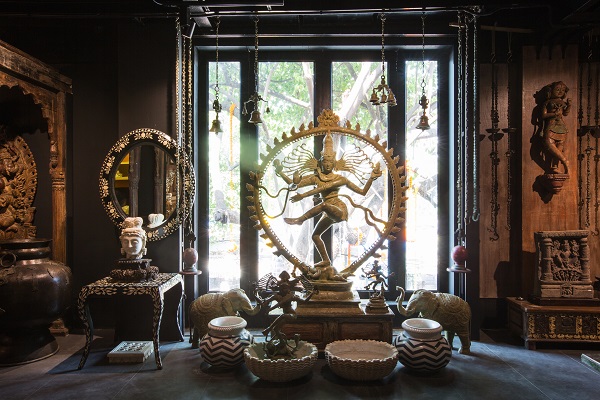
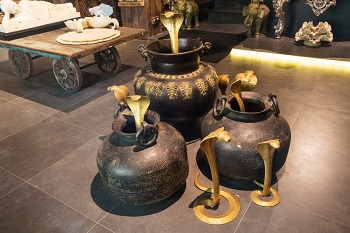
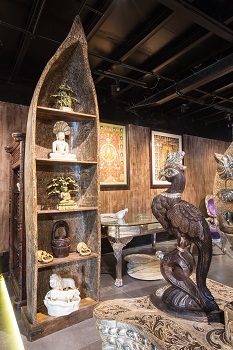
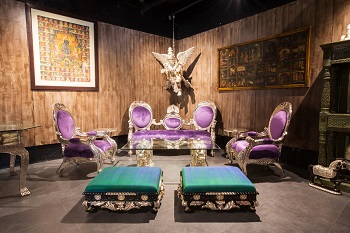
Apart from these, the store also houses a huge collection of interior pieces. Interestingly, the highlight of the store is its washroom – a treat for the eyes, every item in there is on sale, too! 

See the pics below for a glimpse into The Big Door:


The store's best feature - its imposing main entrance door.      The store is becoming popular for its jewellery collection.The artifacts on display come from the store's warehouse in Udaipur

Most of the furniture pieces comprise silver plating over teakwood.This tall storing cabinet with shelves is actually a boat!No two pieces or sets of jewellery are alike at this store.Most of the furniture pieces comprise silver plating over teakwood.Living room pieces

Categories
Event

38 students and a mega project

Students of city-based college have put together video documentaries, a magazine and photo show to be exhibited over four days.
by Sophia Institute of Social Communications Media

Video documentaries, social awareness campaigns, a magazine and a photography exhibit – all of these have been put together by a group of 38 young people, all students, in the space of a year. Their project will be exhibited over four days from today, February 20 to Sunday, February 23, 2014 at the Sophia Institute of Social Communications Media on the Sophia campus from 11.30 am to 7.30 pm.

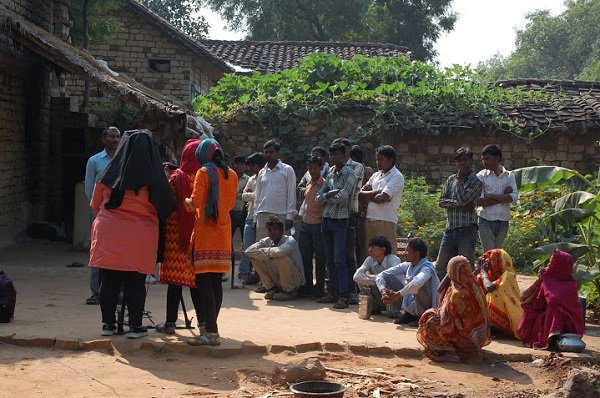
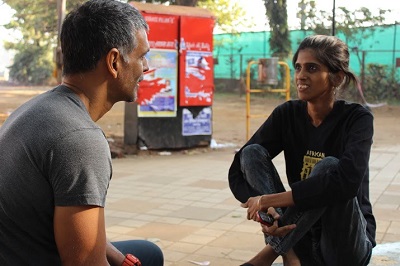
The documentaries feature stories from the many lives that unfold each day in Mumbai. As the working day ends, Basheera Inamdar, Priya Posture and Sitaram Paswan head to school – N se School documents the struggles adults face while attempting to complete their education. Breathe My Space (in pic below) follows Jigna Chanpura training for a marathon, Varsha Bhoweer taking tuitions and Meghna Kotecha Kamath going about her daily chores, valiantly taking on the debilitating effects of Multiple Sclerosis.

Group 4 Breathe My Space Milind Soman gives Jigna Chanpura marathon tipsThe advertising campaigns urges people to save caracals, combat homophobia, seek help for emotional distress and donate sanitary napkins.

Marginalia, the institute’s student magazine, follows the lives of those who ostensibly live on the margins of society but are nevertheless an indispensable part of the fabric of Mumbai—bar dancers, idli sellers, railway gangmen and transgenders. Last year’s edition won three awards – the  Silver Award for the Best Overall Magazine, the Award for the Most Creative Name and the First Runner Up for the most imperative content, at the ICE Awards 2013.

In November, the institute’s students travelled to Bundelkhand and followed the women journalists of Khabar Lahariya into the villages where they observed flawed policies such as laptops being distributed in places that did not have electricity, the acute disparity in the status of women as compared to men, the daily injustice of caste-based discrimination and so on. Their experiences are documented in the broadcast news features and photography exhibit.

(Pictures courtesy Sophia Institute of Social Communications Media)

Categories
Event

Exhibition: Prakash Ghadge showcases Mumbai

Renowned pen and ink artist’s solo show opens today at Nehru Centre Art Gallery; presents Mumbai in all its splendour.
by The Editors | editor@themetrognome.in

In the rush to run our daily lives, and in the midst of increasing traffic, commuter chaos and crime, we often forget one simple fact: Mumbai is gorgeous.

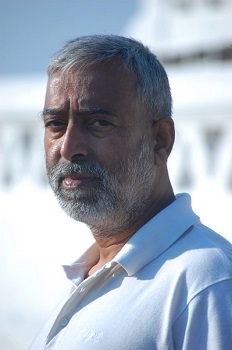
Renowned Pen & Ink Artist Prakash GhadgeHowever, noted pen and ink artist Prakash Ghadge (in pic on left) hasn’t forgotten the city of his birth. In a solo showing starting today, February 18 to 24, 2014 at the Nehru Centre Art Gallery, Prakash will exhibit a series of his works capturing the small, hidden beauties of Mumbai.

Prakash says, “I aim to gather all the small beauties of our own city and put them down in my paintings. I am excited to showcase my exhibition with a specific aim to let people know the beauty of their own city. I have travelled across the world, yet I always question myself, ‘Why do Indians plan their sightseeing outside India?’ As soon as I returned from my world art tour, I began drawing my own city. That’s when I decided to do a series on each city with its course of nature, too.”

He adds, “What gives my work its originality is my use of the Rotring pen, that helps emphasise light and shadows. First and foremost, nature is the inspiration of my work. Drawing and sketching have always been a part of my life. Wherever I go, my camera or sketch book are always with me so that I can capture all sorts of subjects that I would like to sketch. I have also exhibited my favourite subject related to water, like the Ghats, boats, reflections.”

In the exhibition, you can see the few Benares Ghat drawings (in pic below) Prakash has added. “I have always wanted to share that emotion, Benaras Ghat_Pen & Ink Drawing_Upcoming solo Exhibition_Nehru Centre _18th to 24th February, 13which often exists for only a moment,” he explains.


Head to Nehru Centre Art Gallery, Worli, from today up to February 24, 2014. 

(Pictures courtesy Prakash Ghadge)

Categories
Tech

We recommend: The best camera phones in the market today

Our tech writer lists the five best camera phones you can buy in India, and what makes them so great.
by Manik Kakra

Cameras on phones have come a long way. From using them once in a while upon finding something interesting, to using them pretty much every hour to click a thing, ourselves (selfies, yeah), or anything we find amusing or worth sharing. The technology used on cameras on our phones has evolved by leaps and bounds – camera phones today have better and bigger sensors, improved performance under low-light conditions, they are faster, come with accessories, and more.

Here’s my list of the best camera phones available in the market today:

Samsung Galaxy Note 3: Samsung’s Note series has done a great job of proving that many people do want bigger screens on their phones, and has been consistent about improving cameras used on these devices. The Note 3 has a 13 MP (AF) camera that can shoot 1080p videos at 60 FPS. Its camera can take some seriously detailed images, and videos look very nice (and heavy sized). You’re pretty much sure with a Note 3 that its camera performance is going to be good most of the times, and plenty of editing options are in place in case you require any.

Sony Xperia Z1: Sony’s past efforts with cameras on its flagship handsets haven’t been very impressive, but with the Xperia Z1, especcialy after its latest update, the company has a really good camera performer. Its 20.7 MP camera can take some detailed and sharp images, and the camera app provides loads of shooting and editing options for later. The camera is quite smooth, takes less noisy images after the last update, and provides good video recording quality, too.

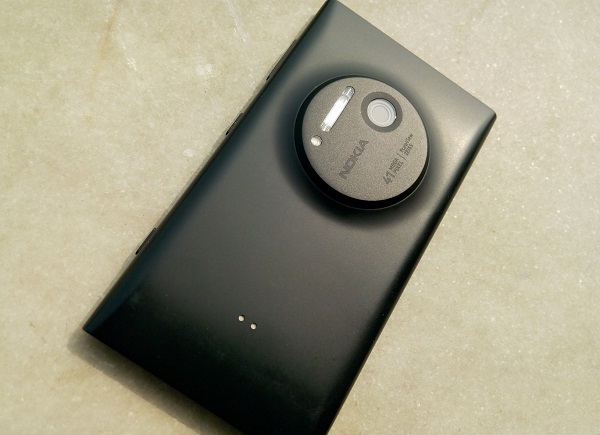
Nokia Lumia 1020: Bet you saw this one coming as soon as you read the headline. The Nokia Lumia 1020, with its huge 41 MP sensor, is pretty much the king of camera phones today. Whatever you want from a camera phone – daylight shots, low-light shows, change focus of an image after clicking it, settings not found on any other company’s phone camera (focus, ISO, etc. Xenon + LED flash, RAW [DNG support]), this Lumia is a one-fit-for-all photography enthusiasts.

LG G2: The G2 has probably the fastest camera of all these. Its camera takes an image the fastest, but without compromising on quality. The 13 MP shooter on its back can take some rich, sharp images, and can also shoot high quality full HD videos with decent audio in place. And thanks to its OIS feature, you need not worry much about getting blurry images due to your hands shaking while taking a photo.

Nokia PureView 808: This is, in my opinion, the best camera performer of the lot. It’s hard to find this Symbian phone today, but it definitely deserves to be named here. The 41 MP, with loads of settings in its camera app, fantastic image quality, great video quality, is really Nokia’s answer if anybody asks about their imaging technology in place. Last officially available for under Rs. 20,000, you could buy one as the last legacy Symbian device that’s equipped with a stunning camera.

Other than these, there are a few that need to be mentioned: Samsung’s Galaxy S IV’s camera is pretty much the same as the Note 3’s. HTC’s One, with its 4 MP ‘Ultrapixel’ can also not be ignored because of its impressive low-light performance and making the OIS feature more common in smartphone cameras today. Also, Apple’s iPhone 5s can take some seriously good photos, videos, is fast in snapping photos and has some decent editing options.

Categories
Do

Go birding!

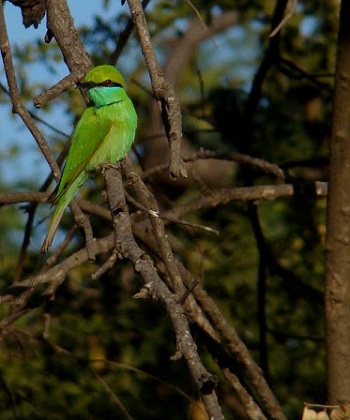
bee-eaterUnique four-day global event invites citizen scientists to participate in a ‘spot a bird’ initiative – in their own backyard.
by Adithi Muralidhar

If you have always had a fascination for observing birds, this is a great chance for you to convert that hobby into something productive. The Great Backyard Bird Count (GBBC) is back with a bang!

GBBC is an annual four-day (February 14 to 17, 2014) event that engages bird watchers from all over the world. A citizen science initiative, this event is as simple as maintaining a sincere account of the birds you sight in your backyard. It attempts to create a real-time snapshot of the location and the birds found there. Organised jointly by the Cornell Lab of Ornithology, National Audubon Society, and Canadian partner Bird Studies Canada, GBBS is sponsored by Wild Birds Unlimited.

What is the event about?

To understand how to participate, first visit this page.

– Decide on a location where you want to bird. You could do this sitting by your window, sipping your morning coffee or on a walk to a nearby park, or visit to a national park/ bird sanctuary. The minimum time limit to do birding is 15 minutes.

– Observe the bird, note down the species, and note down how many individuals you can see of that particular species.

– Note down important aspects like time of the day, duration of birding, weather, any behavioural observations, and estimates of the number of individuals of a species.

– Register to enter your results here. Enter your results on the GBBC website by clicking on ‘Submit Observations’. Apart from entering the bird check-list, you will also be asked to map your location, mark the day and time, whether your sightings were incidental, during travel or while stationary. You will also be required to enter data like how many people contributed to the checklist, sighting of rare birds, unusual or peculiar bird behaviour. It is also important to mention if you are reporting all the species you saw or only the ones you could identify.

– If you are not familiar with identification of birds, try and check with peers, or use a field guide. Do not guess the names or enter unsure sightings.

– If you still have questions, visit this page GBBS’s FAQ section.

Why participate? 

Monitoring bird populations all over the world can tell us a lot about the status of a bird species – you can keep account of their abundance/absence in some areas, their migratory patterns, their breeding grounds, their behaviour and distribution, monitor any ill effects due to pollution and climate change, etc. This is a Herculean task and it cannot be done by a single team of scientists or nature enthusiasts. A collaborative effort like this will help put together pieces of the puzzle from all over the world, which will in turn help the scientific community to make inferences on trends in bird populations.  In 2013, 110 countries participated in GBBC and India contributed to the third highest chunk of checklists (467). Hopefully, with more participation from nature enthusiasts this year, we can do our bit and contribute to this initiative.

But remember…

While GBBC encourages participation from all age groups; beginners, amateurs and experts, one should take care that you are contributing to a global science project. This citizen science initiative asks for numerous individuals to contribute their observations of a particular subject (in this case, birds) to a central database, which in turn will be analysed by scientists. This empowers the scientific community since now they are equipped with a massive set of volunteers who contribute to enhancing their observational research. So, be sincere and responsible while doing your bit.

Adithi Muralidhar is currently an Associate Fellow with Observer Research Foundation, Mumbai. Apart from her pursuits in environment, education and sustainability, she also has a keen interest in socio-cultural issues. 

(Pictures courtesy GBBC website, Adithi Muralidhar)

Categories
Event

Film fest: On gender issues and masculinity

Men Against Violence and Abuse (MAVA) and Ramnarain Ruia College are organising a two day film fest, starting from tomorrow.
by The Editors | editor@themetrognome.in

It is an issue that is currently defining how society looks at women – gender issues have never been as significant as they are today. Seeing them through the prism of masculinity adds another dimension to their scope.

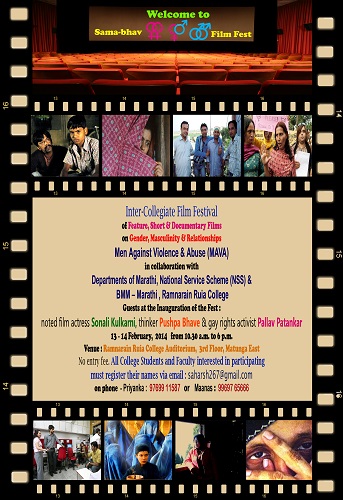
Film fest Final jpgKeeping this in mind, the city-based Men Against Violence & Abuse (MAVA), in collaboration with Ramnarain Ruia College, Matunga, has organised a two-day inter-collegiate film festival titled ‘Sama-bhav’. The festival starts today, February 13, 2014 and ends tomorrow.

“Around 11 feature, short and documentary films on the theme of ‘Gender, Masculinity and Relationships’ will be screened on both the days at the Ruia College Auditorium,” informs Harish Sadani of MAVA. The festival will be inaugurated by noted film actress Sonali Kulkarni, eminent social thinker Pushpa Bhave and gay rights activist Pallav Patankar.

What to expect at the Fest:

There will be a package of three groups of films that would be screened at the fest.

Group one: Intersection of caste-class-religion-gender and violence against women.

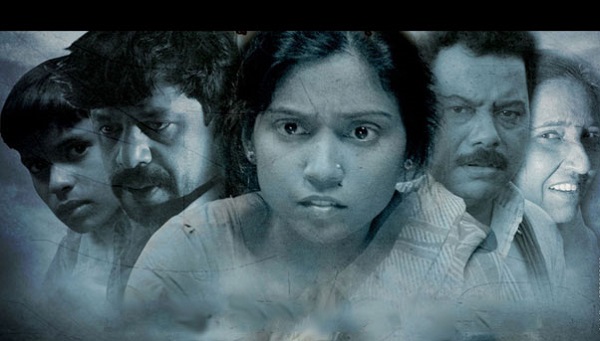
Dhag – in Marathi, by Shivaji Lotan Patil (in picture above)

Hasina – in Kannada, by Girish Kasarvalli

Asabhya Betiyan – in Hindi, by Nakul Singh Sawhney

Saving Face – from Pakistan, by Sharmeen Obaid Chinoy

Osama – from Afghanistan, by Siddiq Barmak.


Group Two: Re-examining Masculinity

Till We Meet Again, by Rahul Roy

Boys Cannot Be Boys, by Continuing Education & Training Centre

Thanks – in Marathi, by Devendra Balsaraf.


Group Three: Lives of homosexual and transgenders

Bioscope, by Nirantar,

Transgenders: Pakistan’s Open Secret, by Sharmeen Obaid Chinoy

Ebang Bewarish – in Bengali, by Debalina.


Head to Ramnarain Ruia Auditorium, Ruia College. The festival will be held from 10.30 am to 6.30 pm. There is no entry fee, but registration is mandatory. Interested college students, faculty, representatives of voluntary organisations and health professionals must register their names via email at saharsh267@gmail.com or call Manas Barve on 99697 65666.

(Pictures courtesy archives.deccanchronicle.com and Harish Sadani)

Exit mobile version