Categories
Tech

India gets world’s slimmest smartphone, Elife S5.5

Gionee, a Chinese company, launched the new smartphone yesterday priced at Rs 22,999 and seems bullish on the Indian market.
by Manik Kakra | @Manik_K on Twitter

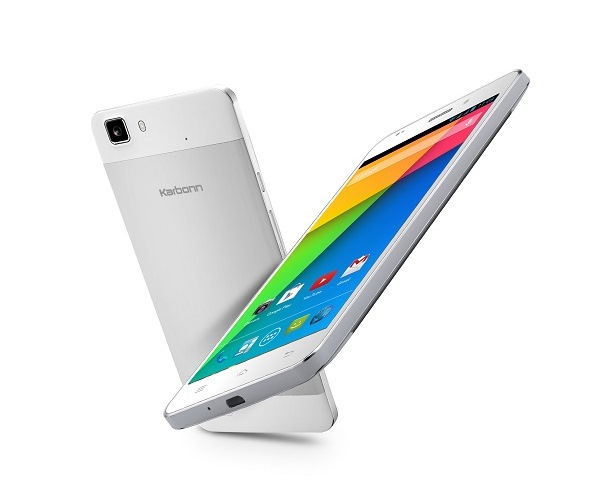
Gionee has unveiled its brand new smartphone in India. The Elife S5.5, as the name suggests, is just 5.5mm thick, making it arguably the world’s slimmest smartphone.

It boasts a 5-inch (1920×1080) Super AMOLED screen, covered in an all-metal plus glass coating material. Under the hood, there is a MediaTek MT6592 SoC (1.7 GHz octa-core processor and Mali 450 GPU), along with 2 GB of RAM. The phone is powered by 2,300 mAh battery, and has 16 GB of internal storage. On the back, there is a 13 MP snapper (along with an LED flash); while the front has a 5 MP camera.

This Android 4.2 device has Gionee’s own Amigo 2.0 UI on top, and there’s no word on when the phone will get updated to 4.3 or 4.4. Connectivity-wise, there is Bluetooth 4.0 (LE), 3G, 3.5 mm headset jack, microUSb 2.0, USB OTG, and WiFi.

Gionee, another recent Chinese player in the Indian market seems to be bullish on the Indian market. It expects to ship around 6 million handsets in India, and has got a long-term target of 10 per cent market share. The company is planning to invest a lot in service centres in the country and has said to open 750 of them by the end of this year.

The phone will be available for sale starting from April 27, at a price of Rs 22,999. It comes in pink, purple, blue, white and black colour options.

Categories
Tech

Samsung launches Galaxy S5 in India at Rs 52,500

The company also introduced new Gear products for the Indian market. The new S5 comes with several improved software features.
by Manik Kakra | @Manik_K on Twitter

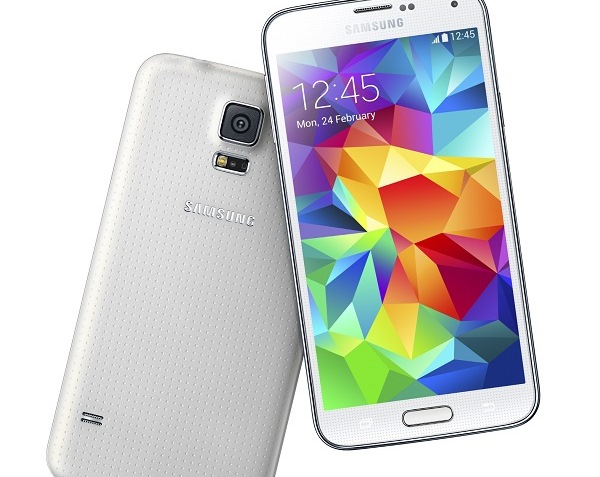
Samsung’s much-awaited Galaxy S5 has officially been launched in India. The new S5 comes with a host of improved software features as well as latest internal hardware Samsung has in store.

Samsung India yesterday launched the Exynos model of the Galaxy S5. This device is powered by octa-core (1.3 GHz quad-core + 1.9 GHz quad-core processor), along with 2 GB of RAM. Packing in 2,800 mAh battery, the phone sports a 5.1-inch (1920×1080) Super AMOLED touchscreen with Gorilla Glass 3 on top, with physical keys placed below the screen. On the back, there is a new 16 MP (fast AF) camera (with an LED flash) that can shoot full HD videos at 60 FPS and also features face detection; while the front has a 2 MP camera with shooting full HD at 30 FPS capabilities.

Gear FirRunning on Android 4.4.2 (KitKat), the new Galaxy flagship also brings in a new tweaked version of the TouchWiz UI. Connectivity-wise, this Samsung device is equipped with microUSB 3.0 (supports 2.0 as well), USB OTG, Bluetooth 4.0 (A2DP), an infrared port, WiFi a/b/g/n/ac, WiFi Direct, and DLNA.

Two additions that Samsung has been touted regarding the S5 since its showcasing at this year’s MWC has been the fingerprint scanner and the heart rate monitor. The S5 has a fingerprint scanner on its Home button, which can be used not just for security purposes but also inside various apps. The phone’s heart monitor works through a new sensor deployed alongside the main camera that tries to capture your pulse rate.

The phone can be pre-ordered starting tomorrow for Rs 1,500 and will go on sale on April 11. The Indian market is getting the 16 GB variant and not the 32 GB (expandable via microSD card). It will be available in charcoal black, shimmery white, electric blue and copper gold, and has been launched at a price of Rs 52,500.

Samsung has also launched its new Gear range of products in India. The Tizen-powered Gear 2 and Gear Neo 2, which sport 1.6-inch AMOLED screens and weigh 68 and 55 grams, respectively, have been priced at Rs 21,900 and Rs 15,900. The Gear Fit, which is equipped with a 1.84-inch curved AMOLED screen and weighs 27 g, has been priced at Rs 15,900. All these Samsung products are IP67 water-resistant and dust proof.

Categories
Read

Review: ‘An astronaut’s guide to life on Earth’

Chris Hadfield’s account of his astronaut life is a must-read for those looking to be (literally) transported to another world.
by The Editors | editor@themetrognome.in

Growing up, a lot of us dream of being astronauts, just like we also dream of being actors, entertainers, doctors and truckers. Growing up, any job that lets us play with toys and props is cool.

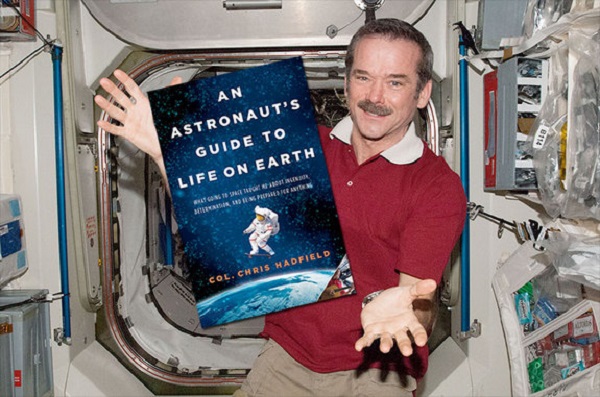
Famous astronaut Chris Hadfield, however, held on to his childhood dream of being an astronaut close to his heart. In his book, An Astronaut’s Guide To Life On Earth, the former astronaut and one of the world’s most accomplished persons in his field, describes how he first dreamed of becoming an astronaut at age 9 while living in his native home town in Ontario, Canada. But like most other children who grow up and relinquish their childhood dreams for more realistic pursuits, Hadfield saw his dream through to a hugely successful, trail-blazing glory.

Chris HadfieldHadfield describes in humorous, engaging detail how he first dreamed the astronaut dream, after watching the telecast of Neil Armstrong descending on the Moon: ‘Slowly, methodically, a man descended the leg of a spaceship and carefully stepped onto the surface of the Moon. The image was grainy, but I knew exactly what we were seeing: the impossible, made possible. The room erupted in amazement…Somehow, we felt as if we were up there with Neil Armstrong, changing the world.

‘Later, walking back to our cottage, I looked up at the Moon. It was no longer a distant, unknowable orb but a place where people walked, talked, worked and even slept. At that moment, I knew what I wanted to do with my life. I was going to follow in the footsteps so boldly imprinted just moments before. Roaring around in a rocket, exploring space, pushing the boundaries of knowledge and human capability – I knew, with absolute clarity, that I wanted to be an astronaut.’

It is with the same clarity that Hadfield outlines the agonies and the ecstasies of his journey as a Canadian boy hoping to catch a break into NASA space programme, enrolling in military service to ensure a route to NASA, getting his glider license at age 15, turning down an opportunity to become a commercial airline pilot to focus on being an astronaut instead, getting through to the Canadian Space Agency, and finally, getting the break into NASA. He outlines his journey with insights into daily gruelling schedules, maintaining optimum fitness levels at all times (the slightest disorder or illness can get you off the programme), the relentless training and repeat training of a series of tasks as part of simulator exercises, and working with a team as an equal player who does not seek individual recognition but team success.

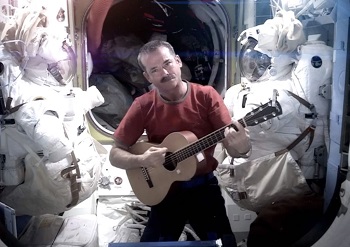
His stint as Commander of the International Space Station, however, made Hadfield famous all over the globe – not least because of the live streaming of pictures and videos that he engineered for transmission from the shuttle and the live tweets of important events aboard the spaceship, but for his performance (on guitar and without his spacesuit) of David Bowie’s ‘Space Oddity’, which became an instant hit online.

His book is an insightful look into the travails and joys of being an astronaut – he describes in vivid detail, for instance, about how zero gravity makes everyday, mundane tasks on space oddityEarth, like washing one’s hair or moving from spot to spot, a complete challenge to master. But his story is not just a superstar’s account of life aboard a spaceship and watching over Earth from a thousand miles away; Hadfield details in pitiless detail the amount of repetitive hard work in the course of training, the compulsive drive an astronaut must possess to be a team player, to practice every single task and routine over and over again and to leave nothing to chance when fighting a crisis. As a reader, you can’t help but be inspired, as he explains the mantra of his success, a philosophy he learnt at NASA: ‘Prepare for the worst – and enjoy every moment of it.’
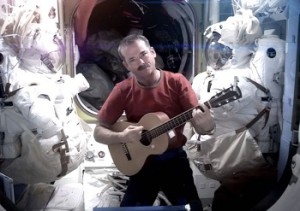
Hadfield writes simply and with humour, bringing to life the incidents where he disposed of a live snake while piloting a plane, or breaking into the Space Station with a Swiss army knife, or even washing his hair with no-rinse shampoo aboard the spaceship. Readers will understand why being an astronaut is one of the toughest jobs in the world – and why all the hard work is worth it with just one glance at beautiful Earth from outer Space.

Rating for ‘An Astronaut’s Guide To Life On Earth’: 4/5. Buy the book at a discount on Flipkart.

Excerpt from the book:

‘Weightlessness doesn’t feel the same on a huge spaceship where you can move around freely as it does on a tiny rocket ship where there’s nowhere to go. Imagine floating in a pool without water, if you can, then endow yourself with a few superpowers: you can move huge objects with the flick of a wrist, hang upside down from the ceiling like a bat, tumble through the air like an Olympic gymnast. You can fly. And all of it is effortless.

But effortlessness takes some getting used to. My body and brain were so accustomed to resisting gravity that when there was no longer anything to resist, I clumsily, sometimes comically, overdid things. Two weeks in, I finally had moments approaching grace, where I made my way through the Station feeling like an ape swinging from vine to vine. But invariably, just as I was marvelling at my own agility, I’d miss a handrail and crash into a wall. It took six weeks until I felt like a true spaceling and movement became almost unconscious; deep in conversation with a crewmate, I’d suddenly realise that we’d drifted clear across a module, much as you might gently bob around in a pool without really noticing.

The absence of gravity alters the texture of daily life because it affects almost everything we do. Toothbrushing, for instance: you need to swallow the toothpaste – spitting is a very bad idea without the force of gravity or any running water to help stuff go down the drain and stay there. Hand washing requires a bag of water that has already been mixed with a bit of no-rinse soap; squirt a bubble of the stuff through a straw, catch it and rub it all over your hands – carefully, so it clings to your fingers like gel instead of breaking into tiny droplets that fly all over the place – then towel dry.’

(Pictures courtesy www.canada.com, www.nbcnews.com, blogs.windsorstar.com)

Categories
Tech

Karbonn launches three new phones

Launched last week, the company’s three brand new phones will be available for sale in India come late April 2014.
by Manik Kakra | @Manik_K on Twitter

Karbonn has come out all guns blazing in partnership with MediaTek, showcasing as many as three Android 4.4 (KitKat) dual-SIM handsets. The three phones launched are the Karbonn Titanium Octane Plus, Karbonn Titanium Octane and Karbonn Titanium Hexa.

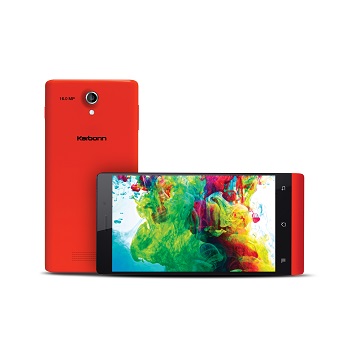
First, the Karbonn Titanium Hexa (in pic above) is the biggest announcement from the company. This is a 1.5 GHz hexa-core phone – MediaTek’s 6591 chipset, along with 2 GB of RAM. Sporting a 5.5-inch full HD display, the phone has a fairly new display quality used called LTPS. It boasts a 13 MP rear camera; and a 5 MP front-facing one. The Titanium Hexa packs in 2,050 mAh battery, and has 16 GB of internal storage, which is expandable via microSD card.

Coming to the other two phones – the Karbonn Titanium Octane Plus and Karbonn Titanium Octane – both are pretty similar in hardware specifications, except the Plus model is a bit on the beefier side. Karbonn’s Titanium Octane Plus features a 5-inch full HD screen. RAM. Under the hood, there’s a MediaTek 6592 chipset (1.7 GHz octa-core processor), and 2 GB of RAM.

The Karbonn Titanium Octane has the same 5-inch screen as the Plus. It has a 13 MP snapper on the back; and a 5 Mp front-facing camera. Packing in 2,000 mAh battery and 16 GB of internal storage, expandable up to 32 GB via microSD card.

Shashin Devsare, Executive Director, Karbonn says, “With this partnership we seek to raise the bar of smartphone experience in the country. Our new portfolio of smartphones is designed in collaboration with MediaTek to provide a powerful mobile experience.” How good the experience will be, is going to an interesting thing to watch from here.

While the Titanium Hexa has WiFi a/b/g/n, the other two support WiFi b/g/n. All three have got Bluetooth 4.0, 3G connectivity, microUSB 2.0 port, and 3.5mm headset jack. All these phones are going hit the market in late April. As far as pricing is concerned, Karbonn Titanium Hexa, available in white and black colour options, will be on sale for around Rs 16,990; Karbonn Titanium Octane Plus for Rs 17,990 and the Karbonn Titanium Octane around Rs 14,490. 

Categories
Watch

In pictures: St Peter’s Church

This stunning church based in Bandra houses the most astonishing stained glass windows made in China. Here’s a closer look.
by The Editors | editor@themetrognome.in

It is a prominent church in Mumbai, and like most churches, it is serene and quiet, inviting one to sit and pray a while before moving on to other mundane chores. But what takes the breath away at St Peter’s Church is its array of exquisite stained glass windows – which were crafted by a Spanish Jesuit priest Bro Antonio Navascues in China and brought by ship to Bombay in the 1930s, when the Church was rebuilt.

The earlier St Peter’s Church was built in 1851 as a simple place of prayer, but the structure began to show signs of wear and tear in the next century. The building was then demolished and a newer, bigger structure was built in its place, the foundation stone for which was laid in 1938.

We are grateful to parish priest Fr Errol Fernandes for allowing us an unrestricted access to the Church’s upper floor to photograph the stained glass windows.

See our pictures of St Peter’s Church below:


(Pictures courtesy Vrushali Lad) 

Categories
Read

Review: Advantage Love

Madhuri Banerjee’s newest book has an interesting plotline and two likeable characters, but is marred by some cliched, preachy storytelling.
by Sharad Panjwani

I’m not a huge fan of romance novels, but I don’t turn up my nose on them either. If written cleverly and with the right mix of empathy and humour, there really isn’t a genre that is more entertaining. You’ll notice this about romantic comedies, as well.

Madhuri Banerjee’s Advantage Love is her newest book after Losing My Virginity And Other Dumb Ideas and Mistakes Like Love And Sex. Personally, I found Advantage Love flagging in spots and a bit too preachy for my liking – despite an interesting premise.

Trisha Mathur, the novel’s heroine, is an independent-minded woman who believes in making her place in the world on her own talent and merit. The story begins with a debate that Trisha is participating at her college, JNU, against Vedant Kirloskar, the dashing, handsome son of a prominent politician. A meeting later, sparks fly between the two and they start a steady relationship. Though in love with Trisha and extremely dependent on her to make his fledgling political career take wings, Vedant is resistant to the idea of making a deeper commitment and refuses to discuss marriage and a future. The relationship ends on a sour note, with Vedant moving to Mumbai to focus on his political career.

Heartbroken, Trisha immerses herself in her job at the UNICEF and a few months later, happens to meet tennis star Abhimanyu Laxman, who is immediately attracted to her. She doesn’t immediately look to enter into a relationship with him, not wishing to get hurt again. But she rediscovers love with Abhimanyu, and just when her heart is healing, Vedant meets her again.

It’s not a bad plot by any means, but I had a problem with how predictably things happen in the book. You just know Vedant is going to break Trisha’s heart and there are umpteen hints of his imminent return, and the character Vedant is curiously one-dimensional. Besides, he has an annoying tendency to spout poetry when wooing Trisha – if that is what girls really like, then well… *starts learning poetry to use, just in case*. I liked Abhimanyu Laxman loads better, though – he is decent, more open to commitment and wears his stardom with ease and just the right amount of arrogance.

Madhuri displays a tendency to ‘tell, not show’ in her writing; instead of letting the reader understand plot development through dialogue and situation, she writes entire paragraphs blandly describing what the characters are feeling and why they do what they do. What’s more, there is too much sermonising about love and relationships, most of it through Trisha’s friend and mother advising her, and the conversations seem stilted. Personally, I wouldn’t want even my best friend talking to me thus: ‘I don’t want to procreate. And I don’t want to have any regrets. I don’t know if we’ll grow in the same direction over the course of years. No one does. Hell, even railway tracks that are laid parallel straight have to change course or be replaced. We are all continuously changing. But as long as we know that this is the path we want to be on and this is the person we want to share today and the now with, tomorrow and the future will sort itself out. When you say “I love you”, it’s meant as forever. There is no time limit that comes with love.’

And so on.

Maybe fans of romance novels will love this book, and I’m not suggesting they shouldn’t. Maybe others will enjoy this love triangle more than I did. For me, though, a little less predictability and a lot more twists and turns would have done the trick. I would have liked the girl to love and lose…but then I like an unresolved love story.

I’m going with 2.5/5 for Advantage Love.

‘Advantage Love’ is available for sale on Flipkart.

Exit mobile version