Categories
Listen

Attend: Vocal recital at the NCPA

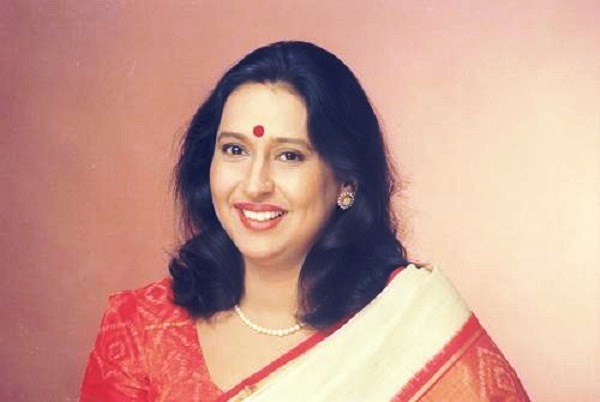
Hindustani classical vocal exponent Arati Anklikar Tikekar will present ‘Shyam Rang’ to celebrate Lord Krishna and Janmashtami, on August 8.
by The Editors | editor@themetrognome.in

On the occasion of Janmashtami, the National Centre for Performing Arts (NCPA) will present ‘Shyam Rang’. The programme is a Hindustani vocal recital that will celebrate the legend of Krishna, the dark one, through music.

In this concert, renowned vocalist Arati Ankalikar Tikekar will present a bouquet of compositions in various genres of classical, semi-classical and light music related to the theme of Krishna. She is currently recognised as one of the top vocalists of the younger generation. Being a disciple of famous singers such as Pandit Vasantrao Kulkarni, Kishori Amonkar and Pandit Ulhas Kashalkar, among others, her singing style is a rare combination of great qualities from various gharanas. She has received training in Agra as well as Gwalior-Atrauli gharanas.

The recital will take place at the NCPA on August 8, 2014 at 6.30 pm. Tickets are priced at Rs 250 and Rs 300. 

(Picture courtesy www.last.fm)

Categories
Watch

Watch: ‘Siddharth’

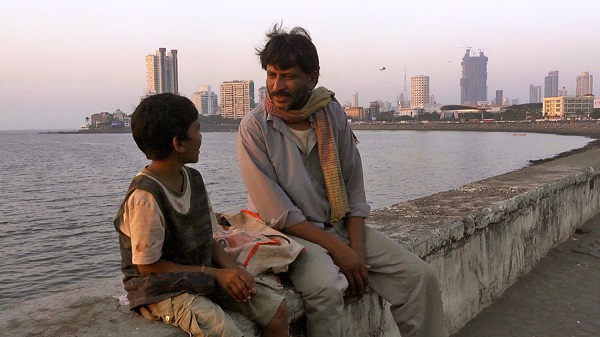
Today, the powerful feature film ‘Siddharth’ will be screened at the Theosophy Hall; the film is directed by Richie Mehta.

For a sensitive, well-made film on the travails of parents looking for lost or abducted children and the menace of child trafficking, you have to watch Siddharth this evening at the Theosophy Hall.

The film is named after its protagonist,12-year-old Siddharth, who is sent away for work by his father, Mahendra. Mahendra is a chainwallah, who fixes broken zippers on the streets and is relieved as he hopes Siddharth will help in allevating his financial burdens at home. But when Siddharth fails to return home, Mahendra learns he may have been taken by child-traffickers. With little resources and no connections, he travels across India in pursuit, with the hope that whatever force arbitrarily took his child away will return him unharmed.

The film takes a powerful look at the brutal exploitation of children on the streets, the most vulnerable people and the wide net cast by child-traffickers. Poignant and bitter-sweet, the film is a must watch.

Siddharth is presented by the Root Reel in association with Dharamshala International Film Festival.

Entry for the screening is free, however seating is limited and hence on a First Come First Serve basis.

Head to the Theosophy Hall, Alliance Française de Bombay, on Wednesday, July 30, at 6.30 pm.

(Picture courtesy www.anokhimedia.com)

Categories
Read

Gratitude at the grassroots

Researcher Sadashiv Tetvilkar’s newest book on ‘veergals’ (aka hero stones) talks about memorial stones as unique sources of local history.
by Shubha Khandekar

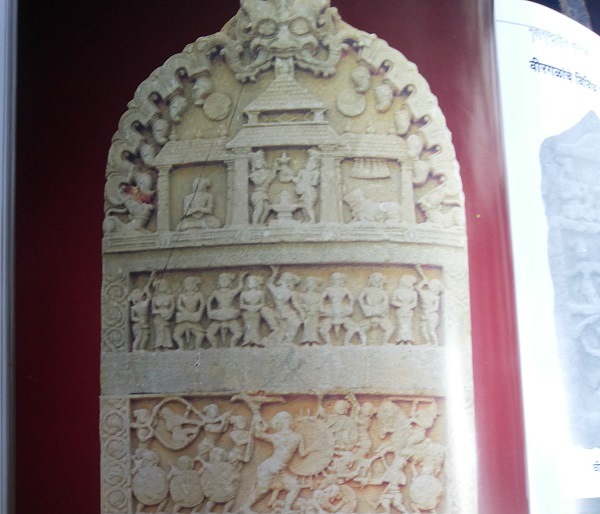
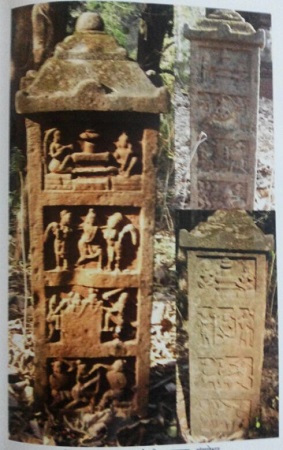
‘Rural Maharashtra is strewn with hundreds of Veergals (Hero Stones) at the boundary of the village or else, in the courtyard of a Shiva temple located on the periphery of the village. A group of four beautiful Hero Stones (fifth one is in the custody of ASI) at Eksar in Borivali shows in vivid detail a ferocious naval battle, which has been correlated to the text Chaturvarga Chintamani composed by Hemadri Pandit. He describes a decisive naval battle fought between Yadava King Mahadeva and Shilahara ruler Someshvara in which the latter was routed and killed in 1265. The details of infantry, cavalry, elephant force and battle ships shown herein enables us to understand the military strategy deployed in this battle. Someshvara was cremated at Eksar and the five Hero Stones were erected to commemorate his valour.’

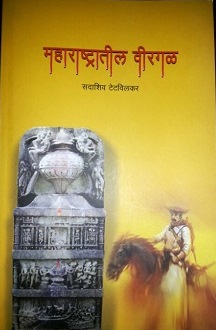
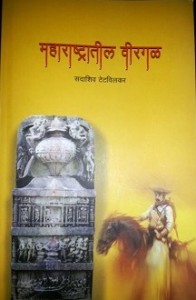
Indefatigable hard core hands-on researcher Sadashiv Tetvilkar, who already has seven books to his credit, has now published Maharashtratil Veergal (Hero Stones of Maharashtra), which highlights the enormous potential of these memorial stones as unique, unconventional sources of local history, in combination with the rich and varied oral traditions of the region. Together with the more conventional methods of decoding historical evidence, such as texts, the book is a significant addition to the armoury of historians and archaeologists working on the early mediaeval past of Maharashtra.
These Hero Stones, often found together with Sati Stones erected to honour wives who committed sati after the husband’s death at the battlefield, are unequivocally the memorials erected to commemorate heroes who valiantly fought and died on the battlefield while defending and protecting the lives and properties of the communities they belonged to, from wild predators or human invaders. It is a humble and affectionate tribute paid by the commoners to their brave hero, so as to inspire future generations to follow in his footsteps.

What makes this effort significant is that this study fills up a huge gap in reconstructing local history, long felt but left unaddressed due to neglect and apathy. Part of the challenge lies in the fact that there is rarely, if ever, any inscription on the Hero Stones, and they are lying open to the skies, which makes it difficult to establish their context in time and space.

The book is embellished with colour and B&W photographs of outstanding samples of Hero Stones. Although the author insists that the Veergals included in his book are only a compilation of the possible sources, it has nevertheless opened floodgates of an exciting archaeological and ethnographic adventure that will unfold unseen aspects of early medieval history of Maharashtra.

Tetvilkar points out that Hero Stones are not unique to Maharashtra: they are found in great numbers in Karnataka, Goa, Rajasthan, Tamil Nadu, Kerala, Kashmir, Andhra, Himachal, Bengal and Gujarat, which highlights the cultural unity of India at the very grassroots. Hero Stones are rectangular slabs of hard stone, usually with three vertical panels decorated with low relief sculpture which is a continuous narrative of valour, sacrifice and magnanimity, through a battle scene, death and ascent into heaven. The sun and moon at the top indicates that the fame of the hero would remain undiminished forever.

Tetvilkar holds the view that some of these local heroes were eventually elevated to the status of gods and came to be worshipped by villagers, which explains the large number of local deities venerated in rural Maharashtra. The attributes of these heroes/gods and the myths and legends associated with them give us important insights into the lives, values and aspirations of the communities they belonged to. They also give us significant clues into the process of Aryanisation of the hinterland and the commingling of varied cultural traits and tradition. By enhancing the credibility of myths and folklore, they constitute a textbook of history from below.

Although Veergals have been known in India from the 2nd to the 18th centuries, a deep study has surprisingly been largely absent. Tetvilkar points out the contribution made to this field by famous anthropologist Gunther Sontheimer and strive to complete the job he left unfinished. The book is an outcome of the relentless energy with which he roamed over jungles and mountains, undeterred by heat or cold or rains, speaking to elders in the villages, gathering and classifying data and correlating this data with the published works of scholars.

Tetvilkar gives several examples of eye-witness accounts of the British who saw women voluntarily committing Sati after the death of their husbands at the battlefield, and the courage and quiet dignity with which these women embraced a painful death, which has been immortalised on the Sati Stones. Women have also been shown on horseback, or worshipping a Shivalinga along with their husbands after reaching heaven. A few Sati Stones also show the woman being coerced into following the Sati custom, and Tetvilkar analyses how Sati is Bengal was different from what it was in Maharashtra, and why Bengal was at the forefront of resistance to the custom.
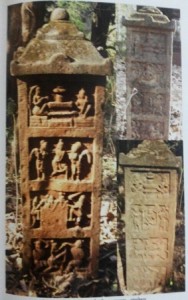
At Degaon in Raigad district is a Hero Stone showing a ten headed enemy, but Ram, Seeta, Lakshman and Hanuman are absent. Blood from the severed fingers of the enemy is shown dripping over a Shivalinga placed below. Tetvilkar dates this Veergal to Shivaji’s times on account of the similarities with the known event in Shivaji’s life.

(Pictures courtesy Shubha Khandekar)

 

Categories
Event

The good doctor has come to Mumbai

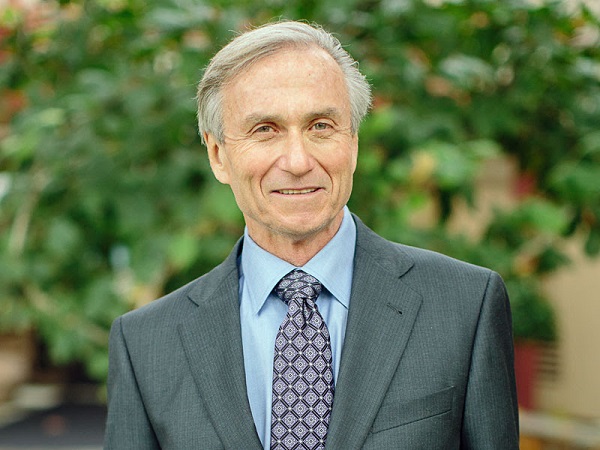
American physicist Dr John Mcdougall is in the city to speak about reversing disease through nutrition – Mumbaikars, please note.
by The McDougall Dietary Program for Health and Reversal of Disease

The human body is a perfect machine. However it’s the wrong input that causes the problem. Just as putting low-quality petrol affects the functioning of a vehicle, similarly a wrong diet is the cause behind most diseases, including diabetes and arthritis. With India being the diabetes capital of the world, we need to listen to this philosophy.

With 30 years of research and successful results backing him, Dr Mcdougall has helped thousands of people reverse degenerative diseases simply by adapting a low-fat, whole foods, plant based, vegan diet.

It all started when he himself in 1965, at the age of 18 suffered from a massive stroke, which left him completely paralysed on the left side for two weeks. This set him thinking and upon research he realized that the American diet was the major cause behind his ill state of health. He says his mission in life is to spread awareness of how we can regain our health simply by eating the right kind of food. He has written several research papers, best-sellers and holds regular and residential programs which are always house-full.

Today Dr Mcdougall can be credited with actually revolutionising health care by use of a dietary program for preventing and reversing an entire gamut of health problems like obesity, diabetes mellitus, hypertension, peptic ulcer, arthritis, asthma, autoimmune disorders etc. He believes that people should look and feel great for a lifetime. He has helped literally thousands of people, many who had lost all hope, to get back to health and be free of or greatly reduce the need for medicines.

Mumbaikars wishing to listen to Dr Mcdougall’s talks can attend any of the events as per their convenience. There is no registration required and the talks are free:

29 July: 5 – 7 pmJai Hind College Auditorium, A road, Marine Drive. Near Churchgate station

30 July: 12 – 1.30 pmGlobal hospital, Parel (for doctors)

30 July: 2.30 – 4.30 pm: Nanavati Hospital Auditorium, Vile Parle (for doctors)

30 July: 5.30 – 7.30 pm: ADAPT (formerly The Spastics Society of India), KC Marg, Next to Rang Sharda Hotel,diagonally opposite Lilavati hospital, Bandra Reclamation, Bandra (West)

31 July: 2 – 4 pm: Saifee Hospital, near Churni Road Station (for doctors)

Categories
Watch

Watch: ‘Waiting for a storm’

The Films Division of India will premiere Prachi Mokashi’s debut film that documents the lives of people farming on ‘chars’.
by Medha Kulkarni | @VeryMedha on Twitter

This Saturday, July 26, 2014, the Films Division of India is hosting the premiere of a film by Prachi Mokashi, titled Waiting For a Storm. Made this year, This film was made possible with an Early Career Fellowship awarded by the School of Media and Cultural Studies, TISS and is Mokashi’s first film.

A young, independent India believed in the panacea of technology to address the crisis that nature often imposed on the nation. The Films Division archives has painstakingly documented that vision by making films on the building of dams, on the production and use of fertilisers and pesticides, on modern farming techniques and use of high yielding seeds. The 1957 film, Defence Of Dibrugarh, produced by Films Division, documents the taming of the river Brahmaputra – therein lies the solution to the crisis of this tempestuous river.

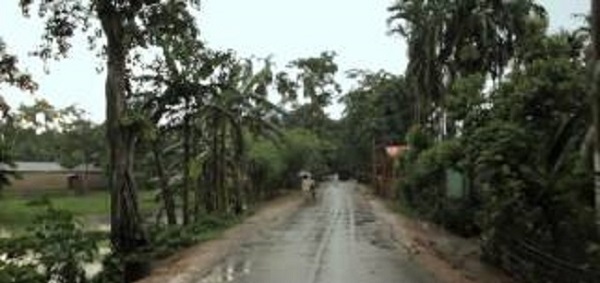
Prachi Mokashi sets out to the document the lives of the people who live and farm on chars, the temporary islands formed by the ever shifting Brahmaputra. The river is not the adversary, not for the filmmaker and nor for the subjects of her film. Waiting For A Storm tries to inhabit life alongside the river through breathtaking visuals and a rhythm that draws from the ebb and flow of the river. Within this world, the filmmaker’s gaze rests on embattled lives of those who live on chars and the issues of citizenship and ownership that marks their existence.

The 14 minute film, Defence Of Dibrugarh, will be screened first, followed by Prachi’s film.

Head to RR II Theatre, 6th floor, Phase II building, Films Division, Peddar Road. The films will be screened on July 26, 2014 at 4 pm. Entry is free and on a first-come-first-seated basis.


Categories
Tech

Spice launches Stellar 520 and Stellar 526

Reasonably priced at Rs 8,999 and Rs 11,499, the Android smartphones are dual SIM devices in the mStellar 526id range segment.
by Manik Kakra | @Manik_K on Twitter

Spice today launched two new Android 4.4.2 smartphones – Stellar 526 and Stellar 520 – in the mid-range segment.

The Stellar 520 (in pic above) is a dual-SIM (3G + 3G) device that sports a 5-inch HD (OGS laminated) screen, and is powered by a 1.3 GHz quad-core processor with 1 GB of RAM. On the back, there is an 8 MP (AF) camera; while the front has a 2 MP camera. The phone packs a 2,000 mAh battery cell and comes with 4 GB of on-board storage, which is expandable up to 32 GB. The phone comes in yellow and red colour options. It is equipped with 3G, Bluetooth 3.0, WiFi, and A-GPS.

The Stellar 526 Iin pic on left) is a dual-SIM (3G + 2G) smartphone that sports a 5-inch HD screen, and has a 1.5 GHz hexa-core processor with Mali 450 GPU, along with 1 GB of RAM. The back has an 8 MP (AF) camera that can shoot 60 FPS videos; while the front has a 3.2 MP camera. Powered by a 2,500 mAh battery unit, the Stellar 526 comes loaded with 8 GB of storage, which is expandable up to 32 GB. Connectivity-wise, there is Bluetooth 4.0, (dual band) WiFi, 3G, FM Radio, and A-GPS. It comes in white-silver colour.

Both these devices are available as of today from retail stores as well as online portals. While the Stellar 520 is priced at Rs 8,999, the Stellar 526 is available for Rs 11,499.

Exit mobile version