Categories
Watch

Mumbai artist’s interpretation of ‘waiting’

Mamta Chitnis Sen’s works address the theme of women left behind to look after family lands in Sawantwadi’s farming regions.
by The Editors | editor@themetrognome.in

This is one exhibition you simply must attend – it comprises some lovely paintings, with a very sensitive theme titled ‘The Wait’.

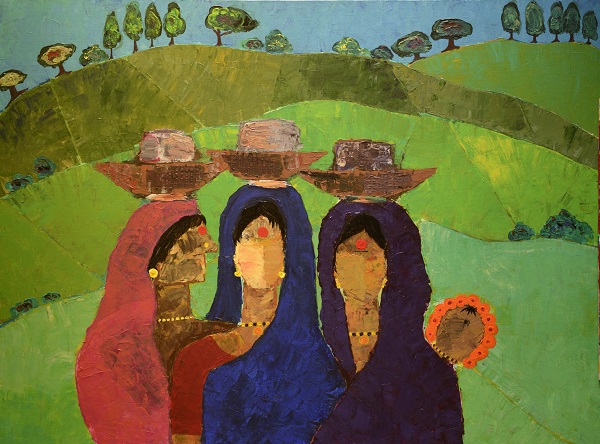
Mumbai-based journalist, writer and artist Mamta Chitnis Sen has put together ‘The Wait’, a collection of her original paintings rooted in Sawantwadi, a former princely state and part of the Konkan belt of western coast of Maharashtra. Sawantwadi has the highest numbers of farmers who have abandoned their lands and are working as migrants in neighbouring cities. The women and children left behind by their husbands end up as mere ‘protectors’ of the lands they once toiled in. The lands often are sold off or abandoned, empty and deserted.
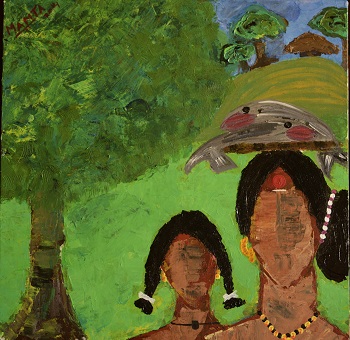
Fisherwoman and daughter_Acrylic on Canvas_24 in x 24 inThe works, acrylics of canvas, highlight the plight of these women and their circumstances.

Born and brought up in Mumbai, the subjects of Mamta Chitnis Sen’s works are concentrated on rural Maharashtra. A journalist and an extensive traveller, Mamta, an alumni of Sir JJ School of Art has been instrumental in creating paintings in oils and acrylics documenting the slow yet disappearing lives and identity of people, especially women living in rural India.

A palette knife artist, Mamta aims to showcase the rustic rural landscape of interior India, specially Maharashtra and Bengal through her works, which is losing itself to the ills of urbanisation.

Speaking to The Metrognome, Mamta says, “It took be nearly three years to research this subject and I actually began painting work related to it in 2013. This is the first of my Sawantwadi series.

I first noticed the subject of women merely ending up as caretakers of their own lands during my travels to interiors of Maharashtra (while reporting for my newspaper), specially the Konkan belt. I saw that in key areas of Konkan beyond Ratnagiri and Sawantwadi (which is my native place) the second generation of farmers are opting out of farming. In Sawantwadi, a large numbers of horticulture farmers preferred desk jobs in ‘large companies’ than compared to taking up farming which they believed was a tedious affair.”

She adds that unseasonal rains, too, was another reason for their growing disinterest. “Most traditional farming families including newly-married young sons in their late 20s, who were hence The Wait2_18in x 18in_acrylic on canvaslooking for alternate revenues of income. The escalating price of lands in the region was yet another reason for this switch. Many second generation families in hope of easy money were either selling off their ancestral property or keeping them on hold hoping to get more money for it.”
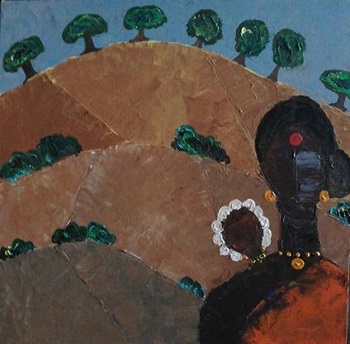
Hence while the men travel to cities, the women who are left behind with their kids to either toil on some part of the land to avail of Government benefits or merely as caretakers.

Most women in rural areas, despite being educated up to primary level, are devoid of any other skills or education on how to convert use the empty land to their benefit. “Further, many local builders often swindle them of their share while the men are away,” she says.

The exhibition is on at Mumbai Art By Artists, Prince of Wales Museum, Coomarswamy Hall, Colaba, from January 23 to 25, 2015 between 11 am and 6 pm. Entry is free.

(Pictures courtesy Mamta Chitnis Sen)
Categories
Event

Love fashion? This forum is for you

The Whistling Woods Neeta Lulla School of Fashion will host its 2nd ‘The Future of Fashion’ forum tomorrow in Mumbai.
by The Editors | editor@themetrognome.in

For those seriously interested in fashion and wanting to make a career in the field, comes this wonderful opportunity to interact with and hear from industry stalwarts in Mumbai.

WWNL 1.22The Whistling Woods Neeta Lulla School of Fashion will present ‘The Future of Fashion Forum’ tomorrow, January 24, 2015, an event for all those aspiring to make a mark in the ever-evolving fashion industry. This school of fashion located at Film City, Goregaon, claims to be the first to conduct this kind of an event. Neeta Lulla, Subhash Ghai, and Meghna Ghai Puri will inaugurate the event along with fashion veteran Hemant Trivedi.

The forum is aimed at offering an in-depth perspective to fashion aspirants on how to launch a career in fashion across vocations like fashion designing, styling and trend spotting. The panel will include some of the renowned names from the world of fashion like Sonaakshi Raaj and Falguni & Shane – top designers of the India fashion industry. The event will also feature personalities like Vinay Nadkarni, Anjana Sharma, Payal Singhal, Gaviin Miguel, Mohini Boparai, Nisha Jhangiani, Ken Fernandez, Shubhika Davda, Arden Dsouza, Anna Romanczuk, Darshini Lal, Gaurang Shah, and Bhamini Subrhamanium as guest speakers, amongst others. The forum will comprise of various panel discussions where the distinguished names from the industry will share their insights on the rapidly evolving fashion and retail industry. The topics for panel discussion include ‘Developing the Fashion Eco System’, ‘Changing Face of Fashion’, ‘Insight by New Age Designers’, ‘Visual Merchandising’, ‘Masterclass – Indian Textiles Blend with Contemporary Fashion’ and ‘Master Haute Couture’.

neeta lullaNeeta Lulla (in pic on left) says, “This is the second year of the Future of Fashion Forum and building on the grand success of last year, the forum this year is going to be grander with stalwarts from the industry gracing us with their presence and interacting with aspirants wanting to create a niche in the ever-evolving fashion industry.”

Entry to the event is free and open to all. The event will take place on Saturday, January 24, between 10 am to 6 pm. The fashion school is located at Whistling Woods International, Filmcity Complex, Goregaon (E), Mumbai – 400065.

Categories
Event

Mumbai gets a new film club, courtesy Osianama

Two new clubs – for cinema and vintage automobiles – come to Mumbai, with a premiere of Hindi film ‘Baby’.
by The Editors | editor@themetrognome.in

After months of deliberation, Mumbai has finally been chosen as the first venue for Osianama, India’s pioneering cultural centre, with the launch of the first two (of nine) clubs focusing on Indian and world cinema, and vintage and classic automobiles, at the iconic art-deco Liberty Cinema.

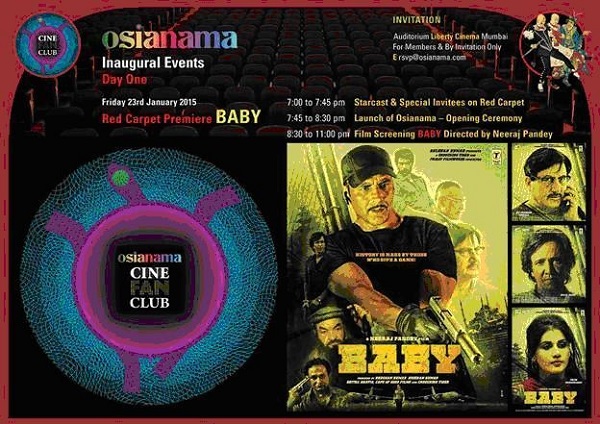
Tomorrow, January 23, will see Osianama inaugurate the film ‘club’, titled ‘Cinefan’ with the premiere of Neeraj Pandey’s film, Baby. On Sunday, January 25, Pandey and the film’s lead actor Anupam Kher will also conduct a masterclass for film enthusiasts and students.

Osianama plans to be the nerve-centre for the exhibition, edutainment, screening and knowledge for the arts, auto, cinema, culture and the preservation of its heritage. It complements the vast emerging online knowledgebase – osianama.com – “to rebuild the educational global platform for India’s cultural civilisation”.

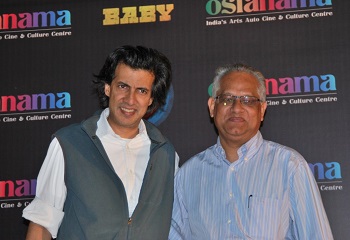
Osianama Chairman Neville TuliNeville Tuli, Chairman of Osianama, states that Osianama embraces nine membership-driven cultural clubs under its umbrella which will be inaugurated step by step between January 2015 and March 2016. The Osianama ‘clubs’ are Vintage and Classic Automobiles; Cinefan; Antiquities and Fine Arts Appreciation; Books and Poetry; Photography; Architectural Heritage and Preservation; All Creatures Great and Small and Animal Welfare; Design, Craft and Popular Cultures, and Sporting Heritage.

“Osianama is starting with the launch of the first two clubs immediately, followed by the Fine Arts Club and Books and Poetry Club in April, when our activities begin on a daily basis,” Tuli explains.

The Osianama Cinefan Club will host premieres of over 50 top quality films from India and the best of world cinema in its first year. It will also organise 12 major exhibitions (such as On Orson Welles, Clark Gable, Marlon Brando, Charlie Chaplin, Buster Keaton, the Marx Brothers, etc. apart from exhibiting Polish poster design from the 1950-70s, Japanese aesthetics and the Samurai, Sci-Fi and horror designs of the 1950-60s, and also host related discussions, master classes and debates with a focus on Hollywood, Indian and world cinema.

Tuli says, “This has been a pivotal institutional step of one’s vision for the past 20 years. Few, if any, cultural institutions, have been built in this world with such independence from patronage, sponsorship and donations. We have always envisaged art, culture and its heritage as India’s greatest assets which will balance and nurture both economic and religious forces once having built its own material infrastructure with daily financial independence.”

Categories
Do

Fathers and sons, pad up for this tourney

South Mumbai gaming lounge is currently running an 8-over cricket tourney for fathers and sons, a wonderful grand prize awaits.
by The Editors | editor@themetrognome.in

In a city starved of space for children and adults to play in, and with our hectic lives making even daily conversation possible, this is a great opportunity for some familial bonding.

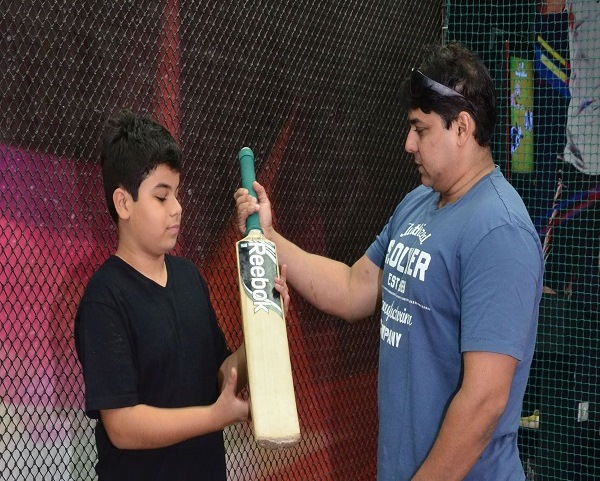
The Lower Parel-based Smaaash gaming lounge is currently running ‘The Father and Son Cricket Tournament’ till January 31, 2015. Already, the tournament has drawn in huge numbers, with even celebrities trooping in to play cricket with their sons.

What’s more, the perfect father-son duo will get to meet cricket legend Sachin Tendulkar.

All you have to do is form a father-son team, play in the relevant age categories and get a chance to meet Sachin. Over the course of the month, top teams will be identified and will be selected for the grand prize. These will include the top 3 scoring father-son pairs from each age category. The tournament involves a 6-over match at Smaaash Cricket.

Age categories include Under 10, Under 12, Under 14 and Under 16

Head to Smaaash, Kamala Mills Compound, Gate No 4, Lower Parel. There is a registration fee of Rs. 800 for 8 overs (2 overs are for practice and 6 overs are counted as tournament). Call 022 4914 3143 for details.

Categories
Event

Maharashtra rocks to Prof Walter Spink

The feted scholar and historian took centrestage at the 2nd Annual Archaeology of Maharashtra conference, with several luminaries in attendance.
by Shubha Khandekar

It was a ruthless demolition of the Ganges-centric view of Indian history and of a Shivaji-centric one of Maharashtara, as speaker after speaker, both eminent and green-horns, rose to recreate the enchanted and enchanting, but unsung cosmos humming with life, incredibly rich materially and culturally, in and around the rock cut caves of Maharashtra, spanning nearly a millennium of artistic activity in and around the region.

The raison d’être of this devastation process was Prof Walter Spink, eminent scholar and professor emeritus of the History of Art at the University of Michigan, Ann Arbor, in whose honour the Centre for Extra Mural Studies (CEMS) of the Mumbai University and the India Study Centre (INSTUCEN) jointly organised ‘Rock-cut Caves of Maharashtra,’ the 2-day 2nd Annual Archaeology of Maharashtra (International) Conference, at the Kalina campus of Mumbai University on January 17 and 18, 2015. The conference was part of the annual Archaeology Day celebrations pioneered by the CEMS in 2012.

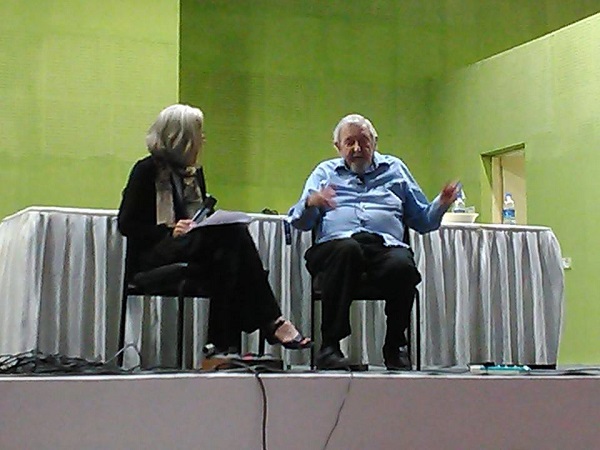
Spink“It is staggering to see how much we don’t know,” said Prof Spink, who has just put down in seven volumes (8th forthcoming), 60 years of his intensive and seminal research on Ajanta, extolled at the valedictory session as ‘Ajanta-charita’ (a biography of Ajanta) by Dr Geri Malandra, author of The Unfolding of a Mandala, on the evolution of art forms at Ellora, who engaged him in a one-on-one at the end of day one. Asked what more needs to be done on Ajanta, “volume 9,” he replied, without batting an eyelid. He will be 87 this February 2015.

Prof Spink’s best known – and most controversial – contribution to the field, is his whittling down of the chronology of the second phase of the Ajanta Caves to a mere 15 years, from 462 to 477 of the Common Era. During this brief span political disturbance drove a frenzied spate of devotional activity, culminating in the exquisite paintings and sculpture at Ajanta, now a UNESCO World Heritage site. The assassination of Emperor Harishena of the Vakataka dynasty, according to Prof Spink, brought the carving as well as the golden age of Indian history, to an abrupt end.

Prof Spink made use of details of circumstantial evidence at Ajanta to arrive at his conclusions. His keynote address provided a brief but razor sharp glimpse into the unique nature and depth of his inquiry. He showed how his study of some 180 doors (that no longer exist) and his investigation into how they were hung, helped him establish the relative chronology of the caves with fool-proof accuracy.

Reconstruction of chronology is a major challenge for ancient Indian history because the original sources are often muddled, misleading or mum.

Of the 1200 rock cut caves in India, no less than 1000 are located in Maharashtra, because the hard volcanic basalt rock from which the monasteries, temples, and intricate carvings are made is in abundance in the region and countless poets have eulogised this region as a land of rocks. “Rock cut art of Maharashtra has played a major role in the development of varied art forms all over the Deccan and beyond,” said Dr A P Jamkhedkar, former director of state archaeology and renowned scholar of art history, Jainism, epigraphy and archaeology. “And it is Walter’s phenomenal energy, methodological precision and passion that have inspired two generations of scholars to explore the vast pre-Shivaji and extra-Gangetic span of history, which we can see blossoming with such extraordinary vibrancy at this conference.”

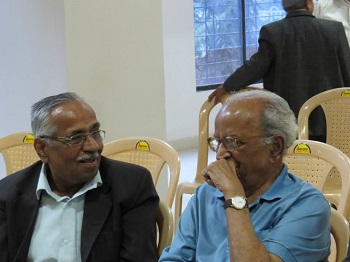
Prof Spink is admired and respected as much for his academic integrity and methodological purity as for his endearing simplicity and gentle, overabundant sense of humour. Every speaker had an Stalwarts at the conferenceanecdote or two of his or her personal encounter with Prof Spink to share with the audience, showing the warm though professional bonds he has forged and nurtured over the past six decades. Thus, while Prof M K Dhavalikar, former director of Deccan College celebrated the golden jubilee of his association with Prof Spink, Dr Alone of JNU, who disagrees with Prof Spink on many issues, recalled how the octogenarian harangued him into reading up before coming for discussions at the now famous site seminars initiated by Prof Spink. Dr Kurush Dalal of the newly set up Centre for Archaeology at the CEMS recalled how Prof Spink pointed his flashlight at a small fragment of a chisel, left in a dingy corner of a barely begun cave at Ajanta by an artisan some 1500 years ago, and Dr Manjiri Bhalerao gratefully acknowledged that it was Prof. Spink’s work that drove her up rocks and into them.

Indeed, boundaries of time and space dissolved as the romance of rock cut art and its derivatives in lands as far as Sri Lanka, slowly unfolded before the rapturous audience. Dr Shreekant Pradhan’s presentation magically transformed the paintings of Ajanta into the sculpture of Amaravati and vice versa in a seamless blend, while Dr Anura Manatunga of Sri Lanka transported the audience to the emerald island to witness the debt that Sigiriya owes to Ajanta. Dr G K Mane credited the origin of rock cut caves to the preliterate megalithic societies in Vidarbha while Dr Abhijit Dandekar showed how sculpture nails down the rise of monks as intermediaries between Lord Buddha and the lay devotee. Dr Viraj Shah showed how the Jaina caves were sustained more with popular support as against the royal patronage received by the Buddhist caves whereas Dr Tejas Garge elaborated on the rock-cut moat around the Daulatabad fort, the one and only instance of traditional skills of regional craftsmen being harnessed for the first time for a military purpose during mediaeval times.

This explosion of scholarly activity is indeed a tribute that Prof Spink has richly earned. One hopes fondly, however, for the day when academic knowledge would become popular folklore, and that’s when scholarship will be truly vindicated.

Categories
Watch

Bangladesh comes to Mumbai

This dance performance addresses the issue of sweat shops and why boycotting their products is not such a good idea.
by The Editors | editor@themetrognome.in

This evening, be prepared to take a look at ‘sweat shops’ through a mesmerising dance performance.

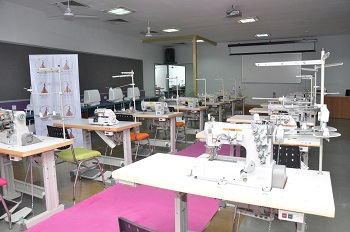
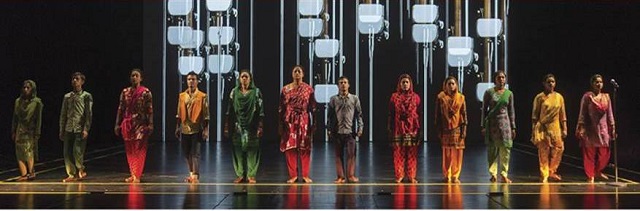
Titled ‘Made in Bangladesh’, the dance is choreographed by Helena Waldmann and Vikram Iyengar, with music set by Daniel Dorsch and Hans Narva. The performance is based on the theme ‘Dance and Exploitation’, and explores the notorious world of the garment industry and the supposedly legitimate artistic ‘sweat shop’ of a dance studio – both dancers and seamstresses work at the expense of their health, fobbed off with low wages and at constant risk of losing their jobs to someone even younger, even more flexible. And yet, still both industries urgently ask us all not to boycott their products.

Head to the Jamshed Bhabha Theatre, NCPA this evening at 7 pm. Free entry passes are available at the NCPA and Max Mueller Bhavan, Mumbai.

Exit mobile version