Categories
Tech

Review: Moto E (2nd Generation)

Motorola’s low-range phone is a good device, but buyers in this segment may opt for other models with enhanced features.
by Manik Kakra | @Manik_K on Twitter

It would not be wrong to say Motorola’s comeback has been a successful one, but the company has been doing really well to storm into at least the budget segment of the smartphone market. With the original Moto E and Moto G, it was clear that Motorola was here to make an impact, giving a good experience without costing a bomb. With the new Moto E, the objective seems to be the same, but expectations are now higher. Does the Moto E (2nd Generation) live up to those expectations or not? Let’s try to find out.

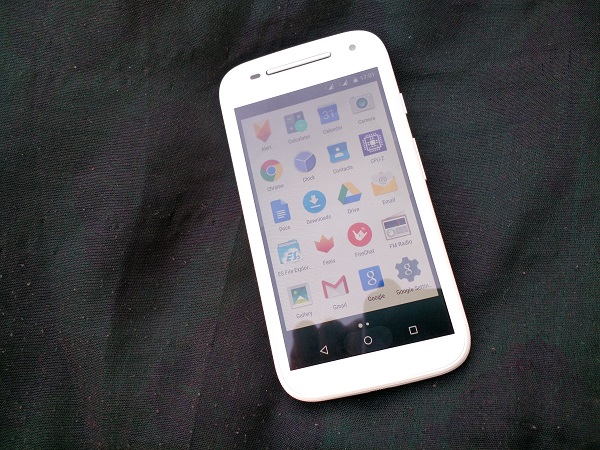
The looks. Motorola’s new Moto E (XT1506) isn’t too different from the original Moto E in terms of looks and feel. It follows the familiar Motorola curved back design, except the new Moto E doesn’t have a removable back cover; instead it has a unique rubberised band across the edges, covering the micro SIM card and microSD card slots. You can change this band with another band of your colour choice (called Motorola Bands).

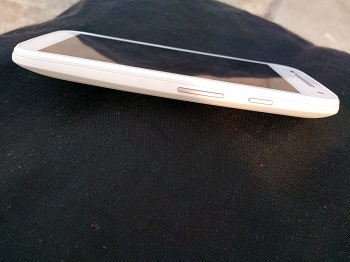
The entire front panel is covered with Gorilla Glass 3 and the screen has anti-smudge coating that is quite effective. On the front, the big silver stereo loudspeaker and ear-speaker grill stand out, sitting next to the front-facing VFA camera and sensors; while there are no physical keys at the screen’s bottom. On the right side panel, you have volume rockers and Power/Lock key, which are tactile and firm to press.
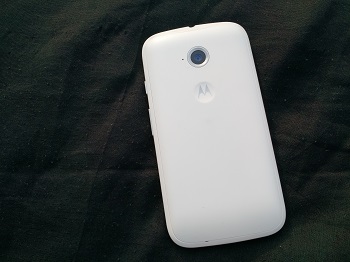
At the top, there’s the 3.5mm headset jack, and the microUSB sits at the bottom. On the rear is the Motorola logo inside a little dimple, while the 5 MP rear camera (encircled in a chrome ring) is placed on the top-middle. The phone is compact, nicely built with no loose points.

Screen. The device features a 4.5-inch (540 x 960) IPS LCD, so it’s a little bigger than its predecessor but has the same resolution. The screen has good colours and viewing angles for a phone at this budget. It’s quite bright but just about okay outdoors. Where it lacks is sharp resolution for images and videos. It’s probably the biggest downside to the new Moto E, not bumping the screen resolution or improving outdoor visibility when there are better screens on phones priced similarly.

Camera. Here are few sample images from the phone’s 5MP rear camera (f/2.2).

The camera takes decent bright images outdoors, but struggles in low-light, whether it is to focus or capture details. It can capture still shots quite well, but don’t expect good performance for objects on the move. The camera app is similar to the previous Motorola Camera app, smooth in use, with basic options like HDR and Panorama to choose from. By default, it captures by a tap, but you can choose to focus by a tap and then capture an image by tapping again.

Audio and reception. Basics like call quality, dual SIM handling, 3G, WiFi and Bluetooth 4.0 connectivity are all in place. In-ear call audio is quite loud and clear, while network reception was never a problem throughout my usage. Audio quality from the front-facing stereo loudspeaker is actually pretty good, and one of the loudest outputs from a phone in this price category, so your audio needs for video and games have been taken care of well. The in-ear headsets, though, are just about okay, which is what you would expect from a budget smartphone.

Battery. As far as battery is concerned, the Moto E has a 2,390 mAh battery unit, and it lasted me about 18 hours on moderate usage. With two SIM cards in use, battery life decreased by two hours. The phone was kept at 30 per cent brightness with Email, Twitter, a few calls and music in use.

Software and performance. The phone runs on Android 5.0.2. Under the hood, there is the Qualcomm Snapdragon 200 (1.2 GHz quad-core processor, Adreno 302 GPU) coupled with 1 GB of RAM. In general, the new Moto E is reasonable. I wasn’t really blown away with how it fared in day to day usage. The original Moto E, running Android 4.4, was noticeably snappier. The new Moto E struggles slightly while running a few apps at once or while switching between a couple of heavy apps. It might be because of the new Android Lollipop and how it is more focused on animations and design, but I won’t call it the smoothest Android phone out there.
The new Android 5.0 OS is really refreshing and better-looking than Android has been. With flatter Menu icons, status icons, Settings, UI elements, there’s Material Design everywhere. The notification bar shows you notifications in one swipe and you have to either swipe with two fingers to swipe once again to access quick toggle buttons. You can now check and access notifications from the Lock screen, though Widgets are not supported on the Lock screen. Volume Settings have also been changed a bit, as you can now choose what type of alerts are allowed to notify you or not. There’s obviously the Google Now launcher in place with Google Now cards accessible by just swiping left to right on main Home screen.

The style of pop-up dialogue box, the dialogue box (appears near the bottom) have also changed and look much better now. There’s also multi-user support, so you can switch to Guest when you are giving your phone away to somebody and don’t want them to have access to your phone’s data.

Motorola Display is on this phone; as soon as you pick the phone, the Lock screen previews any notifications and you can access the relevant message right from there. There’s no need to unlock and light the whole screen up. Very neatly done, but if you already have the phone in your hand, you would have to unlock it and Moto Display doesn’t work then. The user gets a little under 5 GB of storage space, which is expandable up to 32 GB via a microSD card. Motorola hasn’t touched or changed stock Android much, as expected, but has done the usual and a few new touches to keep the experience good.

To sum up, the new Moto E (3G) is a decent buy at Rs 6,490, but it seems to lose out when compared to new phones in the Indian market, and even when you compare it to its predecessor. Still, it is a good phone for somebody buying their first Android smartphone and not wanting to shell out a lot. However, potential buyers in this price range are looking for much, so don’t be surprised if this phone is overlooked for a phone with a better overall package – even the Moto E’s 4G variant.


Categories
Do

Get into a ‘curator se charcha’ at Bhau Daji Lad Museum

Photographer Pa Madhavan invites Mumbai to discuss his curated exhibition ‘The Whole World is My World, Humanity is My Fraternity’.
by The Editors | editor@themetrognome.in

Bhau Daji Lad Museum in Byculla is currently hosting the wonderful photography exhibition, ‘The Whole World is My World, Humanity is My Fraternity’, which is a collection of works by 20 artists. This exhibition is the result of a worldwide ‘Call For Entries’ by FOCUS Photography for photographers to submit work on the festival’s theme. Photographers were invited to explore, investigate and visualise the ‘cultural crossover’ that has given rise to new forms of hybridisation and homogenisation of culture. Works of 20 selected photographers from around the world are on display, chosen by an international jury comprising of London-based photographer Suki Dhanda, Indian artist, writer, activist and curator Sunil Gupta, photographer Isaac Pereira and photographer and Founder of Ojo de Lata, Karlo Sosa.

Focus Festival 2015The exhibition is curated by Pa. Madhavan, Founder of the Wanted Series and Executive Director of the Goa Centre for Alternative Photography.

In an interesting twist, Madhavan invites Mumbaikars coming to the exhibition to sit down and have a chat with him about the photographs on display. He says, “You can find me sitting in the corner quietly reading a book on Mahatma Gandhi. You are most welcome to take a seat next to me. We exchange cards, introduce ourselves and ….let’s start the charcha.” He will talk to visitors about his kind of curation and photography, the philosophy behind the curation and his understanding of photography. “At the same time I would like to hear about their kind of photography and their understanding about the images in the exhibition. We may disagree, debate and confront each other,” he says.

He also invites visitors to walk around the gallery with him and talk about the images.

The exhibition is only only till Thursday, March 26, till 3 pm.

(Picture courtesy en.wikipedia.org)

Categories
Tech

Review: Honor 4X by Huawei

Huawei brings two new Android smartphones in the Indian market. We review the mid-range Honor 4X and come away impressed.
by Manik Kakra | @Manik_K on Twitter

Huawei has been trying to make a comeback into the Indian market for a few months now. The company launched the Honor 6 last year, and seemed to have got a decent response. It is selling quite well, but Huawei probably needs much more. Now, it has come up with two new Android smartphones under its Honor series, which is how it plans to brand itself in India – Honor 4X and Honor 6 Plus. Let’s take a look at the Honor 4X, that is priced at Rs 10,499.

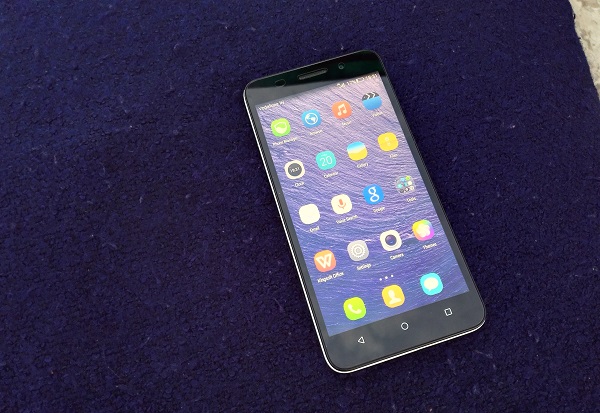
The looks. Huawei’s Honor 4X is not a small phone to hold. With a 5.5-inch HD display, weighing 165 grams and thick bezels on the side, it isn’t a compact phone. The phone follows a white and black colour scheme on the back and front, respectively. The back cover extends to the sides, which sport the white volume rocker and grey Power/Lock key on the right, while the left side panel is left plain.

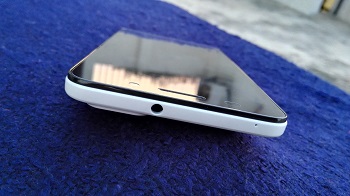
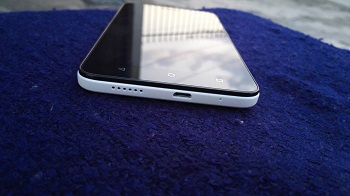
Removing the cover gives you access the two SIM card slots (micro SIM cards) and the sealed battery unit. Below the screen you see three touch White-marked keys – Back, Home, and Menu/ Options (going from left to right). Above the screen are the ear speaker grill, 8 MP camera and sensors tucked near to the LED notification. While the front has glass on it, the white plastic back has a nice diagonal pattern, plus, with the bold Honor branding in the middle and circled (slightly protruding) camera sensor with the LED flash, the rear side appears simple. The microUSB port sits at the bottom next to the loudspeaker and primary mic, while the top has the 3.5 mm headset jack and secondary mic. Most people will find this phone difficult to carry around.

Screen. The phone boasts a 5.5-inch (1280 x 720) IPS LCD. It is quite sharp, has decent colour depth, but where it lacks is when used under direct sunlight. Due to its reflective nature, the screen needs to be used at a high brightness level. Plus, it gets a lot of smudges and fingerprints in a matter of minutes, so keep a spare wipe cloth handy. But, on the other hand, it isn’t a bad screen at all for watching HD videos and is decent for viewing high quality images.

Camera. Check out these sample images. The 13 MP camera can take detailed shots. You can choose whether you want a 13 MP or a 10 MP image from the camera settings, along with a few other basic options. Contrast level is decent and colours come out nicely in these photos. But the camera gives grainy photos in low light, struggling to perform in dark conditions. This seems to be a common factor in mid-range phones. Having said that, when it comes to daylight performance, the Honor 4X’s camera is among the best in this price segment and most people should find it good enough.

Call quality and network. The phone handles call quality and network reception really well. WiFi, Bluetooth work fine, but USB OTG isn’t supported as of now. Audio quality from the loudspeaker at the bottom is also not bad. Users may need to put a hand over the speaker while watching a video or playing a game thanks to its placement, but the actual output is decent for these two uses. There’s no bundled headset with the phone.

Battery. The phone is equipped with a 3,000 mAh battery unit. More often than not, it required to be charged within a day. With brightness level set at 40 per cent, using one SIM card, Email, Twitter, a few minutes of videos and surfing the Web, the phone struggled to last a full day. It gave about 18 hours of juice, which you can expand using the extreme power-saving mode, giving you only basic functions in hand. I was expecting a bit more on the battery side of things.

Software and performance. The Honor 4X is powered by the Snapdragon 410 SoC (1.2 GHz quad-core processor, Adreno 306 GPU), with 2 GB of RAM. Running on Android 4.4.2, it comes loaded with Huawei’s Emotion UI on top. The user gets about 4 GB of storage space, which is expandable via a microSD card. The OS follows Home screen pattern with all the icons and widgets on spread across your Home screens with no separate app launcher. There are pre-loaded apps in folders, which are not allowed to be renamed. You can create and name your own folders, though.

Long-pressing on any Home screen gives you the option to change its wallpaper, swiping effect, put a widget and change icon layout (4×5 or 4×4).The notification bar and toggle buttons look black on white, completely different from any other Android OEM skin. All your notifications are placed on the left panel, and swiping right to left lands you to all the toggle buttons. All the icons, third-party and Huawei and Google apps, get redesigned into circular icons, as per the Emotion UI.

This was one of my gripes with the UI. A lot of apps’ icons seemed weird (as per your chosen theme for icons) and weren’t any good with this circular trend (default style). It would have been much better had icons remained untouched and allowed to remain as they originally are. For customisation, you can choose a particular theme (Lock screen and Home screen), and choose icons from another theme or font style from another, certainly a nice option to have for users looking to edit just about everything on their phone’s OS.

The Lock screen gives you a glance to your notifications. You can unlock it by swiping anywhere in the middle, swiping up from the bottom on the Lock screen brings up basic toggle switches (similar to iOS). There’s also a Suspend button that gives you functionality of Home button and Menu button (again similar to iOS’s Accessibility feature). The phone supports double tap to wake and it worked well. As far as the general performance is concerned, I found the phone to be fairly responsive and able to handle apps and tasks well. Swiping between Home screens and scrolling through Settings aren’t a problem. While I wouldn’t call it being a very smooth device (it stutters a bit when using multiple tabs with an app like Email opened), it isn’t a slouch and can handle most things without struggling.

Wrapping up our review, the Honor 4X has a good screen, decent battery life, capable camera and good performance from an otherwise okay OS. By now, there are already a lot of good phones available in this price range, from the likes of Motorola and Xiaomi, and this is why the Honor 4X may find it hard to prove its worth. It could enhance its position a bit by providing Android 5.0 and further updates quicker than they have in the past. There’s not much wrong with the phone, but how it performs in an already competitive price segment in a long run remains to be seen.

Categories
Do

Aarey says ‘Bachao!’

An RJ with Radio City writes about her station’s ongoing campaign to save Mumbai’s prized green lung – Aarey colony.
Archana Paniaby Archana Pania

Mumbai has two sacrosanct areas that are green covers of the city, Mahim Nature Park and Sanjay Gandhi National Park. The third could have would have been Äarey Forest, but too many have settled in, tried to make it a residential area, while forest retreat hotels have been built therein and very little has been done to maintain the sanctity of the park.

Since its high connectivity to the western suburbs and Powai, the idea of making it pivotal to the real estate agents who look for lands like vultures look for rodents, Aarey is being eyed as the next hub for commercial office space generation, a large residential base and the Metro Phase III shed to be built into!

At the Radio City morning show ‘Kasa kai Mumbai’, we are huge supporters of progress in Mumbai and we want the city to converted into a world class city – but not at the cost of losing the green lungs of the city! “If Aarey colony’s 2,000+ trees are cut, I am going to leave Mumbai!” said one of our listeners! Hence, if we don’t raise our voices in support of  the trees now, we shall lose the most bio-diverse green cover Mumbai has.

Jackie Shroff, singer Shaan, Dia Mirza and many eminent personalities are all for green cover in Mumbai, and it’s time we show respect to nature, as opposed to ‘development’ in the name of progress and take the green cover away. Singer, lyricist, actor, composer Piyush Misra said “A sign of a progressive city is their parks…closer to home, there is Chandigarh or Hyde Park in London…”

Yes, we lost parts of Mulund and the Powai forest to builders, but the least we can do is save whatever is left and help make a clean and green Mumbai – but this seems only to be a text on hoardings, rather than a movement in action!|

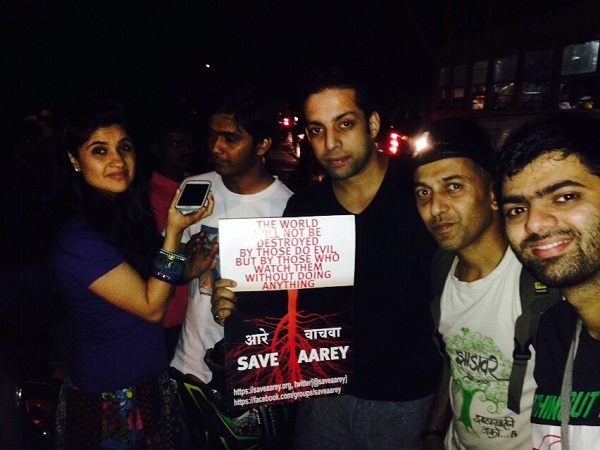
Hence, ‘Radio City ki Treety’ is a campaign where a lot of commoner, where our radio jockeys, Sucharita, Sudarshan, Rohitvir and Gaurav, apart from others, extended their audio signatures on our TREEty!

Join in today, Mumbai. Log on to www.saveaarey.org or simply go to their Facebook page (saveaarey) and make your intent heard. We want our children to carry school bags to school, not oxygen cylinders!

Archana Pania hosts the morning show ‘Kasa kai Mumbai with Salil and Archana’ on Radio City 91.1 along with RJ Salil Acharya. She has been actively campaigning for the cause of saving Aarey. 

What do you want to do to save Aarey? Tell us in the comments section below.

Categories
Tech

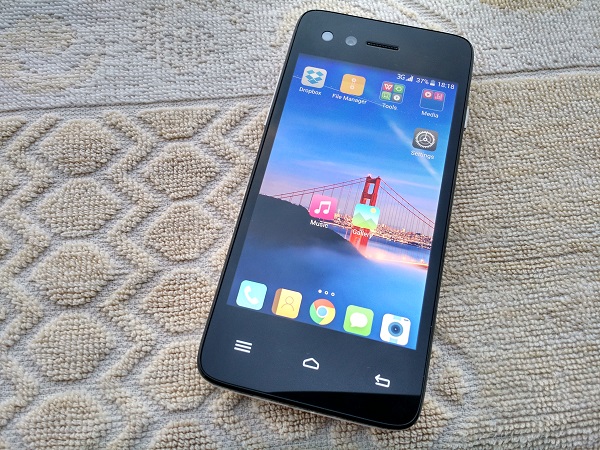
Review: InFocus’s M2 phone

The US firm launches its new device, M2, in the Indian phone market; the device is good at the price.
by Manik Kakra | @Manik_K on Twitter

InFocus, the US-based firm has entered the Indian phone market with the new M2. The company gets its device manufactured from Foxconn and aims at providing a good smartphone at an even lower price point than what’s been available. At Rs 4,999, the price and specifications are tempting, but does it actually deliver?

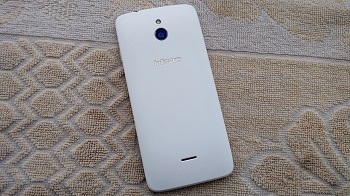
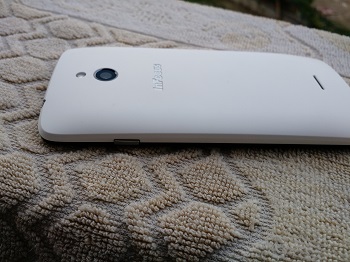
The looks. InFocus’ M2 follows a plain and run-of-the-mill design. The phone has glass all over the front and its rear cover, and which also covers the sides. As soon as you hold the device, you will notice its thick bezel and curve around the back, making it comfortable to hold. On the front, below the 4.2-inch TFT screen are the three touch keys – Menu, Options, Home and Back button – neither of these keys lit up when tapped. While on the top of the screen you have the 8 MP front-facing camera with flash, speaker grill, notification LED and sensors. The back has the 8 MP camera and flash near the top-middle, and loudspeaker placed near the bottom.

On the sides, the volume rocker is placed on the left, and the Power/Lock key on right; these keys feel quite sharp and don’t give a tactile feedback when pressed. The microUSB port and primary mic at the bottom and 3.5mm headset jack and secondary mic are at the top. Removing the back cover gives you access to the two micro SIM card slots and microSD card slot, next to the immovable battery. The phone is not large by today’s standards and is not difficult to carry around. While I won’t call it ‘premium’, it definitely doesn’t appear as a cheap knock-off.

Display. The M2 boasts a 4.2-inch (1280 x 768) LCD, same resolution as on the Nexus 4. The display is to be its biggest selling point. It shows text and images well and isn’t bad for watching HD videos either. Text appears good enough, but struggles a little under direct sunlight. From what other screens I have used from phones under 7,000 bucks, this one seems to be right up there among the brightest and best in terms of colour reproduction. You even get three colour temperature options for the screen, something we have seen on Samsung smartphones for a while.

Audio. Talking about the phone’s audio performance, it didn’t leave as good an impression as the screen quality did. The loudspeaker on the back distorts quite a lot and struggles when used for a video or game. You may feel you’re missing out on sound even after using one hand for coupling the speakers. The bundled headset is okay and better for watching videos. Don’t expect a very good output. InFocus will hopefully give audio more attention next time and put better sound drivers in place. The M2’s call quality and network reception didn’t show any issues. WiFi, Bluetooth, USB OTG function just fine and I didn’t notice any bug against any of them.

Battery. Powered by a 2,010 mAh battery unit, the phone has a decent standby time, but struggles under heavy usage. More often than not, when used for Email, Twitter, a bit of music and calls, you would have to charge it again under 17 hours, keeping one SIM card inserted (even less on 3G) and the brightness level at 30 per cent.

Camera. Here are a few sample images.

The phone’s camera actually takes good shots when in bright light. It does a good job at colour contrast, though when used in low-light, no surprise it struggles and is clearly not meant for clicking subjects in motion. It can shoot full HD videos at 30FPS. The front-facing camera is good enough for your selfie needs with its selfie smile detection and detailed shots. The camera app is simple and smooth to use. Only the usual settings are available.

Software and performance. The device runs on Android 4.4.2 with the company’s own InLife UI on top. Under the hood, there is MediaTek’s MTK6582 (1.3 GHz quad-core processor, Mali 400 GPU) and 1 GB of RAM. The user gets about 5 GB of available space, which you can expand using a microSD card.

The phone handles basic tasks like scrolling or swiping through Home screens and having a single Chrome tab open in background without breaking a sweat. But when you close and open a few apps, open multiple tabs and try scrolling through the OS, the phone clearly struggles and stutters. The notification and toggle buttons can be accessed from the same screen by swiping down. All the icons, Settings and pre-loaded apps are themed around white, pink and blue colours. These look just okay, but certainly not ugly like a few other low-priced Chinese phones do. The pre-loaded apps also work well and should cater to most users using their first Android smartphone. With your Home screens having all the icons and widgets, there’s no separate app launcher.

The lock screen allows you to keep four shortcut icons (similar to HTC phones) and even widgets in place to open them directly from the Lock screen. There’s also a launcher option with large tiles and bigger font size called EZ Launcher. It would be correct to say the phone doesn’t perform very smoothly but just satisfactorily. There’s also InFocus services Account in place, though we couldn’t find any utility for it.

InFocus seems to have done most things well with the M2, considering its price point. It has a good screen, camera and design, but its audio is clearly its shortcoming. It is still to be seen whether the company has provided any service support so far given that even the official website doesn’t mention any service centres or support number. If InFocus can get this after-sale part correct from here on, the M2 can give them a great start and make its presence felt in the online retail space.

Categories
Watch

Film screening: ‘My name is Salt’

Watch the critically acclaimed and multiple award winning documentary ‘My name is Salt’ this evening; being screened at the NCPA.
by The Editors | editor@themetrognome.in

A powerful story well told, has an impact like no other.

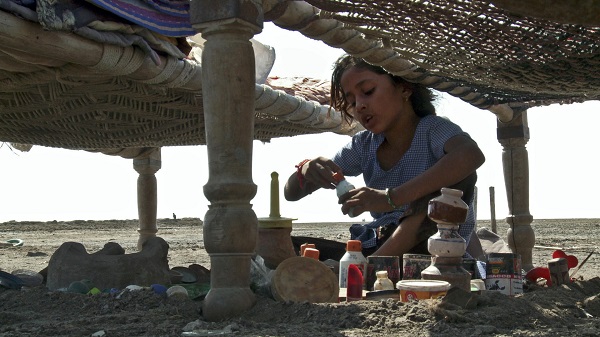
This evening, the critically-acclaimed and much-feted documentary film, My Name Is Salt, will be screened at the NCPA in collaboration with the Indian Documentary Producers’ Assocation (IDPA). The film is a sensitive, searing look at the many families who come to Kutch to extract salt, for a long eight months with the harsh sun beating down on them.

Describes a blurb on the film’s website, ‘The desert extends endlessly – flat, grey, relentless. There is not a tree or blade of grass or rock. But there is one thing in abundance: salt. Salt is everywhere, lying just beneath the cracked, baked surface of the earth. This is the Little Rann of Kutch, 5000 sq kms of saline desert. And for eight months of the year, the salt people live here – laboriously extracting salt from this desolate landscape. They have been doing this for generations.

Year after year, they migrate from their villages, 40,000 of them, to live on this bleak land without water, electricity or provisions. Arriving just after the monsoon, Sanabhai and his family will live here from September until April. Their nearest neighbour is a kilometre away. They communicate by flashing mirrors in the sunlight. Sanabhai’s wife Devuben walks across the bare, trackless desert to chop firewood. They buy the family’s water supply from a private tanker that comes once a week…’

Watch the trailer of the film here:


The film is the journey of Chhanabhai and his family who live without water, electricity or provisions for eight months of the year – tirelessly extracting salt from this desolate landscape. Under the blinding glare of the sun, they work on the salt fields until large crystals have formed. Their labour is rhythmic, a dance that mirrors the dance of the mirages on the burning horizon.

Written and directed by Farida Pacha, the film has won several awards at international film festivals.

Admission is on a first-come-first-served basis. NCPA members will get preferential seating till 6.20 pm. The film begins at 6.30 pm and is 92 minutes long.

(Picture courtesy mynameissalt.com)

Exit mobile version