Categories
Wellness

Smoking ups dementia risk

A recent report by WHO confirms that smoking increases dementia risk, like it is a factor in cancer and cardiovascular disease.
by Alzheimer’s Disease International (ADI)

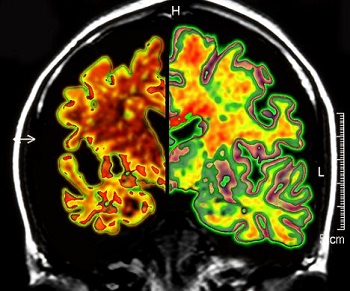
Smokers have a 45 per cent higher risk of developing dementia than non-smokers, according to information published recently by the World Health Organization (WHO), in collaboration with Alzheimer’s Disease International (ADI).

Evidence reviewed by WHO reveals a strong link between smoking and the risk of dementia, and the more a person smokes, the higher the risk. It is estimated that 14 per cent of Alzheimer’s disease cases worldwide are potentially attributable to smoking. WHO warns that exposure to second-hand smoke (passive smoking) may also increase the risk of dementia.

“Since there is currently no cure for dementia, public health interventions need to focus on prevention by changing modifiable risk factors like smoking,” says Dr Shekhar Saxena, Director of the Department for Mental Health and Substance Abuse at WHO. “This research shows that a decrease in smoking now is likely to result in a substantial decrease in the burden of dementia in the years to come.”
Tobacco use is already recognised as the one risk factor common to four main groups of non-communicable diseases (NCDs): cancers, cardiovascular disease, chronic lung disease and diabetes. “Tobacco is one of the biggest public health threats the world has ever faced, killing nearly six million people a year,” says Dr Douglas Bettcher, Director of the Department for Prevention of Noncommunicable Diseases at WHO. “WHO urges governments to actively implement and enforce the measures of the WHO Framework Convention on Tobacco Control, especially smoke-free environment laws and access to tobacco cessation services”.

Laurent Huber, Director of the Framework Convention Alliance (FCA) for Tobacco Control, comments: “It is no surprise to see these findings confirm that tobacco smoking is a major risk factor for dementia. This adds yet another item to the long list of the devastating consequences of tobacco and gives even more reason for personal and public health action to help people to quit smoking.”

“The research also shows that quitting smoking later in life might be beneficial so encouraging and supporting current tobacco users to quit should be a priority,” says Serge Gauthier, chair of the ADI’s Medical Scientific Advisory Panel.

Dementia affects more than 44 million people worldwide, with almost two thirds of them living in low- and middle-income countries. “Every year, there are 7.7 million new cases of dementia. In 2010, the global cost was calculated at US$ 604 billion, which represents 1 per cent of global GDP (gross domestic product),” says Marc Wortmann, ADI Executive Director. “No government can ignore the opportunity to link this new information into its planning and health system activities to reduce smoking and control NCDs.”

ADI believes that this information brief can form the basis for countries to add messages about brain health and dementia risk into public health anti-smoking programs and interventions.

(Pictures courtesy www.express.co.uk, www.dailymail.co.uk)

Categories
Tech

HTC launches Desire 616 and One E8 Dual SIM

HTC’s two new devices launched in India at Rs 16,900 and Rs 34,900. Here’s what you can expect from both.
by Manik Kakra | @Manik_K on Twitter

HTC launched two new Android smartphones in the Indian market. Both these devices are dual-SIM smartphones and are aimed at providing more affordable phones than what the company has done so far.

One (E8)The Desire 616 is an Android 4.2.2 that has a MediaTek 6592 chipset (1.4 GHz octa-core processor and Mali 400 GPU) along with 1 GB of RAM. Boasting a 5-inch 720p screen, it comes with 4 GB of on-board storage, which is expandable up to 32 GB via its microSD card slot. On the back, the phone sports an 8 MP (AF) camera; while the front has a 2 MP camera. The phone is powered by a 2,000 mAh battery unit.

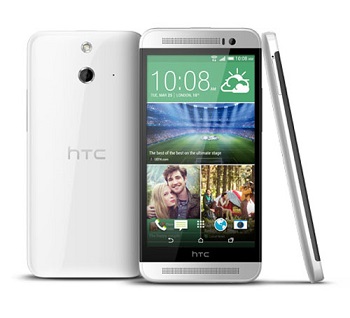
Coming to the One E8 (in pic on left), this is more of a dual SIM variant of the One (M8) with a rubberised back and a few other noticeable changes in looks. Sporting a 5-inch full HD S LCD 3 display, the phone runs on Android 4.4.2 with Sense 6 on top. It boasts a Snapdragon 801 chipset (2.5 GHz quad-core processor, Adreno 330 GPU), coupled with 2 GB of RAM. Dual front-facing BoomSound speakers and a 5 MP (BSI) camera are same as the One M8, while the rear camera has been changed to a 13 MP (AF) one. It is powered by a 2,600 mAh battery unit.

Connectivity-wsise, both these devices feature Bluetooth 4.0, WiFi b/g/n (plus a in the One E8), 3G connectivity, NFC, microUSB 2.0, and GPS. While the Desire 616 comes in black and white colours, the One E8 comes in red, white and black colour options (its blue model is expected to arrive later in India). The Desire 616 goes on sale within a couple of days for a price of Rs 16,900; while the One (E8) will be available in about three weeks for Rs 34,900.

Categories
Enough said

The spirit truly lies within

Does it make sense for us to wait for the Government to help us? These trailblazers solved other’s problems on their own.
by Humra Quraishi

The rains continue to wreak havoc in various parts of the country, bringing ruin to crops in some places and drought in others. Hunger and dearth of necessities have become the mainstay in several sections of society…but what are the options for survival?

More to the point, can the present Government do anything about it? How long do we wait before the Government steps in to help?

As always, the solution has to come from us, from within.

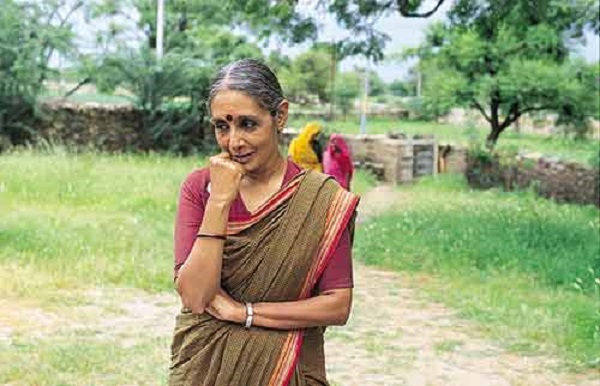
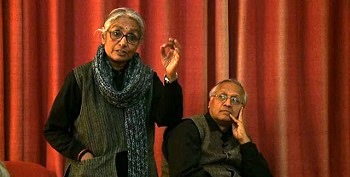
aHearteningly, there are hundreds of ‘doers’ present among us, people who have opted to move out of well-paying jobs and a cushy life to reach out to those in distress. In this context, I can think of none better than the husband-wife duo of Bunkar Roy and his spouse Aruna, who gave up their jobs (Aruna quit the IAS) to settle down in Tilonia, a nondescript village of Rajasthan. There, they started by digging up wells to help the villagers, and today, the village is one of the few locales in the country that can boast of being self-reliant in every sense of the term.

The duo has trained the village’s men and women to become engineers, doctors, technicians, craftsmen, teachers and healers.

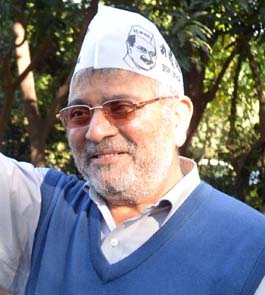
More recently, I was browsing the details of Dr Dharamvir Gandhi, one of the AAP candidates who win in the recent elections from Punjab. To quote Professor Chaman Lal, who has known Dr Gandhi for years, “As a medical   doctor, he was so popular in the surrounding villages that when he was transferred, people from those villages went to the Punjab Secretariat in Chandigarh, and returned only after getting his transfer cancelled.”

Dr Gandhi (in pic on right) joined Rajindra Medical College Patiala for his post graduate studies and later became Assistant Professor in the Cardiology department. In year 2001, he set up his ownDr Dharamvir Gandhi clinic, where only nominal fees were charged from poor patients. He says he was inspired by Andhra Pradesh and some other States, where such Peoples’ Clinics were established by Leftist doctors to provide health services to peasants and workers.

Meanwhile, as the news of the passing away of former Chief Justice of J&K, Justice Mufti Bahauddin Faruqi came, I was reminded of several meetings I had with him. This was in 1990, when I was reporting from the Valley, and each time I met him, I was impressed by his honesty, his forthright stand on issues, his courage in speaking against injustice.

He said to me once, “The Government is treating each person as a suspect. Even India Today says the total number of militants must be about 600, though I say there are no more than 100. Yet, to locate them, a whole city’s population is being hounded. Searches are done in the most brutal manner, even before dawn the whole area is cordoned off and loudspeakers keep blaring, asking everyone to come out of their homes. The search goes on for the whole day, while families sit outside without food and water, and even women in labour are not allowed to move out!”

He said he was tired of expecting help and relief from the Government, after numerous attempts. And yet, he never shied away from revealing horrifying realities in the region, even if those truths were unpalatable to most others.

Humra Quraishi is a senior political journalist based in Gurgaon. She is the author of Kashmir: The Untold Story and co-author of Simply Khushwant.

(Pictures courtesy heroinas.blogspot.com, www.schumachercollege.org.uk, www.sahilonline.org, kashmirvoice.org)

Categories
Trends

Google compiles 8 magical World Cup moments

From a coach staggering backwards to the fastest goal in under a minute, Google tracks 8 moments fans loved this World Cup.
by The Editors | editor@themetrognome.in

After four weeks of anticipation, excitement, aggressive performances, tears of disappointment and some crazy instances, the FIFA World Cup has finally reached the finale stage. As fans await to see the strongest football teams play in  the ‘Battle de finale’ and lift the FIFA Cup this year, Google Search recaps some of the crazy yet entertaining moments the fans cherished again and again during their journey to the finale.

Kroos#1) Highest score in a World Cup victory. An historical battle by all counts, with an exhilarating performance by the German squad that delivered a shocking record World Cup defeat for Brazil, German midfielder Toni Kroos, who scored two back to back goals in the first half’, epitomised Germany’s improved game.  Germany searches for “highest score in a World Cup victory” spiked by 370x during the match.

#2) Klose to history. German striker Miroslav Klose became the World Cup’s all-time record scorer with his 16th goal during their semifinal against Brazil.

#3) Falling coaches. Another such moment emerged during the recent Argentina- Belgium match where Alejandro Sabella, the Argentina coach, quickly gained Internet fame after he became so engrossed in a chance for his side during their World Cup quarter-final against Belgium that he almost fell over.

#4) Cheers and tears. During the round of 16 battle, Argetinian commentator Pablo Giralt could not hold back his tears as he summed up the feelings of many Argentineans after Angel Di Maria’s Tears118th minute winner goal versus Switzerland, letting his emotions take over him in an epic live on air match commentary. After an enormous “ggggggoooooooooaaaaaaallllllll” came the tears!

#5) Full paisa vasool. Piojo Herrera is by far, the most entertaining coach to watch at the World Cup, managed to grab everyone’s attention with his celebration style. Fans searched for Mexican Coach “Piojo” online after his epic side-line celebrations during Mexico- Croatia match.

Japanese fans#6) Clean and clear. Japanese fans, armed with blue rubbish bags scoured the stadium for any mess and made sure the Football Arena was left in good condition as the Japanese team played their set of matches during FIFA. The positive gesture from Japanese fans was appreciated by Football fans across the globe.

#7) Quicker than Maggi noodles. The fastest of this World Cup and one of the quickest goals in the tournament’s history was up on show for fans as USA captain Clint Dempsey wasted no time against Ghana, scoring the 2014 World Cup tournament’s fastest goal a mere 32 seconds after kick-off.

#8) Torres wardrobe malfunction. And finally, from the fashion ramps to the Football Arena, Fernando Torres wardrobe Wardrobe malfunctionmalfunction during the first half of Spain versus Australia match did bring some unusual cheers among the crowd. Fans continued to search for the player and the incident online after the match.

 (Text and graphics courtesy Google Inc.)

Categories
Wellness

How meaningful is your nostalgia?

With the ever changing nature of our metropolis, will getting nostalgic lose its meaning, or simply evolve into something else?
by Ritika Bhandari Parekh

RainfallLast week it rained for the first time this season, the way it rains only in Mumbai. And yet the leaking Metro train, the flooded roads and the emergence of a sea of black umbrellas didn’t excite my heart. When I think about it, it has all got to do with missing the earthy smell brought by the first showers. Maybe it is the fact that I live on a higher floor now, or that I no longer live at the place where I grew up, but that wonderful fragrance of the earth which heralds the Mumbai rains is gone.

Nostalgia is such a heady concoction of familiarity, not only through smell or taste, but also sight. Ask any newly married girl and she will vouch for how different the food tastes at her new home, just because it is not served in the same type of katori as she is used to. Who knew that stainless steel katoris could hold such strong memories? As for the married man, not only he has to appreciate the new style of cooking but the same ‘katori’ with a different flavour definitely needs some adjustment.

The beauty of nostalgia lies in its quality to penetrate us, unknowingly yet in a known manner. Remember that song your mother hummed while making rotis, doesn’t it stop you in your tracks even now? Or the firm handshake of your father which acknowledges your academic or sports success? Speaking of sports, the start of Wimbledon has to coincide with the monsoon in India, or else it really doesn’t hold the same thundering success for old timers. A bit of pitter-patter with some serve and volley and an all-white uniform code, and you are right there in England.

Research shows that nostalgia has evolved from a malady to being accepted as a universal feeling.  From helping the village boy cope with the pressure of finding a job in the dreamland called Mumbai, to giving emotional strength to newlyweds – nostalgia is good for humans, in general.

This New York Times article points out that “Nostalgia counteracts loneliness, boredom and anxiety. It makes people more generous to strangers and more tolerant of outsiders. Couples feel closer and look happier when they’re sharing nostalgic memories. On cold days, or in cold rooms, people use nostalgia to literally feel warmer.”

So what if the rains of today are different from the ones you were used to? Go ahead and take a splash in the rains, click a photo in your mind, make it your moment and relive it every time Mumbai is flooded. Let our buildings be torn down and our few public spaces disappear in the cosmic universe of malls and traffic, for as long as it rains, our chai pakoras are enough to transport us in the realm of a heaven called Bombay.

(Pictures courtesy physicsworld.com, lightnarcissus.com)

Categories
Bombay, bas

Dear Rain, what is your problem?

It should be pouring almost constantly, but before the rains properly settle in Mumbai, there’s no harm in eager anticipation, right?
Pooja Birwatkarby Dr Pooja Birwatkar

The month of June went by without a drop of rain. And we are now in the second week of July, but the rains are not yet settling in Mumbai.

When it rains in Mumbai, it really rains, is what a typical Mumbaikar would tell you. Us Mumbaikars take lot of pride in telling people in other cities about the rains in our city. Also, every Mumbaikar will always mention the city braves all types of weather like the sport it is, and that life goes on (or tries to) even when it really pours.

We’ve had one or two big showers of rain by now, and what relief they brought to the city! I always enjoy the start of the monsoon – what a beautiful sight it is to see children dancing on the streets with joy, housewives rushing to pull dry clothes off the clothesline, people without umbrellas scurrying for cover, and the city collectively watching the dust and dirt of the rest of the year wash away to leave gleaming green trees with swaying branches.

Frankly, nothing beats getting drenched in the rain, reaching home soaked and having hot adrak chai, or even better, the tapri chai with some yummy hot vada pav.  The smell ofRain in Mumbai the wet soil and the romantic weather is a great combination. And nothing beats sitting at Bandstand or Marine Drive in a light drizzle while eating corn on cob or walking under an umbrella with your loved one.

Whether we admit it or not, we feel a secret thrill on the times the rains do actually manage to put a stop to our fast paced lives, when our life line, the local trains stop and chaos follows. Each season, we secretly pray for one such day of heavy rain that prompts offices to close on their own accord, and for schools and colleges to declare a holiday. There is nothing like a paid leave on a heavy rain day.

My fondest memory of my childhood days is standing outside the school gates on a rainy morning, only to be told that the school was closed for the day. I so loved the rains that day and whatever age we are, it still remains the same feeling.

The rains also make celebrities out of the BMC officials, with the TV channels, radio and even the public all going berserk, collectively lamenting the generous smattering of pot holes on the roads, the traffic and the water logging. Hindmata and Milan Subway achieve cult status as rain attractions for tourists, as they are frequently shown on TV. These places are like rain gauges for the rest of the city – if they are flooding, it means it has rained as per ‘Mumbai standards’.

Even as I wait for the rains to settle in and follow a more predictable pattern, I long for the drop in temperature and the various magical moments the season brings. It is quite another story that once the rains truly arrive, I will complain about how miserable my life is in the season. But till then, I wait.

Dr Pooja Birwatkar is currently pursuing post doctoral research and working in the area of science education. She has been associated with the field of education in the past as a teacher educator, and her area of interest is research in education. 

(Pictures courtesy deccanchronicle.com, mumbairain.com, chalochalomumbai.wordpress.com)

Exit mobile version