Categories
Read

Review: ‘One Life Is Not Enough’

Natwar Singh’s book on his life and times as a bureaucrat-turned politician is a fascinating insight into a life well-lived.
by The Editors | editor@themetrognome.in

We rarely have any patience with politicians in India, and politicians over the age of 80? Let’s just say, Congress politician and famed Gandhi family loyalist Natwar Singh’s autobiography would ordinarily not have made any ripples on the Indian book scene.
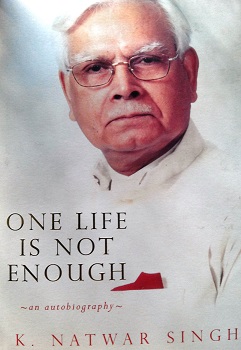
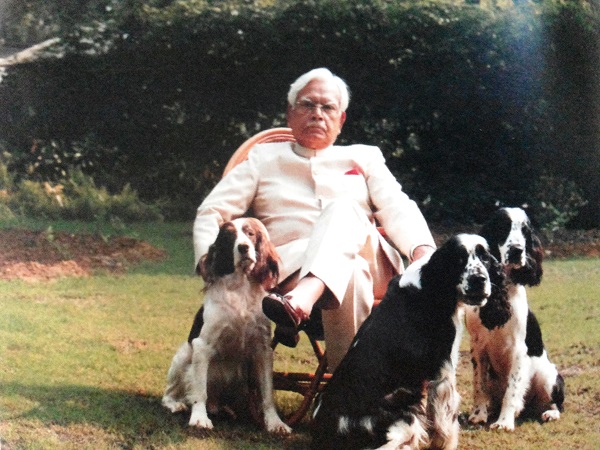
Book coverBut, as with most book releases lately, when controversial details of Sonia Gandhi’s (mis)handling of affairs and spicy excerpts about the highs and lows of the Congress party began to make their way to publications, Singh’s book One Life Is Not Enough, suddenly acquired a must-read status.

Nor does Singh disappoint. Far from being a stodgy, self-righteous look at the life and times of pre-independent and post-independent India, One Life Is Not Enough is a frank, no-holds-barred account of life behind the scenes of Indian politics. It is also an illuminating look into the machinations of the External Affairs Ministry – imagine dealing with the Chinese Premier on an ill-fated trip to India ending with failure of talks with Jawaharlal Nehru, or being constantly on the ball on a posting to Karachi during President Zia-ul-Haq’s reign. The book also describes in detail the failure of the Rajiv Gandhi Government in effectively dealing with the internal affairs of Sri Lanka, and Singh’s part in the creation of the independent country of Bangladesh.

He also describes, in not very modest terms, his successful organisation of two high-profile, international summits in one year – the Commonwealth Heads of Government meeting and the Non-Aligned Movement Summit, both in 1983. In between his role in several milestones in Indian political history, Singh also gives glimpses into his personal life – his education in England, his marriage to an Indian princess, his friendship and admiration for Indira Gandhi, and the thorny relationship he shared with Sonia Gandhi. In the preface, he writes about how Sonia sent her daughter Priyanka to ask him if he intended to write about ‘the events that took place in May 2004 before the swearing-in of the UPA Government’.

I said I intended to,” Singh writes. “No one could edit my book. I would not skirt the truth, nor would I hit below the belt. Certain proprieties cannot be ignored. Just then, Sonia walked in. ‘What a surprise!’ I said. Her overly friendly and gushing greeting bewildered me. It was so out of character. It was a giveaway. Swallowing her pride, she came to her ‘closest’ friend to surrender her quiver. It took her eight-and-a-half-years to do so.

“My book has aroused unexpected interest. I am flattered. Also mildly worried. The expectations are sky high.”

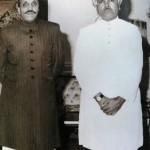
See pictures from the book:
Expectations were bound to be sky-high, come to think of it. Singh has been present in the background, and several times, the foreground, as major events shook the country in independent India. He was witness to the events leading to the Emergency in the 1970s, the rout of the Congress thereafter, the assassination of Indira Gandhi and the anointing of Rajiv Gandhi as her heir, the killing of Rajiv Gandhi and the taking over of the Congress by his widow Sonia after eight years, and the subsequent rise and fall of the Congress under the Sonia-Rahul Gandhi combine. In this context, Singh’s account is a valuable one for chroniclers of Indian history.

Besides, he writes with charming candour and humour about situations both in his personal and professional life. Interestingly, he relays even politically incorrect comments and opinions. Sample some of the comments he mentions:

I once asked Mrs Gandhi what she thought of Margaret Thatcher. She said, ‘What Iron Lady? I saw a nervous woman sitting on the edge of the sofa.”

I was walking on my terrace one day when my servant came and told me, ‘The President is on the line.’ When I took the call, President Zia, after inquiring about my health, asked me if I was free to have dinner with him that night. I agreed. He said, ‘Could you also give me a list of names of your friends?’ I replied, ‘Sir, your intelligence agency already has the names of my friends. AS for the one or two who aren’t on the list, I would like you to spare them!

[Sonia’s] English is near perfect; Hindi is the problem – she cannot speak the language without a written script in front of her. To my suggestion that she learn by heart a chaupai or two of Tulsidas’s or Kabir’s dohas and use them in her speeches, she threw her hands up. ‘I go blank even with a written text. You want me to say something extempore? Forget it.'”

For those outside the corridors of power, One Life Is Not Enough is an essential read on events in Indian history that need clarification. Singh certainly sets the record straight on many points – on how Sonia was forced to give up her idea of assuming Prime Ministership after son Rahul categorically told her not to take up the job, on how strained relations with then PM Morarji Desai posed many roadblocks in his work, and also how his jump from bureaucracy to politics was a relatively simple progression.

Rating: 4/5. One Life Is Not Enough is available for sale on Flipkart

 (All images sourced from ‘One Life Is Not Enough’)
Categories
Event

Attend: Photo exhibition of Chitpur Road, Kolkata

21 German photographers got together to document, celebrate Kolkata’s Chitpur Road. Mumbaikars can see the results at Max Mueller Bhavan today.
by Galerie Max Mueller Bhavan, Mumbai

Goethe Institut/Max Mueller Bhavan Mumbai will today present ‘Calcutta: Chitpur Road Neighborhoods’, a presentation of photographs by 21 German photographers, under the guidance of Peter Bialobrzeski. This body of work is unique in its methodology as its main aim was to develop a coherent, unified approach towards the subject. It challenged traditional ideas associated with originality and aimed at creating a more universal aesthetic of photography shared by these 21 photographers.  This reversal of thinking was in itself a challenge, and it was absolutely important to overcome it in order for the project to be a success. The participants worked in groups and took turns to direct the shoots. Their aim was to “A good picture a day”.  They worked under the collective name:  ‘A Kolkata Heritage Photo Project’, and are the joint authors of this body of work.

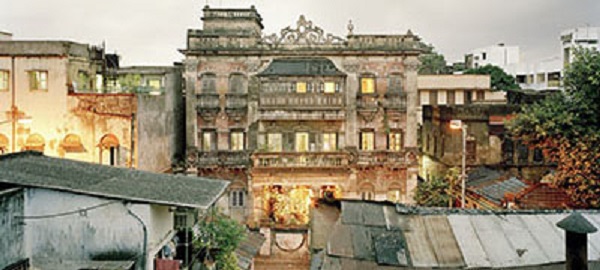
During the 19th century, Kolkata was one of the most economically affluent cities in India under the British, the city elites demonstrated their affluence by building huge palaces in a unique mix of traditional Moghul architecture with classical and Victorian elements. Today, the neighbourhoods around the historical axis of Chitpur road in North Kolkata, still exhibit the remnants of this architecture style. Though decaying as architecture monuments, they still house a vibrant community. The project aimed at capturing these two extremities of the area, without deviating from their set approach.

In 2008, Hatje Cantz published the book ‘Calcutta: Chitpur Road Neighborhoods’, based on this project. Though all the 21 photographers were students of Peter Bialobrzeski at the University of Arts Bremen in 2006, today they are all individual professional photographers. The Kolkata Heritage Project consists of Claudia Aguilar, Johanna Ahlert, Björn Behrens, Jörg Brüggemann, Tine Casper, Franziska von den Driesch, Anja Engelke, Tobias Gratz, Christian Güssow, Dörte Haupt, André Hemstedt, Manja Herrmann, Torben Höke, Britta Isenrath, Joanna Kosowska, Jørgen Kube, Pia Pollmanns, Silke Schmidt, Inga Seevers, Marion Üdema, Sandy Volz.  

The exhibition is a presentation of photographs by twenty one German photographers, under the guidance of Peter Bialobrzeski can be seen from October 1 to 31. The Mumbai presentation is designed by Tanvi Mishra and Kaushik Ramaswamy.

(Picture courtesy Max Mueller Bhavan, Mumbai)

Categories
Tech

This just in: BlackBerry’s Passport, Huawei’s Honor 6

Priced at Rs 49,990 and Rs 19,999, the two devices are great additions to an already exciting Indian smartphone market.
by Manik Kakra | @Manik_K on Twitter

BlackBerry has launched its flagship smartphone in India. The BlackBerry Passport (in pic on left) has a unique squarish form factor with a full QWERTY keyboard that is also touch-sensitive.

BlackBerry PassportFeaturing a 4.5-inch (1440 x 1440) display (1:1 aspect ratio), the Passport is powered by Qualcomm’s Snapdragon 801 chipset (2.2 GHz quad-core processor, Adreno 330 GPU) coupled with 3 GB of RAM. The phone is equipped with a 13 MP (with OIS) rear camera that can shoot 1080p videos at 60 FPS; and a 2 MP front-facing camera. There’s a 3,450 mAh battery unit in place and 32 GB of inbuilt storage, which is expandable up to 128 GB.

Running BB 10 OS, this device has Bluetooth, WiFi, NFC, GPS and 3G connectivity. Available in black and white colour options, it has been priced at Rs 49,990, with a special tie-up with Amazon where you can get 5,000 JPMiles on pre-ordering a unit.

Huawei has also launched its new Android 4.4.2 smartphone, the Honor 6 (in featured image above). Sporting a 5-inch full HD touchscreen, it has Huawei’s Kirin 920 chipset (1.3 GHz quad-core + 1.7 GHz processor, Mali T628 GPU) and 3 GB of RAM.

This dual-SIM phone boasts a 13 MP (BSI) camera and a 5 MP front-facing camera. Powered by a 3,100 mAh battery unit, this Huawei device is loaded with Bluetooth 4.0, WiFi, NFC, GPS, and 3G connectivity.

Running Huawei’s Emotion 2.3 UI on top, the device 16 GB of internal storage and comes in white and black colours. It goes on sale in a week exclusively on Flipkart for Rs 19,999.

Categories
Achieve

Mumbai artist to be part of international art jury

Organised by World Citizens Artists, the art and music competition features Prakash Bal Joshi as one of its jury members.
by The Editors | editor@themetrognome.in

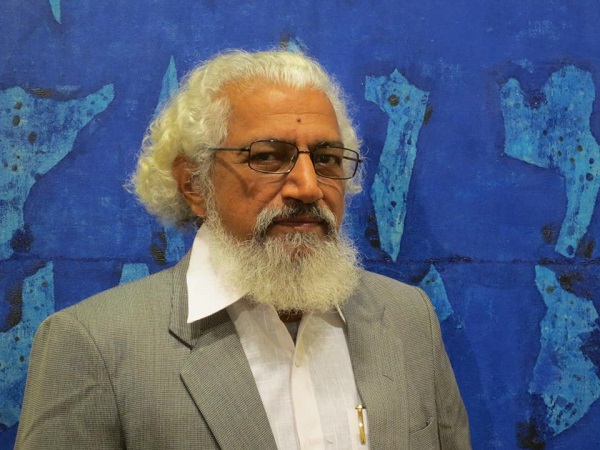
prakash bal joshiPrakash Bal Joshi goes from strength to strength every year. The Mulund-based artist of international repute is set to be a jury member on an international art and music competition ‘World Citizen Artists Competition’ in London later this year. Prior to this, in June this year, he was assigned responsibility as an Ethics Advisor and Ambassador by the World Citizen Artists – an artists’ initiative by a Paris-based artist community to raise awareness about global issues through art.

“It is a worldwide art movement in partnership with London-based Belgravia Gallery and the Playing for Change Foundation,” he said. The competition will see entries from around the world on the theme ‘Peace’, and it is an excellent opportunity for both upcoming and feted artists from South East Asia to showcase their works at the noted Gallery. Belgravia Gallery has a rich history, and houses the works of Picasso, Prince of Wales, Andy Warhol, Matisse and Nelson Mandela.

“For the visual art section, there are three jurists on the panel – Valerie Van Lee from Paris, another from the UK, who is the Gallery’s curator, and I,” Joshi said. “I am happy to be associated with the contest  as a jury member as it would be a unique experience to work at the international level and interact with curators from other countries and understand conceptualisation of ideas in visual forms by artists from all over the world. The theme ‘Peace’ is very relevant today as the world is facing the worst kinds of violence in many parts of the world.”

He added that while judging the art works, the jury members would apply “very strict and scientific methods”, with marks awarded for theme, visualisation, method, innovation, and style. “Marks from three different juries will be taken together to shortlist submissions for awards,” he explained. 

Artists and musicians must send their entries to http://wwww.wcacompetition.com latest by November 16, 2014. Winners’ names will be declared by December 5, 2014.

Categories
Places

Hey, Hampi!

A Mumbaikar adds to his list of solitary India travels with a trip to Hampi, land of fables and architecture.
salilby Salil Jayakar | @Salilicious on Twitter

2014 has been a year of some travel-related firsts for me. My first long-distance overnight train journey, my first time on a non AC State Transport bus and now my first long-distance (somewhat) overnight bus journey, sleeper no less!

The ruins of Hampi, part of the ancient Vijaynagara Empire and a UNESCO World Heritage site, have always fascinated me. Last year, a trip over the long Independence Day weekend came to naught when my friend in namma Bengaluru decided to go out of town with her family. Thankfully, this year, over the long I-Day weekend (August 14-18), I finally found myself among the magnificent ruins of Hampi.

After spending a relatively chilled out day in Bengaluru eating home-cooked fish and taking time out to watch a movie, I finally made my way to Majestic (bus stand). The traffic drove me insane, incessant rain added to my irritation and the fact that my bus was delayed for over an hour added to my woes.

The best was yet to come. The ignoramus that I am, I had booked a window sleeper, which meant I was sleeping next to a stranger with less than 10 feet (or maybe lesser) head space. There was little room to sit up. The nearly seven hour journey to Hospet was uncomfortable (to say the least) thanks to the bus’s constant swaying and bumping on an uneven road. As we neared Hospet on the morning of August 15, village after village in rural Karnataka was decked out as if for a party! Mostly, school kids dressed as leaders of the Indian freedom movement held forth as boy and girl scouts did a parade.

A 40-minute rickshaw ride later, I was in Hampi. A flood warning meant that the Tungabhadra had risen and boats were not crossing over to the Anjeyanadri side where my resort was. As I walked through the bazaar, the Virupaksha Temple dominating the landscape, a local offered me a room. For Rs 700 a night I got a double bed with an attached toilet-bathroom, cold running water, no blankets and a solitary tube light. Beggars can’t be choosers…right said, they.

But I was in Hampi! J

A cold bucket bath and some 20 minutes later, I was ready to conquer the world. Well, almost. At the end of the small path, which led to my rooms, was a corner shop where ‘coffee amma’ sat, making endless cups of coffee through the day for locals and tourists alike, all with a smile. A cuppa later, I made my way to the main bazaar where for a meagre Rs 30 I had three idlis and two fried vadas with authentic coconut chutney for breakfast.

Since I had only two days in Hampi, I decided to hire a rickshaw to cover as much ground as I could, quickly. My driver Hanuman, a local, also doubled as a guide, though I must confess that he mumbled and that his broken Hindi meant that I really didn’t understand much. First up was the Vitthala Temple complex, possibly the grandest and most popular of the Hampi ruins, which is home to the world-famous musical pillars. The temple’s pillars have beautifully carved images from Hindu mythology and also from the time when Hampi was a trading city. Among the more detailed images are the ones of Persian traders selling horses to the local king. Along the road that leads to the Vitthala Temple, ruins of the old market can still be seen. The complex is home to one of three world-famous stone chariots – the other two being in Konark and Mahabalipuram. The chariot houses an image of Garuda, the vehicle of Vishnu. I learnt that till some years ago, the wheels of the chariot could be moved. Interestingly, not one of the many curio shops had a stone chariot souvenir.

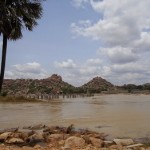
At walking distance from the Vitthala Temple is the King’s Balance and the Tungabhadra River, where you can see remains of an ancient stone bridge that connected Hampi to Anegundi. On the banks of the river is the Purandara Mantapa, the place where the wandering minstrel Purandara Dasa stayed.

Among the more interesting structures at Hampi was the Mahanavami Dibba, a pyramidal, three tiered stone platform located within the Royal Enclosure. Built in granite, it is stunning. Each tier of the platform has sculptured mouldings in the typical Vijaynagara style of architecture. From the top of the platform, the Royal Enclosure stretches out in all directions, scattered with ruins of what were once palaces, administrative buildings and temples. Undoubtedly the temple of royal patronage, the Hazara Rama Temple is dedicated to Vishnu in his avatar as Rama. Sculpted friezes depicting the Ramayana run all around the main shrine, as well as narrative sculptures on Luv-Kush, the children of Ram, and Bala Krishna.

Given the sheer number of ruins scattered across Hampi, it is almost next to impossible to prepare a laundry list of the ones to visit. But the ones that I have written about so far are definitely not to be missed for their artistic grandeur, which is still visible centuries later.

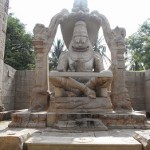
As the sun began to set on Day One in Hampi, I made my way to Hemakuta Hill, dotted with numerous shrines and mandapas. Here, the magnificent monolithic, four-armed Sasivekalu (mustard seed) Ganesha, at 2.4 metres in height, towers above visitors. The elevated Hemakuta Hill offers a sweeping view of Hampi in all directions. At the Hill’s Sunset Point, I let my legs dangle over the edge of a two tiered mandapa and watched the world go by. I had a friendly chat with two lovely girls who were backpacking across India after completing their undergraduate degrees in Wales. They were heading home to London (damn!) to pursue their Master’s in Audiology. And my heart skipped a beat with love and longing…as I watched the sun go down on what was once the great Vijaynagara Empire.

Day Two began bright and early. I checked out of my squalid room and made my way to coffee amma’s shop. The ever-smiling ‘amma’ allowed me to keep my travel bag at her shop while I roamed through Hampi. A quick walk down the river bank and a hot breakfast of poori-bhaji later, I made my way to the Virupaksha Temple. The heart of Hampi, the temple was abuzz with visitors even at 8 am due to the long I-Day holiday weekend. Extended in the 13th and 17th centuries, it predates the Empire, has two magnificent gopurams or ornate towers that dominate Hampi’s landscape and is dedicated to Shiva and Pampa, his consort and a local deity. I was quite happy to walk through the temple courtyard, take darshan and then squeal (not literally) in joy as the temple’s resident elephant made an appearance! I love elephants, there is something about these gentle giants that captures my imagination. Quite unlike me, I waited patiently to be “blessed” – I offered a ten rupee note to the pachyderm, who promptly took it in its trunk, gave it to the keeper and then placed its trunk over my head. Truly, blessed.

I stepped out of the temple complex and took the dusty road opposite it that leads to a monolithic Nandi. Just before it, a small path to the left leads down to the river from where you can walk along its banks. At one point, the path ends turns inward into the rocky cliff side to come out under an outcrop – you’d think it’s a secret tunnel you read about in an Enid Blyton story. From here, follow the path till you come to the magnificent Achyutaraya Temple at the foot of the Matanga Hill. Sitting desolate in a vast expanse, with mandapas on either side, walk towards its imposing mahadwara. The grounds and the mandapas were home to a weekly bazaar where traders, both Indian and foreigners, came to trade their goods.

With more than half a day still left, I decided to make the road trip from Hampi to Anegundi on the other side of the Tungabhadra. Along the way, as you meander through the winding hill roads, the ruins of Hampi can be seen across the river. But by far the most stunning view of Hampi is from the top of Anjaneya Hill, where there is a temple dedicated to Hanuman, the monkey god. Now, I’m always up for a good trek but the steep climb to the temple – almost 600 steps – took the wind out of me. But the view more than made up for it!

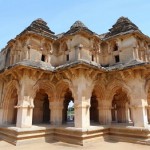
Like I’ve mentioned earlier, it is next to impossible to describe each of the ruins I visited but there are some you just cannot miss. Some of these include the zanana enclosure, the Lotus Mahal and the elephant’s stables, the prasanna Virupakhsa (underground Shiva temple), the Lakshmi Narasimha Temple and the Krishna Temple.

As sunset came, I made my way to Hampi bazaar for some last-minute curio shopping and a quick meal at the Mango Tree restaurant. One last cup of coffee later from coffee amma, I was on the bus back to Hospet. My fondest and most vivid memory? Sitting on Hemakuta Hill and watching the sun go down on what was once the glorious Vijayanagara Empire.

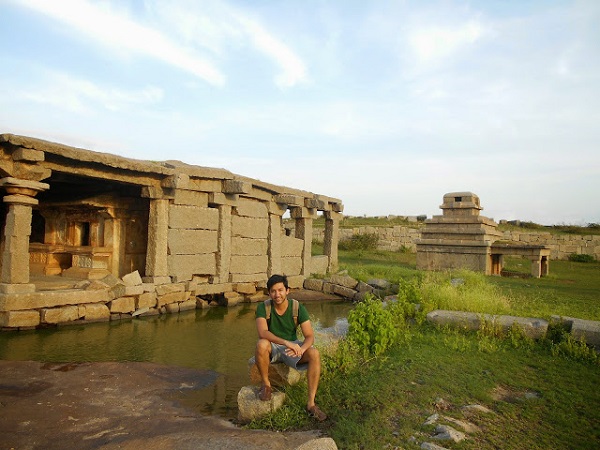
(All pictures courtesy Salil Jayakar)

Categories
Do

Tiger Cyclo Walk returns

After last year, the Tadoba to Mumbai tiger awareness drive returns – this time, it kicks off in January 2015.
by The Editors | editor@themetrognome.in

It’s a distance of 1,200 km, sometimes over difficult terrain, many times over difficult circumstances. But it’s all for a great cause, and it involves tigers.

After a successful drive last year, the Tiger Cyco Walk returns for its second edition this year, too. The initiative involves the traversing of about 1,200 km on foot or on bicycles, to spread awareness about the dwindling numbers of tigers and the lack of an ecological cover to support them.

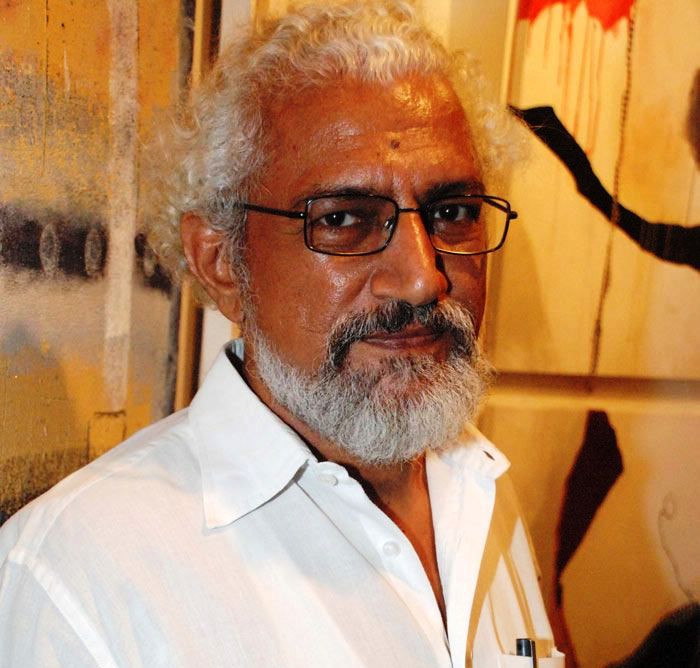
Sunil JoshiLed by noted trekker, mountaineer and walker Sunil Joshi (in pic on left), who conceptualised the drive and conducted it last year too, the Tiger Cyclo Walk will cover the huge distance from January 1 to February 7, 2015. The drive will kick off from Mohorli Gate, Tadoba on January 1, before travelling taking a circuitous tour from Chandrapur and culminating in Mumbai on February 7, 2015 (see entire route map here). Like last year, the group managing the tour and those who sign up for the walk will involve locals in the drive by asking them to accompany them for at least one kilometre, besides showing educational clips and giving talks.

“Come what may, we will cycle the whole distance and promote the ‘Save the Tigers’ cause to the masses,” Sunil says. “On each halt, there will be slide shows, screenings of films and lectures about tigers, environment and forests in educational institutions and social organisations. We will also undertake tree plantation ceremonies en route.”

Sunil has previously walked 2,560 km in Norway, from North Cape (Northern tip of Norway ) to Lindesnes (Southern tip of Norway) while he represented India for ‘Walk Norway Programme’. “We wish to spread awareness and help people in and around the State’s existing forests to protect the jungles. The plantation of more and more Indian origin trees will balance the ecology. Protecting our wilderness will, in turn, protect the tiger,” he explains.

Those wishing to join the awareness drive can contact Sunil Joshi on tiger.cyclowalk@gmail.com/+91-92233 19216.

(Featured image courtesy www.fanpop.com)


Exit mobile version