Categories
Deal with it

From today, loiter for two weeks

Five Mumbai-based women launch the ‘Why Loiter’ initiative from today; invite women to ‘loiter’ in public spaces and document themselves doing so.
by The Editors | editor@themetrognome.in

Starting today, women in Mumbai are invited to loiter in public spaces of their choice – and document themselves doing so. The ‘Why Loiter’ campaign starts in Mumbai today, and will continue till January 1, 2015.
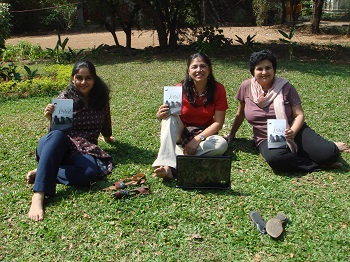
Authors of Why Loiter The brainchild of five Mumbai women – Shilpa Ranade, Shilpa Phadke, Sameera Khan (in pic on left), Neha Singh and Devina Kapoor – the initiative aims to focus the spotlight on gender imbalance in Indian society, and specifically with our society’s way of blaming the (female) victims of assault. What’s more, as the five say, they want to bring the ‘debate back to women’s right to have fun in the city’. The initiative invites women to share their pictures and experiences on social media using the hashtag #whyloiter.

Shilpa Ranade, Shilpa Phadke and Sameera Khan responded to The Metrognome’s questions on the initiative:

What prompted the ‘#WhyLoiter’ campaign?

We are responding to the victim blaming and shaming that takes place after most reported incidences of assault. We are also responding to the fact that increasingly violence has become the only language in which one can talk about gender in the public. We want to bring back the debate to women’s right to the city and just as importantly, women’s right to have fun in the city. The idea is to create a sense of a community of women in public space so that we can remind ourselves and other women that we are not alone. In doing so, we hope to create a conversation and target victim blaming in order to assert women’s right to the city, the right to take risks.

We are telling people that on the #whyloiter events page on FB that we will be sharing a series of posters inviting women to hang out as also a set of messages with them. We will also put out a series of tweets. So when anyone hangs out in the city having a good time, we are asking them to please post these to FB, Twitter, Instagram, Four Square, always using the hashtag #whyloiter. We also encourage them to create their own messages, art work and tweets and share them with us.

Here is what people can do to participate:

1. Starting December 16, you can change your profile picture/cover picture to one of the posters we’re sharing. Better still, use all the four on different days. Or simply share the posters on your page to build awareness.

2. At all times, particularly between December 16 and January 1, update your status on FB or tweet or share a photo via Instagram when you are having a good time in public and use the hashtag #whyloiter.

3. You can also follow us @whyloiter and share the tweet messages we are sharing on twitter.

4. Share the fact that you are loitering and if you like share your location too so we can create an exciting map of where women are loitering in the city.

Who conceived the initiative? 

There are five of us: Three of us Shilpa Phadke, Sameera Khan and Shilpa Ranade are authors of the book Why Loiter? Women and Risk on Mumbai Streets and have been engaging with these issues for a decade now.

Two of us, Neha Singh and Devina Kapoor having read the book have taken on the ideas of the book and with a growing group of women actively loiter in the city every weekend. (See this blog for more information) We also had the help of Nishant John, an advertising professional with some help from a designer friend of his, Abhishek Jayaprakash, who put together and designed the posters you will see on the events page starting December 16. It was in fact Nishant’s poster idea that set us on the route to this campaign.

How did you spread awareness about it?

Mostly on Facebook and twitter as it is an online event – and by getting friends to spread the word.

Do you plan to involve men as well?

Absolutely. All who support women’s right to public space at all times are welcome to join in. It is also inclusive of all queer people and transwomen as well.

Have you tied up with the Mumbai police or any city-based NGOs to reinforce the message further?

Not at this point, though we are in continuing conversation with many organisations and initiatives working on issues related to women’s access to public space.

What is your expectation out of the initiative?

That we will be able to generate a wide ranging and nuanced public debate on women’s right to the city. And just as importantly to talk about women’s right to loiter, to simply hang out and have fun in the city.

Is this an initiative only for Mumbai?

No. It is for ANY city in the world.

What has been the initial response to it?

People are rather delighted and excited by the possibilities. We hope it becomes truly something people take ownership of. At Kavita Krishnan’s suggestion, we are now collecting words in different languages that mean loitering. Check it out on the event page.

Why the two-week duration for it?

We are beginning on December 16, the two-year anniversary of the horrific Delhi gangrape and murder. To mark this day and to assert our right to public space as citizens, and to register our voices as an act of resistance, we are getting together for this online event.

And we are going on till New Year’s Day – especially since people usually have a good time on New Year’s Eve and we hope people will update their Facebook statuses and tweet from wherever they are having fun using the hashtag #whyloiter. It would be great if there were many voices so that we start the year on a  bang – and hopefully it will gather so much momentum that it can go on and on.

What are your thoughts on the overall attitude that ‘Mumbai is safer for women than other Indian cities’?

You know, our book has many pages answering just that question. The short answer is that yes Mumbai is relatively friendlier and more accessible but it’s really far from enough. And we have a very long way to go.

To participate in the initiative, follow @whyloiter on Twitter, www.facebook.com/why.loiter on Facebook. Use the hashtag: #whyloiter every time you post a picture on your own social media channels.

 (Picture courtesy Tejal Pandey, badalja.com)
Categories
Tech

Review: Xiaomi’s Redmi Note

With the new Redmi Note, Xiaomi sets its eyes on large-screen phone buyers, with a modest under-Rs 10,000 price tag.
by Manik Kakra | @Manik_K on Twitter

Xiaomi’s entrance into the Indian market was quite a news story. While the company didn’t sell as many units to set the market on fire lots of users, especially who were active over online portals, heard and talked about them. If you remember, we were quite impressed by the Mi 3, which performed really well despite in most departments despite priced under Rs 15,000. And with the Redmi Note, Xiaomi has set its eyes over large-screen buyers with a price tag of under Rs 10,000.

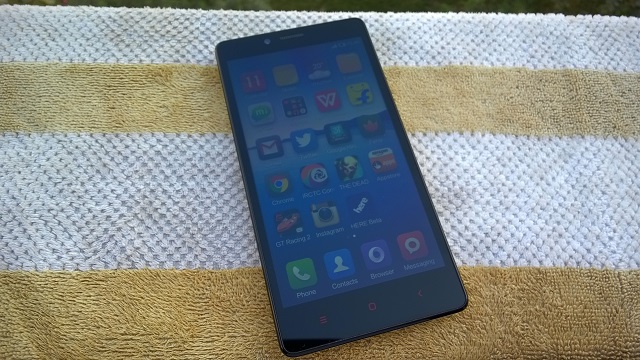
Looks and design. Xiaomi’s Redmi Note (HM Note 1W) follows the large-screen-that-isn’t-high-end trend. Weighing almost 200 grams and not being a thin device, the front has a 5.5-inch HD screen with Corning Gorilla Glass 3 on top. Three capacitive buttons – Options, Menu, and Back – below it, which glow in Red but aren’t very bright. Above the screen are the front-facing camera, speaker grill and sensors along with a tiny LED notification light.

The back has a glossy thin plastic cover, removing which reveals two SIM card slots, microSD card slot and the removable battery unit that also stretches to the sides. The back houses the 13 MP camera with the LED flash next to it, loudspeaker towards the bottom and the Mi logo in silver. No doubt had the back been a little less slippery, or with a better finish, one would have found gripping the device more comfortable.

While the sides are plain, the right side has the Volume rocker and Power/ Lock key. These keys are not very premium to look at, but they are tactile to press. At the bottom is the primary mic and microUSB 2.0. On the top, you have the 3.5 mm headset jack and secondary mic. You could say the phone looks nothing extraordinary, and we would have liked the phone to be less bulky.

Screen. Its 5.5-inch (1280 x 720) screen is just about okay when it comes to resolution for phones in this price range. Images and webpages look quite sharp on the screen, though videos tend to appear a little washed out. The screen has decent viewing angles and can brighten when needed under various conditions. Games that support the given resolution, on the other hand, look just as nice as you expect.

Camera. The Redmi Note sports a 13 MP camera with an LED flash. Here are a few sample images.

The camera is no match for even a mid-range phone and just as good as most phones priced under Rs. 10,000. It takes sharp images under favourable conditions, but don’t expect a lot. Photos in low-light, as you’d expect, are not at all worthy and you should avoid using this phone when it isn’t bright with your subject being still.

Audio. Both in-ear and loudspeaker perform decently. You don’t get any headset in the box, so you would have to get one yourself. Using a basic pair of earphones with the phone, expect a decent quality, quite loud but not too great. The loudspeaker on the back is also just okay and just about does its job while watching videos.

Battery. The device is equipped with a 3,200 mAh battery unit and it is the best thing about this device. You get more than a day of juice even with a bit of heavy usage. Having always sync on, watching videos for about half an hour, checking Twitter, playing a game like GT Racing 2 for half an hour, the phone’s battery life stretches over a day, and with moderate usage, it should go even further. Being a large device, this is definitely a plus point.

Software and performance. The device runs on Android 4.2.2 coupled with MiUi. Under the hood, there is MediaTek’s MT6592 SoC (1.7 GHz octa-core processor, Mali 450 MP GPU) along with 2 GB of RAM. The user gets about 5.8 Gb of available storage out of the box. All the apps are on your Home screen as there’s no separate app launcher. You can make folders, change widgets on it and uninstall an app right from a Home screen.

MiUi is one of the active ROMs in the Android community and there are a lot of tweaks and mods available for it, if you want to try. It has been designed well with most things, like the Notification center, toggle buttons, icons, which go well with the OS’s overall look and feel. Long-pressing the Options key gives a horizontal list of recent apps from where you can remove it; lock it apart from opening it. Or you can also remove each of those apps from the recent list and memory. Lock screen is simple yet useful: with a simple swipe-down gesture from a particular point to unlock it, or swipe it in other sides to directly open Messaging, Camera or Call Log.

The general performance of the phone leaves a lot to be bit desired. Initially, it seemed smooth to scroll, open apps and watch videos, but within two days of use, I saw quite a few issues. Many times when you come back to Home from an app, the launcher reloads; or if you go back to an app, it goes blank (works fine on other phones), which is a little surprising considering there’s 2 GB of Ram in place. Plus, the phone is running on Android 4.2.2 that was released two years back and there’s no word on when it will be updated to Android 4.4 (leave aside 5.0). Scrolling between Home screens, Settings, Dialler is mostly fine but you see signs of lag every now and then. Having said that, the phone handles games and HD videos without any troubles, this is one area that isn’t going to disappoint you. To sum its overall performance, it is not really bad, but it’s certainly not on par when you have used something like the Moto G (1st Generation) that is its competitor.

Concluding our review, the Redmi Note is a decent start from the company to kick off its ‘phablet’ plans. With a good screen, great battery life, decent camera and sub-par performance, anybody coming from a Mi 3 won’t be very happy, but for those looking for a large-screen phone under Rs. 10,000, this could become a device to consider only if the company releases OS updates for it that includes a lot of performance improvement.

Categories
Deal with it

Mumbai, wake up and control your vehicular traffic

Experts deliberate on ways and means to cut down the vehicles on Mumbai choc-a-block roads, improve air quality, waste management.
by TERI News Features

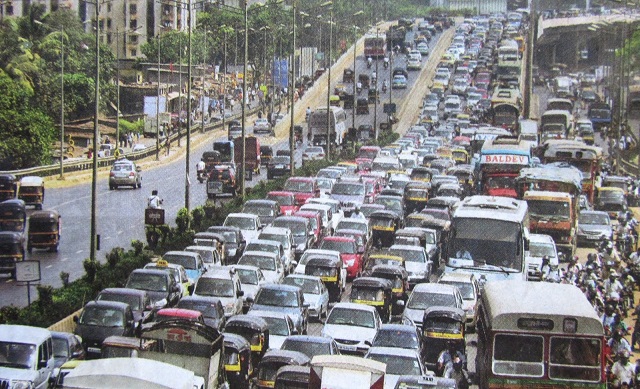
Mumbai is rapidly choking on its own smoke-filled outdoor air. And unless ways are devised to improve the quality of urban infrastructure and incentivise public transport, the rising numbers of private vehicles are going to make a living hell out of the city.

The Energy and Resources Institute (TERI) recently organised a regional dialogue titled, ‘Sustainable Urban Transport and Solid Waste Management in Mumbai’. The dialogue was organised in the run up to TERI’s annual flagship event, the Delhi Sustainable Development Summit (DSDS), which will be held in New Delhi from February 5 to 7, 2015. A series of Regional Dialogues were organized in the run-up to the Summit, which come in the wake of the new Government’s two major announcements — 100 Smart Cities for India and Swachh Bharat Abhiyan.

At the third and the last dialogue in Mumbai, top experts deliberated on ways to tackle the ever-increasing traffic-related problems here and also how waste management can be streamlined. Mumbai and the metropolitan region around it has been growing seamlessly, with its total population expected to touch 44 million in 2052 even as the resources to service the burgeoning masses remain more or less stagnant. The city is experiencing major traffic problems even though public transit represents more than 60 per cent of the motorised transport model share. With one of the highest per capita incomes in the country, Mumbai has seen an unprecedented increase in the number of personal vehicles.

Speaking at the event, Shri Prakash, Distinguished Fellow, TERI, said: “Although the rail-based transport system consisting of suburban rail and newly introduced metro and monorail would cater to the major transport needs of the city, provisions of adequate facilities for growth of non-motorised transport are also very essential for accessible and sustainable transport system.” Added UPS Madan, Metropolitan Commissioner, Mumbai Metropolitan Region Development Authority, “We are looking at smart ticketing, smart cards that can be used for all modes of public transport system. A 100 to 200-km network in the next eight to 10 years should have a positive impact on Mumbai city’s infrastructure.”

“It is not only about setting up transport systems but also about improving road connectivity and accessibility, which are extremely critical,” said Abhay Mishra, CEO, Mumbai Metro One Pvt Ltd.

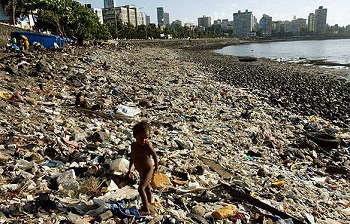
Waste management in MumbaiWhile discussing waste management, experts said the city generates about 10,000 MT of municipal solid waste and more than 2700 MLD of sewage per day. Managing and processing this huge amount of waste is a huge challenge faced by urban local bodies. Even in small peripheral cities of Mumbai, MSW collection and treatment is a huge task. Dr Suneel Pandey, Associate Director, Green Growth and Resource Efficiency, TERI, said: “It’s time to look at an integrated waste management framework to not only treat and dispose the waste, but also, in the process of doing so, recover resources like energy, nutrients and water not only to close the loop of material use, reduce use of harmful chemicals but also improve financial viability of waste processing options.”

“Decentralisation, biomechanisation, and waste management at the household level are the need of the hour. Today, waste processing, co-processing are some of the technologies which can treat waste efficiently. There is a need to introduce curriculum in universities that will teach people to run and operate the technology systems. This is currently lacking,” he added.

“Each individual generates waste and today there is no understanding of waste management. The need of the hour is to first study how, where and what waste is being generated. This will let us decide how we can best manage waste in the country. Then develop the right technology for the specific waste. Bad and inadequate waste management is responsible for the spread of dengue,” said Dr Amiya Kumar Sahu, President and Founder, National Solid Waste Association of India.

What do you think are some of the challenges in Mumbai city today? Tell us in the comments section below.
(Pictures courtesy searchpp.com, coastalcare.org)
Categories
Hum log

‘I love Mumbai because it welcomes new ambitions’

From film actor to debutant author, Olivier Lafont has donned several creative hats – and he’s coming back to the movies.
by The Editors | editor@themetrognome.in

He was the hilarious ‘Price tag’ in the film 3 Idiots, which was his debut performance in a Hindi film. However, few knew at the time that the petulant, money-conscious Suhas Tandon of the film is in reality Frenchman Olivier Lafont (35) – his fluency in Hindi helped masked that fact.

Olivier has worn many hats thus far – apart from acting and modelling in umpteen ads, he is also a screenwriter, director and now author of the book Warrior. The Metrognome interviewed the handsome artist on his life in India, his work, his inspiration for writing and his love for Mumbai, where he lives.

Excerpts from the interview:

Can you tell our readers a little about your childhood and growing up years?

Olivier LafontMy upbringing was primarily French from an early age, linguistically and otherwise. My family moved from France to India when my father took a posting here by the French Government for his historical research on the Indian subcontinent. So here I was at the age of seven, in Delhi, not speaking a word of English or Hindi. It was tough initially. Also, although I lived in India I went to the American Embassy School, so I grew up in an American-style cultural bubble at school, and a French bubble at home.

How did you get so proficient in speaking and writing Hindi?

It was only after I went to university in the USA and returned to India that I decided to teach myself Hindi. I started with the alphabet, which is beautifully phonetic, and built on it from there.

How did you land a role in ‘3 Idiots’? 

The casting director, the lovely Amita Sehgal, was familiar with my work in ad films and called me in. I improvised the party chutney scene from the film, and I guess Raju Hirani liked it well enough to cast me. Raju Hirani was a wonderful director – precise and clear about what he wanted but also extremely liberal. My approach was actually inspired by my French background. I used the French tradition of physical comedy from the comédie de mœurs, the comedy of manners in English, to prepare the character’s comic style.

You’ve covered a gamut of creative professions – actor, model, writer, director, producer. Which of these draws you the most?

Acting and writing, primarily. I find the most satisfaction and interest in these two fields.

What is your inspiration when you write?

I’m usually already on a run of inspiration when I write. The story itself has to inspire me, otherwise what’s the point? When I write I’m also enacting the scene, living it very vividly, and that’s reallyOlivier and Warrior inspiring and serious fun – crafting the characters, their dialogues, their decisions, the plot…

Can we expect to see you in any more Hindi films soon?

As of now I’m especially focussed on Warrior. I’ve just written a feature film script, however, with myself as the main character. After having written scripts for other directors and producers, I’m finally doing it for myself. It’s a really fun comedy, a hilarious story that I’m looking for a producer for.

Aside from that, I’d like to do some more dramatic work, something dark and compelling, or even an action film.

How did your book Warrior happen?

Warrior was originally a feature film script I wrote more than a dozen years ago. Back then I wanted to write a film that was a large-scale special effects extravaganza, something that would be genuinely Indian and completely original. I wrote the script, and then moved to Mumbai to write my actual first film (Hari Om), so I put Warrior away for a while. Some years later I began to get some time free, and I wanted to write a book, so I picked up Warrior again. When I finished the novel I became busy, and put it away. Eventually I started sending it out to publishers, and was pleased to receive two offers in the same week. I decided to go with Penguin, and here we are.

What has been the first reaction to your book?

It’s early days yet, but so far I’ve heard that people are responding with enthusiasm to the book, to the trailer, to the cover contest with Talenthouse.

You have lived in Delhi and Mumbai, among other places in India. What fascinates and disturbs you the most about Mumbai?

What fascinates me about Mumbai is its life. It’s like a hive, everyone is always doing something somewhere. And there’s space for everyone who comes, it’s a city that welcomes new dreams, new ambitions.What disturbs me, however, is the growing congestion as a result of that.

Categories
Event

Special children put up a special show

Block your calender for tomorrow – the special children of Dilkhush School are putting up their wonderful annual arts sale.
by The Editors | editor@themetrognome.in

Here’s your chance to do a good deed and encourage those who need our encouragement the most.

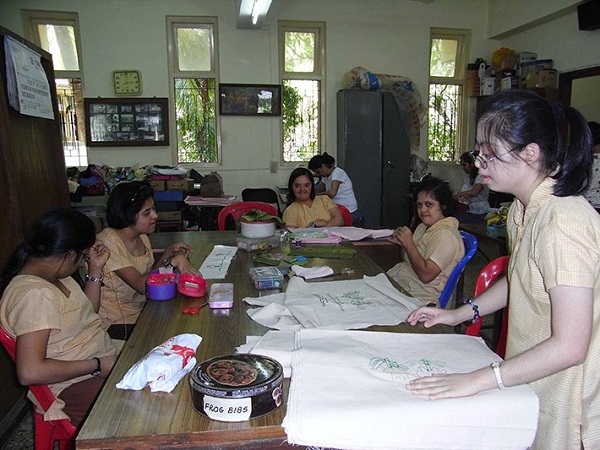
Tomorrow, that is Sunday, December 14, will see the culmination of a year-long effort by special needs children of Dilkhush School, Juhu. The students here spend almost the entire year working hard for their annual Dilkhush Annual Sale, which is put up by the Dilkhush Sheltered Workshop. The students learn skills in carpentry, arts and crafts, home science and needlework. Using these skills, they prepare different artefacts, objects out of different materials, stationery, home decor, games, home linen, gift items, even food items, for sale on the premises.

You can visit the sale and buy things made by these special children, tomorrow from 10 am to 1 pm.

Head to Dilkhush Sheltered Workshop, opposite Hotel Ramada Palm Grove, Juhu Tara Road. Look up dilkhushworkshop.org for details.

(Picture courtesy dilkhush.org. Image is a file picture)

Categories
Trends

India continues to suffer outdoor air pollution

WHO report says outdoor air pollution continues to be a big reason for mortality in India; is a major health burden.
by TERI Features

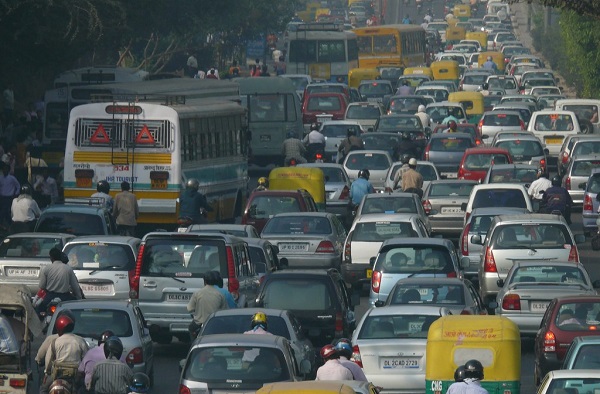
A new report by The Energy and Resources Institute (TERI), University of California, San Diego (UCSD) and the California Air Resources Board (CARB) says that if current trends of vehicle population, fuel and emission standards persist, PM 2.5 emissions  will increase by a factor of three, and those of NOx will increase by a factor of five. The transport sector contributes about 15 to 50 per cent of PM 2.5 emissions in cities, and is a dominant contributor to NOx emissions, says the report.

The World Health Organization (WHO) estimates that of the 67 risk factors studied in their Global Burden of Disease project, outdoor air pollution was ranked fifth in mortality and seventh in health burden in India, contributing to over 627,000 deaths and 17.7 million healthy years of life lost in 2010.

The new report titled ‘Options to reduce road transport pollution in India’ establishes the scientific basis for reducing emissions, the technologies available, and governance issues that need to be urgently addressed to improve air quality in Indian cities.

Said Dr RK Pachauri, Director General, TERI: “We should go beyond technological transfers and evolve pathways for pollution control as there are co-benefits of reducing greenhouse gases and reducing the health burden. We need to develop larger frameworks to mobilise resources and invest in technological innovations. This report will provide intellectual inputs to formulate specific pollution control models for States, and this will require the intervention of not just the government, but all stakeholders.”

80 per cent of cities in India have exceeded the ambient air quality standards prescribed by the Government of India. And this is worsening air quality and leading to a plethora of health problems.

Said Dr Mary Nichols, Chairman, CARB: “In 1991, there were 20 million vehicles in India. The number had skyrocketed to 140 million in 2011, and by 2030, vehicle population is expected to reach a staggering 400 million. We need multiple strategies to bring regulatory agencies and the regulated communities together and provide incentives to reduce the pollution load.”

Vehicular emissions contribute to particulate matter (PM) smaller than 2.5 micrometers (PM 2.5) and to Nitrogen oxides, NO and NO2 (NOx). NOx in turn leads to the production of ozone. PM 2.5 is the dominant contributor to premature deaths and numerous other illnesses, followed by ozone and NOx, and these are the major contributors to agricultural impacts, says the report.

Said Prof V Ramanathan, Distinguished Professor of Atmospheric and Climate Sciences, University of California, San Diego (UCSD): “Tackling air pollution may seem a complex problem, but California has demonstrated how drastic reductions in air pollution can be achieved. We simply cannot ignore the linkages and the multi-dimensional impacts of air pollution – for instance, ozone pollution leads to massive crop losses.”

TERI-UCSD-CARB collaboration

Without affecting its impressive economic growth, California has drastically cut down its emissions. In the 1960s, California had one of the highest air pollution levels in the world, and this triggered a public health outrage. Over the past 40-50 years, California has succeeded in reducing the levels of all air pollutions by 75 to 90 per cent though a series of measures. In particular, it has significantly reduced black carbon and particulate pollutants from automobiles.

On the other hand, 80 per cent of cities in India, which have comparatively much fewer vehicles, have exceeded the ambient air quality standards prescribed by the Government of India. And this is worsening air quality and leading to a plethora of health problems. There is mounting evidence now to show that the transport sector is largely responsible for the increase in the concentrations of particulate pollutants.

In an attempt to replicate the best practices, the University of California, San Diego (UCSD), the California Air Resources Board (CARB) and The Energy and Resources Institute (TERI) launched a programme – India California Air Pollution Mitigation Programme (ICAMP) – in 2013, to learn from air pollution control measures implemented in California to mitigate vehicular emissions and improve air quality in Indian cities.  Based on research and dialogues between Indian and Californian experts, the project partners have now come up with this new report.

(Picture courtesy en.wikipedia.org)

Exit mobile version