Categories
Do

Fathers and sons, pad up for this tourney

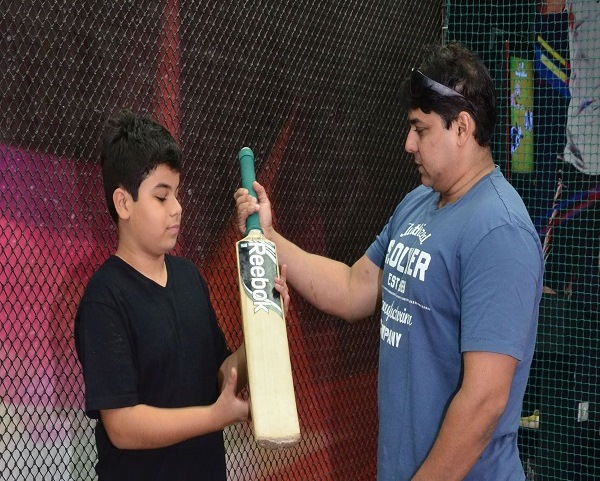
South Mumbai gaming lounge is currently running an 8-over cricket tourney for fathers and sons, a wonderful grand prize awaits.
by The Editors | editor@themetrognome.in

In a city starved of space for children and adults to play in, and with our hectic lives making even daily conversation possible, this is a great opportunity for some familial bonding.

The Lower Parel-based Smaaash gaming lounge is currently running ‘The Father and Son Cricket Tournament’ till January 31, 2015. Already, the tournament has drawn in huge numbers, with even celebrities trooping in to play cricket with their sons.

What’s more, the perfect father-son duo will get to meet cricket legend Sachin Tendulkar.

All you have to do is form a father-son team, play in the relevant age categories and get a chance to meet Sachin. Over the course of the month, top teams will be identified and will be selected for the grand prize. These will include the top 3 scoring father-son pairs from each age category. The tournament involves a 6-over match at Smaaash Cricket.

Age categories include Under 10, Under 12, Under 14 and Under 16

Head to Smaaash, Kamala Mills Compound, Gate No 4, Lower Parel. There is a registration fee of Rs. 800 for 8 overs (2 overs are for practice and 6 overs are counted as tournament). Call 022 4914 3143 for details.

Categories
Autism

He talks of aircrafts, but doesn’t understand relationships

A child on the Autism spectrum may display enhanced static intelligence and lack of dynamic intelligence, a result of neural underconnectivity.
Kamini Lakhaniby Kamini Lakhani | saiconnections01@gmail.com

Part 3 of the Autism Diaries – A differently wired brain

How is it that two children on the Autism Spectrum can exhibit very different behaviours? Or are we unable to see that the behaviours are essentially similar, but the expression different?

Let me give you two examples from my practice.

One of my students, aged 14, knows everything about every commercial aircraft. He knows which airline is discontinuing which model. One day, his discussion with me was about why a particular airline should change a certain passenger aircraft to a cargo aircraft and not scrap it! This same boy is having a rough time at school because he does not understand what kind of impact he has on his peers around him. He does not ‘read’ them well enough and hence it is very difficult for him to maintain friendships.

Another of my students, aged 4, is hyperlexic. He reads words without having been taught. He may not understand their meaning, but he’s totally mesmerised with words and gets lost in the world of words.

It is very difficult for his mother to draw him into a back and forth interaction with the family.

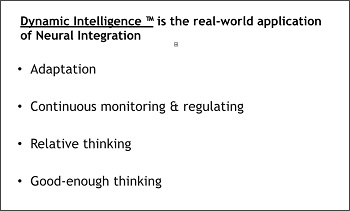
What is the problem in both cases? It is increased static intelligence but lack of dynamic intelligence.

A differently wired brain

Last year I presented at a seminar called, ‘Autism Update’. This seminar was geared towards educating pediatricians and other professionals about Autism or Autism Spectrum Disorders. My fellow presenters included developmental pediatricians and neurologists, occupational therapists, speech language pathologists, psychiatrists, psychologists, special educators and other service providers in the field of autism.

The topic of my presentation was, ‘The Role of ABA (Applied Behaviour Analysis) and RDI (Relationship Development Intervention) in Autism’. In the context of presenting about RDI, I showed a slide related to neural connectivity in the brain of a person with ASD. I was pleasantly surprised to note that similar slides were shown by the neurologists presenting at the conference.

This meant that finally, treatment was keeping up with research! The treatment in context is RDI or Relationship Development Intervention. It is based on the premise that there is a problem with connectivity in the brain of a person with ASD.

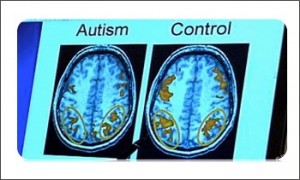
Take a look at the slide:
fMRI

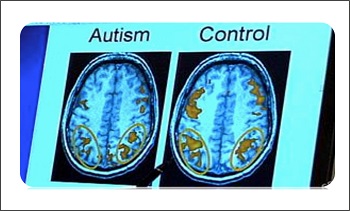
This picture is a cross section of the brain of a person on the Autism Spectrum and a neuro typical person (control) in a fMRI (Functional MRI). Both persons were given a task such as sentence comprehension. During this task, areas of the brain that were connected (lit up) were scanned. What this shows is that more areas in the brain of a neuro typical person were lit up (connected) as compared to a person with ASD.

What does this mean?

There is a problem with neural connectivity in the brain of a person with ASD. The brain is differently wired. This does not mean good or bad, right or wrong, normal or abnormal (is that word still being used?). It just means different!

 How does this affect a person who has ASD?

This results in increased static intelligence and lack of dynamic intelligence. It may result in slower processing abilities. It may manifest as an inability to rapidly process multiple information simultaneously.

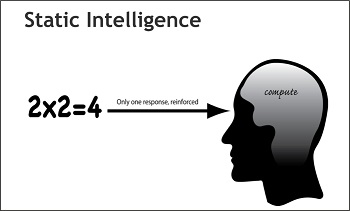
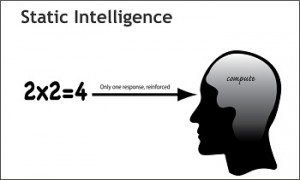
What is static intelligence?
Static intelligence


©Steven Gutstein, PhD, RDIconnect, Inc. 2013.

Some static abilities include math computation, reading for surface meaning, operating a computer, working for a desired reward, memorising facts, following directions and many others. Most programmes working with ASD focus on these.

What is dynamic intelligence?

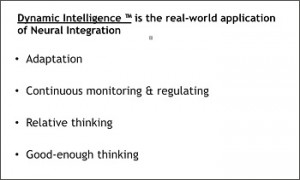
Dynamic intelligence includes going with the flow, seeing the bigger picture, processing rapidly changing information, abstract reasoning, being able to handle changes in plans, good executive functioning (planning, organising and following through).
Dynamic intelligence


Now consider ‘relative thinking’.

Relative conceptsThink about this – how do you explain the slide on the left to a person on the spectrum, that a cold winter day in Singapore is warmer than a warm winter day in Canada? I went crazy trying to teach these kinds of relative concepts to students who were on my academic curriculum. And why is it so difficult to teach these kinds of concepts to students on the Autism Spectrum? How do you and I get these concepts immediately? It’s all about neural connectivity. It’s all about the brain being differently wired.

RDI is a programme that is developed by Dr Steven Gutstein and his wife, Dr Rachelle Sheely. It is based on rebuilding guided participation to develop dynamic intelligence. It is built on the premise that –

– Neural integration can change throughout life.

– We can provide a second chance to those who have left the pathway of neural development.

I believe that RDI is the training and treatment that is in sync with the latest research based on neural connectivity in the brain. We want to make sure that we work respectfully with those affected by ASD.

Can we work with their areas of strengths and help them increase dynamic intelligence? Feel free to share your thoughts with me on saiconnections01@gmail.com. I will be happy to answer any questions that you may have.

Kamini Lakhani is the founder of SAI Connections. She is a Behaviour Analyst, an RDI (Relationship Development Intervention) Consultant, Supervisor and Trainer responsible for RDI professional training in India and the Middle East. She is the mother of an adult on the Autism Spectrum. She is also a member of Forum for Autism.

Next: Children with ASD know something you don’t.

(Pictures courtesy Steven Gutstein, RDIconnect, www.myspecialneedsnetwork.com)

Categories
Event

Maharashtra rocks to Prof Walter Spink

The feted scholar and historian took centrestage at the 2nd Annual Archaeology of Maharashtra conference, with several luminaries in attendance.
by Shubha Khandekar

It was a ruthless demolition of the Ganges-centric view of Indian history and of a Shivaji-centric one of Maharashtara, as speaker after speaker, both eminent and green-horns, rose to recreate the enchanted and enchanting, but unsung cosmos humming with life, incredibly rich materially and culturally, in and around the rock cut caves of Maharashtra, spanning nearly a millennium of artistic activity in and around the region.

The raison d’être of this devastation process was Prof Walter Spink, eminent scholar and professor emeritus of the History of Art at the University of Michigan, Ann Arbor, in whose honour the Centre for Extra Mural Studies (CEMS) of the Mumbai University and the India Study Centre (INSTUCEN) jointly organised ‘Rock-cut Caves of Maharashtra,’ the 2-day 2nd Annual Archaeology of Maharashtra (International) Conference, at the Kalina campus of Mumbai University on January 17 and 18, 2015. The conference was part of the annual Archaeology Day celebrations pioneered by the CEMS in 2012.

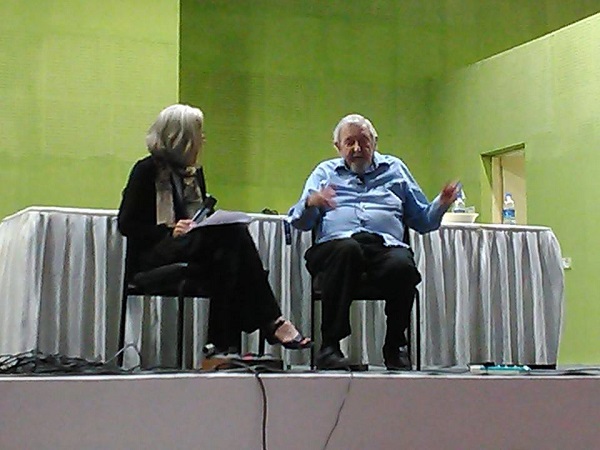
Spink“It is staggering to see how much we don’t know,” said Prof Spink, who has just put down in seven volumes (8th forthcoming), 60 years of his intensive and seminal research on Ajanta, extolled at the valedictory session as ‘Ajanta-charita’ (a biography of Ajanta) by Dr Geri Malandra, author of The Unfolding of a Mandala, on the evolution of art forms at Ellora, who engaged him in a one-on-one at the end of day one. Asked what more needs to be done on Ajanta, “volume 9,” he replied, without batting an eyelid. He will be 87 this February 2015.

Prof Spink’s best known – and most controversial – contribution to the field, is his whittling down of the chronology of the second phase of the Ajanta Caves to a mere 15 years, from 462 to 477 of the Common Era. During this brief span political disturbance drove a frenzied spate of devotional activity, culminating in the exquisite paintings and sculpture at Ajanta, now a UNESCO World Heritage site. The assassination of Emperor Harishena of the Vakataka dynasty, according to Prof Spink, brought the carving as well as the golden age of Indian history, to an abrupt end.

Prof Spink made use of details of circumstantial evidence at Ajanta to arrive at his conclusions. His keynote address provided a brief but razor sharp glimpse into the unique nature and depth of his inquiry. He showed how his study of some 180 doors (that no longer exist) and his investigation into how they were hung, helped him establish the relative chronology of the caves with fool-proof accuracy.

Reconstruction of chronology is a major challenge for ancient Indian history because the original sources are often muddled, misleading or mum.

Of the 1200 rock cut caves in India, no less than 1000 are located in Maharashtra, because the hard volcanic basalt rock from which the monasteries, temples, and intricate carvings are made is in abundance in the region and countless poets have eulogised this region as a land of rocks. “Rock cut art of Maharashtra has played a major role in the development of varied art forms all over the Deccan and beyond,” said Dr A P Jamkhedkar, former director of state archaeology and renowned scholar of art history, Jainism, epigraphy and archaeology. “And it is Walter’s phenomenal energy, methodological precision and passion that have inspired two generations of scholars to explore the vast pre-Shivaji and extra-Gangetic span of history, which we can see blossoming with such extraordinary vibrancy at this conference.”

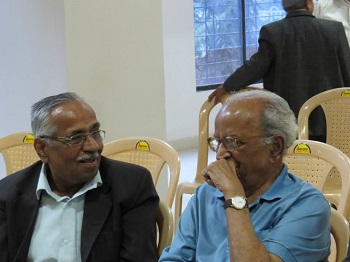
Prof Spink is admired and respected as much for his academic integrity and methodological purity as for his endearing simplicity and gentle, overabundant sense of humour. Every speaker had an Stalwarts at the conferenceanecdote or two of his or her personal encounter with Prof Spink to share with the audience, showing the warm though professional bonds he has forged and nurtured over the past six decades. Thus, while Prof M K Dhavalikar, former director of Deccan College celebrated the golden jubilee of his association with Prof Spink, Dr Alone of JNU, who disagrees with Prof Spink on many issues, recalled how the octogenarian harangued him into reading up before coming for discussions at the now famous site seminars initiated by Prof Spink. Dr Kurush Dalal of the newly set up Centre for Archaeology at the CEMS recalled how Prof Spink pointed his flashlight at a small fragment of a chisel, left in a dingy corner of a barely begun cave at Ajanta by an artisan some 1500 years ago, and Dr Manjiri Bhalerao gratefully acknowledged that it was Prof. Spink’s work that drove her up rocks and into them.

Indeed, boundaries of time and space dissolved as the romance of rock cut art and its derivatives in lands as far as Sri Lanka, slowly unfolded before the rapturous audience. Dr Shreekant Pradhan’s presentation magically transformed the paintings of Ajanta into the sculpture of Amaravati and vice versa in a seamless blend, while Dr Anura Manatunga of Sri Lanka transported the audience to the emerald island to witness the debt that Sigiriya owes to Ajanta. Dr G K Mane credited the origin of rock cut caves to the preliterate megalithic societies in Vidarbha while Dr Abhijit Dandekar showed how sculpture nails down the rise of monks as intermediaries between Lord Buddha and the lay devotee. Dr Viraj Shah showed how the Jaina caves were sustained more with popular support as against the royal patronage received by the Buddhist caves whereas Dr Tejas Garge elaborated on the rock-cut moat around the Daulatabad fort, the one and only instance of traditional skills of regional craftsmen being harnessed for the first time for a military purpose during mediaeval times.

This explosion of scholarly activity is indeed a tribute that Prof Spink has richly earned. One hopes fondly, however, for the day when academic knowledge would become popular folklore, and that’s when scholarship will be truly vindicated.

Categories
Watch

Bangladesh comes to Mumbai

This dance performance addresses the issue of sweat shops and why boycotting their products is not such a good idea.
by The Editors | editor@themetrognome.in

This evening, be prepared to take a look at ‘sweat shops’ through a mesmerising dance performance.

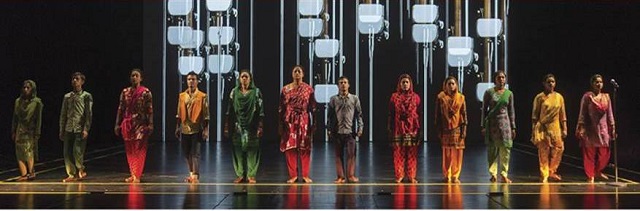
Titled ‘Made in Bangladesh’, the dance is choreographed by Helena Waldmann and Vikram Iyengar, with music set by Daniel Dorsch and Hans Narva. The performance is based on the theme ‘Dance and Exploitation’, and explores the notorious world of the garment industry and the supposedly legitimate artistic ‘sweat shop’ of a dance studio – both dancers and seamstresses work at the expense of their health, fobbed off with low wages and at constant risk of losing their jobs to someone even younger, even more flexible. And yet, still both industries urgently ask us all not to boycott their products.

Head to the Jamshed Bhabha Theatre, NCPA this evening at 7 pm. Free entry passes are available at the NCPA and Max Mueller Bhavan, Mumbai.

Categories
Tech

Review: HTC Desire Eye

Despite a good selfie camera and decent specs, this phone does not enter the winners’ league with its large design and low battery life.
by Manik Kakra | @Manik_K on Twitter

We all use the cameras on our phones extensively. This is normally the feature we check out first on a new phone, and the feature we put to maximum use when taking selfies.

Companies, too, are cashing in on the selfie craze, coming out with better front-facing cameras and marketing their products with the selfie user in mind. HTC’s Desire Eye is one such device – it has a front-facing camera very similar to its rear one.

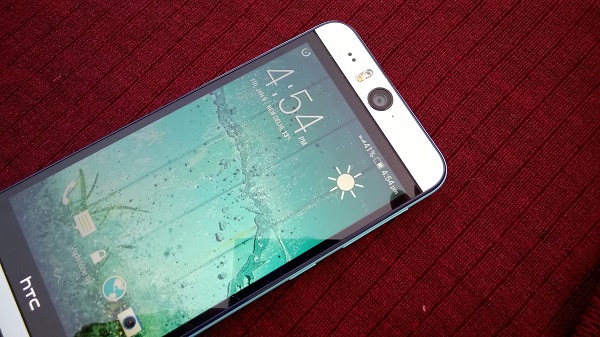
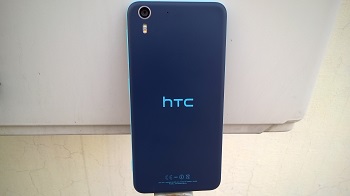
The looks. HTC’s Desire Eye is designed differently from your typical HTC device. Our review unit was dark blue on the back with light blue sides and white bars on the front. It isn’t made up of any metal, but its plastic material is far from being cheap and flimsy. On the front, above the 5.2-inch full HD LCD is the big 13 MP front-facing camera with the dual-tone flash and sensors on the left and speaker hole on the right. Below the screen, you see the familiar HTC logo set on a black bar (like the One M8), followed by the plain white bar.

You might miss noticing the front-facing BoomSound speakers, which are placed right at the bottom and above the display. On the right side panel are the Volume buttons and Power/Lock key; while the left side panel houses the nano SIM card slot and microSD card slot – both capped under flaps that you can open with your fingernail and don’t require any SIM ejector tools nor any separate trays. The back features the 13 MP camera with the dual-tone flash, HTC logo in the middle secondary mic. The bottom has the microUSB port and mic, and the 3.5mm headset jack is placed at the top. The phone is certainly big and has no curves, but its build and material make it decent to grip if you have large hands.

Screen. The Desire Eye’s 5.2-inch (1920 x 1080) screen has Corning Gorilla Glass 3 on top and follows most phones that have full HD screens. HTC has come up with really good screens in the last couple of years and the Desire Eye seems to be another one. It isn’t quite as good as the One (M8) for me, but it isn’t something to complain about. The screen is sharp, has good viewing angles for your photos, videos and to browse webpages.

Camera. Coming to the phone’s camera, it features a 13 MP rear (f2.0) camera coupled with a dual-tone flash. The front-facing camera is a 13 MP module (f/2.2) with the same dual-tone flash. Here are a few sample images (including from the front camera).

The phone can take really nice, detailed photos – be it from the rear of front camera. The rear camera can give really sharp images, but tends to overexpose and fade when used in low-light conditions. The front-facing camera is sufficient for your selfie needs. With HTC’s Eye Experience, you sure can edit, ‘beautify’ your photos and take photos with your friends using UTS wide-angle lens. The camera app is smooth, fast to focus and has a lot of options to choose from that most users will find useful.

Audio. The phone’s audio quality from its external speakers is top-notch. With its BoomSound speakers, you are sure to find the experience worthy when watching videos or playing your music or games. It is loud, clear and punchy enough for most tasks. Using a basic pair of earphones, you could tell audio isn’t something that a normal user won’t like.

Battery life. Equipped with a 2,400 mAh battery unit, it isn’t too large relative to most other high-end smartphones these days. The phone’s battery life isn’t really on the plus side. Powering up all the camera and screen, you aren’t left with much and have to charge the phone well before the 24-hour mark. Having always-on sync, Twitter, Email, YouTube and a few cams in between, the phone clearly struggled to make it a day, though removing BlinkFeed from your Home Screen and switching the Power-Saver mode would help. We would have liked better battery life with maybe a larger battery unit on this phone.

Call quality. The phone handles basic call quality and network well. I didn’t face any network reception issues or have call drops in areas where another phone would.

Software and performance. The HTC Desire Eye boasts Qualcomm’s Snapdragon 801 chipset (2.3 GHz quad-core Krait 400 processor, Adreno 330 GPU) and 2 GB of RAM. Running Android 4.4.4 with Sense UI 6.0 on top, the phone feels and works similar to previous HTC devices that we have seen in the last year or so. The user gets about 11 GB of storage space, plus 100 GB of Google Drive storage for free. With two Home screens by default, HTC has continued with its BlinkFeed to give you news and social updates at a glance, though if you want, you can switch it off. The icons, gestures and UI components haven’t been changed. Regarding the phone’s performance, it is really smooth and handles pretty much every app and task you would require it to. I didn’t find it to stutter when watching videos, opening or closing apps or just flipping through Menu or Settings.

The phone also has double tap to wake the screen and lock it (only from the lockscreen) and it works quite well. From the s=lock screen, you can, as usual, access the camera, browser, messages and dialler directly. There’s also a DND mode where you can choose what tasks are allowed to notify you or not. HTC’s Sense continues to be among the best Android OEM skins with its cohesive arrangement, nice look and satisfactory performance. Having said that, it will be great if HTC could release the Desire Eye’s Android 5.0 update, but it’s quite obvious that will only be coming when its One line is completed, which doesn’t seem to be for another month.

Wrapping our review, the Desire Eye seems like a worthy contender around Rs 35,000. Go for its good camera experience, good screen, and audio quality, but only if you are okay with short battery life and don’t mind the size; otherwise, you might want to look elsewhere. But rest assured, it can take care of your selfie needs rather well.

Categories
Listen

Attend: Lecture by Prof Alexander von Plato

The German philosopher, historian will give a lecture on the political changes in Europe after the World Wars, among others.
by The Editors | editor@themetrognome.in

The face of Europe was changed irrevocably after the two World Wars in the last century. Then, Germany underwent a radical change after the Berlin Wall was broken down forever in 1990. These major world events make for fascinating study and help us to appreciate better the current state of Germany and Europe.

To further aid understanding on this subject, renowned German philosopher and historian Prof Alexander von Plato will give a lecture on ‘Political changes and personal orientations: Remembrance cultures in Germany and Europe after World War II and the Big Changes in 1989/90’. The lecture is scheduled to be held at the Max Mueller Bhavan, Kala Ghoda, this evening.

Prof Plato belonged to the top echelons of the organisation structure of the Communist Party. From 1996-2000, he was secretary of the International Oral History Association, and from 2006-2008, its Vice President. He is co-editor and editor of BIOS – Journal of biographical research, oral history and life history analysis.

In 2012 he was awarded the John G. Diefenbaker Award which enables collaboration with a Canadian university.

(Picture courtesy www.zwangsarbeit-archiv.de)

Exit mobile version